Key takeaways
- BrightLocal's 2026 survey found 45% of US consumers have used AI for local business recommendations, up from 6% the year before. Treat it as a survey figure, not a measurement of AI behavior.
- Uberall's multi-vertical study found review volume predicted AI mentions better than star rating in four of five verticals. Hotels were the exception.
- Reviews spread across several platforms beat reviews concentrated in one. Uberall saw restaurants jump from a 51.2% mention rate with Google only to 89.6% at four platforms.
- Most people still verify AI answers: BrightLocal reports 97% of AI users sometimes double-check against real reviews.
- You need two kinds of tools: review management to generate and respond to reviews, and AI visibility tracking to see whether it changes what AI says about you.
Why reviews matter differently to AI
Classic local SEO treated reviews as numbers. A 4.5 average across 100 reviews helped you in the map pack, and nobody cared much what the reviews said. The HOTH's February 2026 write-up makes the same point: older algorithms read reviews as numerical proxies, while language models can pick up sentiment, specificity and depth.
That is partly true, and partly more complicated than the marketing around it suggests. Whether an AI assistant can read your review text depends on which assistant, and which platform holds the review. Uberall's analysis says models rarely have access to the actual text of reviews. What they can usually see is metadata: how many reviews you have, how recent they are, and your average rating. Some models pick up snippets or themes from Google and Yelp, but most review content sits behind walls they can't crawl.
So the practical picture is mixed. Volume and recency are the visible signals almost everywhere. Review text matters in places where it is actually exposed, which includes your own crawlable pages and, increasingly, platforms with data deals.
What the consumer data says
BrightLocal's Local Consumer Review Survey 2026 (1,002 US adults, run through SurveyMonkey) puts numbers on the demand side:
- 45% of consumers have used AI tools for local business recommendations, versus 6% a year earlier.
- ChatGPT leads, with Google's AI Mode next at 23%, then Gemini. Copilot and Claude trail but are growing.
- Adults aged 30-44 are the heaviest users (64%). Over-60s are the most cautious (24%).
- Use of Google reviews slipped from 83% to 71%.
- 50% trust AI to summarize reviews accurately, and 71% among active AI users.
- 59% of people read the review profile after seeing an AI summary. Only 18% skip summaries entirely.
Two takeaways. First, AI is usually the first step in research, not the last. Yext research cited by Minchow Coders found that after seeing an AI recommendation, 62% of consumers verify it on Google and 58% visit the business website. Second, your native review profiles still get read, so the old basics (replying to reviews, photos, a complete profile) still pay off.
One caution on BrightLocal's framing. It says ChatGPT and other LLMs can't see inside Google's walled garden of reviews. That is probably true for scraping, but Google's own surfaces (AI Overviews, AI Mode, Gemini) sit on top of Google's data. Birdeye's guidance says Google reviews can influence what AI-powered search experiences recommend. I'd read the claim as "ChatGPT has limited direct access," not "Google reviews don't matter to AI."
What the AI-mention data says
The most useful study I found is Uberall's. Their GEO/SEO analyst ran five studies across five business categories, testing five frontier models with 9 to 11 prompts each, 50 to 100 runs per combination, and analyzed over 120,000 mentions. Highlights:
- Grocery: brands with high volume but lower ratings got mentioned more than 94% of the time. High rating but low volume: just under 61%.
- Restaurants: every star-rating bucket, even one-star, predicted mentions positively, because total volume was what counted. 1,000+ Yelp reviews reached a 93.3% mention rate.
- Dental: no platform's star rating reached statistical significance. Mentioned practices averaged 643 reviews against 253 for practices never mentioned.
- Hotels: the exception. Google Business Profile star rating was a stronger predictor than count, and on OTAs like Booking.com and Expedia, more reviews actually correlated negatively with mentions.
This is vendor research, so hold it loosely. But the direction fits the metadata point above: counts and recency are what models can see.
It also fits a wrinkle in Yelp's position. Uberall reports a July 2026 data licensing agreement between Yelp and OpenAI giving ChatGPT access to Yelp's reviews, ratings, photos and business data. If that holds for your market, Yelp review text may matter more for ChatGPT than other platforms do.
Reviews are a small slice of ChatGPT citations
Promptwatch Data gives a useful reality check, with a caveat. In Promptwatch's ChatGPT content type data for Sep 28 to Oct 4, 2026, review pages were only 1.7% of classified ChatGPT citations, while product pages were 22.4%. For prompts that name a brand, reviews rose to 5.6%, more than three times their overall share.
That dataset isn't local-specific (the examples skew toward software), so don't read it as local pack data. The lesson is narrower: reviews rarely get cited on their own, but they matter most when someone is already asking about a specific business. Your own location pages, structured data and other citable pages carry much of the load.
Social platforms matter more on Google surfaces
Platforms that carry reviews and recommendations behave differently by assistant. In Promptwatch's social citation data for Sep 28 to Oct 4, 2026, ChatGPT drew just 0.46% of its citations from seven tracked social platforms, while Google AI Overviews drew 12.2%. Facebook was 2.38% and Instagram 1.61% of AI Overview citations. If your customers leave reviews on Facebook, that counts more for Google surfaces than for ChatGPT.
How to build a review profile AI can use
Collect volume steadily
Since count and recency are the visible signals, a steady trickle beats a big burst once a year. Ask after every job, visit or purchase. Dental and restaurant results above suggest the gap between "mentioned" and "ignored" can be a few hundred reviews.
Spread reviews across platforms
If all your reviews live on Google, a model has one source. Uberall's restaurant numbers (51.2% mention rate with Google only, 89.6% at four platforms) show the value of corroboration. Pick the platforms your category uses: Yelp for restaurants and grocery, TripAdvisor for travel, industry-specific directories for professional services, and Bing Places if you care about Copilot.
Put review signals on your own crawlable pages
Uberall's analyst advice is the part I'd act on first: show your rating and review count on a crawlable local page, include a few dated review examples, and add proper local business schema. That gives a model structured data it can fetch without getting past a third-party wall. Mark up the reviews honestly, and don't fabricate or cherry-pick in a misleading way.
Encourage descriptive reviews
Where review text is visible, specifics help. A lawyer whose reviews mention "responsive" and "won my case" gives a summarizer more to work with than a wall of bare five-star ratings. You can't script customers, but a prompt like "what did we help you with?" gets better text than "please leave a review."
Respond, and don't sound like a robot
Prosperly's 2026 roundup notes that customers spot templated AI responses. Use AI to draft, but keep guardrails: route sensitive or one-star reviews to a human. If a tool offers fully autonomous replies with no override, skip it.
Watch for fake review attacks
The same sources flag AI-generated fake reviews, including coordinated negative batches aimed at competitors. A review tool with alerting helps you report them fast, before they drag down a rating that AI and humans both see.
Tools for managing reviews
These tools generate, monitor and respond to reviews across locations. Pricing changes often, so check each vendor.
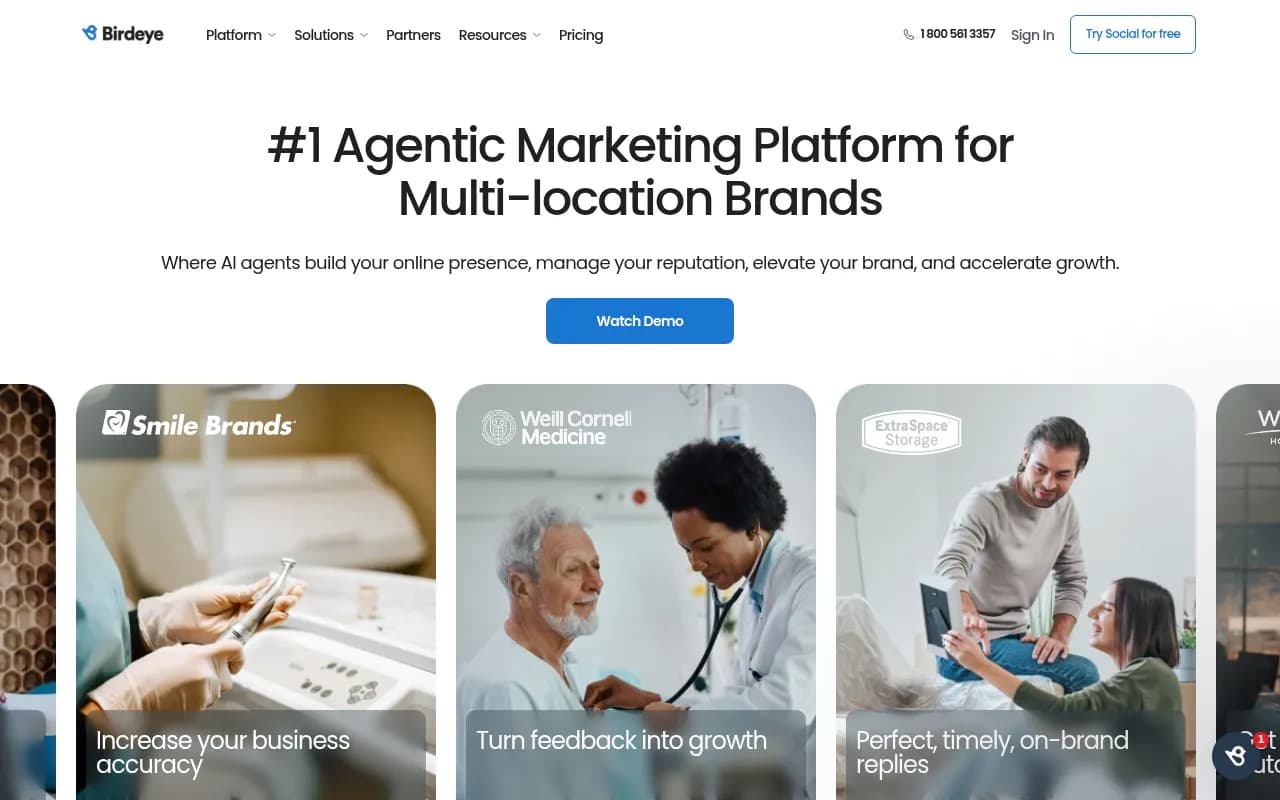
Birdeye covers review collection, responses and local AI visibility content. Its own guidance on AI assistants and local search is a decent read on how reviews feed AI-powered experiences.
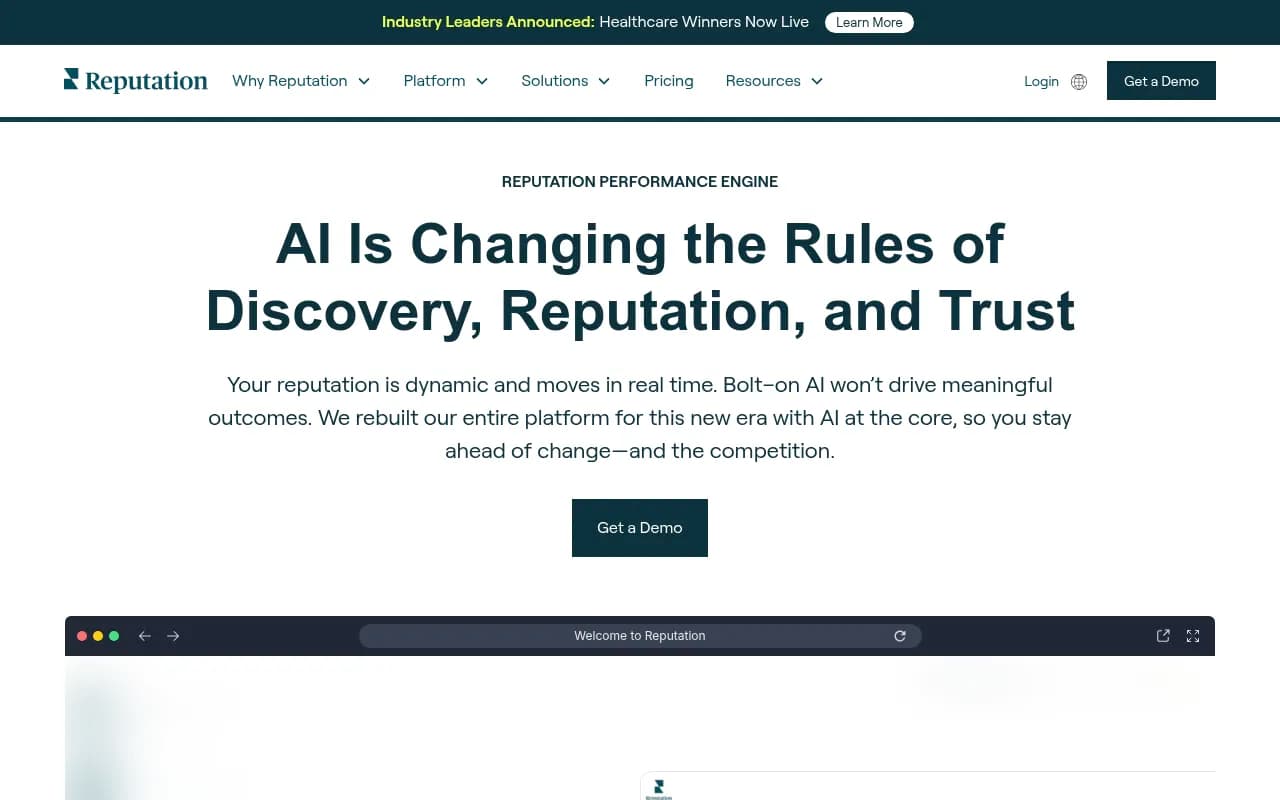
Reputation targets large multi-location brands such as automotive groups, healthcare networks and financial services, where analysis depth matters.
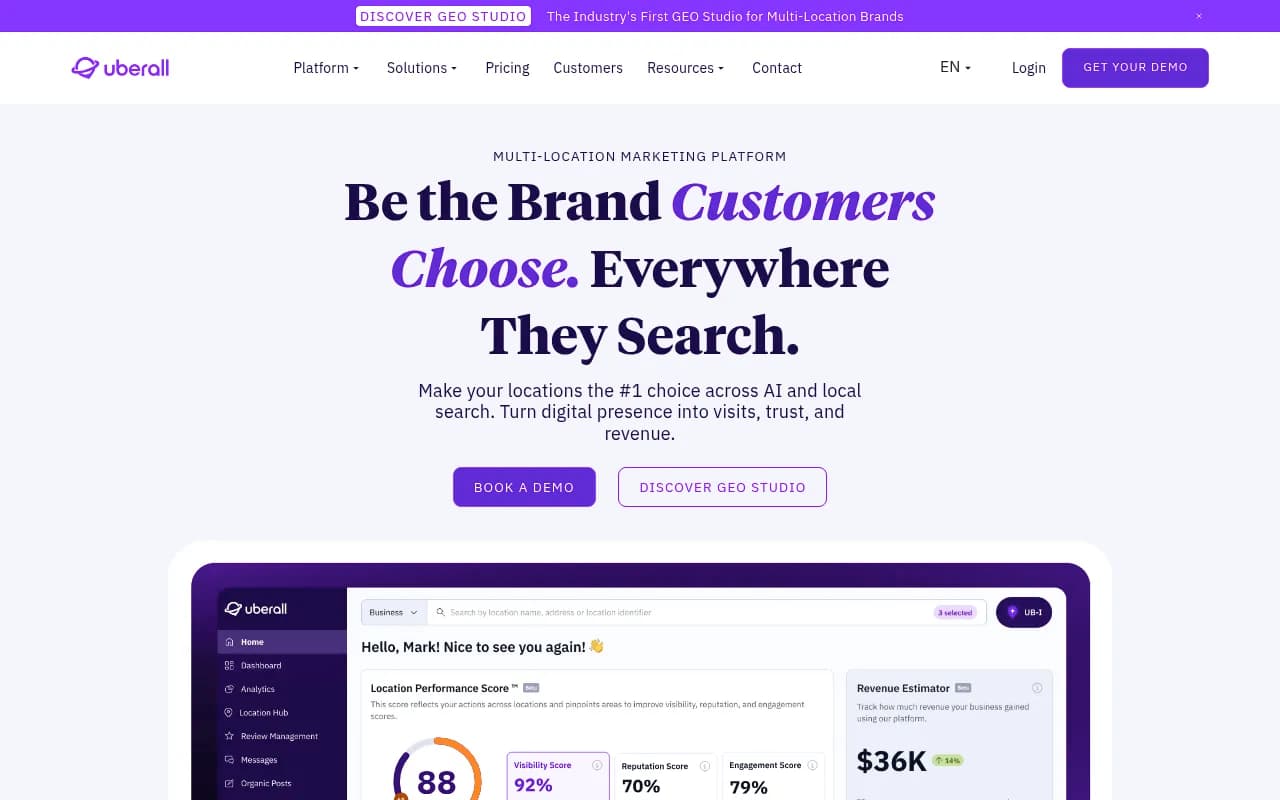
Uberall is the source of the most detailed AI-mention study cited here, and sells listings, reviews and local visibility for multi-location brands.
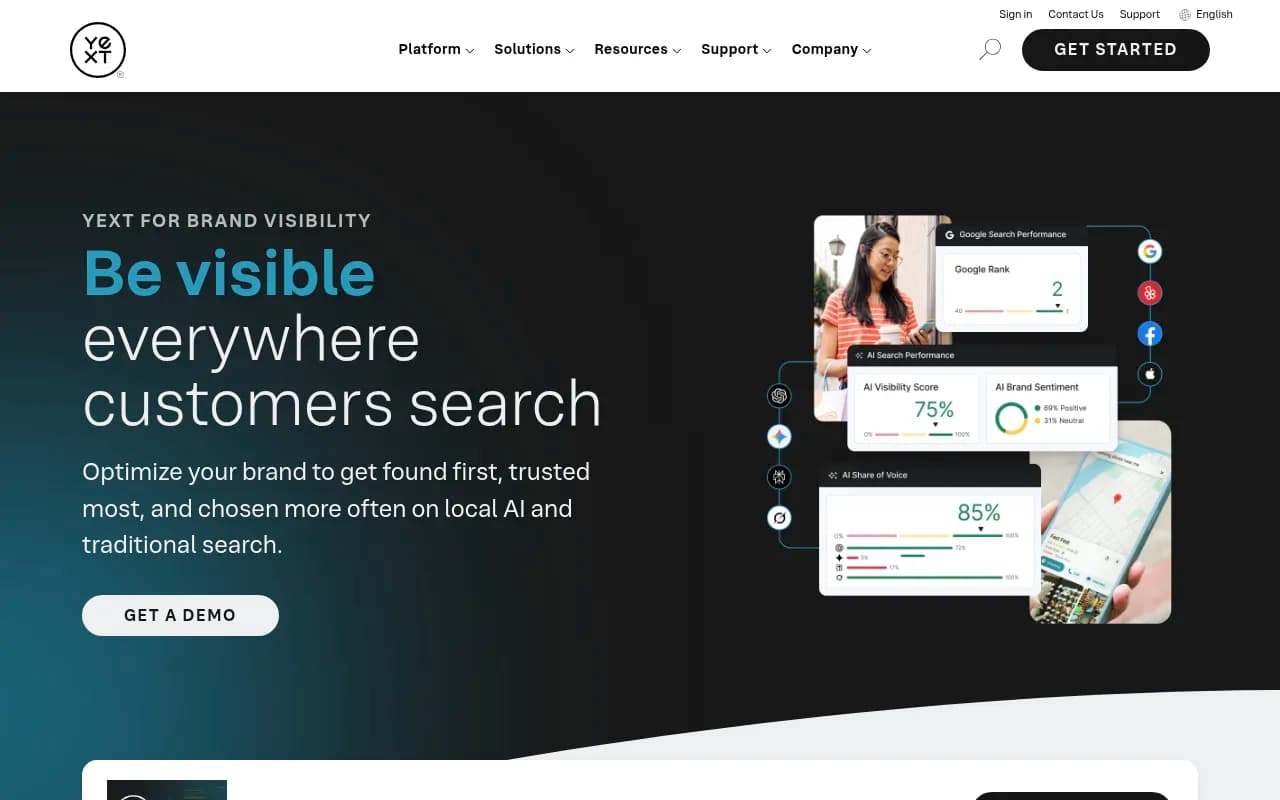
Yext manages listings and structured data across traditional and AI search for multi-location brands. Its consumer research is also cited in this guide.
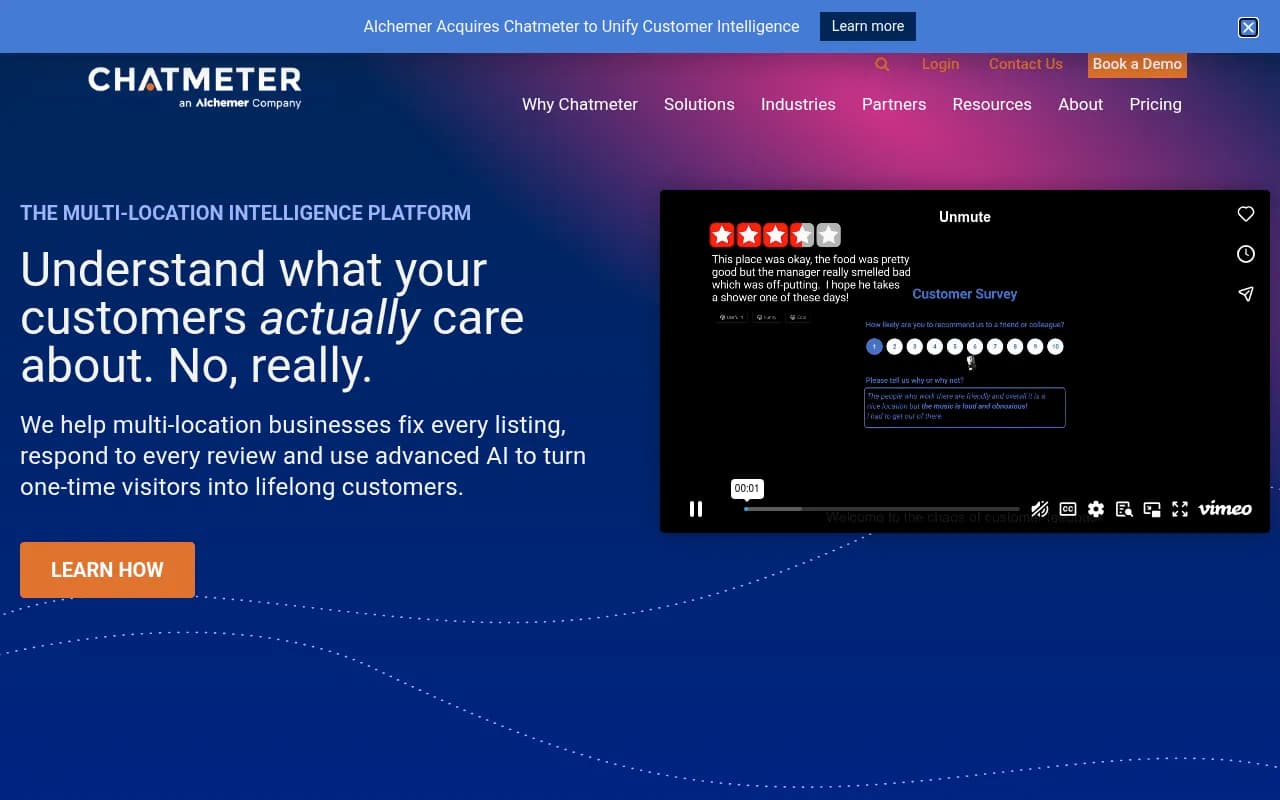
Chatmeter handles multi-location reputation and search visibility.
Trustpilot is a review platform in its own right, useful when your category leans on it.
BrightLocal is a local SEO platform for multi-location businesses and the publisher of the survey data above.
Podium combines messaging and review requests, a fit for small service businesses that live on text conversations.
Other local tools in the catalog worth a look are Synup, Moz Local, Whitespark and Local Falcon for geo-grid rank tracking, all listed on the software directory at surferstack.com.
Tools for tracking whether it works
Review tools tell you what happened to your rating. They don't tell you what ChatGPT or Gemini says about you. For that you need AI visibility tracking: run the prompts your customers use ("best emergency dentist near me") and record whether you're mentioned, how, and which sources are cited.
Minchow Coders suggests tracking three things monthly: mention rate, citation rate, and sentiment compared with competitors. That is a sensible minimum.
Promptwatch is the platform I'd start with for this. It tracks real ChatGPT, Gemini, Perplexity, Google AI Overviews, AI Mode and Copilot interfaces by country, and from the Business plan, by state and city, which matters for local prompts. It also shows which pages and third-party sources get cited, with crawler logs and an Action Board for what to fix. Its dedicated reports on Reddit, YouTube and LinkedIn citations cover channels many trackers skip.

Other trackers in the catalog worth comparing include:
Otterly.AI


Profound


For a wider list, the GEO software directory at bestgeosoftware.com and the AI rank tracking directory at ai-rank-tools.com cover more options.
Quick comparison
| Need | Tool type | Examples | What to check |
|---|---|---|---|
| Collect and respond to reviews | Review management | Birdeye, Podium, Reputation | AI reply guardrails, fake-review alerts |
| Keep listings and schema consistent | Listings and local data | Yext, Uberall, BrightLocal | Platform coverage, structured data |
| Track AI mentions and citations | AI visibility | Promptwatch, Otterly.AI, Peec AI, Profound | Real-UI data, city-level tracking, cited sources |
| Local map rankings | Geo-grid tracking | Local Falcon, BrightLocal | Grid size, update frequency |
A simple workflow
- Audit where your reviews live today, by platform, count and date of latest review.
- List the 10 to 20 prompts customers actually ask AI, with your city in them.
- Run those prompts in ChatGPT, Gemini and AI Mode and note who gets recommended. A tracker automates this.
- Close the platform gaps. If competitors have 600 Yelp reviews and you have 40, that's your first task.
- Add ratings, review count and a few dated review examples to your local pages with schema.
- Re-run the prompts monthly and see whether mention rate moved. Correlation isn't proof, but a trend over a few months is informative.
The honest caveat: nobody outside the AI vendors knows exactly how reviews are weighted, and the models change. Uberall's and BrightLocal's numbers are one-time snapshots. Treat them as direction, then measure your own results.
FAQ
Do star ratings matter to AI recommendations?
Less than volume in most categories, according to Uberall's data. Hotels are the exception. A very low rating still hurts with human readers, who check reviews after the AI answer.
Do I need reviews on more than Google?
Probably yes. Reviews on several credible platforms give models corroborating signals, and ChatGPT may lean on Yelp more given the reported licensing deal.
Can AI read my review text?
Sometimes. Many platforms wall off review content, so on-page snippets and schema on your own site are the safer way to make sure it's visible.
Is this a paid agency job?
It can be done in-house with the tools above. If you want help, an agency such as 1001 SEO Media handles local SEO and AI search visibility work.
Bottom line
For local AI recommendations, aim for many recent reviews across the platforms your category uses, keep your own pages crawlable with visible review signals, and respond like a human. Then measure with an AI visibility tracker instead of guessing.