Key takeaways
- Google AI Overviews pull from your Google Business Profile, local citations, reviews, and on-page content -- all of which need to be city-specific, not generic
- Relevance, distance, and prominence are still the three factors Google uses to rank local results, but AI Overviews add a fourth layer: content authority for specific queries
- City-by-city optimization means creating location-specific pages, targeting neighborhood-level keywords, and building citations in city-relevant directories
- Reviews are now more influential than ever -- AI Overviews frequently summarize review sentiment when recommending local businesses
- Tracking whether you actually appear in AI Overviews requires dedicated monitoring, not just traditional rank tracking
Local search has always been hyperlocal. But in 2026, it's gotten more complex. Google AI Overviews now appear at the top of results for a huge range of local queries -- "best plumber in Austin," "dentist near downtown Chicago," "family restaurant in Brooklyn" -- and they don't just list businesses. They summarize them, pull review snippets, and make recommendations in plain language.
That changes the game for local businesses. Ranking in the traditional map pack is still important. But now there's a second layer: getting cited in the AI-generated summary that sits above everything else.
This guide covers both. Here's how to optimize your local presence so Google's AI actually recommends your business, city by city.
Why Google AI Overviews matter for local search
AI Overviews aren't just a cosmetic change to search results. They're a fundamental shift in how users get answers. Instead of scanning a list of links, someone searching "best HVAC company in Denver" might get a three-paragraph AI summary that names two or three businesses, explains why they're recommended, and includes a snippet from their reviews.
If your business isn't in that summary, you've lost the click before the user even sees the map pack.
According to research from SEOProfy, ChatGPT and other AI platforms are now the third-most-popular source of local business recommendations, trailing only Google and Facebook. AI algorithms are also roughly 30 times more selective than traditional Google search -- meaning high rankings alone don't guarantee you'll be mentioned.
The implication: you need to optimize specifically for AI citation, not just for traditional ranking signals.
The three ranking factors -- and what AI adds
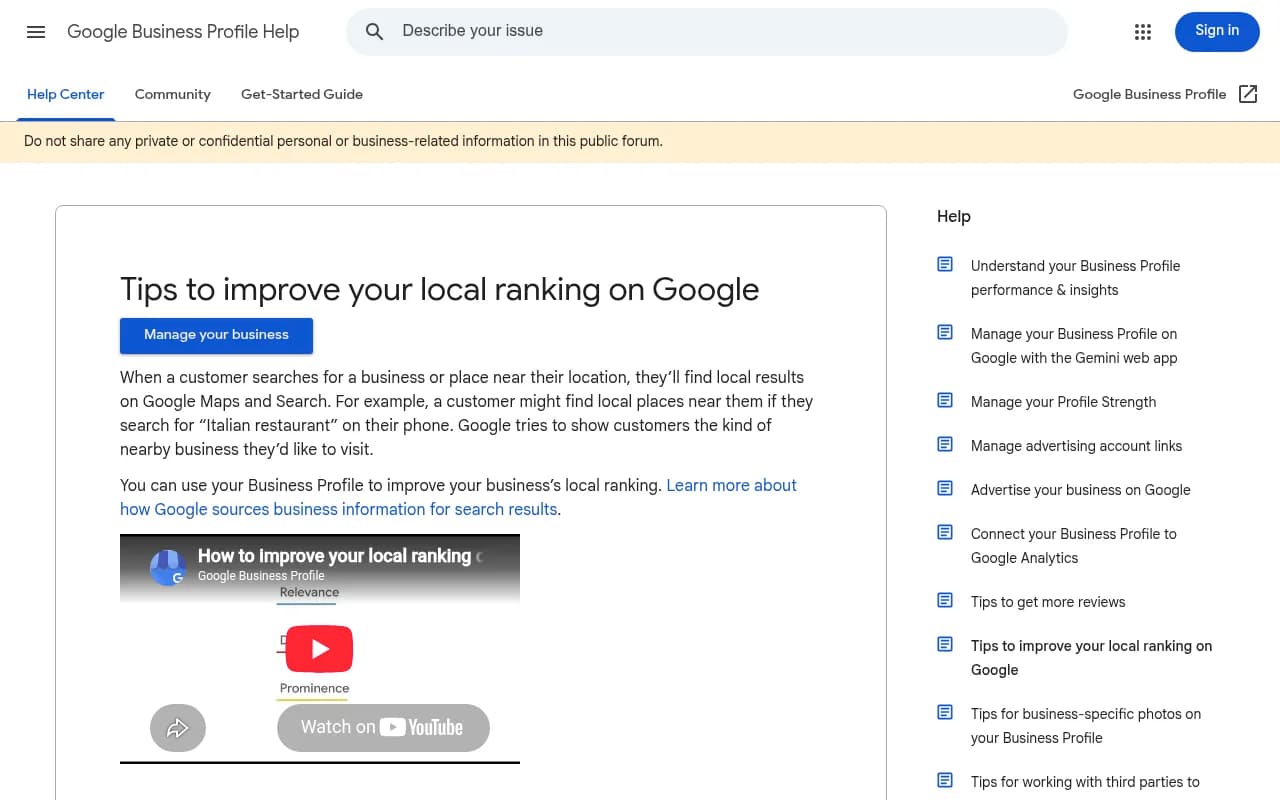
Google's own documentation says local results are based on three things: relevance, distance, and prominence. These haven't changed. But AI Overviews layer on something additional: content authority for specific queries.
Relevance
Your Business Profile needs to clearly describe what you do, where you do it, and for whom. Vague categories hurt you. If you're a "contractor," that's too broad. "Kitchen remodeling contractor in Nashville" is what the AI can actually match to a relevant query.
Practical steps:
- Choose the most specific primary category available in Google Business Profile
- Write your business description using natural language that includes your city and core services
- Use your products/services section to list specific offerings with location context where relevant
Distance
This one is mostly outside your control -- your business is where it is. But you can influence how Google perceives your service area. If you serve multiple neighborhoods or suburbs, add them explicitly to your service area settings in GBP. Don't just list your city; add the specific areas you actually serve.
Prominence
Prominence is where most local businesses have the most room to improve. It's driven by:
- The volume and quality of your Google reviews
- Your citation consistency across the web (NAP: name, address, phone)
- Backlinks from local and industry-relevant sites
- Your overall online presence
For AI Overviews specifically, prominence also seems to correlate with how often your business is mentioned across third-party sources -- review sites, local directories, news mentions, and community platforms.
City-by-city optimization: the core strategy
"City-by-city" optimization means you're not just optimizing for your primary location -- you're building a presence for every geographic area where you want to appear in AI answers. This matters most for:
- Service businesses that cover multiple cities or regions
- Multi-location businesses
- Any business in a metro area where customers search by neighborhood
Step 1: Audit your current geographic footprint
Before building anything new, understand where you currently appear. Search for your core services + each city you serve and see what comes up. Note:
- Are you in the map pack?
- Does an AI Overview appear? If so, are you mentioned?
- What businesses are being cited, and why?
For tracking AI Overview appearances systematically, tools like Promptwatch can monitor which prompts trigger AI Overviews and whether your business is cited -- across different cities and query types.

Step 2: Create location-specific landing pages
If you serve multiple cities, you need a dedicated page for each one. Not thin, templated pages -- actual content that's useful to someone in that city.
A good city page for a plumbing company in Dallas should include:
- Specific services offered in Dallas (not just a generic list)
- Local context: neighborhoods served, common issues in that area (e.g., older pipe materials in certain zip codes)
- Local reviews or testimonials from Dallas customers
- Your service area map
- Local phone number or address if applicable
- Schema markup (more on this below)
The goal is to give Google's AI enough city-specific content to confidently cite you when someone asks about plumbers in Dallas.
Step 3: Build city-specific citations
Citations are mentions of your business name, address, and phone number across the web. Consistency matters -- if your address is listed differently across directories, it creates confusion for both Google and AI systems trying to verify your legitimacy.
For each city you serve:
- Claim and optimize your listing on Yelp, Bing Places, Apple Maps, and relevant industry directories
- Look at what directories your top local competitors are listed in (search their business name + city)
- Get listed in city-specific directories: local chambers of commerce, neighborhood business associations, city-specific review sites
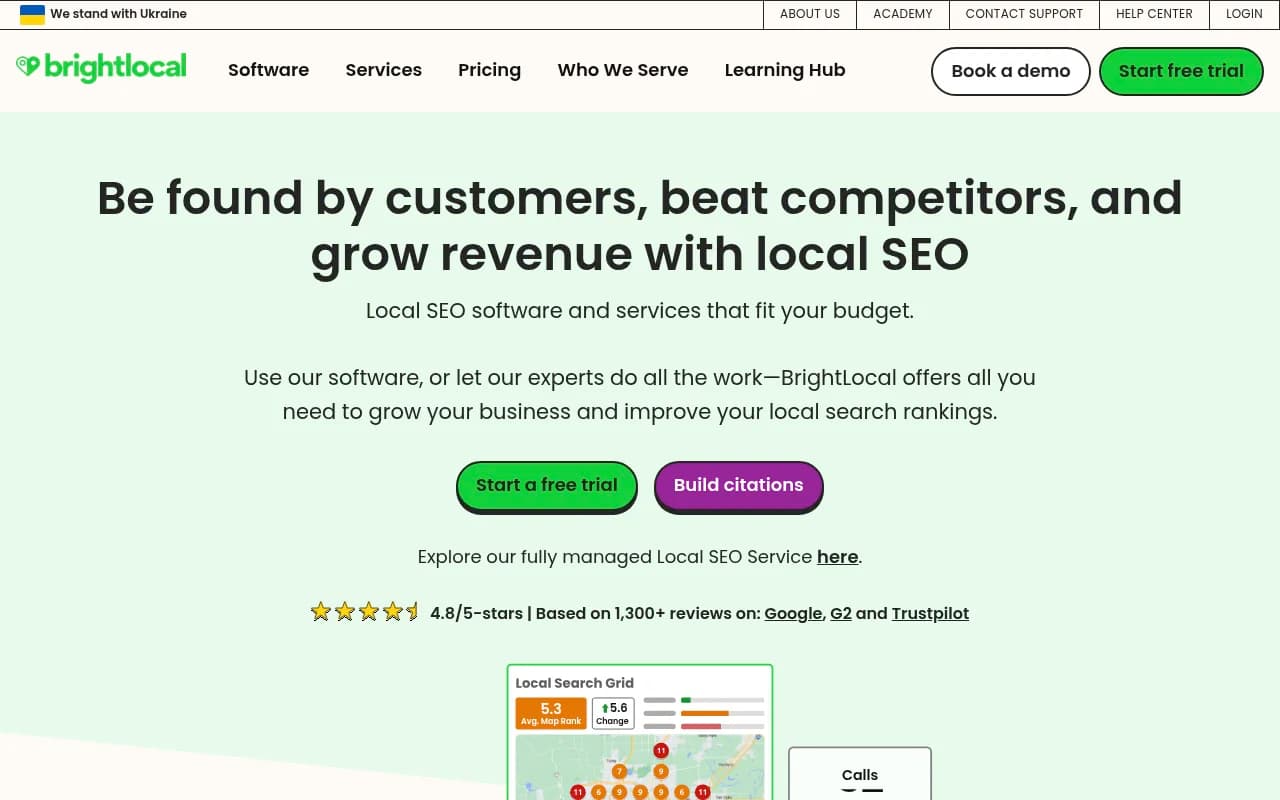
BrightLocal is useful here for managing citations across multiple locations and auditing NAP consistency.
Step 4: Optimize your Google Business Profile -- weekly
This is the single highest-leverage action for local AI visibility. Google's AI pulls heavily from GBP data when generating local recommendations.
What to do:
- Post at least once per week (updates, offers, events, photos)
- Respond to every review -- positive and negative -- within 48 hours
- Keep your hours accurate, including holiday hours
- Add photos regularly; businesses with more photos tend to rank better
- Use the Q&A section to pre-answer common questions customers ask
One thing that's changed in 2026: Google's AI seems to weight review recency more heavily than before. A business with 200 reviews from three years ago may underperform against a competitor with 80 reviews from the last six months. Keep the review velocity up.
Schema markup for local AI visibility
Structured data helps AI systems understand your business without having to infer it from unstructured text. For local businesses, the most important schema types are:
LocalBusiness(or a more specific subtype likePlumber,Restaurant,MedicalBusiness)PostalAddressGeoCoordinatesOpeningHoursSpecificationReviewandAggregateRating
If you're on WordPress, plugins like Rank Math or Yoast SEO handle most of this automatically.
For city-specific pages, make sure each page has its own LocalBusiness schema with the correct address and service area for that location. Don't use the same schema block across all city pages.
Reviews: the AI's favorite signal
When Google AI Overviews recommend a local business, they often pull from review content. The AI isn't just counting stars -- it's reading what customers actually said and using that to characterize your business.
This means the language in your reviews matters. A review that says "best Italian food in the East Village, the pasta is homemade and the service is fast" is more useful to the AI than "great place, highly recommend."
You can't write your customers' reviews for them. But you can:
- Ask for reviews at the right moment (after a completed job, after a positive interaction)
- Make it easy -- send a direct link to your GBP review page
- In your review request, suggest they mention the specific service and location ("If you have a moment, it would help us a lot if you mentioned what we helped you with and where you're located")
Responding to reviews also matters. Google's documentation explicitly says that responding to reviews signals you value customer feedback. More practically, your responses become part of the indexed content around your business -- and the AI reads them too.
Content strategy for AI citation
Beyond your GBP and city pages, you need content that AI systems can cite when answering local questions. Think about the questions people in your city actually ask:
- "What's the average cost of a roof replacement in Phoenix?"
- "Do I need a permit to build a deck in Seattle?"
- "What are the best neighborhoods in Miami for family-friendly restaurants?"
If you're a roofing company in Phoenix, a page that answers the first question with local data -- average costs, factors that affect pricing in the Phoenix climate, what to expect from the permitting process -- is exactly the kind of content Google's AI will cite.
This is sometimes called "answer-first" content: you lead with the direct answer, then provide supporting detail. AI systems are trained to extract and surface direct answers, so content that buries the answer in paragraph five is less likely to get cited.
SE Ranking's content tools can help you identify what questions people are asking in your specific city and what content currently ranks for those queries.
Tracking your AI Overview appearances
Here's the frustrating part: traditional rank trackers don't show you AI Overviews. You can be ranking #1 in the map pack and still be completely absent from the AI summary above it.
You need dedicated monitoring to know:
- Which queries trigger AI Overviews in your target cities
- Whether your business is mentioned in those overviews
- What competitors are being cited and why
| Tool | AI Overview tracking | Local/city-level | Review monitoring | Content suggestions |
|---|---|---|---|---|
| Promptwatch | Yes | Yes (city/state) | No | Yes |
| BrightLocal | No | Yes | Yes | No |
| SE Ranking | Partial | Yes | Yes | Yes |
| Semrush Local | Partial | Yes | Yes | No |
| Local Falcon | No | Yes (grid) | No | No |
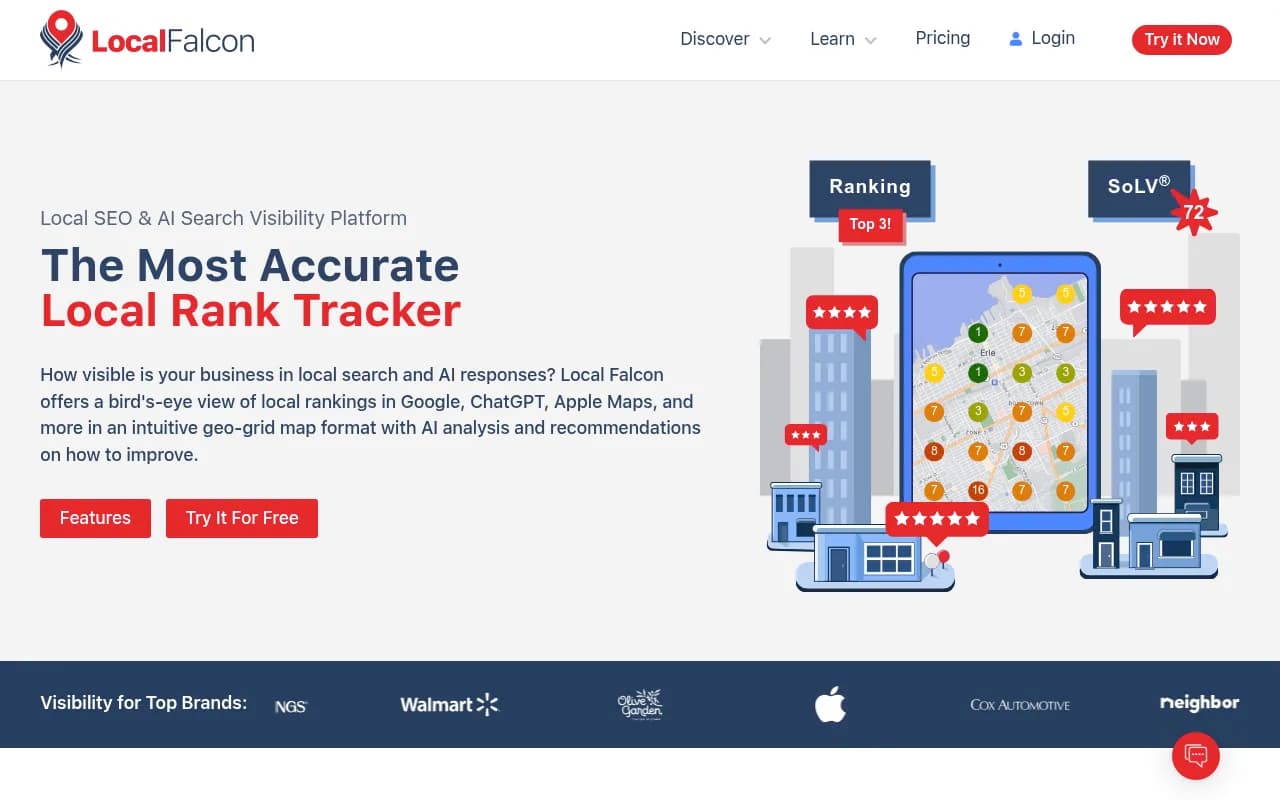
Local Falcon is worth mentioning for its geo-grid rank tracking -- it shows you how your GBP ranks across a visual grid of your city, which is useful for understanding where you're strong and where you're losing to competitors.
Semrush Local handles citation management and review monitoring across locations, which is useful if you're managing more than one or two cities.
The neighborhood-level opportunity
Most local businesses compete at the city level. Fewer compete at the neighborhood level. That's an opportunity.
If you're a personal trainer in Chicago, ranking for "personal trainer in Chicago" is hard -- there are thousands of competitors. But "personal trainer in Lincoln Park" or "personal trainer near Wicker Park" is a much more winnable query, and AI Overviews for those searches will have far fewer businesses to choose from.
Neighborhood-level optimization means:
- Creating content that mentions specific neighborhoods by name
- Getting reviews that mention neighborhoods ("I live in Bucktown and this is the closest great coffee shop")
- Building citations in neighborhood-specific directories or community sites (Nextdoor, neighborhood Facebook groups, local blogs)
- Using neighborhood names in your GBP posts and description where natural
This is especially effective for service businesses where customers think in terms of their immediate area, not the whole city.
Common mistakes that hurt local AI visibility
A few patterns consistently hold businesses back:
Inconsistent NAP data. If your phone number on Yelp doesn't match your GBP, the AI has conflicting signals. Audit your citations annually and fix discrepancies.
Generic city pages. A page that just swaps the city name into a template ("We offer plumbing services in [CITY]") doesn't give the AI anything useful to cite. Write real content for each location.
Ignoring negative reviews. A string of unanswered negative reviews signals to the AI that the business may not be reliable. Respond professionally to every negative review.
No local link building. Links from local news sites, city blogs, and neighborhood organizations carry real weight. Sponsor a local event, get quoted in a local news story, partner with complementary local businesses for cross-links.
Treating GBP as a set-and-forget asset. Businesses that update their GBP weekly consistently outperform those that set it up once and leave it. Fresh signals matter.
A practical 30-day action plan
If you're starting from scratch or doing a full audit, here's a realistic sequence:
Week 1: Foundation
- Audit and fix your GBP (complete all fields, verify, update hours)
- Audit NAP consistency across major directories
- Set up review monitoring and a review request process
Week 2: Content
- Identify 3-5 city or neighborhood-level queries you want to rank for
- Create or improve city-specific landing pages with real, useful content
- Add or fix LocalBusiness schema on all location pages
Week 3: Citations and links
- Claim listings on Yelp, Bing Places, Apple Maps, and industry directories
- Research competitor citations and fill gaps
- Identify one or two local link opportunities (local press, community sites)
Week 4: Monitoring and iteration
- Set up tracking for AI Overview appearances in your target cities
- Start weekly GBP posting cadence
- Review your first batch of data and identify the highest-priority gaps
The businesses that show up in Google AI Overviews aren't doing anything magical. They have complete, accurate, frequently-updated profiles; they've built genuine authority in their local area; and they've created content that directly answers the questions their customers are asking. That's the whole playbook.