Key takeaways
- Click-based attribution misses most of what AI search does, so a CFO-ready case needs several independent signals instead of one number.
- Present ranges and a documented methodology. A single precise figure from one model invites the question that sinks it.
- Set up three layers: AI referral tracking in analytics, self-reported attribution in forms and CRM, and a fixed prompt set that measures visibility over time.
- Tag and measure product and landing pages first, because those are the pages ChatGPT cites most.
- Treat it like a capital allocation request: cost, expected return, uncertainty, budget source, and the cost of waiting.
Why the CFO conversation is different
Marketing teams can usually get away with a visibility chart in a quarterly review. Finance can't. A CFO wants to know what you spent, what came back, how sure you are, and how you measured it.
AI visibility makes that conversation harder because the standard evidence is missing. A buyer asks ChatGPT which vendors to shortlist, sees your competitor's name, and converts on their site a few days later. Nothing in your dashboard records the moment that mattered. Siteimprove calls this zero-click synthesis: the answer breaks attribution before any click fires.
There is a second problem that has nothing to do with AI search. The Open Future Forum reports that enterprise AI spend roughly tripled to about $37 billion, yet fewer than four in ten organizations can attribute any EBIT impact to it. It also points to a gap between seats: 72% of CEO and founder respondents expect payback within six months, against 45% of finance-seat respondents. Your CFO has already heard a lot of unproven AI ROI claims this year. Expect skepticism, and plan for it.
The good news is that the answer isn't perfect attribution. It's a case built honestly enough that the uncertainty becomes part of the argument.
Step 1: Decide what you are actually claiming
Before touching any tooling, write down the claim in one sentence. Vague claims fail in finance review. Compare:
- Weak: "AI search is important and we need to invest."
- Better: "AI answers influence a measurable share of our pipeline. We estimate it at a range, here is how we measured it, and here is what it costs us to be absent."
Then separate the kinds of value, as the Open Future Forum piece recommends for AI ROI generally. For AI visibility these are usually:
- Direct revenue from visitors who arrive from AI platforms and convert.
- Assisted revenue from buyers who saw you in an AI answer, then arrived through branded search, direct, or a sales conversation.
- Defensive value, meaning the revenue you avoid losing if competitors own the answers in your category.
Keep these in separate lines. Mixing a hard number (direct conversions) with a soft one (defensive value) in a single total is how credibility gets lost.
Step 2: Build the three-layer measurement stack
No single method will carry the case. You need three layers that fail in different ways.
| Layer | What it measures | Strength | Weakness |
|---|---|---|---|
| AI referral analytics | Visits and conversions from AI platforms | Hard, auditable numbers | Undercounts; some AI traffic arrives with no referrer |
| Self-reported attribution | Buyers naming AI in forms and sales calls | Catches the invisible influence | Memory bias, sample size |
| Visibility monitoring | Mentions, citations, share of voice over time | Leading indicator, works with zero clicks | Proxy, not revenue |
Each layer answers a question the others can't. Referral data proves AI traffic converts. Self-reported data shows how much influence happens off the click path. Visibility monitoring shows whether you're gaining or losing ground before revenue moves.
Layer 1: AI referral tracking in analytics
Start in your web analytics. In Google Analytics, create a custom channel group or segment that matches known AI referrers (chatgpt.com, perplexity.ai, gemini.google.com, claude.ai, copilot.microsoft.com, and so on) using a regex on source.
^(chatgpt\.com|chat\.openai\.com|perplexity\.ai|gemini\.google\.com|claude\.ai|copilot\.microsoft\.com)$
Then do three things that most teams skip:
- Mark the conversion events that finance already recognizes (demo request, trial start, qualified form fill) as key events, so AI sessions roll up to numbers CFOs trust.
- Pass the source through to your CRM on form submission, not just in the analytics tool. If it stays in analytics, it can never reach a pipeline report.
- Add a UTM-based fallback. Promptwatch notes that ChatGPT stopped sending a referrer on October 8, 2026, so some visits now arrive looking like direct traffic. If you control links that AI might surface, tag them and count utm_source=chatgpt.com visits as ChatGPT traffic.
Be honest in the CFO deck that this layer is a floor, not a ceiling. Say so before someone else does.
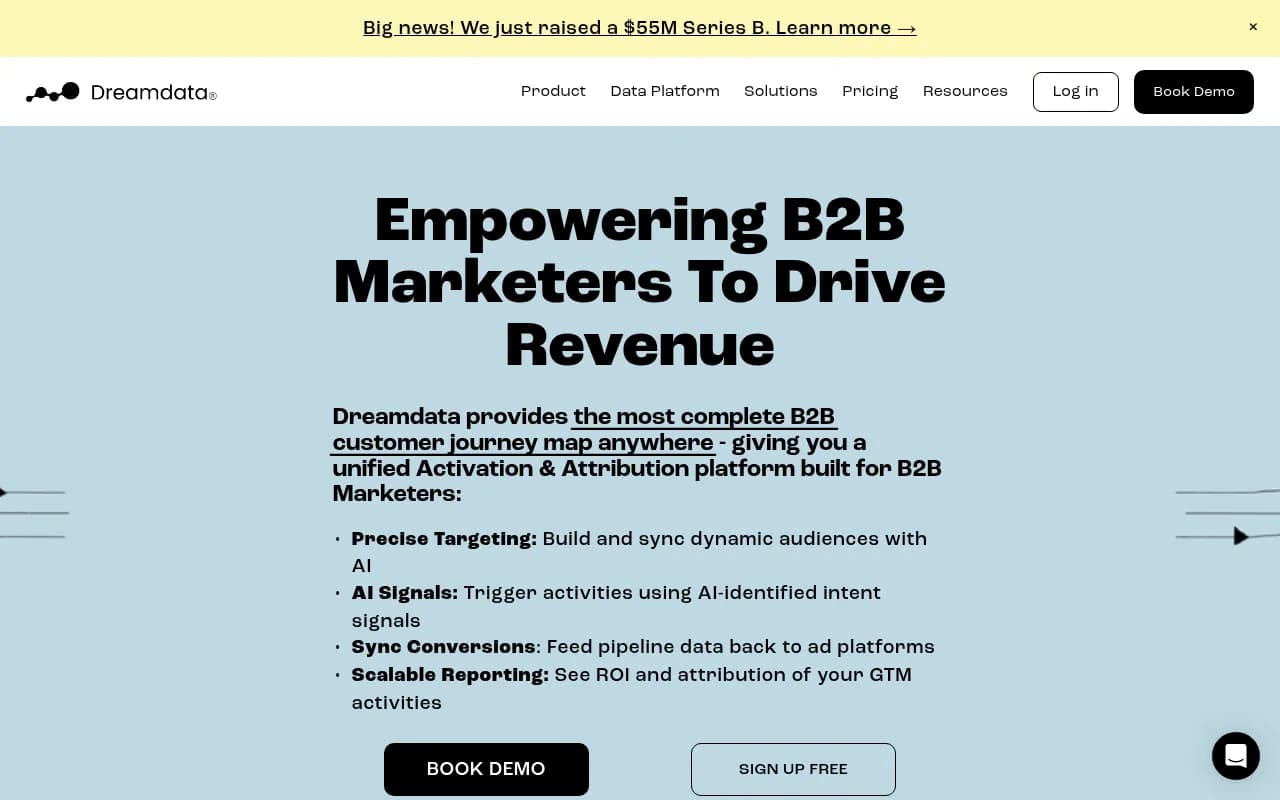
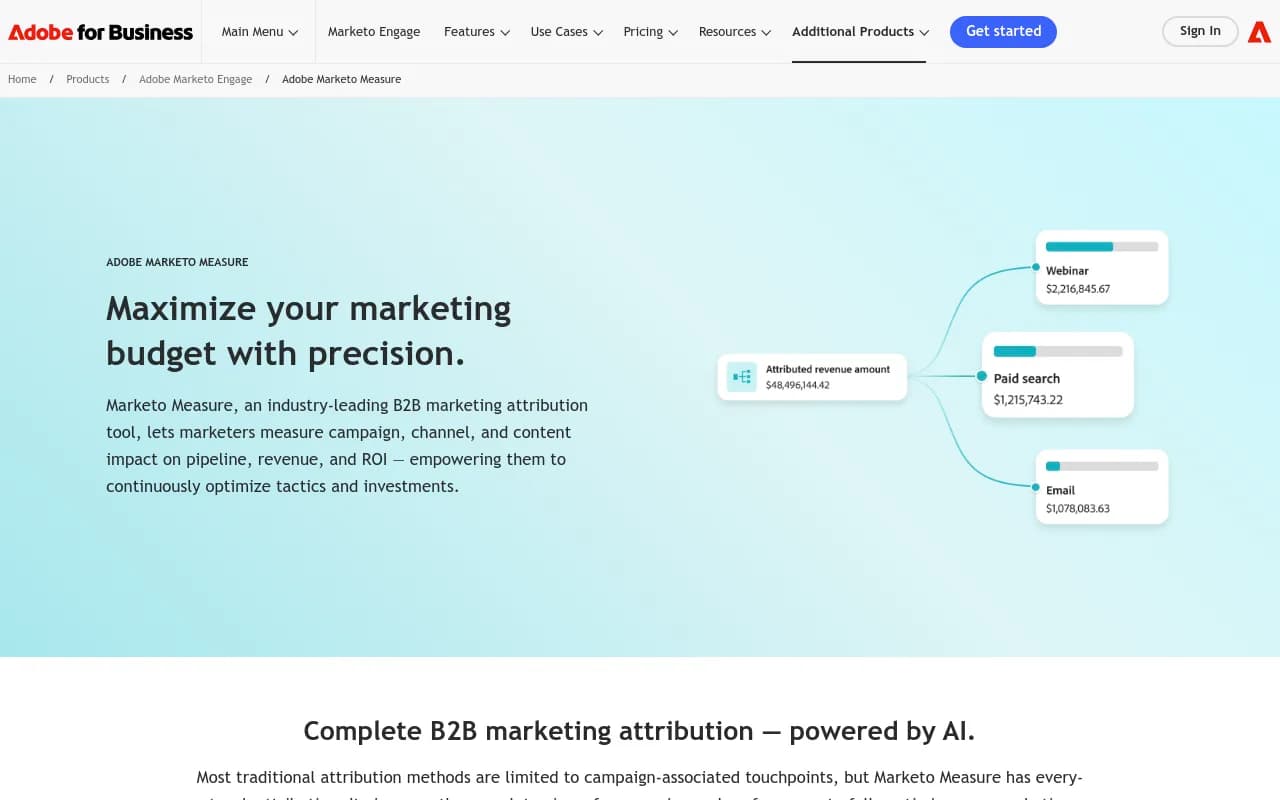
For attribution platforms that sit between analytics and CRM, enterprise teams often look at Dreamdata for B2B journey mapping or Adobe Marketo Measure for multi-touch attribution.
OptimizeGEO makes a useful point here: evaluate any platform by how well it integrates with your CRM and pipeline analytics, because a visibility number that never joins to closed revenue can't carry an ROI argument.
Layer 2: self-reported attribution
This is the cheapest layer and often the most revealing. Local Dominator suggests the first fix: replace the generic "How did you hear about us?" field with options that name AI platforms separately. A single "Other" or "Search" bucket hides exactly what you're trying to measure.
A workable setup:
- Add a required, single-select field to demo and contact forms with named options: ChatGPT, Perplexity, Gemini, Claude, Google AI Overviews, Google search, LinkedIn, referral, event, other.
- Add an optional free-text follow-up. The comments are where you'll see phrases like "ChatGPT recommended you for X".
- Write the answer into a dedicated CRM field, not a notes field, so it can be reported on by opportunity and by stage.
- Have sales reps capture the same question on the first call and log it against the opportunity.
Compare self-reported AI influence against first-touch analytics data. The gap between the two is a rough estimate of how much influence sits off the click path. In many B2B funnels, that gap is large.
Layer 3: visibility monitoring with a fixed prompt set
This is the leading indicator. You can't wait for pipeline to move to know whether your work is landing, and monitoring gives you share of voice, citation rate, and prompt coverage months earlier.
The rule that matters for finance: fix the methodology. Lock the prompt set, the platforms, the countries and languages, and the sampling cadence, then don't change them without documenting why. A CFO will ask whether the number moved because you improved or because you changed the questions.
Why per-engine tracking matters comes straight from Promptwatch Data. Between Sep 28 and Oct 4, 2026, social platforms were only 0.46% of ChatGPT citations, versus 12.2% for Google AI Overviews. And reddit.com's share of ChatGPT citations collapsed from roughly 4% to 0.5% on August 14, 2026. A baseline that blends engines hides shifts like these, and a shift like that can wipe out a quarter of progress overnight for reasons that have nothing to do with your work.
Tools in this category include Promptwatch, which tracks how ChatGPT, Gemini, Claude, Perplexity and Google AI Overviews mention and cite a brand, and also joins that to AI crawler logs and visitor analytics so visibility and traffic sit in one place.

Other monitoring options worth a look for enterprise procurement include Profound, Scrunch AI, and Evertune. You can browse more at the GEO software directory at bestgeosoftware.com.
Profound


Step 3: Measure the pages that actually get cited
Don't try to tag everything. Start where AI engines actually send people.
Promptwatch Data covering Sep 28 to Oct 4, 2026 shows product pages are 22.4% of classified ChatGPT citations and landing pages are 16.8%, so about 39% of citations go to pages that describe what a company sells. For commercial prompts, product pages hit 26.0% and landing pages 20.6%. Listicles (13.6% overall) and comparisons (5.9%) are the next tier.
The practical consequence for attribution setup: put your tracking effort on product pages, landing pages, comparison pages and pricing pages first. Make sure:
- Conversion events fire correctly on those pages and their forms.
- Source and landing page are captured in the CRM on submission.
- Those pages are crawlable. If AI bots can't read a page, you'll never see it cited and the ROI case dies at the first step.
Content type also changes how long a page keeps earning. Promptwatch's content half-life study found that landing pages and docs stay cited longest, while news loses half its pages within 36 days. That matters for your payback period. Evergreen commercial pages produce returns for months; news-driven content decays in about five weeks. Model them differently.
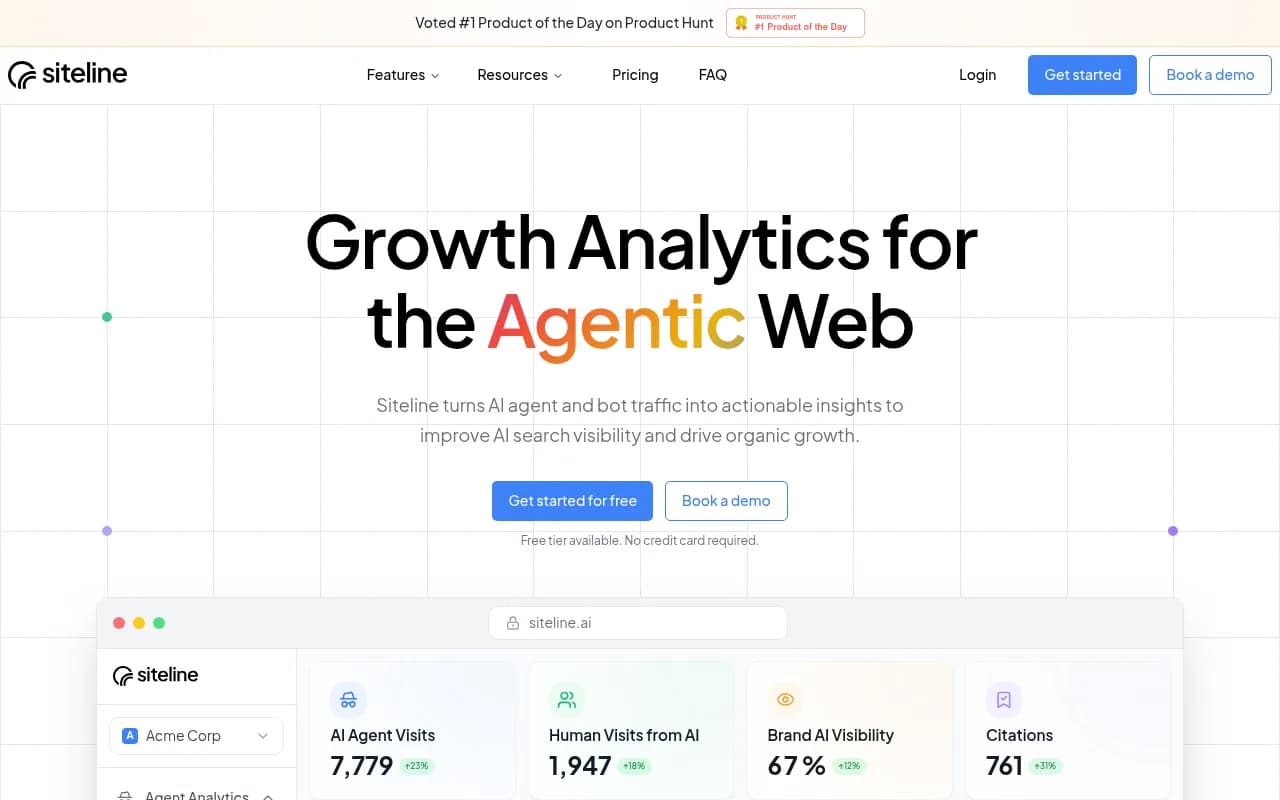
It also pays to check what the crawlers see. Crawler logs show whether AI bots read a page and where they fail, which separates an access problem from a content problem. Promptwatch's AI crawler logs are one way to get this, and Siteline AI is another option focused on AI agent traffic.
Step 4: Triangulate, then present ranges
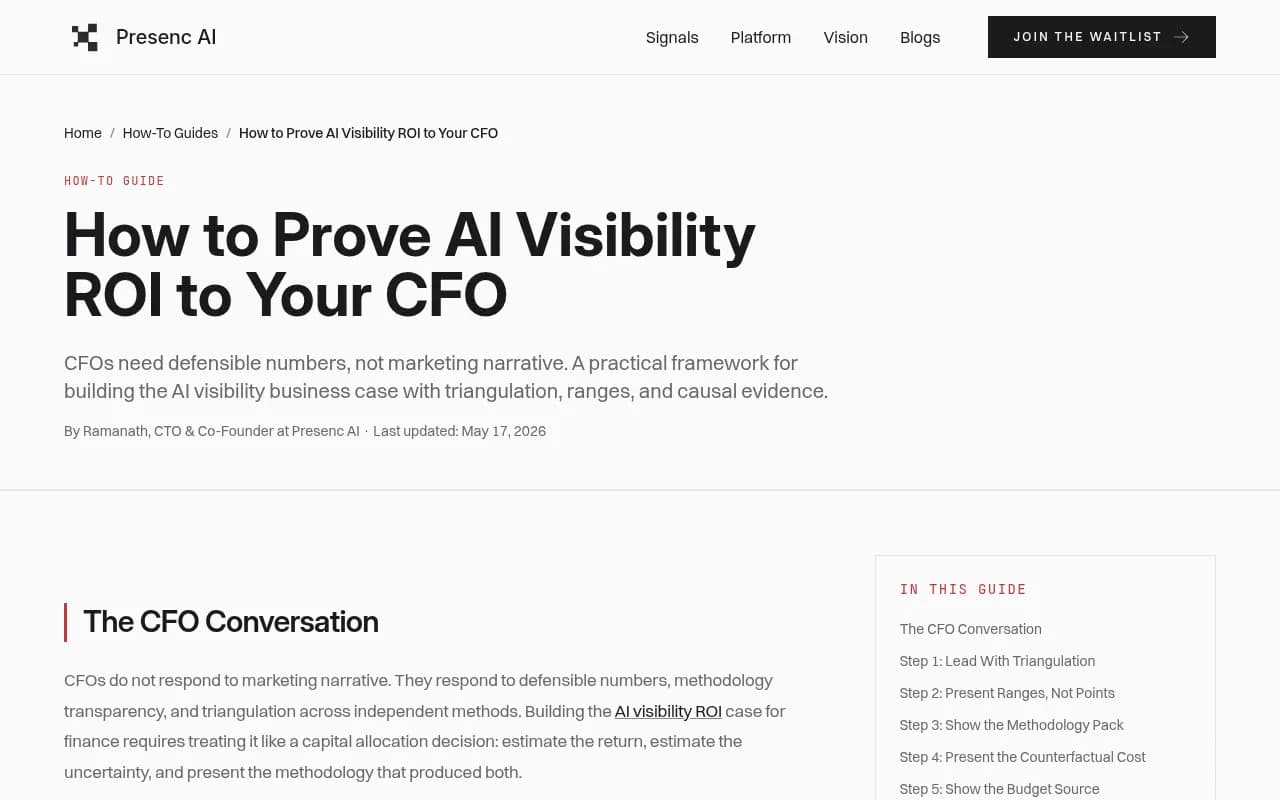
This is the core of the CFO pitch, and it comes from Presenc AI's CFO framework. Their argument is simple: finance respects triangulation and methodology transparency, not a single confident figure.
Present three independent estimates of AI visibility's contribution:
- A model-based estimate, such as marketing mix modeling, if you have the data volume for it.
- Survey or form self-attribution, with AI named as an option.
- A lift test, where you have run one, as the causal anchor.
They won't agree exactly, and that's fine. "Three independent methods put AI search at 12 to 18 percent of converted revenue" is the example Presenc gives, and it lands better than "our model says $14M." The spread is your honest uncertainty. Report it as a range with a confidence level where you can, for example "$14M plus or minus $4M", rather than a point.
If you don't have MMM, don't pretend. Many enterprise teams only have two of the three legs. Present two, label the third as planned, and say when you'll have it. A smaller honest case beats a larger one that falls apart under questioning.
A simple lift test you can run
Lift tests are the strongest evidence and the least used. A practical version:
- Pick comparable topic clusters, or comparable markets, and split them into test and holdout groups.
- Invest in content, citation sources and technical fixes for the test group only.
- Track visibility and AI-referred conversions for both groups over a fixed window, say 90 days.
- Compare the change in each, and document markets, duration and analysis method in advance.
AI search introduces noise (model updates, citation changes) so keep the window long enough to ride out a single shift, and note any known platform events that landed inside it.
Step 5: Build the methodology pack
Opacity is what makes finance push back. Put the following in an appendix, ready before the meeting:
- The prompt set: how it was chosen, how many prompts, which topics and personas, which countries and languages.
- The platforms and sampling cadence, and whether you collect from real user interfaces or APIs. Answers can differ between the two.
- The attribution rules: how AI referrers are classified, what counts as an assisted conversion, the lookback window.
- The survey design: question wording, sample size, response rate.
- The lift test design, if any.
- A change log recording every adjustment to any of the above.
It looks like overkill until the first hard question arrives. Then it's the thing that ends the argument.
Step 6: Frame the investment like a CFO would
A CFO evaluates this against every other request in the budget cycle. Give them the same structure.
| Element | What to include |
|---|---|
| Cost | Tooling, content production, headcount or agency time, fully loaded |
| Expected return | Range from the triangulated estimates, split into direct, assisted, defensive |
| Payback clock | Based on the operating metric that moves first (citation share, then AI traffic, then pipeline) |
| Uncertainty | The spread between methods, plus known measurement gaps |
| Counterfactual | Revenue at risk if competitors take the answers in your category |
| Budget source | Where the money comes from: reallocated from declining channels, or net new |
Two cautions on the counterfactual. First, Presenc cites 30 to 60 percent year-over-year growth in AI search query volume for most categories, but gives no source, so treat it as a hypothesis and substitute your own data. Second, Siteimprove's claim that AI-referred B2B buyers convert four to five times faster than average organic visitors, in a channel growing 165 times faster than organic search, is also unsourced. Don't put either figure in front of finance unless you can reproduce it from your own analytics. Your own conversion rates will be far more persuasive than anyone's benchmark.
The Open Future Forum's advice carries over too: capture a pre-deployment baseline, count the full cost, and state your attribution stance. Take your baseline before you start optimizing. If you start without one, you can never prove a change.
For real-world examples of what direct AI traffic can look like, Promptwatch's case studies describe Crisp seeing 2x higher conversion rates from AI traffic and TreeHouse growing AI search to about 25% of organic conversions. These are vendor-published and specific to those businesses, so use them as illustrations of the shape of the data, not as benchmarks for your own forecast.
Step 7: Report on a cadence finance will accept
One-off decks don't build trust. Recurring reports do.
- Monthly: visibility and share of voice by engine, citation rate on priority pages, AI-referred sessions and conversions, self-reported AI mentions from forms and sales.
- Quarterly: the triangulated revenue range, lift test results, and a plain-language note on what changed in the methodology and why.
- Always: a line on what you don't know. Finance trusts reports that name their own blind spots.
If you route all of this into your BI layer, Looker Studio connectors, Tableau or Microsoft Power BI can sit on top of the monitoring, analytics and CRM data so finance sees one view. Improvado is another option for pulling marketing data into a warehouse.

Common mistakes that sink the case
- Quoting one number from one method with no range.
- Changing the prompt set mid-quarter, then claiming progress.
- Counting AI sessions without joining them to CRM outcomes.
- Treating defensive value as if it were booked revenue.
- Skipping the baseline, then trying to prove improvement from nothing.
- Using vendor benchmarks instead of your own conversion data.
- Ignoring engine differences. A gain in one engine and a loss in another can net to flat while the story sounds great.
A 90-day rollout plan
| Weeks | Focus | Output |
|---|---|---|
| 1-2 | Baseline | Prompt set locked, monitoring live, AI channel group in analytics, CRM field created |
| 3-4 | Instrumentation | Named AI options in forms, source passed to CRM, priority pages tagged and crawl-checked |
| 5-8 | First read | Initial visibility baseline by engine, early AI-referred conversion counts, first self-reported data |
| 9-12 | Case | Methodology pack, triangulated range, lift test design, CFO presentation |
By week 12 you won't have a perfect number. You'll have a documented method, a baseline, and a range, which is what finance needs to say yes to a pilot with checkpoints.
Getting help
If your team lacks the capacity to set this up, an SEO and GEO agency can build the instrumentation and reporting alongside the optimization work. 1001 SEO Media works on technical SEO, content, and AI search visibility, and uses Promptwatch as its GEO platform. Whoever you pick, ask to see their methodology pack before you sign.
The short version
You will not get click-perfect attribution for AI search, and your CFO knows it. Stop trying to hide that. Build three layers of evidence, lock your methodology, report ranges, anchor with a lift test where you can, and show the cost of standing still. A modest, honest range with a clear audit trail will beat a confident number every time.