Key takeaways
- AI models like ChatGPT, Claude, and Perplexity are actively shaping purchase decisions, but each platform surfaces brands differently -- you need to monitor all of them, not just one
- Manual spot-checking is a starting point, but it doesn't scale; purpose-built tools can automate cross-platform monitoring and alert you to changes in real time
- The metrics that matter most are visibility rate (how often you appear), sentiment, share of voice vs. competitors, and which prompts trigger your brand
- Setting up alerts is only half the job -- you also need a process for acting on what you find, whether that's fixing inaccurate information or creating content that fills gaps
- Tools like Promptwatch go beyond tracking to show you exactly which prompts you're missing and help you create content to fix it
Every day, millions of people ask ChatGPT "what's the best project management tool for remote teams?" or ask Perplexity "which CRM do consultants recommend?" or ask Claude "what email marketing platform should I use?" These aren't idle questions -- they're buying decisions in progress. And if your brand isn't showing up in those answers, you're losing ground to whoever is.
The uncomfortable truth is that most brands still have zero visibility into what AI models say about them. Traditional brand monitoring tools track social media, news sites, and review platforms. They don't look inside AI-generated responses. That's a blind spot that's getting more expensive to ignore every month.
This guide walks through exactly how to set up real-time brand mention alerts across the major AI platforms -- what to track, how to track it, and what to do when you find something worth acting on.
Why monitoring AI mentions is different from traditional brand monitoring
Before getting into the setup, it's worth understanding why this problem is genuinely tricky.
Traditional brand monitoring works by crawling public web pages and social posts. If someone mentions your brand on Twitter or in a news article, a tool like Brand24 or Mention can find it because the text is sitting on a public URL.
AI responses don't work that way. When ChatGPT recommends a tool, that recommendation exists inside a conversation -- it's not indexed anywhere. The response is generated fresh each time, and it can vary based on how the question is phrased, which model version is running, and even the user's conversation history. Two people asking nearly identical questions might get different answers.
This means you can't just scrape AI platforms the way you'd scrape the web. You need to run structured queries -- the same prompts, repeatedly, across multiple platforms -- and track what comes back. That's the core mechanic behind every AI visibility tool in this space.
Step 1: Define what you're actually tracking
The first mistake most teams make is starting with their brand name and stopping there. That's too narrow.
Think about all the ways someone might encounter your brand in an AI response:
- Direct brand mentions ("Acme is a good option for...")
- Category queries ("best tools for X") where you should appear but might not
- Competitor comparisons ("Acme vs. [competitor]")
- Problem-based queries ("how do I solve Y?") where your product is the answer
- Use-case queries ("what do [industry] teams use for Z?")
Write out a list of 20-50 prompts that represent how your actual customers talk about the problems you solve. Include variations -- "best," "recommended," "top," "alternatives to [competitor]." Include industry-specific phrasing. If you serve multiple personas (e.g., small business owners and enterprise teams), write prompts for each.
This prompt list becomes the foundation of your monitoring setup. Every tool you use will run against this list.
Step 2: Understand how each platform decides what to cite
ChatGPT, Claude, and Perplexity each have different architectures, and that affects how they surface brands.
ChatGPT (especially GPT-4o and later models) relies heavily on training data, but the web-browsing version also pulls from live sources. It tends to cite brands that appear frequently in authoritative content -- reviews, comparisons, industry publications. Shopping-related queries in ChatGPT can also trigger product carousels, which is a separate visibility surface.
Perplexity is more explicitly a search engine. It retrieves live web content and synthesizes it into an answer, with citations. This means your website content, recent press coverage, and third-party reviews directly influence whether you appear. Perplexity is arguably the most "SEO-adjacent" of the major AI platforms.
Claude (Anthropic's model) doesn't have real-time web access in its base form, though Claude.ai with web search enabled does. Without web access, it draws on training data. This makes it harder to influence in the short term, but brands with strong content footprints across the web tend to appear more consistently.
Gemini and Google AI Overviews are tightly integrated with Google's index, so traditional SEO signals matter a lot here.
Knowing these differences helps you interpret your monitoring data. If you're appearing in Perplexity but not ChatGPT, that's a different problem than the reverse.
Step 3: Set up manual spot-checking (the free starting point)
If you're not ready to invest in a dedicated tool yet, manual monitoring is a legitimate starting point -- just understand its limits.
The basic process:
- Open each platform (ChatGPT, Claude, Perplexity, Gemini) in separate browser tabs
- Run each prompt from your list in each platform
- Record whether your brand appears, where in the response, and what's said about it
- Note which competitors appear in responses where you don't
- Log everything in a spreadsheet with the date, platform, prompt, and result
Do this weekly, at minimum. The problem is that this gets tedious fast. Running 30 prompts across 4 platforms is 120 individual queries -- and you need to do it consistently to spot trends. Most teams start here and quickly realize they need automation.
One practical tip from the Reddit community around AI SEO: vary your prompt phrasing. "Best X tools" and "recommended X platforms" and "what X software should I use" can return meaningfully different results. If you only track one phrasing, you're missing part of the picture.
Step 4: Choose a monitoring tool that covers multiple platforms
This is where most teams level up. A dedicated AI visibility tool runs your prompts automatically, stores the results, and alerts you when something changes.
Here's a comparison of the main options worth considering in 2026:
| Tool | Platforms covered | Content generation | Crawler logs | Starting price |
|---|---|---|---|---|
| Promptwatch | 10+ (ChatGPT, Claude, Perplexity, Gemini, Grok, DeepSeek, Copilot, Meta AI, Mistral, Google AI Overviews) | Yes (built-in AI writing agent) | Yes | $99/mo |
| Otterly.AI | 6 platforms | No | No | $29/mo |
| Peec AI | ChatGPT, Claude, Perplexity, Gemini | No | No | ~$85/mo |
| Profound | 9+ platforms | No | No | $99/mo (ChatGPT only on starter) |
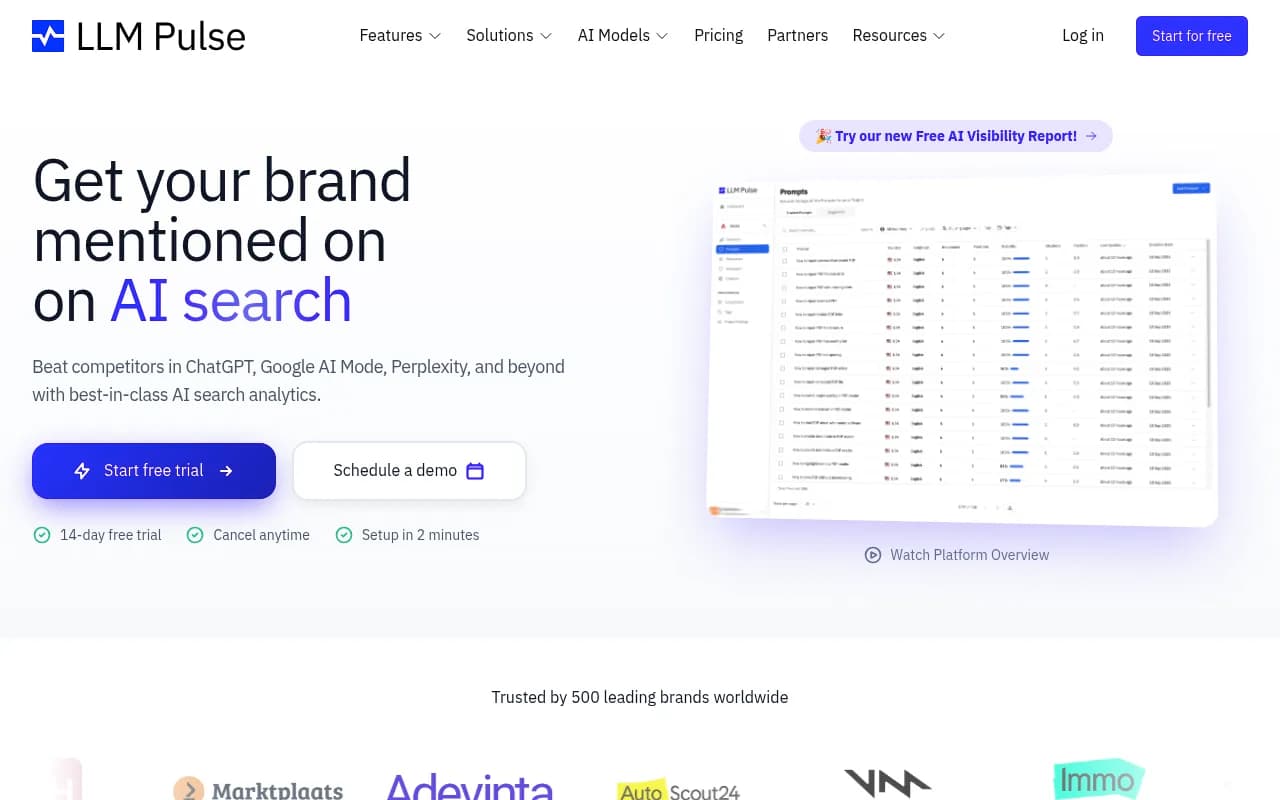
| LLM Pulse | ChatGPT, Perplexity, others | No | No | Varies |
| Rankshift | ChatGPT, Perplexity, AI search | No | No | Varies |
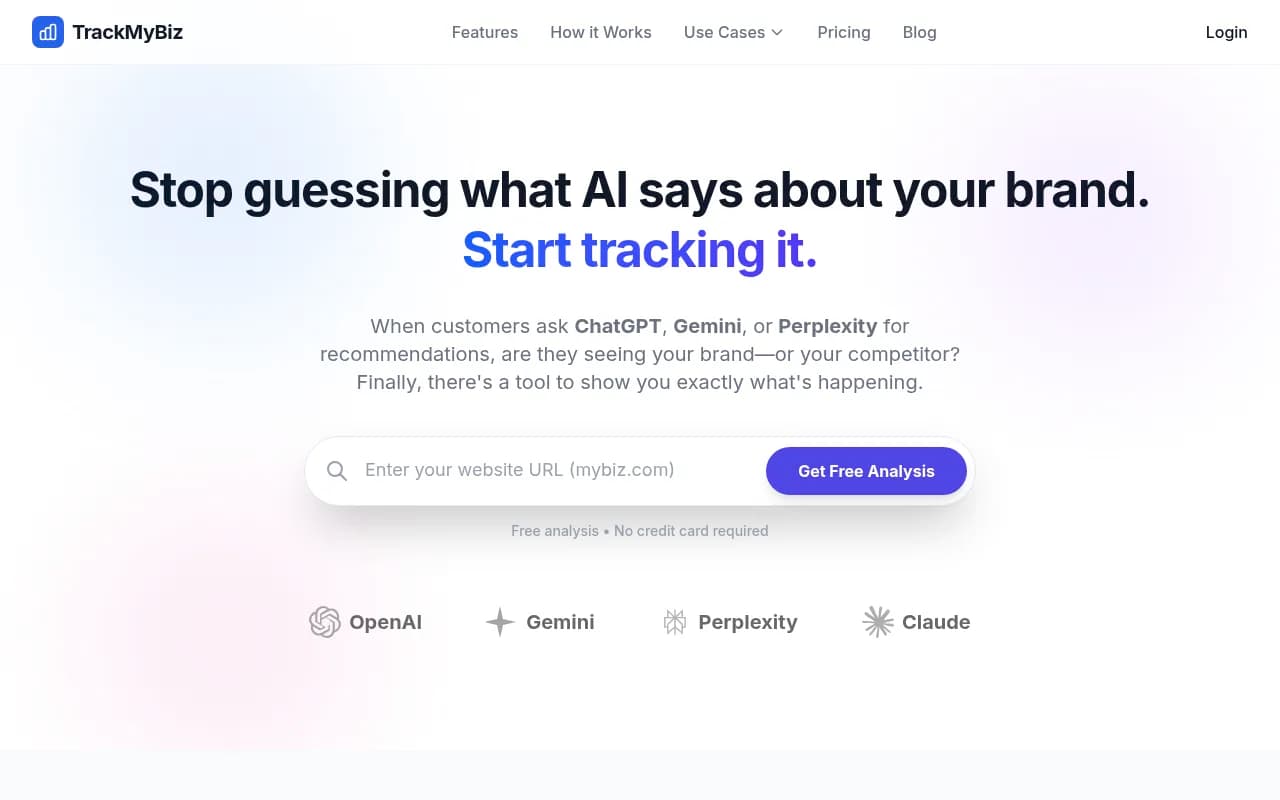
| TrackMyBusiness | ChatGPT, Gemini, Perplexity | No | No | Varies |

The key distinction to understand: most tools in this category are monitoring dashboards. They show you what's happening but leave you to figure out what to do about it. Promptwatch is built differently -- it has an answer gap analysis that shows you which prompts competitors are visible for that you're not, and a built-in content generation tool that creates articles designed to get cited. That full loop (find gaps, create content, track results) is what separates an optimization platform from a tracker.
Otterly.AI


Profound

Step 5: Configure your alert triggers
Once you have a tool running, you need to decide what actually triggers an alert. Not every change in AI responses is worth a notification -- you'll drown in noise if you alert on everything.
Useful alert triggers to set up:
- New competitor mention in a prompt where you previously appeared (displacement alert)
- Your brand disappears from a prompt where you were previously cited
- Sentiment shift -- a response that previously described you positively now includes a caveat or negative framing
- New prompt category where you start appearing (expansion opportunity)
- Factual inaccuracy detected (wrong pricing, outdated product info, incorrect feature claims)
The factual inaccuracy one is underrated. AI models sometimes hallucinate details about brands -- wrong pricing, discontinued features, incorrect founding dates. If ChatGPT is telling users your product costs $X when it actually costs $Y, that's a real problem. Monitoring lets you catch this and take steps to correct it (usually by updating your own content so models have accurate information to draw from).

Step 6: Set up cross-platform tracking in practice
Here's what a working setup looks like for a mid-sized SaaS company:
Prompt library: 40-60 prompts covering category queries, competitor comparisons, use-case queries, and problem-based queries. Organized by funnel stage (awareness vs. consideration vs. decision).
Platform coverage: At minimum, ChatGPT, Claude, Perplexity, and Google AI Overviews. Add Grok and Gemini if your audience skews toward those platforms.
Run frequency: Daily for your highest-priority prompts (the ones with highest search intent). Weekly for the broader set.
Alert routing: Displacement alerts and factual inaccuracies go to the marketing lead immediately. Sentiment shifts go into a weekly review. New appearance opportunities go into the content backlog.
Response protocol: When you get an alert, there's a defined next action. Factual inaccuracy? Update your website content and FAQ pages. Competitor displacement? Run a content gap analysis to understand what they're doing that you're not. New appearance? Document what content seems to be driving it and replicate the pattern.

Ceyo
Step 7: Understand what's driving your visibility (and fix the gaps)
Alerts tell you what's happening. Understanding why requires a bit more digging.
AI models cite brands for a few consistent reasons:
- The brand appears frequently in authoritative third-party content (reviews, comparisons, industry roundups)
- The brand's own website has clear, structured content that directly answers the question
- The brand is mentioned in sources that AI crawlers have indexed (Reddit discussions, YouTube videos, major publications)
- The brand has strong entity recognition -- it appears consistently across many sources, so models "know" it well
If you're not appearing in responses, the most common culprits are: thin content on your own site, low presence in third-party review sites, or simply not being mentioned in the types of sources AI models draw from.
Tools like Promptwatch surface this through citation analysis -- showing you which pages, Reddit threads, and domains are being cited in responses for your target prompts. That tells you where to focus your content and PR efforts.

Step 8: Build a feedback loop, not just a monitoring system
The brands that win in AI search aren't the ones that set up monitoring and check it occasionally. They're the ones that treat AI visibility as an ongoing optimization process.
That means:
- Reviewing your visibility scores weekly and tracking trends over time
- Running content experiments -- publish a new article targeting a specific prompt, then watch whether your visibility for that prompt improves over the following weeks
- Tracking competitor movements and understanding when they gain or lose ground
- Connecting AI visibility to actual traffic and revenue (via UTM parameters, server log analysis, or GSC integration)
The last point is important. AI visibility that doesn't translate to traffic or pipeline isn't worth optimizing for. You want to close the loop between "we appear in ChatGPT for this prompt" and "users who came from AI search convert at X rate."
LLMrefs
Common mistakes to avoid
A few things that trip up teams when they first set up AI monitoring:
Running prompts only once. AI responses vary. A single query isn't representative. Run each prompt multiple times and look at the aggregate -- what percentage of runs include your brand?
Ignoring prompt phrasing variation. "Best CRM tools" and "top CRM software" and "what CRM should I use" can return different results. Your prompt library should cover multiple phrasings of the same intent.
Treating all platforms equally. Your audience might predominantly use Perplexity for research and ChatGPT for recommendations. Know where your customers actually are and weight your monitoring accordingly.
Monitoring without acting. Alerts are useless without a defined response process. Before you set up monitoring, agree on who owns the alerts and what the standard responses are.
Forgetting about AI crawlers. If AI bots can't properly crawl your website, none of the content optimization work matters. Tools with crawler log analysis (Promptwatch has this) can show you whether ChatGPT's GPTBot, Perplexity's PerplexityBot, and others are actually reaching your pages.
Putting it all together
Setting up real-time brand mention alerts across Claude, Perplexity, and ChatGPT is genuinely achievable in 2026 -- the tools exist, the process is clear, and the payoff is real. The brands that get this right early have a meaningful advantage as AI search continues to grow.
Start with a solid prompt library. Add a monitoring tool that covers the platforms your customers use. Configure alerts for the things that actually matter. And build a process for acting on what you find -- because the monitoring is only useful if it drives action.
If you want the full picture -- monitoring, gap analysis, content generation, and traffic attribution in one place -- Promptwatch is the most complete option in the market right now. But even starting with manual spot-checking and a basic tracker is infinitely better than flying blind.