Key takeaways
- There is no "rank" in AI Mode or ChatGPT the way there is on Google. You track mentions, position within an answer, citations, and share of voice instead.
- ChatGPT and Google AI Mode cite very different sources, so one blended score hides what is happening. Look at each platform separately inside one dashboard.
- Track fan-out queries as well as prompts. One prompt does not equal one search.
- Free data from Google Search Console helps, but it does not replace a dedicated tracker that captures the real interfaces.
- Check citation share monthly at minimum. Shares can halve or double within weeks.
Why a traditional rank tracker does not work here
A classic rank tracker asks one question: where does my URL sit in a list of ten blue links? AI Mode and ChatGPT do not produce that list. They write an answer, name a handful of brands, and attach a few sources. Two people asking the same question can get different answers, and the same person can get different answers an hour later.
So the unit of measurement changes. Instead of position 3 for a keyword, you are looking at things like:
- Whether your brand is mentioned at all in the answer
- Where it appears among the brands named (first, fourth, or not at all)
- Whether your own domain is cited as a source
- How the answer describes you (sentiment and claims)
- Your share of all brand mentions versus competitors
One of the research roundups I pulled for this guide puts it bluntly: you cannot track AI Mode visibility with a traditional rank tracker. I agree, with one caveat. Those roundups are mostly written by the vendors they rank, and each puts itself first, so treat any "best tool" list (including this one) with healthy suspicion and test before you commit.
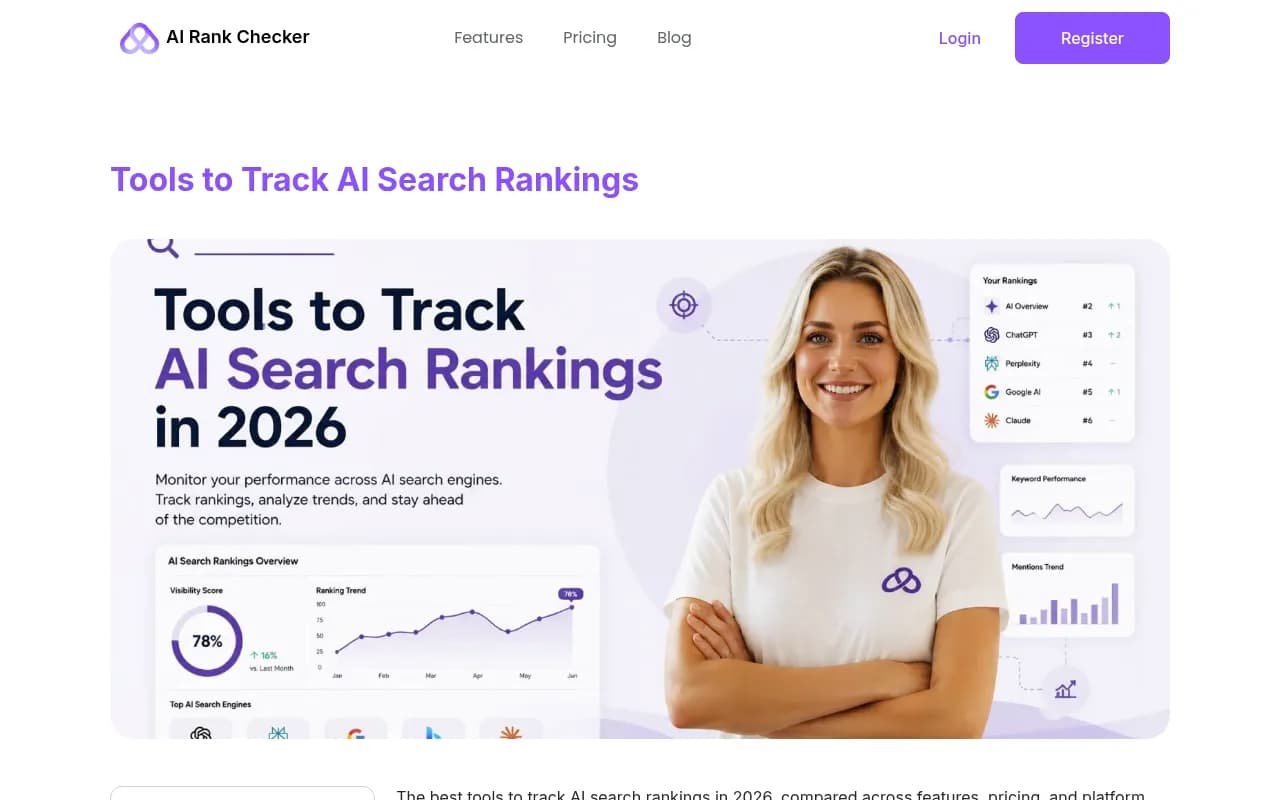
Why you need to see both platforms side by side
Putting ChatGPT and AI Mode in one dashboard is useful. Merging them into one number is not. The data shows why.
According to Promptwatch Data's Google AI Mode citation share report (May 31 to Jun 26, 2026), google.com earned 7.31% of AI Mode citations, more than YouTube (2.88%) and Reddit (2.52%) combined. Google-owned properties together made up over 10%, and no independent website cleared 1%.
Now look at ChatGPT over the same period. In Promptwatch's ChatGPT citation share data for June 2026, Reddit led with 3.71% and Wikipedia was second at 0.56%. No domain exceeded 4%, so citations were spread across a long tail. Google.com was nowhere near the top.
Those are two different games. In AI Mode, Google's own properties (Business Profile, Maps, Merchant Center, YouTube) carry weight. In ChatGPT, third-party pages, forums, and product or documentation pages do. A combined "AI visibility 62%" tells you nothing about which lever to pull.
The sources also move. Promptwatch's data shows Reddit's share of ChatGPT citations falling from about 4% to 0.5% on August 14, 2026. If you built a strategy around Reddit in ChatGPT, that was a bad week. If you were watching a dashboard, you saw it the same day.
What to measure
Pick a small set of metrics and read them together. They point at different problems.
| Metric | What it tells you | If it is low |
|---|---|---|
| Mention rate / visibility | How often you appear in answers | Coverage problem: you are missing from the topic |
| Position in answer | Where you land among named brands | Prominence problem |
| Share of voice | Your slice of all brand mentions | Competitors are winning the category |
| Citation rate (own domain) | How often your pages are linked as sources | Content or crawlability problem |
| Sentiment | How the answer frames you | Reputation problem |
| Citation share by source type | Which sites AI trusts for your topic | Tells you where to earn mentions |
A brand that is mentioned often but never cited has a different fix than a brand that is cited but mentioned late. The first usually needs better pages that AI can read and quote. The second needs stronger positioning and third-party coverage.
Step 1: Build a prompt set that looks like real buyers
The quality of your tracking depends on the prompts. A few rules that have worked well:
- Mix prompt types. Include category questions ("best project management tool for agencies"), comparison prompts ("X vs Y"), and branded prompts ("is X worth it").
- Write them the way a person talks, not the way you search. Conversational prompts behave differently from keywords.
- Cover personas. A CFO and a junior marketer ask differently.
- Fix the country and language per monitor. Mixing markets muddies the numbers.
- Start with 30 to 50 prompts per product line. More is not better if you cannot act on the results.
If you already have Search Console data, mine it for questions. Queries with high impressions and low clicks are often the ones where an AI answer is eating the click.
Step 2: Track the fan-outs, not just the prompts
Here is a detail many dashboards skip. When ChatGPT searches the web, it does not search your prompt. It generates its own queries, called fan-outs, and your page has to match one of those.
Promptwatch's ChatGPT query fanout data shows how unstable this is. The average was 2.15 web searches per response in early December 2025, fell to about 1.84 by early March 2026, and returned in April at 1.0 per response. Average fan-out query length dropped from about 117 characters to around 53. Then on August 8, 2026, ChatGPT began using the site: operator at scale, jumping from about 0.4% to about 17% of fan-out queries, per Promptwatch's site: operator report.
The practical lesson: one tracked prompt does not equal one search, and the pattern changes without warning. Write headings that read like short search queries, put the entity and category first, and re-audit after major ChatGPT updates. Promptwatch also has a free ChatGPT query fan-out generator if you want to see likely fan-outs before you buy anything.
Step 3: Choose how you collect the data
This choice matters more than the logo on the dashboard. Tools collect AI answers in two ways.
- API calls. Cheap and fast, but the answer can differ from what a user actually sees. Citations and shopping results are often missing or different.
- Real interface capture. The tool queries the live ChatGPT or AI Mode interface and records what the user would see, per country.
For ChatGPT and AI Mode specifically, I would insist on real interface capture. The citation behavior you care about only shows up there. Ask any vendor directly which method they use for each platform. Also check whether AI Mode and AI Overviews are tracked separately. One of the roundups I reviewed makes the point that a tool that tracks one does not automatically track the other well, because they need different capture methods.
The free layer: Google Search Console
Google Search Console is worth connecting regardless of what else you use. A community thread I found claims it has provided AI Mode impression data since mid-2025, but I could not verify that against Google's documentation, so check your own property before relying on it. Even if it does, Search Console shows impressions and clicks, not which competitors were named or how you were described. It is the free baseline, not the full picture.
Step 4: Pick a dashboard
Tools that cover both ChatGPT and Google AI Mode in one place are now common. The differences are in depth: whether they capture real interfaces, whether they track fan-outs, and whether they help you act on what they find.
I would put Promptwatch first for teams that want to go beyond looking at numbers. It tracks ChatGPT, Google AI Mode, AI Overviews, Gemini, Perplexity, Copilot and others from the real interfaces in each country and language, then connects the data to action. Citation Trends, query fan-outs, IP-verified AI crawler logs and visitor analytics show whether AI bots read your pages and whether any traffic follows. The Action Board and Content Agent turn gaps into prioritized tasks and published pages. Business is the first plan with the automated Content Agent, tracking every 12, 6 or 1 hours, and local GEO targeting. Pricing starts at $95/month for Essential, and you can confirm current plans at promptwatch.com/pricing. There is a 7-day free trial and a free AI visibility report if you want to test before paying.

If you want to see how it stacks up against specific rivals, the 2026 side-by-side comparison of GEO platforms is the place to start.
Other tools worth testing
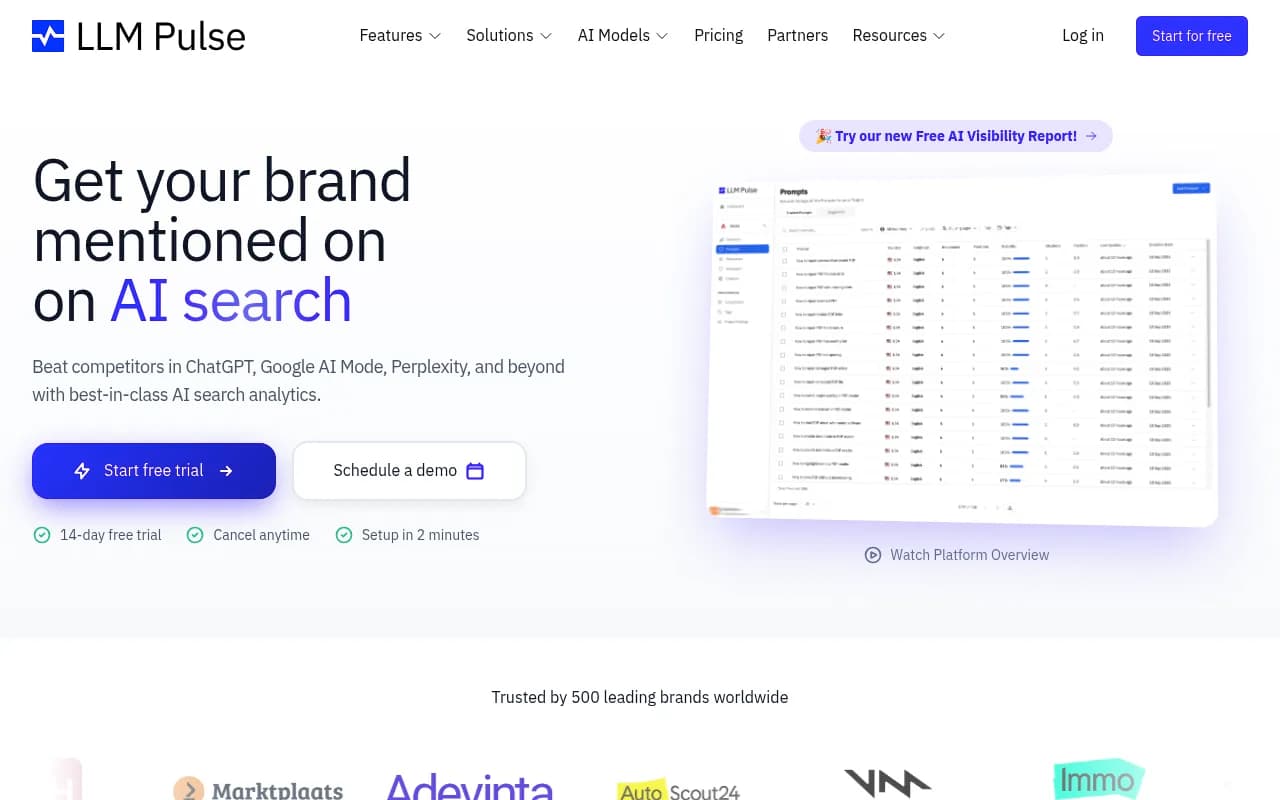
LLM Pulse is a dedicated AI visibility analytics platform that monitors Google AI Mode, ChatGPT, Perplexity, Gemini and AI Overviews from one dashboard, with daily or weekly tracking.
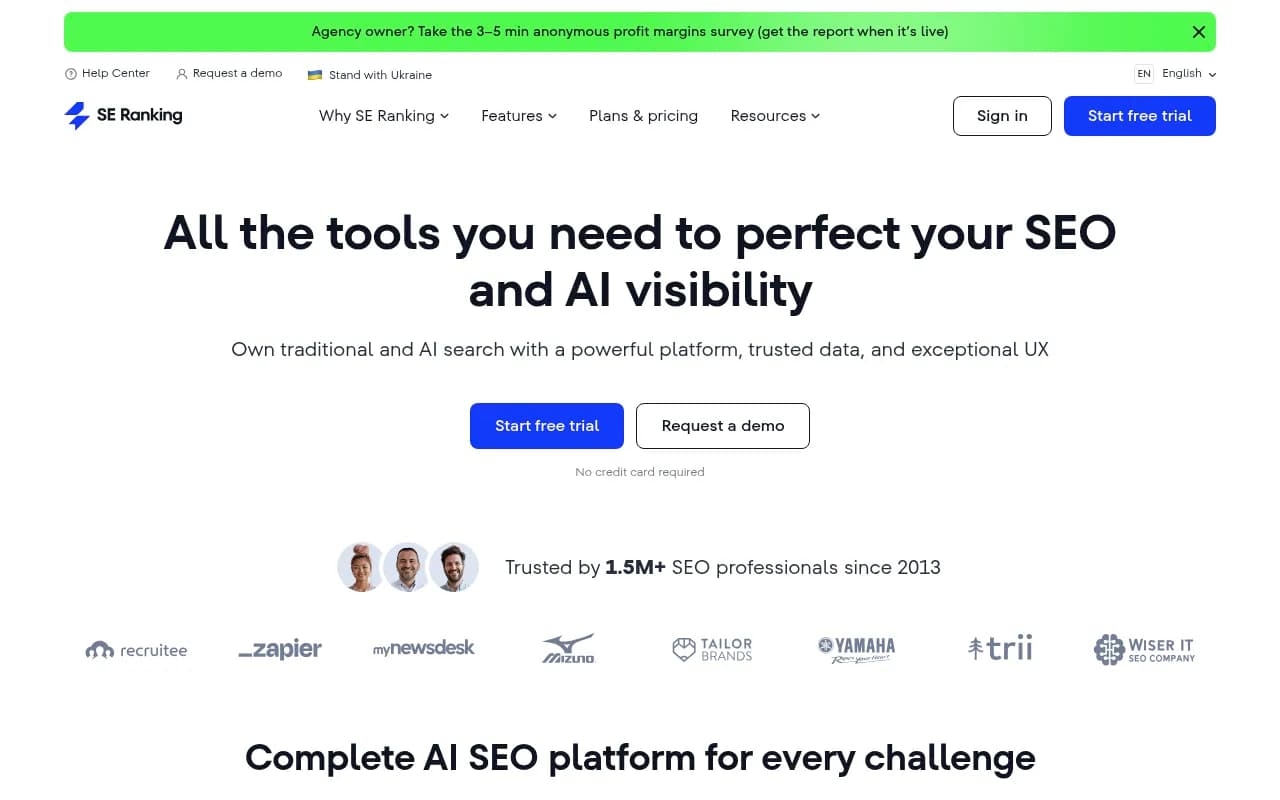
SE Ranking, through its AI add-on, tracks AI Overviews, AI Mode, ChatGPT, Gemini and Perplexity next to classic rank tracking. That is a sensible choice if your team already lives in an SEO suite.
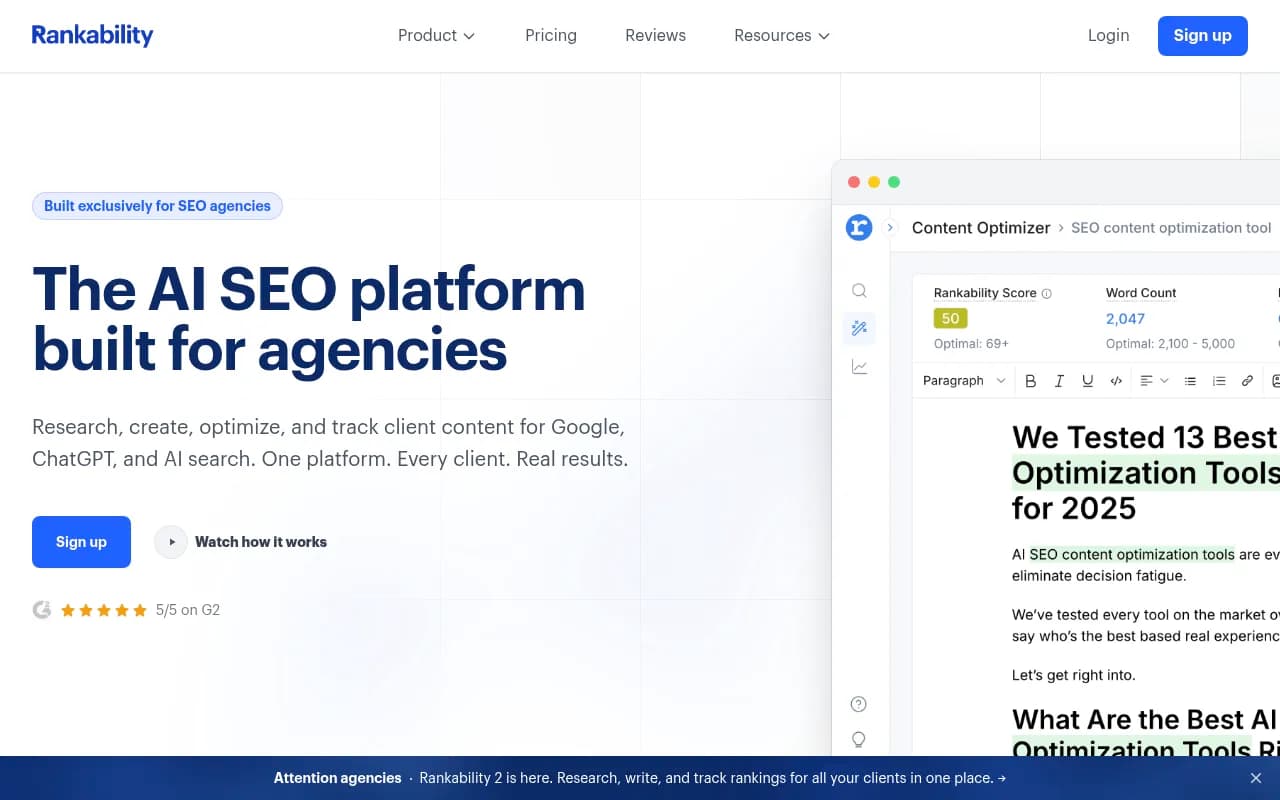
Rankability combines Google and local tracking with AI search tracking, and leans toward agencies.
Nightwatch tracks AI Mode, ChatGPT and Perplexity and is strongest when you also care about precise local or traditional rankings.
Otterly.AI is an easy starting point for citations and sentiment across ChatGPT, Perplexity and AI Overviews.
Otterly.AI

Profound and Scrunch AI sit at the enterprise end, with deep monitoring but, in my read, less emphasis on executing fixes.
Profound

Comparison at a glance
Pricing and coverage change fast, and the figures in vendor-written roundups are unverified, so I have left most prices out. Confirm on each vendor's pricing page.
| Tool | ChatGPT | Google AI Mode | Beyond tracking | Best for |
|---|---|---|---|---|
| Promptwatch | Yes, real UI | Yes, real UI | Content Agent, crawler logs, visitor analytics, Action Board | Teams that want to fix gaps, not just see them |
| LLM Pulse | Yes | Yes | Mostly monitoring | Dedicated AI Mode and ChatGPT dashboards |
| SE Ranking + AI add-on | Yes | Yes | Full SEO suite | Teams wanting classic and AI tracking together |
| Rankability | Yes | Yes | Google and local rank tracking | Agencies |
| Nightwatch | Yes | Yes | Precise traditional and local tracking | Local-focused teams |
| Otterly.AI | Yes | AI Overviews focus | Basic monitoring | Getting started cheaply |
| Profound / Scrunch AI | Yes | Yes | Enterprise monitoring | Large brands with big budgets |
For more options by category, the directories at bestgeosoftware.com and ai-rank-tools.com list a wider set of GEO and AI rank tracking tools.
Step 5: Set a cadence and a baseline
Run a baseline for two weeks before you change anything. AI answers vary, so a single day tells you little. After that:
- Review visibility, position and share of voice weekly.
- Review citation share by domain monthly. Promptwatch's own advice from its June data is to track citation share monthly because shares can halve or double within a month.
- Annotate your dashboard with releases. Promptwatch data shows average citations per ChatGPT response dropped around the GPT-5.3 rollout on March 4, 2026. If you do not note model changes, you will blame your own content for a platform shift.
- Use faster refresh (every 12, 6 or 1 hours, where your tool supports it) only for launches and campaigns. Daily is enough otherwise.
Step 6: Turn the numbers into work
A dashboard that only reports is a to-do list you never open. Use the numbers to drive specific actions per platform.
For ChatGPT
- Look at which content types get cited. Promptwatch Data shows product pages are the most cited type at 22.4% (Sep 28 to Oct 4, 2026), followed by landing pages and listicles.
- Remember content decays. In Promptwatch's half-life study, news lost half its cited pages within 36 days, while landing pages and docs lasted longest. Refresh accordingly.
- Check crawler access. If AI bots cannot read a page, no amount of rewriting helps. Server logs or an AI crawler log tool will show it.
For Google AI Mode
- Fix your Google-owned footprint first: Business Profile, Maps, and Merchant Center data. AI Mode leans on Google's own properties.
- Keep indexing and page quality healthy, since AI Mode draws on Google's index.
- Watch YouTube. It is still a large source, though Promptwatch's data showed its share declining in June 2026.
For both
- Earn mentions on third-party pages that AI already cites for your topic.
- Tighten headings so they read like the fan-out queries the models generate.
- Fix inaccurate claims AI makes about you by finding the page that teaches the wrong thing.
Step 7: Connect visibility to traffic
Mentions are a vanity metric until you can tie them to visits and conversions. Tag AI referrals in your analytics, and be aware that referrer data from ChatGPT is unreliable, so add UTM parameters where you control the link. A platform with built-in visitor analytics saves you stitching this together manually. Promptwatch's guide to attributing AI traffic walks through the setup.
Common mistakes
- Averaging platforms. A blended score hides platform-specific problems.
- Tracking too few prompts. Ten prompts will swing wildly day to day.
- Trusting API-only data. It can diverge from what users see.
- Ignoring AI Overviews versus AI Mode. They are different surfaces and need separate tracking.
- Reading one week as a trend. Wait for a few weeks of data.
- Choosing on the vendor's own listicle. Run a free trial with your actual prompts.
A simple setup you can finish this week
- Connect Google Search Console and mine it for 40 prompt ideas.
- Create two monitors (ChatGPT and AI Mode) per country, with the same prompt set.
- Trial one or two tools with your real prompts and compare answers against what you see by hand.
- Record a two-week baseline for visibility, position, share of voice and citation rate.
- Pick the three biggest gaps and ship fixes. Re-measure in a month.
If you would rather hand the whole program to specialists, 1001 SEO Media runs GEO and technical SEO engagements and uses Promptwatch for AI visibility tracking.
Bottom line
Tracking AI Mode and ChatGPT together is mostly a discipline problem, not a tooling one. Use real-interface data, keep the platforms separate inside one view, track fan-outs, and review citation share on a fixed schedule. The sources AI trusts change month to month, so the dashboard is worth only what you do with it.