Key takeaways
- Google AI Overviews now appear on over 50% of U.S. searches, and when they do, the top organic result loses roughly 58% of its clicks
- Answer gap analysis finds the specific questions AI Overviews are answering that your content doesn't cover -- these are your fastest citation opportunities
- Brands cited in AI Overviews earn 35% more clicks than those that aren't, and AI Overview traffic converts at 5x the rate of traditional organic
- Branded mentions across the web correlate with AI Overview visibility more than backlinks or domain rating, according to Ahrefs research
- Tools like Promptwatch automate the gap-finding and content-creation cycle so you're not doing this manually for every query
Something changed in search last year, and most teams are still catching up. Google AI Overviews went from appearing on roughly 6% of searches in early 2025 to over 50% by the end of the year. That's not a gradual shift -- it's a near-complete restructuring of how the top of the search results page works.
The uncomfortable math: when an AI Overview appears, the top organic result loses around 58% of its clicks. You can rank #1 and still get almost nothing. Your traffic analytics look fine, your rankings look fine, and meanwhile Google is answering your target queries from someone else's content.
Answer gap analysis is how you find out where that's happening -- and fix it.
What answer gap analysis actually is
The core idea is simple. An AI Overview pulls from specific content to answer a query. If your content doesn't cover the right angle, the right depth, or the right sub-questions, Google won't cite you -- even if you rank well for the main keyword.
Answer gap analysis compares what AI Overviews are saying against what your content actually covers. The gaps are the topics, questions, and angles that AI models want to cite but can't find on your site.
This is different from a traditional content gap analysis. Traditional gap analysis asks "what keywords am I missing?" Answer gap analysis asks "what specific answers is Google pulling from competitors that my content doesn't provide?"
The distinction matters because 46.5% of URLs cited in AI Overviews rank outside the top 50 for that keyword. Google isn't just pulling from the top-ranking pages -- it's pulling from pages that answer specific sub-questions well, regardless of their overall ranking position.
Why manual gap analysis breaks down fast
The manual version of this works like this: search for a query, read the AI Overview, compare it to your existing content, note what's missing, repeat for the next query.
For one or two queries, it's fine. For a site targeting hundreds of informational queries, it's not sustainable. Each AI Overview can contain five to ten distinct claims, each potentially sourced from a different page. Doing this at scale without tooling means you're spending days on analysis before you write a single word.
There's also a consistency problem. AI Overviews change. The same query can produce different overviews depending on location, device, and how Google's models are updated. A snapshot you took last Tuesday might not reflect what's showing today.
The practical answer is to build a more systematic process -- either with custom tooling or with platforms designed for this.
The step-by-step gap analysis process
Step 1: Build your target query list
Start with the informational queries most relevant to your business. These are the queries where AI Overviews are most likely to appear -- "what is X," "how does X work," "best X for Y," "X vs Y" comparisons, and definition-style queries.
A few sources for building this list:
- Google Search Console: filter for queries with impressions but low CTR -- these are often queries where an AI Overview is intercepting clicks
- "People Also Ask" boxes for your core topics
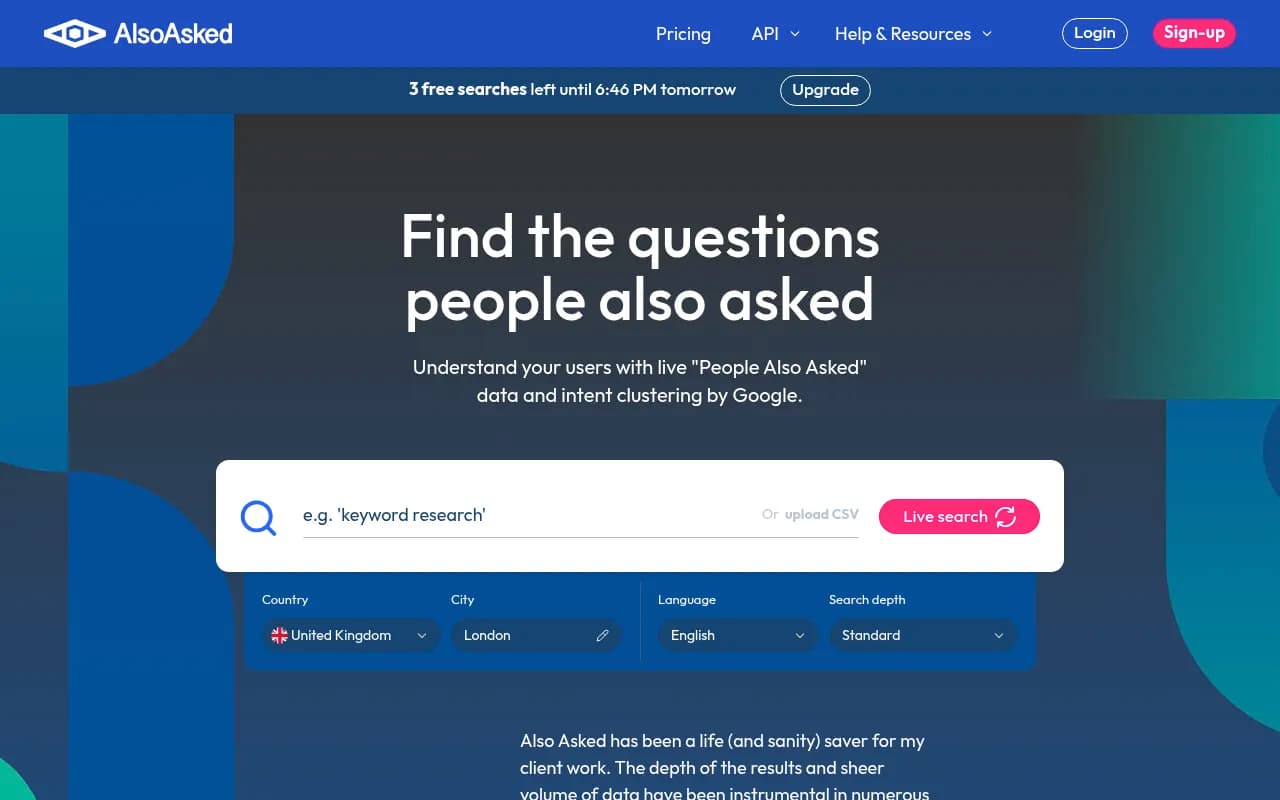
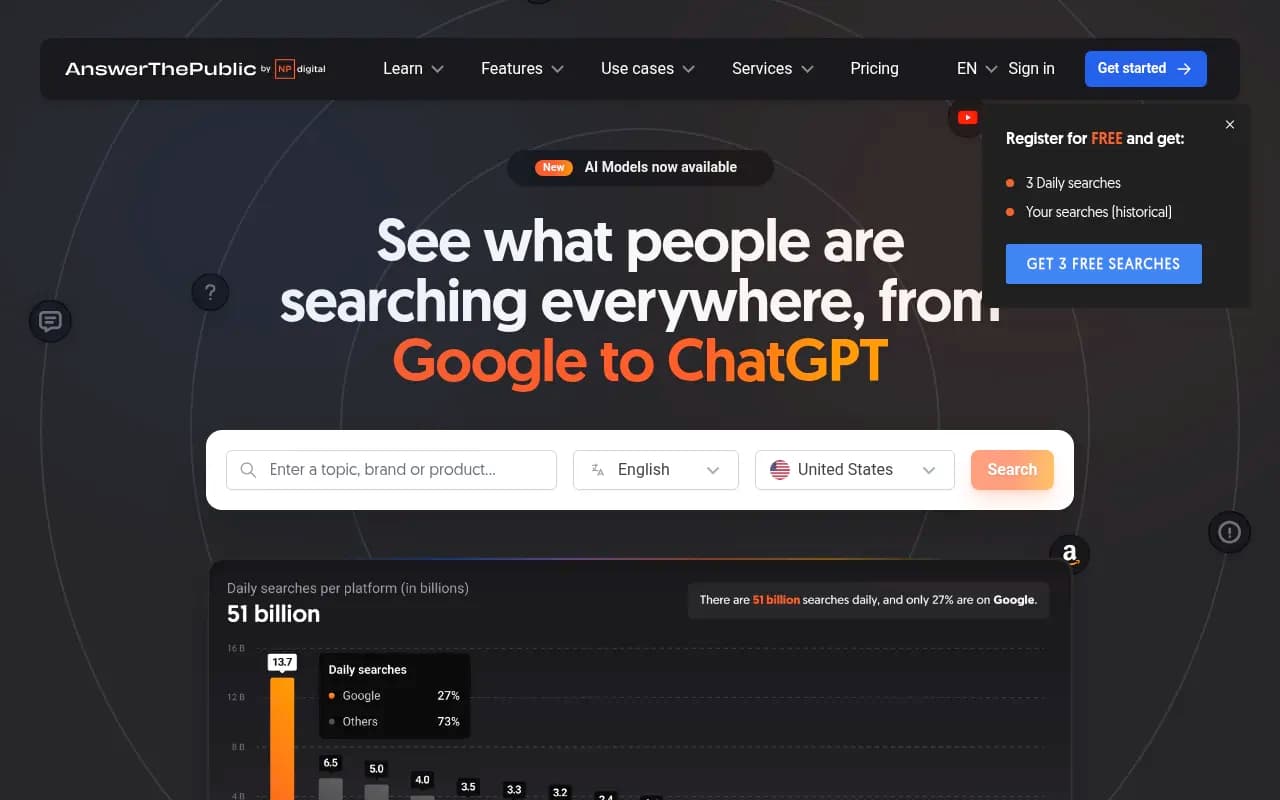
- Tools like AlsoAsked or AnswerThePublic to surface the question variants around each topic
Prioritize queries where you already have content but suspect you're not being cited. These are your quickest wins -- you're updating existing pages rather than creating from scratch.
Step 2: Audit what the AI Overview actually says
For each target query, pull the full AI Overview text. Don't just skim it -- read every claim, every sub-point, every example. Note:
- What specific claims does it make?
- What sub-questions does it answer?
- What format does it use (steps, definitions, comparisons, pros/cons)?
- Which sources does it cite?
The cited sources are particularly valuable. If the same domain appears repeatedly across multiple AI Overviews in your space, that site has figured out something about how to structure content that Google's AI wants to pull from.
Step 3: Map the gaps in your content
Now compare the AI Overview against your existing content on that topic. For each claim or sub-question in the AI Overview, ask: does my content address this directly?
Common gaps you'll find:
- Missing sub-questions: your article covers the main topic but skips specific questions the AI Overview answers
- Shallow coverage: you mention something but don't explain it with enough depth for Google to confidently cite it
- Wrong format: your content has the information but it's buried in paragraphs when the AI Overview wants a numbered list or clear definition
- Missing data: the AI Overview cites a statistic or study your content doesn't reference
- Outdated information: your content covers an older version of something the AI Overview is answering with current data
Step 4: Prioritize by citation opportunity
Not all gaps are equal. Before you start writing, score each gap by two factors: how often the query appears (volume) and how achievable the citation looks based on who's currently being cited.
Queries where the cited sources are generic or thin are better opportunities than queries where Google is citing authoritative research papers or government sites. You can realistically displace a mid-tier blog post; displacing the CDC is harder.
Ahrefs' research found that 71% of AI Overview keywords have a difficulty below 30, and you need roughly 3x fewer backlinks to rank in answer engines compared to traditional search. The barrier to entry is lower than most teams assume.
Step 5: Update or create content to close the gaps
This is where the analysis turns into action. For each gap, you have two options:
- Update an existing page to add the missing sub-questions, depth, or format
- Create a new page specifically targeting the query and its sub-questions
Updates are usually faster and carry the advantage of existing authority. If your page already ranks in the top 20 for a query, adding the missing content often gets you cited within a few weeks.
When creating new content, structure it explicitly around the sub-questions the AI Overview is answering. Use clear headings for each sub-question, answer directly before elaborating, and include any statistics or data points that the AI Overview referenced.
What makes content citable by AI Overviews
Beyond closing specific gaps, there are structural patterns that make content more likely to get pulled into AI Overviews.
Direct answers first
AI Overviews favor content that answers the question in the first sentence or two, then elaborates. The "inverted pyramid" style -- answer first, context second -- is more citable than content that builds up to the answer.
Structured sub-questions
If your article covers a topic that has five common sub-questions, use headings for each one and answer them directly. Google's AI can pull individual sections from a page, so each well-structured section is a potential citation opportunity.
Schema markup
FAQ schema and HowTo schema help Google understand the question-answer structure of your content. They're not a guarantee of AI Overview inclusion, but they make it easier for Google to parse what your content is answering.
Specificity and data
Vague claims don't get cited. Specific claims with supporting data do. If you can add a statistic, a concrete example, or a named study to a claim, do it. AI Overviews tend to pull from content that sounds authoritative and specific.
Branded mentions across the web
This one surprised a lot of SEOs. Ahrefs' research found that branded mentions correlate with AI Overview visibility more strongly than backlinks, referring domains, or domain rating. If your brand is mentioned across relevant forums, review sites, YouTube videos, and comparison pages, Google's AI is more likely to treat you as an authoritative source.
This means getting your product reviewed, added to comparison lists, and discussed in relevant communities isn't just a brand awareness play -- it directly affects your AI Overview citation rate.
Tools that help automate this process
Doing gap analysis manually for 50+ queries is a lot of work. Several tools can help different parts of the process.
For tracking which queries trigger AI Overviews and monitoring your citation status, platforms built for AI search visibility are the most direct fit. Promptwatch goes a step further than most -- its Answer Gap Analysis feature shows you exactly which prompts competitors are being cited for that you're not, then its built-in AI writing agent can generate content specifically engineered to close those gaps. It's one of the few tools that connects the monitoring side to the content creation side in one workflow.

For broader SEO research and finding query opportunities, Ahrefs and Semrush both have useful data on AI Overview appearances and keyword difficulty.
For content optimization once you know what to write, tools like Clearscope and MarketMuse help you make sure your content covers the right topics at the right depth.

For surfacing the specific questions people are asking around a topic, AlsoAsked and AnswerThePublic remain useful for building out the sub-question map before you write.
Tracking whether it's working
Gap analysis without measurement is just guesswork. Once you've updated or created content to close gaps, you need to track whether you're actually getting cited.
The signals to watch:
- Direct AI Overview citations: are your pages appearing as sources in AI Overviews for your target queries?
- Impressions in Google Search Console: AI Overview impressions show up separately from traditional organic impressions in GSC
- Traffic from AI sources: look for referral traffic from Google's AI features in your analytics
- Branded search volume: as your AI Overview citations increase, branded search often follows
The feedback loop matters here. Content that gets cited in AI Overviews tends to accumulate more branded mentions, which increases future citation probability. Getting the first few citations is the hardest part -- after that, the process compounds.
A realistic timeline
Most teams want to know how long this takes. The honest answer: it depends on how competitive your space is and how much content you already have.
For queries where you have existing content that just needs updating, you can often see citation improvements within two to four weeks of publishing changes. Google's AI crawlers are active, and updated content gets re-evaluated relatively quickly.
For new content targeting queries where you have no existing pages, expect four to eight weeks before you see consistent citation. New pages need time to accumulate signals before Google's AI treats them as authoritative sources.
The fastest wins are almost always existing pages with clear, fixable gaps -- a missing sub-question, a missing statistic, a format that needs restructuring. Start there.
Comparison: manual vs. tool-assisted gap analysis
| Approach | Time per query | Scale | Freshness | Best for |
|---|---|---|---|---|
| Manual (search + compare) | 20-40 min | Low (10-20 queries) | Snapshot only | One-off audits |
| ChatGPT-assisted | 10-15 min | Medium (50-100 queries) | Snapshot only | Teams with some automation skills |
| Dedicated GEO platform | 1-2 min | High (500+ queries) | Continuous monitoring | Ongoing optimization programs |
| Traditional SEO tools (Semrush, Ahrefs) | 5-10 min | Medium-high | Weekly updates | Teams already in these platforms |
The right approach depends on how many queries you're targeting and how frequently you want to update your analysis. For most marketing teams running a serious AI search optimization program, some combination of tooling and manual review makes sense -- tools for scale and monitoring, manual review for the highest-priority queries where you want to go deep.
The bigger picture
AI Overviews aren't going away. Google has committed to expanding them, and the data suggests they're now appearing on more than half of all searches. The brands that figure out how to get cited consistently will have a structural advantage in organic visibility that compounds over time.
Answer gap analysis is the most direct path to that outcome. It tells you exactly what's missing from your content, in a format you can act on immediately. The analysis is only useful if it leads to content changes -- so the goal isn't a perfect audit document, it's a prioritized list of updates you can actually ship.
Start with your ten most important informational queries. Pull the AI Overviews, map the gaps, update the content. Then track what happens. That cycle, repeated consistently, is what moves the needle.