Key takeaways
- Jasper is an AI writing platform built for marketing teams that need to produce content at scale — it's not an SEO or GEO tool.
- Clearscope is a content optimization tool focused on traditional SEO signals like keyword coverage and readability — it has no AI search tracking.
- Promptwatch is a full GEO platform that tracks how your brand appears in ChatGPT, Perplexity, Google AI Overviews, and 8 other AI engines, identifies content gaps, generates AI-optimized content, and ties visibility back to revenue.
- These three tools serve different stages of the content workflow. Many teams end up needing more than one — but if AI search visibility is your goal, only one of them actually addresses it.
These three tools get compared a lot, usually by teams trying to figure out where their content budget should go. The confusion is understandable: all three touch "content" in some way. But they're solving completely different problems.
Jasper writes content. Clearscope tells you how to optimize it for Google. Promptwatch tells you whether AI search engines are actually citing you — and helps you fix it when they're not.
That's not a subtle difference. It's the difference between production, optimization, and visibility. Let's break down what each tool actually does, where it falls short, and how to think about which one (or which combination) you actually need in 2026.
What each tool is actually built for
Jasper: AI writing at marketing scale
Jasper started as an AI copywriting tool and has grown into a full marketing platform with agents, content pipelines, and brand voice controls. In 2026, it's aimed squarely at marketing teams that need to produce a lot of content — blog posts, social copy, email sequences, ad creative — without hiring a small army of writers.
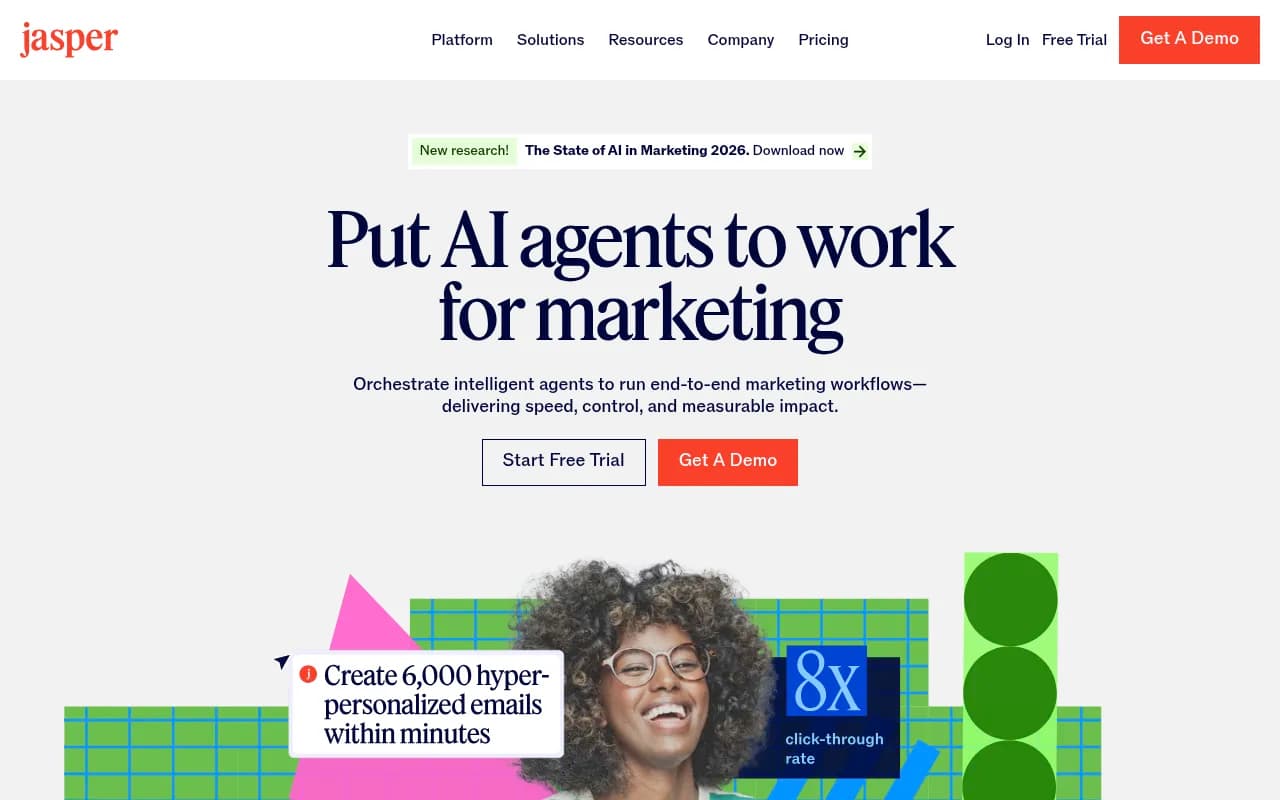
The core value proposition is speed and consistency. You set up your brand voice, connect your knowledge base, and Jasper generates drafts that sound like your company. It integrates with tools like Google Docs, HubSpot, and various CMS platforms. The agent features can handle multi-step workflows: research a topic, draft an outline, write the article, suggest a meta description.
What Jasper doesn't do: tell you whether the content you're creating will appear in AI search results. It has no prompt tracking, no citation analysis, no visibility scoring. You can write a hundred articles with Jasper and have no idea whether ChatGPT or Perplexity is citing any of them. That's not a criticism — it's just not what the tool is for.
Clearscope: content optimization for traditional SEO
Clearscope is a content optimization platform that analyzes top-ranking Google results for a given keyword and tells you what topics, terms, and questions your content should cover to compete. It grades your content in real time as you write, flagging gaps and suggesting related terms.

It's well-regarded in SEO circles for a reason: the NLP-driven recommendations are genuinely useful for improving topical coverage, and the workflow integrations (Google Docs, WordPress) make it easy to use during the writing process rather than as a post-publish afterthought.
But Clearscope's entire model is built around Google's traditional search algorithm. It looks at what ranks in blue-link results and reverse-engineers the content signals. It has no concept of AI search visibility, no prompt monitoring, no citation tracking, and no way to tell you whether your content is being surfaced in ChatGPT, Perplexity, or Google AI Overviews. According to Wellows' 2026 review of content optimization tools, "Clearscope is focused on content optimization only. It does not offer site audits, AI search tracking, GEO scoring, or cannibalization detection."
That's fine if traditional SEO is your primary channel. But if a growing share of your audience is finding answers through AI search — and the data increasingly suggests they are — Clearscope doesn't help you there.
Promptwatch: GEO platform with content built in
Promptwatch is a different category of tool entirely. It's built around the question: "When someone asks an AI search engine about my industry, does my brand show up?"

The platform tracks how your brand appears across 10 AI models — ChatGPT, Perplexity, Google AI Overviews, Google AI Mode, Claude, Gemini, Grok, DeepSeek, Copilot, and Mistral. It monitors which prompts trigger your brand mentions, which pages are being cited, and how your visibility compares to competitors. It also logs AI crawler activity in real time, so you can see when GPTBot or ClaudeBot visits your site, which pages they read, and whether those visits lead to citations.
The part that separates it from monitoring-only tools is the action loop. When Promptwatch identifies a gap — a prompt your competitors are visible for but you're not — it can generate content designed to close that gap. Content Agents produce articles, listicles, and comparisons grounded in real prompt data, citation patterns, and competitor analysis. Then you track whether the new content gets cited.
That full cycle (find gaps → create content → track results) is what makes it a GEO platform rather than just a tracker.
Feature-by-feature comparison
| Feature | Jasper | Clearscope | Promptwatch |
|---|---|---|---|
| AI content generation | Yes (core feature) | No | Yes (Content Agents) |
| Traditional SEO optimization | No | Yes (core feature) | Partial |
| AI search visibility tracking | No | No | Yes (10 AI models) |
| Prompt monitoring | No | No | Yes |
| Citation analysis | No | No | Yes |
| AI crawler logs | No | No | Yes |
| Content gap analysis | No | No | Yes |
| Competitor visibility heatmaps | No | No | Yes |
| Reddit/YouTube insights | No | No | Yes |
| ChatGPT Shopping tracking | No | No | Yes |
| Traffic attribution to AI | No | No | Yes |
| Brand voice controls | Yes | No | Partial |
| Google Docs integration | Yes | Yes | No |
| Pricing (starting) | ~$49/mo | ~$189/mo | $99/mo |
Where each tool genuinely shines
Jasper is the right choice when...
Your main bottleneck is content production volume. If you have a solid SEO strategy, a content calendar, and a team that knows what to write — but not enough hands to write it all — Jasper fills that gap well. The brand voice consistency is real, and the agent workflows can meaningfully reduce the time from brief to draft.
It's also a reasonable choice for teams producing lots of short-form content: social posts, email sequences, ad variations. The speed advantage is most pronounced for high-volume, lower-stakes copy.
Where it struggles: Jasper doesn't know what to write. It can write whatever you tell it to, but it has no insight into what prompts AI search engines are responding to, what your competitors are being cited for, or what content gaps are costing you visibility. You still need a strategy layer on top.
Clearscope is the right choice when...
You're competing seriously in traditional Google search and need to improve topical coverage and content quality. If your team writes content manually (or with AI assistance) and wants real-time feedback on whether a piece covers the right ground, Clearscope's grading system is genuinely useful.
It's particularly good for teams with existing content that needs refreshing. Running older articles through Clearscope to identify missing topics is a legitimate workflow that can recover rankings without starting from scratch.
Where it struggles: if your audience is increasingly finding you through AI search, Clearscope gives you no signal on that. Optimizing for Google's traditional algorithm and optimizing for AI citation likelihood are related but not identical tasks. Clearscope only helps with one of them.
Promptwatch is the right choice when...
You want to understand and improve how your brand appears in AI search. That includes knowing which prompts trigger competitor mentions but not yours, seeing which pages AI models are actually citing, understanding why you're being recommended (or not), and generating content specifically designed to improve citation rates.
It's the right tool for marketing teams that have noticed AI-referred traffic in their analytics and want to grow it systematically, or for brands that know their customers are using ChatGPT and Perplexity to research purchases and want to show up in those conversations.
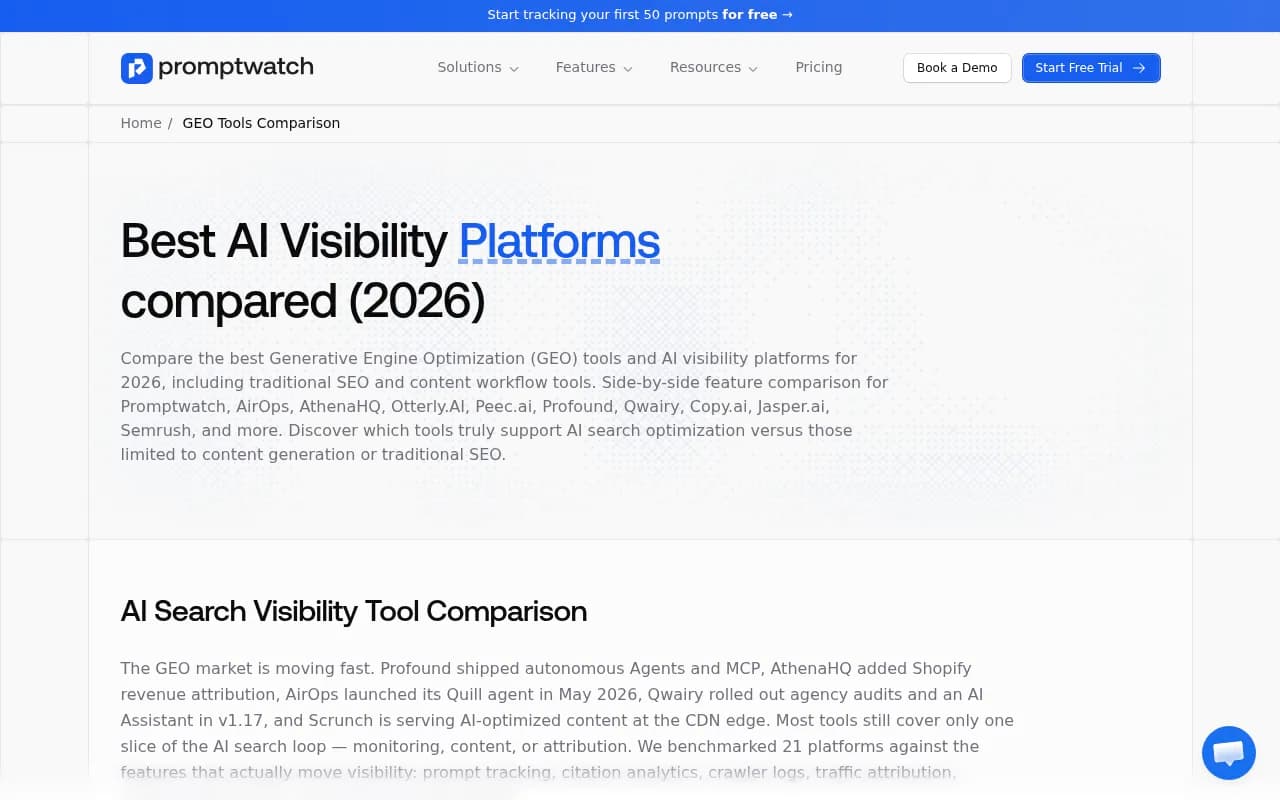
It's also the right tool for agencies managing multiple client brands across AI search — the multi-site support, white-label reporting, and Looker Studio integration are built for that use case.
The workflow question: do you need all three?
This is where it gets practical. These tools don't directly compete — they address different stages of the content workflow.
A realistic stack for a mid-size marketing team in 2026 might look like:
- Promptwatch to identify which prompts and topics matter for AI search visibility, and to track results
- Jasper (or another AI writer) to produce content at scale
- Clearscope to optimize that content for traditional Google search before publishing
That's not a cheap stack, and it's worth being honest about the overlap. Promptwatch's Content Agents generate content directly from prompt data, which reduces the need for a separate AI writing tool if your primary goal is AI search visibility. If you're mainly writing for traditional SEO and using AI to speed up production, Jasper + Clearscope makes more sense.
The question to ask yourself: what percentage of your target audience is finding information through AI search engines right now, and what percentage do you expect in 12 months? If the answer is "significant and growing," you need a GEO platform. If it's still mostly traditional search, Clearscope's optimization model still applies.
Pricing reality check
Jasper's pricing starts around $49/month for individuals and scales up for teams with more seats and features. It's not cheap for what you get at the lower tiers, and the enterprise plans can get expensive quickly.
Clearscope starts at $189/month, which is a lot for a single-purpose optimization tool. It's defensible if you're publishing frequently and the content quality improvements translate to ranking gains, but it's a hard sell for smaller teams.
Promptwatch starts at $99/month for the Essential plan (1 site, 50 prompts, 5 articles), with Professional at $249/month (2 sites, 150 prompts, 15 articles, crawler logs) and Business at $579/month (5 sites, 350 prompts, 30 articles). A free trial is available.
Given that Promptwatch includes content generation in the platform, teams whose primary goal is AI visibility can potentially replace both a separate AI writer and a monitoring tool with a single subscription.
What the broader GEO landscape looks like
It's worth noting that Jasper and Clearscope aren't the only alternatives to consider when thinking about AI search visibility. The GEO tool market has expanded significantly in 2026.
Tools like Profound and AthenaHQ offer monitoring-focused approaches with strong enterprise features. Otterly.AI and Peec AI are lighter-weight tracking tools that work well for teams just getting started with AI visibility monitoring. Surfer SEO and MarketMuse occupy a similar space to Clearscope for traditional content optimization.
Profound

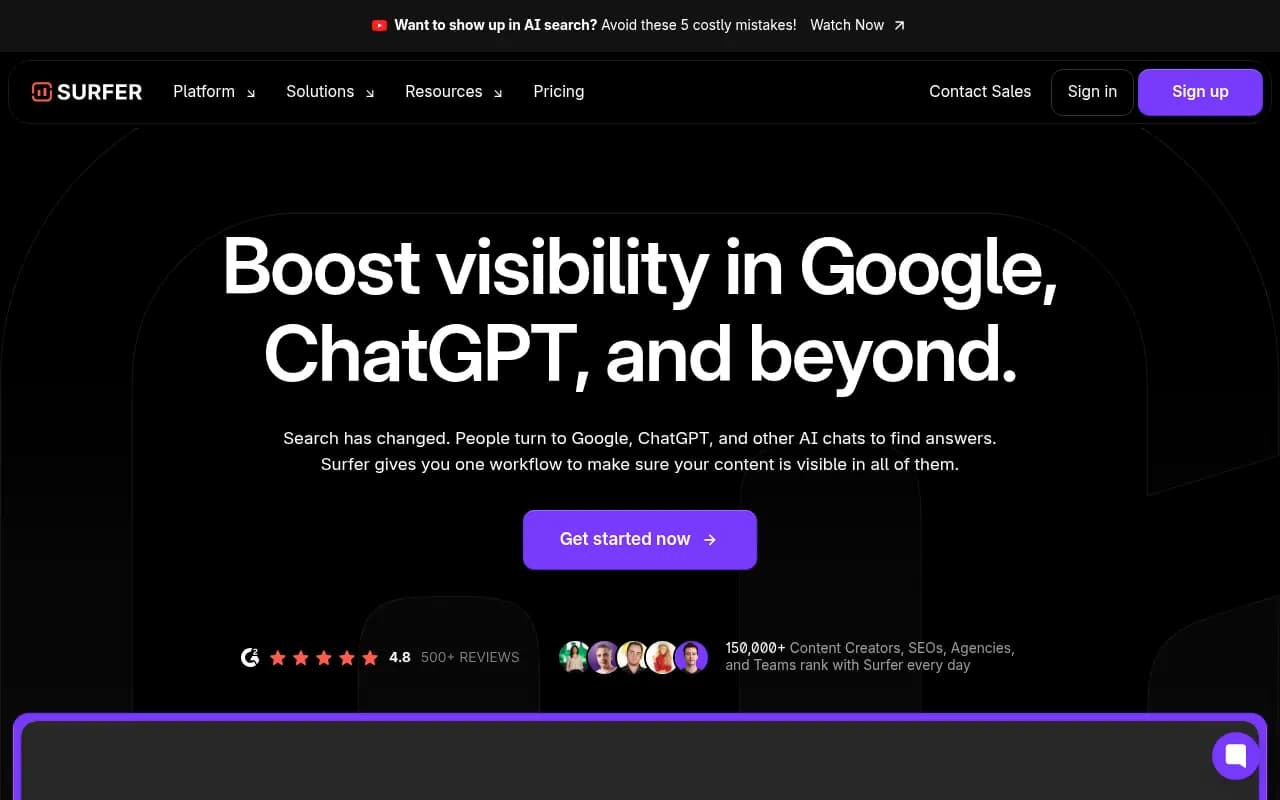
The key distinction across all of these is whether the tool helps you take action or just shows you data. Most monitoring tools stop at the dashboard. Promptwatch's differentiation is the full loop from gap identification to content creation to citation tracking.
The honest bottom line
If you need to write more content faster: Jasper is a solid choice.
If you need to optimize existing content for Google: Clearscope does that well.
If you need to understand and improve how your brand appears when people ask AI search engines questions about your industry: neither of those tools helps you, and you need something built for GEO.
The market has moved fast enough that "AI writing tool" and "AI visibility platform" are now genuinely different categories. Conflating them leads to spending money on tools that don't address the actual problem.
For most marketing teams in 2026, the practical question isn't Jasper vs Clearscope vs Promptwatch. It's: which of these problems am I actually trying to solve? Start there, and the tool choice becomes straightforward.