Key takeaways
- Local discovery has moved into AI assistants fast. In BrightLocal's Local Consumer Review Survey 2026 (1,002 US adults, February 2026 release), 45% of consumers said they used AI tools like ChatGPT to find local business recommendations, up from 6% a year earlier.
- The engines disagree. In Searchable's data, ChatGPT and Gemini agreed on only about a quarter to a third of the local service businesses they recommended for the same questions.
- Ranking in the map pack and being recommended by AI are different scoreboards. SOCi's 2026 Local Visibility Index found them up to 30x apart depending on category.
- ChatGPT now has a Yelp deal (announced July 23, 2026), and Alexa+ has Angi and Yelp integrations, so third-party listings matter more than they did a year ago.
- You need to test each engine separately, because there is no single "AI local ranking" to optimize for.
Why 'near me' is no longer just a Google Maps problem
For about fifteen years, local SEO had a clean mental model. Get into the map pack, collect reviews, keep your name, address and phone number consistent. If you did that, the phone rang.
That model still works for simple searches like "plumber Leeds." But the research customers do before they pick up the phone is moving into assistants. People ask ChatGPT which dentist takes emergency appointments. They ask Google's AI Mode for the best pizza within ten minutes. They ask Alexa, out loud, in the kitchen.
The numbers are big enough to take seriously. BrightLocal's 2026 survey put ChatGPT at 31% of consumers using it for local recommendations, with Google's AI Mode at 23%. A year ago the AI figure was 6%. Google says AI Mode has passed a billion monthly active users and that queries have more than doubled every quarter since launch, with the average AI Mode search about triple the length of a traditional one. Longer queries are exactly what local intent looks like when people stop typing keywords and start describing a situation: "quiet cafe near the station with outlets that's open until 9."
One more data point that matters for "near me" specifically: Seer Interactive found informational near me queries showed an AI Overview 76.9% of the time (April 2026). So even on classic Google, the AI layer sits on top of most local research queries.
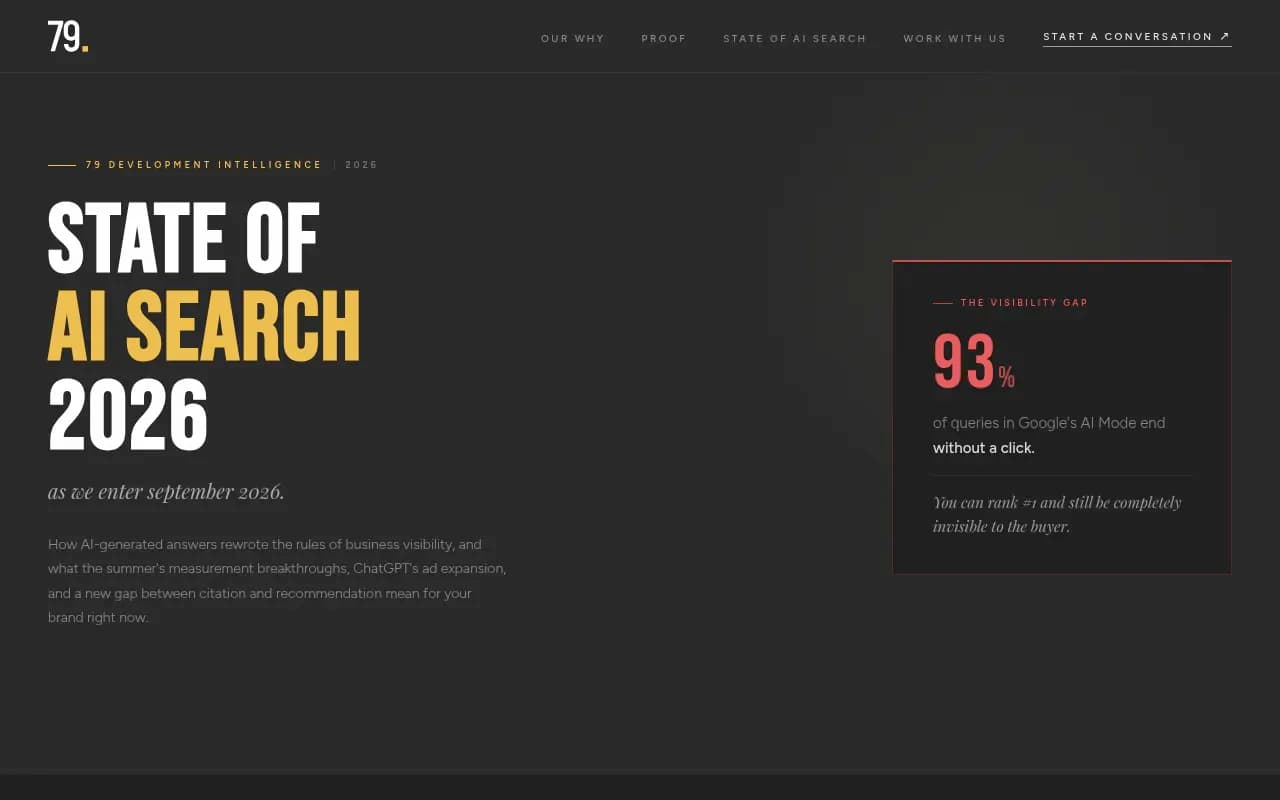
The same 79 Development report quotes a 93% zero-click rate in AI Mode. Treat that as a signal that the answer is the product now. If you are not named in it, the customer may never visit a site where you could have won them back.
How the three engines handle local queries
Here is the honest part first. None of these companies publishes a formula for how AI answers rank local businesses. Anyone guaranteeing you a spot is guessing. What we can do is describe where each engine reportedly pulls its raw material, and flag where the evidence is thin.
| Platform | What it is | Where local data comes from | What you can control |
|---|---|---|---|
| ChatGPT | OpenAI's assistant with web search | Web sources plus licensed data, including Yelp since the July 2026 deal | Yelp listing, website, press and third-party mentions, reviews |
| Google AI Mode / AI Overviews | Google's AI answer layers on top of Search | Google's places data and reviews, plus the indexed web | Google Business Profile, reviews, website content |
| Alexa+ | Amazon's voice assistant | Reported integrations with Angi and Yelp (announced December 2025) | Angi and Yelp profiles, plus the basics of listing accuracy |
Treat the Alexa row with some caution. I could not verify how Alexa+ sources its near me answers from a primary Amazon document. The Angi and Yelp integrations come from industry write-ups of the December 2025 announcement, so confirm against Amazon before you rebuild a strategy around it.
ChatGPT: weak spot, now with Yelp
Local recommendations were a weak area for ChatGPT for a long time. That changed on July 23, 2026, when OpenAI and Yelp announced a non-exclusive deal bringing Yelp reviews, ratings, photos and business information into ChatGPT's local answers, with Yelp's Request a Quote feature to follow, according to Search Engine Land.
If you wrote off Yelp because "our customers use Google," that calculation has changed. ChatGPT is also a heavy fan-out engine, meaning it runs several web searches per answer. Promptwatch Data shows that on August 8, 2026, ChatGPT began using the site: operator at scale, jumping from about 0.4% to about 17% of fan-out queries overnight (ChatGPT site: operator report). For a local business, that means ChatGPT may be searching specific sites, like review platforms and directories, for you by name.
There is one vendor claim I would not repeat yet: a page from an AI optimization vendor says OpenAI stated that ChatGPT can find available restaurant tables since August 10, 2026. The snippet was truncated and I could not tie it to an OpenAI source. If you run a restaurant, check OpenAI's own announcements before acting on it.
Google AI Mode: the places graph plus the web
Google has not published how AI Mode weighs Business Profiles. What it has said is that there are no extra requirements to appear in AI Overviews or AI Mode beyond being indexed and eligible for regular search results. Its local features draw on Google's places data and reviews. So the safe bet is the boring one: a complete, accurate Google Business Profile, steady recent reviews, and a website that states your services, prices and location plainly.
The map pack still dominates simple "business type plus place" searches. AI answers increasingly handle the comparison work that happens before those searches.
Alexa: voice changes the shape of the question
Voice queries tend to fall into three types: discovery ("best breweries near me"), direct (a specific business) and knowledge ("is the hardware store open Sunday?"). Discovery is where AI recommendations matter most, and it is also where a voice assistant gives you one answer, not ten blue links. Being second is the same as being absent.
The evidence on Alexa is thin right now. I found no published dataset on how Alexa+ chooses local businesses, and Promptwatch Data has no report on local queries at the time of writing. Anyone selling you Alexa-specific ranking tactics is extrapolating.
The engines disagree, so one audit is not enough
This is the finding I would put on a sticky note. Searchable's data found ChatGPT and Gemini agreed on only about a quarter to a third of recommended local service businesses, versus close to half for B2B software brands. Local is messier because the underlying data is messier: duplicate listings, stale hours, review sets that differ per platform.
SOCi's August 2026 Local Visibility Index (about 350,000 locations, 2,751 brands) adds the other half of the picture. Local 3-pack rankings and AI recommendation rates moved almost independently, up to 30x apart depending on category. Being strong in the map pack does not mean AI recommends you, and the reverse is also true.
The 79 Development report phrases the underlying problem well: being cited and being recommended are not the same thing. An AI answer can quote your content and still send the customer to a competitor. That is why brand signals, meaning reviews, press mentions and third-party coverage, matter alongside page optimization.
What content types the engines cite
Promptwatch Data covers general ChatGPT behavior, not local queries specifically, but it is the best first-party signal on what gets cited. For September 28 to October 4, 2026, product pages made up 22.4% of classified ChatGPT citations, landing pages 16.8% and listicles 13.6%, with reviews at 1.7% overall (ChatGPT citation share by content type). On branded prompts, which is what "tell me about [your business]" looks like, reviews rise to 5.6%, more than three times their overall share, and FAQ pages reach 4.8%.
The report does not segment local queries, so read this by analogy. For a local business, the equivalent of a product page is a service page with prices, areas served and hours. Add an FAQ. Collect reviews on the platforms trusted in your category.
Vertical reports hint at the same pattern. In Promptwatch's travel data (Sep 28 to Oct 4, 2026), booking and search sites earn more than half of ChatGPT citations, led by Skyscanner, Going and Tripadvisor (travel report). In automotive (August 2026), marketplaces like Autotrader and Cars.com outrank every car brand (automotive report). Aggregators beat brand sites in categories with strong directories, which is a good reason not to ignore your listings.
Also worth knowing: ChatGPT has nearly stopped citing social media. Promptwatch's data shows social platforms at 0.46% of ChatGPT citations in that week versus 12.2% for Google AI Overviews (social citations report). If your local strategy leans on Reddit threads or social posts, that helps in Google's surfaces more than in ChatGPT.
A practical local AI checklist
| Task | Why it matters | How often |
|---|---|---|
| Run your customers' real questions in ChatGPT, Gemini, Perplexity and AI Mode, signed out | Shows what each engine says and which sources it cites | Monthly |
| Claim and complete Yelp, Google Business Profile, and Angi if relevant | Licensed or integrated data sources for ChatGPT and Alexa+ | Quarterly check |
| Fix inconsistent name, address, phone and hours across listings | Conflicting data is a likely cause of engines disagreeing | Quarterly |
| Earn recent reviews steadily | Reviews feed local answers and branded prompts | Ongoing |
| Put services, prices, areas served and hours in plain text on your site | AI quotes what your site states plainly | When anything changes |
| Pursue mentions from credible local outlets | Third-party coverage helps push you from cited to recommended | Ongoing |
| Check that AI crawlers can read your site | Blocked crawlers can't cite you | After site changes |
Write the questions the way customers ask them
Build a list of 15 to 30 prompts. Mix the types: "best emergency dentist in downtown Seattle," "is [your business] any good," "[you] vs [competitor]," and the longer situational ones AI Mode favors. Run them in each engine, ideally signed out, and record who gets named, in what order, and which sources are cited. "ChatGPT told me" is now a real answer customers give when you ask how they found you, so it is worth counting.
Tools for tracking and fixing local AI visibility
Manual checks work for a single location. They fall apart at ten locations or when you want a trend line. Tools split into two groups: AI visibility trackers and local listing platforms.
For AI visibility, Promptwatch is the one I would look at first if you want to act on the data and not just watch it. It monitors the real interfaces of ChatGPT, Google AI Overviews, AI Mode, Gemini, Perplexity, Copilot and Amazon Alexa, and Business-tier plans add state and city tracking and local GEO/SEO targeting at exact coordinates, so answers are collected as if asked from a specific spot. That matters for near me queries, where the location changes the answer. It also shows which pages get cited, logs AI crawler visits, and has a Content Agent for publishing gap-filling pages. Pricing starts at $95/month and Business, the first plan with local targeting, is $579/month; confirm current numbers at promptwatch.com/pricing.

Searchable, the source of the ChatGPT versus Gemini agreement numbers, also publishes local AI search research and runs a visibility platform with content generation.
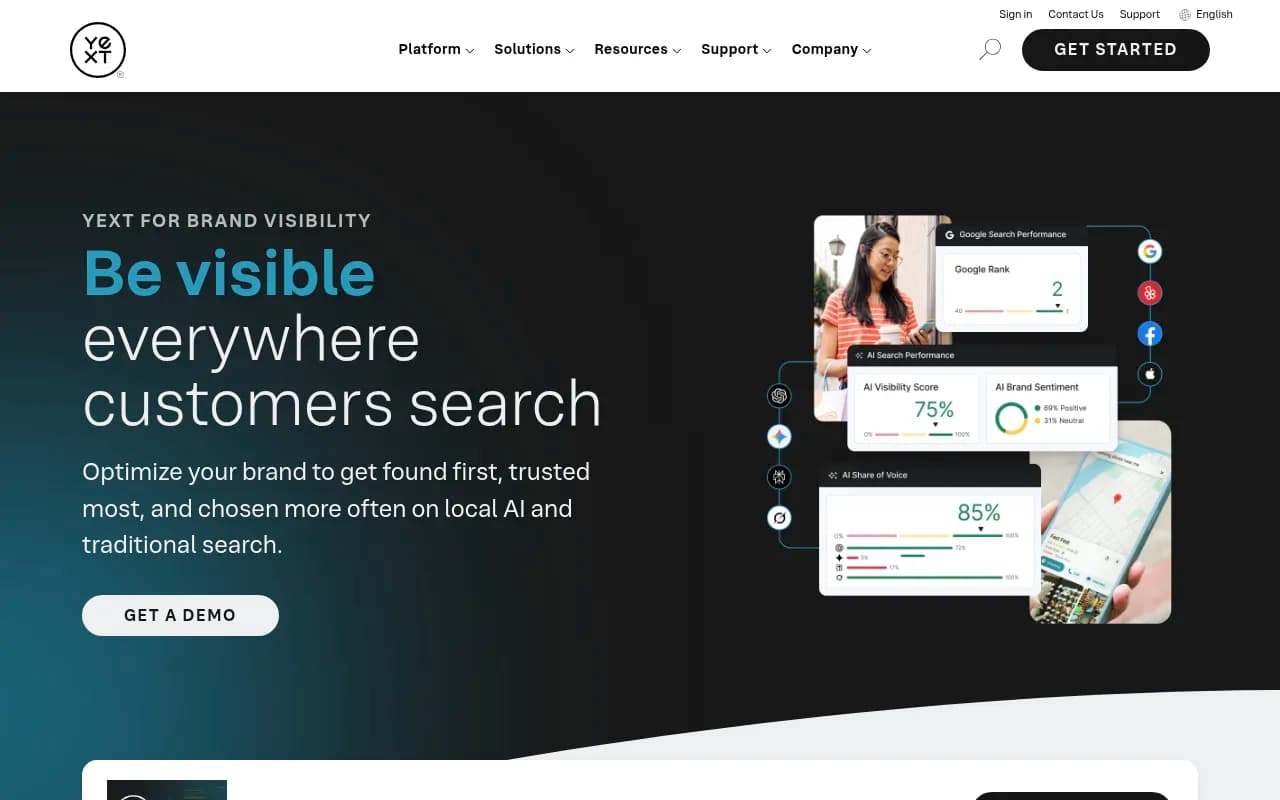
For listings and reputation across many locations, the established names are Yext, Uberall, SOCi and BrightLocal. They manage the raw material (listings, reviews) that AI engines draw on, which is why they are still relevant even though they started in classic local SEO.
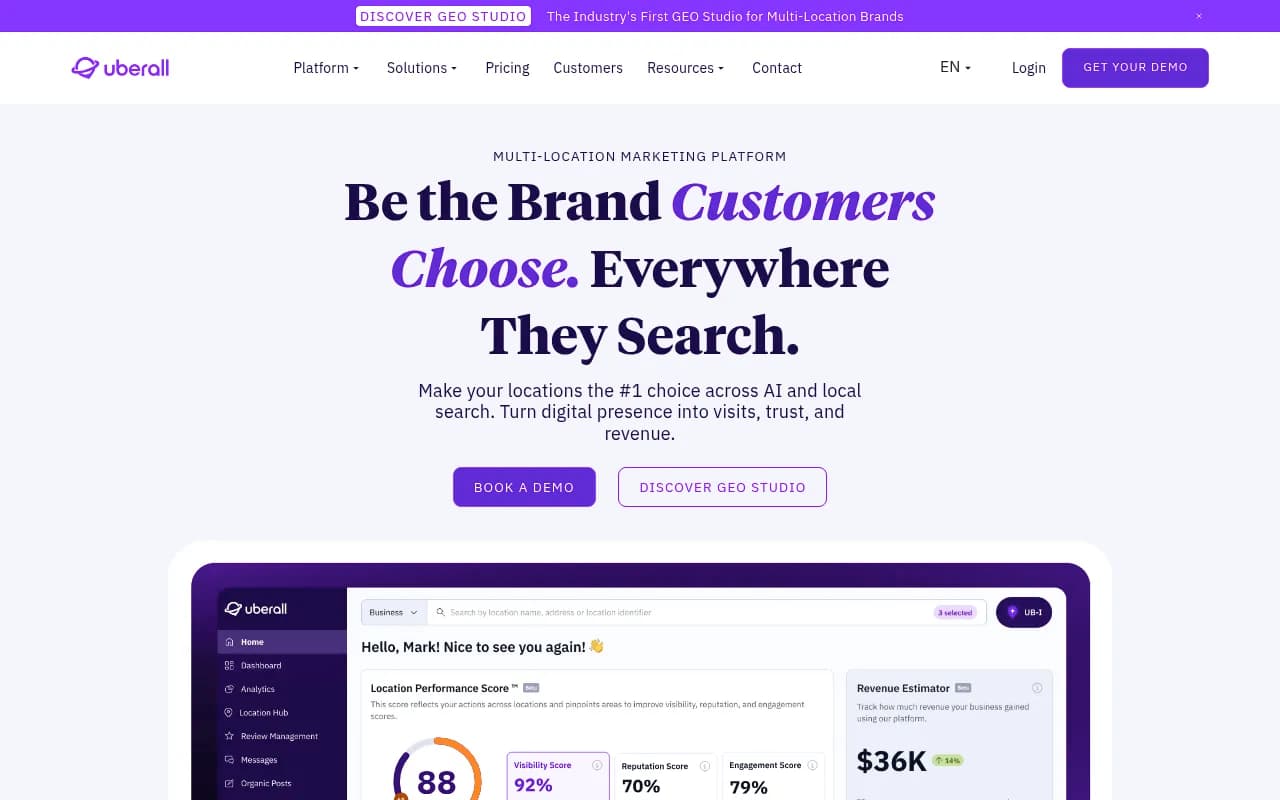
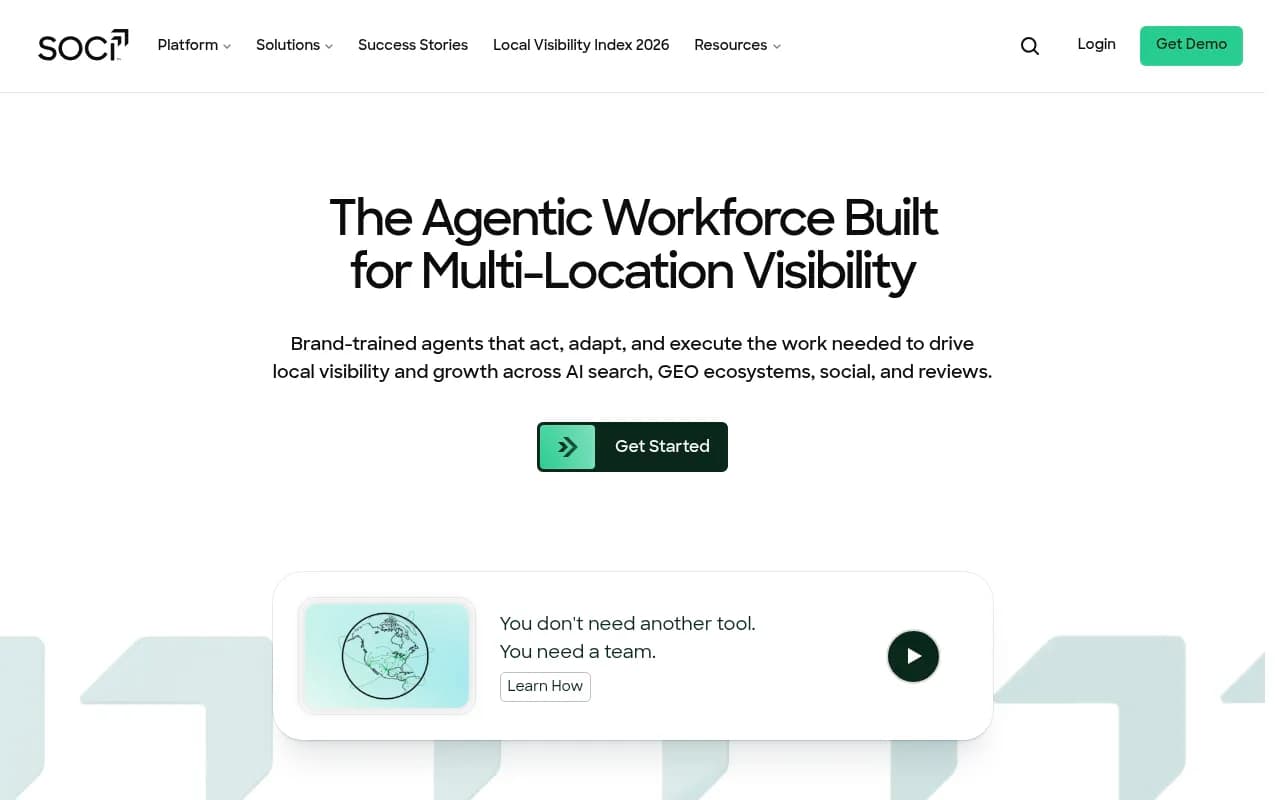
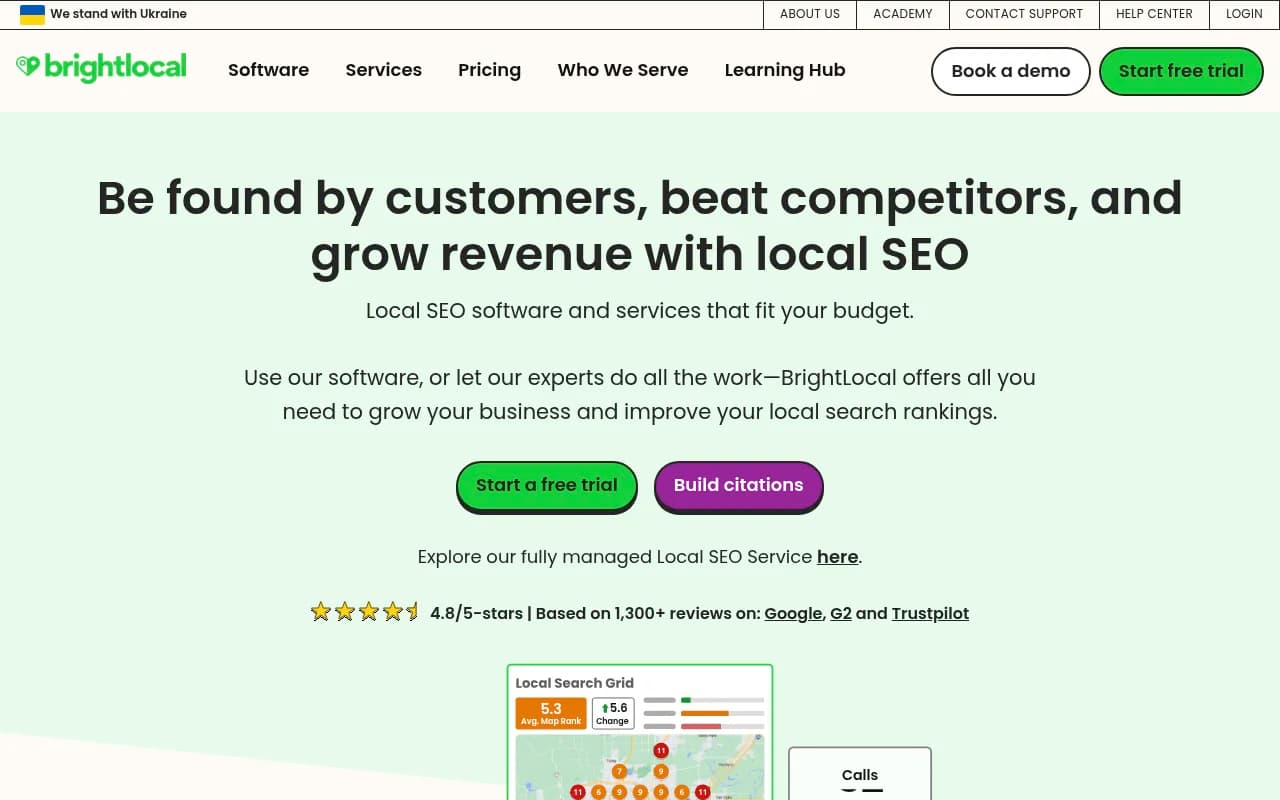
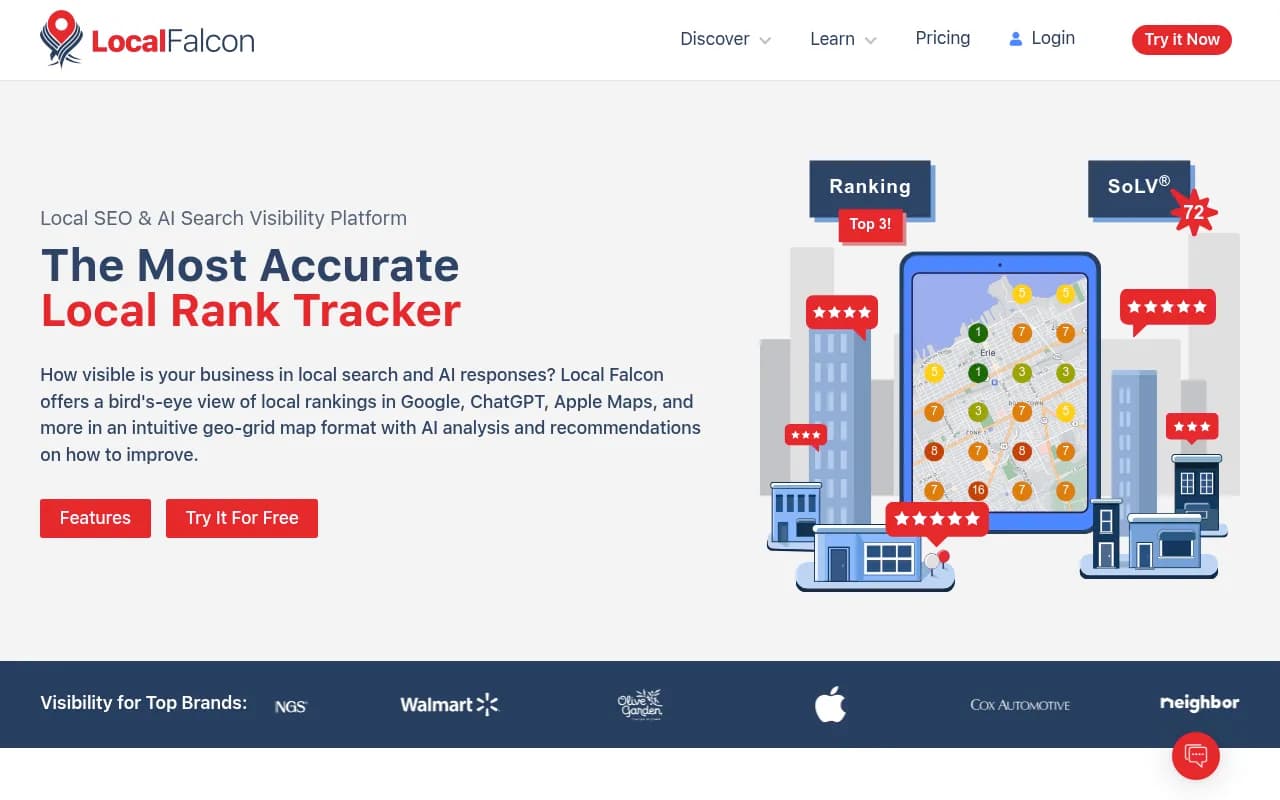
If you also want to see where you stand in the old map pack, geo-grid rank trackers show visibility block by block.
| Need | Tool type | Examples |
|---|---|---|
| Track AI answers by location and act on gaps | AI visibility and GEO platform | Promptwatch, Searchable |
| Keep listings consistent across directories | Listing management | Yext, Uberall, Moz Local |
| Multi-location reviews and local marketing | Local marketing platform | SOCi, BrightLocal, Birdeye |
| Map pack position | Geo-grid rank tracking | Local Falcon |
For more options, the GEO software directory at bestgeosoftware.com lists tools in this category.
What to do this month
Start with the audit, because it is free and it will tell you which of the above actually applies to you. Pick ten customer questions, run them across ChatGPT, AI Mode, Gemini and Perplexity, and screenshot the results. Note which sources show up repeatedly. If Yelp appears under ChatGPT answers in your category, fix your Yelp listing first. If competitors win on review volume, that is your gap.
Then fix the dull things: hours, categories, service descriptions, consistent contact details. Those are the inputs every engine shares, and they are the least likely to be wasted effort even as the individual engines keep changing.
What I would not do is chase an Alexa-specific or AI Mode-specific trick. The evidence is not there yet. Treat anything claiming to be one as a guess, and recheck in a month, because the Yelp deal showed how quickly one partnership can change the local picture in an engine.
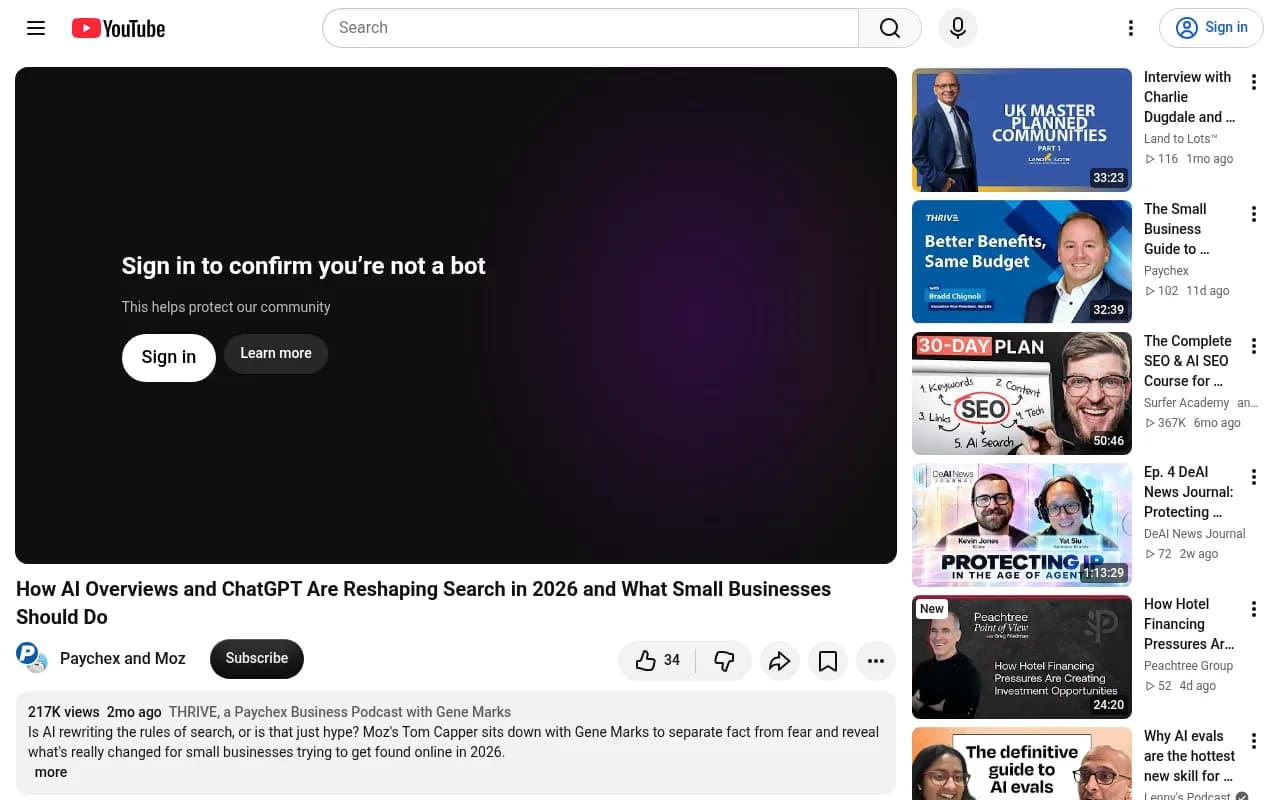
Paychex's 2026 conversation with Moz's Tom Capper makes a similar point from the SEO side: organic search is shifting, not disappearing, and brand authority and third-party mentions now carry weight that link building used to.
Frequently asked questions
Does Google AI Mode use my Google Business Profile?
Google hasn't published how AI Mode weighs Business Profiles, but its local features draw on its places data and reviews. Google says there are no extra requirements to appear in AI Overviews or AI Mode beyond being indexed and eligible for regular search. A complete, accurate profile is the safe bet.
How does ChatGPT choose local businesses?
It draws on web sources and licensed data, including Yelp reviews and ratings under the 2026 deal. Keep listings accurate, earn recent reviews, get mentioned by credible local outlets, and make your website state your services, prices and location plainly.
Why does ChatGPT recommend different businesses than Gemini?
They use different sources and different retrieval behavior. Searchable's data shows agreement on only about a quarter to a third of local service recommendations. That is why you should audit each engine separately.
Is the map pack dead?
No. It still dominates simple business-type-plus-place searches. AI answers handle more of the research before those searches, and SOCi found the two rankings can sit up to 30x apart.