Key takeaways
- Peec AI's Starter plan is €85/month for 50 prompts across only 3 AI models (ChatGPT, Perplexity, Google AI Overviews) — additional engines like Claude, Gemini, and Google AI Mode cost extra.
- Most alternatives under $150/month offer more prompts, more AI models, or both at the entry tier.
- Otterly.AI is the cheapest option at $29/month, covering 4 AI engines with 15 prompts.
- Promptwatch's Essential plan ($99/month) is the only sub-$150 option that combines tracking with AI content generation — it doesn't just show you the gap, it helps you close it.
- Pure monitoring tools (Otterly, Promptmonitor, Rankshift) are fine for basic brand tracking but leave you on your own when it comes to actually improving your visibility.
Peec AI has raised $29 million and built a clean, focused product. That's worth acknowledging. But if you're evaluating it against a $150/month budget ceiling, the math gets uncomfortable fast.
The Starter plan is €85/month. For that, you get 50 prompts tracked across three AI platforms: ChatGPT, Perplexity, and Google AI Overviews. Want Claude? Add-on. Gemini? Add-on. Google AI Mode? Add-on. Those extras can push your real monthly spend well past €150 before you've done anything particularly ambitious.
That's the core reason teams look elsewhere. Not because Peec AI is bad, but because the entry tier doesn't actually cover the AI search landscape in 2026 — it covers a slice of it, with the rest paywalled.
This guide looks at what you can actually get for under $150/month from the main alternatives, with honest assessments of each tier's real-world usefulness.
What Peec AI's entry plan actually includes
Before comparing alternatives, it's worth being precise about what you're comparing against.
Peec AI Starter (€85/month):
- 50 prompts per month
- 3 AI engines: ChatGPT, Perplexity, Google AI Overviews
- Unlimited countries and languages (a genuine differentiator)
- No content creation tools
- No site audit features
- No shopping visibility tracking
The Pro plan (€199/month) adds DeepSeek as a fourth engine and bumps you to 100 prompts and 9,000 AI answers. Claude, Gemini, and Google AI Mode remain enterprise-only add-ons.
At €1.70 per prompt on the Starter plan, the cost-per-prompt is high compared to most alternatives. That matters if you're trying to track a meaningful set of queries across a competitive category.
The alternatives under $150/month
Otterly.AI — cheapest entry point
Otterly's Lite plan is $29/month. You get 15 prompts tracked across ChatGPT, Google AI Overviews, Perplexity, and one additional engine. That's four models for less than a third of Peec's Starter price.
The tradeoff is obvious: 15 prompts is very few. If you're a small brand tracking a handful of core queries, it might be enough. For anyone with a real competitive monitoring need, you'll hit the ceiling fast.
Otterly's next tier is around $79/month, which gets you more prompts and broader model coverage. Still under $150, still monitoring-only — there's no content generation, no gap analysis, no crawler logs.
Promptwatch is worth mentioning here as a point of comparison: even at the entry tier, it includes content generation tools that Otterly doesn't touch.
Otterly.AI

Promptmonitor — budget-conscious but basic
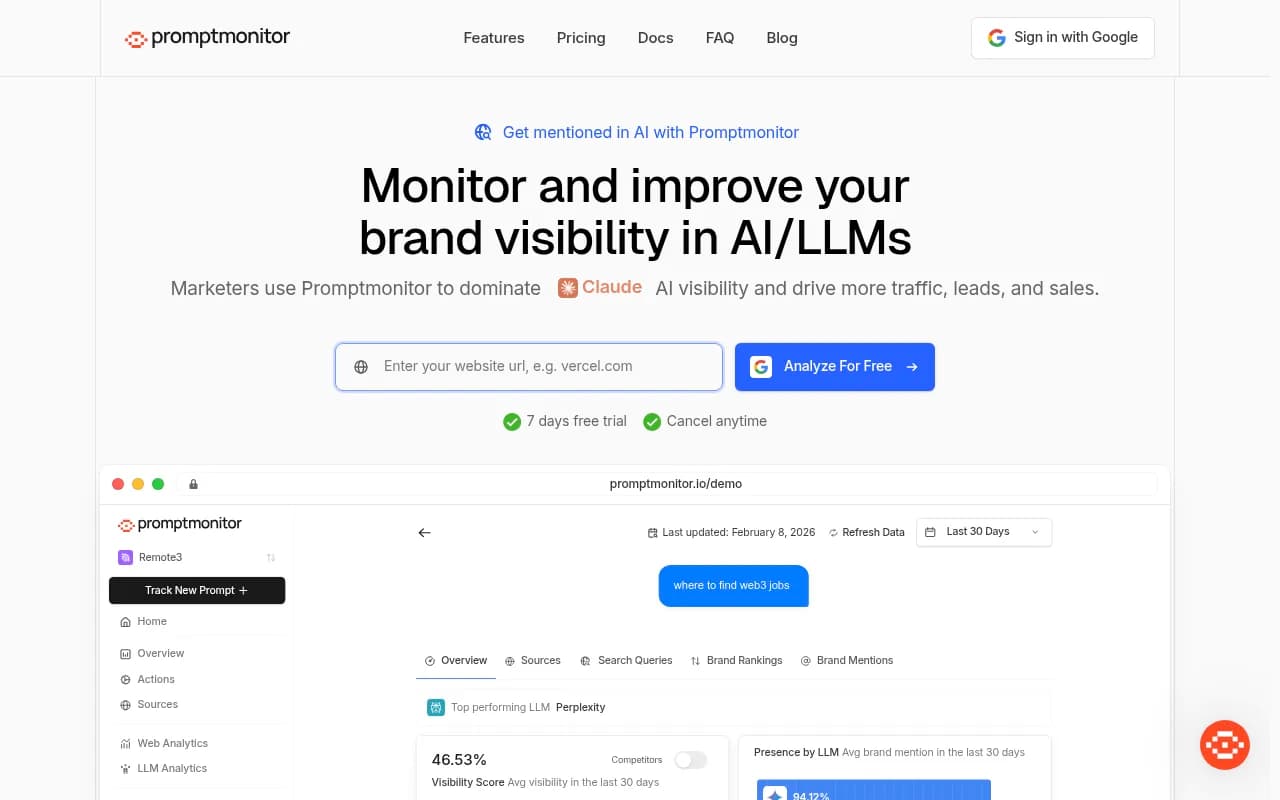
Promptmonitor sits at the lower end of the market and is worth considering if your only goal is basic brand mention tracking. The entry tier is inexpensive, the interface is simple, and setup is fast.
What it lacks: depth. There's no prompt volume data, no difficulty scoring, no competitor heatmaps, no content tools. It tells you whether you're being mentioned — not why you're not, or what to do about it.
For teams that just want a sanity check on AI visibility without committing to a full platform, Promptmonitor is functional. For teams that want to actually improve their position, it's a starting point at best.
Rankshift — credit-based model
Rankshift uses a credit system rather than a flat prompt allowance. This can work in your favor if your monitoring needs are uneven month to month, but it makes direct comparison tricky.
At entry-level pricing (under $150/month), you get a reasonable number of credits for tracking brand mentions across ChatGPT and Perplexity. The UI is clean and the data is presented well.
The credit model becomes a disadvantage when you want to run consistent, scheduled tracking — you burn through credits faster than you'd expect, and the cost-per-query can creep up.

LLM Pulse — solid mid-range option
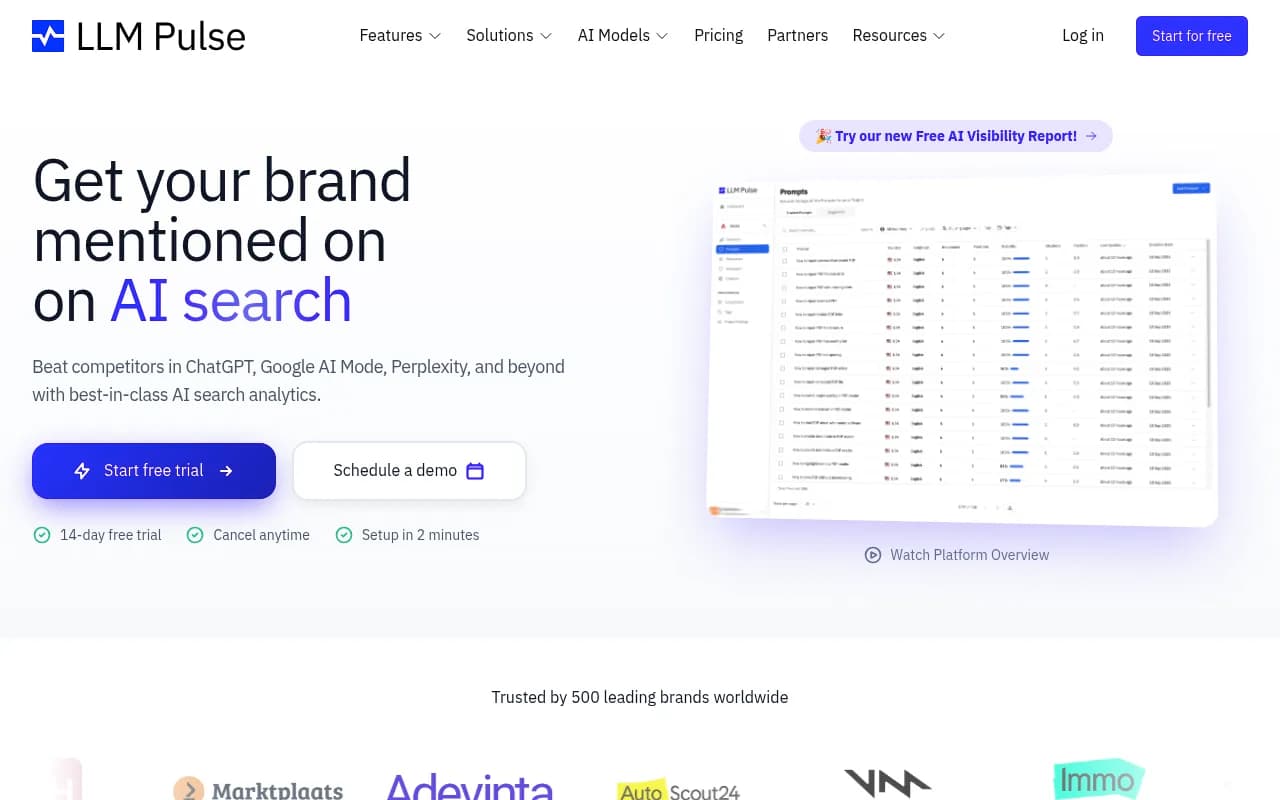
LLM Pulse has positioned itself as a value-focused alternative to the more expensive enterprise platforms. Entry pricing falls comfortably under $150/month, and the feature set is more complete than Otterly or Promptmonitor.
You get multi-model tracking, some competitive benchmarking, and a cleaner view of prompt-level performance. It's a reasonable choice for teams that want more than basic monitoring without jumping to enterprise pricing.
The gap is still content. LLM Pulse shows you data; it doesn't help you act on it.
Promptwatch Essential ($99/month) — the action-oriented option
This is where the comparison gets interesting. Promptwatch's Essential plan at $99/month includes:
- 1 site
- 50 prompts
- 5 AI-generated articles per month
- Tracking across 10 AI models (ChatGPT, Perplexity, Claude, Gemini, Google AI Overviews, Google AI Mode, DeepSeek, Grok, Copilot, Mistral)
- Answer Gap Analysis
That last part matters. Most tools at this price point show you where you're invisible. Promptwatch shows you which specific prompts competitors are appearing for that you're not — and then generates content designed to close those gaps.
The 10-model coverage at $99/month compares directly against Peec's 3-model coverage at €85/month. That's not a marginal difference.

SE Ranking — traditional SEO with AI visibility added
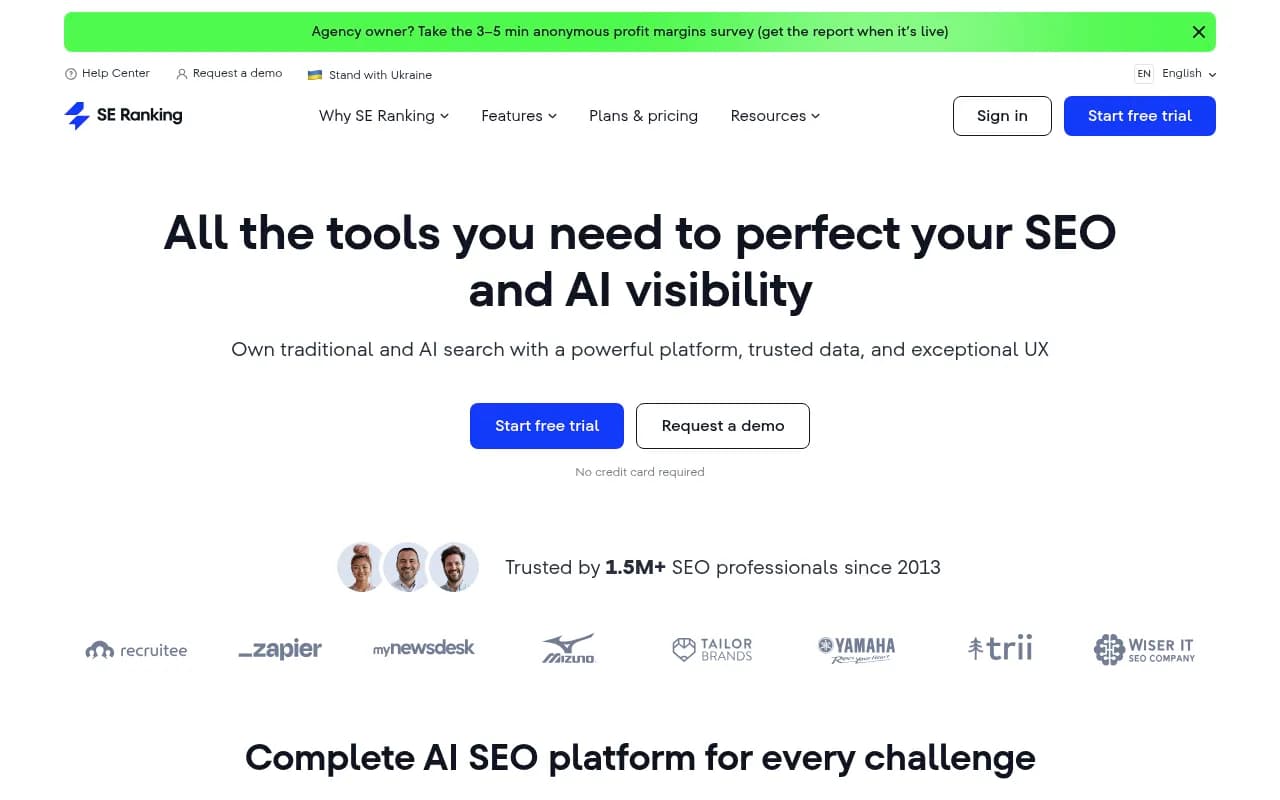
SE Ranking's entry plans fall under $150/month and include a solid traditional SEO toolkit: rank tracking, site audits, keyword research, backlink analysis. The AI visibility features are newer additions.
If you're a team that still cares deeply about Google organic rankings alongside AI visibility, SE Ranking gives you both in one platform. The AI monitoring isn't as deep as dedicated GEO tools, but it's functional.
Worth considering if you're consolidating tools rather than adding another one.
Goodie AI — monitoring without optimization
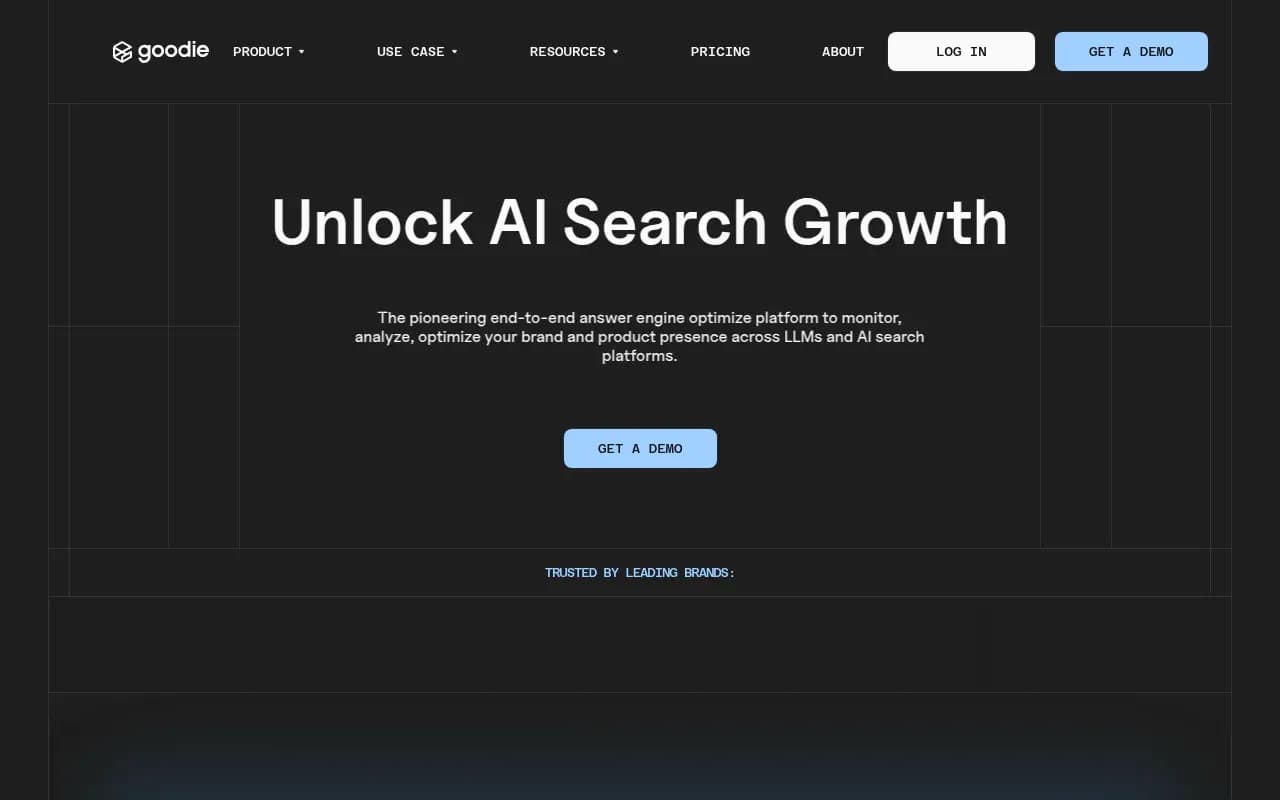
Goodie AI tracks AI search visibility across several engines and has entry pricing under $150/month. The interface is straightforward and the data is presented clearly.
Like most tools in this tier, it stops at monitoring. You see your visibility scores, you see competitor comparisons, and then you're on your own to figure out what to do next.
Side-by-side comparison
| Tool | Entry price | Prompts | AI models covered | Content generation | Gap analysis |
|---|---|---|---|---|---|
| Peec AI Starter | €85/mo | 50 | 3 (+ paid add-ons) | No | No |
| Otterly.AI Lite | $29/mo | 15 | 4 | No | No |
| Promptmonitor | ~$49/mo | Varies | 3-4 | No | No |
| Rankshift | ~$49/mo | Credit-based | 3-4 | No | No |
| LLM Pulse | ~$79/mo | Varies | 5-6 | No | Limited |
| Promptwatch Essential | $99/mo | 50 | 10 | Yes (5 articles) | Yes |
| SE Ranking | ~$65/mo | Limited | 3-4 | No | No |
| Goodie AI | ~$79/mo | Varies | 4-5 | No | No |
What "monitoring only" actually means in practice
Most tools under $150/month are monitoring dashboards. They answer the question "are we visible?" They don't answer "why aren't we visible for this prompt?" or "what content would make us visible?"
That distinction matters more than it sounds. If you're tracking 50 prompts and you're invisible for 30 of them, a monitoring tool shows you a red dashboard. A platform with gap analysis and content generation shows you the 30 specific topics you're missing and helps you create content to address them.
The monitoring-only approach is fine if:
- You already have a content team that can interpret the data and act on it
- You're in an early stage of AI visibility work and just need baseline data
- You're using the tool to report upward rather than to drive optimization
It becomes a problem when:
- You're trying to actually improve your AI visibility, not just measure it
- You don't have the internal resources to translate data into content strategy
- You're competing against brands that are actively optimizing their AI presence
This is the core gap in the under-$150 market. Most tools were built to answer "where are we?" The harder question — "how do we get there?" — is mostly left unanswered.
Model coverage: the hidden cost in Peec's pricing
One thing that doesn't show up in headline pricing comparisons is the model coverage gap.
In 2026, AI search isn't just ChatGPT and Perplexity. Users are getting answers from Claude, Gemini, Google AI Mode, DeepSeek, Grok, Copilot, and Meta AI. A monitoring tool that covers three of those engines is giving you a partial picture.
Peec's Starter covers ChatGPT, Perplexity, and Google AI Overviews. To add Claude or Gemini, you're looking at enterprise add-on pricing — which almost certainly pushes you past €150/month.
Promptwatch's Essential plan at $99/month covers all 10 models it tracks. That's the full picture for less money.
For teams that care about where their brand appears across the entire AI search ecosystem — not just the most popular two or three engines — this is a meaningful difference.
Who should use what
The right tool depends on what you're actually trying to accomplish.
If you want the cheapest possible entry point for basic monitoring: Otterly.AI at $29/month gets you started. Expect to outgrow it quickly if your needs are serious.
If you want broad model coverage without paying for add-ons: Promptwatch Essential at $99/month covers 10 AI engines. Peec's equivalent coverage would cost significantly more.
If you want to track and improve visibility (not just measure it): Promptwatch is the only sub-$150 option that includes content generation and gap analysis. The others show you the problem; Promptwatch helps you fix it.
If you need traditional SEO alongside AI visibility: SE Ranking gives you both in one platform at a reasonable price.
If you're an agency tracking multiple clients: Most entry tiers only cover one site. You'll need to look at Professional or Agency tiers for multi-site tracking — Promptwatch's Professional plan at $249/month covers 2 sites with 150 prompts and adds crawler logs.
The content generation question
One feature that separates Promptwatch from every other tool in this price range is AI content generation. The Essential plan includes 5 articles per month, generated based on real prompt data, citation analysis, and gap identification.
This isn't generic AI writing. The content is grounded in what AI models are actually citing, what prompts competitors are appearing for, and what your site is currently missing. The goal is content that gets cited — not content that reads well but gets ignored by AI engines.
No other tool under $150/month offers this. Otterly, Promptmonitor, Rankshift, LLM Pulse, SE Ranking, Goodie AI — they all stop at the data layer. The content work is left to you.
For teams with limited bandwidth, those 5 articles per month can represent a meaningful portion of their AI-focused content output. For teams with more resources, it's a starting point that can be scaled up on higher tiers.
Bottom line
The under-$150/month AI visibility market in 2026 splits into two categories: monitoring tools and optimization platforms. Most tools fall into the first category. They're useful for establishing a baseline and reporting visibility scores, but they don't help you move the needle.
Peec AI's Starter plan is expensive for what it delivers at this price point — limited model coverage, no content tools, and add-on costs that push the real price higher than the headline suggests.
If you're comparing alternatives at the same budget:
- For pure monitoring at low cost, Otterly.AI or LLM Pulse are reasonable choices.
- For monitoring plus the ability to actually improve your visibility, Promptwatch Essential at $99/month is the only option in this tier that closes the loop from data to content to results.
The question worth asking before you commit to any monitoring tool: what happens after you see the data? If the answer is "we figure it out ourselves," a basic tracker will do. If the answer is "we need to act on it," you need a platform built for that.