Key takeaways
- All five tools (Peec AI, Rankshift, LLMrefs, AICarma, Omnia) are monitoring-focused platforms -- they show you where your brand appears in AI search, but most stop there
- LLMrefs is the most affordable entry point; AICarma covers the widest range of LLMs (14+)
- Omnia has the most polished UI and is the best fit for teams that want clean, shareable dashboards
- Peec AI offers the most flexible model selection for its price tier
- None of these five tools include content generation, AI crawler logs, or traffic attribution -- if you need those, you'll want a more complete platform
- For teams that want to go beyond monitoring and actually fix visibility gaps, Promptwatch is worth a look
The AI visibility tracking space has exploded. There are now dozens of tools claiming to tell you how your brand appears in ChatGPT, Perplexity, Gemini, and the rest. Most of them do roughly the same thing: run your prompts, count your mentions, show you a share-of-voice chart.
For a small marketing team or solo SEO, that's often enough to get started. You don't need enterprise pricing or a 40-feature platform when you're just trying to answer "does ChatGPT even know we exist?"
This guide focuses on five tools that sit in that lighter-weight, more accessible tier: Peec AI, Rankshift, LLMrefs, AICarma, and Omnia. I've looked at what each one actually does, what it costs, and where it falls short -- so you can pick the right one for your situation without wasting a month on trials.
What these tools have in common
Before getting into the differences, it's worth being honest about what this category of tool fundamentally does.
All five platforms work roughly the same way: you set up a list of prompts (questions your potential customers might ask an AI), the tool runs those prompts across one or more AI models on a schedule, and then it reports back on whether your brand appeared, how prominently, and what sentiment the response carried.
That's genuinely useful. It's the difference between guessing whether ChatGPT recommends you and actually knowing.
What most of these tools don't do is tell you why you're not appearing, or help you fix it. That's a real limitation worth keeping in mind as you read.
The five tools, one by one
Peec AI
Peec AI is a monitoring tool built specifically for AI search visibility. It tracks brand mentions, share of voice, and sentiment across ChatGPT, Perplexity, Google AI Overviews, Google AI Mode, Gemini, and Copilot -- six models at the entry tier, with up to ten available depending on your plan.

What makes Peec AI stand out in this group is the flexibility around model selection. Most tools at this price point lock you into a fixed set of LLMs. Peec lets you choose which models matter to your audience, which is actually a meaningful difference if, say, your customers skew toward Gemini users rather than ChatGPT.
The interface is clean and the setup is fast. You can be tracking prompts within a few minutes of signing up.
Pricing starts at around €85/month. There's no free tier, but there is a trial period.
Where it falls short: Peec AI is a monitoring dashboard. It shows you the data but doesn't help you act on it. No content generation, no crawler logs, no traffic attribution. If your brand isn't appearing in AI responses, Peec will confirm that -- but it won't tell you what to write to fix it.
Rankshift
Rankshift is a lightweight tracker focused on brand visibility across ChatGPT and Perplexity, with some coverage of other AI search engines.

It's positioned as a simple, affordable option for teams that want to get started with AI visibility tracking without a big commitment. The onboarding is minimal -- you enter your brand name, set up some prompts, and start seeing data.
Rankshift's strength is simplicity. If you've never tracked AI visibility before and want to understand the basics before investing in something more powerful, it's a reasonable starting point.
The limitation is coverage. Compared to Peec AI or AICarma, Rankshift tracks fewer models and offers less granular data. It's fine for a quick pulse check, but it'll feel thin if you're trying to do serious competitive analysis.
Pricing is on the lower end of this group, making it one of the more accessible entry points.
LLMrefs
LLMrefs is one of the more affordable options in the AI visibility space and is frequently recommended for solo marketers, startups, and small teams that want basic tracking without a big monthly bill.
LLMrefs
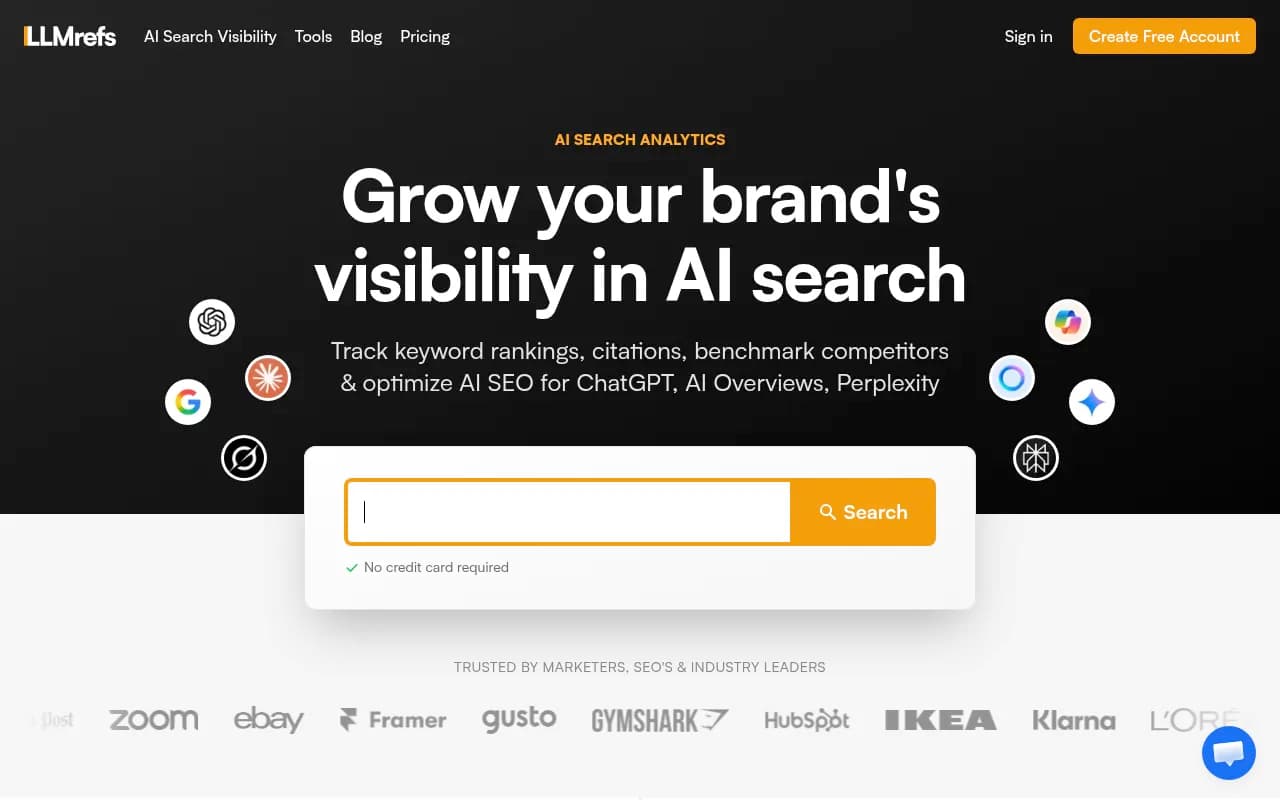
It tracks visibility across ChatGPT, Perplexity, and several other AI search engines -- up to 11 models according to its current positioning. The focus is on citation tracking: which pages are being cited in AI responses, and how often your domain appears.
That citation-level data is actually more useful than raw mention counts. Knowing that ChatGPT is citing a competitor's blog post (and not yours) gives you something to act on -- even if LLMrefs itself won't help you write the replacement content.
Pricing is the lowest in this comparison, which makes it a natural first tool for teams with tight budgets. There's a free tier with limited prompt volume.
The trade-off is depth. LLMrefs is genuinely lightweight -- the interface is basic, the reporting is straightforward, and there's not much in the way of competitive analysis or prompt intelligence. It does what it says on the tin, nothing more.
AICarma
AICarma takes a different angle from the others. Its headline feature is coverage: it tracks brand visibility across 14+ language models daily, which is the widest range in this comparison by a significant margin.
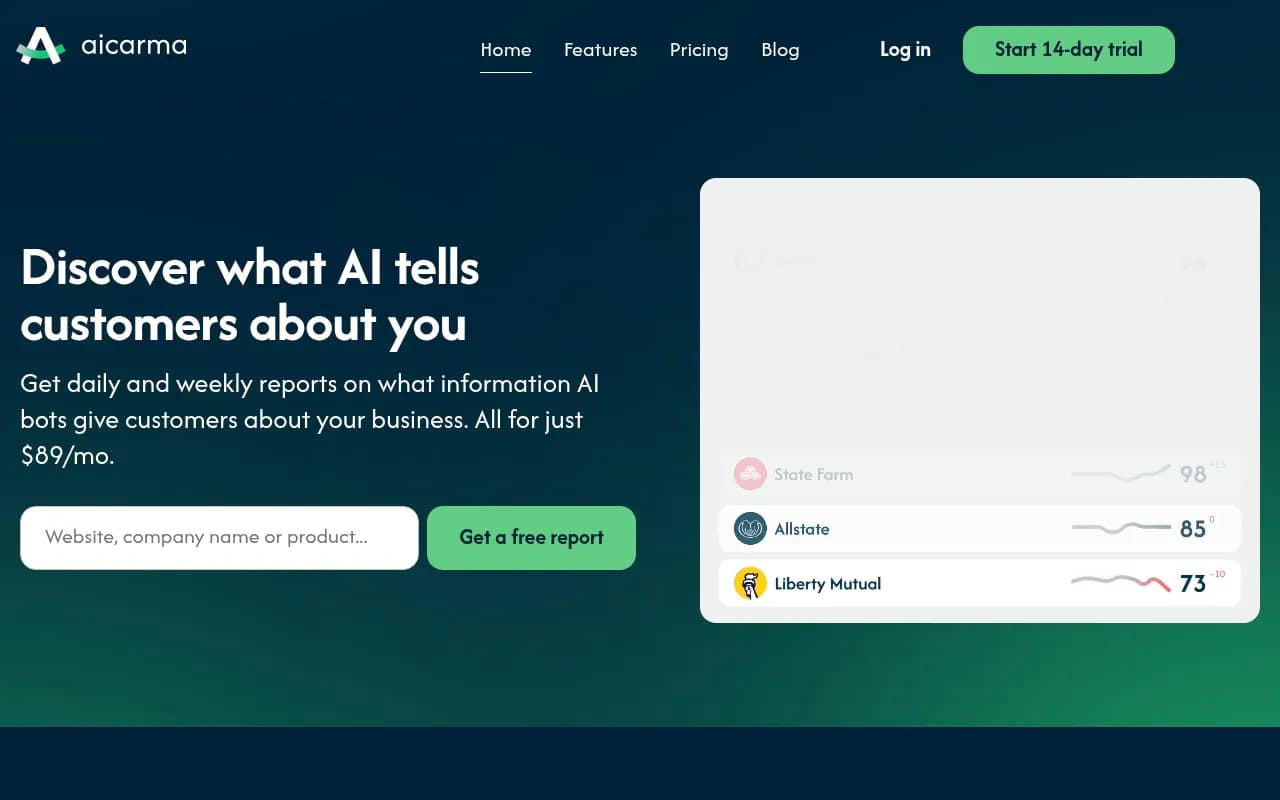
If your concern is "I don't know which AI models my customers are actually using," AICarma's breadth is genuinely useful. Most tools focus on the obvious four or five (ChatGPT, Perplexity, Gemini, Claude, Copilot). AICarma goes deeper, including models that the other tools in this group don't cover.
It also runs tracking daily rather than on a slower cadence, which matters if you're monitoring a fast-moving competitive situation or tracking the impact of a PR event.
The interface is more data-dense than Rankshift or LLMrefs, which some teams will appreciate and others will find overwhelming. It's still a monitoring tool -- no content generation or optimization features -- but the data it produces is richer.
Pricing sits in the mid-range of this group.
Omnia
Omnia (useomnia.com) is the most polished product in this comparison. It's built for teams that care about how the data looks as much as what the data says -- clean dashboards, good visualization, and reporting that's easy to share with stakeholders who don't live in marketing tools all day.
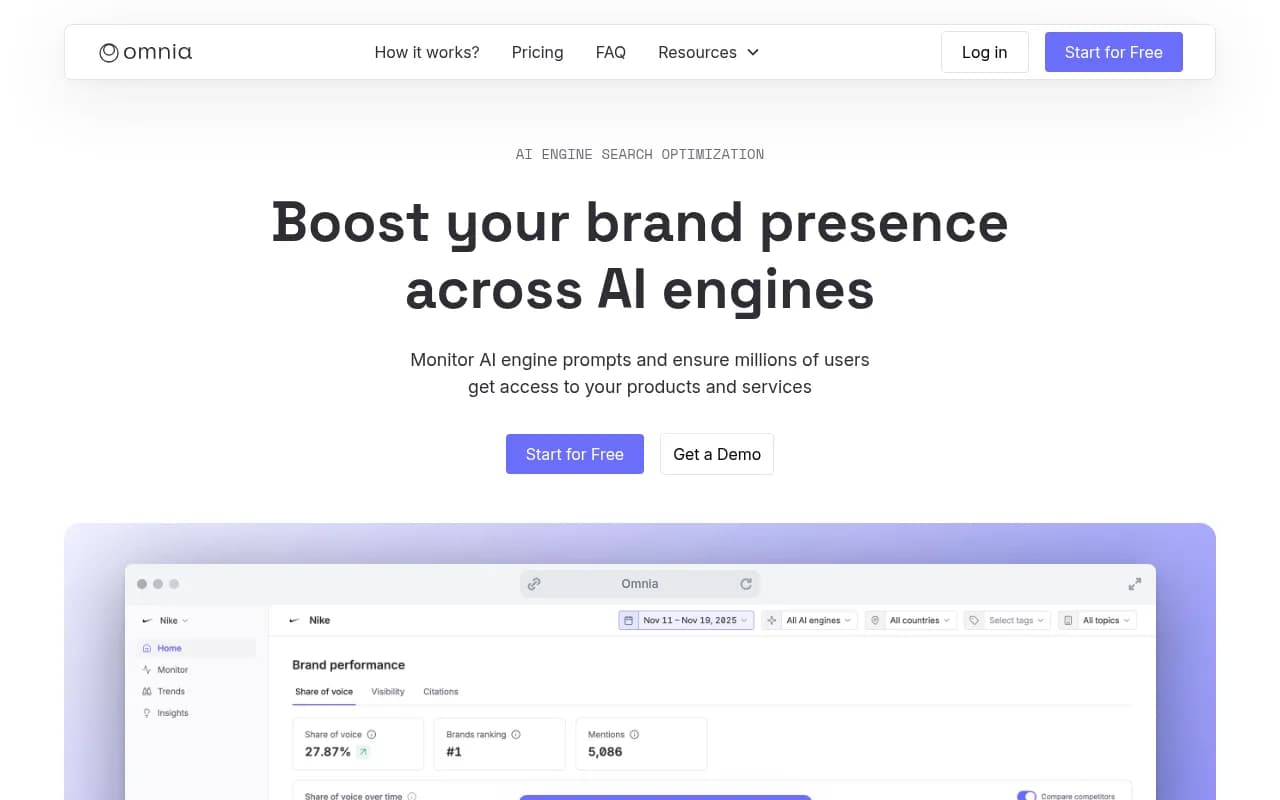
It tracks brand mentions and citations across the major AI engines, with solid coverage of ChatGPT, Perplexity, and Google AI Overviews. The competitive tracking features are more developed than most tools at this tier -- you can see how your share of voice compares to specific competitors across different prompt categories.
Omnia also publishes a detailed blog on AI search monitoring (their roundup of 20 AI search monitoring tools is one of the more thorough resources in the space), which suggests a team that's genuinely engaged with the problem rather than just shipping a dashboard.
The limitation is the same as the others: it's a monitoring platform. Omnia shows you the picture clearly, but it doesn't hand you a paintbrush.
Pricing is competitive with Peec AI, with a free tier available for getting started.
Side-by-side comparison
| Tool | LLMs tracked | Starting price | Free tier | Best for | Content generation | Crawler logs |
|---|---|---|---|---|---|---|
| Peec AI | Up to 10 (flexible) | ~€85/mo | No (trial) | Flexible model selection | No | No |
| Rankshift | ChatGPT, Perplexity + others | Low | Yes | Simplest entry point | No | No |
| LLMrefs | Up to 11 | Lowest in group | Yes | Budget-conscious solo teams | No | No |
| AICarma | 14+ | Mid-range | Limited | Widest LLM coverage | No | No |
| Omnia | Major engines | Competitive | Yes | Clean reporting, stakeholder-friendly | No | No |
What none of them do
This is worth saying plainly: all five tools are monitoring dashboards. They're good at answering "are we visible?" They're not built to answer "how do we become visible?"
None of them include:
- Content gap analysis (which prompts are competitors winning that you're not?)
- AI content generation (what should you write to get cited?)
- AI crawler logs (is ChatGPT even crawling your site?)
- Traffic attribution (is AI visibility actually driving revenue?)
For a team that's just getting started with AI visibility, that's fine. Monitoring is step one. But once you've confirmed you have a visibility problem, you'll quickly hit the ceiling of what these tools can help you do.
If you reach that point, Promptwatch is the platform that closes the loop -- it identifies which prompts you're missing, generates content designed to get cited by AI models, and tracks whether that content actually improves your visibility scores.

The difference is that Promptwatch is built around the full optimization cycle, not just the reporting layer. Most of the tools in this comparison (and many of their larger competitors) stop at step one.
Which tool should you pick?
There's no single right answer -- it depends on what you actually need.
If you're a solo marketer or startup with a tight budget and just want to start tracking, LLMrefs is the lowest-friction entry point. The free tier is real, the setup is fast, and the citation data is more actionable than simple mention counts.
If you want flexibility in which AI models you track, Peec AI is the strongest option in this group. The ability to choose your model mix is genuinely useful if your audience skews toward specific platforms.
If you need the widest possible LLM coverage -- especially if you're in a market where newer or less mainstream models matter -- AICarma's 14+ model tracking is hard to beat at this price tier.
If you're presenting data to stakeholders or clients and need dashboards that don't require explanation, Omnia's polish gives it an edge. It's the tool you'd be least embarrassed to screen-share in a quarterly review.
If you just want the simplest possible starting point and don't need depth, Rankshift gets you up and running with minimal friction.
And if you've already confirmed you have a visibility problem and need to do something about it -- not just measure it -- that's when you outgrow all five of these tools and need something with content optimization built in.
A note on the broader market
The AI visibility tool market is moving fast. In early 2026, there are now well over 20 platforms claiming to track AI search visibility, ranging from free browser extensions to enterprise platforms charging thousands per month.
The five tools in this guide sit in the accessible, monitoring-focused tier. They're not trying to be everything -- and for small teams, that's often a feature, not a bug. Less complexity, lower cost, faster setup.
Just go in with clear expectations. These tools will tell you where you stand. Getting to where you want to be is a separate problem.