Key takeaways
- Searchable offers AI search visibility monitoring but lacks several capabilities that matter most in 2026, including AI crawler logs, content generation, and traffic attribution.
- Monitoring-only platforms show you where you're invisible -- they don't help you fix it. That gap matters more as AI search grows.
- The platforms worth investing in combine tracking, content gap analysis, and optimization in one loop.
- If you're evaluating Searchable, watch for these seven red flags before signing a contract.
- Alternatives like Promptwatch close the loop from gap discovery to content creation to citation tracking.
The AI visibility space has exploded in 2026. Dozens of platforms now claim they'll get your brand cited in ChatGPT, Perplexity, and Google AI Overviews. Most of them show you a dashboard. A few of them actually help you do something about what the dashboard reveals.
Searchable sits somewhere in the middle of that spectrum, and the honest answer is: it depends on what you need. For some teams, it's fine. For others, it's a slow-motion waste of budget.
Here are seven red flags that suggest Searchable might not be the right fit for your AI visibility goals this year.
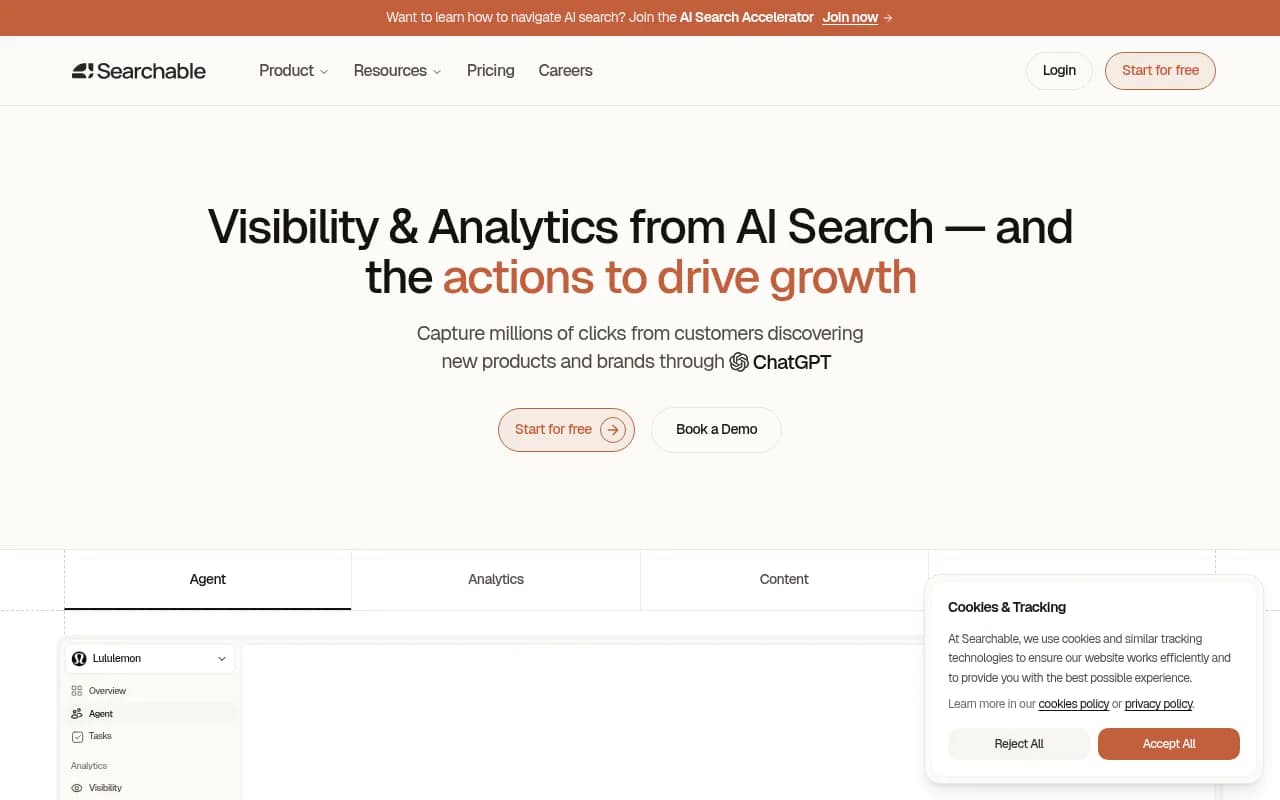
Red flag 1: You need more than a monitoring dashboard
The most important question to ask any AI visibility platform is simple: after it shows me where I'm invisible, what does it actually help me do about it?
Searchable tracks brand mentions across AI engines. That's genuinely useful. But if the workflow ends there -- if you're left staring at a visibility score with no clear path to improving it -- you've bought a thermometer, not a treatment.
In 2026, the brands winning in AI search aren't just tracking their citations. They're running a continuous loop: find the prompts where competitors appear and they don't, create content that fills those gaps, then watch citation rates climb. Platforms that only handle step one of that loop are increasingly hard to justify at their price points.
If your team needs content gap analysis, AI-native content generation, or page-level citation tracking, Searchable's feature set will feel incomplete quickly.
Red flag 2: No AI crawler log visibility
This one is underappreciated. AI search engines don't just "read the internet" -- they send crawlers to your site, and those crawlers behave differently from Googlebot. GPTBot, ClaudeBot, PerplexityBot: they each have their own crawl patterns, return frequencies, and error responses.
If a platform can't show you which AI crawlers are hitting your site, which pages they're reading, and whether they're encountering errors (JavaScript rendering failures, blocked routes, slow response times), you're flying blind on the technical side of GEO.
This matters because a lot of AI visibility problems aren't content problems at all. They're crawlability problems. Your content might be excellent, but if GPTBot is hitting a JavaScript wall or getting a 403, it doesn't matter how well-written your pages are.
Searchable doesn't offer AI crawler log analysis. That's a meaningful gap, especially for teams with complex site architectures or JavaScript-heavy builds.
Platforms like Promptwatch surface real-time crawler logs showing exactly which AI agents visited, which pages they read, and when those pages moved from crawl to citation -- which is the kind of data that turns a vague "we're not being cited" complaint into a fixable technical issue.

Red flag 3: Prompt intelligence is shallow or absent
Not all prompts are equal. "Best project management software" and "what's the best project management tool for remote engineering teams in fintech" are both prompts -- but they have wildly different volumes, competitive dynamics, and citation patterns.
If a platform tracks whether your brand appears in AI responses without telling you how often those prompts are actually being asked, how hard they are to win, or how one prompt fans out into related sub-queries, you're optimizing without a map.
Searchable's prompt tracking is relatively basic. You can see whether you appear, but the depth of prompt intelligence -- volume estimates, difficulty scoring, query fan-outs -- is limited compared to what the more mature platforms now offer.
For teams trying to prioritize which content to create first (because you can't create everything at once), this is a real problem. You need to know which prompts are high-volume and winnable, not just which ones exist.
Red flag 4: No content gap analysis against competitors
Here's a scenario that plays out constantly in 2026: a brand checks its AI visibility score, sees it's lower than competitors, and has no idea why. The platform shows the gap. It doesn't show what's causing it.
Content gap analysis -- specifically, identifying which prompts competitors are being cited for that you're not -- is the bridge between "we have a problem" and "here's what we need to create." Without it, you're guessing.
Searchable doesn't offer this kind of structured competitor gap analysis. You can track your own mentions, but the comparative intelligence that tells you "your competitor is being cited for these 47 prompts, and you're missing from all of them" isn't there.
This is one of the clearest points of differentiation between monitoring platforms and optimization platforms. Tools like AthenaHQ and Peec AI also fall into the monitoring-only camp here.


If you're at a brand or agency where the question isn't just "how visible are we?" but "what do we need to do to become more visible?", you'll hit this wall fast.
Red flag 5: No content generation tied to visibility data
Even if you know which gaps to fill, creating content that actually gets cited by AI engines is different from creating content that ranks in Google. AI models want clear, structured answers. They favor content that directly addresses specific questions, uses proper schema, and comes from sources they've already crawled and trusted.
Generic SEO content tools don't account for this. They optimize for keyword density and readability scores -- useful, but not the same as engineering content to answer the exact prompts AI models are already exposing.
Searchable has no content generation capability. That means your workflow requires at least two separate tools: Searchable for monitoring, and something else for actually producing content. That's not necessarily fatal, but it adds friction, and it means the content you create isn't grounded in the same citation data you're tracking.
The platforms that are pulling ahead in 2026 generate content briefs and articles directly from prompt data, citation patterns, and competitor analysis -- so the content is built to answer the specific gaps the AI models are already showing.
Red flag 6: Traffic attribution is missing or disconnected
Visibility scores are a means to an end. The end is revenue. If you can't connect AI citations to actual website traffic, and traffic to pipeline or conversions, you're reporting on a metric that your CFO will eventually ask you to justify -- and you won't have a good answer.
This is a widespread problem across AI visibility platforms. Most of them track citations. Very few connect those citations to traffic, and fewer still connect traffic to revenue.
Searchable doesn't offer traffic attribution. You can see that your brand was mentioned in a Perplexity response, but you can't see whether that mention drove a click, a session, or a conversion.
For marketing teams that need to prove ROI on their GEO investment, this is a serious limitation. It's the difference between "we improved our AI visibility score by 23%" and "our AI visibility improvements drove 1,400 additional sessions and contributed to $180K in pipeline last quarter."
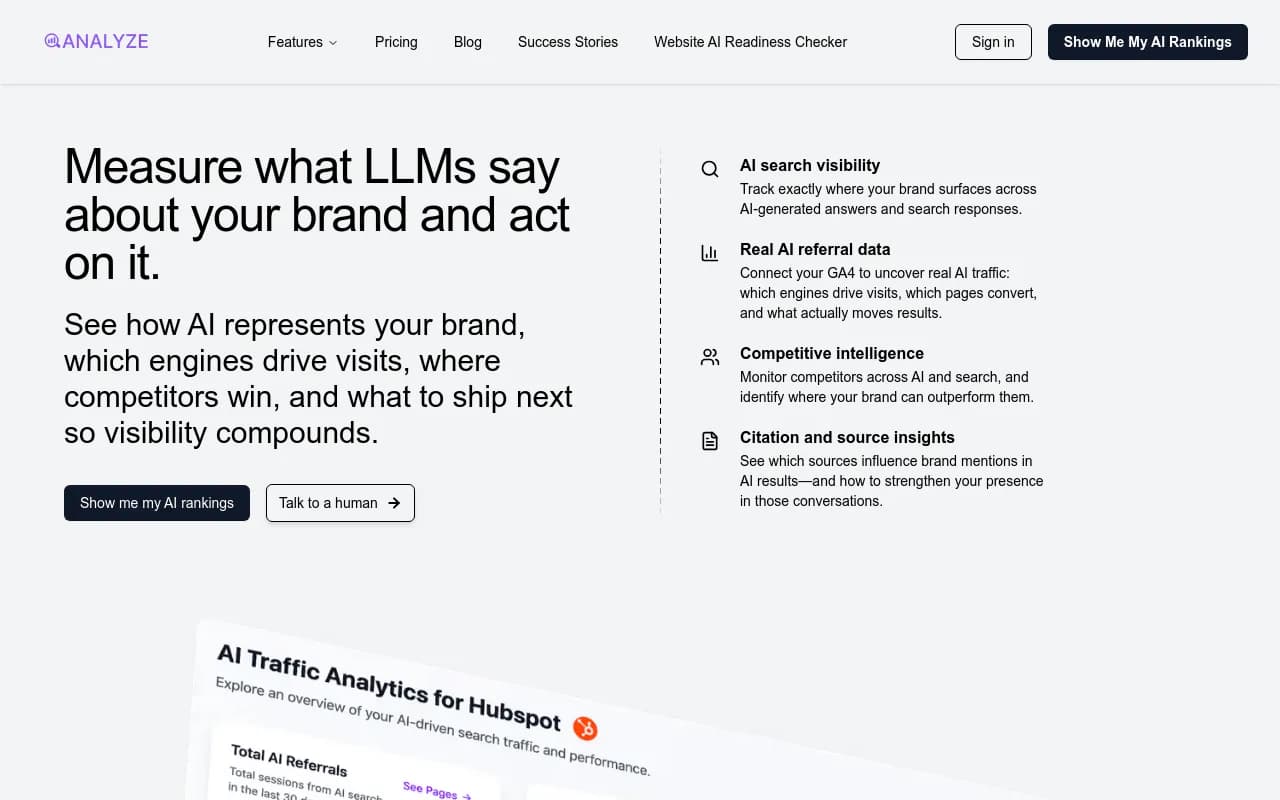
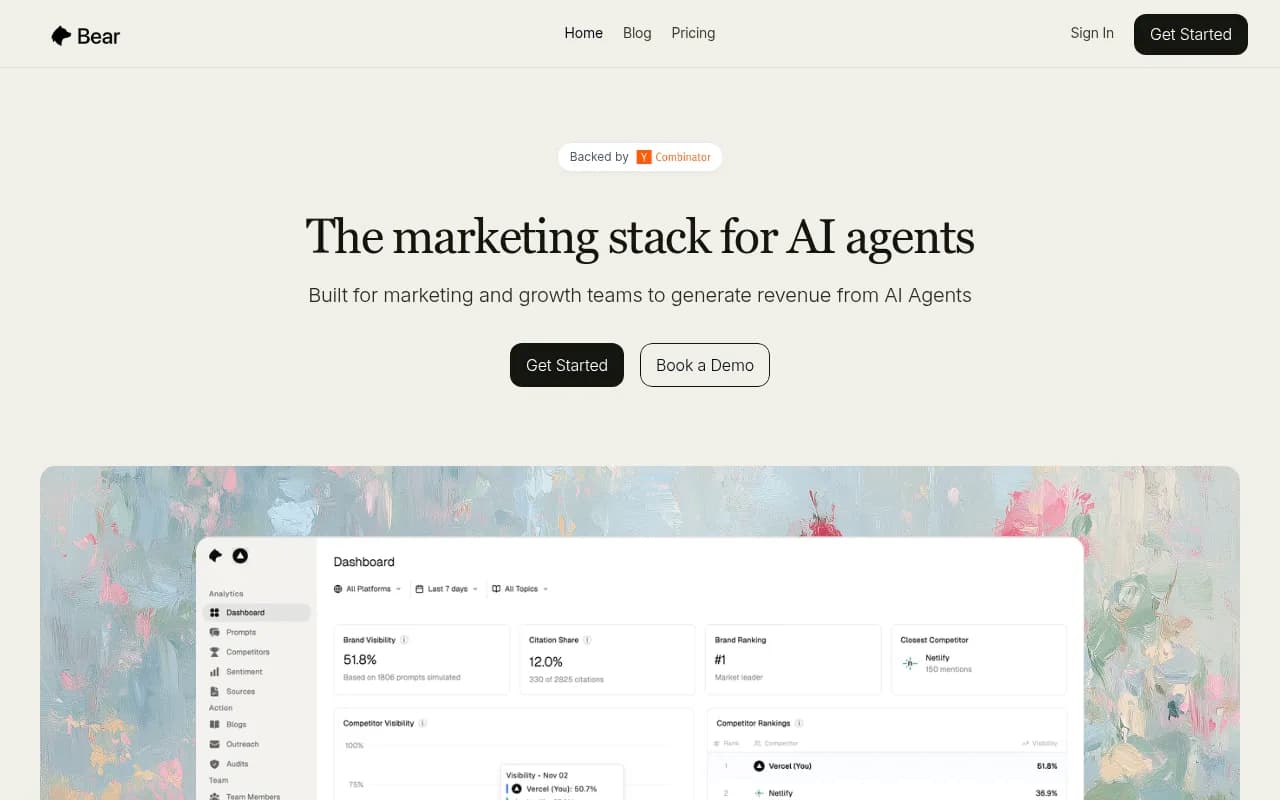
Tools like Analyze AI and Bear AI are trying to close this gap specifically.
Red flag 7: Limited model and channel coverage
In 2026, "AI search" isn't one thing. ChatGPT, Perplexity, Google AI Overviews, Google AI Mode, Claude, Gemini, Grok, DeepSeek, Copilot, Meta AI -- these are distinct surfaces with different citation behaviors, different user bases, and different content preferences. A brand that's well-cited in Perplexity might be nearly invisible in Google AI Mode.
If a platform only tracks two or three of these, you're getting a partial picture. And if it doesn't account for channels like Reddit threads and YouTube videos that directly influence AI recommendations (because AI models frequently cite these sources), you're missing a whole category of optimization opportunity.
Searchable's model coverage is narrower than the leading platforms, and it doesn't surface Reddit or YouTube citation data. For brands in categories where community content heavily influences AI responses -- consumer tech, personal finance, health, travel -- that's a meaningful blind spot.
How Searchable compares to the broader field
Here's a quick comparison of where Searchable sits relative to other platforms in the space:
| Capability | Searchable | Otterly.AI | Peec AI | Promptwatch |
|---|---|---|---|---|
| AI citation monitoring | Yes | Yes | Yes | Yes |
| Competitor gap analysis | Limited | No | No | Yes |
| AI crawler logs | No | No | No | Yes |
| Content generation | Yes (basic) | No | No | Yes (advanced) |
| Prompt volume/difficulty | No | No | No | Yes |
| Traffic attribution | No | No | No | Yes |
| Reddit/YouTube tracking | No | No | No | Yes |
| ChatGPT Shopping tracking | No | No | No | Yes |
| Models covered | 3-4 | 3-4 | 4-5 | 10+ |
Otterly.AI

The pattern is consistent: Searchable and most of its direct competitors are monitoring tools. They show you the problem. The platforms that are actually moving the needle in 2026 are the ones that help you fix it.
What to look for instead
If you're evaluating platforms and Searchable isn't checking enough boxes, the criteria that matter most right now are:
- Does it show you which specific prompts competitors are winning that you're not?
- Can it generate content briefs or articles grounded in that gap data?
- Does it give you AI crawler log visibility so you can fix technical crawlability issues?
- Can it track citations at the page level and connect them to traffic?
- Does it cover the AI models your actual customers are using?
The platforms that score well across all of these are still relatively few. Promptwatch is the most comprehensive option currently available, covering the full loop from gap discovery through content creation to citation tracking and traffic attribution -- across 10 AI models including ChatGPT, Perplexity, Google AI Overviews, Claude, Gemini, Grok, and DeepSeek.
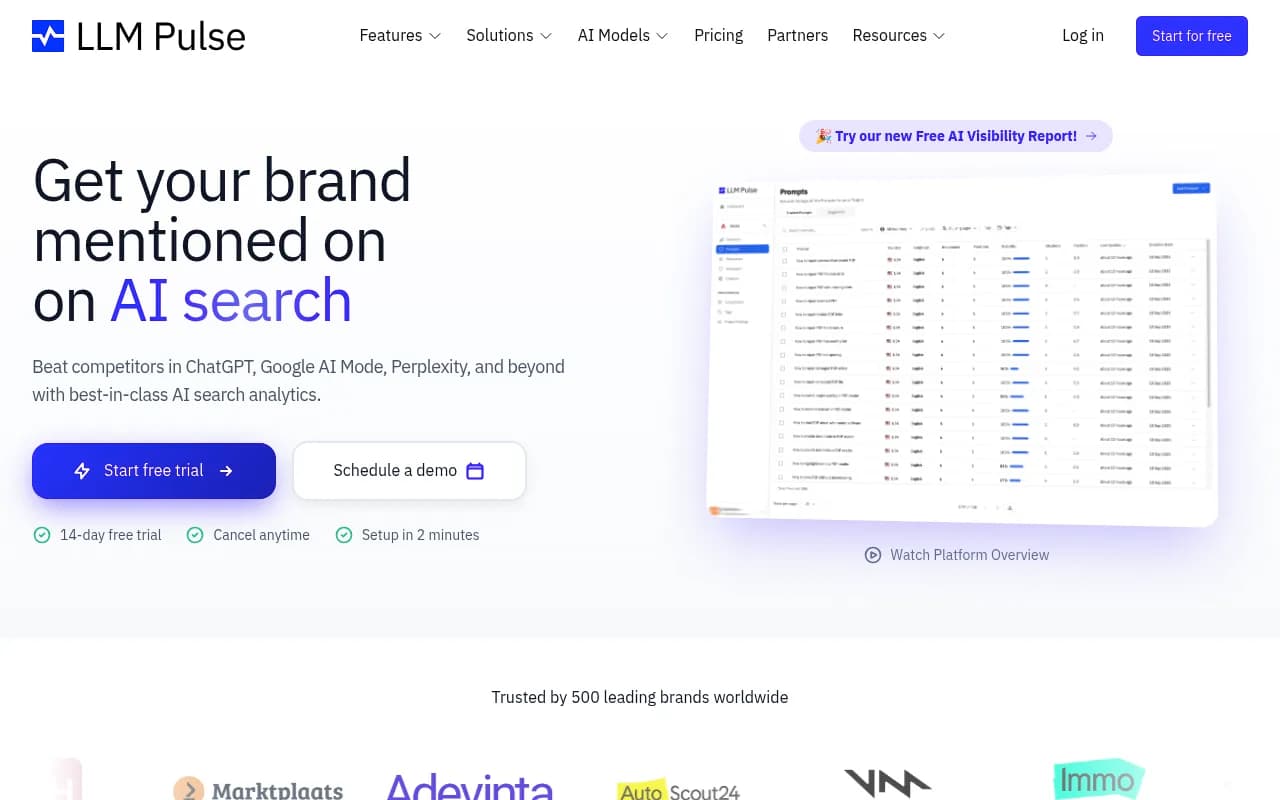
For teams with narrower needs -- say, a startup that just wants to know if their brand is appearing in ChatGPT responses -- simpler tools like LLM Pulse, Rankshift, or Otterly.AI might be sufficient.

But if you're a marketing team or agency with real optimization goals, the honest advice is: don't pay for a monitoring dashboard and call it a GEO strategy. The gap between knowing you're invisible and actually fixing it is where most AI visibility budgets quietly disappear.
The bottom line
Searchable isn't a bad product. For some use cases -- quick brand mention tracking, basic competitive benchmarking -- it does what it says. The red flags above aren't about the platform being broken. They're about whether it's the right tool for teams that need to move from visibility data to actual visibility improvement.
In 2026, with AI search eating an increasing share of informational queries and product discovery, the cost of being invisible in AI responses is measurable and growing. The platforms worth investing in are the ones that treat AI visibility as an optimization problem, not just a reporting problem.
If Searchable's limitations match the red flags above, it's worth spending an hour evaluating what a more complete platform would actually unlock for your team.