Key takeaways
- These four platforms serve very different masters: Junia AI is an SEO content writer, Atomic AGI is a monitoring tool with content features, Searchable combines visibility tracking with content generation, and Promptwatch is the only one that closes the full loop from gap analysis to content creation to citation tracking.
- "Content-first GEO" is a meaningful distinction -- generating articles without knowing which prompts AI models are responding to is just SEO content with a new label.
- Promptwatch's Answer Gap Analysis and Content Agents are grounded in real prompt data, citation data, and crawler logs -- not keyword research repurposed for AI.
- If your goal is articles that actually get cited by ChatGPT, Perplexity, or Google AI Overviews, the platform's data layer matters as much as its writing quality.
- Free trials exist for all four platforms, so there's no reason to commit without testing your specific use case first.
The phrase "content-first GEO" gets thrown around a lot in 2026. Every platform with an AI writing feature now claims it can make you visible in ChatGPT or Perplexity. Most of them can't -- or at least, they can't prove it.
The real question isn't whether a platform can generate articles. It's whether those articles are grounded in what AI models are actually citing, and whether the platform can show you the before-and-after when your visibility improves.
This comparison looks at four platforms that each take a different angle on that problem: Searchable, Promptwatch, Atomic AGI, and Junia AI. They're not interchangeable. Understanding what each one actually does -- and where each one stops -- is the only way to pick the right one.
What "content-first GEO" actually means
Traditional SEO content is written to rank in Google. You find keywords, match search intent, optimize on-page signals, build links. The feedback loop is slow but legible: rankings move, traffic follows.
GEO content has a different target. AI models don't rank pages -- they cite them. The question isn't "does this page rank for this keyword?" but "does this page answer a question well enough that an AI model will pull from it when constructing a response?"
That distinction changes what good content looks like. It also changes what a good platform needs to do. A content-first GEO platform should:
- Know which prompts AI models are responding to in your category
- Know which sources those models are currently citing
- Identify where your content is absent from those responses
- Help you create content that fills those gaps
- Track whether the new content actually gets cited
Most platforms do one or two of those things. Very few do all five.
The four platforms at a glance
Junia AI
Junia AI is an AI content writing platform with SEO optimization built in. It generates long-form articles, handles internal linking suggestions, and has features for brand voice consistency. In 2026 it's added some AI search optimization framing to its positioning.
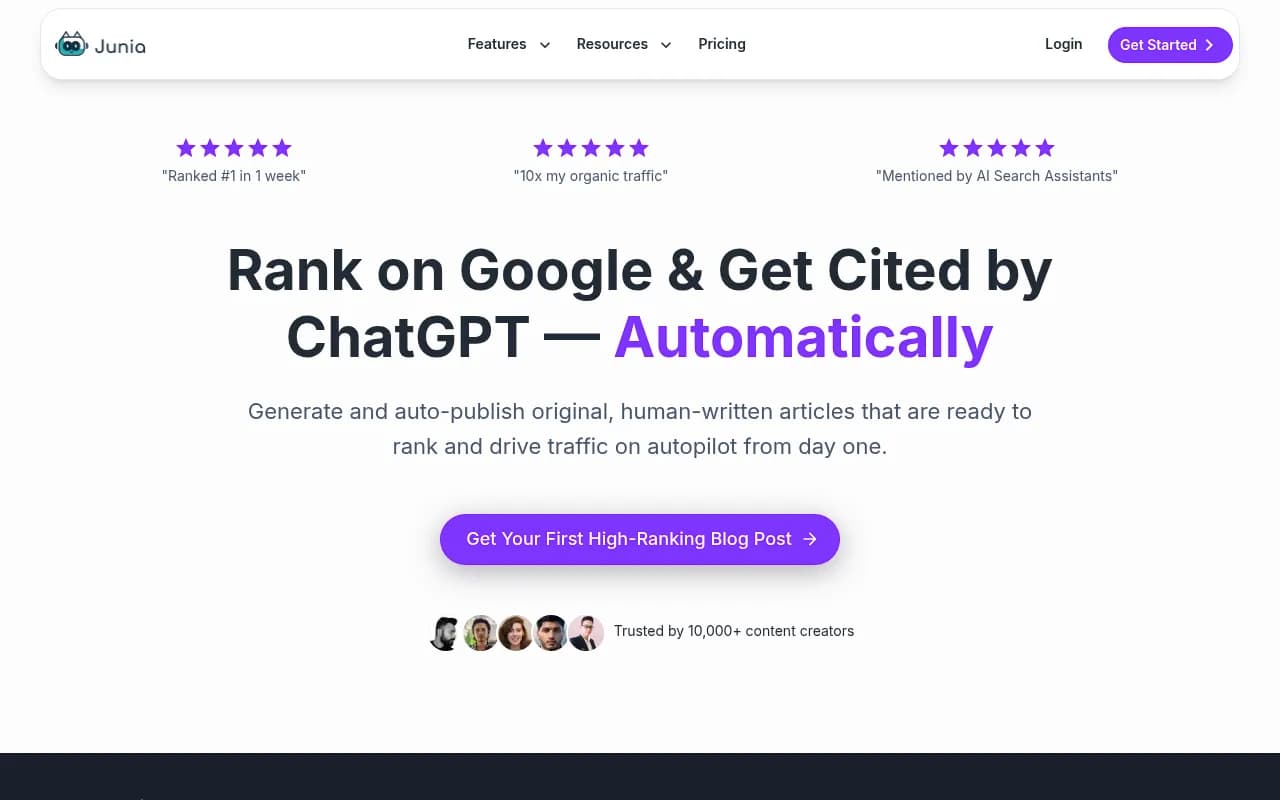
What Junia AI does well: it writes. The output quality is solid for SEO-oriented content, and the workflow for producing articles at scale is reasonably smooth. It has keyword research integration and can generate content briefs.
What it doesn't do: Junia AI has no prompt tracking, no citation monitoring, no crawler logs, and no way to tell you whether the articles it generates are actually being cited by AI models. It's an SEO content tool that has added GEO language to its marketing. That's not a knock -- it's just an accurate description of what it is. If you need to produce a lot of SEO content and want some AI optimization guidance baked in, it's a reasonable choice. If you need to know whether ChatGPT is citing your pages, it can't help you.
Atomic AGI
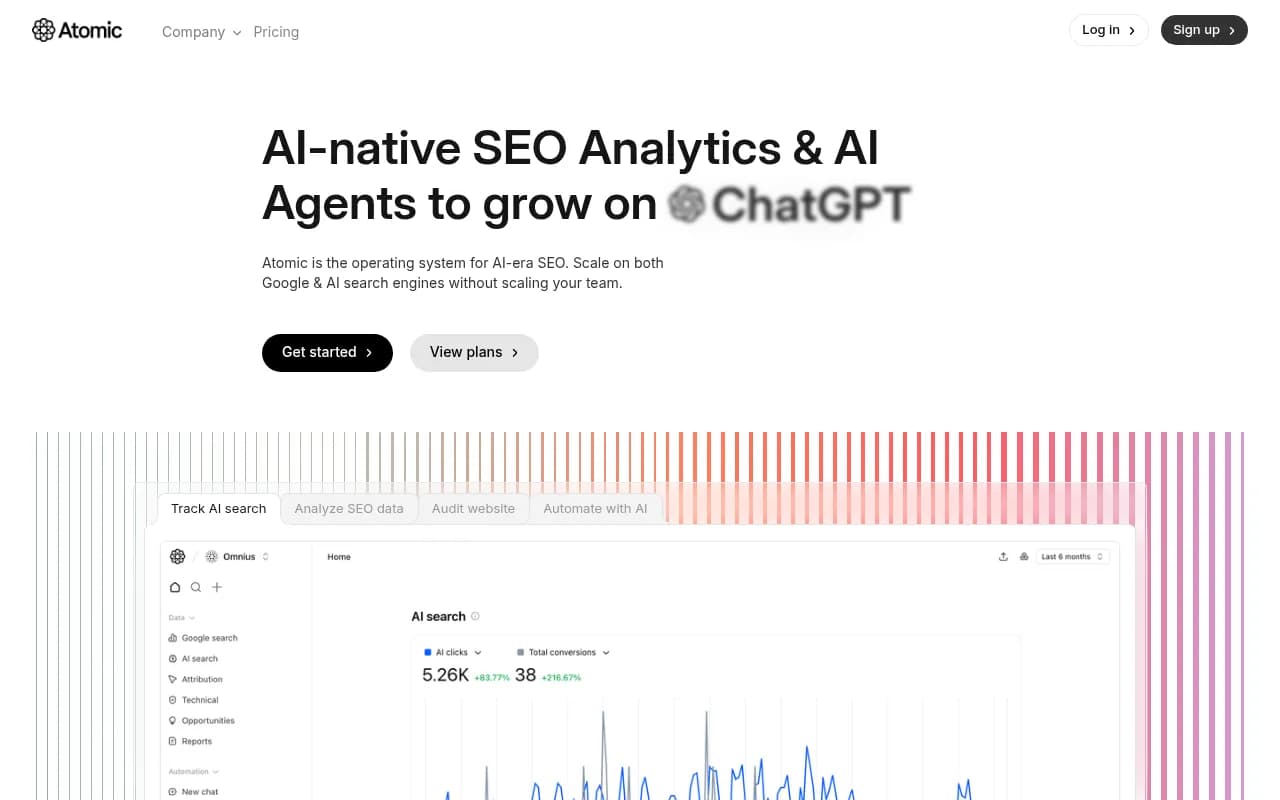
Atomic AGI positions itself as an AI-native SEO platform combining multi-engine tracking with workflow automation. It monitors brand visibility across AI search engines and has content workflow features.
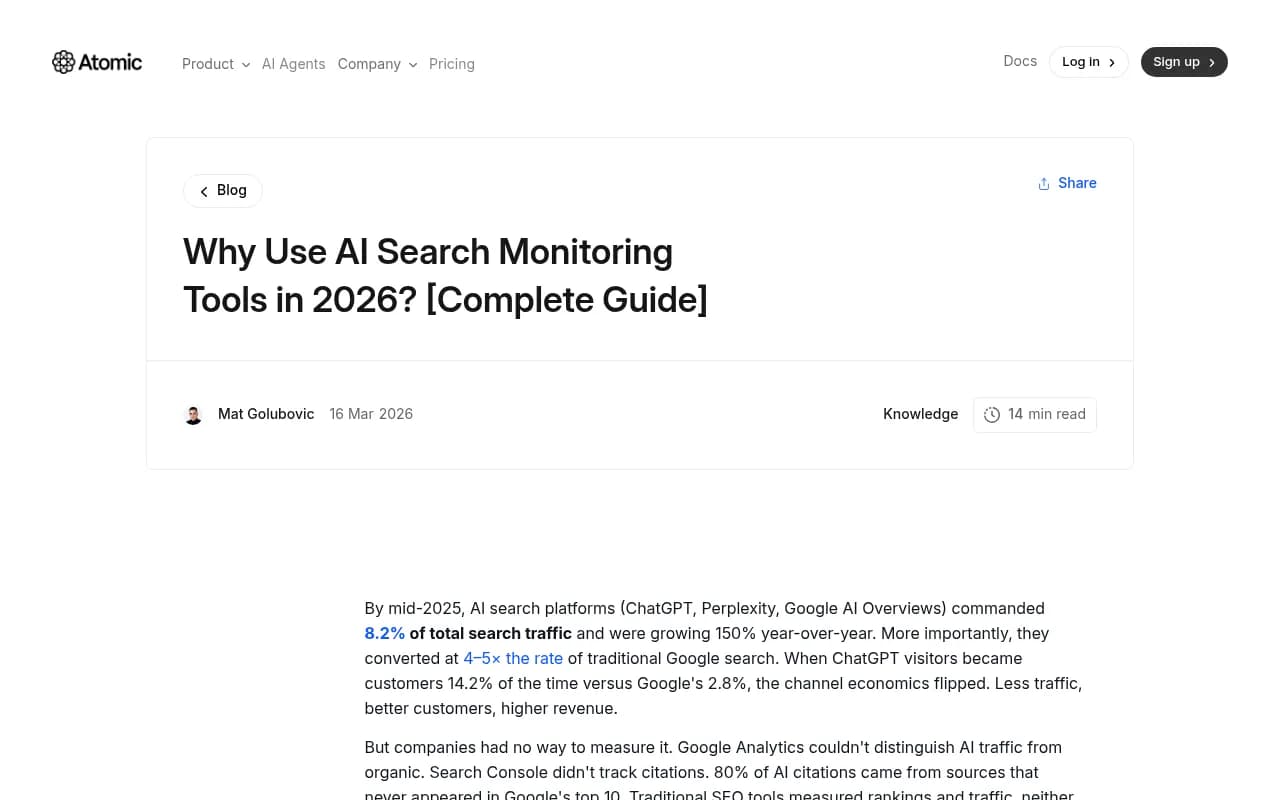
The platform's blog content (including a detailed guide on why to use AI search monitoring tools) shows genuine understanding of the GEO space. Atomic AGI tracks brand mentions, monitors competitor visibility, and provides some content optimization guidance.
Where it falls short: Atomic AGI's content features are more workflow-oriented than data-driven. It can help you manage content production, but the connection between its monitoring data and its content recommendations isn't as tight as it needs to be for true content-first GEO. There's no equivalent of a prompt-grounded content brief that tells you exactly which question to answer and why.
Searchable
Searchable is one of the more interesting entrants in this space -- it explicitly combines AI search visibility tracking with content generation in a single platform. The pitch is that you can monitor where you're missing from AI responses and then generate content to fill those gaps without switching tools.
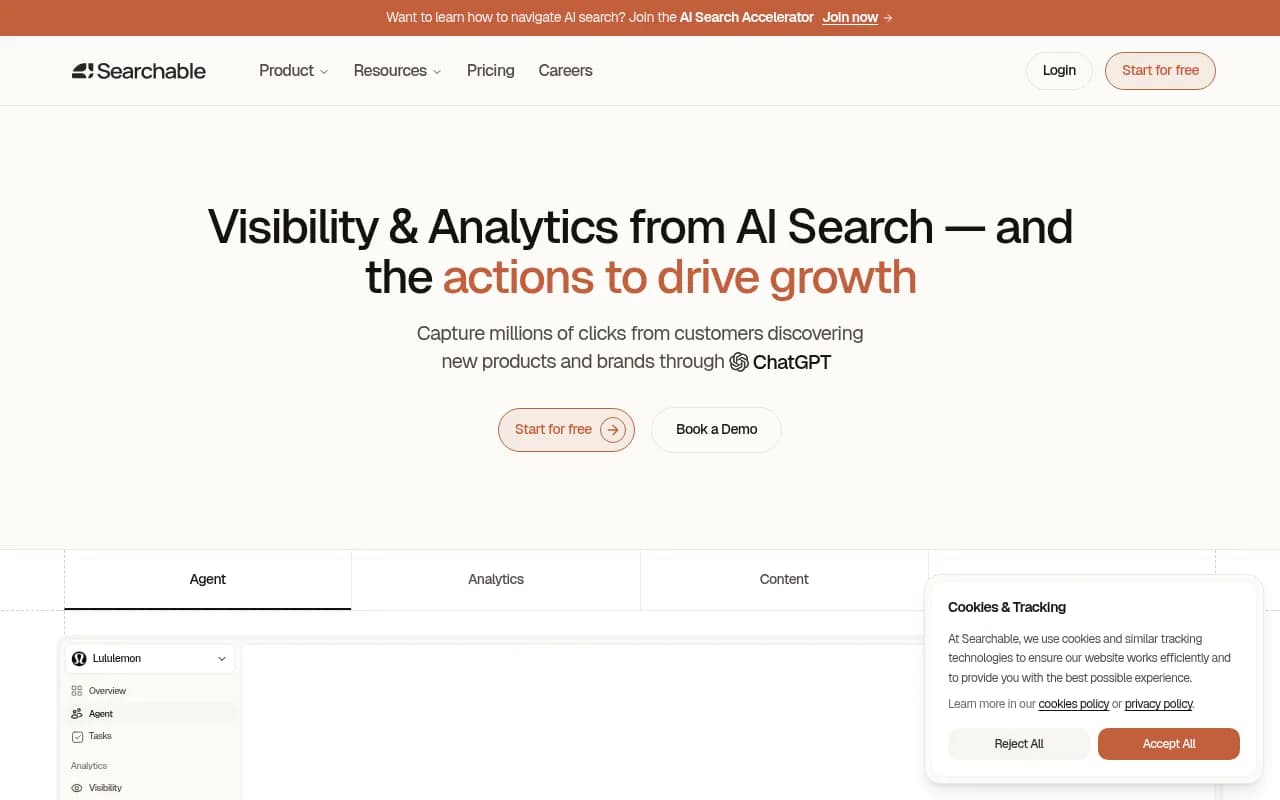
That's the right idea. The execution is more limited than it sounds. Searchable's content generation is functional but not deeply grounded in prompt data the way a purpose-built GEO content tool needs to be. The monitoring side covers the major AI engines, but the depth of citation analysis and the granularity of prompt tracking lag behind the more specialized platforms.
For smaller teams that want a single tool and don't need deep analytics, Searchable is worth evaluating. For teams that need to understand why they're being cited (or not), and need content that's engineered around real prompt data, it's a starting point rather than a complete solution.
Promptwatch
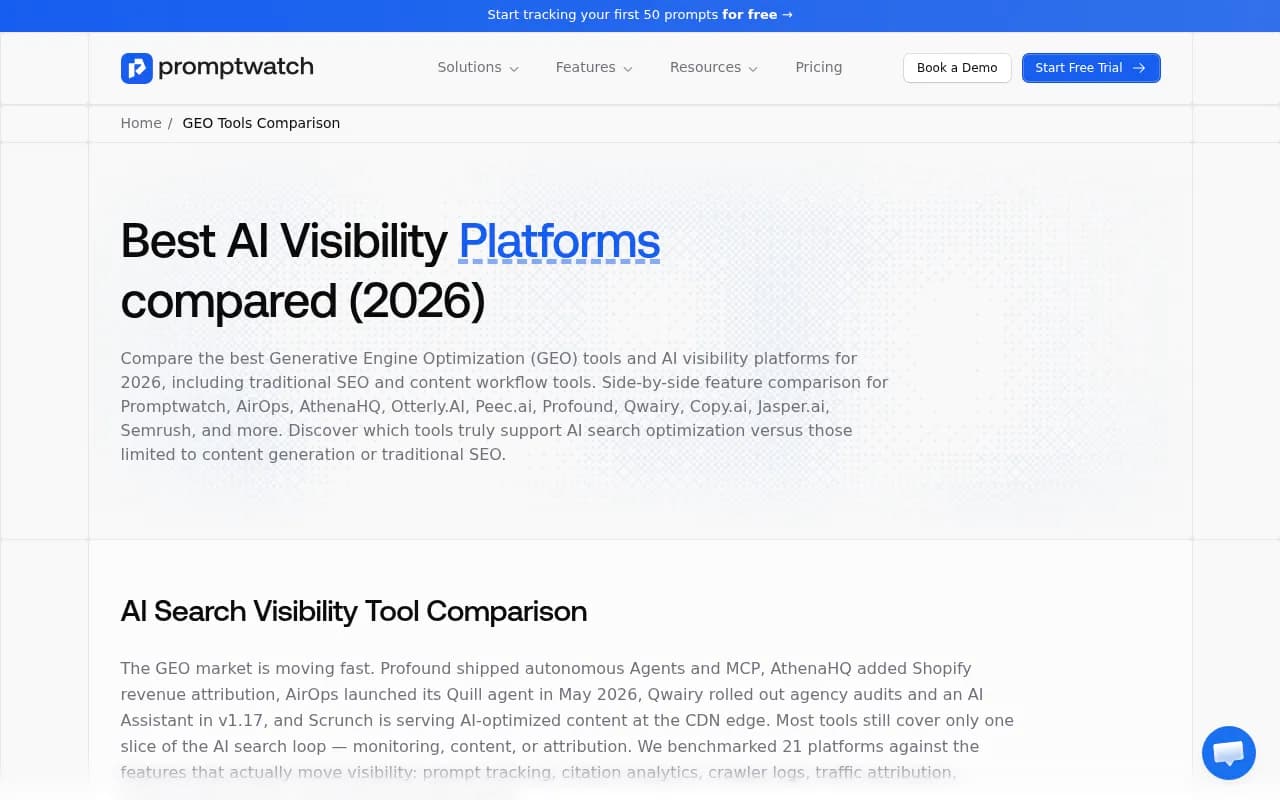
Promptwatch is the most complete platform in this comparison. It's built around a specific loop: find the gaps in your AI visibility, generate content to close those gaps, then track whether that content gets cited.

The Answer Gap Analysis shows exactly which prompts competitors are visible for that you aren't -- not as a generic content opportunity, but as a specific question an AI model is already answering from a competitor's source. The Content Agents then generate articles grounded in that prompt data, citation data, prompt volumes, and competitor analysis. And the page-level tracking shows you when those articles start getting cited, by which models, and how often.
That full loop is what separates Promptwatch from the other three platforms in this comparison. Junia AI stops at content generation. Atomic AGI stops at monitoring plus workflow. Searchable combines both but with less depth. Promptwatch connects all three stages with data that's specific to how AI models actually behave.
Feature comparison
| Feature | Junia AI | Atomic AGI | Searchable | Promptwatch |
|---|---|---|---|---|
| AI search monitoring | No | Yes | Yes | Yes |
| Prompt tracking (volume + difficulty) | No | Limited | Limited | Yes |
| Citation analytics | No | Basic | Basic | Deep |
| Answer gap analysis | No | No | Partial | Yes |
| Content generation | Yes (SEO-focused) | Workflow-based | Yes | Yes (prompt-grounded) |
| Content briefs from prompt data | No | No | Partial | Yes |
| AI crawler logs | No | No | No | Yes |
| Page-level citation tracking | No | No | No | Yes |
| Reddit/YouTube insights | No | No | No | Yes |
| ChatGPT Shopping tracking | No | No | No | Yes |
| Traffic attribution | No | No | No | Yes |
| Multi-model coverage | No | Yes | Yes | Yes (10 models) |
| Free trial | Yes | Yes | Yes | Yes |
Which platform actually produces the most citable articles?
This is the core question, and the honest answer is: it depends on what you mean by "citable."
If you mean articles that are well-written and cover a topic thoroughly, Junia AI and Promptwatch both produce strong output. Junia AI has been doing this longer and has a polished writing workflow.
If you mean articles that are specifically engineered to answer the questions AI models are already responding to in your category -- grounded in real prompt data, citation data, and gap analysis -- Promptwatch is the only platform in this comparison that can do that. You're not guessing what to write. You're writing to fill a specific gap that the data has identified.
The difference matters more than it might seem. AI models don't cite content randomly. They cite content that answers specific questions with enough authority and clarity that the model can pull from it confidently. Writing a good article about "project management for remote teams" is different from writing an article that specifically addresses the question "what's the best project management tool for async remote teams?" in a way that matches how ChatGPT or Perplexity constructs its response to that prompt.
Promptwatch's Content Agents are designed around the second approach. The briefs include the actual prompts, the sources currently being cited, the prompt volume, and competitor analysis. That's a different starting point than a keyword brief.
Pricing comparison
| Platform | Entry price | What you get |
|---|---|---|
| Junia AI | ~$49/mo | Content generation, SEO optimization, brand voice |
| Atomic AGI | Varies (contact for pricing) | AI monitoring + workflow features |
| Searchable | Varies (contact for pricing) | Monitoring + content generation |
| Promptwatch | $99/mo (Essential) | 1 site, 50 prompts, 5 articles/mo |
| Promptwatch | $249/mo (Professional) | 2 sites, 150 prompts, 15 articles, crawler logs |
| Promptwatch | $579/mo (Business) | 5 sites, 350 prompts, 30 articles |
Junia AI is the cheapest entry point if you just need content output. Promptwatch's Essential plan at $99/mo is reasonable for a team that wants to start tracking AI visibility and generating prompt-grounded content. The Professional plan at $249/mo adds crawler logs and more granular tracking, which is where the platform starts to show its full capability.
Who should use which platform
The right choice depends on what stage you're at and what problem you're actually trying to solve.
Use Junia AI if you need to produce a lot of SEO content efficiently and want AI optimization guidance baked into the writing workflow. It's not a GEO platform in any meaningful sense, but it's a solid content tool.
Use Atomic AGI if you want AI search monitoring with content workflow features and you're comfortable with a platform that's still building out its GEO capabilities. It's a reasonable choice for teams that want monitoring plus some content management in one place.
Use Searchable if you're a smaller team that wants a single tool combining visibility tracking and content generation, and you don't need deep prompt analytics or crawler logs. It's a good starting point.
Use Promptwatch if you want to close the full loop: know exactly which prompts you're invisible for, generate content specifically designed to fill those gaps, and track whether that content gets cited. It's the right choice for marketing teams and SEO teams that are serious about AI search visibility as a channel, not just a checkbox.
The data layer is the real differentiator
One thing worth saying directly: the quality of the content a GEO platform generates is only as good as the data it's generating from.
Junia AI generates from keyword research and SEO signals. That's fine for Google. For AI search, it's incomplete.
Promptwatch generates from prompt data -- actual questions users are asking AI models, with volume estimates, difficulty scores, and citation data showing which sources are currently winning. That's a fundamentally different input, and it produces fundamentally different output.
The research from Atomic AGI's own blog makes this point well: by mid-2025, 80% of AI citations came from sources that never appeared in Google's top 10. If your content strategy is built on Google keyword data, you're optimizing for the wrong signal.
That's the core argument for using a platform like Promptwatch over a traditional SEO content tool with GEO branding. The data layer isn't a feature -- it's the whole point.
Bottom line
All four platforms will help you produce content. Only one will tell you whether that content is getting cited, by which AI models, and what to write next to improve your visibility.
If you're evaluating these platforms for a team that takes AI search seriously as a channel, start with Promptwatch's free trial and run the Answer Gap Analysis against your actual category. The gap report alone is usually enough to show you what your current content strategy is missing.
For teams that need pure content output at scale and aren't yet tracking AI citations, Junia AI is a reasonable choice. For teams somewhere in between, Searchable and Atomic AGI are worth evaluating -- just go in with clear expectations about where each one stops.