Key takeaways
- Being cited in AI-generated answers is the new search ranking -- traditional SEO metrics don't capture this at all
- The 3-step framework (find gaps, create content, track citations) turns AI visibility from a passive dashboard into an active improvement loop
- Most brands are stuck at step one: they monitor their AI visibility but never act on it
- Content that gets cited by AI models shares specific traits: clear structure, direct answers, topical authority, and entity signals
- Closing the loop -- connecting citations to actual traffic and revenue -- is what separates teams that grow from teams that just report
Something shifted in 2025 and it's now impossible to ignore. When someone asks ChatGPT "what's the best project management tool for remote teams" or Perplexity "which CRM should a B2B startup use," they get a synthesized answer with sources -- not a list of ten blue links. The brand that gets cited in that answer wins the customer. The brand that doesn't might as well not exist for that query.
This is the new competitive arena. And the uncomfortable truth is that ranking #1 on Google doesn't guarantee you'll appear in AI answers. One study found only 12% of ChatGPT citations matched URLs on Google's first page. Your SEO success and your AI visibility are largely separate problems.
So how do you actually improve your AI search visibility in a systematic way? Not by guessing. Not by publishing more content and hoping. There's a repeatable 3-step framework that works: find the gaps, create content that gets cited, and track what happens. Let's walk through each step.
Step 1: Find the gaps -- know where you're invisible
You can't fix what you can't see. The first step is understanding your current AI footprint: which prompts trigger your brand to appear, which ones surface competitors instead, and which ones you're missing entirely.
This is harder than it sounds. Traditional analytics tools don't capture AI citations. Google Search Console won't tell you that Perplexity cited your competitor 47 times this week for the query "best email marketing tool for ecommerce." You need purpose-built visibility data.
What "gap analysis" actually means in practice
Answer gap analysis is the process of identifying prompts where your competitors appear in AI-generated answers but you don't. It's not about keywords in the traditional sense -- it's about the specific questions, comparisons, and use-case queries that AI models are answering every day.
For example, if you sell HR software and a competitor consistently gets cited when someone asks "how do I automate employee onboarding," that's a gap. You're not invisible because your product is worse -- you're invisible because you don't have clear, structured content that answers that specific question in a way AI models can parse and cite.
The gaps tend to cluster around a few patterns:
- Comparison queries ("X vs Y" or "alternatives to X") where competitors have dedicated pages and you don't
- Use-case questions that your product solves but your website never explicitly addresses
- FAQ-style prompts where a direct, structured answer would get cited but your content buries the answer in long prose
- Industry or persona-specific queries where your content is too generic
Tools for finding your gaps
Promptwatch is built specifically for this. Its Answer Gap Analysis shows you the exact prompts where competitors are visible but you're not, along with prompt volume estimates and difficulty scores so you can prioritize which gaps are worth closing first.

Beyond dedicated GEO platforms, a few other approaches help surface gaps:
- Run your target queries manually across ChatGPT, Perplexity, Claude, and Gemini. Note who gets cited and why. It's slow but revealing.
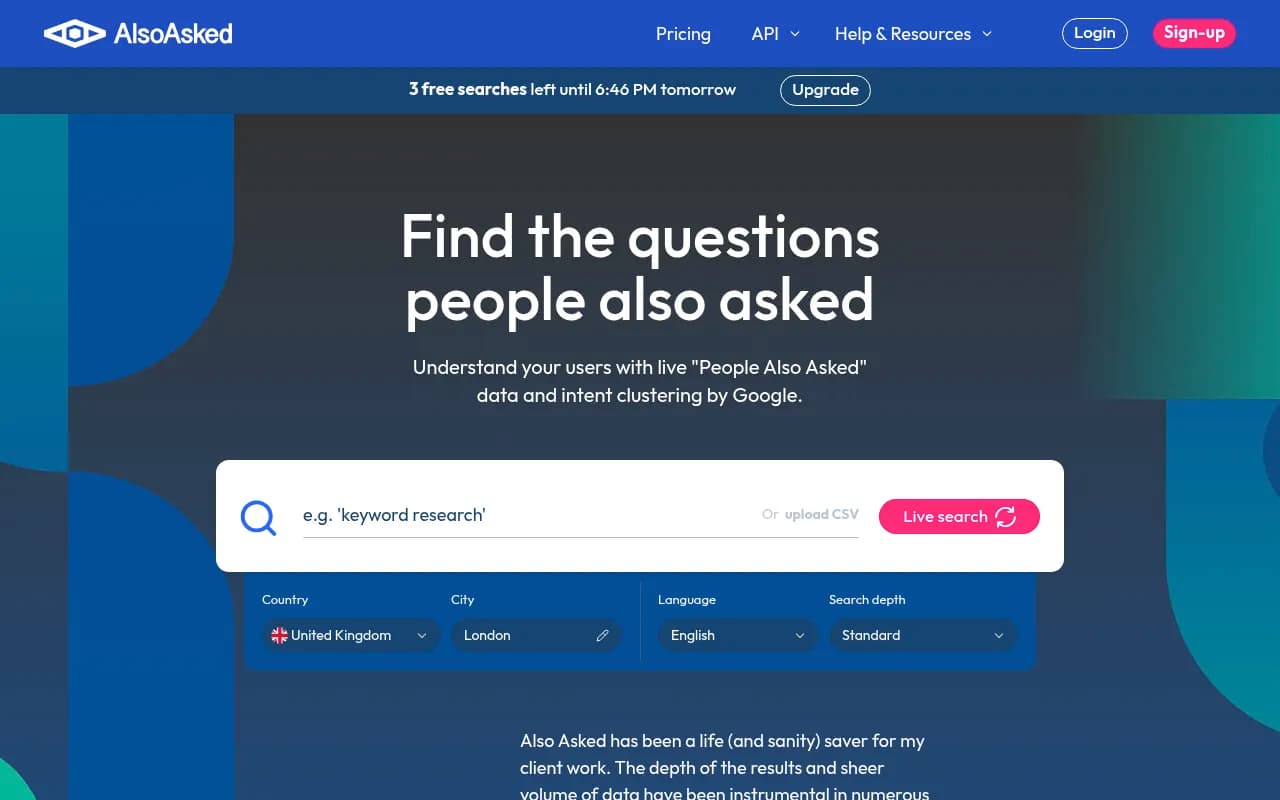
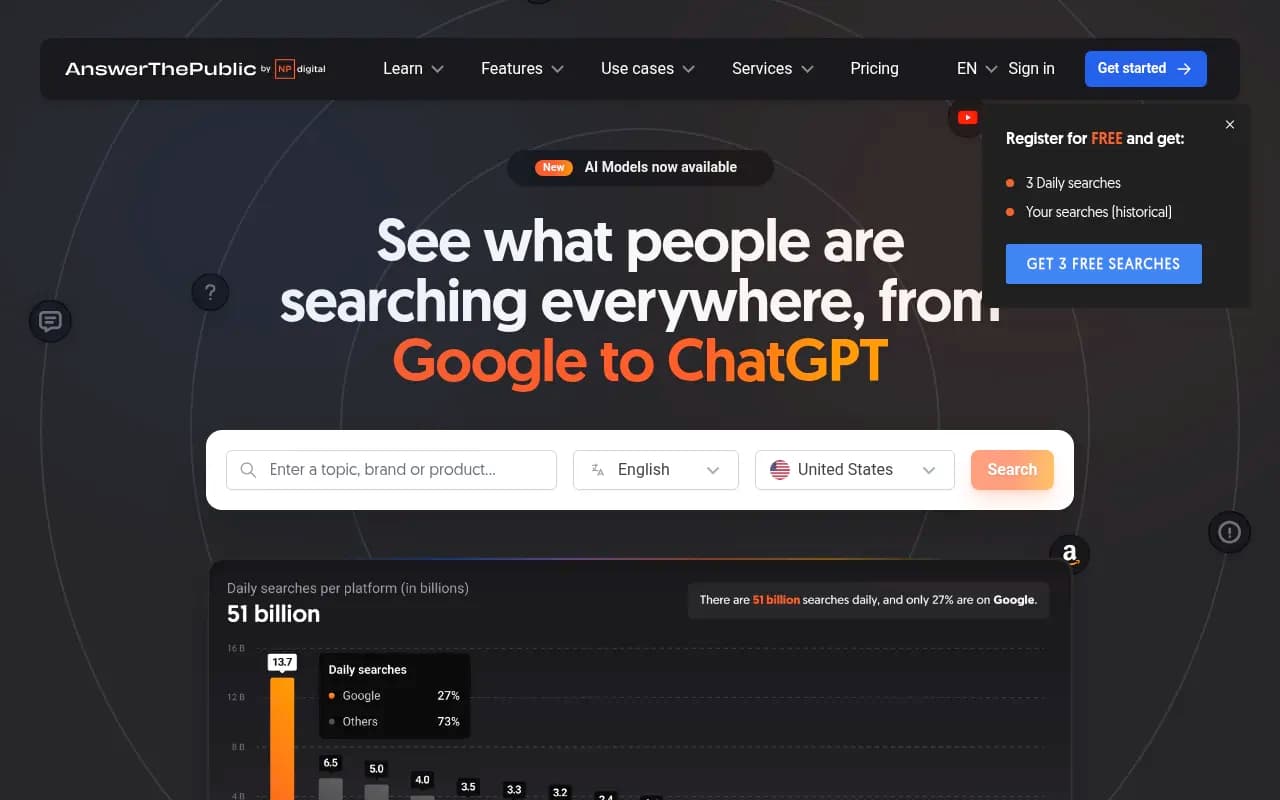
- Use tools like AlsoAsked or AnswerThePublic to map the question landscape around your topic area -- these surface the kinds of conversational queries AI models field constantly.
- Check Reddit threads in your niche. AI models frequently cite Reddit discussions, and the questions people ask there are often the same ones they ask AI assistants.
Once you have a list of gaps, prioritize ruthlessly. Not every gap is worth closing. Focus on prompts with meaningful volume, reasonable difficulty, and clear commercial intent.
Step 2: Create content that AI models actually cite
Here's where most brands stall. They identify the gaps, feel good about having a list, and then... produce the same content they always have. Generic blog posts. Keyword-stuffed landing pages. Content written for humans skimming a feed, not for AI models synthesizing answers.
AI models cite content differently than search engines rank it. The signals that matter are different.
What makes content citation-worthy
Based on patterns across billions of AI citations, a few content characteristics consistently predict whether a piece gets cited:
Direct, structured answers. AI models are trying to synthesize a response to a specific question. If your content buries the answer in paragraph four after three paragraphs of context-setting, the model may skip it. Lead with the answer. Use headers that match the question. Make it easy for an AI to extract the relevant passage.
Topical authority and depth. A single page that comprehensively covers a topic -- including sub-questions, edge cases, and related concepts -- tends to get cited more than shallow content. AI models reward genuine expertise, not keyword density.
Entity signals. Your brand, your product, your team members, and your company's associations with specific topics all function as entities that AI models track. Consistent mentions across authoritative sources (publications, directories, review sites) strengthen these signals. Schema markup helps too, though it's not a silver bullet.
Freshness. AI models increasingly favor recently updated content, especially for fast-moving topics. A page that was last updated in 2023 is at a disadvantage for queries about current best practices.
E-E-A-T signals. Experience, Expertise, Authority, Trust -- the framework Google uses for quality evaluation -- applies to AI citations too. Author credentials, citations to primary sources, original data, and clear organizational identity all matter.
Writing content engineered for AI citation
The practical implication: you need content that's structured like a direct answer, not like a traditional blog post. Think:
- FAQ sections with clear question-and-answer pairs
- Comparison tables that directly address "X vs Y" queries
- Step-by-step guides with numbered sections (AI models love numbered lists)
- Definition pages that establish your brand as the authoritative source for key terms in your space
For the actual writing and optimization, several tools help:
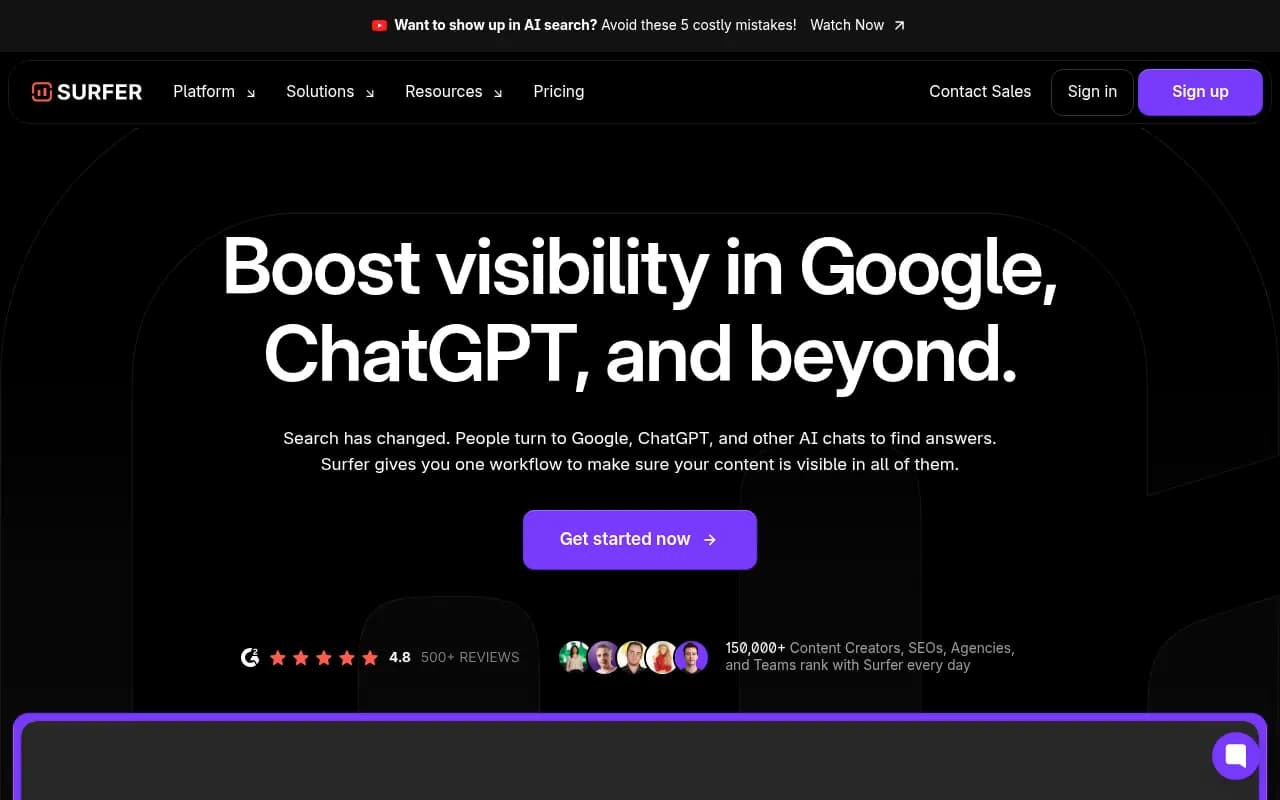
Surfer SEO and Clearscope analyze top-performing content and help you match the topical coverage that AI models expect to see.

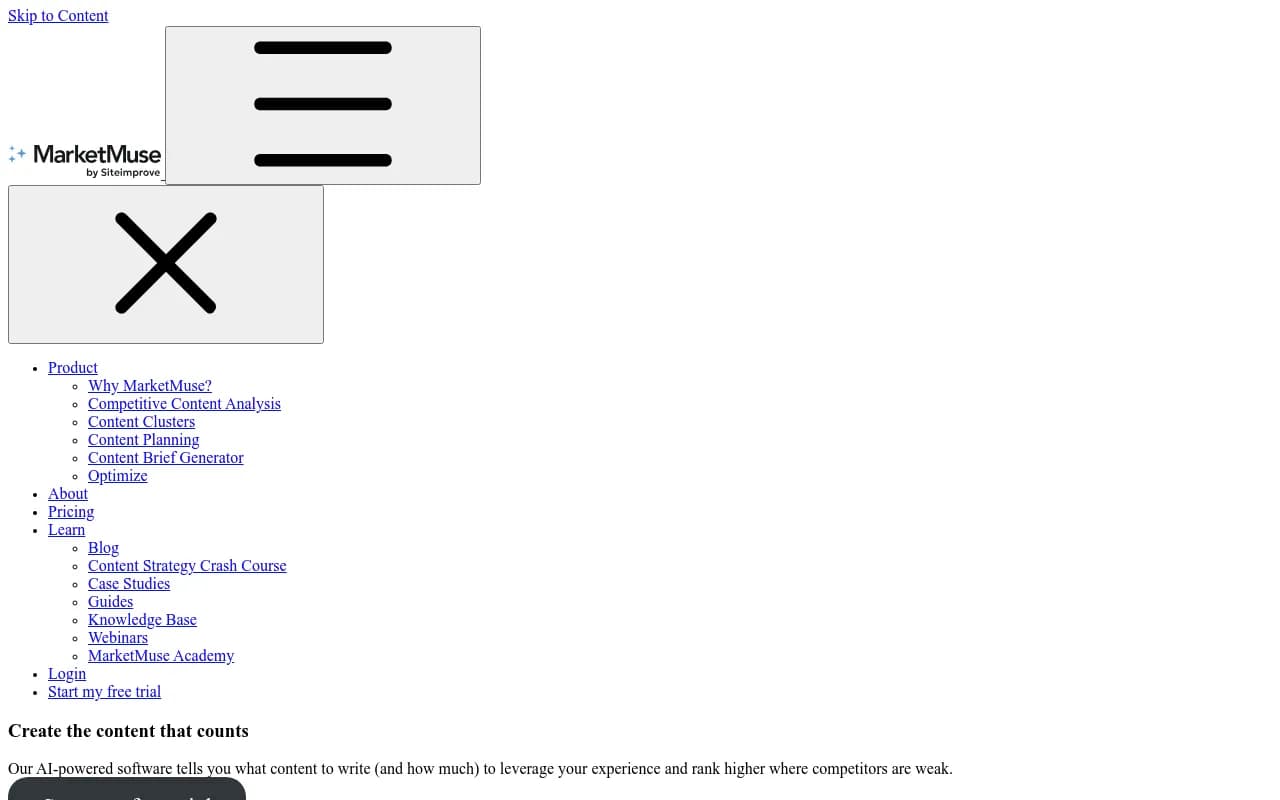
MarketMuse goes deeper on content planning -- it maps topic clusters and identifies the specific subtopics you need to cover to establish authority in a given area.
For actually generating the content, Promptwatch's built-in AI writing agent is worth mentioning here because it's grounded in real citation data. It doesn't just write generic articles -- it generates content based on what's actually being cited across 880M+ analyzed citations, which means the output is calibrated for AI discoverability rather than just readability.
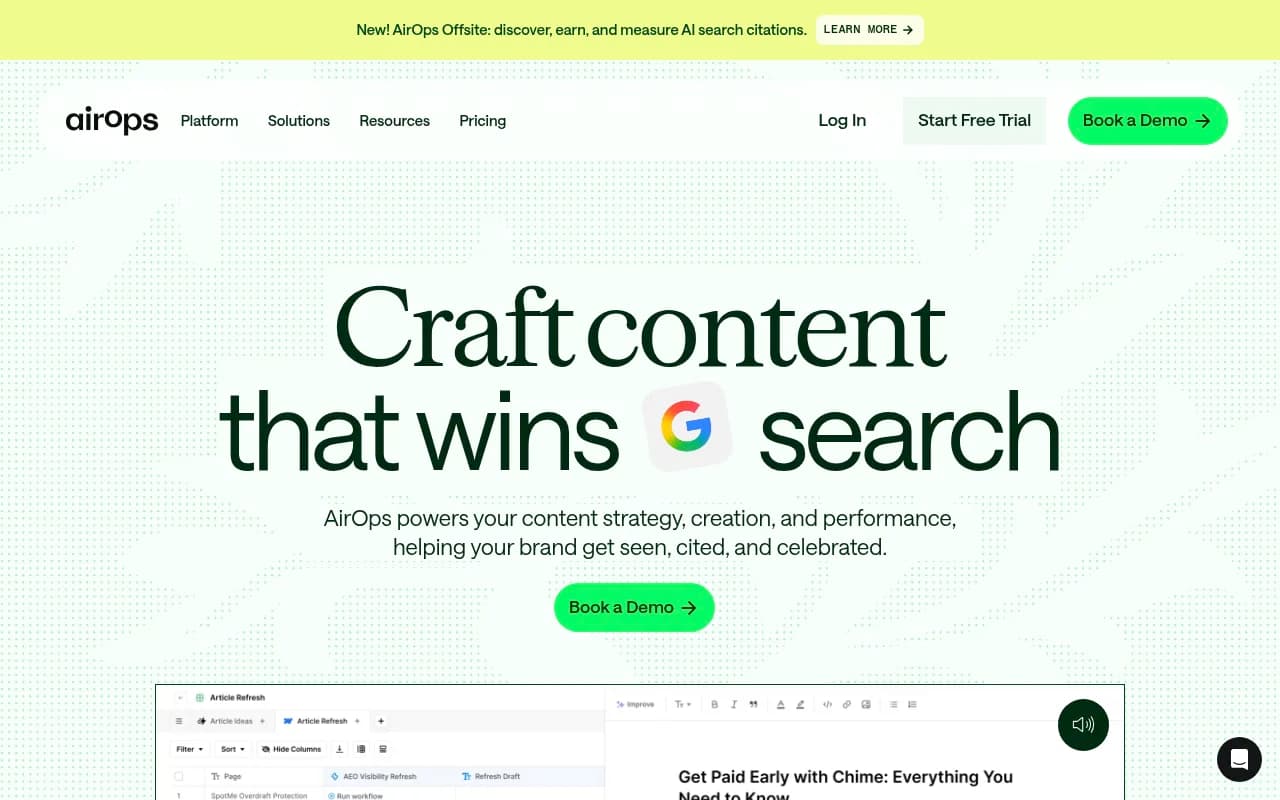
AirOps is another strong option for teams that want to build content workflows at scale, with AI agents that can research, draft, and optimize content for AI search visibility.
Don't ignore Reddit and YouTube
This is counterintuitive but important: AI models frequently cite Reddit discussions and YouTube videos in their answers. If your brand or topic area has a presence on these platforms, that content can directly influence AI recommendations.
A well-structured Reddit AMA, a detailed YouTube tutorial, or even a comment thread where your product gets recommended -- these all feed into the citation ecosystem. Most brands ignore this channel entirely.
Step 3: Track citations and close the loop
Creating content is not the end of the process. You need to know whether it's working -- which pages are getting cited, by which AI models, for which prompts, and whether those citations are translating into actual traffic and revenue.
This is where most teams fall short. They publish content, check their AI visibility dashboard once a month, and call it done. That's not optimization -- that's reporting.
What to track
Citation frequency by page. Which specific pages on your site are being cited, how often, and by which AI models? A page that's cited frequently by Perplexity but never by ChatGPT might need structural changes to match ChatGPT's citation preferences.
Prompt-level visibility. For each target prompt, are you appearing? Are you appearing in position one (the primary recommendation) or buried in a list? Are you gaining or losing ground versus competitors?
AI crawler activity. Which AI crawlers (GPTBot, ClaudeBot, PerplexityBot) are visiting your site? Which pages are they reading? Are they encountering errors? Crawler logs reveal how AI engines discover and index your content -- and where they're hitting dead ends.
Traffic attribution. The hardest but most important metric: are AI citations actually driving visitors to your site? This requires either a tracking snippet, Google Search Console integration, or server log analysis to identify traffic from AI referrers.
Tools for tracking
Promptwatch covers all of this in one place -- page-level citation tracking, prompt visibility scores, AI crawler logs, and traffic attribution. For teams that want a single platform rather than stitching together multiple tools, it's the most complete option available.
For teams that want to start simpler, several monitoring tools track AI visibility without the full optimization layer:
Otterly.AI tracks brand mentions across ChatGPT, Perplexity, and Google AI Overviews. Good for getting started, though it's monitoring-only -- it won't tell you why you're not appearing or what to do about it.
Otterly.AI

Profound is a strong enterprise option with coverage across 9+ AI engines and solid reporting capabilities.
Profound

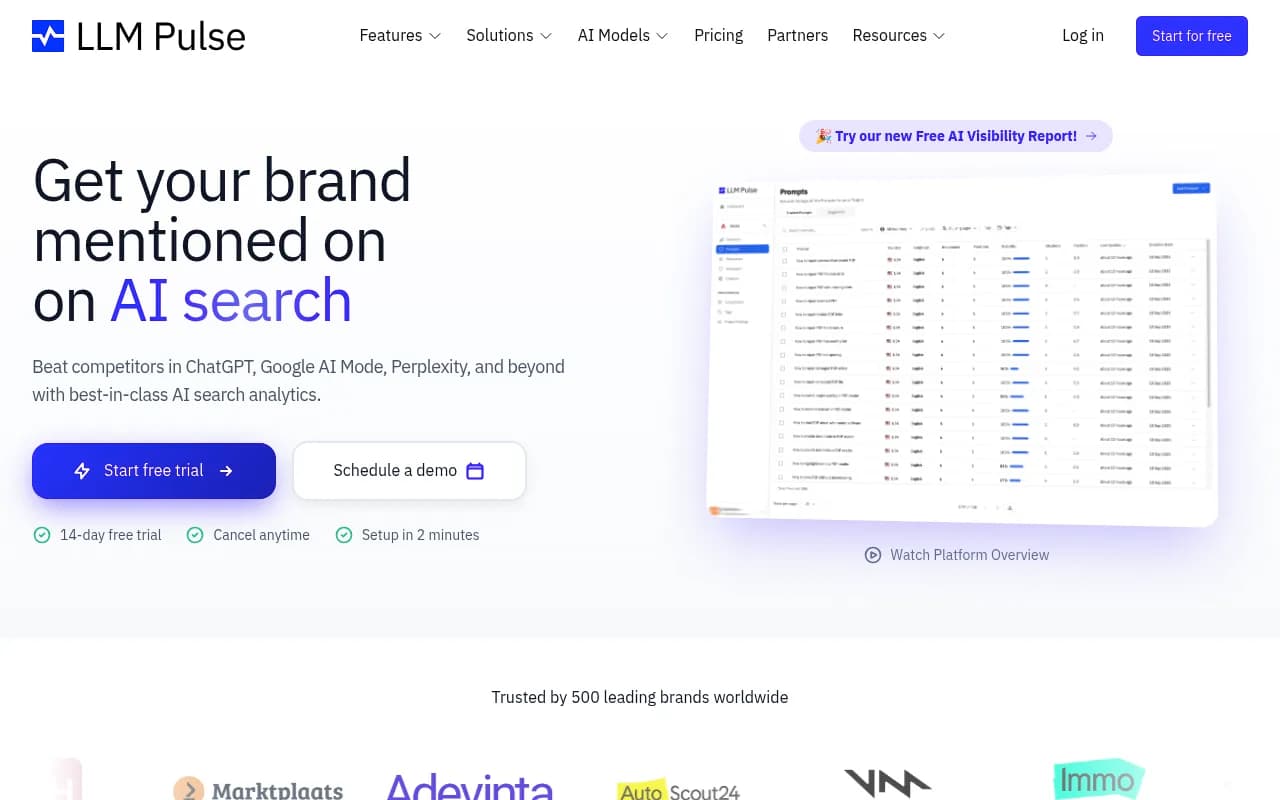
LLM Pulse and Rankshift are lighter-weight options for teams that just need basic citation monitoring to start.

Comparing the main tracking approaches
| Tool | AI models tracked | Crawler logs | Content generation | Traffic attribution | Best for |
|---|---|---|---|---|---|
| Promptwatch | 10+ | Yes | Yes (AI writing agent) | Yes | Full optimization loop |
| Profound | 9+ | No | No | Limited | Enterprise monitoring |
| Otterly.AI | 3 | No | No | No | Basic monitoring |
| LLM Pulse | 5+ | No | No | No | Lightweight tracking |
| Rankshift | 3 | No | No | No | Simple brand tracking |
| AthenaHQ | 5+ | No | No | No | Monitoring-focused teams |
The pattern is clear: most tools stop at monitoring. They show you the data but leave you to figure out what to do with it. The 3-step framework only works if you can close the loop -- see the gap, fix it, verify the fix worked.
Putting it together: the improvement loop
The 3-step framework isn't a one-time project. It's a cycle.
You find gaps, create content to fill them, track whether the content gets cited, then find the next set of gaps. Each iteration makes you more visible. Each citation builds the entity signals that make future citations more likely. Over time, you're not just appearing in AI answers -- you're becoming the source AI models default to for your topic area.
The brands winning at AI search visibility in 2026 are the ones who've turned this into an operational discipline, not a quarterly audit. They have someone (or a team) responsible for monitoring prompt visibility weekly, publishing citation-optimized content regularly, and reviewing crawler logs to catch indexing issues before they compound.
That's the real difference between brands that show up in AI answers and brands that don't. It's not luck. It's not domain authority from 2019. It's a repeatable process, run consistently, with the right tools to measure what's working.
Start with step one. Pick 20 prompts that matter to your business. Find out where you're invisible. Then go fix it.