Key takeaways
- Enterprise brands have a significant head start in AI search visibility, but the gap is largely structural -- not permanent.
- The main causes are content depth, domain authority, and the fact that most SMBs haven't started tracking AI visibility at all.
- AI search engines like ChatGPT, Perplexity, and Google AI Overviews pull from a different set of signals than traditional Google rankings -- which means the playing field isn't as locked in as it looks.
- SMBs that act now -- tracking their visibility, identifying content gaps, and publishing content specifically engineered for AI citation -- can close meaningful ground in 2026.
- Tools purpose-built for AI visibility tracking (not just traditional SEO) are the starting point.
The gap is real -- and it's widening
If you've asked ChatGPT or Perplexity a question about your industry lately, you've probably noticed something: the same handful of enterprise brands keep showing up. The big names. The ones with the content teams, the PR budgets, the Wikipedia pages.
This isn't coincidence. A March 2026 report on AI brand visibility found that single-platform strategies leave brands "vulnerable to invisible gaps in AI search coverage" -- and that enterprise brands are already accelerating their response. They're not just passively benefiting from their existing authority; they're actively investing in AI visibility as a distinct discipline.
Meanwhile, most SMBs are still treating AI search the same way they treated SEO in 2012: assuming it'll sort itself out, or that their existing content will carry over. It won't, at least not reliably.
The data from AirOps' 2026 State of AI Search report makes the structural problem clear: visibility in AI search now depends on freshness, off-site credibility, and content clarity -- not just domain authority. That's both the bad news and the good news. Enterprise brands have the authority advantage, but SMBs can compete on freshness and clarity if they move fast.
Why enterprise brands dominate AI search results
They have more content, and it's older
AI models are trained on and retrieve from a vast corpus of web content. Enterprise brands have been publishing detailed, authoritative content for years -- whitepapers, case studies, comparison guides, product documentation. That content has accumulated citations, backlinks, and mentions across the web.
When an AI model tries to answer "what's the best CRM for mid-market companies," it's drawing on everything it knows about the topic. Brands that have been discussed, cited, and referenced extensively across credible sources are more likely to appear. A 10-person SaaS company with a 20-page website is competing against Salesforce's library of thousands of indexed, cited pages.
They're cited across more sources
According to SearchAtlas research, brand AI visibility correlates strongly with how often a brand is mentioned across third-party sources -- review sites, industry publications, Reddit threads, YouTube videos, and news coverage. Enterprise brands have PR teams generating exactly this kind of off-site presence constantly.
An SMB might have great reviews on Google and a solid LinkedIn presence, but that's a thin citation footprint compared to a brand that gets covered in TechCrunch, cited in analyst reports, and discussed in subreddits with 200,000 members.
They've started investing in GEO specifically
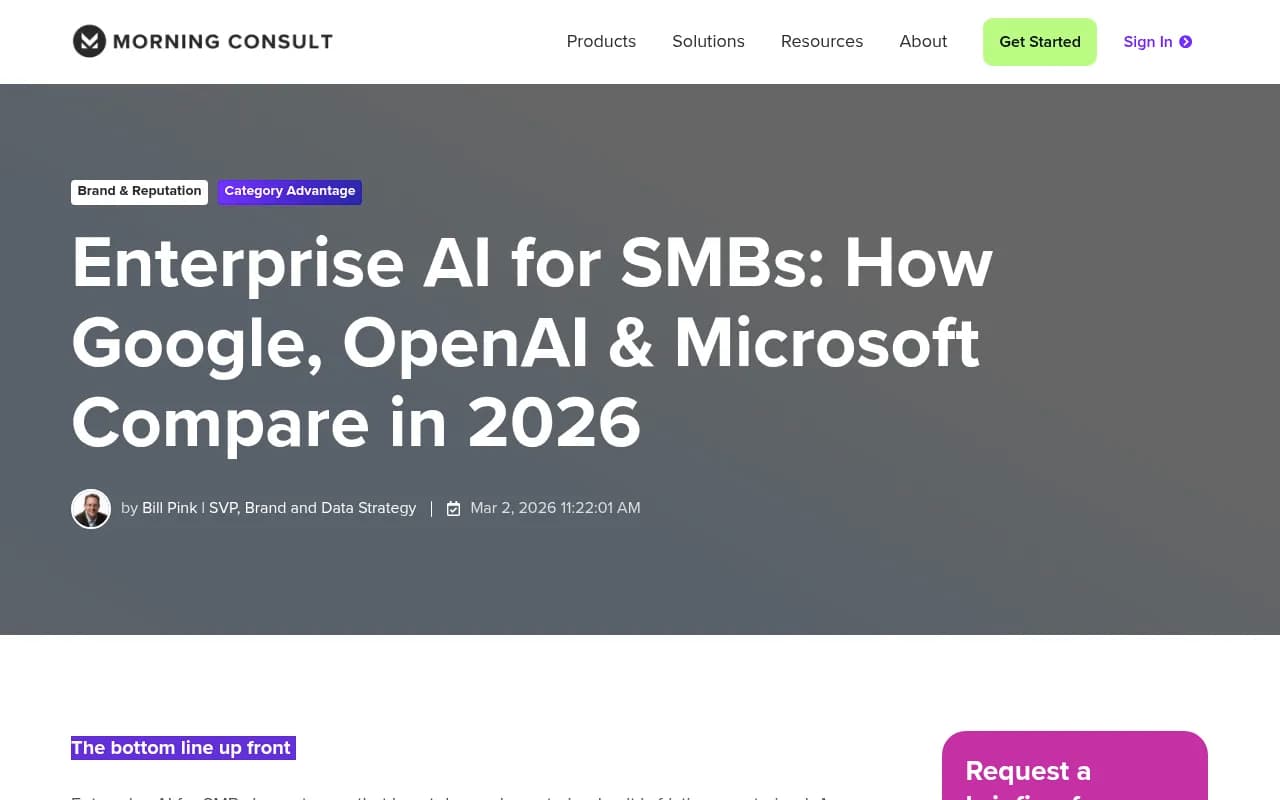
The Morning Consult data on enterprise AI adoption among SMBs is telling: Google, OpenAI, and Microsoft collectively capture nearly three-quarters of mental market share in the enterprise AI category. The brands that are winning are the ones that have made trust, security, and operational clarity their core message -- and they've done it consistently across every channel AI models can read.
Enterprise marketing teams are now running dedicated Generative Engine Optimization (GEO) programs. They're tracking which prompts they appear for, analyzing competitor citations, and publishing content specifically designed to be cited by AI models. Most SMBs haven't started this process yet.
They have better technical foundations
AI crawlers -- the bots that ChatGPT, Claude, Perplexity, and others send to read your website -- need to be able to access and parse your content cleanly. Enterprise sites typically have better technical infrastructure: faster load times, cleaner HTML, proper structured data, and fewer crawl errors.
An SMB running on a slow WordPress install with broken internal links and no schema markup is harder for AI crawlers to read. That content might be excellent, but if it's not being crawled reliably, it won't get cited.
The SMB disadvantage isn't just about resources
It's tempting to frame this as purely a budget problem -- enterprises have more money, so they win. But that's not quite right. The deeper issue is awareness and prioritization.
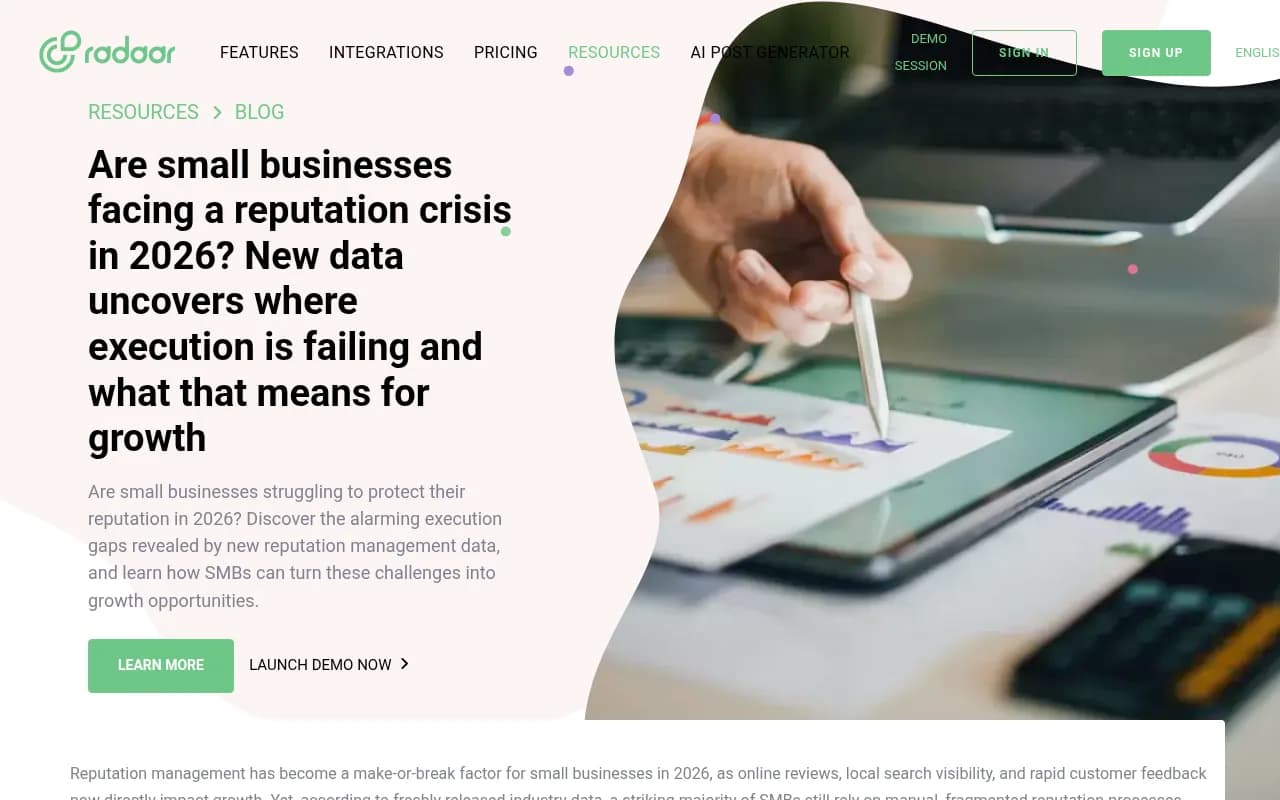
Radaar's 2026 reputation management research found that 74.5% of small businesses recognize online visibility as critically important, yet over 60% still rely on manual, fragmented processes. The execution gap is real. SMBs know they need to be visible; they just haven't adapted their processes to the new reality of AI-driven discovery.
The specific blockers are worth naming:
- Most SMBs don't know which AI prompts are relevant to their business, let alone which ones they're invisible for
- There's no established workflow for creating content that gets cited by AI models (as opposed to content that ranks in Google)
- The tools that exist for AI visibility tracking have historically been priced for enterprise budgets
- There's no clear feedback loop -- you publish content, but you don't know if it's being cited by ChatGPT or Perplexity
This is a solvable problem. The tools have gotten better and more affordable. The playbook is becoming clearer. But SMBs need to start.
What AI search actually rewards
Before getting into tactics, it's worth being precise about what AI models are actually looking for when they decide which brands to cite.
AI search isn't just "better Google." The signals are different:
- Topical authority: Does your content comprehensively cover a topic, or does it skim the surface? AI models favor sources that go deep on specific subjects.
- Citation patterns: Are you mentioned in discussions, reviews, and articles across the web? AI models synthesize from multiple sources, so your off-site presence matters as much as your own content.
- Freshness: Stale content gets deprioritized. AI models want current information, especially for fast-moving topics.
- Clarity and structure: Content that directly answers questions -- with clear headings, specific claims, and concrete details -- is easier for AI models to extract and cite.
- Entity recognition: Is your brand clearly associated with specific products, services, and use cases across the web? Ambiguity hurts.
The good news for SMBs: most of these signals are achievable without a massive budget. You don't need a PR team to publish a genuinely comprehensive guide on a topic you know deeply. You don't need an agency to make sure your content is structured clearly. You do need a system.
How SMBs can close the gap
Step 1: Find out where you actually stand
You can't fix what you can't see. The first step is understanding which AI prompts are relevant to your business, which ones you're appearing for, and which ones your competitors are winning.
This is where dedicated AI visibility tracking tools become necessary. Traditional SEO tools like Ahrefs or Semrush track Google rankings -- they don't tell you whether ChatGPT mentions you when someone asks "what's the best [your category] tool."
Promptwatch is built specifically for this: it tracks your brand's visibility across 10 AI models (ChatGPT, Perplexity, Claude, Gemini, Google AI Overviews, and more), shows you which prompts competitors appear for that you don't, and quantifies the gap. The Answer Gap Analysis feature is particularly useful for SMBs -- it shows you the specific content your site is missing, not just a vague score.

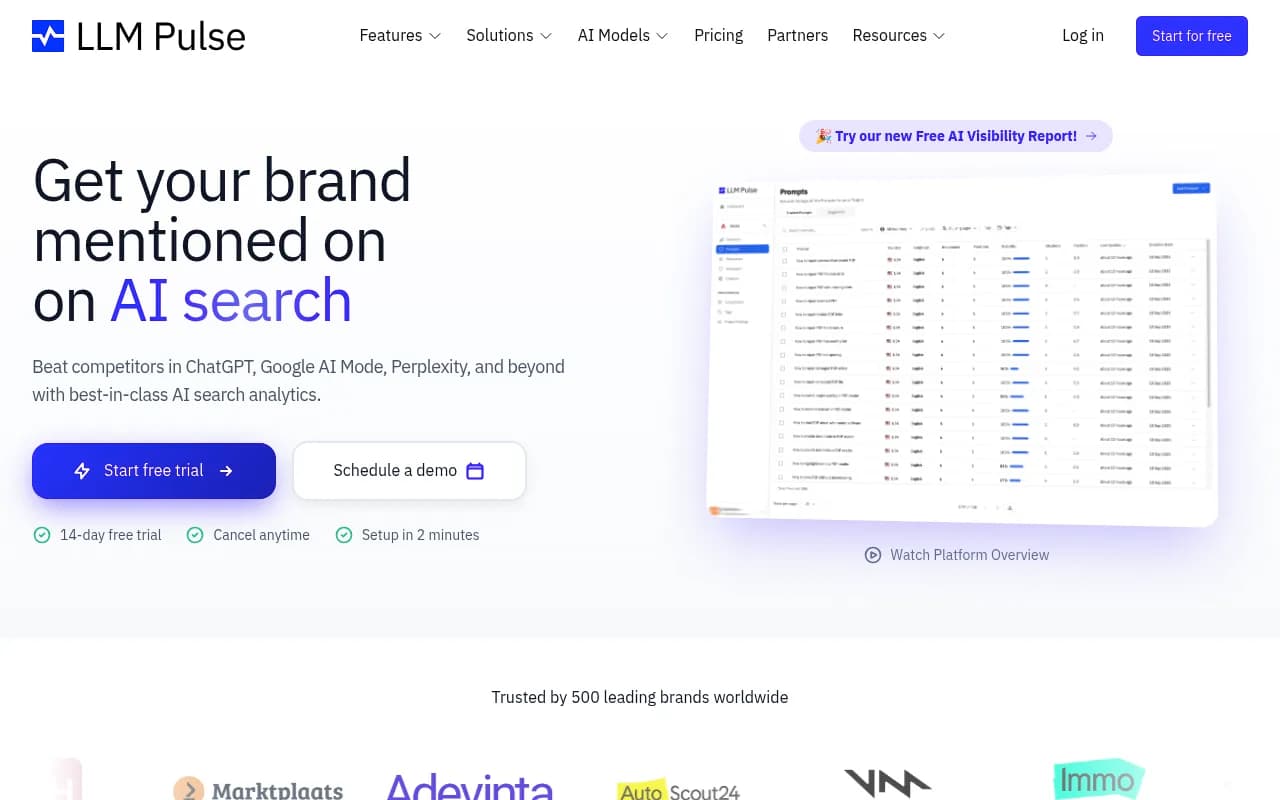
For SMBs that want to start with something simpler, tools like Rankshift and LLM Pulse offer basic AI visibility monitoring at lower price points.

Step 2: Identify your winnable prompts
Not all prompts are worth chasing. A small accounting firm isn't going to displace Intuit for "best accounting software" -- that's a lost cause. But "best accounting software for independent contractors in [city]" or "how to handle quarterly taxes as a freelancer" might be very winnable.
The key is finding prompts where:
- The search volume is meaningful (enough people are asking)
- Your competitors in AI search are weak (not the Salesforces of the world)
- You have genuine expertise to offer
Prompt volume and difficulty data -- the kind that tools like Promptwatch provide -- helps prioritize. Without it, you're guessing.
Step 3: Create content that AI models actually cite
This is where most SMBs get stuck. They know they need "more content," but they don't know what kind.
Content that gets cited by AI models tends to share a few characteristics:
- It answers specific questions directly, not vaguely
- It includes concrete data, examples, or comparisons
- It's structured so the relevant answer is easy to extract (clear headings, direct statements)
- It covers the topic more thoroughly than competing pages
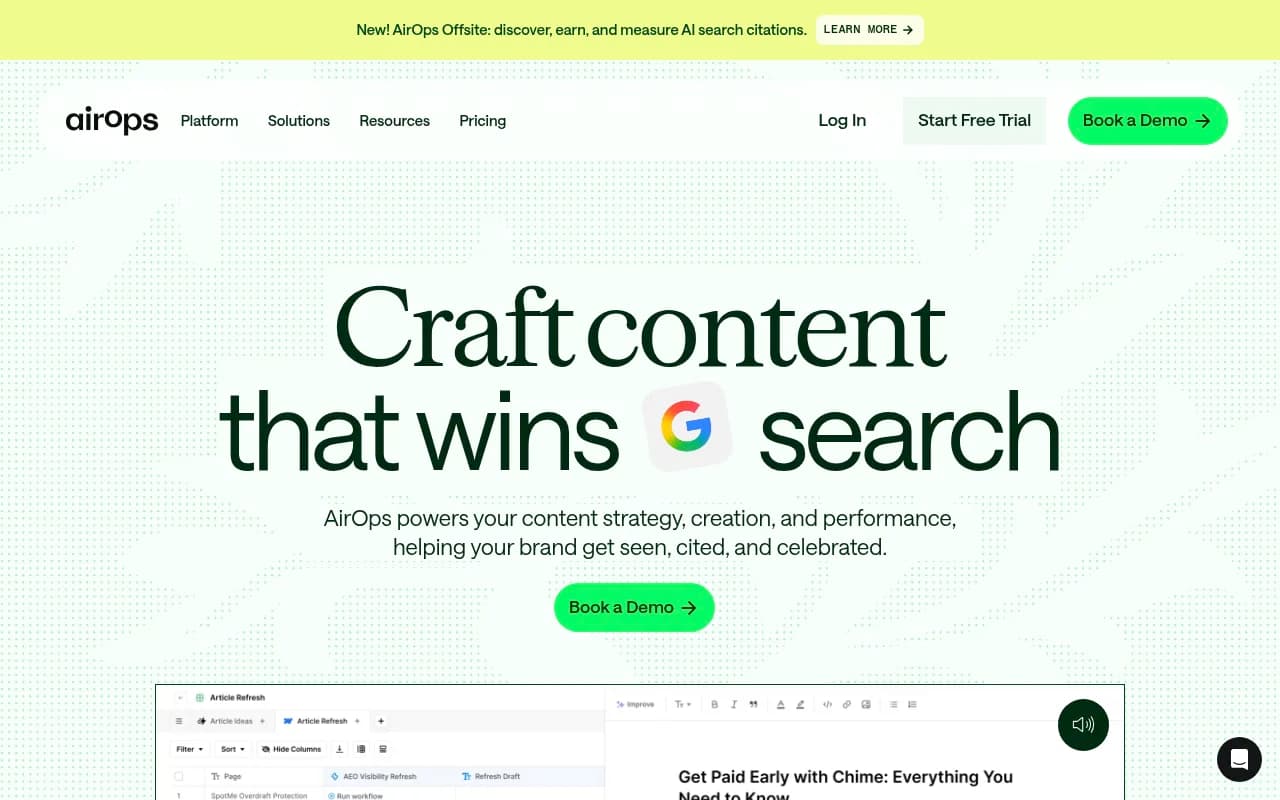
The AirOps 2026 State of AI Search report makes a useful distinction: AI models don't just want content that exists -- they want content that's clearly the best answer to a specific question. Generic blog posts that cover a topic at 500 words don't cut it.
Tools like AirOps can help with content creation specifically engineered for AI citation.
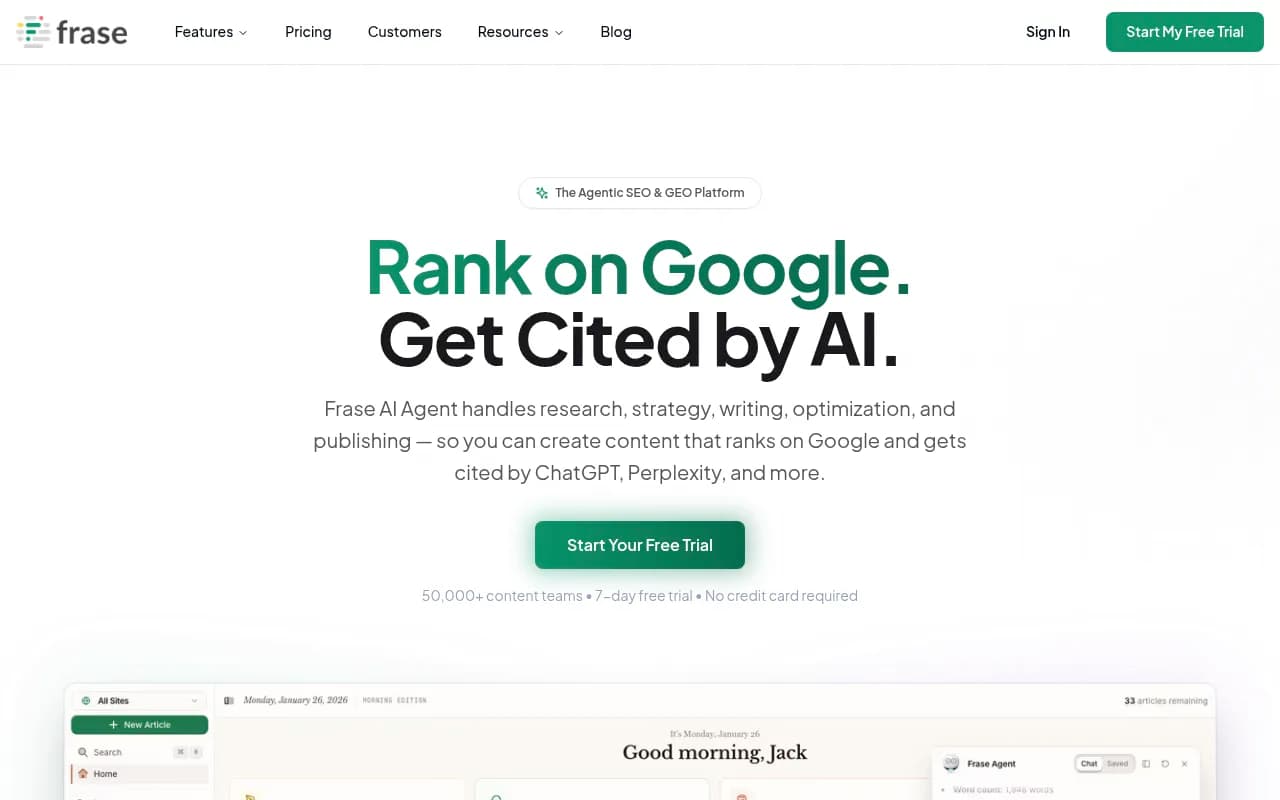
For SMBs that need help with the writing itself, platforms like Frase and MarketMuse offer content research and optimization capabilities.
Step 4: Build your off-site citation footprint
Your own website is only part of the picture. AI models pull from Reddit discussions, YouTube videos, review sites, industry publications, and news coverage. If your brand isn't being discussed in those places, you're invisible to a significant portion of what AI models read.
Practical tactics for SMBs:
- Answer questions in relevant Reddit communities (genuinely, not promotionally)
- Get listed and reviewed on industry-specific review platforms
- Contribute to industry publications and newsletters
- Encourage customers to mention your brand specifically in reviews (not just star ratings)
- Create YouTube content that answers the questions your customers ask
This is slow work, but it compounds. Every mention of your brand in a credible context is a signal that AI models can use.
Step 5: Fix your technical foundation
AI crawlers need to be able to read your site. Basic technical hygiene matters:
- Make sure your site loads quickly (under 3 seconds)
- Use proper heading structure (H1, H2, H3 in logical order)
- Add schema markup for your business type, products, and FAQs
- Make sure your robots.txt isn't blocking AI crawlers
- Fix broken links and crawl errors
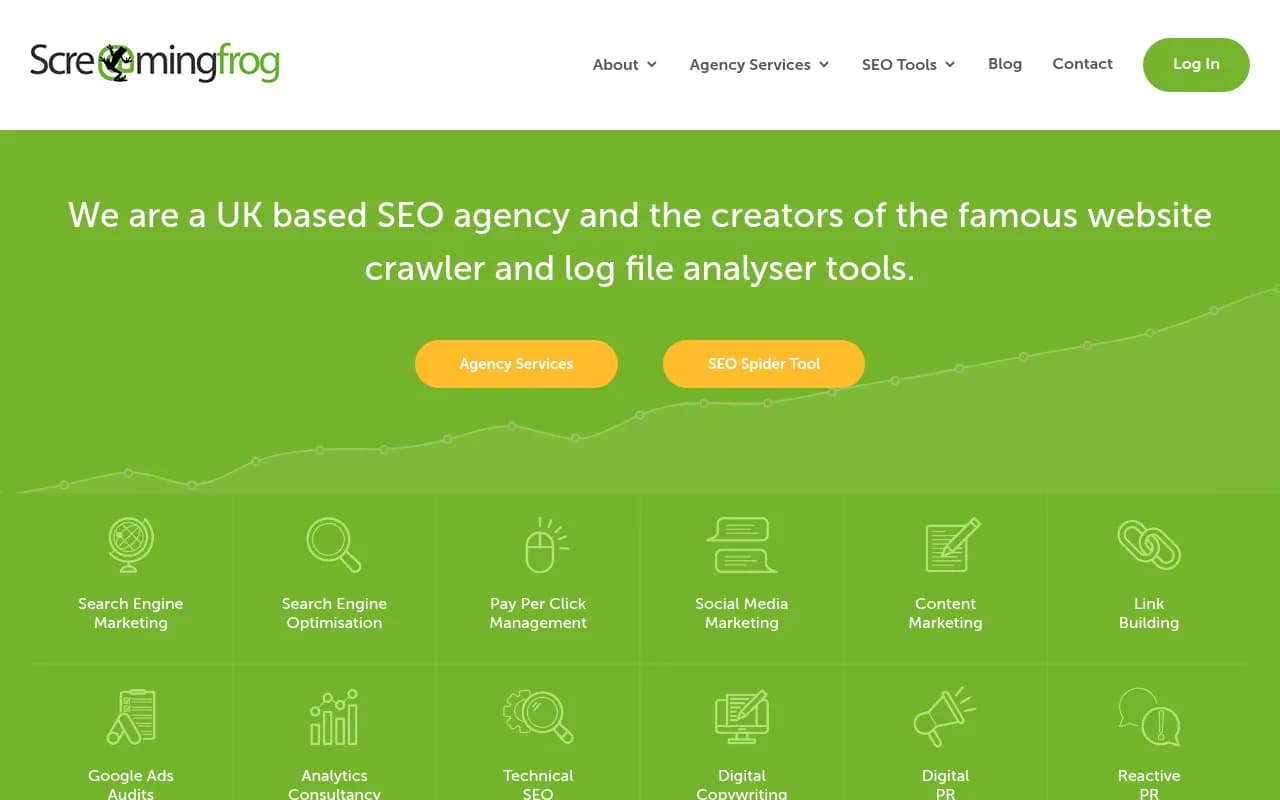
Tools like Screaming Frog SEO Spider can audit your site for technical issues.
If you want to specifically monitor how AI crawlers are interacting with your site -- which pages they're reading, which errors they're hitting -- Promptwatch's AI Crawler Logs feature does this in real time. Most SMBs have no idea whether GPTBot or ClaudeBot is even visiting their site.
Step 6: Track results and iterate
The brands that will win in AI search are the ones that treat it as a continuous optimization process, not a one-time project. Publish content, track whether your visibility improves, identify new gaps, repeat.
This requires a feedback loop. At minimum, you need to know:
- Which prompts you're appearing for (and how your rank changes over time)
- Which pages are being cited by AI models
- Whether your AI visibility is translating into actual traffic
Tool comparison: AI visibility tracking for SMBs
| Tool | Best for | Price range | Content generation | Crawler logs |
|---|---|---|---|---|
| Promptwatch | Full-cycle AI visibility (track + fix + measure) | $99-$579/mo | Yes (built-in AI writer) | Yes |
| Rankshift | Basic brand tracking across ChatGPT/Perplexity | Lower tier | No | No |
| LLM Pulse | Lightweight monitoring | Lower tier | No | No |
| Otterly.AI | Monitoring-only dashboard | Mid tier | No | No |
| Peec AI | Basic cross-LLM tracking | Lower tier | No | No |
| AirOps | Content creation for AI search | Mid-high tier | Yes | No |
| Profound | Enterprise-grade tracking | Higher tier | No | No |
The honest summary: most tools in this space are monitoring dashboards. They tell you where you stand but don't help you improve. For SMBs that want to actually close the gap -- not just measure it -- the combination of tracking and content generation in one platform matters a lot.
Otterly.AI


Profound

The window is open, but it won't stay open forever
Here's the uncomfortable truth: the AI search visibility gap between enterprise and SMB brands is going to get harder to close over time, not easier. Enterprise brands are investing now. They're building citation footprints, publishing comprehensive content, and running GEO programs. Every month that passes is another month of compounding advantage.
The opportunity for SMBs is real but time-limited. AI search is still new enough that the rankings aren't locked in. A well-executed content strategy targeting the right prompts can move the needle meaningfully in 2026 in a way that will be much harder in 2027 or 2028.
The brands that act now -- that start tracking their AI visibility, identify their winnable prompts, and publish content that AI models actually want to cite -- will be the ones that show up when their customers ask ChatGPT or Perplexity for a recommendation. The ones that wait will find the enterprise brands have locked in the answers.
Start with visibility. Know where you stand. Then fix it.