Key takeaways
- Most AI writing tools in 2026 still stop at content generation -- they produce text but give you no way to know if it's working.
- A new category of platforms has emerged that connects content creation to measurable outcomes: AI search visibility, citation tracking, and traffic attribution.
- The tools worth investing in are those that close the loop between "we published something" and "here's what happened in AI search."
- For teams serious about AI search visibility, the combination of a content generation tool and a dedicated GEO tracking platform is now the baseline, not a luxury.
- Pure-play AI writers (Jasper, Copy.ai, Writesonic) remain useful for speed, but they don't tell you whether your content is getting cited by ChatGPT, Perplexity, or Google AI Overviews.
The problem with "just generate" in 2026
Two years ago, the pitch for AI writing tools was simple: write faster, publish more, rank higher. That worked well enough when Google was the only search engine that mattered and ranking meant appearing in a blue-link SERP.
That world is gone.
Today, a significant portion of search traffic never reaches a website at all. Users ask ChatGPT, Perplexity, or Google AI Mode a question and get a synthesized answer. If your content isn't being cited in those answers, you're invisible to a growing slice of your audience -- and most AI writing tools have no way to tell you that.
This is the central tension in the AI content tool market right now. The generation side has matured fast. You can produce a 2,000-word article in minutes with Jasper, Copy.ai, or Writesonic. The quality is genuinely good. But "good" and "visible in AI search" are two different things, and the gap between them is where most content teams are quietly losing ground.
The platforms that have evolved in 2026 are the ones that figured out the second half of the equation.
How the market split in two
If you look at the AI content tool landscape today, it's split pretty cleanly into two camps.
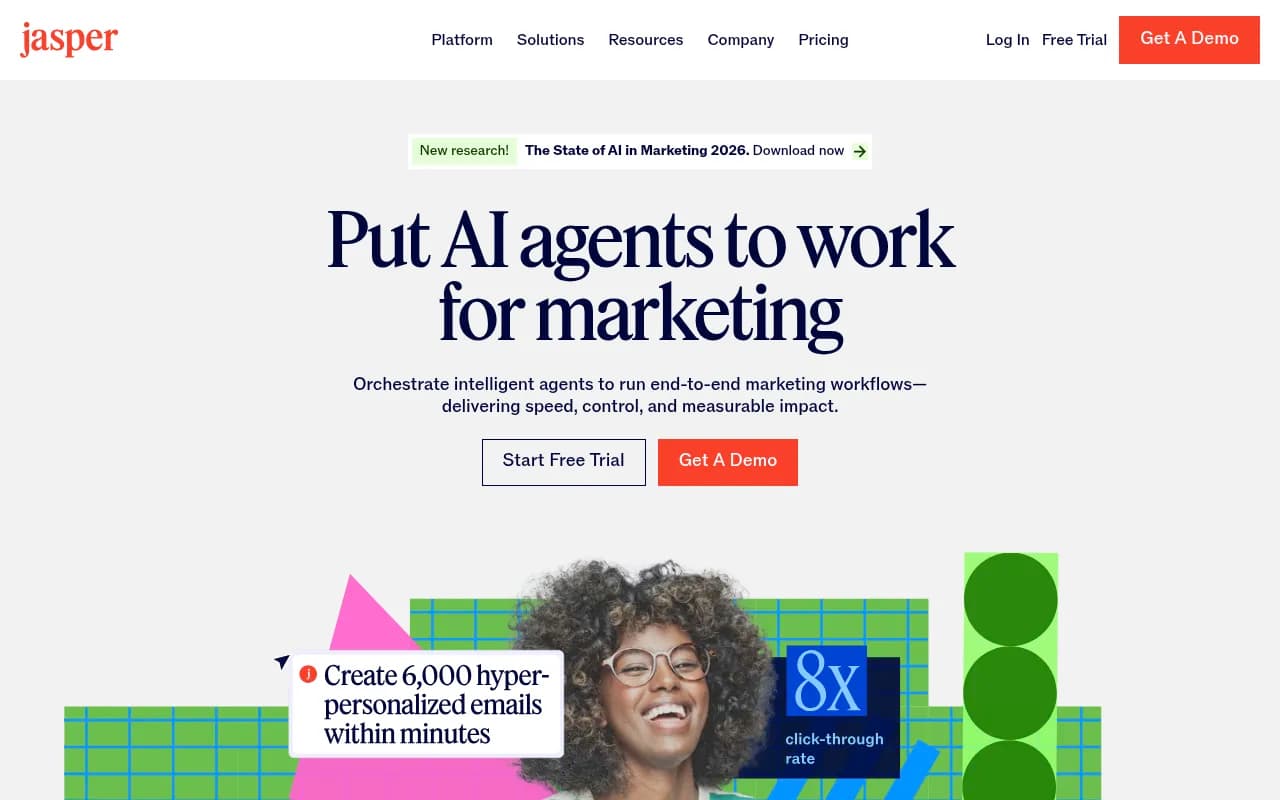
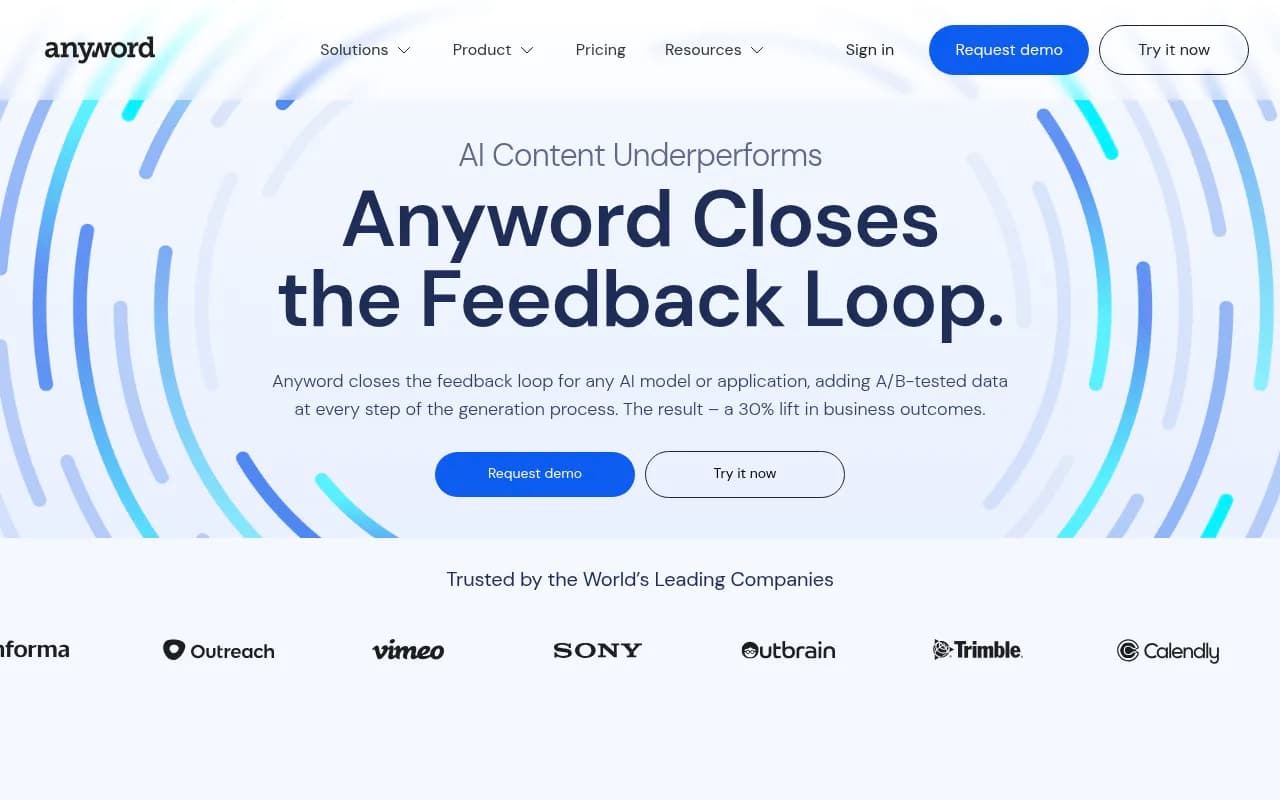
The first camp is pure generation: tools that take a brief, a keyword, or a topic and produce content. They're fast, they're getting cheaper, and most of them have decent SEO optimization baked in (content scoring, keyword density, readability). Jasper, Copy.ai, Writesonic, Rytr, and Anyword all live here.


The second camp is what I'd call the "close the loop" category: platforms that connect content creation to measurable outcomes in AI search. These tools track whether your content is being cited by ChatGPT or Perplexity, identify the gaps where competitors are visible and you're not, and in some cases generate content specifically engineered to fill those gaps.
The interesting thing is that very few platforms do both well. Most tools are still firmly in camp one. A smaller number have built genuine tracking capabilities. And only a handful have actually connected the two into a coherent workflow.
What "tracking results" actually means in 2026
Before getting into specific tools, it's worth being precise about what "tracking results" means in the context of AI content -- because it's not just Google Analytics.
There are a few distinct layers:
AI citation tracking. Is your content being cited in ChatGPT, Perplexity, Claude, Gemini, or Google AI Overviews? Which pages? How often? This is the new version of rank tracking, and it requires querying AI models at scale with real prompts.
Answer gap analysis. Which prompts are your competitors appearing for that you're not? This is the content strategy layer -- it tells you what to write, not just whether what you've written is working.
Traffic attribution. When someone clicks through from an AI-generated answer to your website, can you connect that visit to a specific piece of content, a specific AI model, and ultimately to revenue? This requires either a tracking snippet, a Google Search Console integration, or server log analysis.
Crawler monitoring. Are AI crawlers (GPTBot, ClaudeBot, PerplexityBot) actually visiting your site? Which pages are they reading? Are they hitting errors? This is the technical layer that most teams completely ignore.
Most AI writing tools address none of these. Some SEO platforms address one or two. Very few address all four.
The generation-only tools: still useful, but know the limits
Let's be fair to the pure generation tools. They're genuinely good at what they do, and for teams that need volume, they're hard to beat.
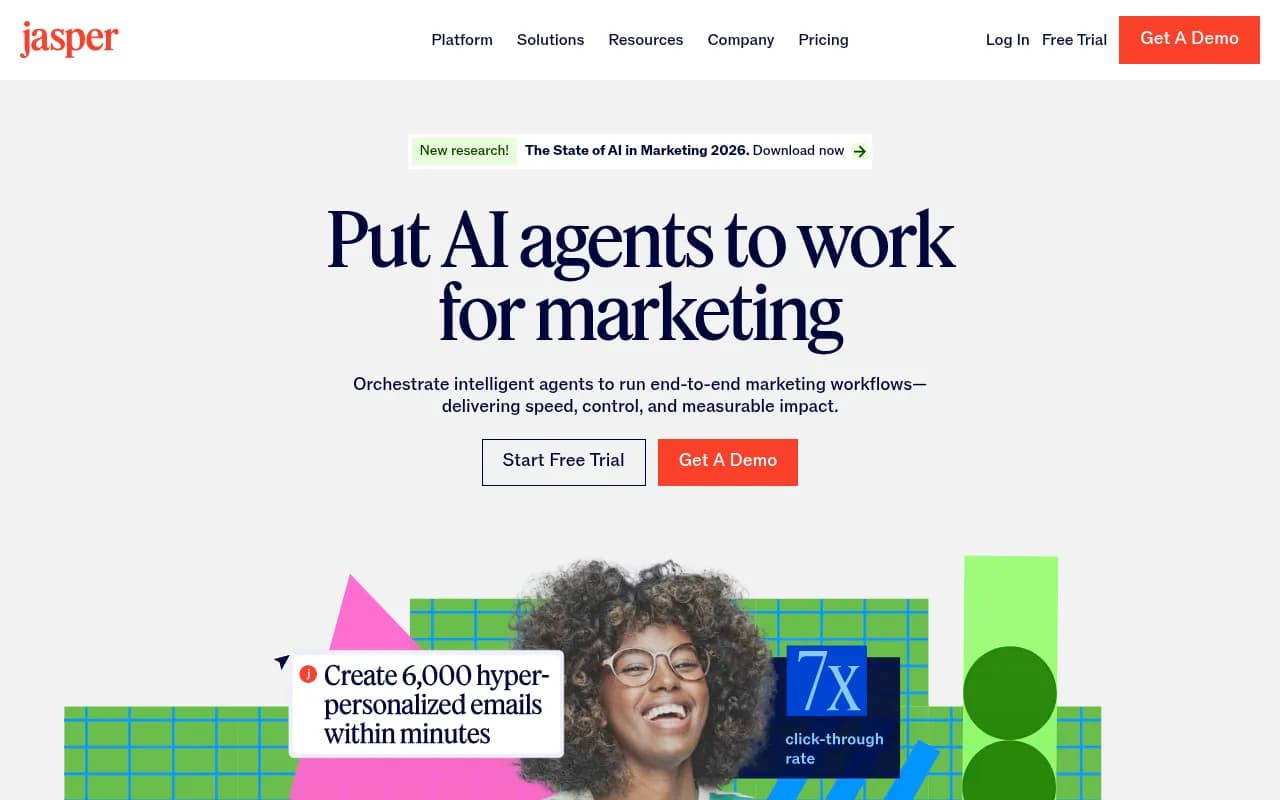
Jasper has evolved into a full marketing platform with agents and content pipelines. It's strong for brand voice consistency and has decent SEO integrations. But it doesn't track whether your content gets cited in AI search.
Copy.ai is fast and versatile, particularly for shorter-form marketing copy. It's added workflow automation features that make it useful for content operations teams. Same limitation: no AI visibility tracking.
Writesonic has built out a broader content marketing suite and added some SEO features. It's one of the more complete pure-play writing tools. Still no citation tracking.
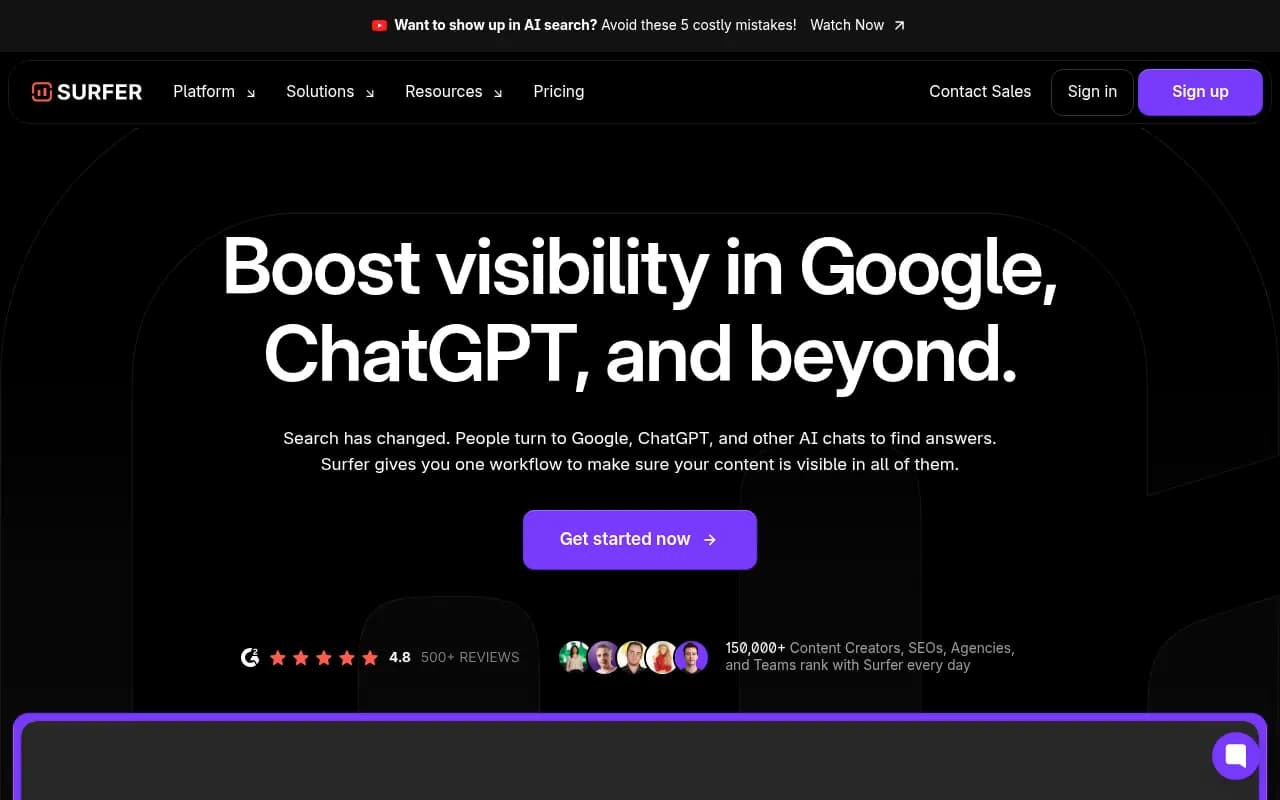
Surfer SEO sits in an interesting middle position. It's primarily an optimization tool (content scoring against top-ranking pages) that has added AI writing. It's good at traditional SEO optimization but hasn't made the jump to AI search visibility.
MarketMuse is worth mentioning because it goes deeper on content strategy than most. Its topic modeling and content gap analysis is genuinely sophisticated. But its frame of reference is still Google search, not AI model citations.
These tools are worth using. The point isn't that they're bad -- it's that they're incomplete for 2026's reality.
The tools that actually close the loop
This is where things get more interesting.
A new category of platforms has emerged specifically to track brand and content visibility in AI search engines. Some are pure trackers. A few have started connecting tracking to content creation. The best ones have built an end-to-end workflow.
Pure AI visibility trackers
Tools like Otterly.AI, Peec AI, and AthenaHQ fall into this category. They monitor how often your brand appears in AI-generated answers, which prompts trigger mentions, and how you compare to competitors. Useful data, but they stop there -- you get the diagnosis without the prescription.
Otterly.AI



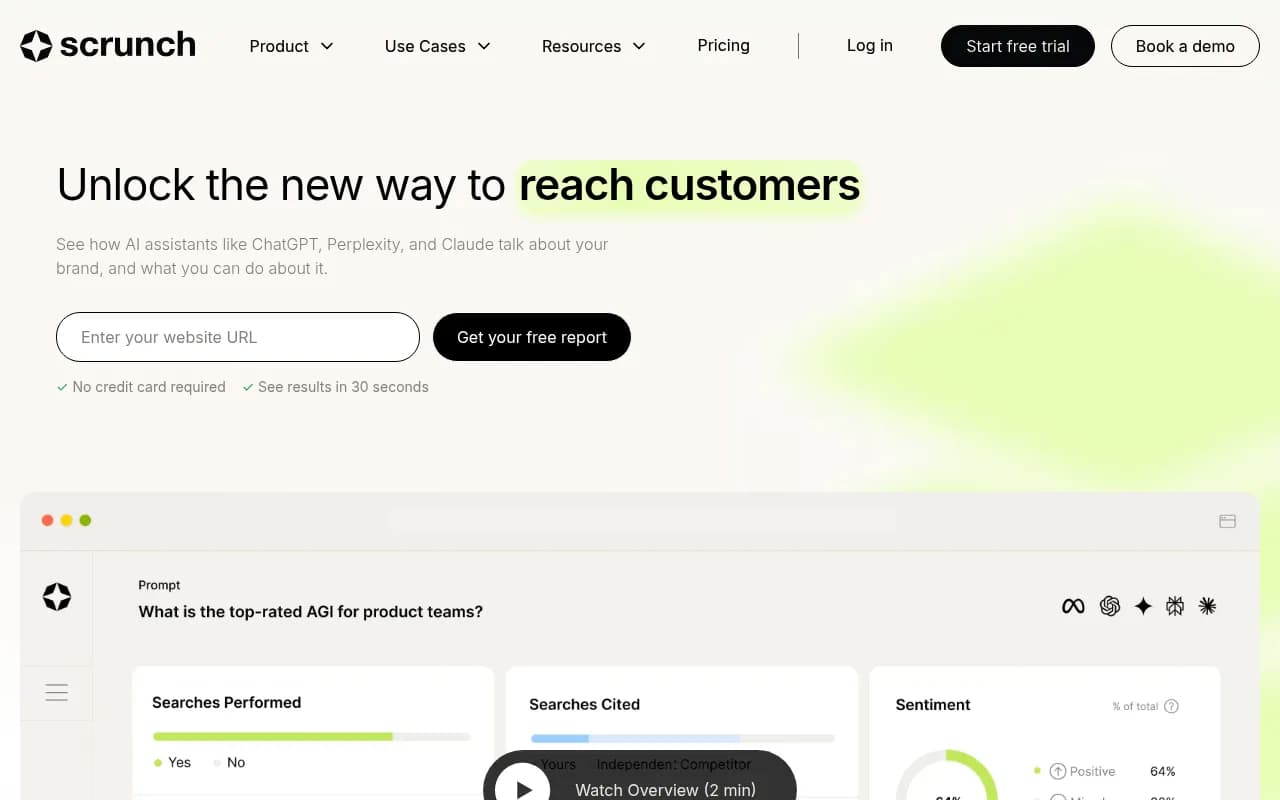
Profound and Scrunch AI have stronger feature sets and are particularly popular with enterprise teams. Both offer solid monitoring across multiple AI models. The trade-off is price and the fact that they're still primarily monitoring dashboards.
Profound

Platforms that connect tracking to action
This is the category that matters most in 2026. A handful of platforms have figured out that tracking alone isn't enough -- you need to be able to do something with the data.
Promptwatch is the clearest example of this approach. Rather than just showing you where you're invisible, it identifies the specific content gaps (prompts your competitors rank for that you don't), generates content engineered to fill those gaps using citation data from 880M+ analyzed citations, and then tracks whether that content starts getting cited by AI models. The loop is: find gaps, create content, track results.

What makes this different from a monitoring-only tool is the answer gap analysis. You're not just seeing a dashboard of your current visibility -- you're seeing exactly which prompts are driving traffic to competitors and what content you'd need to create to compete for them. Then there's a built-in writing agent to actually create that content, grounded in real citation patterns rather than generic SEO signals.
The AI crawler logs feature is also worth calling out specifically because almost no other tool has it. Seeing which pages GPTBot or ClaudeBot visited, how often they return, and whether they're hitting errors is the kind of technical data that can explain why some pages get cited and others don't.
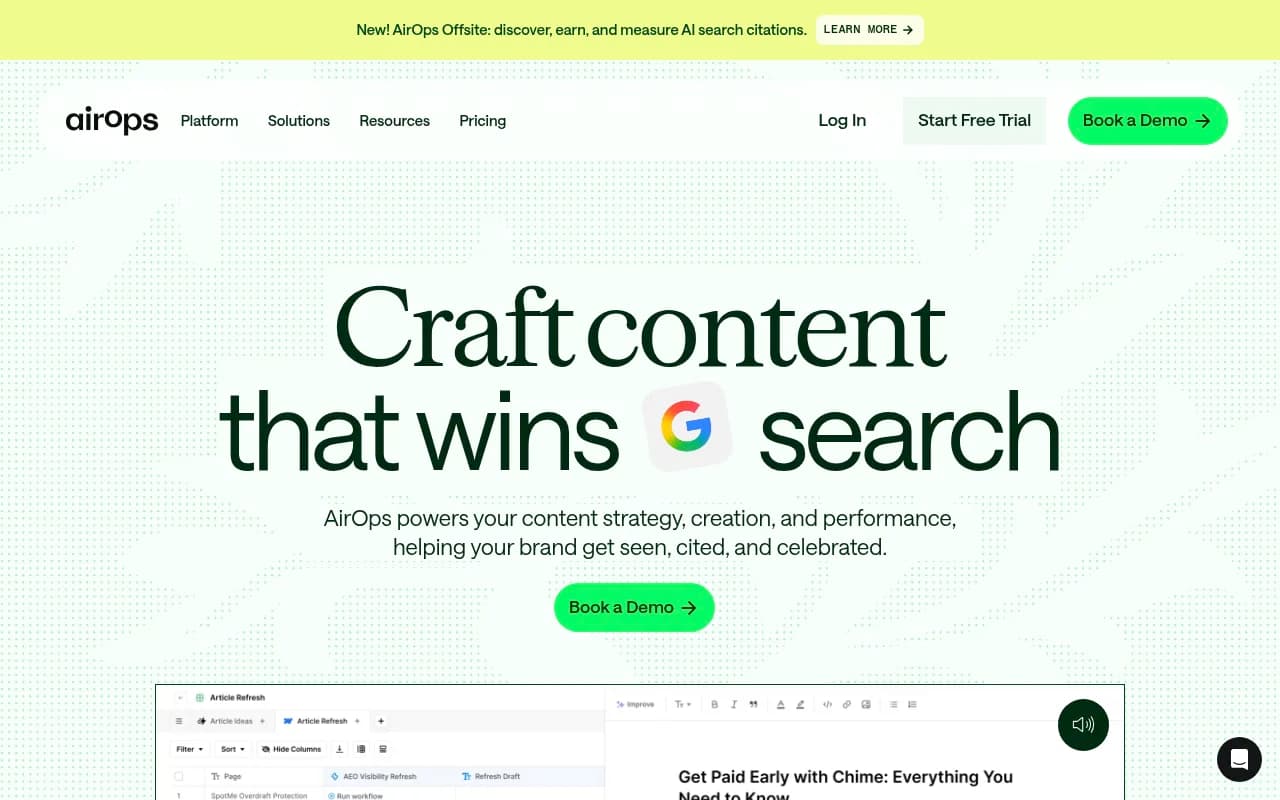
AirOps takes a content engineering angle -- it's built for teams that want to systematically create content optimized for AI search, with workflow automation baked in. Less focused on monitoring, more on the creation side.
Search Atlas has built out AI-powered SEO automation that includes some AI search optimization features alongside traditional SEO. It's a broader platform that covers more ground.

Comparison: which tool does what
Here's a practical breakdown of the major platforms across the capabilities that matter in 2026:
| Platform | AI content generation | AI citation tracking | Answer gap analysis | Crawler monitoring | Traffic attribution |
|---|---|---|---|---|---|
| Jasper | Excellent | No | No | No | No |
| Copy.ai | Good | No | No | No | No |
| Writesonic | Good | No | No | No | No |
| Surfer SEO | Good (SEO-focused) | No | No | No | No |
| MarketMuse | Limited | No | Partial (Google) | No | No |
| Otterly.AI | No | Yes | No | No | No |
| Peec AI | No | Yes | No | No | No |
| Profound | No | Yes | Limited | No | No |
| AthenaHQ | No | Yes | No | No | No |
| Promptwatch | Yes (citation-grounded) | Yes | Yes | Yes | Yes |
| AirOps | Yes | Limited | Limited | No | No |
| Search Atlas | Yes | Limited | Limited | No | Limited |
The pattern is obvious. Generation tools are good at generating. Monitoring tools are good at monitoring. Promptwatch is the only platform that covers the full stack -- which is why it's the right answer for teams that need to actually improve their AI search visibility, not just measure it.
What SEO-focused content teams are actually doing in 2026
Talking to content teams at mid-size brands and agencies, a few patterns have emerged in how they're approaching this.
The most common setup is still a generation tool (usually Jasper or Copy.ai) paired with a traditional SEO optimizer (Surfer SEO or Clearscope) and then a separate AI visibility tracker bolted on. This works, but it's three tools that don't talk to each other, and the AI tracker is usually just a monitoring dashboard that doesn't inform what content gets created.

The teams seeing the best results have shifted to a workflow where AI visibility data drives content decisions from the start. Instead of "what keywords should we target this month," the question is "which prompts are driving traffic to competitors in ChatGPT and Perplexity, and what content do we need to create to compete for them?" That's a fundamentally different brief, and it requires different tooling.
A smaller number of teams have gone further and are tracking AI crawler activity on their sites -- using that data to understand which content formats and page structures AI models prefer to cite. This is still relatively early-stage practice, but the teams doing it are getting a genuine edge.
The content quality question
One thing worth addressing directly: does AI-generated content actually get cited by AI models?
The short answer is yes, but not all of it. AI models are selective about what they cite. They tend to favor content that is specific, factual, well-structured, and genuinely answers the question being asked. Generic SEO filler -- the kind that used to rank on Google because it hit keyword density targets -- performs poorly in AI search.
This is actually good news for content quality. The incentives in AI search push toward better content. But it means that the "generate 50 articles a month and see what sticks" approach doesn't work well. You need to know which prompts to target, what angle to take, and what information the AI model is looking for before you write.
That's why the answer gap analysis and citation data that tools like Promptwatch provide are so valuable -- they tell you what AI models actually want to cite, which is a much more useful brief than a keyword and a word count.
Practical recommendations
If you're a content team trying to figure out where to invest in 2026:
-
If you just need to produce more content faster and AI search visibility isn't a priority yet, Jasper or Copy.ai are solid choices. Add Surfer SEO or Clearscope for optimization.
-
If you're starting to think about AI search visibility but aren't ready to overhaul your workflow, add a monitoring tool like Otterly.AI or Peec AI to get baseline data on where you stand.
-
If AI search visibility is a real business priority and you want to actually improve it (not just measure it), Promptwatch is the right platform. It's the only tool that connects gap analysis, content generation grounded in citation data, and result tracking in a single workflow.
-
If you're an agency managing multiple clients, the multi-site tracking and white-label reporting capabilities matter. Promptwatch's agency and enterprise tiers are built for this.
The content tool market is still maturing fast. But the direction is clear: the platforms that win in 2026 are the ones that treat content creation as the beginning of a measurement loop, not the end of a production process.
The bottom line
Most AI writing tools were built for a world where "good content" meant "content that ranks on Google." That world still exists, but it's shrinking relative to AI search. The platforms that have adapted are the ones that understand AI citation as the new ranking signal and have built tooling to track, analyze, and improve it.
Generation is a commodity now. The differentiator is knowing whether what you generated is actually working -- and having the data to fix it when it's not.