Key takeaways
- Jasper AI was built for content generation, not AI search visibility — and that distinction matters more than ever in 2026.
- It lacks six critical capabilities: AI citation tracking, answer gap analysis, AI crawler monitoring, prompt intelligence, content grounded in citation data, and traffic attribution from LLMs.
- These gaps mean you can produce a lot of content with Jasper but have no way to know if AI engines are actually citing it.
- Dedicated GEO platforms address all six gaps, and some (like Promptwatch) close the full loop from gap identification to content creation to visibility tracking.
- If your goal is to appear in ChatGPT, Perplexity, or Google AI Overviews, you need tools built for that job — not repurposed from the pre-AI-search era.
Jasper AI is good at what it was designed to do. It writes fast, it maintains brand voice, and for teams cranking out marketing copy, it genuinely earns its keep. But here's the problem: the job description for "content that performs" changed dramatically over the last two years, and Jasper hasn't fully kept up.
In 2026, ranking on Google is only part of the equation. Your brand also needs to show up when someone asks ChatGPT for a product recommendation, when Perplexity synthesizes an answer about your category, or when Google's AI Mode summarizes the best options in your space. That's a fundamentally different challenge from writing a well-structured blog post — and it requires a fundamentally different toolkit.
This guide breaks down the six specific features Jasper is missing that matter most for AI search optimization. Not to pile on a tool that has genuine strengths, but to be honest about where those strengths end.
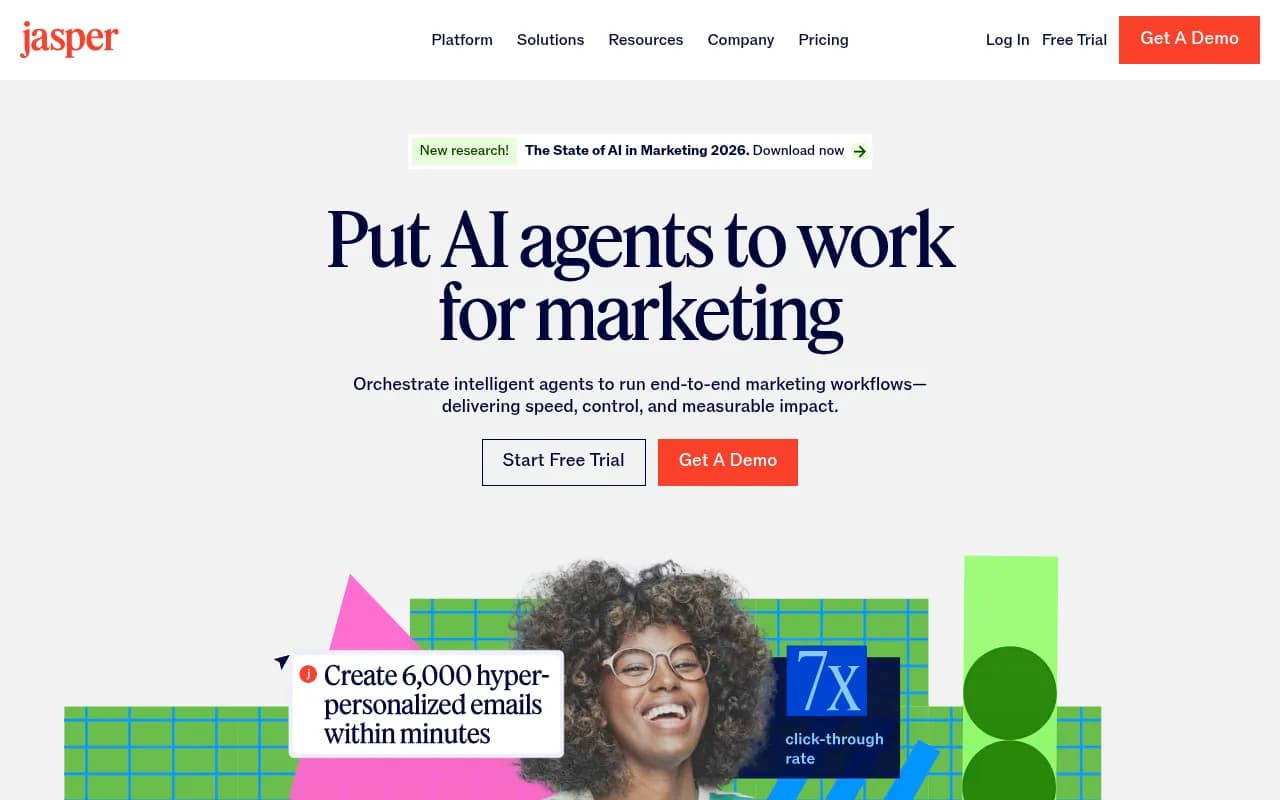
The core problem: Jasper was built for content creation, not AI visibility
A Reddit thread from early 2026 put it well: "It's not that Jasper or Copy.ai are outdated. The problem is they were built for content generation, not for understanding how AI search engines work."
That's the crux of it. Jasper's mental model is: you prompt it, it writes, you publish. That workflow made sense when the goal was to fill a content calendar and rank on Google through volume and keyword density. But Generative Engine Optimization (GEO) — getting cited by AI models — requires a different loop entirely.
You need to know which prompts AI models are answering in your category. You need to see which sources they're citing and why. You need to understand where your content is invisible. Then you need to create content that specifically fills those gaps, and track whether it's working.
Jasper handles one step of that process (writing) and leaves the rest to you.
The 6 features Jasper is missing
1. AI citation tracking
The most basic question in AI search optimization is: "When someone asks an AI engine about my category, does it cite my brand?" Jasper has no answer to that question.
There's no dashboard showing you whether ChatGPT, Perplexity, Claude, or Gemini is referencing your content. No visibility into which pages are being cited, how often, or by which models. You're flying blind.
This matters because citation patterns are the new rankings. In traditional SEO, you could check your position in Google and know roughly how visible you were. In AI search, citation is the equivalent metric — and without tracking it, you can't optimize for it.
Tools built specifically for this problem (like Promptwatch, Profound, or Otterly.AI) track citations across multiple AI engines and show you exactly which pages are being surfaced. Jasper doesn't touch this.

2. Answer gap analysis
Even if you know you're not being cited, you need to know why — and more specifically, what content you'd need to create to change that. This is what answer gap analysis does: it identifies the prompts and questions where your competitors are getting cited but you're not.
Jasper has no concept of this. It's a writing tool, so it waits for you to tell it what to write. It doesn't analyze AI responses, compare your visibility to competitors, or surface the specific topics your website is missing.
Without gap analysis, content strategy for AI search is essentially guesswork. You're writing articles based on intuition rather than data about what AI models actually want to cite. That's an expensive way to operate.
Platforms like Promptwatch build answer gap analysis into their core workflow — showing you the exact prompts where competitors appear and you don't, so you can prioritize content that will actually move the needle.
3. AI crawler monitoring
Here's something most marketers don't think about: AI engines have their own crawlers (GPTBot for ChatGPT, ClaudeBot for Anthropic, PerplexityBot, etc.), and they don't always behave like Googlebot. They may hit certain pages repeatedly, encounter errors, or skip sections of your site entirely.
If an AI crawler can't access your content, it can't cite it. Full stop.
Jasper has no visibility into this layer at all. It's a content editor — it has no connection to your server logs, no awareness of which crawlers are visiting your site, and no way to flag indexing issues that might be preventing AI engines from reading your pages.
This is a gap that's easy to overlook until you realize your well-written content is invisible to AI search because of a crawl error you didn't know existed. Dedicated GEO platforms with crawler log analysis catch these issues before they cost you visibility.
4. Prompt intelligence and volume data
In traditional SEO, keyword research tells you what people are searching for and how competitive those terms are. The GEO equivalent is prompt intelligence: understanding which questions people are asking AI engines, how often, and how hard it is to get cited for each one.
Jasper doesn't have this. It can help you write about any topic you choose, but it has no data on which prompts are driving AI search volume, which ones are winnable for a site like yours, or how a given prompt fans out into sub-queries that AI models explore.
This means Jasper users are essentially doing keyword research blind for AI search. They might write great content on a topic that generates almost no AI queries, while ignoring high-volume prompts where they could realistically compete.
Prompt intelligence — with volume estimates, difficulty scores, and query fan-out mapping — is a core feature of purpose-built GEO platforms. It's the foundation of a prioritized AI search strategy.
5. Content grounded in citation data
Jasper can write well, but it doesn't know what AI models want to cite. Its content generation isn't informed by analysis of which sources, formats, or topics are actually getting cited in AI responses. It's trained on general text and guided by your prompts — not by 880 million citations worth of data on what makes AI engines trust a source.
This is a subtle but important distinction. Content that gets cited by AI models tends to have specific characteristics: it answers questions directly, it covers topics comprehensively, it's structured in ways that AI can extract and quote. Writing that's optimized for human readers and traditional SEO isn't automatically optimized for AI citation.
Jasper's January 2026 product update introduced some "modern search optimization" features, which is a step in the right direction. But the gap between a general AI writing tool and a platform trained specifically on citation data is still significant.
SEO-focused tools provide the research depth and citation data that generalist writing tools like Jasper can't match.
6. Traffic attribution from AI search
The final missing piece is knowing whether your AI visibility is actually driving traffic and revenue. If you're getting cited by Perplexity, are those citations translating into clicks? Which pages are generating AI-driven visits? How does that compare to your traditional organic traffic?
Jasper is a content creation tool — it has no analytics layer, no traffic attribution, and no way to connect the content it helps you write to downstream business outcomes. You'd need to stitch together data from Google Search Console, your web analytics, and any GEO monitoring tool you're using separately.
This matters because AI search attribution is genuinely hard. AI engines don't always pass referral data cleanly, and understanding the path from "AI cited my page" to "visitor converted" requires specific tooling. Without it, you can't prove ROI on your AI search content investment.
How Jasper compares to purpose-built GEO tools
Here's a direct comparison of where Jasper stands versus tools designed specifically for AI search optimization:
| Capability | Jasper AI | GEO-focused platforms |
|---|---|---|
| AI content writing | Yes (strong) | Varies |
| Brand voice consistency | Yes | Varies |
| AI citation tracking | No | Yes |
| Answer gap analysis | No | Yes (leading platforms) |
| AI crawler monitoring | No | Yes (leading platforms) |
| Prompt volume/difficulty | No | Yes (leading platforms) |
| Citation-grounded content | Partial (Jan 2026 update) | Yes |
| LLM traffic attribution | No | Yes (leading platforms) |
| Competitor visibility heatmaps | No | Yes |
| Reddit/YouTube citation tracking | No | Yes (leading platforms) |
The pattern is clear: Jasper is strong where it was always strong (writing, brand voice, speed) and absent where AI search optimization actually happens.
What to use instead — or alongside Jasper
The answer isn't necessarily to abandon Jasper entirely. If your team uses it for ad copy, email, or social content, it still does that job well. The issue is treating it as your AI search optimization strategy.
For teams serious about GEO, here's how to think about the toolstack:
For tracking AI visibility and citations, you need a dedicated monitoring platform. Options range from basic trackers to full-featured platforms. Promptwatch sits at the more comprehensive end — it tracks citations across 10 AI models, shows competitor heatmaps, and includes crawler log analysis.
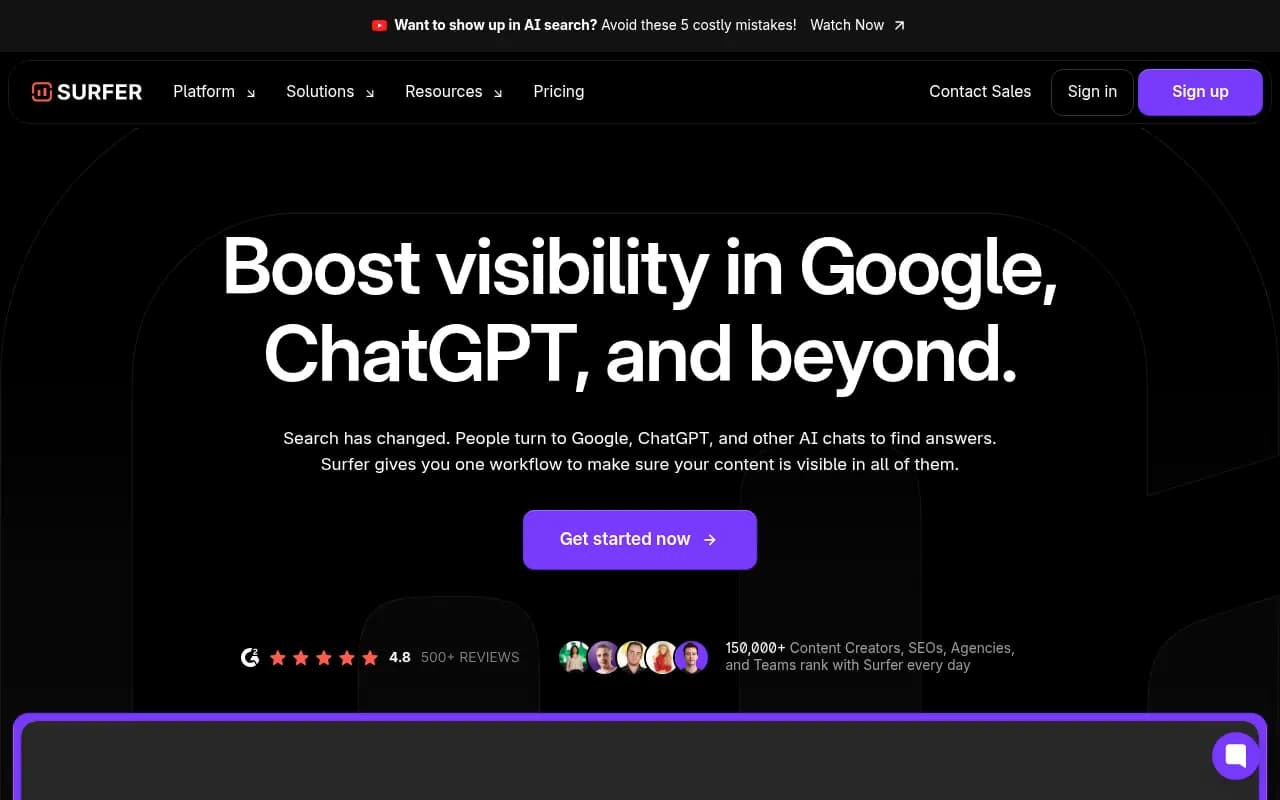
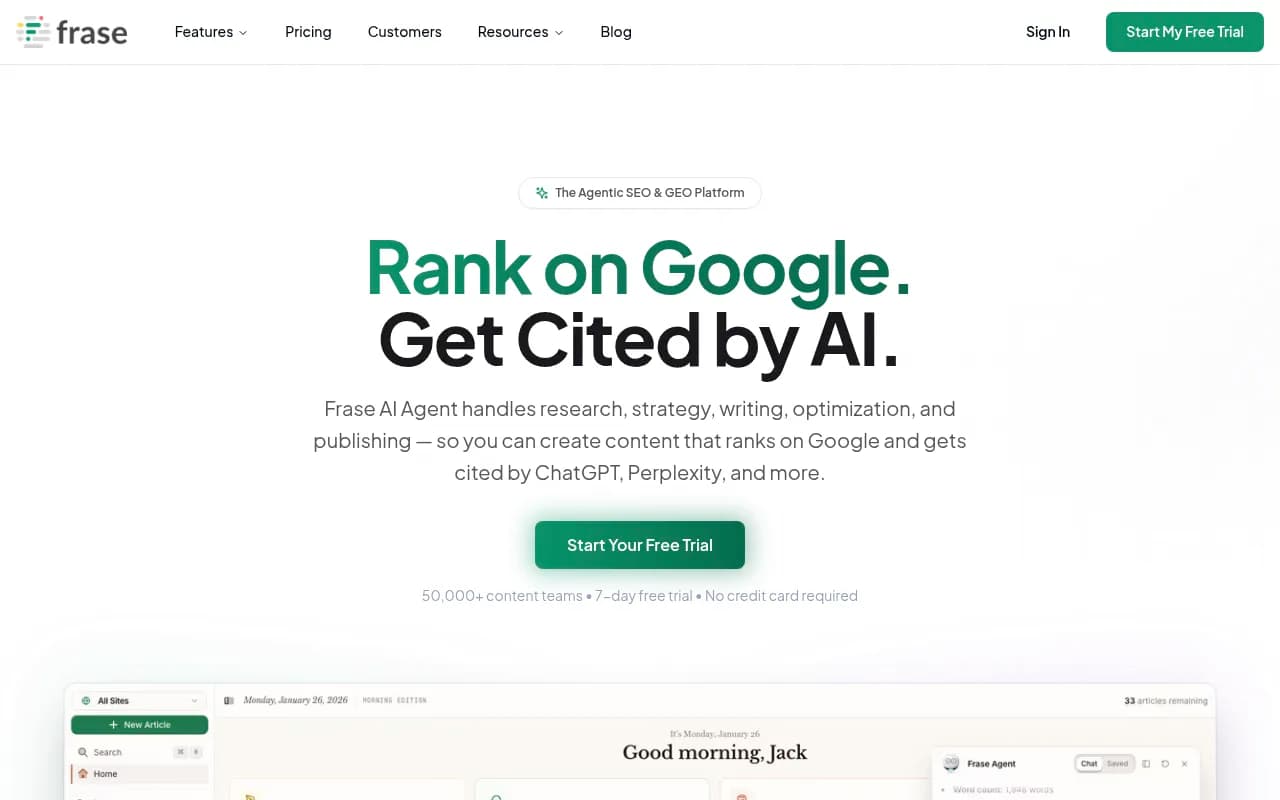
For SEO-grounded content writing, tools like Surfer SEO and Frase combine content briefs with SERP analysis, which is closer to what you need for AI-optimized content than a general writing tool.
For answer gap analysis specifically, platforms that analyze which prompts competitors are winning and you're not are essential. This is where the real strategic value lives in GEO — knowing exactly what to write before you write it.
For content at scale with SEO intent, Writesonic and similar tools have moved further toward search-optimized output than Jasper has.

The honest assessment of Jasper in 2026
Jasper's January 2026 update showed the company is aware of the GEO shift — the update explicitly mentioned "purpose-built optimization for modern search." That's encouraging. But awareness and capability are different things.
Right now, Jasper's core value proposition is still content volume and brand consistency. Those matter. But they're table stakes in 2026, not differentiators. The teams winning in AI search are the ones who know exactly which prompts they need to target, which pages are being cited (and which aren't), and how to create content that AI models will actually reference.
That requires a different kind of tool. Jasper can be part of your stack — but it can't be the whole strategy.
If you're spending money on content production and not tracking whether AI engines are citing any of it, you're optimizing for a world that's already changed. The good news is the tools to fix that exist, and they're more accessible than they were even 12 months ago.
The question is whether you're using them.