Key takeaways
- Peec AI is a solid monitoring tool that tracks brand mentions, sentiment, and position across AI engines like ChatGPT and Perplexity -- but it stops at data collection
- The platform offers limited actionable guidance: you see the numbers, but you're left to figure out what to do next
- Pricing scales quickly as you add prompts, engines, or team members, which catches growing teams off guard
- It lacks content generation, AI crawler logs, traffic attribution, and hallucination detection -- features that matter if you want to actually improve your AI visibility
- Several alternatives fill these gaps, from end-to-end optimization platforms to specialized trackers
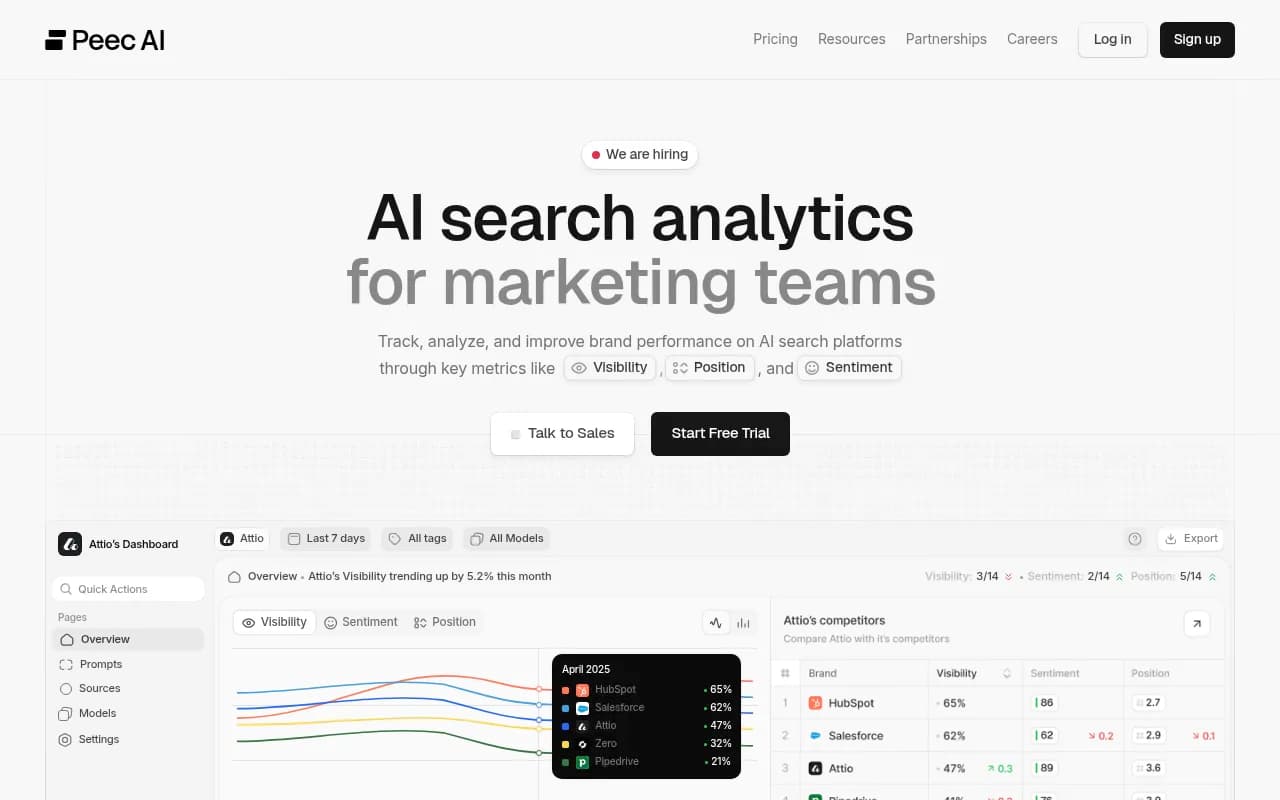
Peec AI does one thing well: it tells you whether your brand is showing up in AI-generated answers. Set up some prompts, connect your brand, and within a few days you have visibility scores, sentiment breakdowns, and position data across ChatGPT, Perplexity, and a handful of other models.
That's genuinely useful. In 2024, most marketing teams had no idea what AI search engines were saying about them. Peec gave them a window.
The problem is that 2026 is a different situation. AI search isn't a curiosity anymore. Adobe Analytics tracked a 4,700% year-over-year surge in generative AI traffic to U.S. retail sites in July 2025. Gartner has predicted traditional search engine volume will drop 25% by 2026. If AI engines are now a meaningful traffic channel for your business, "we can see our visibility score" is not enough. You need to know why it's low, what to do about it, and whether your fixes are working.
That's where Peec starts to show its limits.
What Peec AI actually does well
Before getting into the gaps, it's worth being specific about where Peec genuinely delivers.
The core monitoring setup is clean. You define prompts that mirror real buyer questions, and Peec runs them across AI engines on a schedule. For each prompt, you get three metrics: mention rate (how often you appear), position (where in the response), and sentiment (positive, neutral, or negative). The prompt-level granularity is good -- you can see exactly which questions you're winning and which you're invisible for.
Competitor benchmarking is another genuine strength. You can stack your visibility against named competitors and see who's dominating specific prompt categories. That's useful context for prioritizing where to focus.
Reviewers consistently rate Peec's analytics and monitoring capabilities around 9/10. The data is there. The interface is reasonably well-organized for experienced SEOs. If your only job is to report on AI visibility to stakeholders, Peec can do that.
Where Peec falls short
It shows you the problem but not the solution
This is the most consistent complaint across independent reviews. Peec excels at analytics but offers limited prescriptive guidance. You can see that your visibility score dropped 12 points this month. You can see that a competitor is outranking you for "best [category] tool" prompts. What you can't get from Peec is a clear answer to "so what do I do about it?"
There's no content gap analysis that tells you which topics AI models want to cite but can't find on your site. There's no built-in content generation to help you create pages that are more likely to get cited. You get the diagnosis without the treatment plan.
For a team with a dedicated SEO strategist who can translate data into action, this is manageable. For most marketing teams, it means the data sits in a dashboard while the visibility problem stays unsolved.
No AI crawler log monitoring
When ChatGPT or Perplexity crawls your website, what pages do they read? How often do they come back? Are they hitting errors that prevent them from indexing your content properly?
Peec doesn't answer any of these questions. There's no crawler log analysis, which means you have no visibility into how AI engines are actually discovering (or failing to discover) your content. You might have perfectly written content that AI models never see because of a technical crawling issue -- and Peec won't flag it.
No traffic attribution
Peec tells you your AI visibility score. It doesn't tell you whether that visibility is driving actual traffic or revenue. There's no integration with Google Search Console, no code snippet for tracking AI-referred visits, no server log analysis to connect AI citations to real sessions.
This is a significant gap for anyone who needs to justify the investment in AI visibility work. "Our mention rate went up" is hard to defend in a budget meeting. "AI search drove 340 additional visits last month, and here's the revenue attribution" is a different conversation.
Hallucination detection is absent
This one has real business consequences. AI models sometimes get things wrong. They might cite an outdated price, attribute a competitor's feature to your product, or invent an integration that doesn't exist. A prospect who gets incorrect information from ChatGPT before a sales call shows up skeptical -- or doesn't show up at all.
Peec tracks whether you're mentioned. It doesn't check whether what's being said about you is accurate. If ChatGPT is telling people your enterprise plan costs $200/month when it actually costs $400, your visibility score looks fine while your sales pipeline quietly takes damage.
Pricing scales faster than expected
Peec's entry-level pricing looks reasonable, but the structure penalizes growth. Adding more prompts, more AI engines, or more team members pushes costs up quickly. Several reviews note that teams expecting a flat monthly fee end up paying significantly more once they're tracking enough prompts to get meaningful data.
This isn't unique to Peec, but it's worth flagging because the gap between "starter" and "actually useful" is wider than it first appears.
A quick comparison: Peec vs. the alternatives
| Feature | Peec AI | Otterly.AI | Promptwatch | LLMClicks |
|---|---|---|---|---|
| Brand mention tracking | Yes | Yes | Yes | Yes |
| Sentiment & position | Yes | Basic | Yes | Yes |
| Competitor benchmarking | Yes | Limited | Yes | Yes |
| Content gap analysis | No | No | Yes | No |
| AI content generation | No | No | Yes | No |
| AI crawler logs | No | No | Yes | No |
| Traffic attribution | No | No | Yes | No |
| Hallucination detection | No | No | No | Yes |
| Reddit/YouTube tracking | No | No | Yes | No |
| Prompt volume/difficulty | No | No | Yes | No |
| ChatGPT Shopping tracking | No | No | Yes | No |
Tools that fill the gaps Peec leaves open
For end-to-end optimization (not just monitoring)
If you want to move from "we can see our visibility" to "we can improve our visibility and prove it," the gap is significant. Most monitoring tools, including Peec, stop at step one of what should be a three-step cycle: find gaps, create content, track results.
Promptwatch is built around that full cycle. The Answer Gap Analysis shows which prompts competitors appear for that you don't -- and more specifically, what content your site is missing that AI models want to cite. The built-in writing agent then generates articles and comparisons grounded in real citation data (over 880 million citations analyzed). Page-level tracking closes the loop by showing which of your pages are being cited, how often, and by which models.

It also covers the crawler log gap: real-time logs of AI crawlers hitting your site, which pages they read, and any errors they encounter. That's the kind of technical visibility that Peec doesn't touch.
For hallucination detection
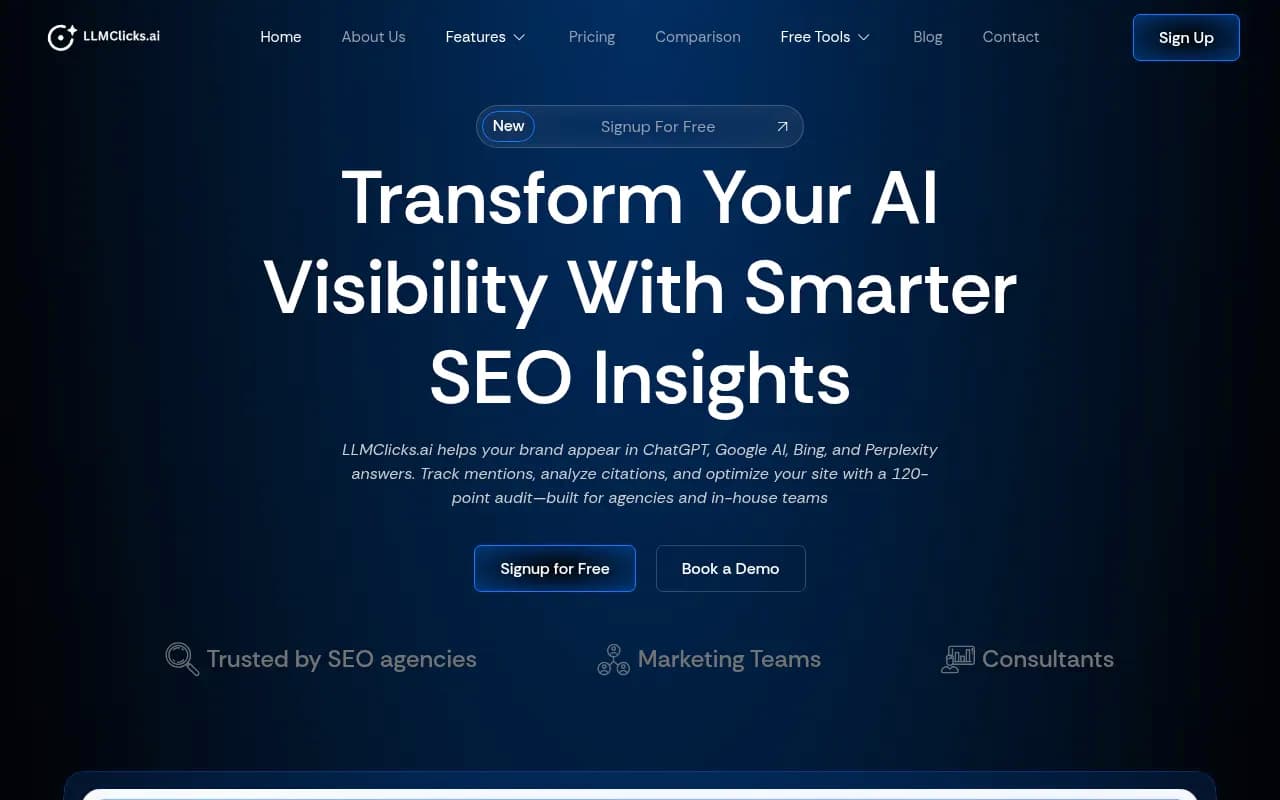
LLMClicks was built specifically around the accuracy problem. It doesn't just count mentions -- it checks whether what AI models say about your brand is actually correct. If ChatGPT is citing wrong pricing or attributing a competitor's feature to you, LLMClicks flags it. That's a genuinely different capability from anything Peec offers.
For monitoring with a cleaner interface
Otterly.AI sits in a similar category to Peec -- monitoring-focused, with brand mention tracking across major AI engines. It's generally considered more beginner-friendly than Peec, though it has its own gaps (no content generation, no crawler logs, limited prompt metrics). If Peec feels complex for your team, Otterly is worth evaluating.
Otterly.AI

For tracking across more AI engines
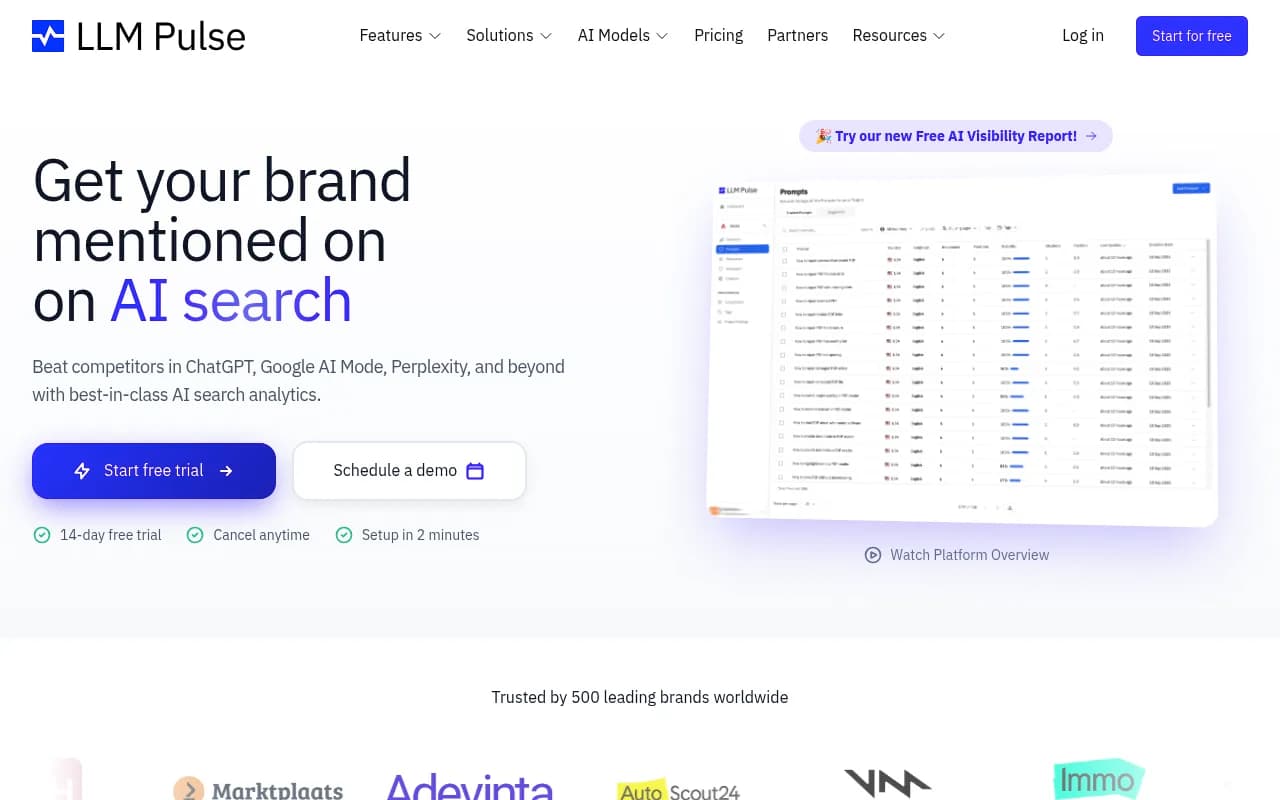
LLM Pulse tracks visibility across ChatGPT, Perplexity, and several other models with a focus on simplicity. It won't replace a full GEO platform, but for teams that just need broader engine coverage without the complexity of enterprise tools, it's a reasonable option.
For connecting AI visibility to traditional SEO
Semrush has been adding AI search monitoring features to its existing platform. The advantage is that you get AI visibility data alongside your traditional SEO signals in one place. The limitation, noted in several comparisons, is that the AI data can feel disconnected from the core SEO toolset, and the prompt sets are fixed rather than customizable.
Ahrefs has a Brand Radar feature that covers some AI visibility ground, but it also uses fixed prompts and lacks AI traffic attribution -- the same gap that Peec has.
Who should still use Peec AI
Peec isn't a bad tool. It's a monitoring tool that does monitoring well. There are teams for whom that's the right fit:
- In-house SEO teams that already have a content strategy and just need visibility data to inform it
- Agencies that need to report AI visibility metrics to clients without necessarily owning the optimization work
- Brands in early-stage AI visibility programs that want to establish a baseline before investing in optimization
If you're in one of those situations, Peec's 9/10 analytics capabilities are real. The prompt-level data is granular, the competitor benchmarking is useful, and the sentiment tracking gives you something to work with.
The question is whether monitoring alone is enough for where your business is now. If AI search is driving meaningful traffic and you need to grow that number, a monitoring-only tool leaves you doing the hard work yourself -- figuring out what content to create, whether it's working, and whether AI engines are even crawling it.
The bottom line
Peec AI's core limitation isn't a bug -- it's a design choice. The platform was built to answer "how visible are we?" not "how do we become more visible?" That was a reasonable scope in 2024 when the category was new. In 2026, with AI search driving real traffic and real revenue, the gap between monitoring and optimization is where most teams are losing ground.
The features Peec is missing -- content gap analysis, AI content generation, crawler log monitoring, traffic attribution -- aren't nice-to-haves. They're the difference between a dashboard that tells you something is wrong and a platform that helps you fix it.
If you're evaluating Peec, the honest question to ask is: once we see our visibility score, what happens next? If you have a clear answer to that, Peec might be enough. If the answer is "we're not sure," you probably need a tool that takes you further.