Key takeaways
- Mention tracking tells you what AI said. Crawler logs tell you whether AI systems can reach your pages at all, which is usually the reason a brand is missing.
- Profound has crawler analytics (Agent Analytics), but since September 2026 its brand plans are a free 7-day trial or a custom Enterprise quote. That pushes many teams to look elsewhere.
- Several popular alternatives, including Peec AI, Trakkr and AI Peekaboo, are described by one third-party review as lacking crawler or server-log analytics as a main feature. I did not verify every competitor's plan myself, so check before you buy.
- Promptwatch includes IP-verified crawler logs on every plan, starting at $95/mo, which makes it the most direct swap if you want to keep that capability without an enterprise contract.
- Compare your own logs against public benchmarks. A provider that is big in the benchmark but near zero in your logs probably can't reach you.
The problem with tracking mentions only
Imagine your brand never shows up in ChatGPT for a prompt you care about. A mention tracker shows you a zero. Now what?
Maybe the content is weak. Maybe a competitor has a better page. Or maybe OAI-SearchBot hits a 403 on your pricing page every time it visits and has never read it. The dashboard looks identical in all three cases. That is what I mean by guessing.
Crawler logs split those cases apart. They record which AI bots requested which URLs, what status codes came back, and which pages were read but never cited. Without them you are treating symptoms from the outside.
This matters more now because the crawler mix keeps shifting. Promptwatch Data's AI crawler traffic report (June 8 to September 6, 2026) shows OpenAI at 79.8% of verified AI crawler requests in the week of August 31 to September 6, down from 94.8% in the week of June 8. Other providers are taking share, and your robots.txt or WAF rules written a year ago probably did not anticipate them.
What the data says about crawlers moving fast
Two findings from Promptwatch Data are worth knowing before you shop.
First, Meta-WebIndexer went from about 2.2% of tracked AI crawler requests in mid-July 2026 to 37.8% on August 9, roughly 17x in under a month, according to Promptwatch's Meta-WebIndexer report. It briefly became the heaviest AI crawler in the logs. The report notes the link to Meta building its own search index rests on an unconfirmed claim relayed in a tweet, so treat the cause as unproven. The crawl load itself is real: it triggered server load alerts on independent sites.
Second, the same crawler report counts only requests whose source IP matches the operator's published ranges. Spoofed user agents are excluded. That detail matters when you evaluate any log tool. Plenty of bots claim to be GPTBot. If a product just counts user agent strings, your numbers are inflated.
If you want to see how crawling connects to citations, Promptwatch's ChatGPT query fanout data and its site: operator report are useful. ChatGPT began using the site: operator at scale on August 8, 2026, jumping from about 0.4% to about 17% of fanout queries, so what it can fetch from your domain is more important than before.
What Profound does here, and why people are leaving anyway
Profound is good at this. Its docs describe Agent Analytics as enterprise-grade visibility into how AI systems interact with your digital presence. It uses server logs and infrastructure integrations, identifies AI crawlers, separates legitimate bots from spoofed ones, measures page-level crawler activity, and connects AI search with human referral traffic.
Profound

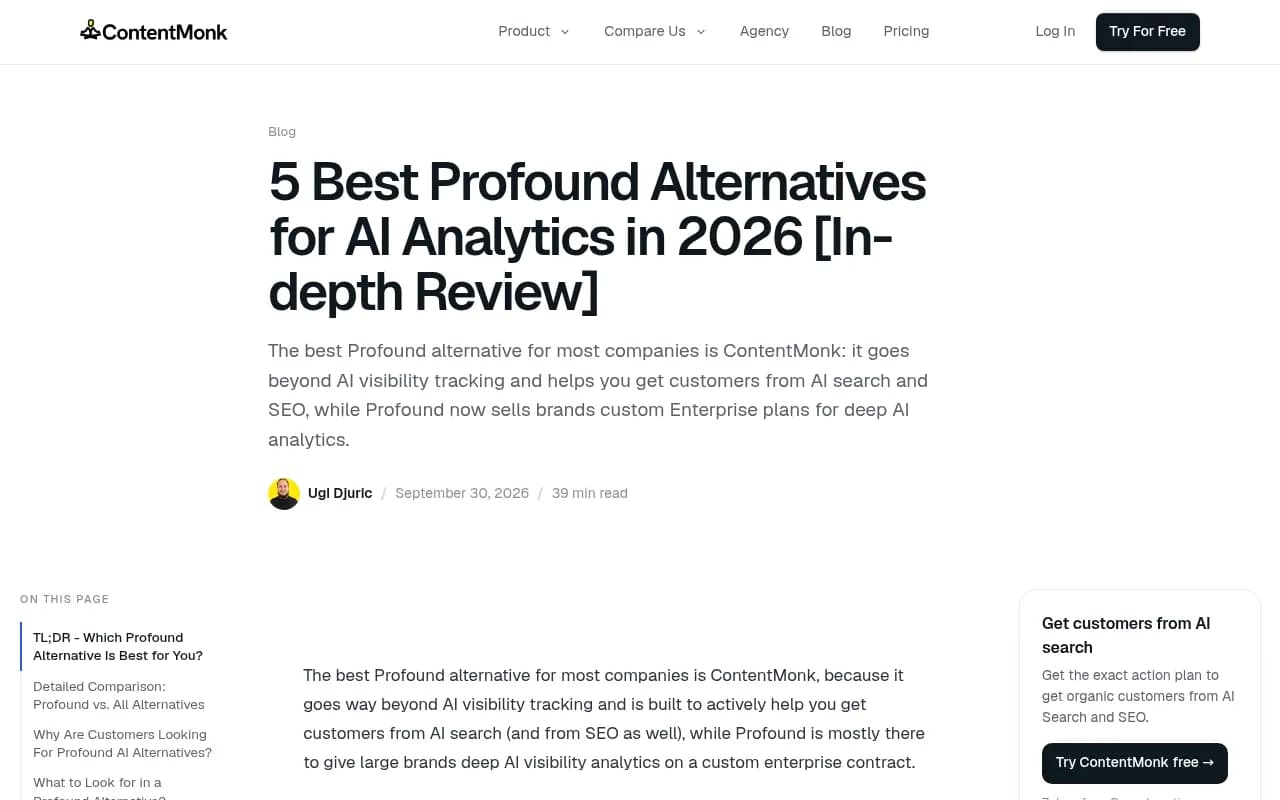
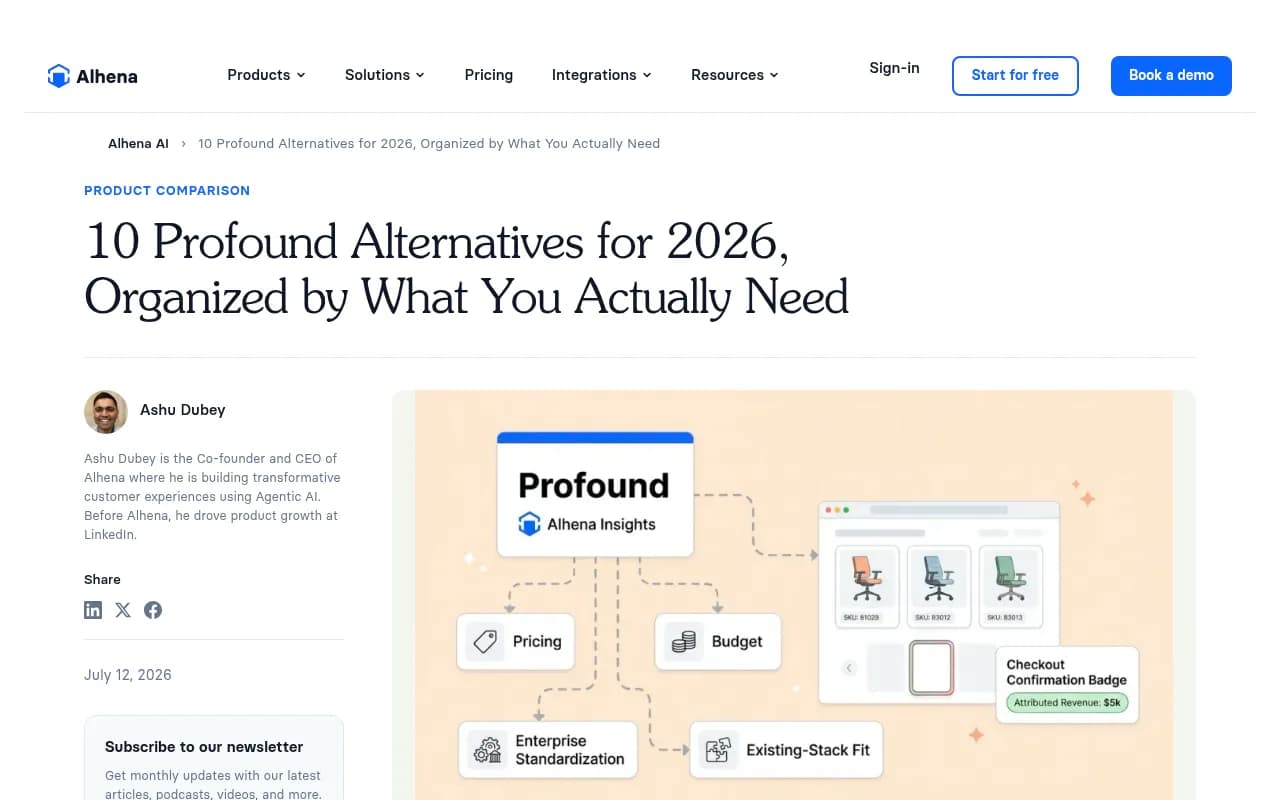
The issue is access and price, not quality. According to ContentMonk and Alhena, both competitors with their own agenda, Profound raised a $180M Series D at a $1.8B valuation in September 2026 and removed its self-serve Starter and Growth brand plans around the same time. The pricing page now shows a free trial (50 prompts a day for 7 days on ChatGPT, Gemini and Google AI Overviews) and a custom Enterprise plan. Treat these figures as vendor-reported and confirm on Profound's pricing page.
The features that matter most are also gated. All nine engines, ChatGPT Shopping tracking, history, exports and the API are Enterprise-only. If you wanted crawler analytics without a procurement cycle, that door is mostly closed.
Which alternatives include crawler logs
Here is where I have to be careful. My research confirmed crawler logs for Promptwatch. For most others I only have a third-party review and the tool descriptions in our catalog, so the table marks what is confirmed and what is not.
| Tool | Crawler or server-log analytics | Notes |
|---|---|---|
| Profound | Yes (Agent Analytics) | Enterprise contract; trial is limited |
| Promptwatch | Yes, on every plan | IP-verified logs, spoofed bots filtered; from $95/mo |
| Peec AI | Not a main feature per one third-party review | Simple tracker, strong for agencies |
| Trakkr | Not a main feature per the same review | Unverified by me |
| AI Peekaboo | Not a main feature per the same review | Basic monitoring |
| Otterly.AI | Not verified | Cheapest published plan, about $29/mo per Alhena |
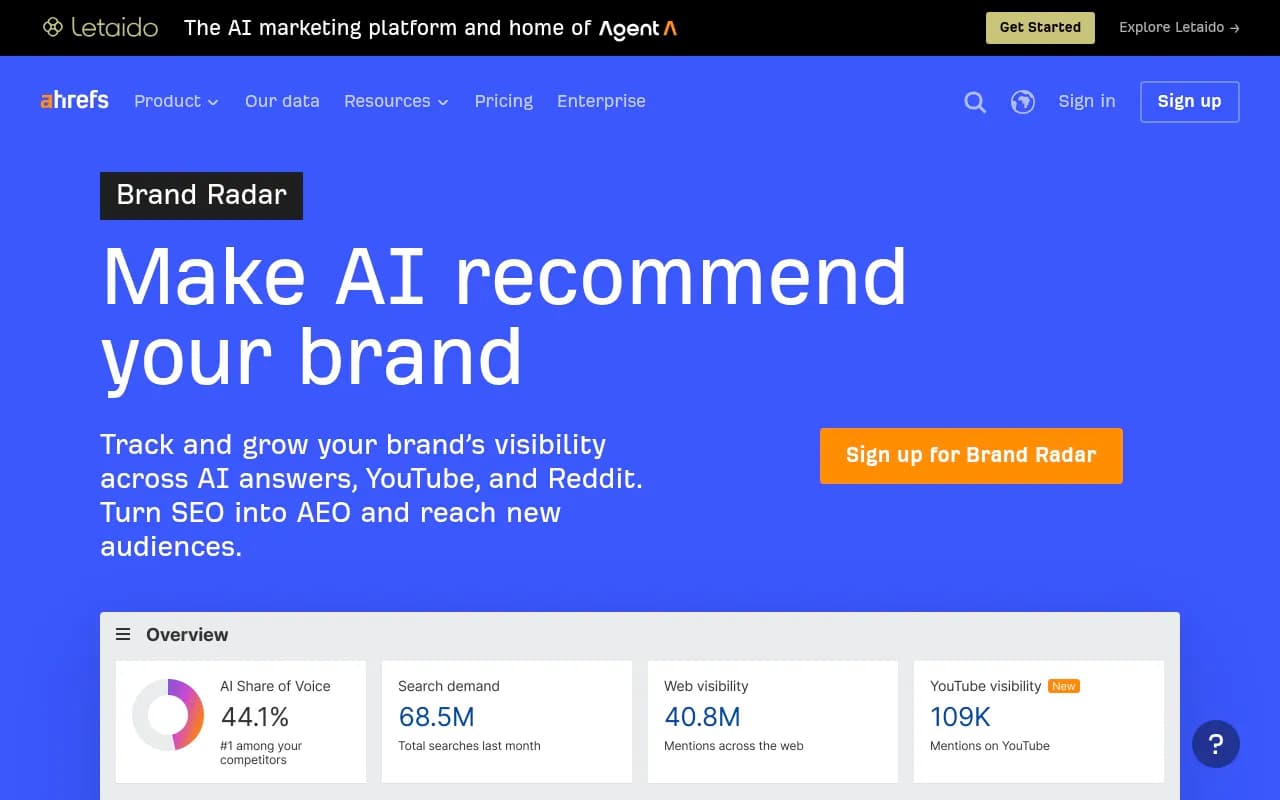
| Ahrefs Brand Radar | No. Ahrefs' CMO says they do not track AI crawler activity | Huge prompt database instead |
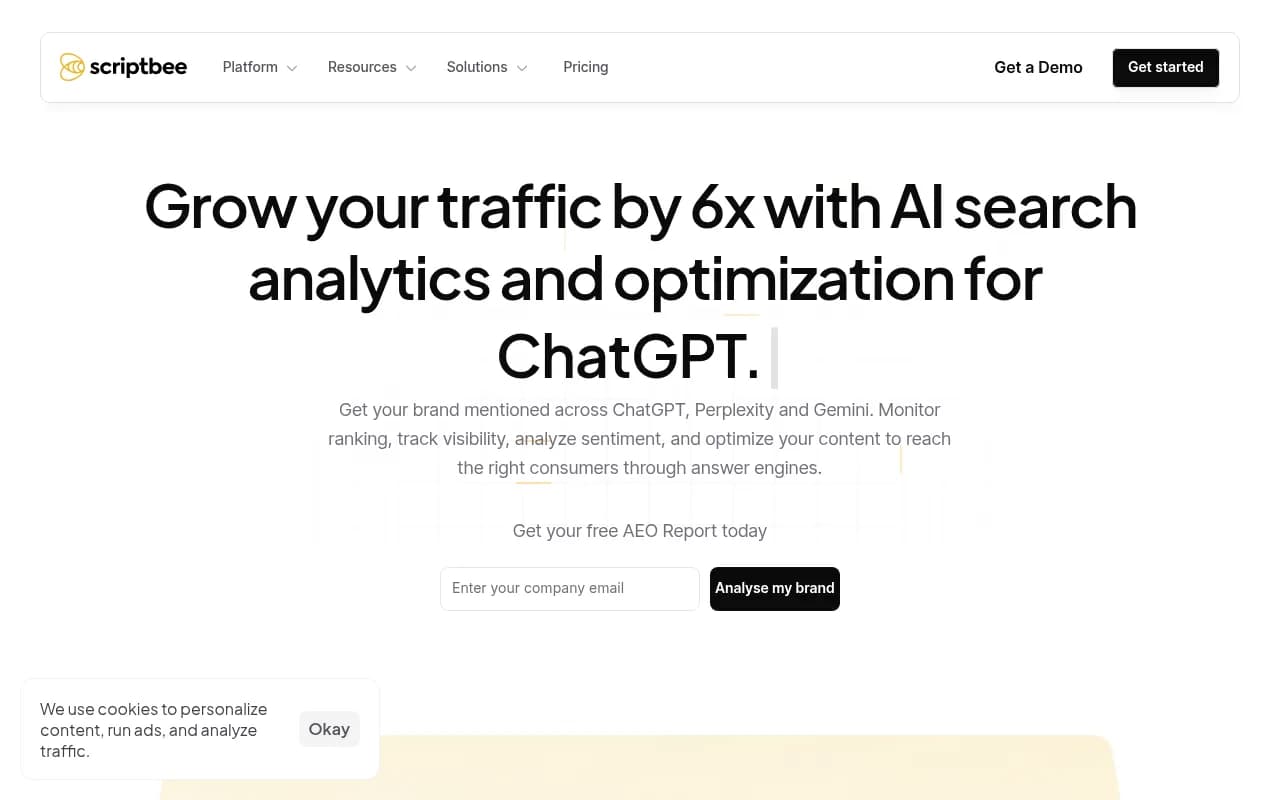
| Scriptbee | Catalog describes AI crawler monitoring | Not verified in depth |
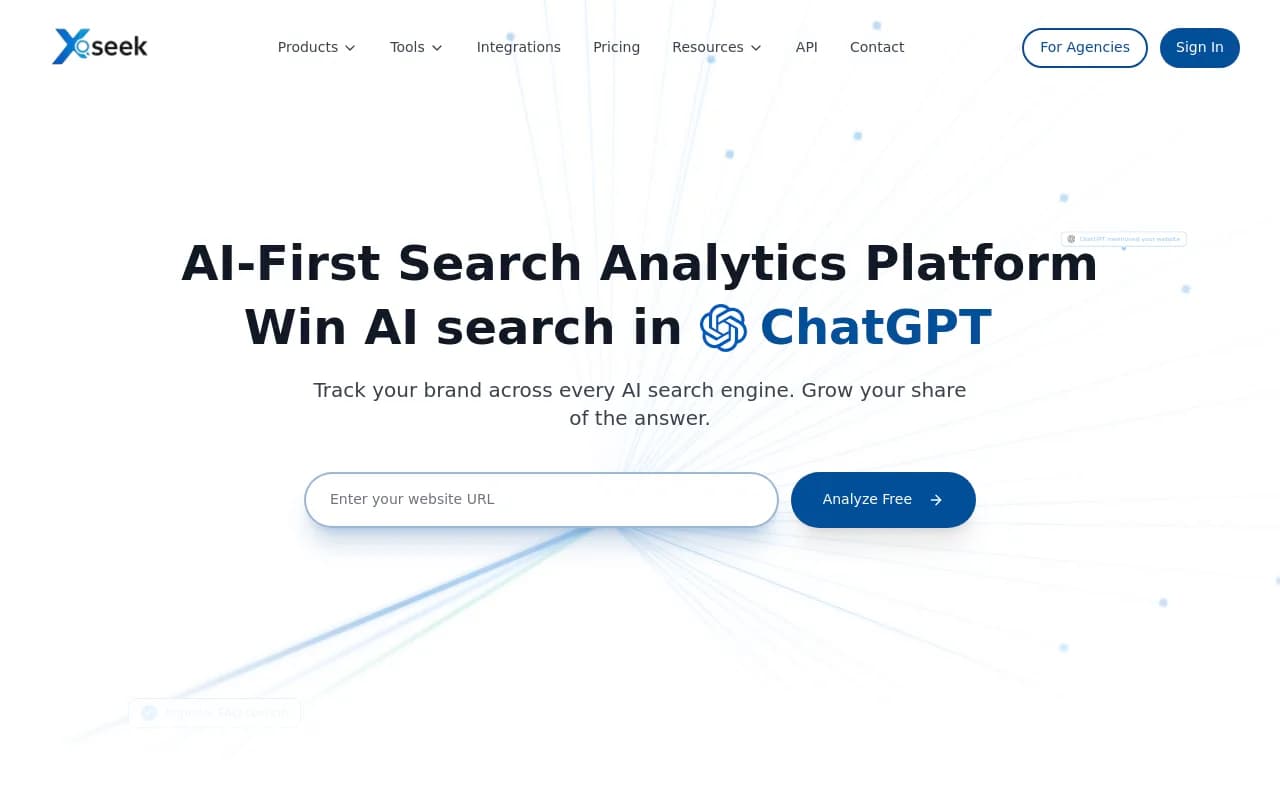
| xSeek | Catalog describes GPTBot crawler monitoring | ChatGPT-focused |
| Siteline AI | Catalog describes AI agent traffic analytics | Not a full visibility tracker |
The Ahrefs point is worth pausing on. Tim Soulo, Ahrefs' CMO, wrote a Profound alternatives post and was honest about it: Brand Radar does not track AI crawler activity, while Profound shows which bots hit your site and how often. I appreciated that candor. It is a fair trade if you value a 243 million prompt research database more than server-side evidence.

Otterly.AI

Promptwatch as the closest like-for-like swap
Promptwatch is the one I would look at first if crawler logs are the requirement. It ingests IP-verified logs of GPTBot, OAI-SearchBot, ChatGPT-User, ClaudeBot, PerplexityBot, Meta-WebIndexer and others, shows which pages they read and which errors they hit (with plain-language explanations), and tracks a crawl-to-citation path with a citation rate per page. Spoofed bots are filtered out.

Plans, as listed on its pricing page (confirm at promptwatch.com/pricing):
| Plan | Price | Prompts | Crawler logs | Extras |
|---|---|---|---|---|
| Essential | $95/mo | 50 | 200K lines | All AI models, 360 Insights, site audit |
| Professional | $245/mo | 150 | 25M | 5 AEO articles a month, 2 seats |
| Business | $579/mo | 350 | 100M | Content Agent, 10 articles, shopping insights |
Log data connects through Cloudflare, Vercel, Fastly, AWS CloudFront, Netlify, Akamai, a custom HTTP endpoint or the WordPress plugin. That matters because logs are only useful if you can get them in without a three-week engineering ticket.
To be fair, G2 reviewers mention a dense dashboard with a learning curve, and agent credits that run out fast. If you want the simplest possible view, that is a real tradeoff.
The bigger difference from monitoring-only tools is what happens after you find the problem. The Action Board lists prioritized fixes, and the Content Agent can write and publish pages to WordPress, Webflow or Framer. Then page tracking shows whether the new page got crawled, cited and clicked. That closes the loop that mention trackers leave open.
A quick diagnostic you can run before buying anything
You do not need a paid tool to start. Try this:
- Pull a week of raw server or CDN logs and filter for AI user agents.
- Verify the IPs against each operator's published ranges. Ignore anything that fails.
- Compare your provider mix to the public benchmark. If OpenAI is about 80% of the benchmark but near zero in your logs, you are likely blocked or unreachable.
- Check robots.txt, CDN rules and WAF settings for every provider, including newer ones like Meta-WebIndexer, Meta-ExternalAgent, MistralAI-User and Claude-SearchBot.
- Separate training crawlers from answer-time fetchers. They mean different things. GPTBot reading your site for training is not the same as ChatGPT-User fetching a page to answer a live question.
That is the exact logic from the AI crawler traffic report, and it takes an afternoon. If the results show gaps, you have your answer on why mentions are low. If the logs look healthy, then the problem really is content or authority, and a mention tracker plus content tools make sense.
How to choose
Pick based on the question you are stuck on.
- If the question is "why are we invisible," you need logs. Choose Promptwatch or Profound Enterprise.
- If the question is "what are people asking AI," prompt volume matters more. Profound's Prompt Volumes and Ahrefs Brand Radar's database both address that. Promptwatch also has monthly prompt volumes and difficulty scores.
- If the question is "what is the cheapest way to watch ChatGPT," Otterly or Peec will do, and you can pair them with your own log checks.
- If you are an agency, check seats and client workspaces. Peec offers unlimited seats; Promptwatch has agency plans from $199/mo with white-label reports.
One caution on cheaper trackers: monthly billing makes them low-risk to try, but if they lack logs, budget time for manual diagnosis. For more tools in this category, the GEO software directory at bestgeosoftware.com lists dozens with feature breakdowns.
Verify before you commit
Two cautions about the sources here. Most of the pricing and plan-change details come from competitors' blogs (ContentMonk, Alhena), so confirm them on the vendors' own pages. And one older source still lists a $99 Profound starter plan, which conflicts with newer reports and is likely stale.
Also ask any vendor three direct questions: Do you verify crawler IPs? Which CDNs or log sources do you connect to? Can I see per-page crawl errors? If the answers are vague, you are buying a mention counter, and you will be guessing again the first time your visibility drops.
The short version
Mentions are an outcome. Crawls are a cause. Tools that only report outcomes leave you inferring causes from the outside, which works until it doesn't. If you are leaving Profound because of price or access, make crawler logs a hard requirement rather than a nice-to-have, and test any shortlisted tool against your own server logs on day one.