Key takeaways
- AthenaHQ costs $295/mo with no free trial, and its credit system often runs out halfway through the month on real monitoring programs
- The most useful features -- persona targeting, multi-region tracking, the Citation Engine, BI integrations -- are Enterprise-only, meaning you pay more before you even know what you're getting
- Teams switching away cite three consistent pain points: pricing opacity, monitoring-only limitations, and the lack of content optimization tools
- Several alternatives offer free trials, more predictable pricing, or go further than monitoring to help you actually fix visibility gaps
- If you want a platform that tracks AND helps you create content to improve AI visibility, the gap between AthenaHQ and full-stack options like Promptwatch is significant
AthenaHQ is not a bad product. That's worth saying upfront. It monitors AI search visibility across multiple LLMs, has real case studies, and was one of the earlier platforms to take the space seriously. The co-founder left a previous role specifically because he saw AI search disruption coming -- and built something around that conviction.
But conviction doesn't mean the product is right for every team. And in 2026, with the GEO/AEO space maturing fast and a dozen serious competitors now available, "capable but expensive and limited" is a harder sell than it used to be.
Here's what's actually driving teams away -- based on what shows up in real evaluations, not the platform's own marketing.
The pricing problem is worse than it looks on paper
The headline number is $295/month for the Self-Serve plan. That's not outrageous for an enterprise-adjacent tool, but there are two things that make it sting more than it should.
First, there's no free trial. You're committing $295 before you've seen a single data point about your brand. Most alternatives in this space -- including newer entrants -- let you evaluate before you buy. Paying nearly $300 to find out whether the data is useful is a real barrier, especially for marketing teams that need to justify tool spend to finance.
Second, the credit system is deceptive at scale. The Self-Serve plan comes with 3,600 monthly credits, which sounds generous. But run 50 prompts across 5 AI engines daily -- a reasonable monitoring program for a mid-size brand -- and you're burning through 250 credits per day. That's the entire monthly allocation gone in 14 days. Add-on credits cost $100 per 1,250. Real monitoring programs can easily double the stated monthly cost.
This isn't a hidden fee exactly, but it's the kind of math that only becomes obvious once you're inside the platform and trying to do actual work.
The best features are behind a second paywall
Here's the part that frustrates teams most: the features that would make AthenaHQ genuinely useful for serious programs are Enterprise-only.
Persona Targeting. Multi-region tracking. The Citation Engine. BI tool integrations. Advanced Content Optimization. These aren't edge-case features -- they're core to running a real AI visibility program. If you want to understand how AI models respond to prompts from different buyer personas, or track visibility across multiple countries, or connect your data to your existing BI stack, you're not getting that on the $295 plan.
You're getting a monitoring dashboard. Which is fine as a starting point, but it's not what the marketing suggests you're buying.
The Enterprise tier requires a custom pricing conversation. So the actual cost of getting the full product is unknown until you're already invested in the evaluation process.
It's a monitoring platform, not an optimization platform
This is the deeper issue, and it applies to several tools in this space -- not just AthenaHQ.
Monitoring tells you where you're invisible. That's valuable. But it doesn't tell you what to do about it, and it doesn't help you do it.
The teams switching away from AthenaHQ most often aren't leaving because the data is bad. They're leaving because the data sits there and nothing happens. You can see that a competitor is getting cited for prompts you're not, but the platform doesn't help you understand why, what content is missing, or how to create something that would change that.
That gap -- between knowing you have a problem and being able to fix it -- is where most monitoring-only tools fall short. AthenaHQ's content optimization features exist in some form, but they're limited on Self-Serve and the workflow isn't built around a closed loop of find-gap, create-content, track-result.
Platforms that have built that loop are pulling teams away from pure monitoring tools.
Promptwatch is one of the clearest examples of this. It starts with Answer Gap Analysis to show exactly which prompts competitors rank for that you don't, then uses Content Agents to generate articles, listicles, and briefs grounded in real prompt data -- and then tracks whether those pages start getting cited. The whole thing is designed around the cycle, not just the first step.

What the Profound comparison reveals
Profound published a direct comparison with AthenaHQ in April 2026, and it's worth reading because it's honest about the tradeoffs rather than just being a hit piece.
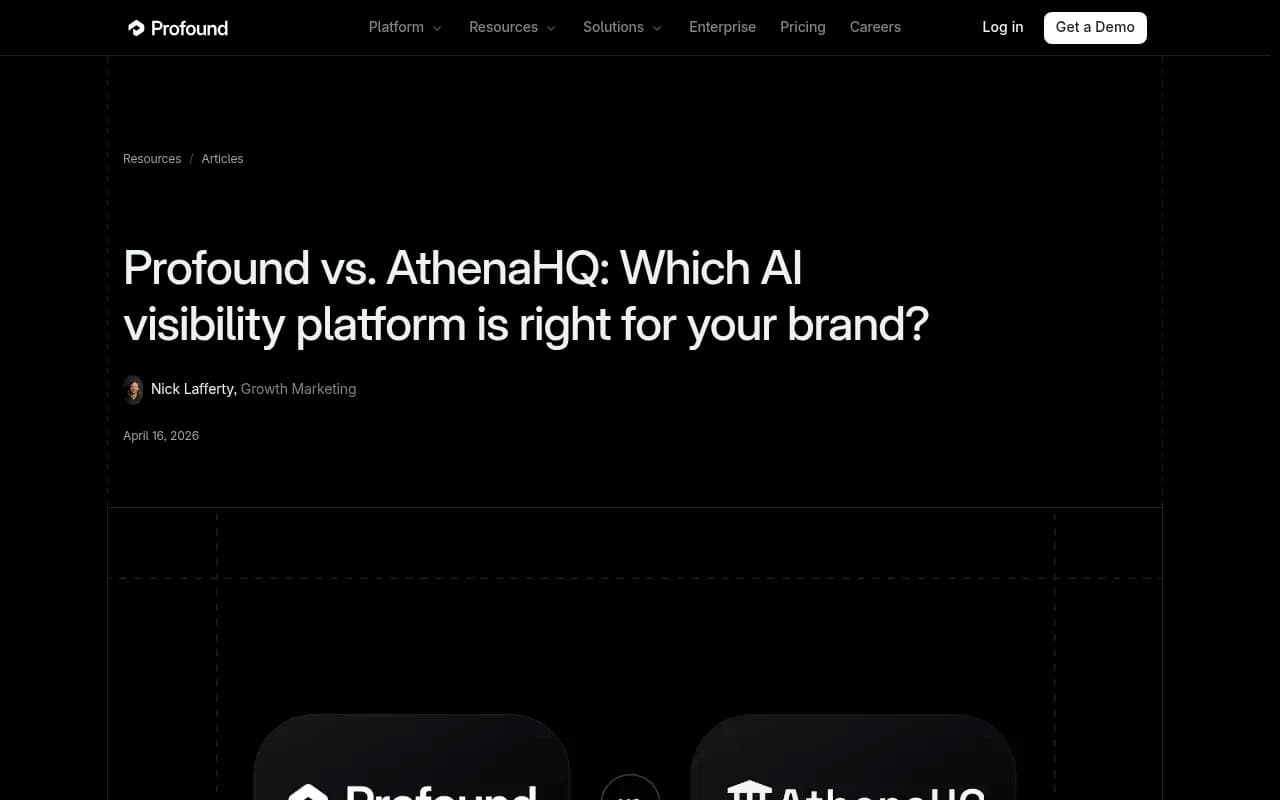
The framing is useful: both platforms serve marketing teams trying to get ahead of the AI search shift, but they approach the problem differently. Profound positions itself as more enterprise-ready with deeper data infrastructure. AthenaHQ is more accessible at the entry level -- but that accessibility has limits, as described above.
McKinsey's research, cited in that piece, projects $750 billion in US revenue flowing through AI-powered search by 2028, with only 16% of brands systematically tracking their AI search performance. The point being: the stakes are high enough that "good enough monitoring" isn't a safe position.
Profound

What teams are actually switching to
The alternatives getting the most attention in 2026 fall into a few categories.
Full-stack optimization platforms
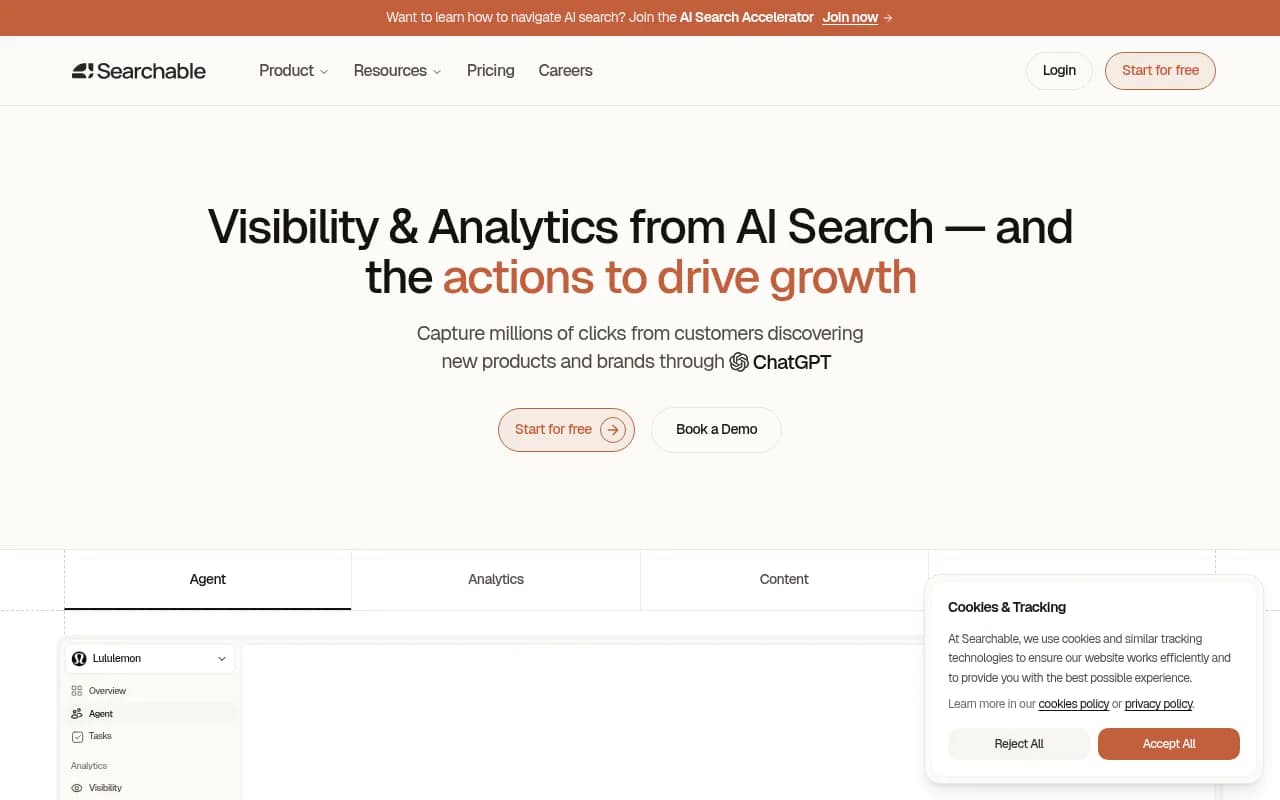
These go beyond monitoring to help you create and optimize content. Promptwatch is the clearest example, with content generation built around real prompt data and citation analysis. Searchable also combines monitoring with content generation capabilities.
Monitoring-focused alternatives with better pricing
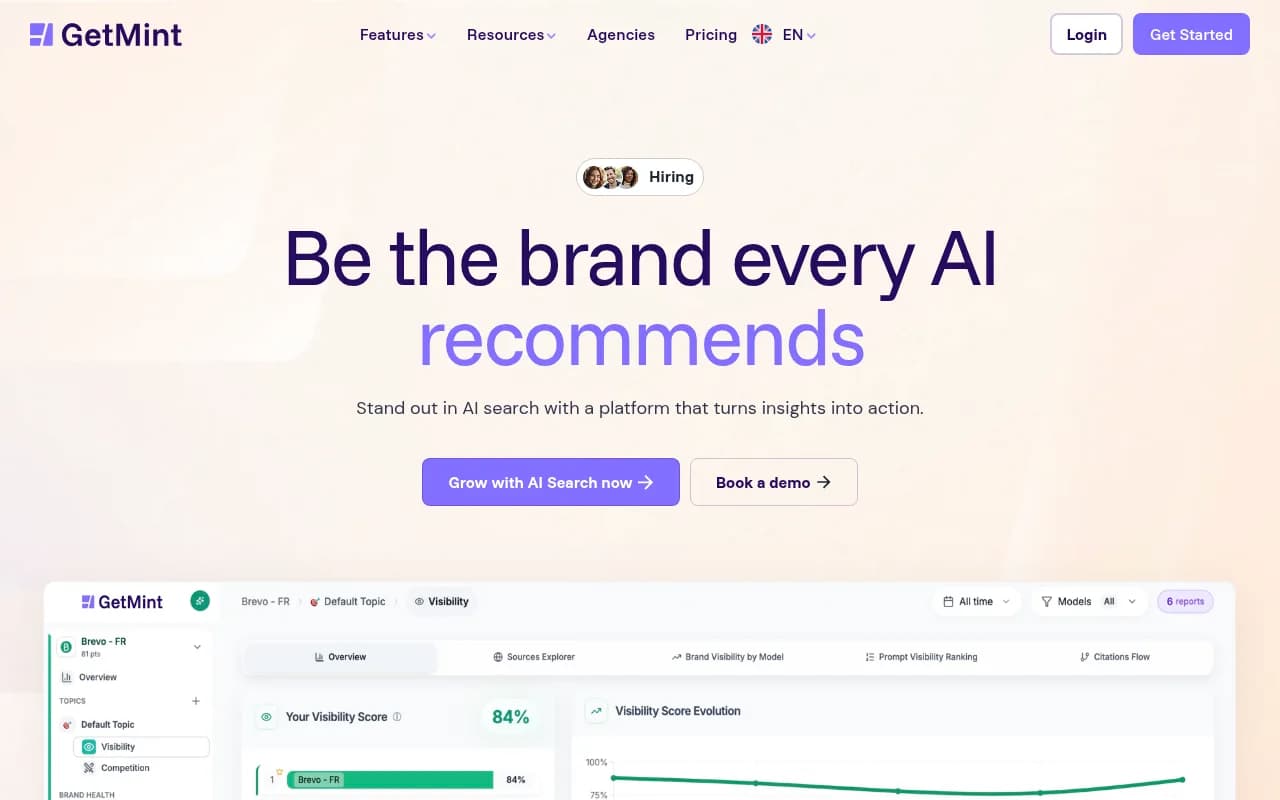
Some teams don't need content generation -- they just want reliable monitoring without the credit math problem. Tools like Otterly.AI, Peec AI, and GetMint serve this use case with more predictable pricing and free trial options.
Otterly.AI


Enterprise platforms with deeper data
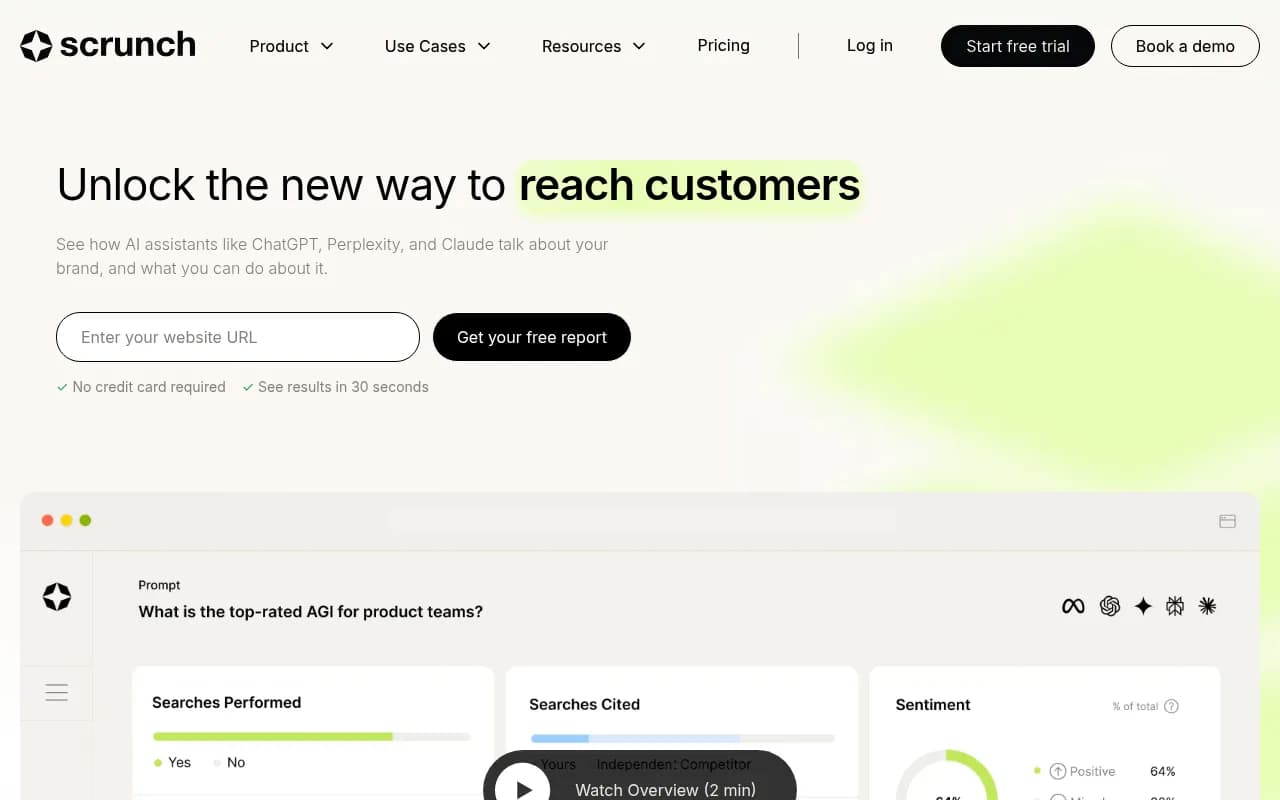
For larger organizations that need serious data infrastructure, Profound and Scrunch AI offer more depth. These aren't cheaper than AthenaHQ, but they're more transparent about what you're getting at each tier.
A direct comparison of the main alternatives
| Platform | Free trial | Starting price | Content generation | Crawler logs | Persona targeting |
|---|---|---|---|---|---|
| AthenaHQ | No | $295/mo | Limited (Enterprise) | No | Enterprise only |
| Promptwatch | Yes | $99/mo | Yes (all plans) | Yes (Professional+) | Yes |
| Profound | Yes (demo) | Custom | Yes | Yes | Yes |
| Otterly.AI | Yes | ~$49/mo | No | No | Limited |
| Peec AI | Yes | ~$49/mo | No | No | No |
| GetMint | Yes | Lower | No | No | No |
| Searchable | Yes | Varies | Yes | Limited | Yes |
The pattern is clear: AthenaHQ is priced in the mid-market but delivers enterprise-level features only at enterprise pricing. Most alternatives either cost less for comparable monitoring, or cost similarly but include content optimization that AthenaHQ reserves for custom tiers.
The credit system in practice
It's worth being specific about this because it's the complaint that comes up most often in real evaluations.
3,600 credits per month. Each prompt run across each AI engine costs credits. If you're running a serious monitoring program -- say, 100 prompts across 6 engines -- that's 600 credits per day. Your monthly allocation is gone in 6 days. The rest of the month, you're either buying add-ons at $100/1,250 credits or you stop monitoring.
For a brand doing basic monitoring with 20-30 prompts, the math works fine. For a brand doing anything resembling a real competitive intelligence program, it doesn't. And the teams most likely to pay $295/month are the ones running real programs.
This isn't unique to AthenaHQ -- credit systems are common in this space -- but the combination of high entry price, no trial, and credits that run out mid-month is a particularly frustrating combination.
Who should still consider AthenaHQ
To be fair: there are teams for whom AthenaHQ makes sense.
If you're at an enterprise that can afford the custom tier and needs Shopify and GA4 attribution alongside AI visibility tracking, AthenaHQ has built those integrations and has case studies to back them up. The AI Blindspot Detection feature is genuinely useful for identifying where you're missing from AI responses.
If you're evaluating platforms and have budget for a custom Enterprise conversation, AthenaHQ is worth including in that process. The product is more capable than the Self-Serve tier suggests.
The problem is that most teams evaluating at the $295/month level are not getting the product that the marketing describes. They're getting a monitoring dashboard with a credit system that runs out.
The broader shift happening in this space
The GEO/AEO platform market has matured significantly in 2026. A year ago, any platform that could show you AI citations was impressive. Now, the bar has moved. Teams expect:
- Transparent pricing without credit math surprises
- Free trials before commitment
- Content tools that help fix what monitoring finds
- Crawler logs that show how AI bots interact with their site
- Prompt volume data so they can prioritize what to optimize for
AthenaHQ was built for an earlier version of this market. The product hasn't kept pace with where buyer expectations have landed, and the pricing structure makes it hard to evaluate whether the gap is worth closing.
That's the real reason teams are switching. Not because the platform is broken -- it isn't -- but because the space has moved and the value proposition hasn't kept up.
If you're currently evaluating alternatives, the most useful exercise is to map your actual monitoring program -- how many prompts, how many engines, how often -- against the credit math before you commit to anything. Then ask whether you need content optimization tools or just monitoring. Those two questions will narrow the field quickly.
For teams that need the full loop -- find gaps, create content, track results -- Promptwatch is worth a close look. For teams that just need reliable monitoring at a lower price point, Otterly.AI or Peec AI are reasonable starting points with free trials that let you verify the data before paying.
The right answer depends on what you're actually trying to accomplish. But "pay $295 before you see anything and hope the credits last the month" is a hard case to make when better options exist.