Key takeaways
- Profound is a solid AI visibility tracker, but its pricing jumps fast and it doesn't help you fix the gaps it finds.
- The tools that actually move the needle combine monitoring with content gap analysis, content generation, and crawler insights.
- Promptwatch is the only platform in this category rated as a "Leader" across all evaluation criteria — it finds gaps, generates content to fill them, and tracks the results.
- Pure monitoring tools (Otterly.AI, Peec.ai, Goodie AI) are fine for awareness but won't help you rank.
- If you're already in the Ahrefs or Semrush ecosystem, their AI tracking add-ons are worth checking before buying a standalone tool.
There's a version of this article that just lists 10 tools with feature bullets and calls it a day. This isn't that.
The real question when evaluating Profound alternatives isn't "does it track ChatGPT?" — almost everything does now. The question is: after you see that you're invisible for a prompt your competitor owns, what happens next? Does the tool help you fix it, or does it just show you the problem and leave you to figure it out?
That's the lens I'm using to rank these. Tools that help you actually rank are at the top. Tools that only show you where you're not ranking are at the bottom. Profound itself sits somewhere in the middle, which is why you're here.
Let's get into it.
Why Profound falls short for some teams
Profound was one of the first serious players in AI search visibility tracking. It has real strengths: front-end response capture (not just API calls), real user prompt volume data, and an Amazon Rufus shopping module that most competitors still haven't built.
But a few things push teams to look elsewhere.
Pricing is the obvious one. The Starter plan at $99/month only covers ChatGPT. Adding Perplexity and Google AI Overviews jumps you to $399/month. Full model coverage (Claude, Gemini, Grok, DeepSeek) is enterprise-only with no published price. You're also capped at 100 tracked prompts on the Growth plan with just 3 user seats.
The deeper issue is that Profound, like most tools in this category, is primarily a monitoring platform. It shows you visibility scores. It doesn't generate content to improve them, doesn't give you AI crawler logs, and doesn't close the loop between "you're invisible here" and "here's what to publish."
If that loop matters to you, read on.
The 10 alternatives, ranked by how much they help you rank
1. Promptwatch — the only tool that closes the full loop
Promptwatch is the one platform in this space that treats AI visibility as an optimization problem, not just a reporting problem. Most tools show you a dashboard. Promptwatch shows you a dashboard and then helps you do something about it.

The core workflow: Answer Gap Analysis identifies which prompts your competitors are visible for but you're not. Content Agents then generate articles, listicles, and briefs grounded in that prompt data — not generic SEO filler, but content engineered around the specific questions AI models are already surfacing. Then page-level tracking shows you when those pages get crawled, cited, and start driving traffic.
That cycle — find gaps, create content, track results — is what separates Promptwatch from every other tool on this list.
It also covers things most competitors skip entirely: AI crawler logs (real-time logs of ChatGPT, Claude, and Perplexity bots hitting your site), Reddit and YouTube citation tracking, ChatGPT Shopping monitoring, and query fan-outs that show how one prompt branches into sub-queries. Across 10 AI models, with multi-language and multi-region support.
Pricing starts at $99/month (Essential), $249/month (Professional), and $579/month (Business). Free trial available.
In a 2026 comparison of 12 GEO platforms, Promptwatch was the only one rated "Leader" across all categories. The gap between it and the next tier is meaningful.
2. AirOps — for teams that want to engineer content at scale
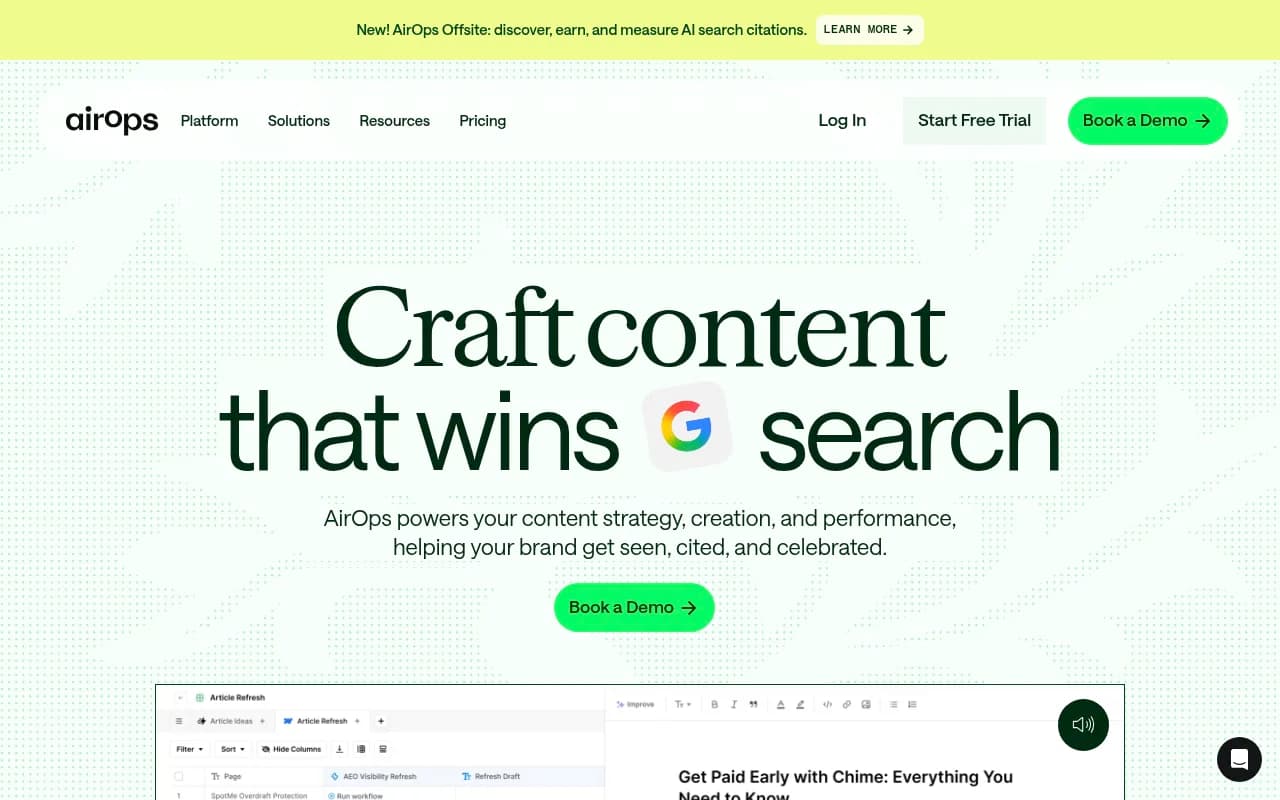
AirOps sits at the content engineering end of the spectrum. It's less about tracking your AI visibility scores and more about building the content infrastructure that earns citations. You can create workflows that pull in competitor data, prompt data, and brand guidelines, then generate content at scale.
It's powerful but requires more setup than most teams want. Think of it as a content factory rather than a visibility dashboard. If you have a dedicated SEO or content team that wants to build repeatable GEO workflows, AirOps is worth serious consideration. If you want something that works out of the box, look elsewhere.
3. Scrunch AI — strong on content, lighter on tracking depth
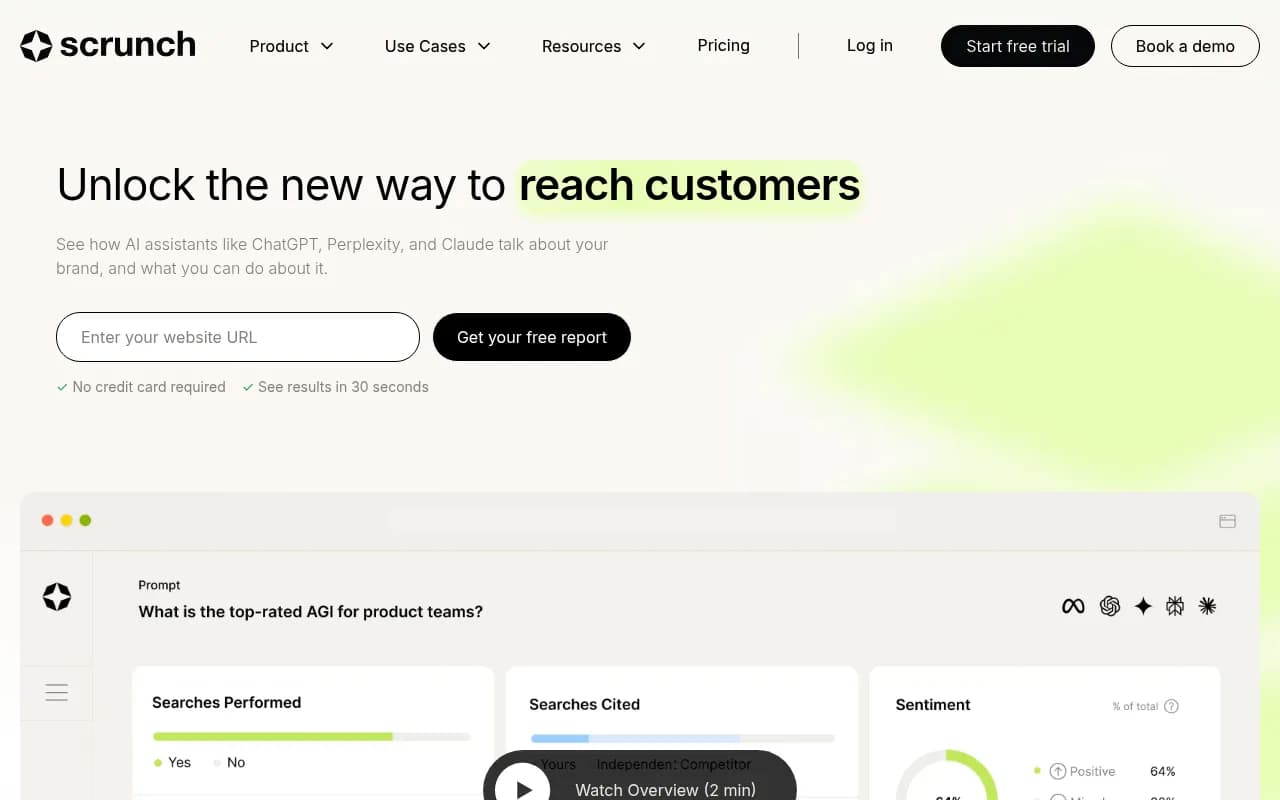
Scrunch AI has built a reasonable balance between monitoring and content optimization. It tracks brand mentions across LLMs and surfaces content recommendations based on what AI models are citing. The interface is cleaner than most competitors, and the content brief generation is genuinely useful.
Where it falls short: no AI crawler logs, no Reddit/YouTube citation tracking, and the prompt volume data is thinner than Promptwatch or Profound. It's a good mid-market option for teams that want more than pure monitoring but don't need enterprise-grade depth.
4. Search Atlas — SEO-native with growing AI search features
Search Atlas started as a traditional SEO platform and has been adding AI search tracking features throughout 2025 and 2026. The advantage here is that you get AI visibility alongside a full SEO toolkit — keyword research, site audits, link building — without paying for two separate platforms.
The AI tracking features aren't as deep as dedicated GEO tools yet. But if you're a smaller team that can't justify separate budgets for SEO and AI visibility, Search Atlas is a practical choice. The content automation features are also improving quickly.
5. Ahrefs — best if you're already in the ecosystem
Ahrefs Brand Radar is worth a mention here because the data quality is genuinely different from most competitors. Its prompt data comes from real "People Also Ask" queries with measurable search volume, not fabricated prompts. That means the visibility scores reflect actual user behavior.
The limitation is that Brand Radar is still relatively new and the feature set is narrower than dedicated GEO platforms. No content generation, no crawler logs, no Reddit tracking. But if you're already paying for Ahrefs and want to add AI visibility without a separate subscription, the Brand Radar add-on is a sensible first step.
6. Semrush — broad coverage, fixed prompt limitations
Semrush has added AI visibility tracking to its platform, which makes sense given how many SEO teams already live there. The integration with existing keyword data and content tools is useful.
The catch: Semrush uses fixed prompt sets rather than letting you define your own. That means you're tracking visibility for prompts Semrush chose, not necessarily the ones your actual customers are asking. For teams that need custom prompt tracking, this is a real limitation. For teams that want a quick read on AI visibility without leaving their existing SEO platform, it's fine.
7. AthenaHQ — solid monitoring, limited action

AthenaHQ has a clean interface and tracks AI visibility across the major models reasonably well. The competitive benchmarking features are useful for understanding where you stand relative to competitors.
But it's fundamentally a monitoring platform. There's no content generation, no crawler logs, and no clear path from "you're invisible for this prompt" to "here's what to do about it." If you're evaluating tools specifically because Profound doesn't help you act on data, AthenaHQ has the same problem.
8. Otterly.AI — good for basic monitoring on a budget
Otterly.AI

Otterly.AI is one of the more accessible entry points into AI visibility tracking. It covers ChatGPT, Perplexity, and Google AI Overviews, the interface is straightforward, and the pricing is reasonable for small teams.
The honest assessment: it's a monitoring dashboard. No content tools, no crawler logs, no visitor analytics. If you're just starting to understand how your brand appears in AI search and want something simple to get oriented, Otterly.AI works. If you want to actually improve your visibility, you'll outgrow it quickly.
9. Peec AI — lightweight tracker for early-stage teams

Peec AI occupies a similar space to Otterly.AI — basic monitoring across a handful of AI models, simple reporting, accessible pricing. It's fine for teams that are just beginning to think about AI search visibility and want a low-commitment way to start tracking.
The feature set is thin by design. No content generation, no gap analysis, no crawler data. It's a starting point, not a destination.
10. Goodie AI — monitoring only, limited model coverage
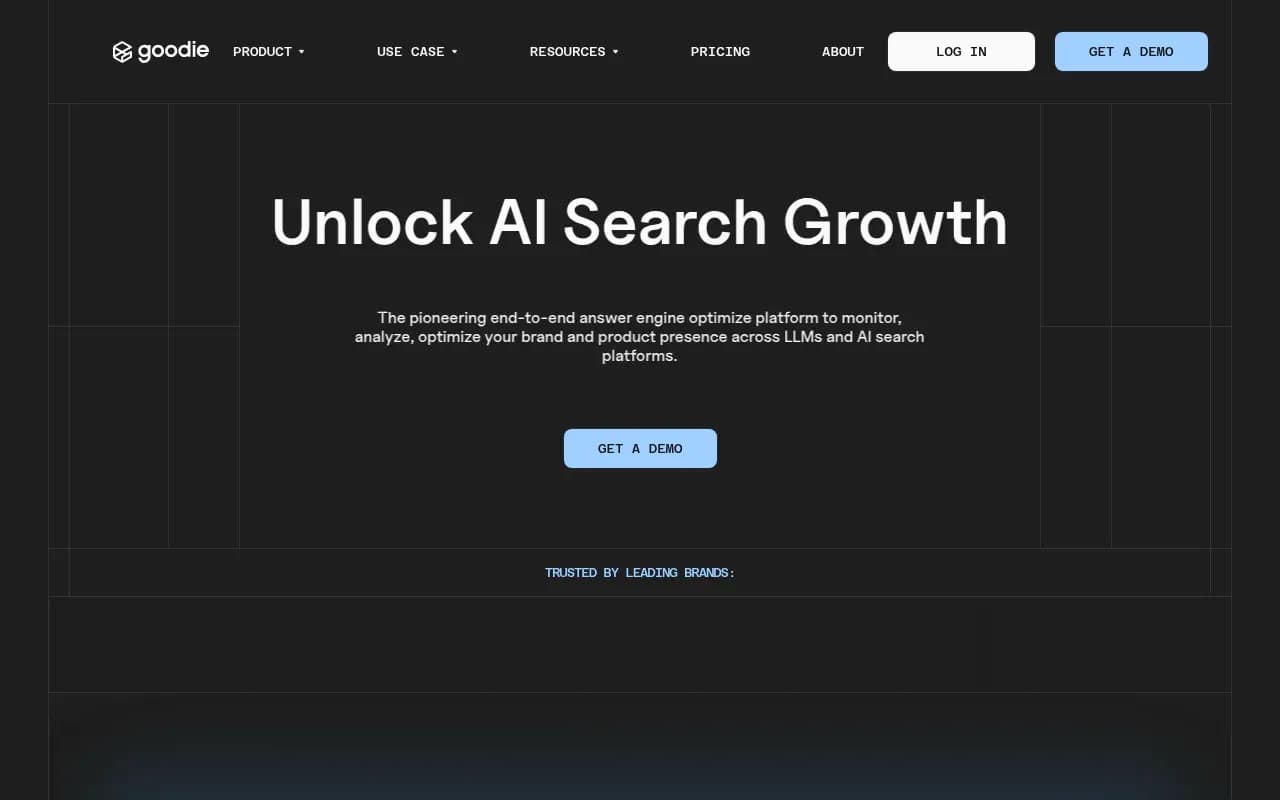
Goodie AI rounds out this list as a basic monitoring tool with limited model coverage. It tracks brand mentions in AI responses and surfaces some basic reporting. The interface is simple and the setup is fast.
But it's the most limited tool on this list in terms of actionability. If your goal is to rank better in AI search, Goodie AI won't get you there — it'll just show you that you're not there yet.
How they compare
Here's a direct comparison across the dimensions that actually matter for ranking, not just tracking:
| Tool | AI models covered | Content generation | Crawler logs | Prompt gap analysis | Reddit/YouTube tracking | Starting price |
|---|---|---|---|---|---|---|
| Promptwatch | 10 | Yes (Content Agents) | Yes | Yes | Yes | $99/mo |
| AirOps | Varies | Yes (workflows) | No | Partial | No | Custom |
| Scrunch AI | 5+ | Partial | No | Partial | No | Custom |
| Search Atlas | 4+ | Yes | No | Partial | No | ~$99/mo |
| Ahrefs Brand Radar | 6 indexes | No | No | No | No | $50/mo add-on |
| Semrush | 3+ | Partial | No | No | No | Included in plans |
| AthenaHQ | 5+ | No | No | No | No | Custom |
| Otterly.AI | 3 | No | No | No | No | ~$49/mo |
| Peec AI | 3+ | No | No | No | No | ~$49/mo |
| Goodie AI | 2-3 | No | No | No | No | Free/low cost |
The pattern is clear. The tools at the top of the list do more than track. The tools at the bottom are dashboards with no path to improvement.
How to choose
If you want to actually rank in AI search and not just measure where you stand, you need a tool with content gap analysis and content generation. Promptwatch is the most complete option here. AirOps is worth considering if you have a technical team that wants to build custom workflows.
If you're already deep in the Ahrefs or Semrush ecosystem, their AI tracking features are worth exploring before adding another subscription. The data quality in Ahrefs Brand Radar is particularly good.
If you're just starting out and want to understand the landscape before committing to a paid platform, Otterly.AI or Peec AI give you a low-friction entry point. Just know you'll need to upgrade when you're ready to act on the data.
If you're at enterprise scale, Promptwatch's Business plan or custom agency/enterprise pricing covers the depth you need — crawler logs, multi-site tracking, traffic attribution, and the full content generation loop.
The monitoring-only tools aren't bad. They're just incomplete. Knowing you're invisible in Perplexity for a high-value prompt is useful information. Knowing that and having a tool that helps you fix it is a different category of useful.
A note on Profound itself
None of this means Profound is a bad tool. The real user prompt volume data is genuinely differentiated, and the Amazon Rufus module is something most competitors haven't built yet. If you're an enterprise team with budget for the higher tiers and your primary need is accurate measurement, Profound is a reasonable choice.
But if you're looking for a tool that helps you rank — not just report — the alternatives above, particularly at the top of the list, are worth a serious look.
The AI search visibility category is still young. Most tools were built to answer "where do I show up?" The better question is "how do I show up more?" The tools that answer the second question are the ones worth your money in 2026.