Key takeaways
- Profound is a solid enterprise AI visibility tracker, but it lacks the white-label reporting, multi-client management, and content optimization features most agencies actually need.
- The best Profound alternatives for agencies combine AI visibility monitoring with content gap analysis, client-ready reporting, and tools to act on what they find.
- Promptwatch stands out as the only platform rated "Leader" across all GEO categories in 2026, with built-in content generation, crawler logs, and traffic attribution that most competitors skip entirely.
- For traditional SEO reporting alongside AI visibility, SE Ranking and Semrush remain strong choices with genuine white-label capabilities.
- The right pick depends on whether your agency primarily needs monitoring, reporting, or a full optimization workflow.
Profound is a capable tool. It tracks brand mentions across ChatGPT, Perplexity, and a handful of other AI engines, and it does that reasonably well for enterprise clients with big budgets and dedicated analytics teams.
But if you run an agency, Profound has some real friction points. The pricing is enterprise-tier. White-label reporting is limited. Managing 10 or 20 client accounts means juggling a lot of manual work. And when a client asks "okay, so how do we fix this?" -- Profound doesn't have a great answer. It shows you the problem and leaves you to figure out the solution.
That gap between "here's your visibility score" and "here's how to improve it" is where most agencies lose time and client trust.
This guide covers five alternatives that handle multi-client workflows better, offer cleaner white-label reporting, and in some cases actually help you do something about the visibility gaps you find.
What agencies actually need from a Profound alternative
Before jumping to the list, it's worth being specific about what makes a tool genuinely useful for agencies versus just functional.
Multi-client management means more than having multiple workspaces. It means being able to switch between accounts quickly, compare performance across clients, and generate reports without rebuilding everything from scratch each time.
White-label reporting isn't just slapping a logo on a PDF. It means custom domains, branded dashboards, and reports that look like they came from your agency -- not from whatever SaaS tool you're paying for.
Optimization tools are what separate a monitoring dashboard from something that actually earns its monthly fee. If a client's AI visibility drops, you need to know why and have a path to fix it. That means content gap analysis, citation data, and ideally some help creating the content that will close those gaps.
Traffic attribution is the final piece most tools ignore. Knowing your brand appears in ChatGPT responses is interesting. Knowing that those appearances are driving actual sessions and revenue is what justifies the retainer.
The 5 best Profound alternatives for agencies in 2026
1. Promptwatch -- best for agencies that need to actually fix visibility gaps
Promptwatch is the most complete option on this list, and the one most directly built around the agency use case of "monitor, diagnose, fix, report."

Most AI visibility tools -- including Profound -- are monitoring dashboards. They show you where your clients appear (or don't) in AI-generated responses, give you a score, and call it done. Promptwatch is built differently. The core workflow is a loop: find the gaps, create content to close them, track the results.
The Answer Gap Analysis is the piece that makes this genuinely useful for agencies. It shows you exactly which prompts competitors are getting cited for that your client isn't. Not vague topic clusters -- specific questions and angles that AI models are answering from competitor content. That's a content brief, essentially, handed to you automatically.
From there, the built-in AI writing agent generates articles, listicles, and comparisons grounded in citation data from 880M+ analyzed citations. This isn't generic AI content -- it's engineered around what AI models actually cite. For agencies running content retainers alongside GEO work, this is a significant time saver.
On the reporting side, Promptwatch tracks visibility across 10 AI models: ChatGPT, Perplexity, Claude, Gemini, Google AI Overviews, Google AI Mode, Grok, DeepSeek, Meta/Llama, Copilot, and Mistral. Page-level tracking shows which specific pages are being cited and by which models. The traffic attribution layer -- via a code snippet, GSC integration, or server log analysis -- connects AI visibility to actual sessions and revenue, which is exactly what you need to show clients ROI.
The AI Crawler Logs feature is something most competitors don't offer at all. You can see in real time when ChatGPT, Claude, or Perplexity crawls a client's site, which pages they read, and any errors they hit. That's genuinely useful for diagnosing why a client isn't getting cited despite having relevant content.
For agencies specifically: Promptwatch supports multi-site management, custom personas, multi-language and multi-region monitoring, and a Looker Studio integration for custom reporting. Agency and enterprise pricing is available on request. Standard plans start at $99/month (Essential), $249/month (Professional), and $579/month (Business).
The honest caveat: if your agency only needs basic brand monitoring with no optimization work, Promptwatch is more tool than you need. But if you're selling GEO as a service -- or want to -- it's the most complete platform available.
2. SE Ranking -- best for white-label SEO reporting with AI visibility added
SE Ranking has been a go-to for agency SEO reporting for years, and in 2026 it's added meaningful AI visibility features through its SE Visible module.
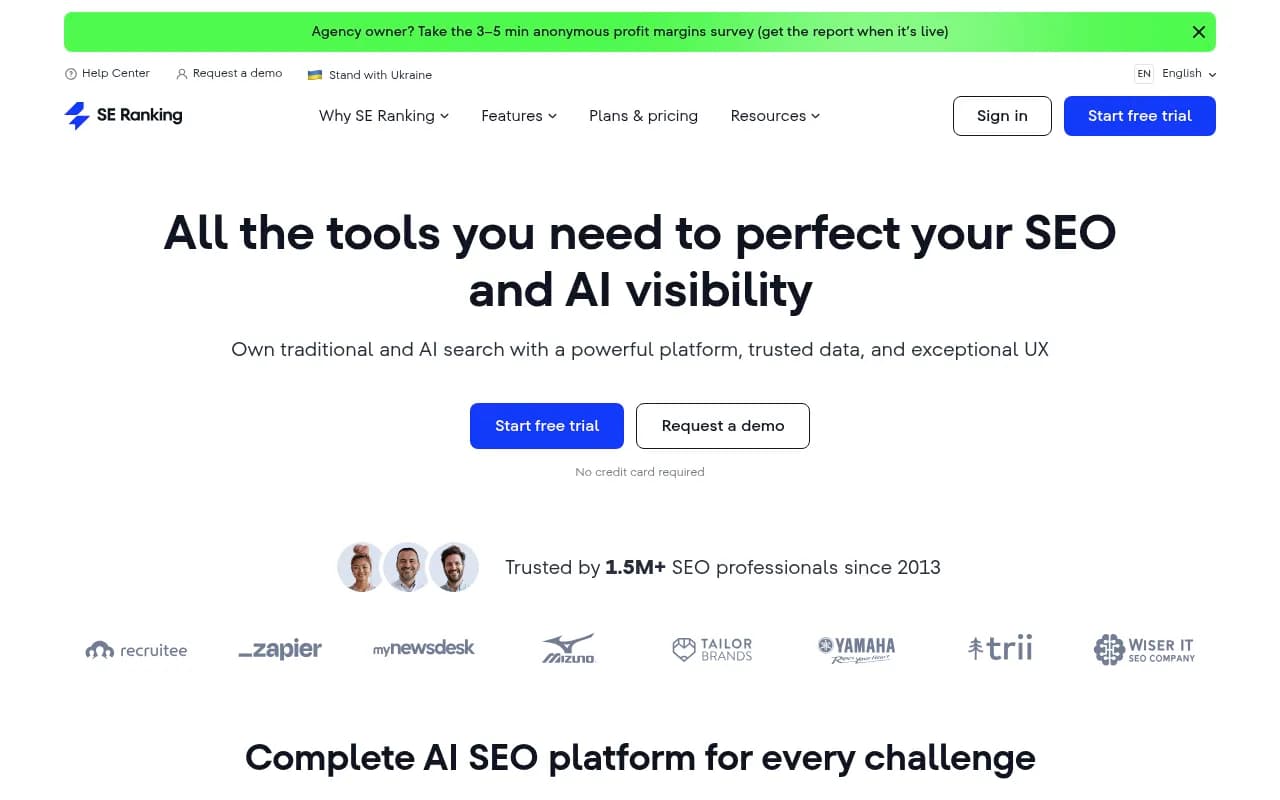
The white-label capabilities here are genuinely strong. You get custom domains, branded client dashboards, white-label PDF reports, and the ability to set up separate client portals with their own logins. For agencies managing 20+ clients, the workflow is smooth -- bulk reporting, scheduled delivery, and template-based report building that doesn't require rebuilding from scratch each time.
On the traditional SEO side, SE Ranking covers rank tracking, site audits, backlink analysis, and keyword research. The AI visibility layer tracks brand mentions in AI-generated responses, though it's more of a monitoring add-on than a core feature. You can see when clients appear in AI Overviews and some LLM responses, but the depth of prompt analysis and citation data doesn't match Promptwatch.
Where SE Ranking wins for agencies: price-to-feature ratio. It's significantly cheaper than Profound for multi-client setups, and the white-label reporting is more polished. If your agency is primarily selling traditional SEO with AI visibility as a secondary offering, SE Ranking is a practical choice.
3. Semrush -- best for agencies that want everything in one platform
Semrush needs no introduction, but its relevance to this list is worth being specific about.
For agencies already using Semrush for traditional SEO, the AI visibility features are a reasonable add-on rather than a reason to switch platforms. The AI Toolkit tracks brand mentions in AI search responses, and the Agency Growth Kit includes white-label reporting, client management, and lead generation tools.
The limitation Semrush has in the AI visibility space is that its prompt tracking uses fixed prompts rather than letting you build custom prompt sets around your clients' actual competitive landscape. That's fine for broad brand monitoring but less useful when you're trying to understand why a specific client isn't appearing for a specific category of queries.
Semrush also lacks AI traffic attribution and doesn't have anything equivalent to Promptwatch's Answer Gap Analysis or content generation features. It's a monitoring layer on top of a traditional SEO platform, not an optimization workflow.
That said, for agencies that want one platform for everything -- keyword research, rank tracking, competitor analysis, backlink auditing, and AI visibility monitoring -- Semrush is the most practical consolidation play.
4. Rankscale -- best for agency-focused AI visibility tracking on a budget
Rankscale is a newer entrant built specifically with agencies in mind, and it shows in the product design.
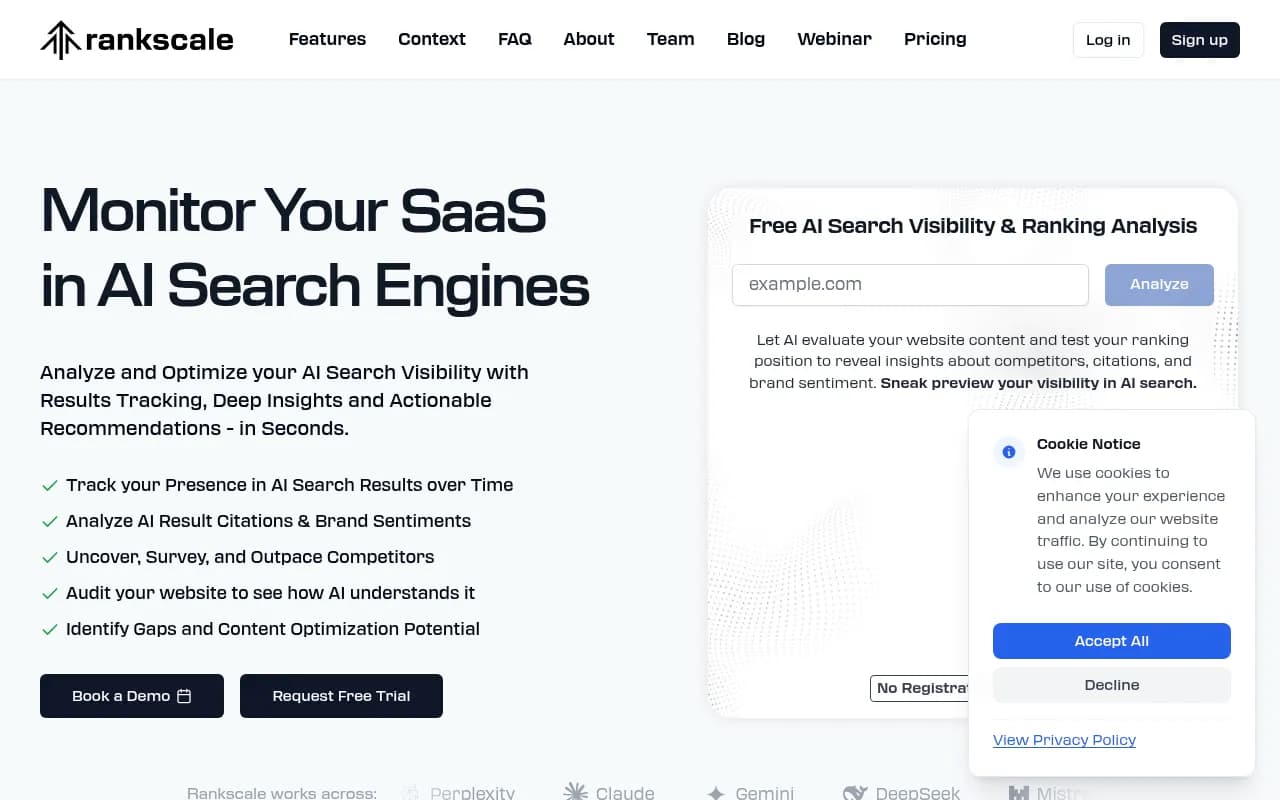
The multi-client dashboard is clean and genuinely built for managing multiple accounts without the friction you get from tools designed for single-brand use. Client onboarding is fast, prompt sets are easy to configure per client, and the reporting is white-label ready.
Rankscale tracks visibility across the major AI models and gives you share-of-voice metrics that are easy to explain to clients who aren't deep in the GEO weeds. The competitive benchmarking is solid -- you can show a client exactly how they compare to three or four competitors across different prompt categories.
The gap compared to Promptwatch is on the optimization side. Rankscale is primarily a monitoring and reporting tool. There's no content generation, no Answer Gap Analysis, and no crawler log data. If a client asks "what do we do about this?" you're still doing that analysis yourself.
For agencies that want a clean, affordable monitoring and reporting tool without paying for optimization features they'll build themselves, Rankscale is worth a look.
5. Gauge -- best for competitive gap analysis and AI visibility roadmaps
Gauge positions itself around actionable competitive insights, which makes it a reasonable middle ground between pure monitoring tools and full optimization platforms.
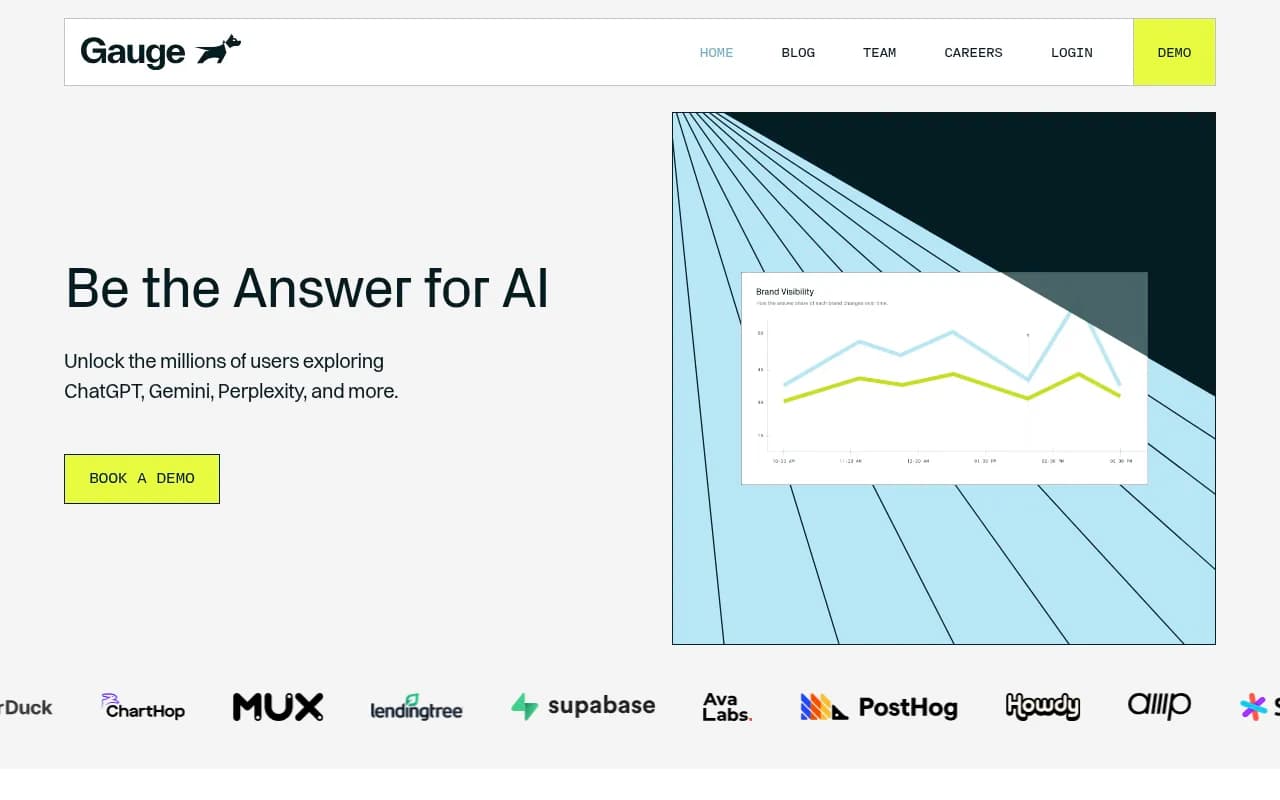
The competitive gap analysis is the standout feature. Gauge shows you which prompts competitors are visible for that your client isn't, and it frames this as a visibility roadmap rather than just a data dump. For agencies pitching GEO services, that roadmap framing is useful -- it gives you something concrete to show clients as a deliverable.
Gauge also has a free tool called ProductRank AI for product ranking research, which can be a useful prospecting tool for agencies looking to demonstrate value before a client commits.
The limitations: Gauge doesn't have the crawler log data, traffic attribution, or content generation capabilities that Promptwatch offers. It's a step up from pure monitoring tools in terms of actionability, but it stops short of being a full optimization platform. Pricing is also less transparent than some alternatives, which can complicate agency proposals.
Side-by-side comparison
| Feature | Promptwatch | SE Ranking | Semrush | Rankscale | Gauge |
|---|---|---|---|---|---|
| AI visibility monitoring | 10 models | Limited | Limited | Major models | Major models |
| White-label reporting | Yes (Looker Studio) | Yes (strong) | Yes (Agency Kit) | Yes | Limited |
| Multi-client management | Yes | Yes | Yes | Yes (built for it) | Yes |
| Content gap analysis | Yes (Answer Gap) | No | No | No | Yes (partial) |
| AI content generation | Yes | No | No | No | No |
| Crawler logs | Yes | No | No | No | No |
| Traffic attribution | Yes | No | No | No | No |
| Reddit/YouTube tracking | Yes | No | No | No | No |
| Prompt volume/difficulty | Yes | No | No | No | No |
| Starting price | $99/mo | ~$65/mo | ~$140/mo | Custom | Custom |
How to choose
If your agency is building a GEO practice and wants to sell optimization as a service -- not just monitoring -- Promptwatch is the right choice. The Answer Gap Analysis, content generation, and traffic attribution give you a complete workflow from diagnosis to proof of results. It's the only platform on this list where you can genuinely close the loop.
If you're primarily an SEO agency adding AI visibility as a secondary service, SE Ranking gives you the best white-label reporting at a reasonable price, with enough AI visibility coverage to satisfy most clients.
If you're already deep in the Semrush ecosystem, the Agency Growth Kit is the path of least resistance. Just know you're getting monitoring, not optimization.
If you want a clean, agency-first monitoring tool without paying for features you won't use, Rankscale is worth evaluating.
If competitive gap analysis and roadmap-style deliverables are central to how you pitch GEO work, Gauge fills that niche reasonably well.
The honest reality is that most agencies in 2026 are still figuring out what GEO services look like as a product. The tools that will matter most are the ones that help you show clients a clear before/after -- and that requires more than a monitoring dashboard. It requires the ability to find gaps, create content that closes them, and attribute the results to revenue. Right now, Promptwatch is the only platform that does all three.