Key takeaways
- Peec AI is a solid monitoring tool, but it stops at showing you data -- it doesn't help you create content to improve your visibility.
- The most useful alternatives combine AI search tracking with built-in content generation or optimization workflows.
- Platforms like Promptwatch, Writesonic, and Search Atlas take an "optimize, not just observe" approach that's more useful for teams trying to grow their AI presence.
- Price points vary dramatically -- from free tiers to enterprise contracts -- so the right pick depends on your team size and how seriously you're investing in GEO.
- If you're an agency or brand that needs to close the loop between visibility data and content output, look for tools that include citation gap analysis alongside writing capabilities.
Peec AI helped a lot of teams ask the right question: are we showing up in AI-generated answers? That was genuinely valuable when most SEO teams were still figuring out that ChatGPT and Perplexity had become part of the buyer journey.
But asking the question is only half the job. If your brand isn't appearing in AI Overviews, ChatGPT responses, or Perplexity citations, you need to do something about it -- and Peec AI doesn't give you the tools to act. It shows you the gap; it doesn't help you close it.
That's the core reason teams start looking for alternatives. Not because Peec AI is bad, but because monitoring-only platforms have a ceiling. You can stare at a visibility score all day. What you actually need is to know which content to create, then create it.
This guide covers seven alternatives that go beyond tracking and include some form of built-in content generation or optimization. Each one is worth a serious look depending on your use case.
What to look for in a Peec AI alternative
Before jumping into the list, it's worth being clear about what "built-in content generation" actually means in this context -- because tools use that phrase loosely.
At the useful end of the spectrum, you have platforms that analyze which prompts your competitors are being cited for, identify the specific content gaps on your site, and then generate articles, comparisons, or listicles grounded in that citation data. That's content generation with a purpose.
At the less useful end, you have tools that bolt a generic AI writer onto a monitoring dashboard. The writing is disconnected from the visibility data, so you're essentially using two separate tools that happen to share a login.
When evaluating these alternatives, I looked at:
- Whether the content generation is informed by actual citation and prompt data
- How many AI models are tracked (ChatGPT, Perplexity, Claude, Gemini, etc.)
- Whether there's any traffic attribution to connect visibility to revenue
- Pricing transparency and value at each tier
The 7 best Peec AI alternatives with content generation
1. Promptwatch
Promptwatch is the most complete option on this list if your goal is to actually improve your AI visibility, not just measure it.
The core difference from Peec AI is what Promptwatch calls the action loop: find the gaps, create content that fills them, track the results. Most monitoring tools only do step one. Promptwatch does all three.
The Answer Gap Analysis is particularly useful -- it shows you exactly which prompts your competitors are being cited for that you're not. You see the specific topics and questions AI models want to answer but can't find on your site. That's actionable in a way that a simple visibility score isn't.
The built-in AI writing agent then generates articles, listicles, and comparisons grounded in real citation data. It's not generic content -- it's engineered around the prompts and citation patterns that actually influence AI responses. With over 880 million citations analyzed, the content recommendations have real data behind them.
Beyond content generation, Promptwatch tracks 10 AI models (including ChatGPT, Claude, Perplexity, Gemini, Grok, and Google AI Overviews), logs AI crawler activity on your site in real time, and includes Reddit and YouTube citation tracking -- two channels most competitors ignore entirely. There's also ChatGPT Shopping tracking if you're in e-commerce.
Traffic attribution closes the loop: you can connect AI visibility to actual site traffic and revenue via a code snippet, Google Search Console integration, or server log analysis.

Pricing starts at $99/month for the Essential plan (1 site, 50 prompts, 5 articles), $249/month for Professional (2 sites, 150 prompts, 15 articles, plus crawler logs), and $579/month for Business (5 sites, 350 prompts, 30 articles). A free trial is available.
2. Writesonic GEO
Writesonic has been an AI writing tool for years, and its GEO module adds AI search visibility tracking on top of that existing content infrastructure. The combination works reasonably well.
The platform tracks share-of-voice across AI engines, detects citation gaps, and lets you generate content directly from those insights. Because Writesonic already had a mature writing product before adding GEO features, the content generation side is genuinely capable -- not an afterthought.
Where it falls short compared to Promptwatch is depth of AI search data. Crawler log monitoring, Reddit/YouTube citation tracking, and ChatGPT Shopping visibility aren't part of the offering. But if you're primarily looking for a writing-forward platform that also handles AI visibility monitoring, Writesonic GEO is worth evaluating.

3. Search Atlas
Search Atlas takes a broad approach -- it's trying to be an all-in-one SEO and GEO platform, which means it covers a lot of ground. AI visibility tracking, content generation, technical SEO, and rank tracking all live under one roof.
The content generation is tied to its OTTO AI agent, which can research, write, and publish content based on keyword and citation data. For teams that want to consolidate tools, this is appealing. You're not paying separately for an SEO platform, a GEO tracker, and a content writer.
The tradeoff is that "all-in-one" platforms often mean "good at many things, best at none." Search Atlas is a strong option for teams with broad SEO needs who want GEO capabilities included, rather than teams whose primary focus is AI search optimization.

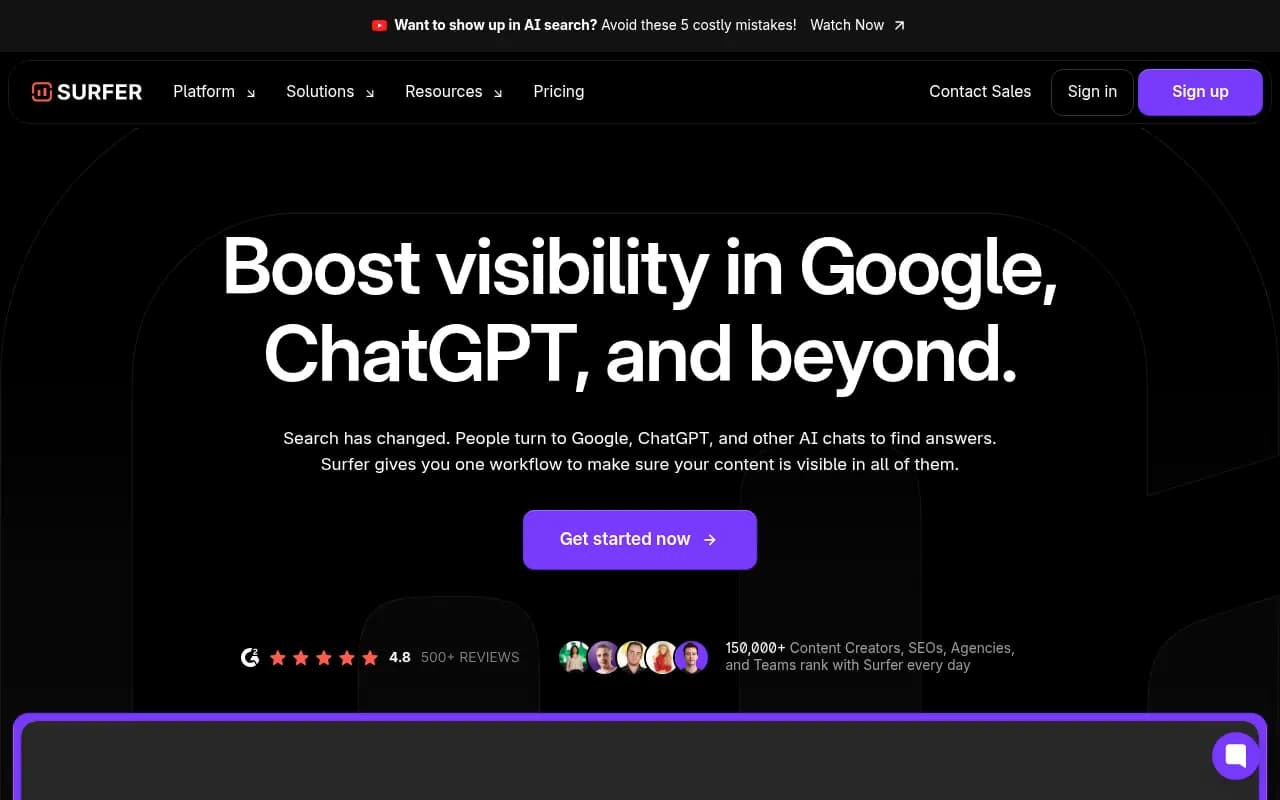
4. Surfer SEO
Surfer SEO is primarily a content optimization tool for traditional search, but it's been adding AI search features and its core strength -- grounding content recommendations in real SERP and citation data -- translates well to GEO.
The Content Editor analyzes top-ranking content and tells you exactly what topics, entities, and phrases to include. That same logic applies to AI-cited content: AI models tend to cite comprehensive, well-structured pages that cover a topic thoroughly. Surfer's optimization workflow pushes you in that direction.
It's not a dedicated GEO platform, so you won't get LLM-specific tracking or prompt volume data. But if you're already using Surfer for SEO and want a tool that helps you write content that performs in both traditional and AI search, it's a practical choice.
5. Scalenut
Scalenut combines keyword research, content briefs, AI writing, and SEO optimization in one platform. It's aimed at content teams that need to produce a high volume of optimized content without a large team.
The AI writer generates full articles from briefs, and the optimization layer checks content against NLP-based scoring. It's a solid content production workflow. The GEO-specific features are less developed than dedicated AI visibility platforms, but Scalenut has been adding AI search tracking capabilities.
For teams that are primarily content-focused and want to scale production while keeping an eye on AI visibility, Scalenut is a reasonable option at a competitive price point.

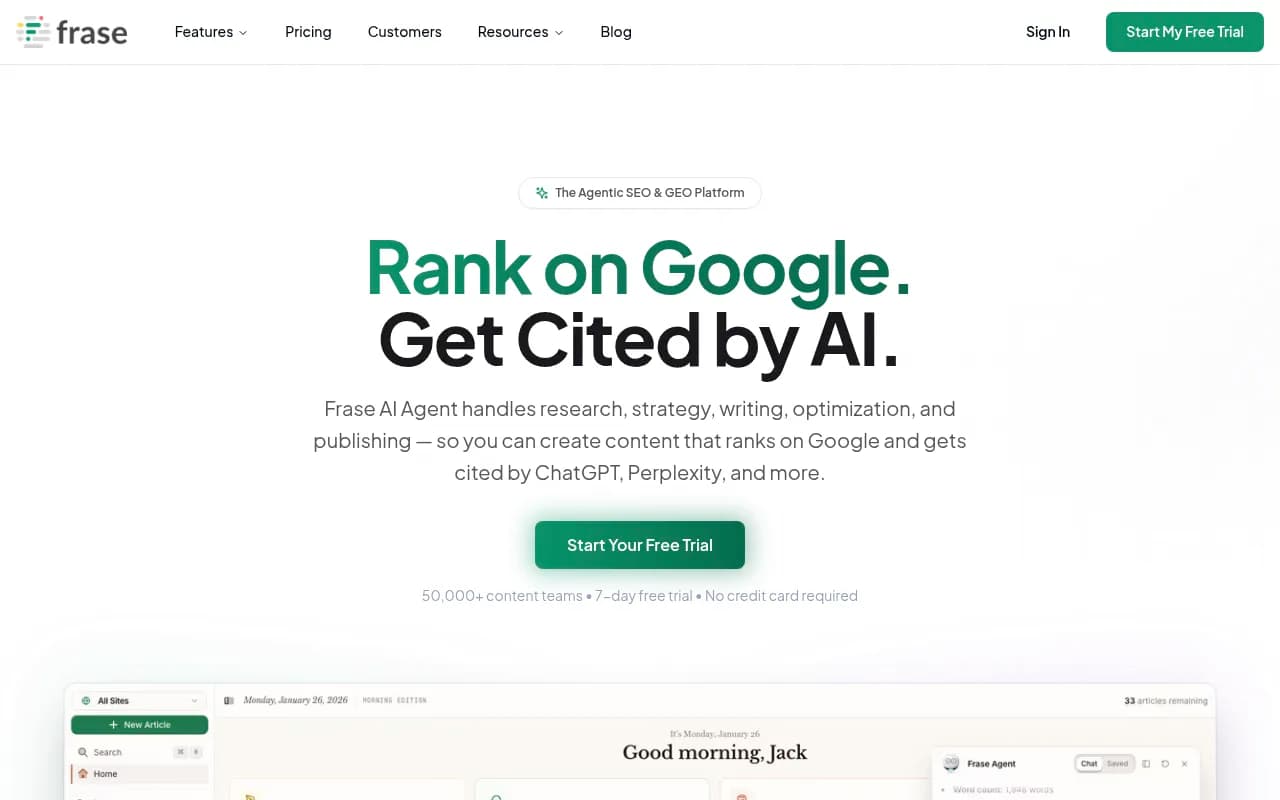
6. Frase
Frase is one of the cleaner tools in the content research and optimization space. You enter a topic, it pulls together what's ranking and being cited, builds a brief, and helps you write against it.
The workflow is fast and the briefs are genuinely useful -- they surface questions, headings, and entities from top-performing content. For AI search optimization, this matters because AI models tend to cite pages that answer specific questions comprehensively.
Frase doesn't have dedicated LLM tracking or AI visibility scoring, so you'd need to pair it with a monitoring tool if you want to see how your content performs in AI results. But as a content generation tool informed by real search data, it's one of the best standalone options.
7. Outranking
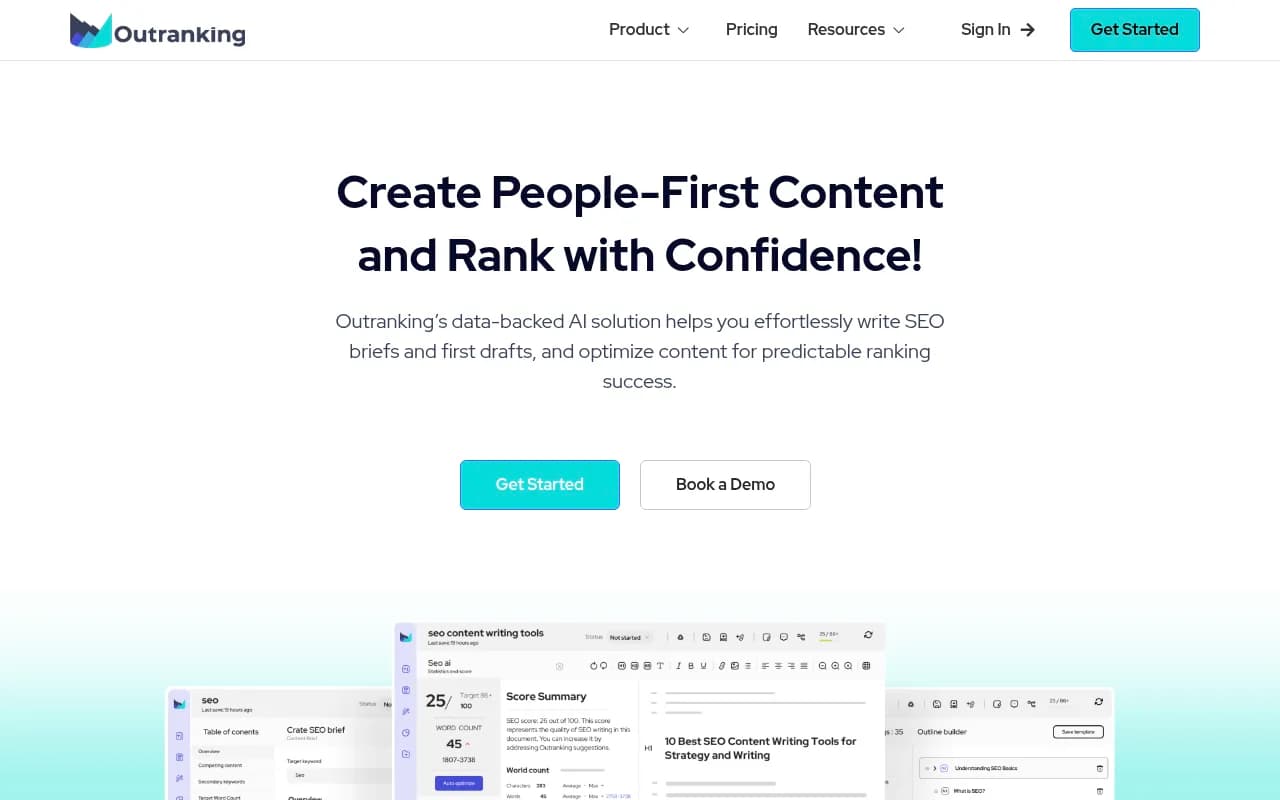
Outranking is an AI content platform that writes, optimizes, and publishes SEO content with a focus on factual accuracy and search intent. It's been building toward GEO use cases, with content workflows designed to produce the kind of comprehensive, well-cited pages that AI models prefer to reference.
The platform includes content briefs, AI writing, internal linking suggestions, and optimization scoring. It's more structured than a general-purpose AI writer, which makes it better suited for teams that want a repeatable content production process rather than one-off article generation.
Like Frase, Outranking works best when paired with a dedicated AI visibility tracker rather than as a standalone GEO solution.
Side-by-side comparison
| Tool | AI model tracking | Content generation | Citation gap analysis | Traffic attribution | Starting price |
|---|---|---|---|---|---|
| Promptwatch | 10 models | Yes (citation-grounded) | Yes | Yes | $99/mo |
| Writesonic GEO | Multiple models | Yes (mature writer) | Partial | No | ~$99/mo |
| Search Atlas | Multiple models | Yes (OTTO AI) | Partial | No | ~$99/mo |
| Surfer SEO | Limited | Yes (content editor) | No | No | ~$89/mo |
| Scalenut | Limited | Yes | No | No | ~$39/mo |
| Frase | No | Yes (brief-driven) | No | No | ~$45/mo |
| Outranking | No | Yes (structured) | No | No | ~$79/mo |
| Peec AI | Multiple models | No | No | No | Custom |
The table makes the gap clear. Most alternatives are strong on content generation but weak on AI-specific tracking. Promptwatch is the only option that combines deep AI model tracking with citation-grounded content generation and traffic attribution in one platform.
How to choose the right tool for your situation
The right answer depends on where you are in your GEO journey.
If you're just starting to think about AI visibility and want to understand the landscape before committing to a full platform, a tool like Frase or Surfer SEO gives you a content optimization workflow that improves your chances in both traditional and AI search without a steep learning curve or price tag.
If you're already tracking AI visibility with Peec AI and frustrated that the data doesn't translate into action, the upgrade path is clear: you need a platform that connects monitoring to content creation. Promptwatch is built specifically for that workflow, and the Answer Gap Analysis is the most direct way to turn visibility data into a content brief.
If you're an agency managing multiple clients and need to show AI visibility improvements over time, you need both tracking depth and content output at scale. Promptwatch's agency pricing and multi-site support are worth evaluating alongside Search Atlas's all-in-one approach.
If budget is the primary constraint, Scalenut and Frase offer the most content generation capability at the lowest price points, though you'll need to accept limited AI-specific tracking.
The monitoring-only trap
One thing worth naming directly: a lot of teams get stuck in monitoring mode. They pick a tool, set up tracking, watch their visibility scores, and feel like they're doing GEO. They're not -- they're just watching.
The platforms that actually move the needle are the ones that turn visibility data into a content production workflow. That means knowing which prompts to target, what content to create, and then being able to measure whether that content actually improved your citations.
That's a harder problem to solve than monitoring, which is why most tools haven't solved it. The ones on this list that come closest to the full loop are worth the extra investment if AI search visibility is genuinely a priority for your team.