Key takeaways
- AI assistants recommend, they don't just rank. Reviews, accurate listings and third-party mentions often outweigh pure proximity.
- SOCi's 2026 Local Visibility Index (350,000+ locations, 2,751 brands) reports that ChatGPT recommends only 1.2% of local business locations. Most businesses are invisible.
- Different assistants disagree. Searchable's data shows ChatGPT and Gemini agreeing on only about a quarter to a third of local service businesses.
- You get into answers through listicles, directories and review sites, so listing accuracy and review volume matter as much as your own website.
- Check what AI says about you first, fix the gaps, then re-check monthly.
What "AI perception" means for a local business
AI perception is what an AI assistant says about your business when a customer asks something like "who's the best HVAC company near me?" It covers three things: whether you are mentioned at all, how you are described, and which sources the assistant leans on to say it.
This is different from the old map pack. A map pack ranks pins. An assistant writes a recommendation, and recommendations need confidence. Review Inc.'s write-up on how AI recommends local businesses frames it well: every review, listing, customer photo and owner response is evidence that helps the model answer one question, "Can I confidently recommend this business?"
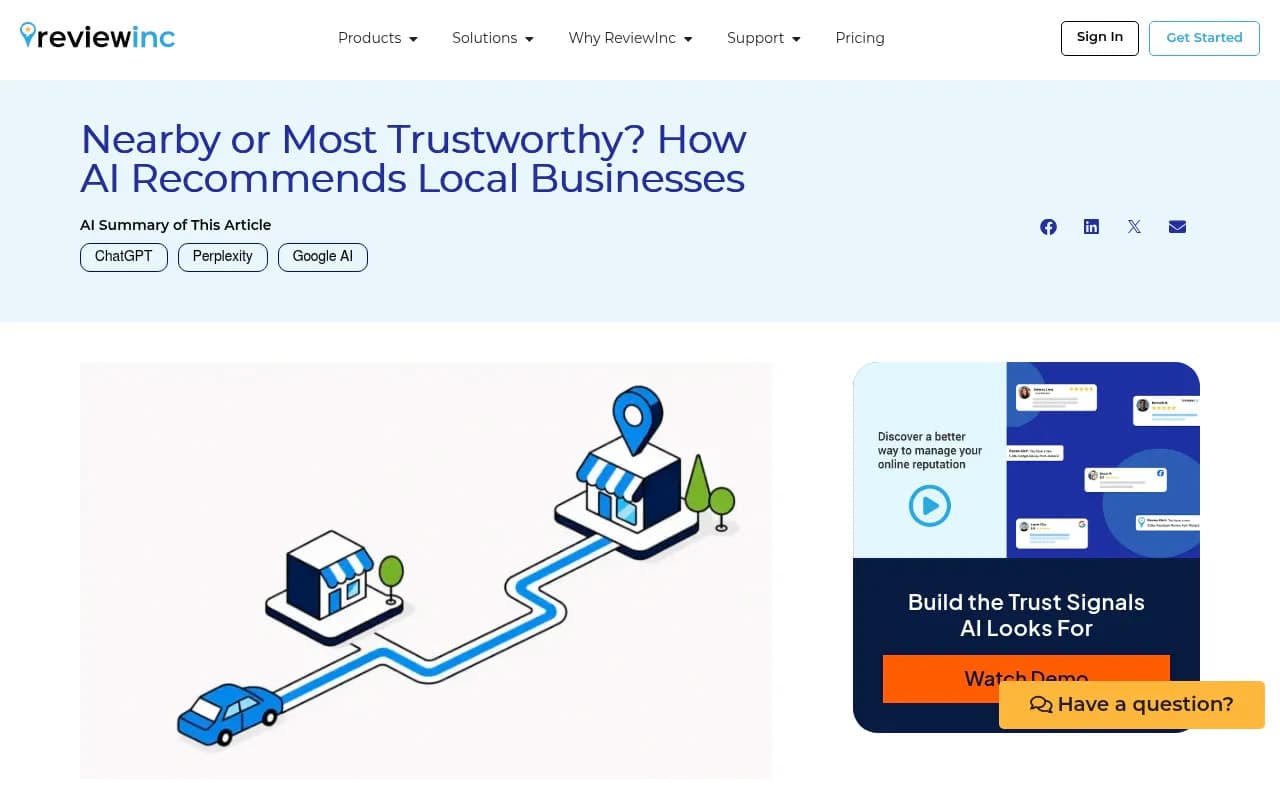
For years, being closer than your competitor gave you an edge. Now proximity is only part of the story. I think that's the most important mental shift for a small business owner: you can be a block away and still not get named.
How bad is the visibility gap?
The headline number is stark. SOCi's 2026 Local Visibility Index analysed over 350,000 business locations across 2,751 brands and found ChatGPT recommends just 1.2% of them. That figure comes from a press release summary and I haven't verified the underlying report, so treat it as directional. Even so, it matches what most people see when they test their own business: the assistant names three or four options and everyone else simply doesn't exist.
The second finding is that assistants don't agree with each other. Searchable reports that ChatGPT and Gemini overlapped on only about a quarter to a third of the local service businesses they recommended for the same questions, versus close to half for B2B software brands. So a business mentioned by one may be missing from another. Checking one assistant and calling it done is a mistake.
The flip side is encouraging. The same Searchable piece argues AI search levels the field in ways Google Maps never did, because people ask very specific, natural-language questions like "best coffee shop walking distance from downtown." Smaller businesses with strong reviews and clear descriptions can win those.
What AI looks at when it picks a local option
No assistant publishes its local ranking recipe, so be careful with anyone who claims to know it exactly. What the research and first-party data do show points in a consistent direction.
Third-party sources do most of the work
Promptwatch Data has no local-specific report, but its cross-industry numbers are useful. In Promptwatch's analysis of ChatGPT citations by content type (Sep 28 to Oct 4, 2026), product pages made up 22.4% of classified citations and landing pages 16.8%. Listicles were 13.6% and reviews 1.7%. For commercial "best X" prompts, product pages hit 26.0%, landing pages 20.6% and listicles 15.0%.
For a local business, translate that: your own service and location pages matter, and so do the "best of" roundups that list you.
A second dataset shows how crowded answers are. Promptwatch's report on unique domains per ChatGPT response found 47.6% of responses with citations cite 10 or more domains, and 52.5% of organic prompts that don't name a brand do. You are rarely the only option in an answer. Directories, reviews and listicles are how you get in.
When someone names you directly, the picture flips. Only 21.3% of brand-specific prompts cite 10 or more domains, and reviews rise to 5.6% of citations, more than three times their overall share. A handful of sources shape how you are described, so the quality of those few pages matters a lot.
Vertical examples
Travel is the closest local-style vertical Promptwatch has covered. In its travel and tourism citation report (Sep 28 to Oct 4, 2026), Skyscanner led with 0.78%, followed by Going, Tripadvisor, Kayak and Airbnb. Booking and search sites earned 2.42% of travel citations, and review sites like Tripadvisor and Trustpilot 0.86%. The practical lesson for hotels and attractions: keep aggregator listings accurate and collect reviews where the models already look.
The trust signals
Pulling the research together, the evidence an assistant seems to weigh includes:
- Review volume, recency and ratings across several platforms
- Consistent name, address, phone and hours across listings
- Owner responses to reviews
- Mentions in local roundups, news and directories
- Clear service and location pages on your own site
- Details that match the question, such as nearby landmarks or transit for a hotel
The last one is easy to miss. A hotel that never mentions nearby transit may not appear when someone asks for accommodation in a specific area.
Check what AI says about you right now
Before buying anything, do a manual baseline. It takes an hour.
- Write 10 to 15 prompts the way customers talk: "best family dentist in [town]", "emergency plumber open now near [neighborhood]", "cheap Italian restaurant for a group of eight in [area]".
- Run each in ChatGPT, Gemini, Google AI Mode and Perplexity. Use a logged-out or clean session where you can.
- Record whether you are mentioned, in what position, and how you are described.
- Record which sources are cited. Those are your real competitors for the answer.
- Repeat the exact prompts monthly. Answers change.
Note that results shift with location. If you serve several areas, test from each one.
The Entrepreneur piece on this topic describes a study of close to 500 prompts across local sectors, three countries and six cities. I couldn't read the full article, so I won't quote its findings, but the approach is the one to copy: many prompts, several places, repeated checks.
Fixing a weak AI perception
Clean up your listings first
Inconsistent hours or an old phone number is the cheapest problem to fix and the most embarrassing to leave. Audit Google Business Profile, Bing Places, Apple Business Connect, Yelp and the main industry directory in your trade. Multi-location brands should do this with software, since the problem scales with size.
Earn reviews where trust lives
Ask for reviews steadily rather than in bursts, and reply to them. Use the platforms that matter in your category, such as Tripadvisor for hospitality or G2-style sites for software. Promptwatch's own advice for branded prompts is blunt: collect reviews on sites people trust in your category.
Make your site answer real questions
Add service pages per location, a proper FAQ, pricing ranges where you can, opening hours, parking, nearby landmarks and who you serve. Write it the way a customer would ask it. Assistants quote pages that state the answer plainly.
Get into the roundups
Because listicles are one of the biggest cited formats, find the local "best of" lists that already rank for your category and earn a place on them with real outreach, sponsorships or community involvement. Local press counts too.
Keep AI crawlers able to read you
If your robots.txt or CDN blocks AI bots, your content can't be used. A free check such as the Agentic Readiness Check shows which crawlers can reach your site.
Tools for tracking and improving local AI visibility
There are two tool families here, and local businesses usually need a bit of both: listing and reputation management, and AI visibility tracking.
AI visibility tracking
Promptwatch is the option I would look at first if you want more than a dashboard. It monitors the real interfaces of ChatGPT, Google AI Overviews, Google AI Mode, Gemini, Perplexity, Copilot and others, and Business plans add state and city tracking plus local GEO targeting at exact coordinates (accuracy radius 20 m to 5 km), so answers are collected as if asked from your storefront. It also shows which pages and third-party sources get cited, and its Content Agent can write and publish pages for the gaps. Business is $579/mo; confirm current pricing at promptwatch.com/pricing. There is a 7-day free trial and a free AI visibility report.

Lighter options for monitoring brand mentions across assistants include Otterly.AI and Peec AI, which suit small budgets but are mostly monitoring.
Otterly.AI


For a broader view of this category, the GEO software directory at bestgeosoftware.com lists many more.
Listings and reputation
These handle the evidence layer: listings, reviews and local rankings.
| Tool | Main job | Best for |
|---|---|---|
| Promptwatch | AI visibility tracking, local targeting, content fixes, crawler logs | Local brands and agencies that want to act on the data |
| Otterly.AI / Peec AI | Brand mention tracking in AI answers | Small businesses wanting a simple monitor |
| BrightLocal | Local SEO, citations, review tracking | Single and multi-location SEO |
| Whitespark | Citation building and local rankings | Agencies and consultants |
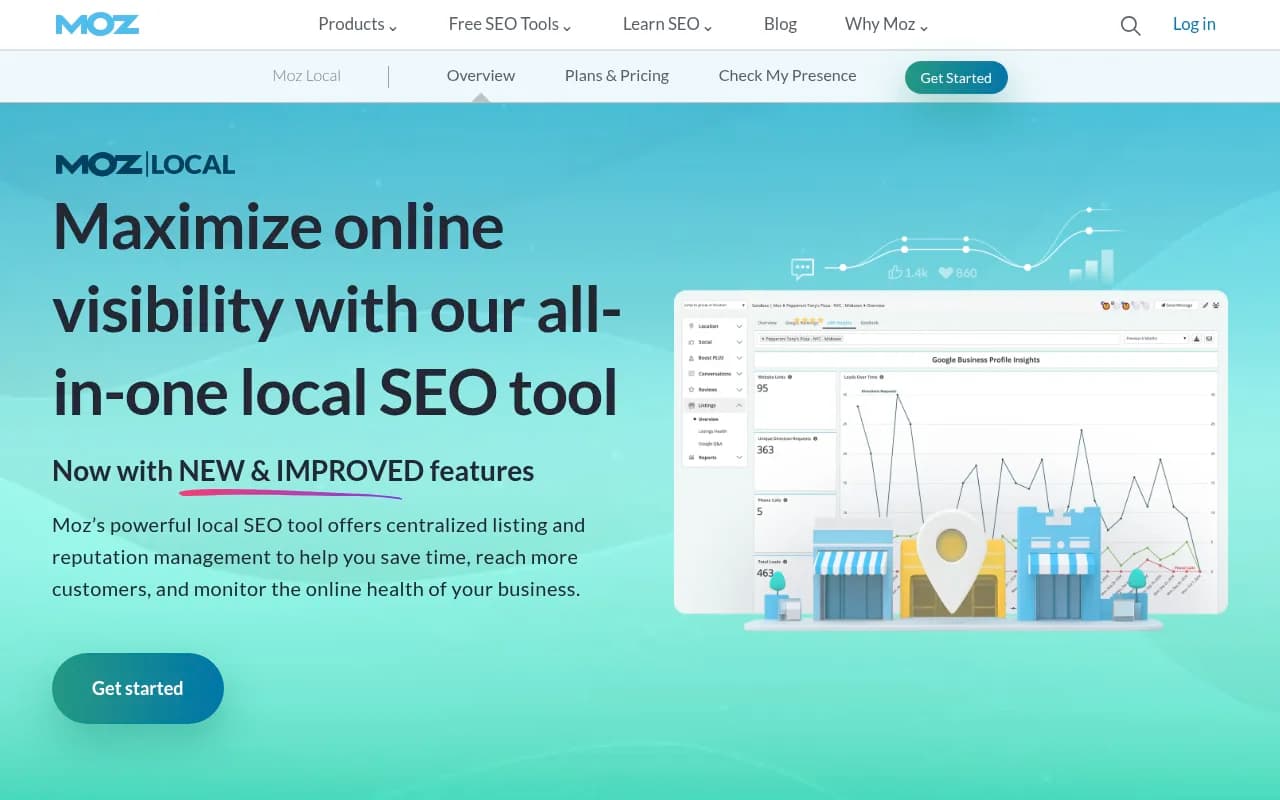
| Moz Local | Listing sync and management | Small multi-location sets |
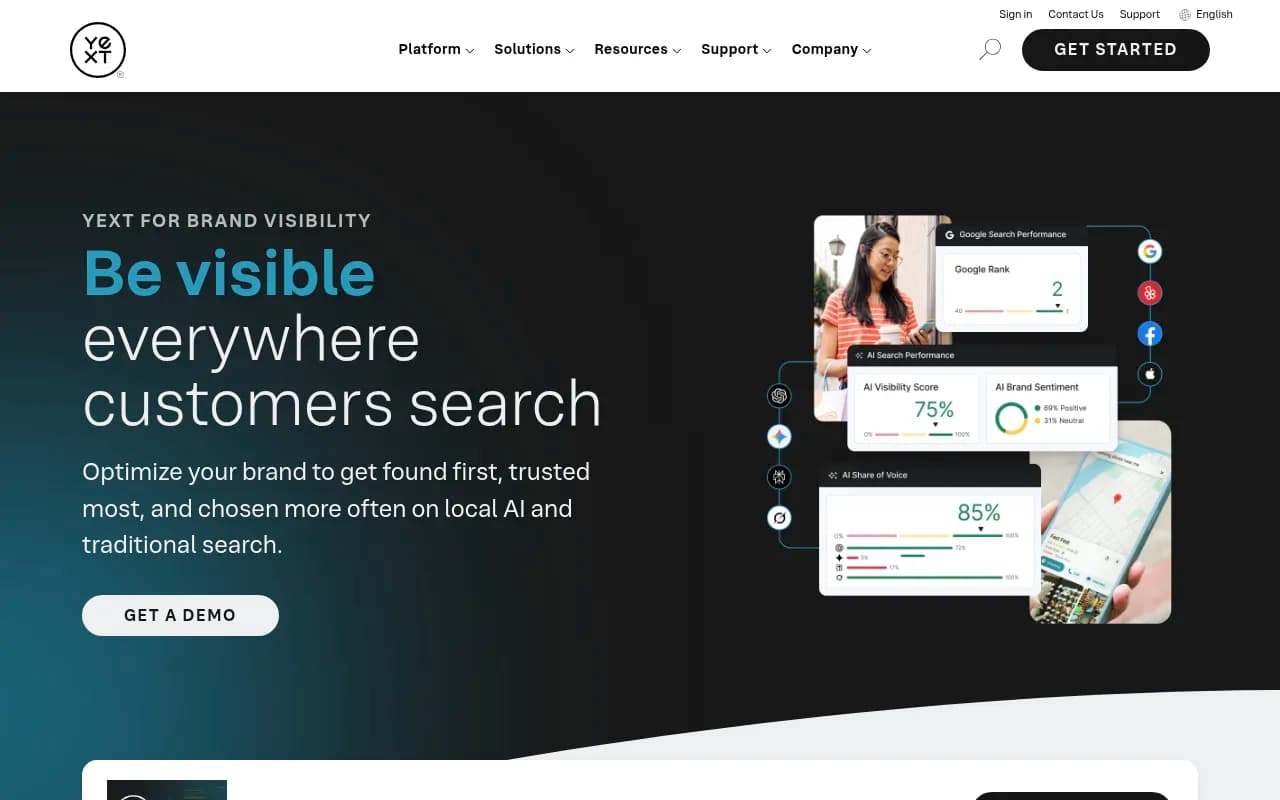
| Yext | Listings and knowledge across many publishers | Large multi-location brands |
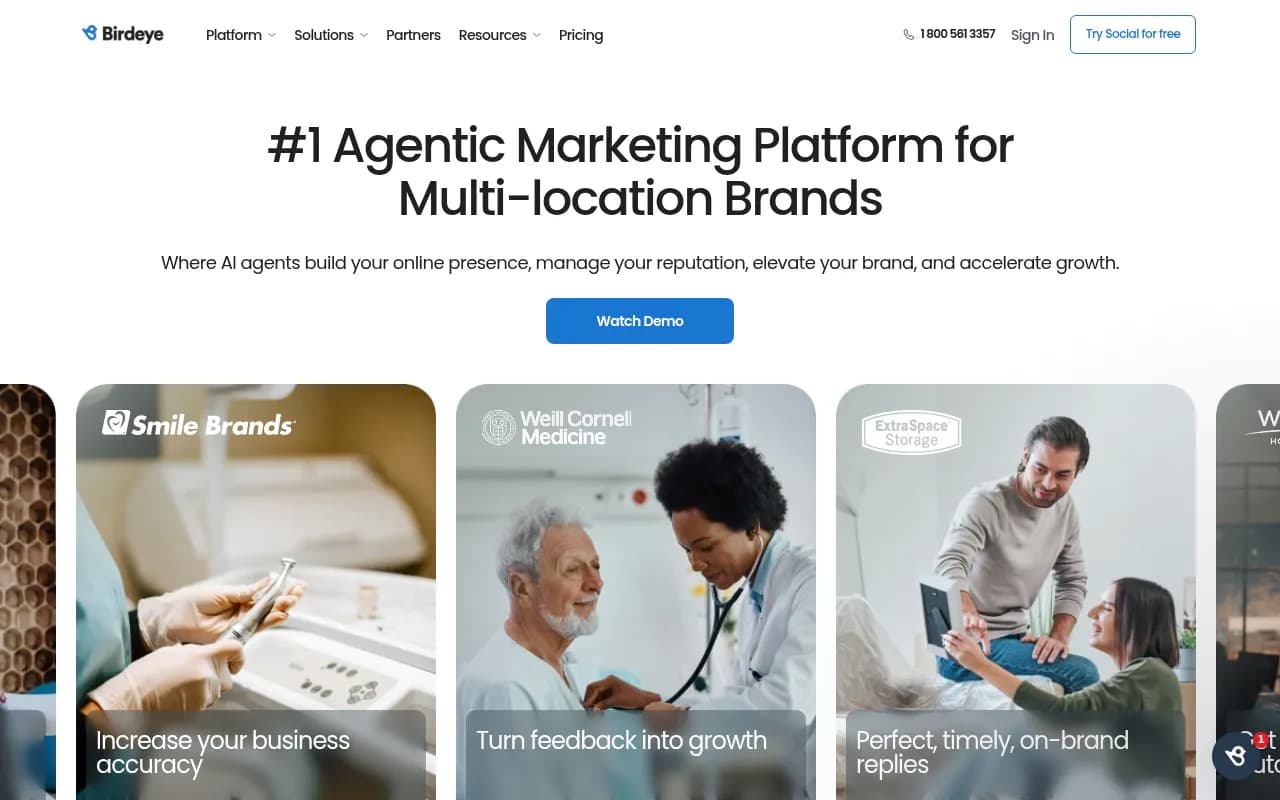
| Birdeye | Review collection and AI mention tracking | Review-heavy service businesses |
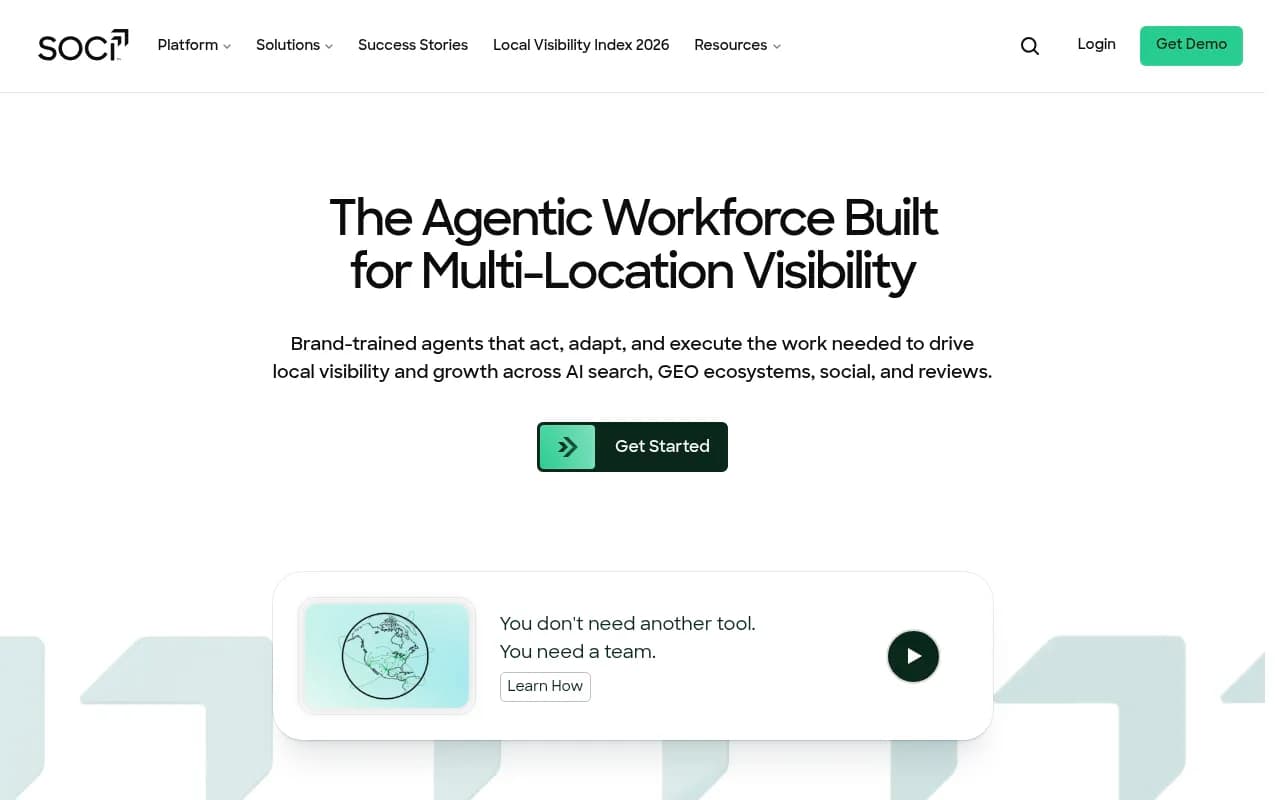
| SOCi | Multi-location local marketing | Franchise and enterprise |
| Local Falcon | Geo-grid map rank tracking | Checking map-pack strength by area |
A sensible small-business stack is one listing tool, one review tool and one AI visibility tracker. Don't buy all nine.
Common mistakes
- Testing only ChatGPT. Assistants disagree, so test several.
- Assuming proximity wins. It helps, but evidence of quality decides a lot.
- Chasing a single score. A number is useful only when you can see which sources and claims sit behind it.
- Ignoring what is said about you. Read the descriptions. If an assistant says you are expensive or closed on Sundays and that's wrong, find the page it learned that from.
- Treating it as a one-off. Answers move month to month, and so does the data. Promptwatch Data has shown big swings, such as Reddit's share of ChatGPT citations collapsing in August 2026.
A simple 30-day plan
Week 1: run the manual prompt baseline and write down gaps. Fix listing errors.
Week 2: start a review routine and reply to the last 20 reviews. Add or improve FAQ and location pages.
Week 3: identify five local roundups and directories that appear in citations and pitch each.
Week 4: re-run the same prompts, compare, and decide whether a tracking tool is worth it. If you are an agency doing this for local clients, 1001 SEO Media covers local SEO and AI search work, and the wider directories at surferstack.com can help you compare software.
Bottom line
When someone asks AI for the best option nearby, the answer is built from evidence, not distance. The businesses that get named have consistent listings, steady reviews on trusted platforms, pages that answer real questions and mentions in the roundups AI already cites. Measure first, fix the cheap problems, then keep checking, because the answer you get this month is not guaranteed next month.