Key takeaways
- True AI invisibility means AI crawlers are blocked from accessing your site — no amount of content optimization will fix it until the technical barrier is removed.
- Low visibility is different: AI can access your content, but doesn't find it authoritative or relevant enough to cite. This is a content and strategy problem, not a technical one.
- The diagnostic process matters: you need to check robots.txt, crawler logs, and citation data before deciding which fix to apply.
- Most brands have a mix of both problems across different pages and AI models — the fix isn't one-size-fits-all.
- Monitoring tools like Promptwatch can show you exactly which pages are being cited, which prompts you're missing, and whether AI crawlers are even reaching your content.
The problem most teams misdiagnose
Here's a scenario that plays out constantly in 2026: a marketing team notices their brand isn't appearing in ChatGPT or Perplexity responses. They assume it's a content problem, so they spend weeks rewriting pages, adding FAQs, and publishing new articles. Three months later, nothing changes.
The reason? Their robots.txt file was blocking GPTBot the entire time. The AI never read a single word.
This is the core confusion between AI invisibility and low AI visibility. They look identical from the outside (your brand isn't showing up) but have completely different causes and completely different fixes. Treating one as the other wastes months of effort.
Let's break down exactly what each problem is, how to tell them apart, and what to do about each.
What true AI invisibility actually means
AI invisibility isn't a metaphor. It's a technical state where AI crawlers physically cannot access your content. The most common causes:
Blocked crawlers in robots.txt. AI models like ChatGPT, Claude, and Perplexity use their own crawlers (GPTBot, ClaudeBot, PerplexityBot) to index the web. If your robots.txt file disallows these bots, they can't read your pages. According to Ahrefs, 35% of the top 1,000 websites block GPTBot. Those sites are invisible to ChatGPT's web-browsing features and training data pipelines.
JavaScript-rendered content that bots can't parse. Many modern sites render content via JavaScript. Most AI crawlers don't execute JavaScript the way a browser does. If your key content only appears after JS runs, crawlers see an empty page.
No-index tags on important pages. If your product pages, comparison pages, or key articles have noindex meta tags, they won't be indexed by anyone, including AI crawlers.
Crawl errors and server blocks. Rate limiting, 5xx errors, and firewall rules that block non-browser user agents can all prevent AI crawlers from successfully fetching your pages.
The defining characteristic of true invisibility: it doesn't matter how good your content is. A perfectly written, structured, authoritative article that's blocked in robots.txt will never be cited.
What low AI visibility means
Low visibility is a different problem entirely. The AI can access your content, but when someone asks a relevant question, it doesn't cite you. Instead, it cites a competitor.
This happens for several reasons:
Your content doesn't directly answer the question. AI models are looking for clear, direct answers to specific questions. If your page talks around a topic without ever stating the answer plainly, the AI skips it.
You're missing entire topic clusters. A competitor has published 15 articles covering every angle of a topic. You have two. The AI has more material to work with from the competitor and cites them more often.
Your brand lacks authority signals in the AI's training data. AI models weight sources that appear frequently across the web, get cited in other content, and appear in discussions on Reddit, YouTube, and forums. If your brand is relatively new or niche, you may have lower authority even if your content is good.
Wrong content format. AI models tend to cite content that's structured for direct extraction: clear headings, concise answers, comparison tables, numbered steps. Dense prose without structure is harder for AI to parse and cite.
Competitor content is simply better. Sometimes the honest answer is that a competitor has published a more comprehensive, more accurate, more useful piece on the same topic.
The defining characteristic of low visibility: you're present in the AI's index, but not winning citations for the prompts that matter.
How to diagnose which problem you have
Before you fix anything, you need to know what you're dealing with. Here's a practical diagnostic process.
Step 1: Check your robots.txt
Go to yourdomain.com/robots.txt and look for any rules that disallow AI crawlers. Specifically check for:
User-agent: GPTBot
Disallow: /

User-agent: ClaudeBot
Disallow: /

User-agent: PerplexityBot
Disallow: /

User-agent: *
Disallow: /
Any of these mean you have a true invisibility problem. The fix is straightforward: remove the disallow rules for AI crawlers (or add explicit allow rules) and verify the change.
Step 2: Check your crawler logs
This is where most teams stop short. Robots.txt tells you what you're blocking intentionally, but crawler logs tell you what's actually happening. Are AI crawlers attempting to visit your site? Are they hitting errors? Which pages are they reading and which are they skipping?
Tools like Promptwatch include real-time AI crawler logs that show exactly which bots (ChatGPT, Claude, Perplexity, etc.) are hitting your site, which pages they're reading, and what errors they encounter. This is the clearest diagnostic signal available.

Without crawler log data, you're guessing. With it, you can see within minutes whether your invisibility is technical or content-based.
Step 3: Run a citation check
Search for your brand name and key topics in ChatGPT, Perplexity, and Claude. Ask questions like:
- "What are the best [your product category] tools?"
- "How do I [solve the problem your product solves]?"
- "Compare [your brand] vs [competitor]"
If your brand appears at all, you have low visibility, not true invisibility. If it never appears across dozens of relevant prompts, you may have a technical block.
Step 4: Check for JavaScript rendering issues
Use a tool like Screaming Frog to crawl your site with JavaScript disabled. Compare what the crawler sees to what a browser sees. If key content disappears, AI crawlers may be seeing the same empty pages.
Fixing true AI invisibility
Once you've confirmed a technical block, the fixes are relatively quick to implement (though they take time to take effect as crawlers re-index your site).
Fix your robots.txt
Add explicit allow rules for AI crawlers:
User-agent: GPTBot
Allow: /

User-agent: ClaudeBot
Allow: /

User-agent: PerplexityBot
Allow: /

User-agent: OAI-SearchBot
Allow: /
Be intentional about what you allow. You may want to block AI crawlers from certain sections (login pages, admin areas, private content) while allowing them on your public content.
Fix JavaScript rendering
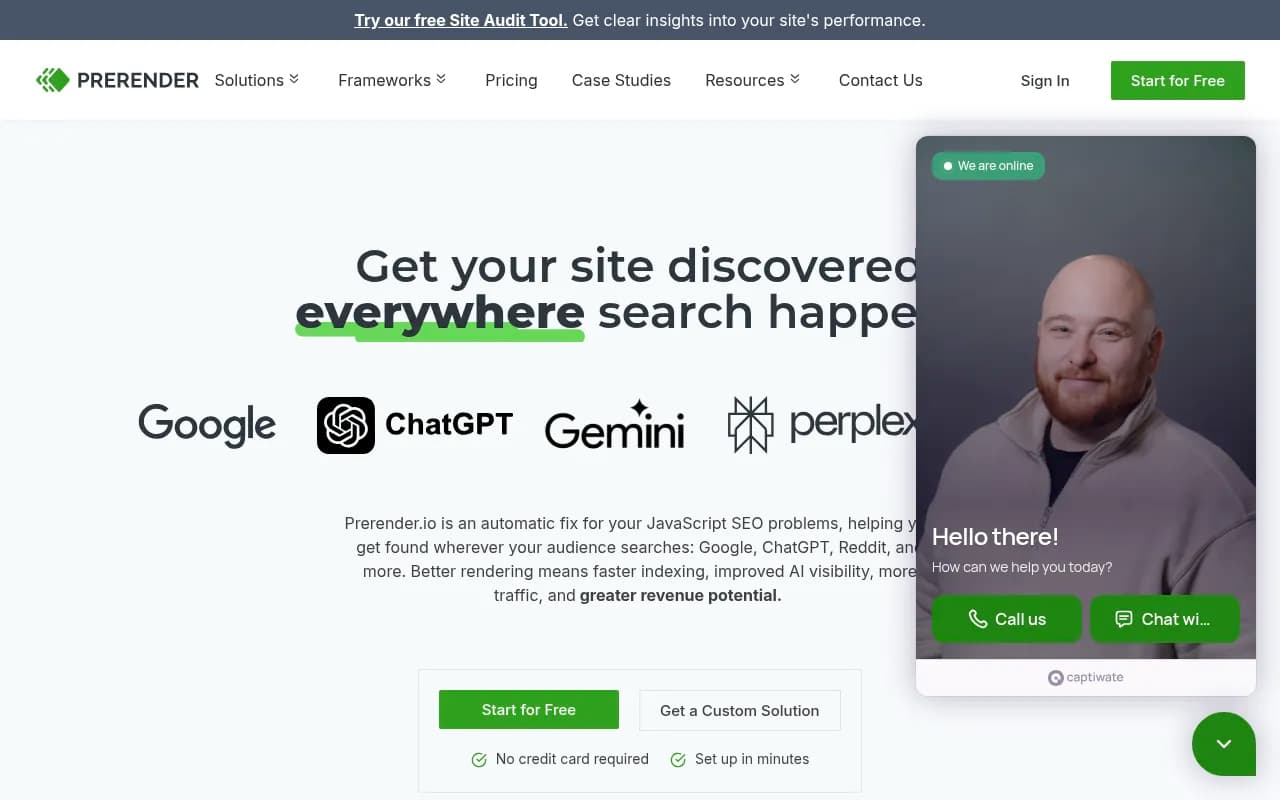
If your content is JS-rendered, consider implementing server-side rendering (SSR) or static site generation for key pages. Alternatively, use a pre-rendering service that serves pre-rendered HTML to crawlers while keeping the JS experience for users.
Add schema markup
Even after crawlers can access your content, schema markup (JSON-LD) helps AI systems understand what your content is about. At minimum, add:
ArticleorBlogPostingschema for content pagesFAQPageschema for FAQ sectionsProductschema for product pagesOrganizationschema for your homepage
Verify the fix
After making changes, monitor your crawler logs over the following weeks. You should see AI crawlers starting to visit pages they previously couldn't reach. This is the confirmation that your technical fix worked.
Fixing low AI visibility
Low visibility is a longer game. There's no single fix, but there are clear levers.
Identify your content gaps
The most efficient approach is to find the specific prompts where competitors are being cited but you're not. This is called answer gap analysis. You're looking for questions that:
- Your target audience is asking AI models
- AI models are answering by citing competitors
- You have no content addressing
This isn't guesswork. Tools like Promptwatch run this analysis systematically, showing you the exact prompts where you're invisible and what content would need to exist to compete.
Create content that AI models can cite
Content that gets cited by AI has some consistent characteristics:
- It directly answers a specific question in the first few sentences
- It uses clear headings that match how people phrase questions
- It includes comparison tables, numbered lists, and structured data
- It covers a topic comprehensively, not just superficially
- It's accurate and cites credible sources
Generic SEO content optimized for keyword density doesn't perform well in AI citations. The question is always: "If someone asked an AI this question, would this page be the best answer available?"
Build topical authority
AI models develop a sense of which sources are authoritative on which topics. If you publish 20 well-researched articles on a specific topic, you're more likely to be cited for that topic than if you have one article.
Map out the topic clusters that matter for your business and systematically fill the gaps. This is a 3-6 month project, not a one-week sprint.
Earn mentions in AI-influential sources
AI models don't just crawl your website. They also read Reddit discussions, YouTube transcripts, forum posts, and third-party review sites. If your brand is mentioned in those places in a positive, informative context, it influences how AI models perceive your authority.
This means:
- Participating genuinely in Reddit communities where your audience asks questions
- Getting your product reviewed on authoritative comparison sites
- Building a presence in industry publications that AI models treat as trusted sources
Track what's working
Visibility improvement without measurement is just hope. You need to track which pages are getting cited, by which AI models, for which prompts, and whether that's translating to actual traffic.
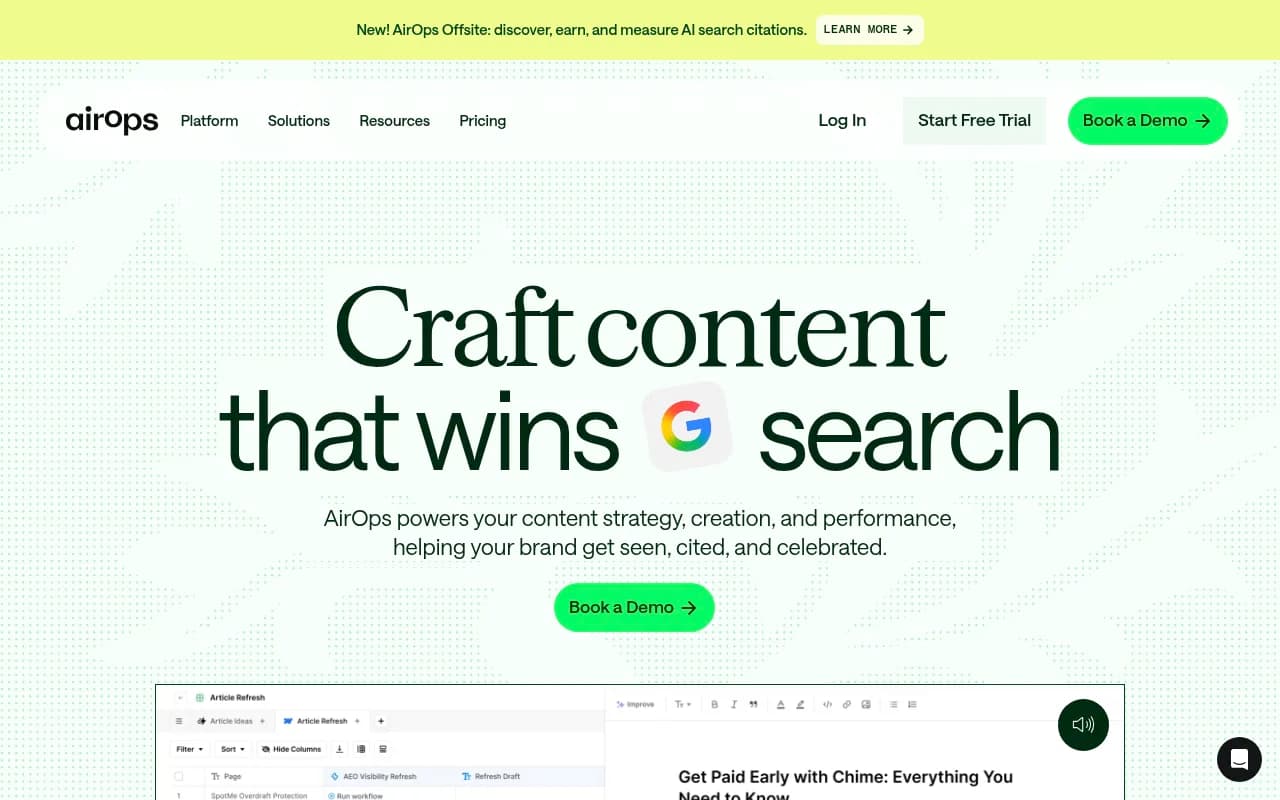
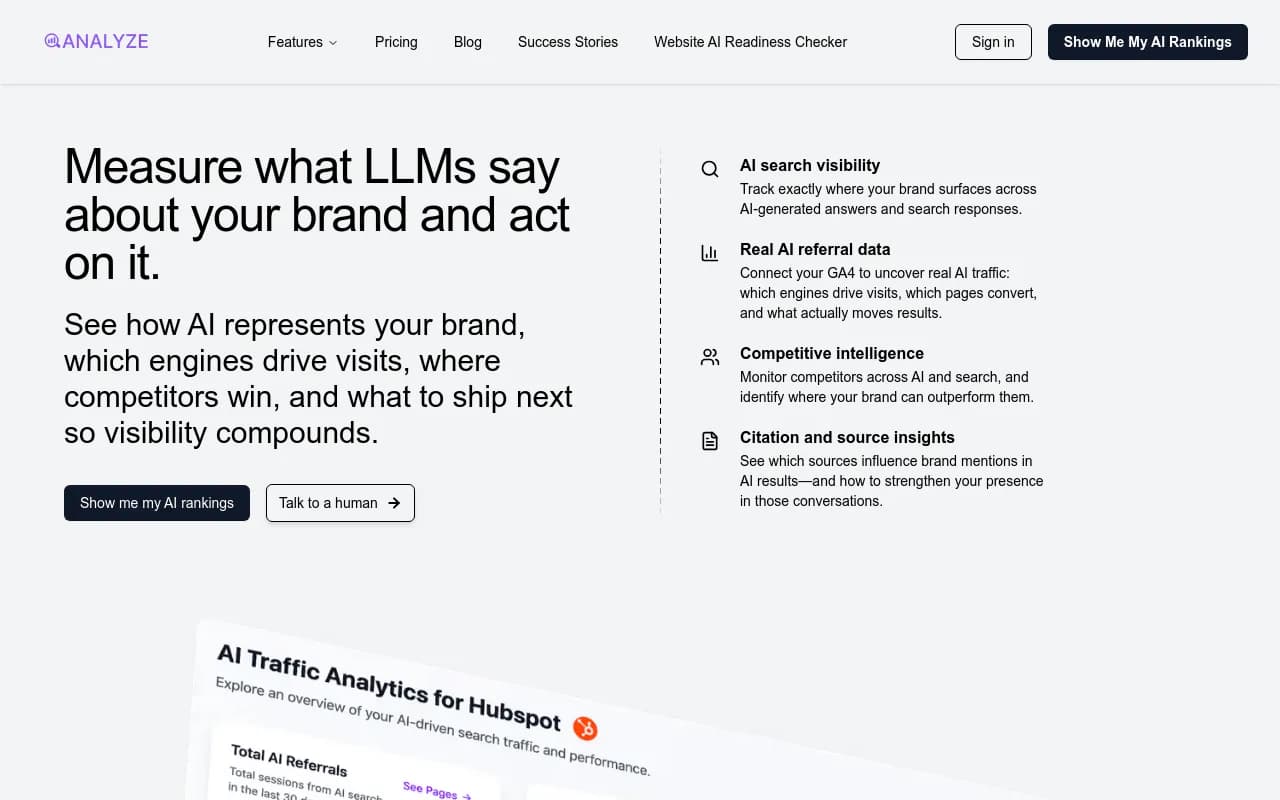
The comparison table below shows how different tools approach this tracking problem:
| Tool | Citation tracking | Crawler logs | Content gap analysis | AI content generation | Traffic attribution |
|---|---|---|---|---|---|
| Promptwatch | Yes | Yes | Yes | Yes | Yes |
| Otterly.AI | Yes | No | No | No | No |
| Peec AI | Yes | No | No | No | No |
| Profound | Yes | No | Limited | No | Limited |
| AthenaHQ | Yes | No | No | No | No |
| Omnia | Yes | No | No | No | No |
Otterly.AI


Profound

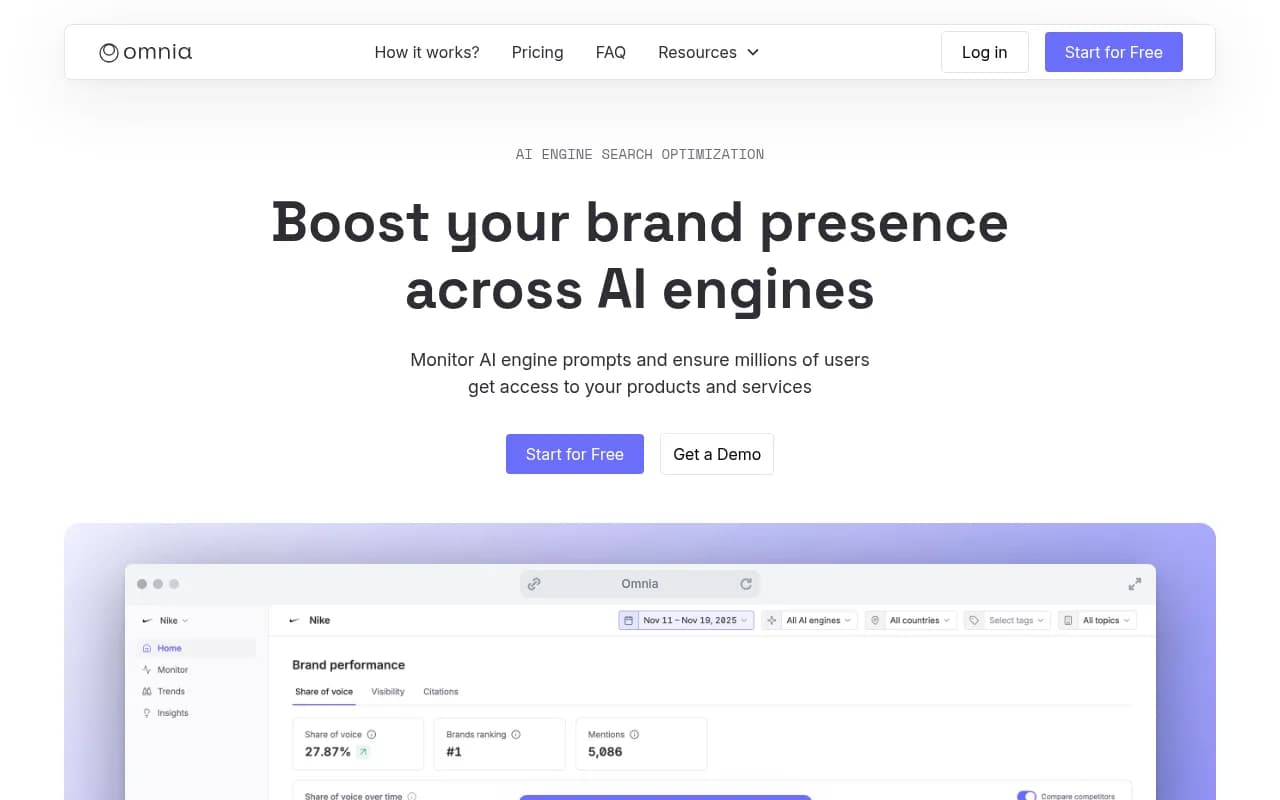
The pattern is clear: most tools will tell you where you're not showing up. Fewer help you figure out why, and fewer still help you do something about it.
The mixed reality: most brands have both problems
Here's something worth acknowledging: most brands don't have a clean "invisibility" or "low visibility" problem. They have both, distributed unevenly across their site.
Your homepage might be fully accessible to AI crawlers but rarely cited because it's too generic. Your best comparison page might be accidentally blocked. Your product pages might be accessible but JavaScript-rendered in a way that shows crawlers empty content. Your blog might be well-indexed but missing the specific topics AI models want to cite.
This is why the diagnostic step matters so much. Running a blanket content strategy when you have technical blocks is wasted effort. Fixing robots.txt when your real problem is content gaps won't move the needle either.
The practical approach is to run both diagnostics in parallel, fix the technical issues first (they're faster and have immediate impact), then work on the content gaps systematically.
A practical starting point for 2026
If you're starting from scratch on AI visibility, here's a reasonable sequence:
- Check robots.txt and fix any crawler blocks today. This takes 30 minutes and can have significant impact.
- Run a citation audit across ChatGPT, Perplexity, and Claude for your 10 most important prompts. Document where you appear and where competitors appear instead.
- Set up crawler log monitoring so you can see which AI bots are visiting your site and which pages they're reading.
- Identify 5-10 content gaps where competitors are being cited and you have nothing. Prioritize by prompt volume and business relevance.
- Publish content specifically designed to answer those questions. Structured, direct, comprehensive.
- Track visibility scores over 60-90 days to see whether citations improve.
The whole cycle -- find gaps, create content, track results -- is what separates brands that improve their AI visibility from those that stay stuck wondering why they're not showing up.
What to watch for as AI search evolves
A few things are shifting in 2026 that affect both invisibility and low visibility:
AI models are getting better at real-time web access. ChatGPT's browsing mode, Perplexity's live search, and Google's AI Mode all pull from the live web, not just training data. This makes your current robots.txt and crawl accessibility more important than ever, because these models are checking your site right now, not just during training runs.
The number of AI models that matter is growing. ChatGPT and Perplexity were the obvious ones in 2024. In 2026, you also need to think about Claude, Gemini, Grok, DeepSeek, Meta AI, and Copilot. Each has different crawlers and different citation patterns. Visibility in one doesn't guarantee visibility in another.
AI shopping and product recommendations are becoming a real channel. ChatGPT's shopping features and product carousels are driving purchase decisions. If you sell products, appearing in those recommendations is a distinct visibility problem from appearing in informational answers.
The brands that treat AI visibility as a technical and content discipline, not a vague aspiration, are the ones building durable advantages right now.