Key takeaways
- "SEO autopilot" covers two different products: tools that write and publish new articles, and tools that change pages you already have. Few do both well.
- List prices for the pure content autopilots cluster around $99/month for roughly 30 articles (RankPine, Outrank, RankYak), with SEObot at $49/month for 9. Confirm everything on each vendor's pricing page.
- Most comparison posts are written by vendors who rank themselves first. Run your own trial and judge the edited output.
- ChatGPT cites product pages and landing pages more than blog posts, so a tool that only makes generic articles covers a minority of the citation surface.
- Publishing is only half the job. Check that AI crawlers can reach the pages, then track whether they get cited.
What "publishes for you" actually means
I keep seeing the phrase "SEO autopilot" stretched until it means nothing. A writing assistant that exports a Google Doc is not autopilot. A tool that picks a topic, writes the article, makes an image, and pushes it live to your CMS on a schedule is.
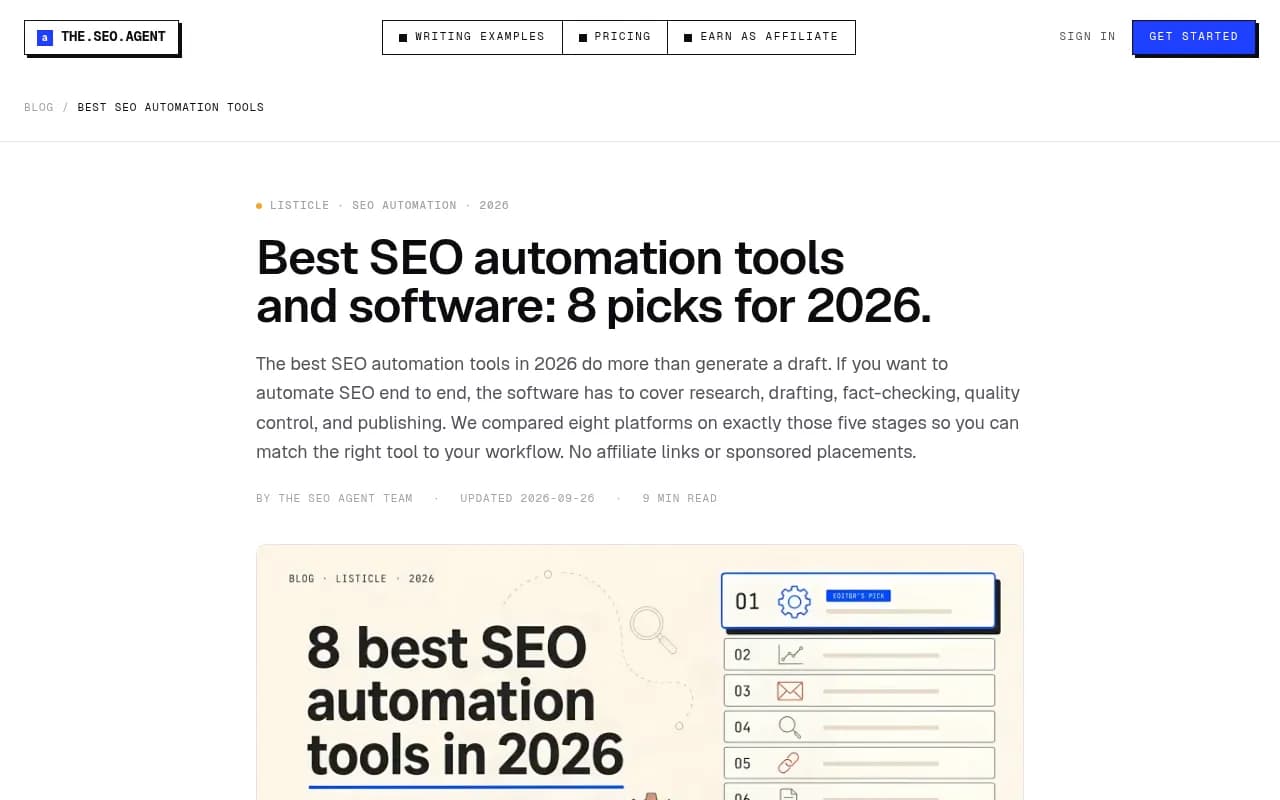
The SEO Agent's roundup scores tools on how many steps run without a person: keyword picking, brief writing, drafting, fact-checking, image generation, CMS publishing, and rank tracking. Their finding matches mine. Most tools win on one or two steps and quietly assume a human for the rest.
So before comparing products, sort what you are buying into three buckets:
- Content autopilots that research topics, write, and publish new articles.
- On-page autopilots that edit titles, schema, internal links, and speed on existing pages.
- Assistive tools that score or brief content but leave publishing to you.
Bucket one is the focus here. Bucket two gets a short section, and bucket three is covered for contrast.
A caveat about the sources
Honesty first. Almost every "best autopilot tools" article ranks its own publisher near the top. Swetrix's list names RankPine "best overall". Ryze's "12 tools tested" post, updated in September 2026, puts Ryze AI first at 9.4/10. TheSEOAgent puts TheSEOAgent at number one. Frizerly says it is the only all-in-one platform. None of that is necessarily wrong, but treat the rankings as marketing, and treat the pricing as a starting point to verify.
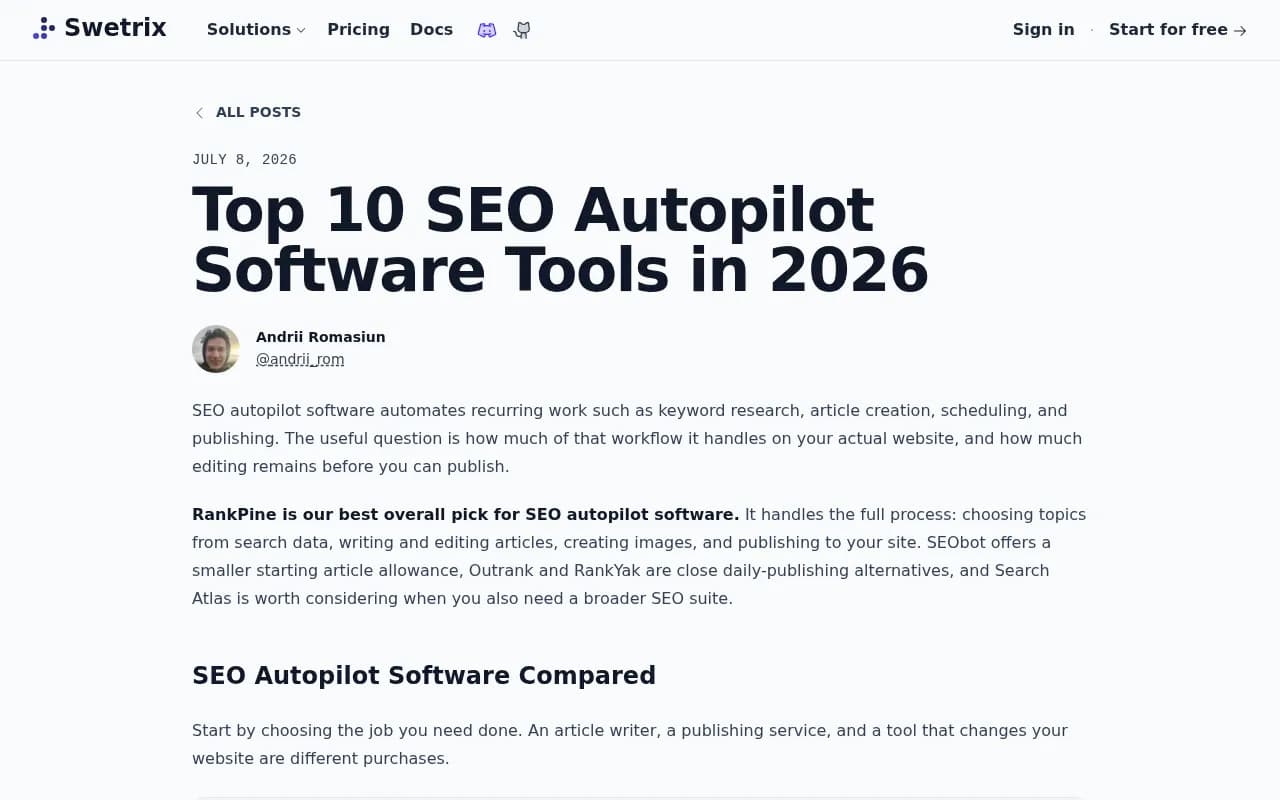
The most useful idea in the Swetrix piece is the one that ignores its own ranking: the "what to verify in a trial" column. That is how you should shop.
Content autopilots compared
The list prices below come from third-party roundups (Swetrix, July 2026) and I have not verified them against vendor pages. Annual billing, extra sites, and add-ons change the real bill.
| Tool | What it automates | Reference price | Verify in a trial |
|---|---|---|---|
| RankPine | Topic research, writing, images, publishing | $99/site/month, 30 articles | Topic fit, editing time, CMS workflow |
| SEObot | Smaller content plan | $49/month, 9 articles | Output allowance, cadence |
| Outrank | Automated content, several CMS integrations | $99/month, 30 articles | Draft quality, optional extras |
| RankYak | Daily content, Search Console workflows | $99/site/month, 30 articles | Publishing controls, add-on limits |
| Search Atlas | Content plus on-page fixes (OTTO) | Ryze cites $79-$319/month on annual billing | OTTO scope, usage credits |
| SEO.AI | AI SEO agent and content workflow | Check vendor | Review process, deliverables |
| Frizerly | Content, publishing, rank and AI visibility tracking | Check vendor | Whether tracking is deep or token |
Pricing for Arvow, Emplibot, Scalenut, and Adaptify was not available in the research, so check their sites directly.
The daily-publishing group
RankPine, Outrank, and RankYak are close to interchangeable on paper: about $99 for 30 articles, meaning one a day. The differences that matter are the ones a feature table hides. Does the draft read like your product's customers wrote it? Does the CMS transfer keep headings, images, internal links, metadata, and author fields intact? Can you hold articles in a review inbox instead of letting them go live blind?
SEObot is the cheap way to find out whether autopilot works for your niche, since nine articles a month is a small enough commitment to judge without much risk.
Search Atlas and SEO.ai
Search Atlas is the one to consider if you want content alongside broader automation. Its OTTO system applies on-page changes, so it straddles buckets one and two.

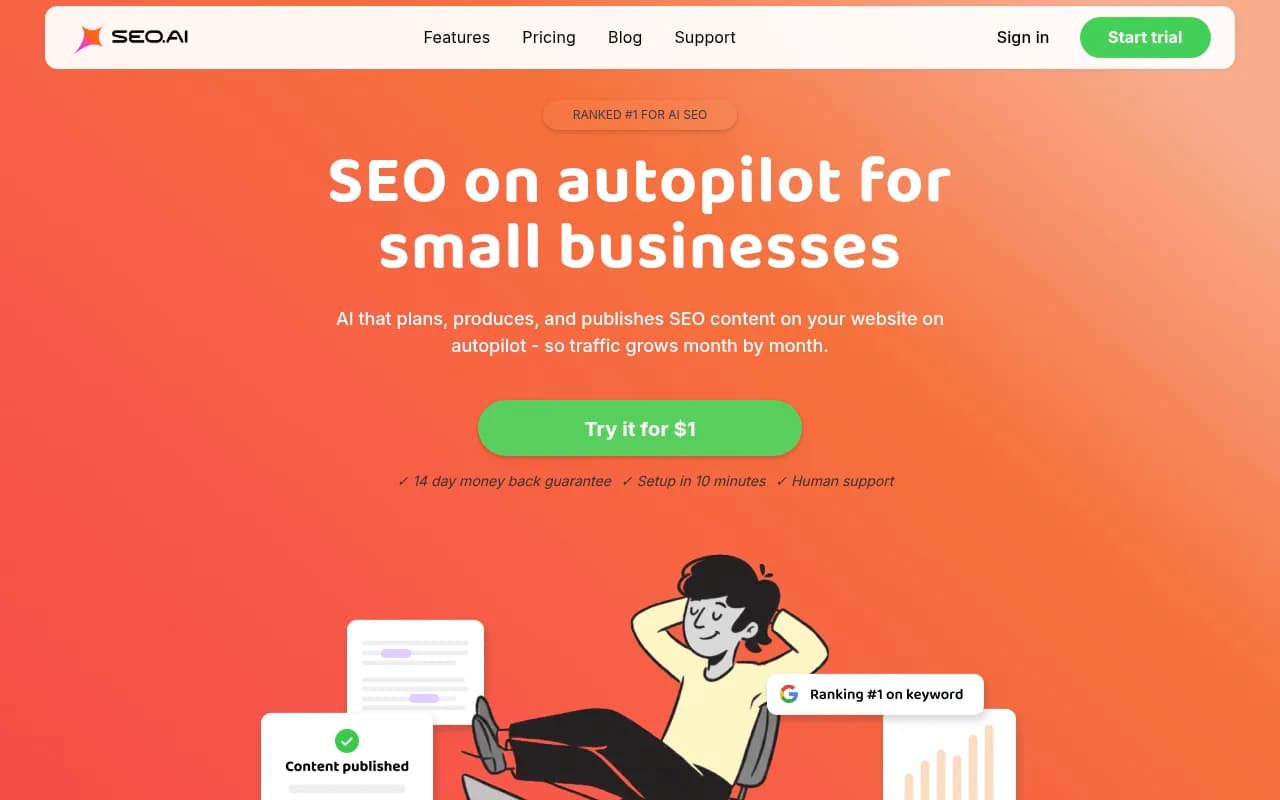
SEO.ai positions itself as an AI SEO agent with a content workflow. Ask what is included in the review step before you assume anything is hands-off.
Other autopilot-style options in the catalog
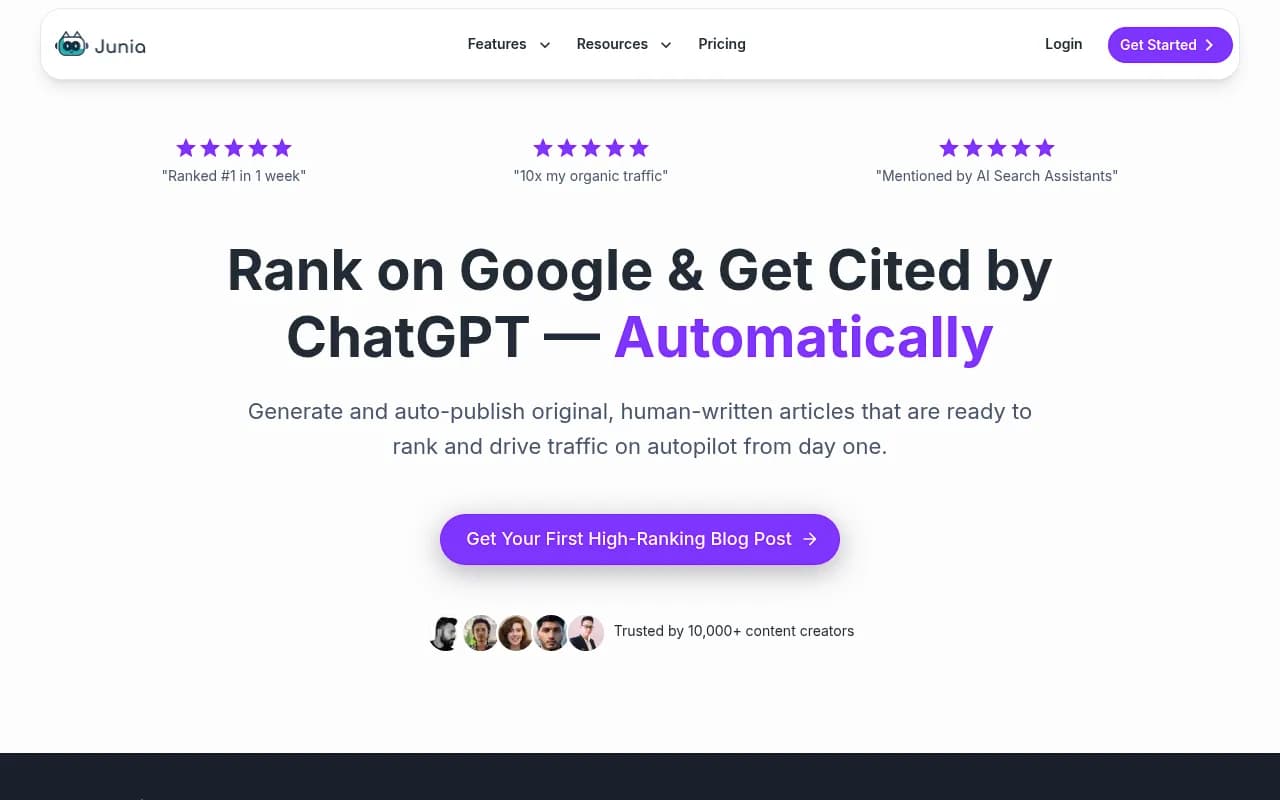
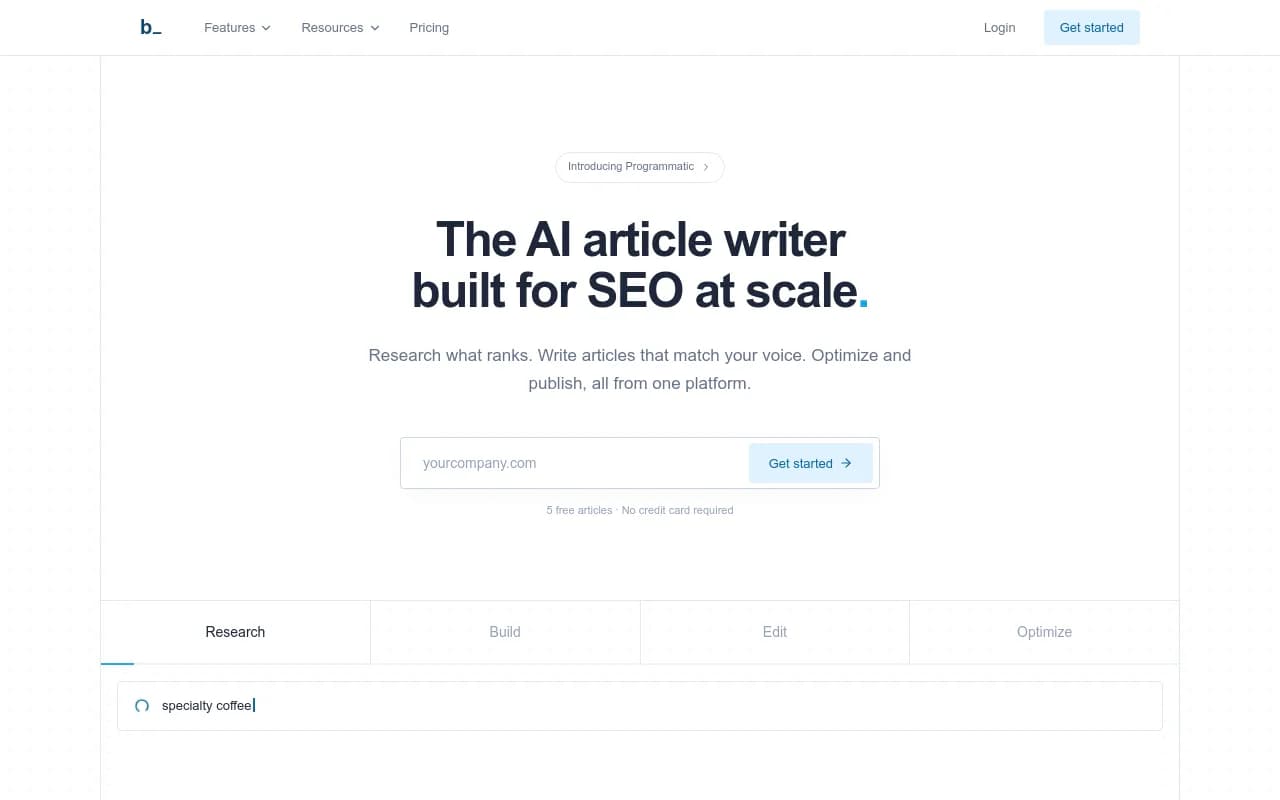
A few more tools claim to write and publish, and are worth a look if the above don't fit. MEGA SEO pitches autopilot SEO with content and technical fixes. Frizerly pairs auto-publishing with AI brand tracking. Junia AI and SEO Writing AI both lean toward article generation with auto-publish. Byword is built for bulk article production.


On-page autopilots
These do not write new articles. They change what is already live.
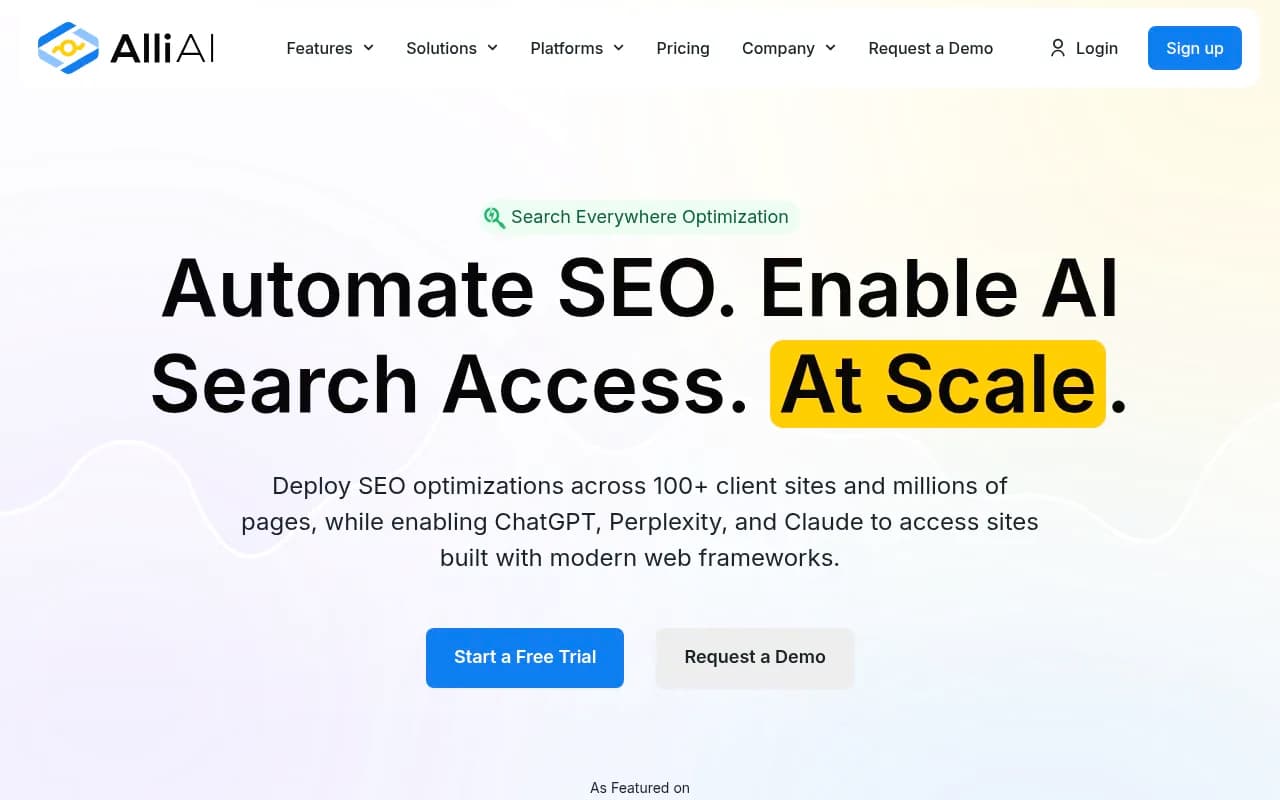
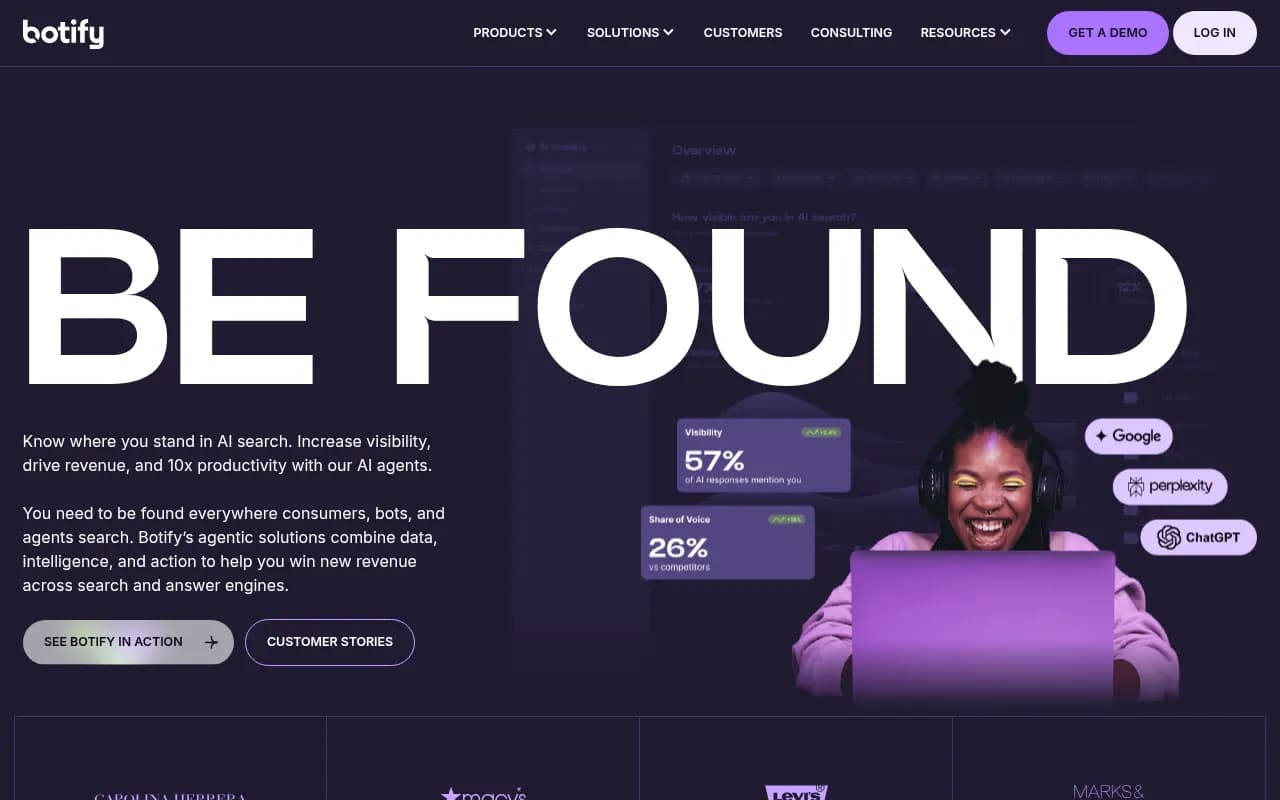
Alli AI pushes bulk on-page edits and speed improvements across a site. Botify is the enterprise end, deploying changes at the edge, and Ryze's own scoring gave it 8.0/10 with no public pricing. BrightEdge also publishes no pricing.
If you run a large site with thousands of thin pages, this bucket probably returns more than another 30 blog posts a month. If you run a young site with little content, it won't.
Assistive tools that do not publish
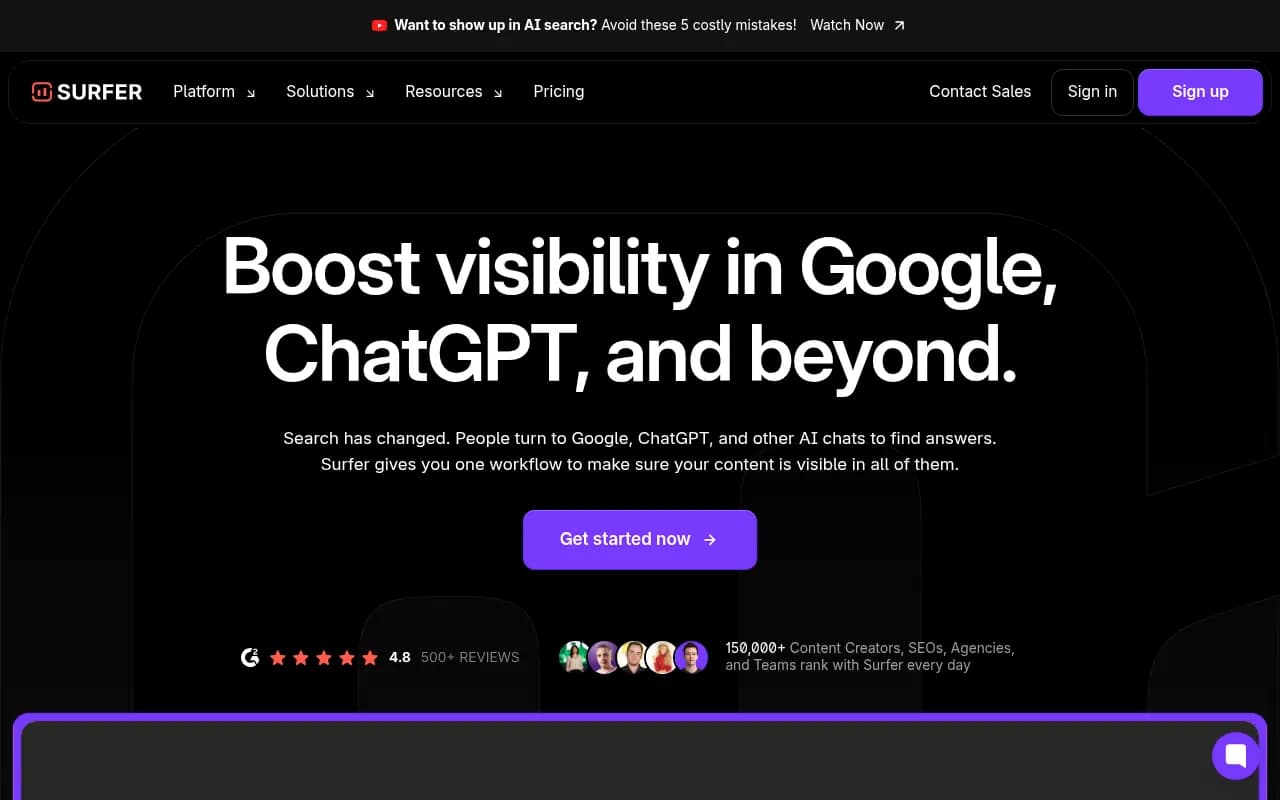
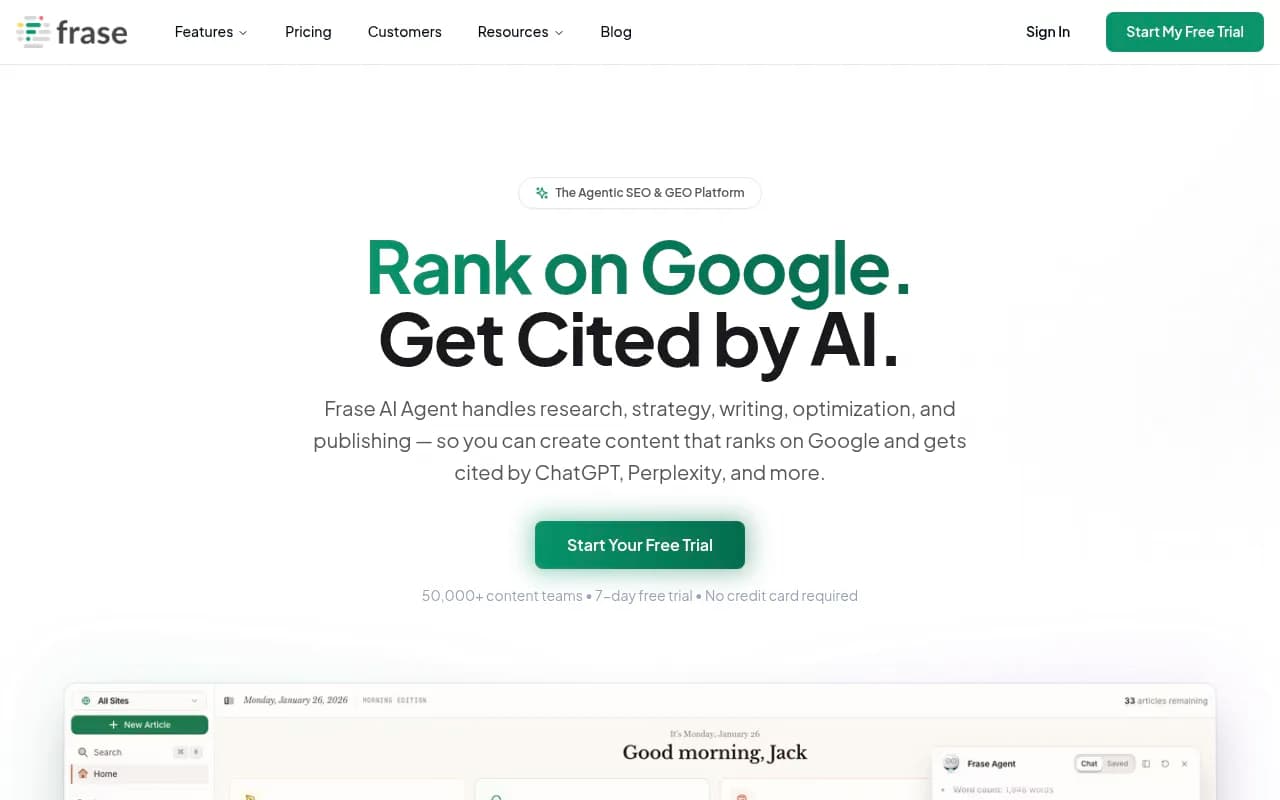
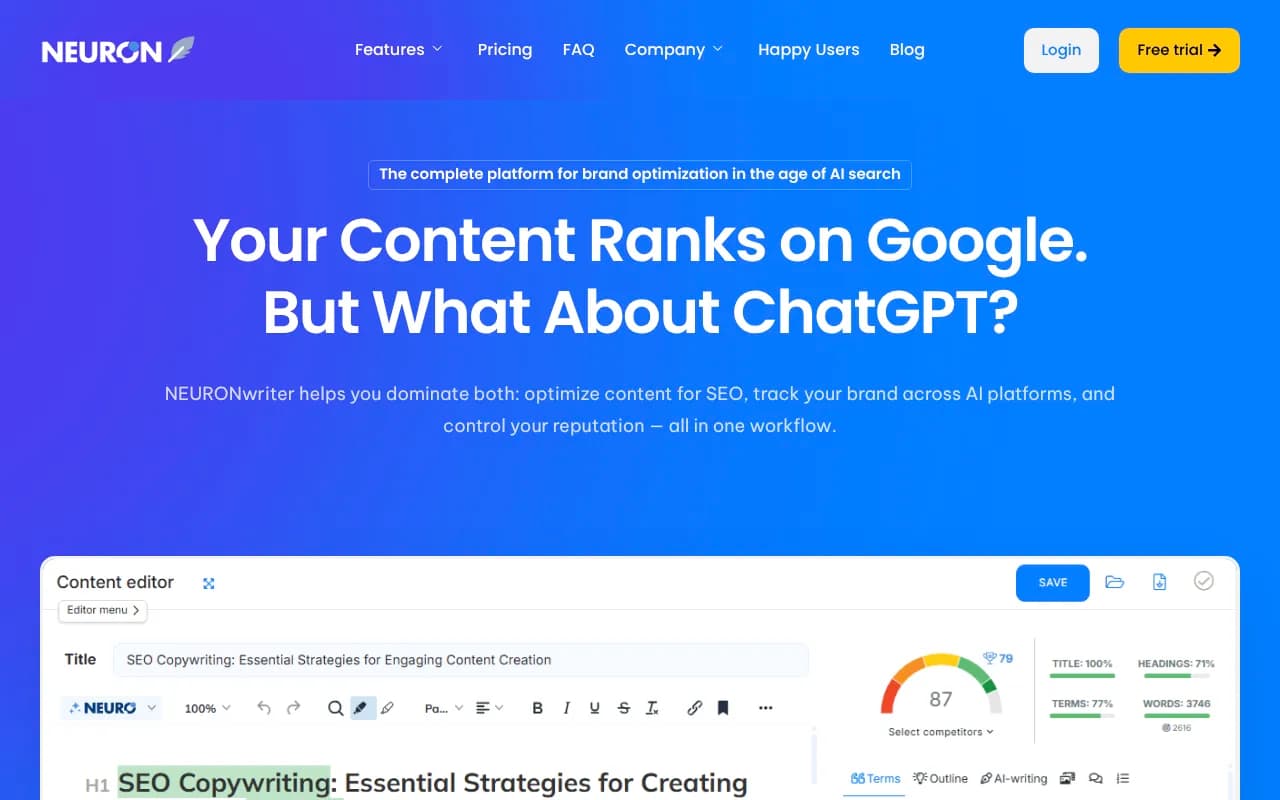
Sometimes a full autopilot is the wrong purchase. Surfer SEO, Frase, Clearscope, MarketMuse, and NeuronWriter automate one step each: scoring, briefs, or topical planning. You still write, edit, and publish.
| Tool | Step automated | Publishes for you? |
|---|---|---|
| Surfer SEO | On-page scoring and AI drafts | Assisted only |
| Frase | Briefs and research | No |
| Clearscope | Enterprise content scoring | No |
| MarketMuse | Topical cluster planning | No |
| NeuronWriter | Budget writing loop | No |

They pair well with a human editor. They are a poor fit if the whole point is removing the human.
Match the content to what AI actually cites
This is where I think most autopilot buyers go wrong. They optimize for article volume, and articles are not what ChatGPT leans on most.
In Promptwatch Data's analysis of ChatGPT citations by content type (Sep 28 to Oct 4, 2026), product pages made up 22.4% of classified citations and landing pages 16.8%. That is about 39% of citations going to pages describing what a company sells. Listicles took 13.6%, how-to guides 8.7%, general articles 6.1%, comparisons 5.9%, and news 5.7%.
For commercial prompts like "best CRM for small businesses", product pages, landing pages, listicles, and comparisons added up to almost 70% of citations.
The practical read: an autopilot that only produces generic blog posts covers a minority of the citation surface. The formats worth automating are listicles, how-tos, and comparisons. Your product and landing pages still need human attention, because no daily article will substitute for them.
Freshness matters too. Promptwatch's content half-life report tracked pages ChatGPT cited on July 6, 2026 and found news lost half its pages within 36 days, while landing pages and docs stayed cited longest. If your autopilot leans on newsy posts, expect them to fade fast.
Make sure AI can read what gets published
A published article only helps if crawlers can reach it. Promptwatch's AI crawler traffic data (June 8 to September 6, 2026) shows OpenAI at 79.8% of IP-verified AI crawler requests in the week of Aug 31 to Sep 6, down from 94.8% in early June. The mix is shifting, so a robots.txt, CDN, or WAF rule that blocks one provider can quietly remove you from a big slice of AI search.
Before you let an autopilot publish 30 pages a month, check robots.txt, CDN, and WAF settings for every major AI crawler. Also make sure the CMS integration produces pages that render without JavaScript tricks.
Closing the loop: tracking what the autopilot publishes
Most autopilots end at "published". That leaves a gap: are these pages crawled, cited, and driving visits? You need a visibility layer on top.
Promptwatch is the one I'd point to here. It tracks how brands appear in ChatGPT, Google AI Overviews, Perplexity, Gemini, and others, and its crawler logs show whether AI systems actually fetch the new pages. It also has its own Content Agent that plans, writes, and publishes to Webflow, Framer, or WordPress, so it overlaps with the autopilots above while adding the measurement most of them lack. Pricing starts with a free Explore tier and Essential at $95/month; confirm current plans at promptwatch.com/pricing.

If you only need monitoring, the GEO software directory at bestgeosoftware.com lists a wider set of trackers to compare.
How to run a trial that tells you the truth
Do not trust a sales demo. Here is the test I would run on any two or three finalists:
- Give each tool the same site and the same topic constraints.
- Check whether the proposed topics match your customers, not just keyword volume.
- Pick one article you would actually publish and time how long it takes to edit.
- Publish to a staging CMS and verify headings, images, internal links, metadata, and author survive the transfer.
- Look for invented claims, fake statistics, and quotes. If the tool fact-checks against sources, ask to see how.
- Confirm you can hold content for review instead of auto-publishing.
- After 30 days, check indexing in Google Search Console and whether AI crawlers fetched the pages.
Editing time is the number that matters. If an article takes 45 minutes to fix, the autopilot saved you less than the price suggests.
Which one should you pick?
| Your situation | Start with |
|---|---|
| Testing autopilot on a small budget | SEObot |
| Want daily publishing on one site | RankPine, Outrank, or RankYak |
| Want content plus on-page fixes | Search Atlas |
| Large site, enterprise needs | Botify or Alli AI |
| Want to measure AI citations and traffic too | Promptwatch alongside a content tool |
| Writers stay in control | Surfer SEO, Frase, or NeuronWriter |
My own bias: I would pick the cheapest daily publisher, run it with a review inbox for a month, and put the savings into a visibility tracker. Autopilot output is easy to buy. Knowing whether it earns citations is the hard part.
For a broader view of tools in this space, the agentic SEO tools directory at agenticseotools.com is a good next stop.