Key takeaways
- For offline-heavy brands, AI answers lean on third-party sources: marketplaces, review sites, listings and local pages. Tracking only your own domain misses most of the picture.
- In Promptwatch Data's automotive report (August 2026), listings plus review sites earned 27.27% of ChatGPT citations, while manufacturer sites earned 7.92%.
- You need four layers: prompt tracking by location, citation source tracking, local listing and review health, and proof that AI visibility turns into visits or sales.
- Pure monitoring tools tell you that you are missing. Platforms with crawler logs, visitor analytics and content workflows help you fix it.
- Local listing platforms (Yext, Uberall, BrightLocal and similar) are a different category from AI visibility platforms. Most multi-location brands end up using one of each.
Why offline brands need a different tracking setup
Most AI visibility guides assume a SaaS company with a website, a blog and a funnel. That is a clean setup: someone asks ChatGPT for the best project management tool, the model cites your product page, the visitor lands on your site, and you can see all of it.
A car dealer group, a bank with 400 branches, a restaurant franchise or a regional grocery chain works differently. The purchase happens in a showroom, a branch or a store. The AI answer may name your brand without sending anyone to your domain. And the sources the model reads are often not yours at all.
The automotive data shows how stark this is. In Promptwatch Data's automotive citation report for August 2026, Autotrader led ChatGPT citations at 5% and Cars.com had 4.6%. Chevrolet.com was the only manufacturer site in the top eight, in fourth place at 2.62%. By source type, marketplaces and listings earned 14.65% of citations and reviews and research sites 12.62%, against 7.92% for manufacturer sites. Third-party pages outweighed brand-owned ones by a wide margin.
That is one vertical, but the pattern is familiar to anyone in retail, hospitality or financial services. If your category is decided on aggregators and review profiles, your AI visibility is partly decided there too.
What to track beyond your website
Here is the checklist I would build before picking a tool.
1. Location-specific prompts
"Best dentist" and "best dentist near me" produce different answers, and "near me" depends on where the question is asked. A national brand with 300 locations cannot track one generic prompt set and call it done.
You want a tool that can run the same prompt as if asked from specific countries, cities or even exact coordinates. Without that, you are measuring a national average that matches no real customer.
2. Third-party citation sources
Track which domains AI cites when it talks about your category, and whether your brand appears on them. For offline brands these usually fall into a few buckets:
- Marketplaces and listing aggregators
- Review platforms and local directories
- Editorial roundups and listicles
- Government or industry bodies (important in healthcare and finance)
- Your own location pages
The same automotive report found that a single dealer group's domain still reached the top 31 at 0.28%, so local pages can get cited. They just have to exist, be crawlable and be accurate.
3. Review and profile health
Promptwatch Data's citation share by content type report (Sep 28 to Oct 4, 2026) has a detail worth noting. Across all prompts, product pages (22.4%) and landing pages (16.8%) lead. But for branded prompts, meaning people asking about your company by name, reviews rise to 5.6%, about three times their overall share. FAQ pages hit 4.8% and press releases 2.1%.
So when a customer asks ChatGPT "is [your bank] any good?", what it reads is review profiles, FAQ content and press coverage. For an offline brand with thousands of Google, Trustpilot and BBB reviews, that is a reputation channel you can audit.
4. Social and video sources, by model
Where your audience asks matters. Promptwatch's social citation data for Sep 28 to Oct 4, 2026 shows ChatGPT drew only 0.46% of its citations from social platforms, while Google AI Overviews drew 12.2%. In AI Overviews, YouTube was 4.28%, Facebook 2.38%, Instagram 1.61% and LinkedIn 1.55%. Reddit in ChatGPT collapsed from about 4% to 0.5% on August 14, 2026.
If your customers use Google, public Facebook pages, Instagram profiles and YouTube videos from your stores are worth tracking. If they use ChatGPT, they mostly are not.
5. AI crawler access to location pages
Store locator pages are notorious for being JavaScript-heavy, buried behind a search box, or blocked by robots rules nobody remembers writing. If AI crawlers cannot read your location pages, they will cite someone else's version of them. Crawler logs tell you which bots actually reach those pages and what errors they hit.
6. Traffic and conversions from AI
Even offline brands have online conversion points: booking forms, store-finder clicks, click-to-call, quote requests, reservations. AI-referred sessions are a proxy for in-store influence. Set these up in GA4 at minimum, and ideally in a platform that attributes AI traffic directly.
What the platforms offer
There are two separate categories to keep straight. AI visibility platforms measure and improve how AI answers describe you. Local presence platforms manage the listings, reviews and profiles AI reads from. Offline-heavy brands usually need both.
AI visibility platforms
Promptwatch is the one I would put first for this use case, mainly because it goes past monitoring. It tracks real ChatGPT, AI Overviews, AI Mode, Gemini, Perplexity and Copilot interfaces, lets you pin a monitor to exact coordinates (20 m to 5 km radius) so answers come back as if asked from that spot, and includes IP-verified AI crawler logs so you can see whether bots reach your location pages. Citation tracking covers Reddit, YouTube and LinkedIn, and visitor analytics show AI-referred traffic and conversions. Local targeting and state/city tracking are on the Business plan and above. Check promptwatch.com/pricing for current plans.

Profound is a strong enterprise option for brand-level reputation tracking across several models, and suits regulated sectors like financial services.
Profound

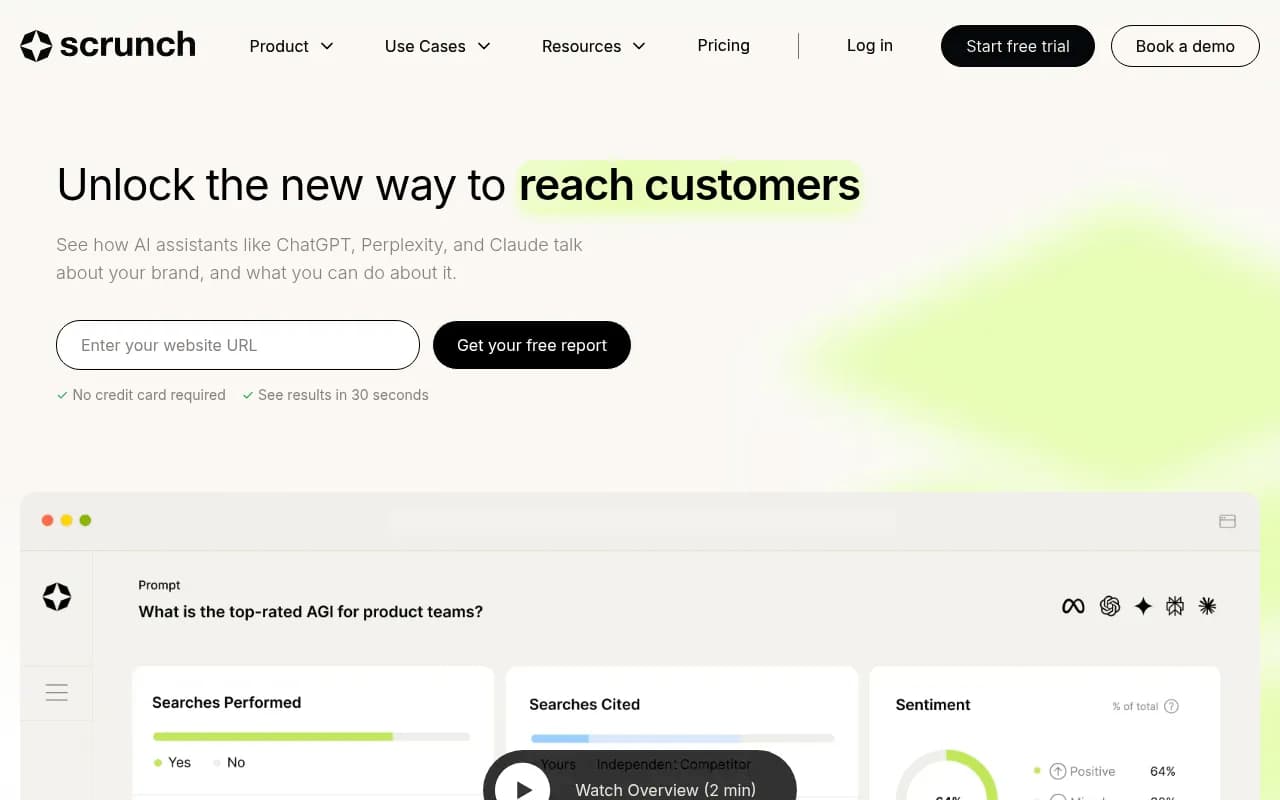
Scrunch pairs monitoring with site auditing and enterprise workflow features.
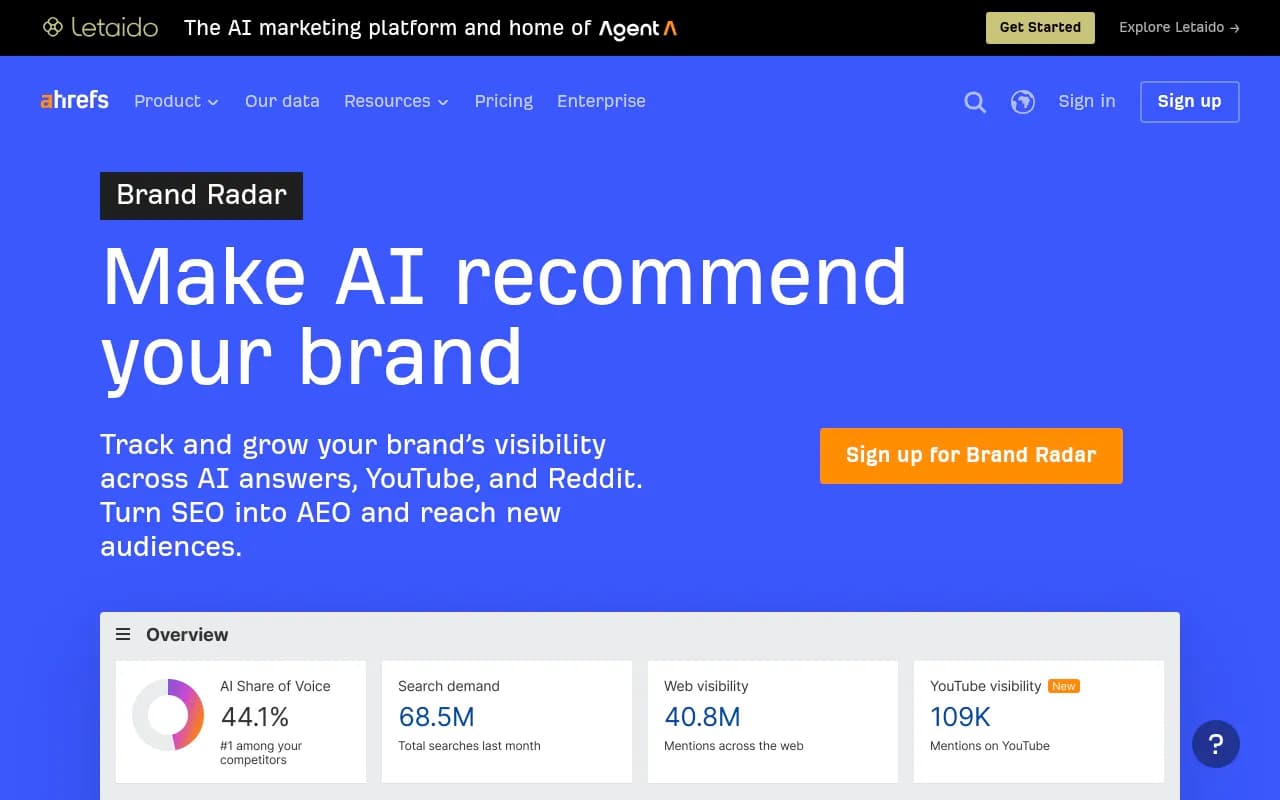
Ahrefs Brand Radar is a reasonable pick if you already live in Ahrefs and want a large prompt dataset next to your SEO data.
Otterly.AI and Peec AI are lighter prompt trackers. They are fine for a baseline, but expect to add other tools for crawler data and traffic attribution.
Otterly.AI


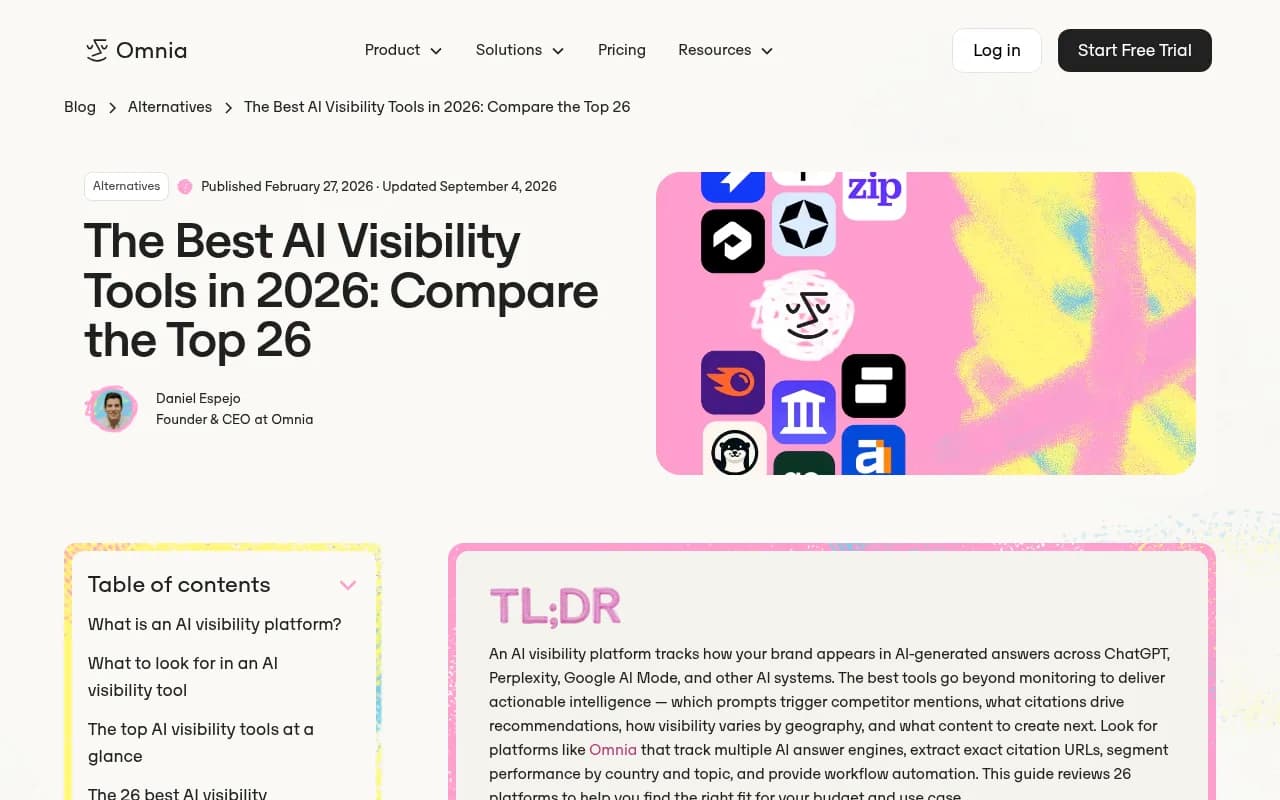
Omnia, whose comparison of 26 platforms is worth skimming, segments performance by country and topic and extracts exact citation URLs.
Local and multi-location platforms
These do not track AI answers the way the tools above do, but they control the data AI pulls from.
Yext, Uberall and Chatmeter market multi-location visibility across traditional and AI search. Birdeye matters for review volume and responses. BrightLocal is a good fit for smaller multi-location operators. I have not verified current pricing or feature depth for any of these, so confirm with each vendor before you shortlist.
Comparison table
| Tool | Category | Location-level AI tracking | Crawler or traffic data | Best for |
|---|---|---|---|---|
| Promptwatch | AI visibility and GEO | Yes, exact coordinates (Business and up) | Crawler logs, visitor analytics | Brands that want to track and fix |
| Profound | AI visibility | Check with vendor | Check with vendor | Enterprise reputation monitoring |
| Scrunch | AI visibility | Check with vendor | Site audit | Structured brand and agency workflows |
| Ahrefs Brand Radar | SEO suite add-on | Check with vendor | Via Ahrefs | Existing Ahrefs teams |
| Otterly.AI / Peec AI | Prompt trackers | Limited | Limited | Baselines and small budgets |
| Yext / Uberall / Chatmeter | Local presence | Listings, not AI answers | Listing analytics | Directory and profile accuracy |
| Birdeye | Reviews | Reviews by location | Review analytics | Review volume and response |
More options are collected in the GEO software directory at bestgeosoftware.com.
A practical setup for a multi-location brand
Here is a sequence that works without a six-figure budget.
Step 1: Map the prompts by location and intent
Split your prompts into three groups: category discovery ("best urgent care in Leeds"), branded ("is [brand] worth it"), and comparison ("[brand] vs [competitor]"). Then duplicate the discovery group for your ten most important markets. Do not start with 500 prompts. Start with 50 that map to revenue.
Step 2: Find out who AI actually cites
Run the prompts for two weeks and look at the top cited domains. For an offline brand, expect to see marketplaces, review sites and local directories before your own site. Those become your off-site audit list.
Step 3: Fix the sources, not just the site
This is the step web-only brands skip. Check your profiles on every cited review or listing site: opening hours, addresses, inventory, descriptions, response rates. Marketplace inventory that is wrong, or review profiles that sit unanswered, feed straight into AI answers. In the automotive report, the recommended audit covers DealerRater, Birdeye and BBB profiles, marketplace inventory accuracy and stable model and trim pages.
Step 4: Make your own location pages worth citing
One page per location, server-rendered, with real content: services, staff, local FAQs, prices where possible. Landing pages and docs also stay cited far longer than news, according to Promptwatch's content half-life data, where news lost half its pages in about five weeks. Evergreen location pages are a better bet than press-driven content.
Step 5: Check crawler access
Verify that GPTBot, OAI-SearchBot, ClaudeBot, PerplexityBot and Google's agents can reach your store pages. Promptwatch's free Agentic Readiness Check is a quick first pass; crawler logs give you the real picture over time.
Step 6: Connect to outcomes
Tag the online actions that signal offline intent (directions clicks, call clicks, booking starts) and segment by AI referrer in GA4 or your visibility platform. Then, where you can, compare store-level sales or foot traffic in markets where visibility improved against those where it did not. It is imperfect, but it is the only honest way to show the board that AI visibility matters.
Metrics worth reporting
- Visibility and share of voice by market, not just nationally
- Citation share by source type (marketplace, review, owned, news)
- Share of branded prompts where reviews or FAQ pages are cited, and the sentiment of those answers
- Crawl success rate on location pages
- AI-referred sessions and conversion actions
Read together, they tell you where the problem sits. Low share of voice in a city is a coverage problem. Cited but never by your own pages is a content or crawlability problem. Negative tone on branded prompts is a reputation problem.
Choosing a tool: a short decision guide
If your team just needs a baseline and has a small budget, a lightweight prompt tracker is enough to learn where you stand.
If you manage hundreds of locations and have a content team, pick a platform that covers location targeting, citation sources, crawler data and content workflows in one place. That is where Promptwatch is strongest, and it is why I would trial it first.
If listing accuracy is your biggest known gap, start with a local presence platform and add AI visibility tracking once the basics are clean.
If you want hands-on help, agencies that combine local SEO and GEO exist. 1001 SEO Media, which publishes this site, offers GEO and local SEO services and uses Promptwatch internally.
Caveats
AI answers vary run to run, so treat any single day's numbers with suspicion and look at trends over weeks. Vendor feature sets also change fast. One review of Amplitude's AI visibility product noted it tracked only ChatGPT and Google AI Overviews, and that may already be out of date. Verify coverage and pricing directly before you buy. For the latest research on what AI engines cite, see the Promptwatch Data hub.
The short version: if your revenue happens in a physical location, your AI visibility is built on other people's websites. Measure that first.