Key takeaways
- Jasper is the strongest fit for brand-led marketing teams that need governance, voice consistency, and campaign execution at scale.
- Writesonic is the most GEO-aware of the four, with built-in AI search visibility tracking and SEO tooling that the others lack.
- Copy.ai is fast and versatile for high-volume copywriting, but it has limited depth for long-form content engineered to earn LLM citations.
- AirOps sits in a different category entirely: it connects AI search signals to content workflows, making it the most "citation-aware" platform of the group.
- None of these tools alone guarantees LLM citation. The content strategy behind the tool matters more than the tool itself.
There's a question most AI writing tool comparisons don't bother asking: does the content these tools produce actually get cited by ChatGPT, Perplexity, Gemini, or Claude?
That's the question that matters in 2026. Traditional SEO rankings still drive traffic, but a growing share of buyer journeys now start with an AI search query. If your content isn't showing up in those AI-generated answers, you're invisible to a chunk of your market regardless of how much you publish.
So let's look at AirOps, Copy.ai, Jasper, and Writesonic through that specific lens. Not just "which one writes better copy" but "which one helps you produce content that LLMs actually want to cite."
What makes content "citable" by LLMs
Before comparing the tools, it's worth being clear about what LLM citation actually requires. AI models like ChatGPT and Perplexity tend to cite sources that:
- Directly answer specific questions with depth and specificity
- Demonstrate topical authority across a cluster of related content
- Are structured in ways that make information easy to extract (clear headings, definitions, lists)
- Come from domains that AI crawlers have indexed and trust
- Cover angles and sub-questions that competitors haven't addressed
Generic, fluffy AI-generated content fails most of these criteria. The problem isn't that it's AI-written. The problem is that it's shallow. LLMs are looking for the most useful answer to a query, and "useful" means specific, accurate, and comprehensive.
This is why the tool you use matters less than the strategy behind it. But the tool still matters, because some are built with citation-readiness in mind and others aren't.
The four tools at a glance


AirOps: built for the signal-to-content loop
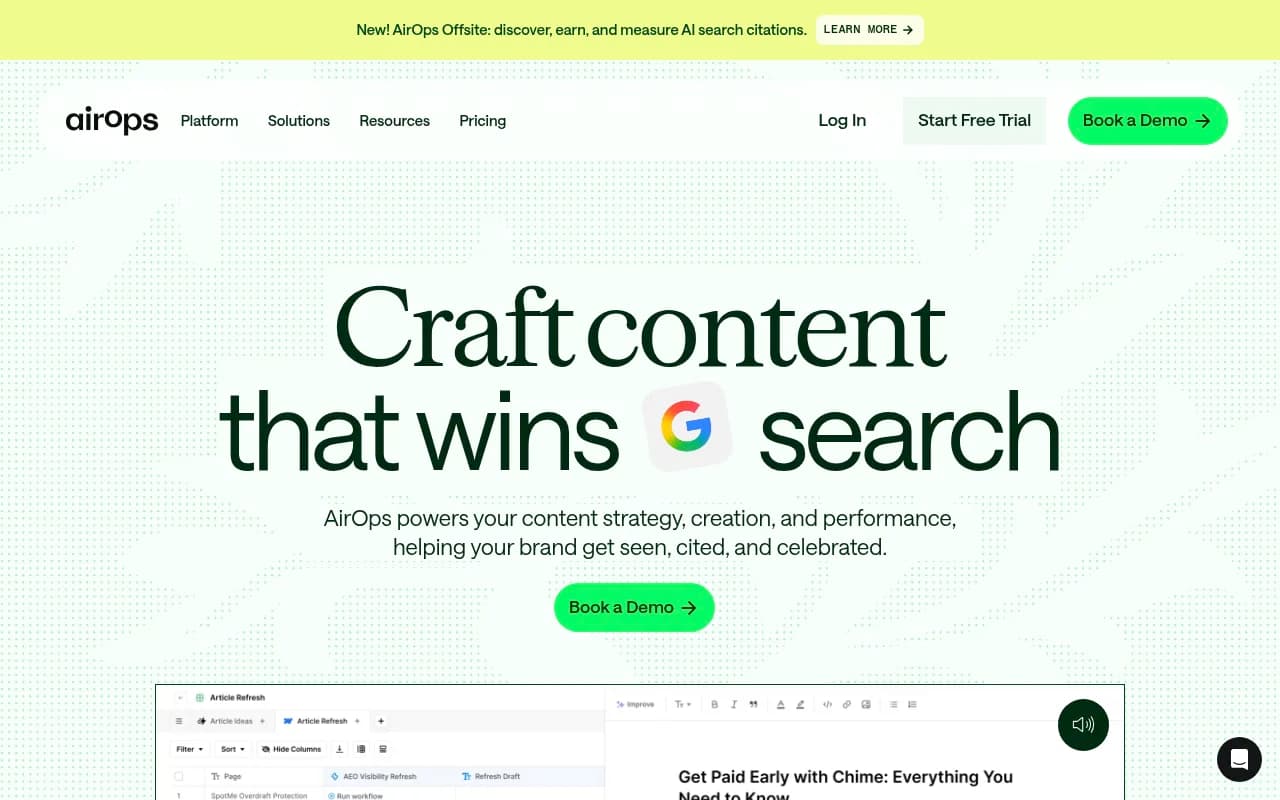
AirOps describes itself as a "growth platform for AI search." That framing is accurate and also meaningfully different from the other three tools in this comparison.
Where Jasper, Copy.ai, and Writesonic start from a blank page or a brief, AirOps starts from AI search visibility data. The workflow is: identify which prompts your competitors are showing up for (and you're not), then generate content specifically designed to close those gaps.
That's a fundamentally different approach to content creation. Instead of writing about topics you think are relevant, you're writing about the exact questions AI models are already being asked and answering with competitor content. That's about as close to "citation-engineered" content as you can get without a dedicated GEO platform.
AirOps connects to your CMS, SEO tools, and project management stack. It's positioned as the central hub of a content operation rather than a standalone writing tool. This makes it more powerful for teams with established workflows, but also more complex to set up than the others.
The tradeoff: AirOps is enterprise-oriented and priced accordingly. It's not the right tool if you need to spin up a blog post quickly. It's the right tool if you're running a systematic program to improve AI search visibility.
Copy.ai: fast, flexible, but shallow on GEO
Copy.ai built its reputation on speed and versatility. It handles a wide range of formats well: ad copy, email sequences, social posts, product descriptions, short-form blog content. The interface is clean, the output is generally usable, and the learning curve is low.
For LLM citation purposes, Copy.ai has a real limitation: it's optimized for volume and variety, not for the kind of deep, structured, topically authoritative content that AI models tend to cite. You can use it to produce long-form articles, but the output often lacks the specificity and depth that makes content citation-worthy.
Copy.ai has added GTM workflow features in recent years, positioning itself as more of a go-to-market platform. That's interesting for sales and marketing teams, but it doesn't directly address the GEO problem.
If your goal is high-volume content production for traditional channels, Copy.ai is genuinely good at that. If your goal is to show up in AI-generated answers, you'll need to layer a lot of additional strategy on top of what Copy.ai gives you.
Jasper: brand voice and governance, not GEO depth
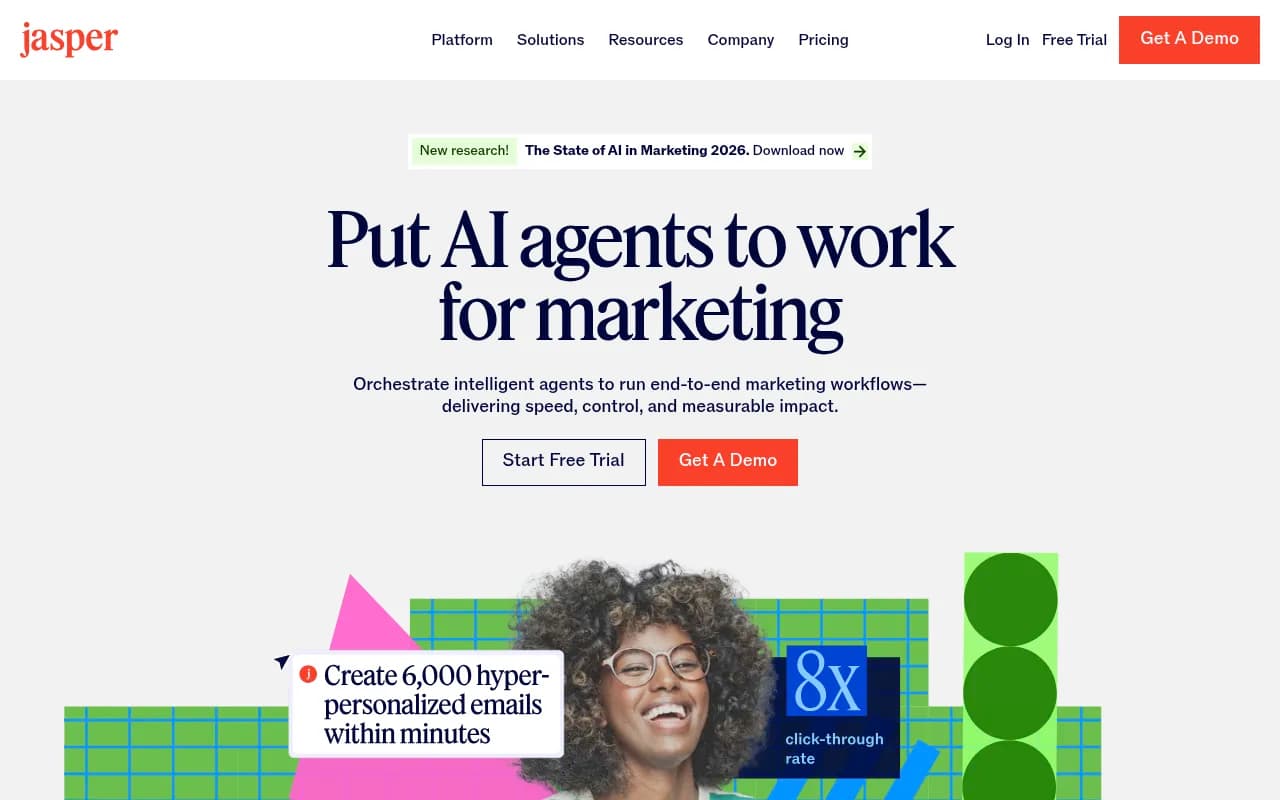
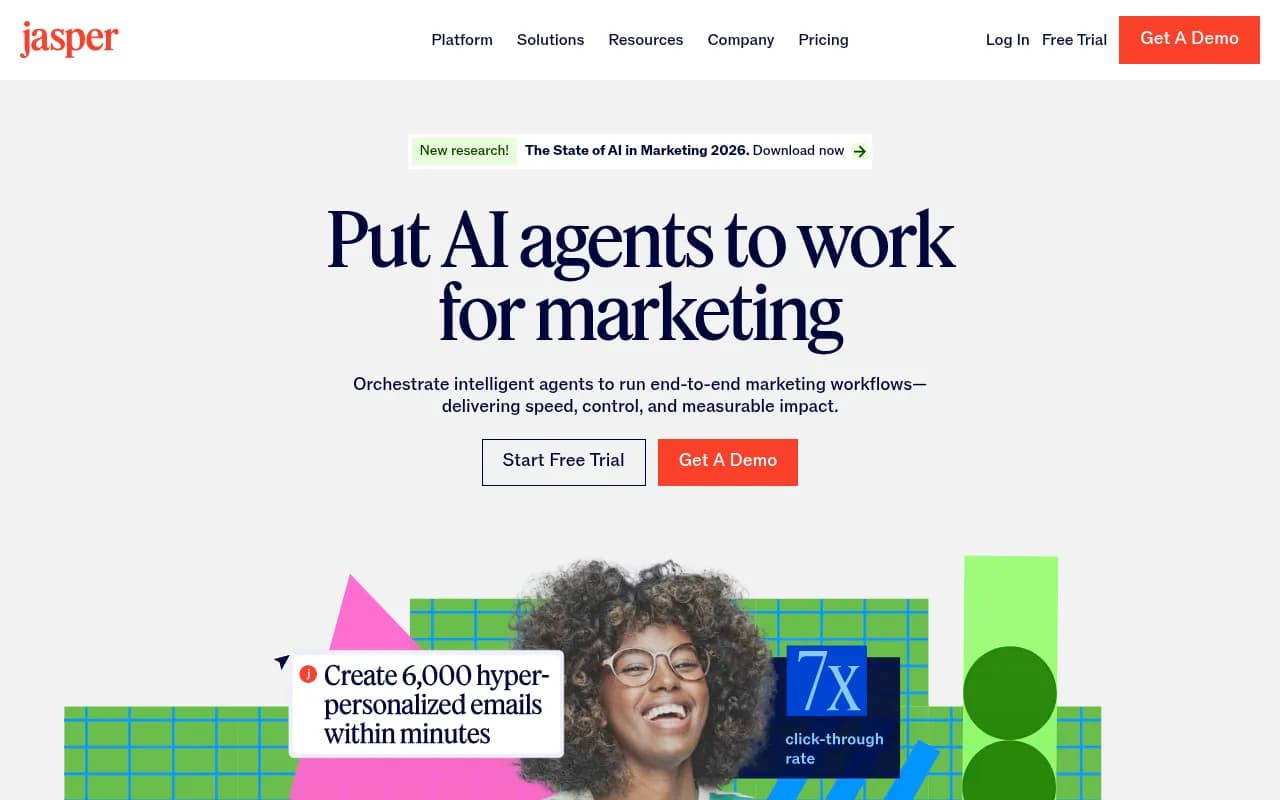
Jasper is the most mature brand in this comparison. It's been around the longest, has the most developed brand voice and governance features, and is clearly aimed at marketing teams that need consistency across a large content operation.
The brand voice controls are genuinely useful. You can train Jasper on your existing content, set tone guidelines, and get output that sounds like your company rather than generic AI text. For campaign content, landing pages, and marketing copy, that matters a lot.
Where Jasper falls short for LLM citation is in its GEO tooling, or rather the lack of it. Jasper doesn't tell you which prompts you're missing, which competitors are being cited instead of you, or how to structure content to answer the specific questions AI models are fielding. It's a content execution tool, not a content strategy tool.
The Jasper AI Agents feature (launched in late 2025) adds some workflow automation, but it's still oriented around marketing execution rather than AI search visibility.
Jasper starts at $59/month per seat (billed annually). That's reasonable for what it does, but what it does is brand-led marketing execution, not GEO optimization.
Writesonic: the most GEO-aware of the four
Writesonic has made a deliberate pivot toward AI search visibility in 2025-2026, and it shows. Of the four tools in this comparison, Writesonic is the only one that explicitly tracks how your brand appears in AI-generated answers alongside its content generation features.
The platform includes AI search monitoring, GEO research tools, and an article writer that's designed with SEO and AI search in mind. It's not as deep as a dedicated GEO platform, but it's meaningfully more citation-aware than Jasper or Copy.ai.
The monitoring features are gated behind higher-tier plans, which is worth knowing before you sign up expecting full GEO functionality at the entry level. The Starter plan at $99/month ($79/month billed annually) gives you the writing tools; the visibility tracking comes at higher tiers.
Writesonic's article writer is also solid for SEO-oriented long-form content. It produces structured, reasonably comprehensive articles that are more likely to satisfy the "depth and specificity" requirements for LLM citation than what Copy.ai typically outputs.
The honest assessment: Writesonic is the best of these four tools if your primary goal is content that earns LLM citations, because it's the only one that treats GEO as a first-class concern. But it's still a content creation tool with monitoring bolted on, not a purpose-built GEO platform.
Head-to-head comparison
| Dimension | AirOps | Copy.ai | Jasper | Writesonic |
|---|---|---|---|---|
| Primary use case | AI search visibility + content workflows | High-volume copywriting | Brand-led marketing execution | SEO/GEO content + monitoring |
| LLM citation focus | High (signal-to-content loop) | Low | Low | Medium |
| AI search monitoring | Yes (core feature) | No | No | Yes (higher tiers) |
| Brand voice controls | Limited | Basic | Strong | Moderate |
| Long-form content quality | High (structured for GEO) | Medium | High (brand-consistent) | High (SEO-structured) |
| Content gap analysis | Yes | No | No | Partial |
| Ease of use | Complex (enterprise) | Simple | Moderate | Moderate |
| Starting price | Enterprise pricing | Free tier available | $59/mo/seat | $79/mo (annual) |
| Best for | Enterprise teams running GEO programs | Marketing teams needing volume | Brand-controlled campaign content | Teams wanting GEO + content in one tool |
The real problem none of them fully solve
Here's the honest truth: all four of these tools help you create content faster. None of them, on their own, guarantee that content gets cited by LLMs.
Getting cited requires knowing which specific prompts to target, understanding what's already being cited and why, tracking whether your new content is actually being picked up by AI crawlers, and connecting that visibility to actual traffic and revenue.
That's a monitoring and optimization problem, not just a writing problem. AirOps gets closest to solving it within this group, but it's still primarily a content workflow platform.
If LLM citation is your actual goal, you need to pair whichever writing tool you choose with dedicated AI visibility tracking. Promptwatch is built specifically for this: it tracks how your content performs across ChatGPT, Perplexity, Gemini, Claude, and seven other AI models, shows you exactly which pages are being cited and which aren't, and includes content gap analysis to identify the specific topics you need to cover.

The combination of a good writing tool and a dedicated GEO platform is more powerful than either alone. Write with Jasper or Writesonic, track and optimize with a platform that shows you what's actually working.
Which tool should you choose?
The answer depends on what problem you're actually trying to solve.
Choose AirOps if you're running an enterprise content program and want a platform that connects AI search signals directly to content production. It's the most sophisticated option here for teams that are serious about GEO, but it requires investment in setup and workflow integration.
Choose Writesonic if you want a single tool that handles both content creation and basic AI search monitoring. It's the most GEO-aware of the four and a reasonable starting point for teams that are new to thinking about LLM citation.
Choose Jasper if brand voice consistency and marketing governance are your top priorities. It's excellent for campaign content, landing pages, and brand-controlled execution. Just don't expect it to help you figure out why you're not showing up in AI-generated answers.
Choose Copy.ai if you need high-volume, versatile copywriting across many formats and channels. It's fast, flexible, and good at what it does. For LLM citation specifically, it's the weakest of the four.
And regardless of which writing tool you pick: if showing up in AI search results is a real business priority, you need visibility tracking alongside it. The writing tool gets content onto your site. The tracking tells you whether AI models are actually reading and citing it.
A note on the broader GEO landscape
The tools in this comparison are primarily content creation platforms. The GEO space has its own set of dedicated tools that focus specifically on AI search visibility rather than content production.
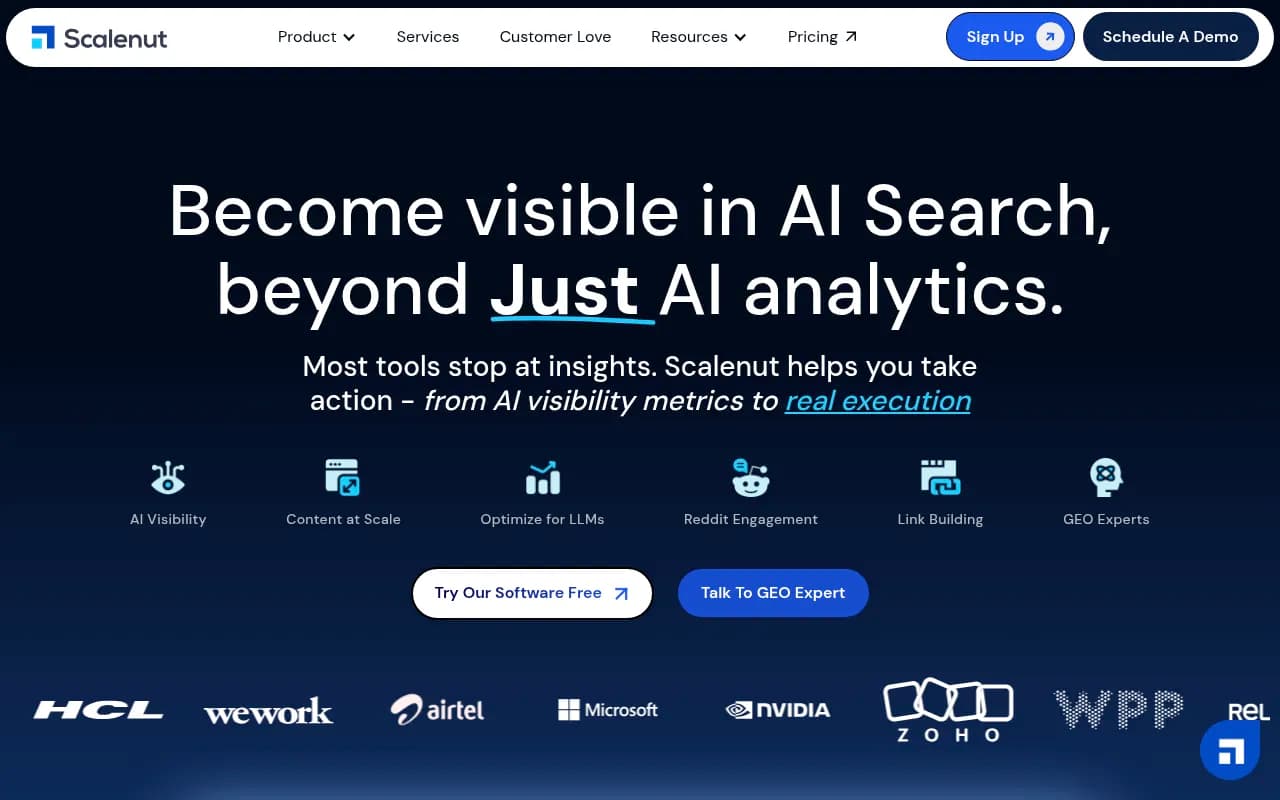
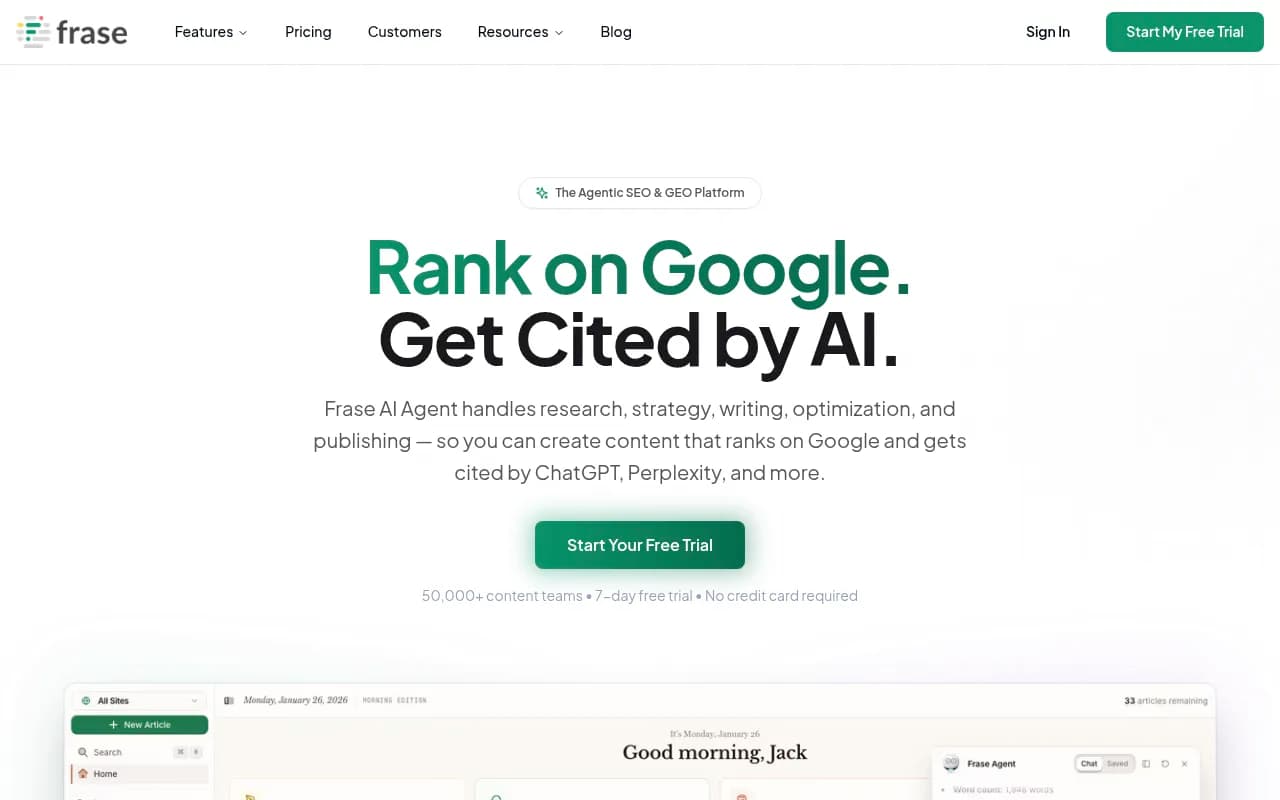
For teams that want to go deeper on monitoring and optimization, tools like Scalenut, MarketMuse, and Frase can complement your writing workflow with better content intelligence.
The category is moving fast. What these tools look like in six months will likely be different from what they look like today. The underlying principle won't change though: content that earns LLM citations is content that directly, specifically, and authoritatively answers the questions real users are asking AI models. Build your workflow around that goal, and the tool choice becomes secondary.