Key takeaways
- AirOps, Junia AI, and Outranking are content creation tools that help you write faster -- but none of them close the loop between what you publish and whether AI models actually cite it.
- Promptwatch is the only platform in this comparison that tracks AI citations, identifies content gaps, generates content grounded in real prompt data, and then confirms whether that content gets picked up by AI crawlers.
- AirOps' Quill agent (launched May 2026) is the closest competitor to Promptwatch's content generation approach, but it still lacks crawler logs and AI traffic attribution.
- If your goal is to produce articles that AI models will cite, the platform you use to write them matters far less than the data you use to brief them.
- For teams that want a single platform to find gaps, create content, and verify results, Promptwatch is the only option here that does all three.
There's a question that keeps coming up in marketing teams right now: "We're publishing a lot of content -- why isn't ChatGPT citing any of it?"
The honest answer is that most content platforms weren't designed with AI citation in mind. They were built to help you write faster, rank on Google, or hit a publishing cadence. Those are legitimate goals. But AI search engines have different preferences. They cite content that's structured clearly, answers specific questions, and comes from sources they've already crawled and validated.
That gap between "content we published" and "content AI models actually cite" is exactly what this comparison is about. Let's look at how AirOps, Junia AI, Outranking, and Promptwatch each approach the problem -- and which one actually helps you close it.
What "citable" content actually means in 2026
Before comparing platforms, it's worth being precise about what makes content citable by AI models.
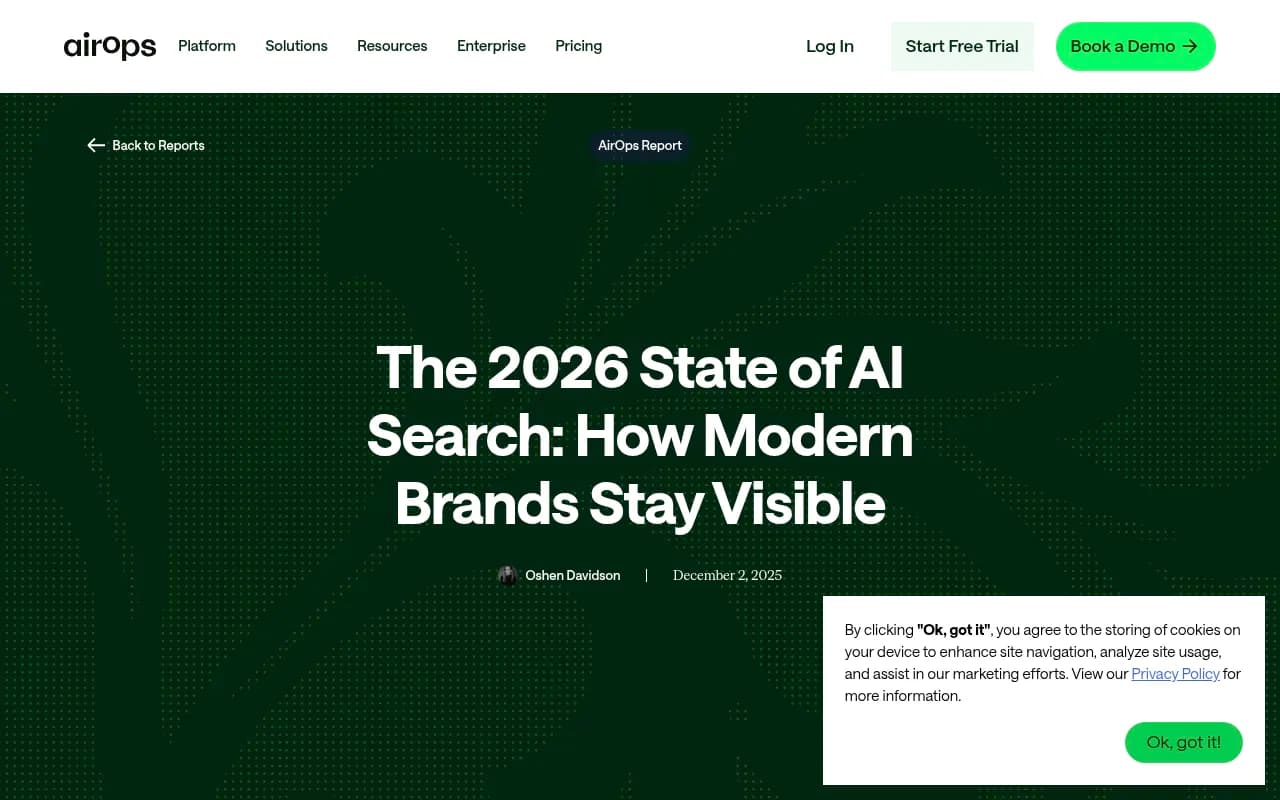
AirOps published research in late 2025 showing that pages not updated quarterly are 3x more likely to lose citations. The same research found that sequential headings and rich schema correlate with 2.8x higher citation rates. About 48% of citations come from community platforms like Reddit and YouTube. And roughly 60% of AI Overview citations come from URLs not ranking in the top 20 organic results.
That last point is the one most teams miss. You can have strong Google rankings and still be invisible in AI search. The signals that matter for AI citation -- freshness, structure, off-site credibility, and direct answer quality -- are different from the signals that drive organic rankings.
So when evaluating content platforms, the right question isn't "does this tool help me write faster?" It's "does this tool help me write content that AI models will actually cite?"
The four platforms compared
AirOps
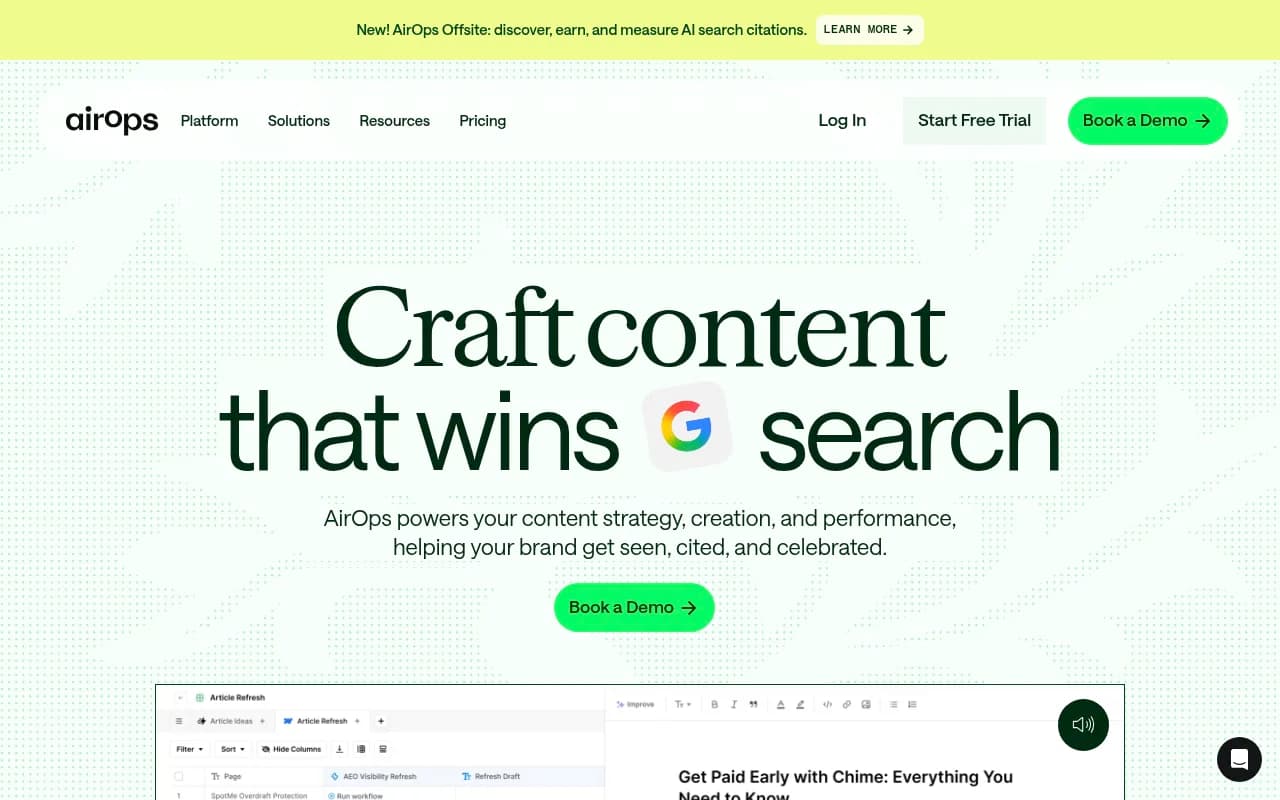
AirOps started as a content orchestration platform. Its core strength has always been workflow-driven content marketing -- building pipelines that scale content production without losing quality control. In May 2026, AirOps launched Quill, an agent specifically designed for AI search visibility. Quill can generate articles, run competitor analysis, and produce content briefs grounded in AI search data.
What AirOps does well: it connects content production to AI search strategy in a way that most pure writing tools don't. The 2026 State of AI Search report (co-authored with Kevin Indig) shows the platform is genuinely thinking about what signals matter for AI citation, not just content volume.
What AirOps doesn't do: it doesn't track whether your published content is actually being cited by AI models. There's no crawler log showing you which AI agents visited your pages, no page-level citation tracking, and no traffic attribution connecting AI visibility to revenue. You can produce content with AirOps, but you can't verify whether it worked.
Junia AI
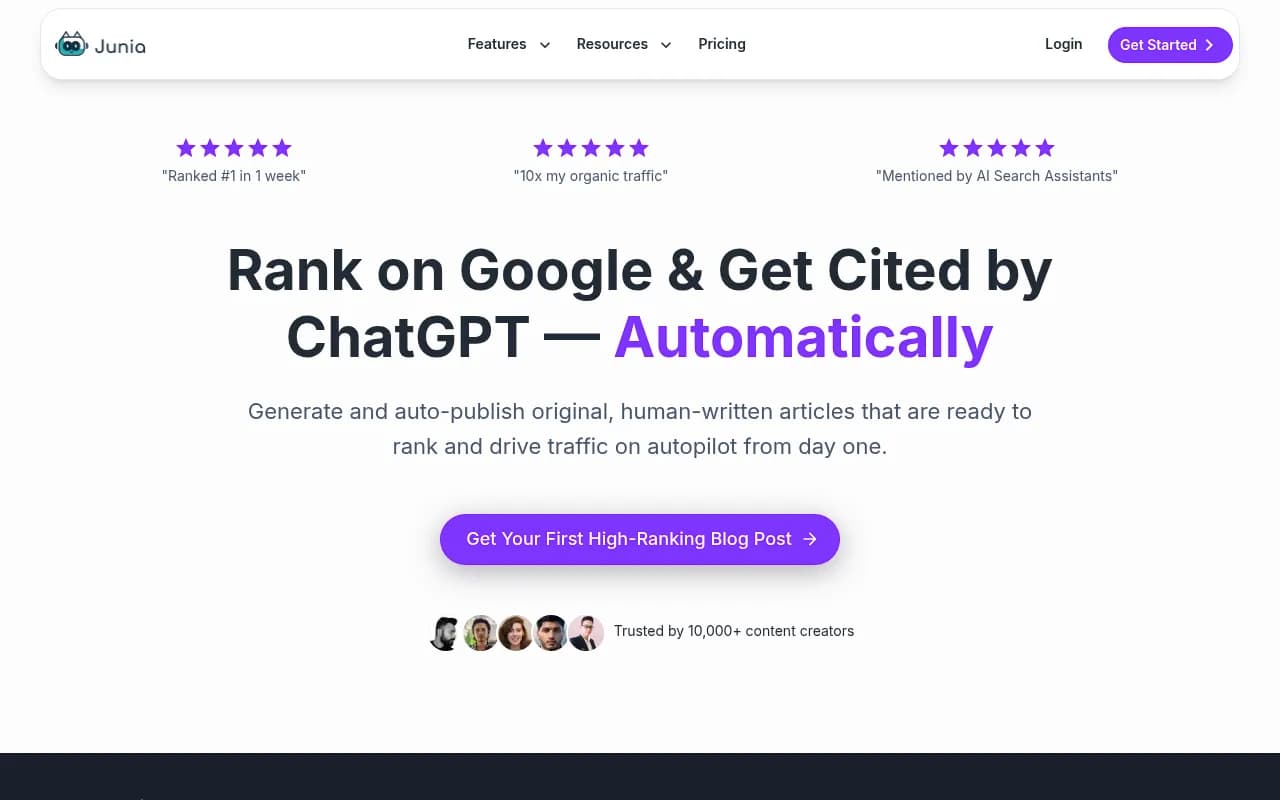
Junia AI is an SEO content platform focused on writing and optimization. It generates long-form articles, handles keyword research, and produces content with SEO structure baked in. For teams that need to publish a lot of content quickly, it's a capable tool.
The limitation for AI citation purposes is that Junia AI is fundamentally a writing tool. It doesn't track AI model behavior, doesn't analyze which prompts your competitors are winning, and doesn't show you which content gaps are costing you citations. You can use it to write good content, but "good content" and "content AI models cite" aren't the same thing without the data to bridge them.
Outranking
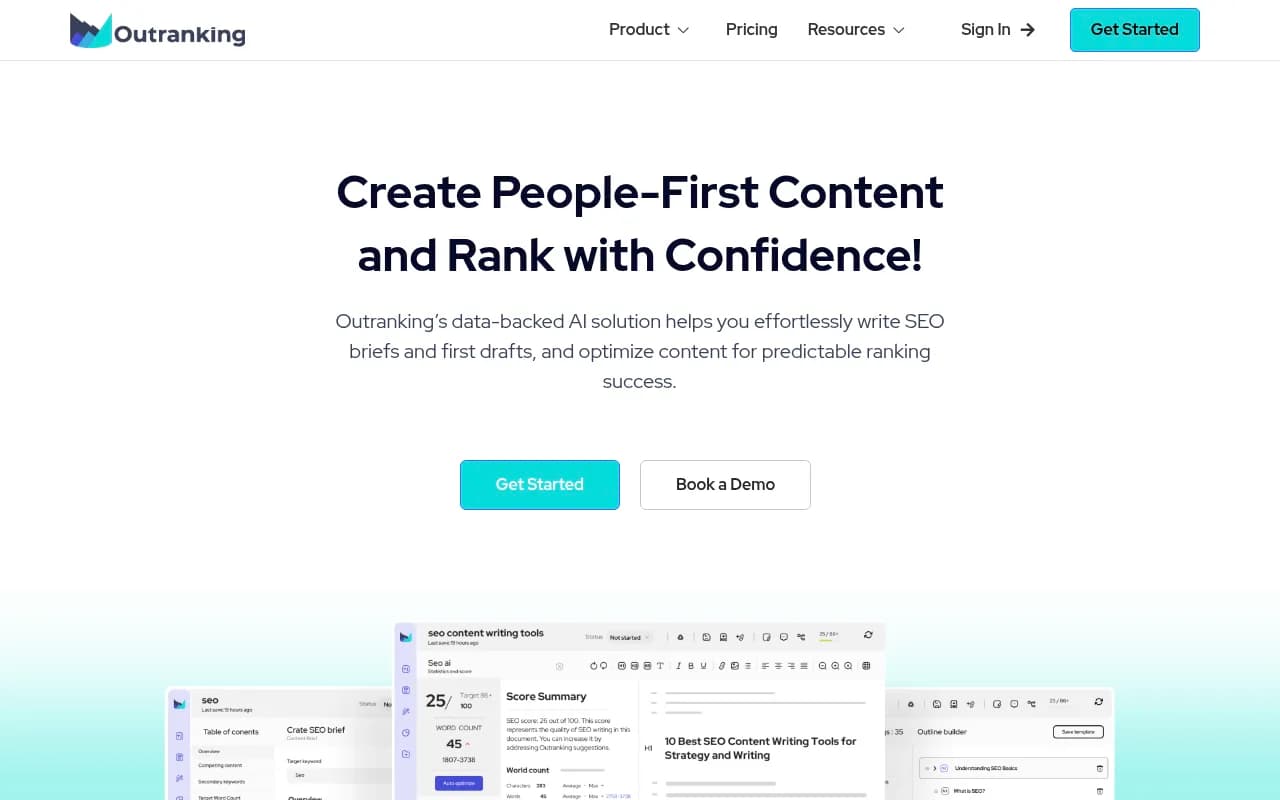
Outranking takes a similar approach to Junia AI -- it's an AI-powered SEO content platform that writes, optimizes, and publishes. It has solid content brief generation, SERP analysis, and on-page optimization features. For traditional SEO, it's a reasonable choice.
For AI citation specifically, Outranking has the same blind spot as Junia AI: it optimizes for Google rankings, not for AI model citation patterns. The signals that matter for AI search (freshness, structured answers to specific questions, off-site credibility signals) aren't what Outranking's optimization engine is calibrated for.
Promptwatch
Promptwatch approaches the problem from the opposite direction. Instead of starting with "let's write content," it starts with "what content gaps are causing AI models to cite your competitors instead of you?"
The Answer Gap Analysis shows exactly which prompts competitors are visible for that you're not. Content Agents then generate articles grounded in that prompt data -- not generic SEO briefs, but content engineered around the specific questions AI models are already answering. After publishing, AI Crawler Logs show which AI agents visited your pages, when, and whether those visits led to citations. Page-level tracking confirms which pages are being cited, by which models, and how often.
That cycle -- find gaps, generate content, verify results -- is what separates Promptwatch from the other three platforms here. The others help you create content. Promptwatch helps you create content that gets cited, then proves it.

Feature comparison
| Feature | AirOps | Junia AI | Outranking | Promptwatch |
|---|---|---|---|---|
| AI content generation | Yes (Quill agent) | Yes | Yes | Yes (Content Agents) |
| Content briefs | Yes | Yes | Yes | Yes (with prompt data) |
| SEO optimization | Partial | Yes | Yes | Yes |
| Prompt tracking (AI search) | Partial | No | No | Yes (50-350 prompts/plan) |
| Citation monitoring | No | No | No | Yes |
| AI crawler logs | No | No | No | Yes |
| Answer gap analysis | No | No | No | Yes |
| Page-level citation tracking | No | No | No | Yes |
| AI traffic attribution | No | No | No | Yes |
| Reddit/YouTube insights | No | No | No | Yes |
| ChatGPT Shopping tracking | No | No | No | Yes |
| Competitor visibility heatmaps | No | No | No | Yes |
| Multi-model monitoring | No | No | No | Yes (10 AI models) |
| Pricing starts at | Custom | ~$49/mo | ~$79/mo | $99/mo |
The table makes the gap clear. AirOps, Junia AI, and Outranking are content creation tools with varying degrees of SEO intelligence. Promptwatch is a different category of tool -- one that treats content creation as one step in a larger optimization loop.
The core difference: creation vs. optimization
Here's a useful way to think about it. If you handed a skilled writer a content brief from Junia AI or Outranking, they could produce a solid article. If you handed that same writer a content brief from Promptwatch, they'd have something different: the specific prompts AI models are using, the citations those models are currently returning, the gaps in your existing content, and data on which angles are winning for competitors.
That's not a small difference. It's the difference between writing good content and writing content that's calibrated to how AI models actually behave.
AirOps with Quill gets closer to this -- the platform is clearly thinking about AI search signals, not just traditional SEO. But even Quill doesn't close the loop with crawler logs and citation verification. You still can't confirm whether your published content is being picked up.
Who should use which platform
Use AirOps if...
You need to scale content production with AI search strategy built into the workflow. AirOps is the strongest content-creation option here for teams that already have some AI visibility monitoring in place elsewhere and want a capable writing pipeline. The Quill agent is genuinely useful for teams thinking about AI search, not just Google.
Use Junia AI if...
You need to publish a high volume of SEO-optimized content quickly and your primary goal is Google rankings. It's a capable writing tool for teams that aren't yet focused on AI citation specifically.
Use Outranking if...
You want solid AI-assisted content creation with traditional SEO optimization baked in. It's a reasonable choice for content teams that are still primarily optimizing for Google and want structured briefs and on-page guidance.
Use Promptwatch if...
Your goal is to actually appear in AI-generated answers -- in ChatGPT, Perplexity, Google AI Overviews, Claude, Gemini, or any of the other models your customers are using. Promptwatch is the only platform here that tracks what's happening in AI search, identifies the specific gaps costing you citations, generates content to fill those gaps, and then verifies whether that content gets crawled and cited.
For marketing teams and agencies that have moved past "we should probably think about AI search" and are now asking "why aren't we being cited and how do we fix it," Promptwatch is the right tool.
A note on the monitoring-only trap
One thing worth flagging: there's a whole category of tools that track AI citations but don't help you do anything about them. You get a dashboard showing your visibility score, maybe a competitor comparison, and then... nothing. No content generation, no gap analysis, no crawler logs.
AirOps, Junia AI, and Outranking have the opposite problem -- they help you create content but don't track whether it's working in AI search.
Promptwatch is the only platform in this comparison (and one of very few in the broader market) that does both. It's not just monitoring and it's not just creation -- it's the loop between them.
Pricing reality check
| Platform | Starting price | What you get |
|---|---|---|
| Junia AI | ~$49/mo | Content generation, SEO optimization |
| Outranking | ~$79/mo | Content briefs, on-page optimization, publishing |
| Promptwatch Essential | $99/mo | 1 site, 50 prompts, 5 articles, citation tracking |
| Promptwatch Professional | $249/mo | 2 sites, 150 prompts, 15 articles, crawler logs |
| Promptwatch Business | $579/mo | 5 sites, 350 prompts, 30 articles, full attribution |
| AirOps | Custom | Content workflows, Quill agent, AI search features |
Junia AI and Outranking are cheaper at entry level, but they're solving a different problem. If you're comparing them to Promptwatch on price, you're also comparing them on scope -- and the scope is genuinely different.
The more useful comparison is: what does it cost to produce content that actually gets cited in AI search, versus content that might or might not? If your team is spending time and budget on content that AI models ignore, the "cheaper" tool is actually the more expensive one.
Bottom line
AirOps, Junia AI, and Outranking are all legitimate content tools. They'll help you write faster, structure content better, and hit publishing targets. For teams focused on traditional SEO, any of them could be the right fit.
But if the question is specifically "which platform produces the most citable articles in AI search," the answer isn't really about writing quality. It's about whether the platform knows what AI models want to cite, generates content calibrated to those signals, and then confirms whether it worked.
Only one platform in this comparison does all three.
For teams that want to explore the broader AI visibility landscape before committing, tools like Omnia offer monitoring-focused alternatives, and platforms like Surfer SEO or MarketMuse can complement content creation workflows. But for the full loop from gap identification to content generation to citation verification, Promptwatch is the only option here that covers the whole thing.