Key takeaways
- "Brand perception" in 2026 has two halves: what people say about you (reviews, social mentions) and what AI assistants say about you when buyers ask. Most small businesses only watch the first.
- You can learn a lot for free before paying anything: ask the AI engines yourself, run a free visibility report, and read your own reviews.
- Entry-level paid plans run from roughly $29 to $125 per month. The hidden cost is the prompt cap, so check how many prompts you actually get.
- Prices below come from third-party roundups and vendor pages that sometimes conflict. Confirm on each vendor's site before you buy.
- Tracking alone does not change anything. Pick a tool that tells you what to fix, or plan to do the fixing yourself.
What brand perception means now
A few years ago, brand perception tools meant social listening. You tracked mentions on X, Reddit and review sites, scored the sentiment, and watched the trend line. That still matters.
But a new layer sits on top. When someone asks ChatGPT "what's the best accounting software for a 5-person agency?", the answer names a few brands, says something about each, and cites a handful of sources. If your business is missing, or described wrongly, that is a perception problem you cannot see in a social dashboard.
So this guide covers both. First, the AI-answer trackers, which are the newer and more confusing category. Then the traditional monitoring and review tools that small businesses can still afford.
How AI answers form an opinion about you
It helps to know what the engines actually pull from before you spend money.
According to Promptwatch Data on average sources per response (published September 2025), ChatGPT cites about 5 sources per web-search answer, while Google AI Overviews and Perplexity cite about 10. With only five slots in ChatGPT, every cited page matters.
The type of page matters too. In Promptwatch's ChatGPT citation share by content type report (Sep 28 to Oct 4, 2026), product pages were the most cited type at 22.4%, followed by landing pages at 16.8%. For branded prompts, meaning prompts that name your company, reviews climbed to 5.6% of citations, more than triple their share across all prompts.
Translation for a small business: the AI's opinion of you is built mostly from your own product and landing pages, plus whatever reviews exist on trusted sites. You control more of this than you think.
Start with free checks
Before paying for anything, spend an hour on this.
- Ask ChatGPT, Gemini and Perplexity ten questions your customers would ask. Include a few that name you directly ("is [your brand] any good?") and a few that don't ("best [your category] for small businesses").
- Write down who gets named, in what order, and what is said about each.
- Note every claim about you that is wrong: old pricing, discontinued features, wrong location.
- Run a free scan. Promptwatch's free AI visibility report needs no login and checks how ChatGPT, Gemini and Perplexity talk about your brand, plus whether AI crawlers can read your site. Guzu also offers a free no-login audit, though it is a vendor with a product to sell.
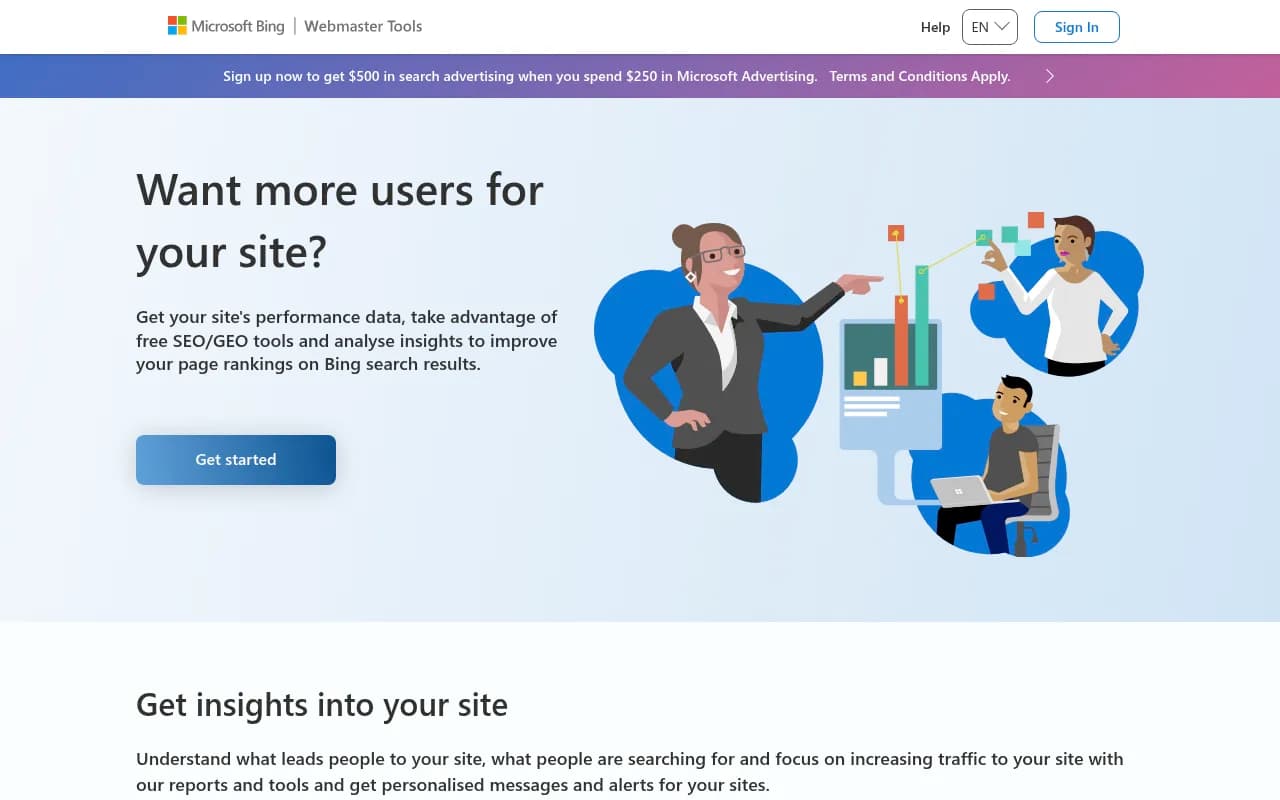
- Check your Google Search Console and Bing Webmaster Tools for pages that rank but never get cited.
This manual pass is tedious, and it is a snapshot rather than a trend. But it tells you whether you even have a problem, which is worth knowing before a subscription starts billing.
Budget AI visibility tools compared
These are the tools that tend to show up for small teams. Prices come from third-party roundups (Zapier, Strategi, Leapd, Guzu) and conflict in places, so treat them as ballparks and verify on the vendor site.
| Tool | Entry price (approx.) | What you get at that price | Watch out for |
|---|---|---|---|
| cloro | $30/mo, free tier | Credit-based, API-driven, many engines | Needs some technical comfort |
| Otterly.AI | From $29/mo | 15 prompts daily, AI Overviews, ChatGPT, Perplexity, Copilot | 15 prompts run out fast; light on recommendations |
| ZipTie | ~$59/mo annual | Indexation audits, URL-level filtering | Narrower scope |
| Waikay | From $69.95/mo | Focus on factual accuracy of what AI says | Closest to pure perception, less to optimize |
| Semrush AI Visibility Toolkit | $99/mo per domain | 25 prompts, 4 engines | Seats and extra prompts add up |
| Peec AI | $95/mo | 50 prompts, 3 chosen models, unlimited users | Tracking only |
| Promptwatch Essential | $95/mo | 50 prompts, all AI models, daily tracking, Brand Narrative | No crawler logs or content articles at this tier |
| Searchable | $125/mo | 100 prompts, ChatGPT, AI Overviews, Perplexity | Three engines only |
| Ahrefs Brand Radar | From $199/mo | Large prompt index | Priced above most small budgets |
Otterly.AI
The cheapest well-known name. The Lite plan is listed from $29 per month for 15 prompts tracked daily. Fifteen prompts sounds fine until you realize that one product in two cities across a few customer types eats that allowance quickly. Guzu notes you have to interpret the data yourself, which matches what I would expect from a tracker at this price. The next tier jumps to roughly $189.
Otterly.AI

Peec AI
Simple and well-liked: $95 per month for 50 prompts across three models, daily, with unlimited users. If you only need to know whether you show up and against whom, it does that cleanly.

Semrush AI Visibility Toolkit
At about $99 per month per domain with 25 prompts, it makes sense if you already live in Semrush. Guzu claims an extra seat plus 50 more prompts can push the bill past $250 per month. Guzu is a competitor, so verify that, but the pattern of add-ons inflating the price is real across this category.
Searchable
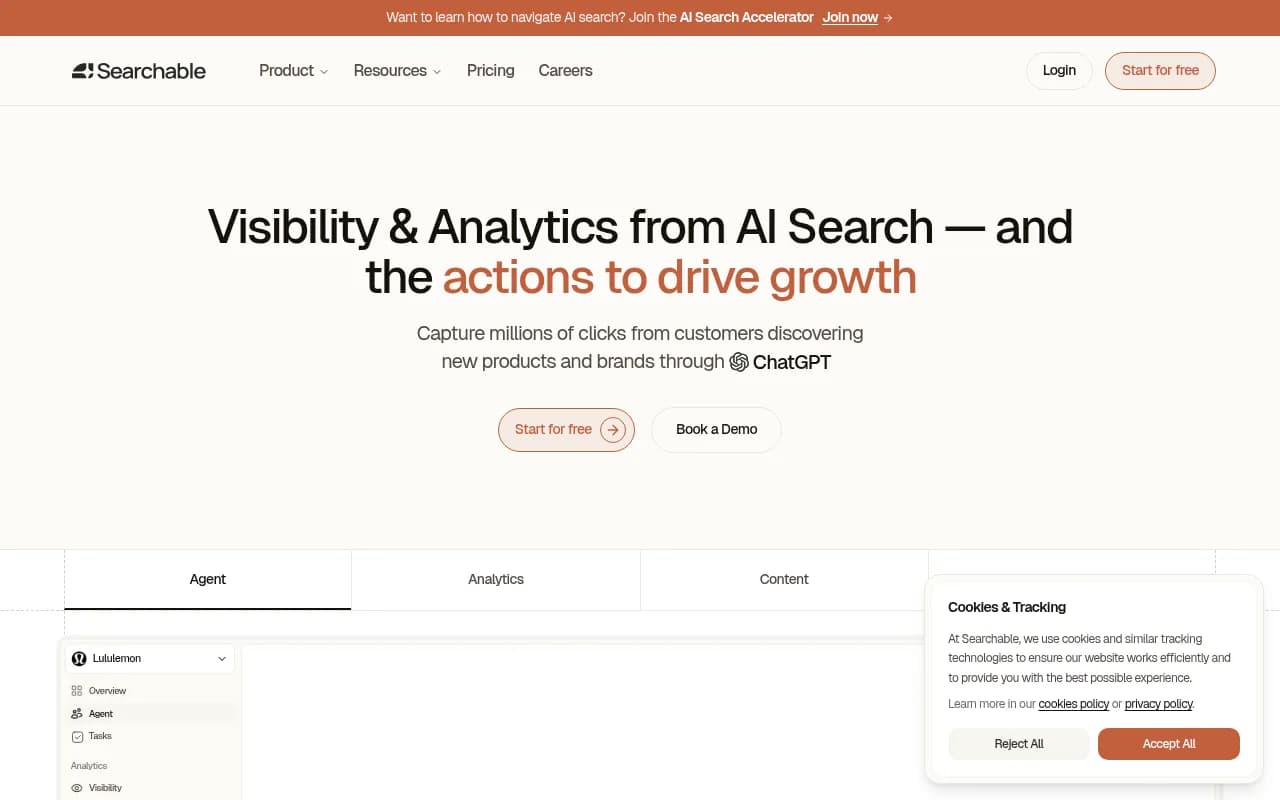
About $125 per month for 100 prompts across ChatGPT, AI Overviews and Perplexity. The prompt count is generous for the price. It is also on the Promptwatch comparison list, if you want a head-to-head view.
ZipTie and cloro
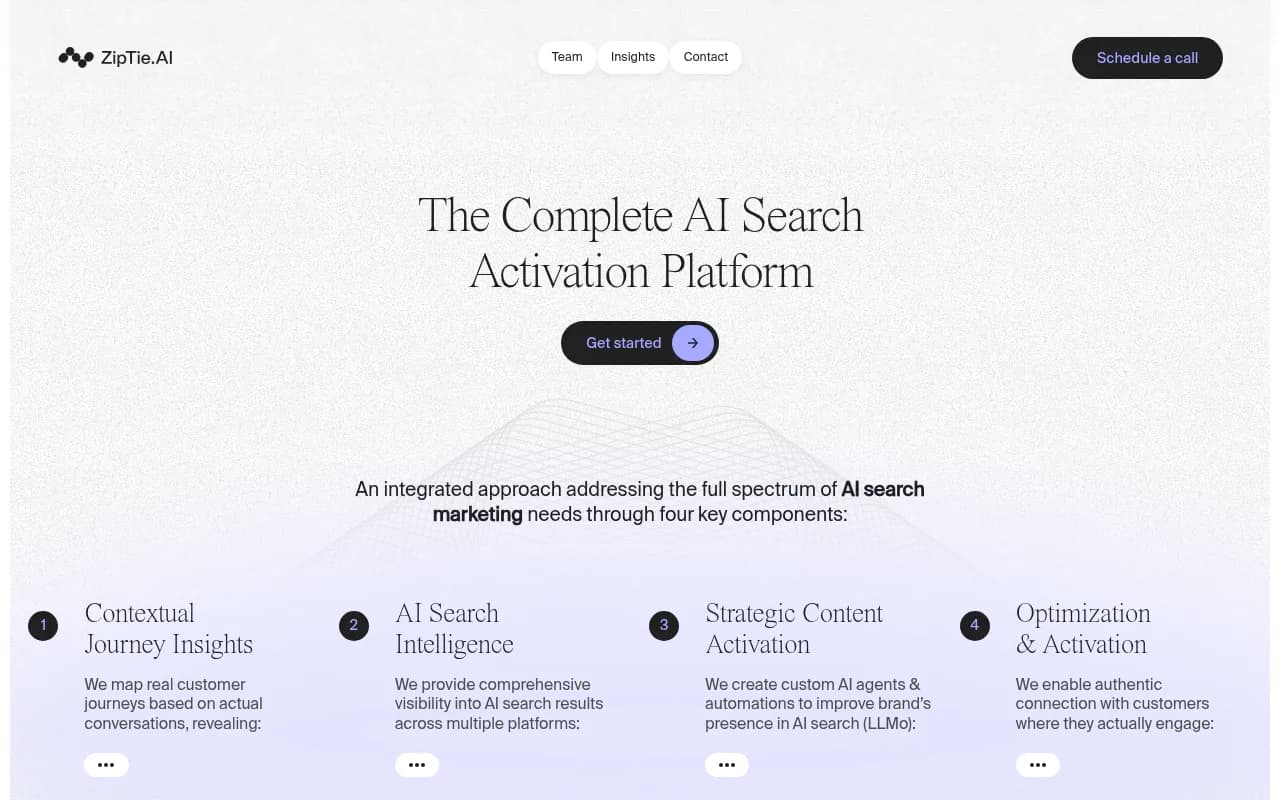
ZipTie is around $59 per month on annual billing and leans on indexation audits. cloro starts at $30 with a free tier and uses credits, which suits someone comfortable with APIs more than someone who wants a dashboard to open on Monday.
Waikay
From about $69.95 per month and focused on whether what AI says about you is factually right. That is the nearest thing in this list to a pure brand perception tool. It is narrower than the platforms above, which is the tradeoff.
Tools I would skip at this budget
Scrunch (about $250 per month), AthenaHQ ($295) and Profound (multi-engine coverage reportedly starts around $399, and pricing may now be enterprise-contract based) are built for larger teams. Petra Labs starts at $15,000 per month. None of these suit a small business watching every dollar.
Where Promptwatch fits for small teams
Promptwatch is an AI visibility and GEO platform rather than a pure tracker, and its Essential plan at $95 per month (confirm at promptwatch.com/pricing) is the entry point for a small business. It covers 50 prompts, daily tracking across all supported AI models, and 500 Agent Credits. Brand Narrative is included on every plan: it pulls out the individual claims AI makes about you, groups them into themes like pricing, features and support, and scores each theme, which is the closest feature to "brand perception" in the AI-answer category.
The tradeoff at that price: Essential does not include crawler logs or AEO articles. Those arrive at Professional ($245 per month), and the automated Content Agent and Fact Check arrive at Business ($579 per month). A 7-day free trial is available on monthly billing.

If accuracy is your main worry, the useful workflow is: see the claim AI makes, mark it right or wrong, find the page it learned it from, fix that page. Fact Check automates the middle steps but sits in the Business tier, so on a tight budget you would do that detective work by hand.
Traditional brand perception tools that still earn a place
AI answers are one channel. Reviews, social chatter and press still shape how buyers see you, and they feed what AI says.
| Tool | Best for | Notes |
|---|---|---|
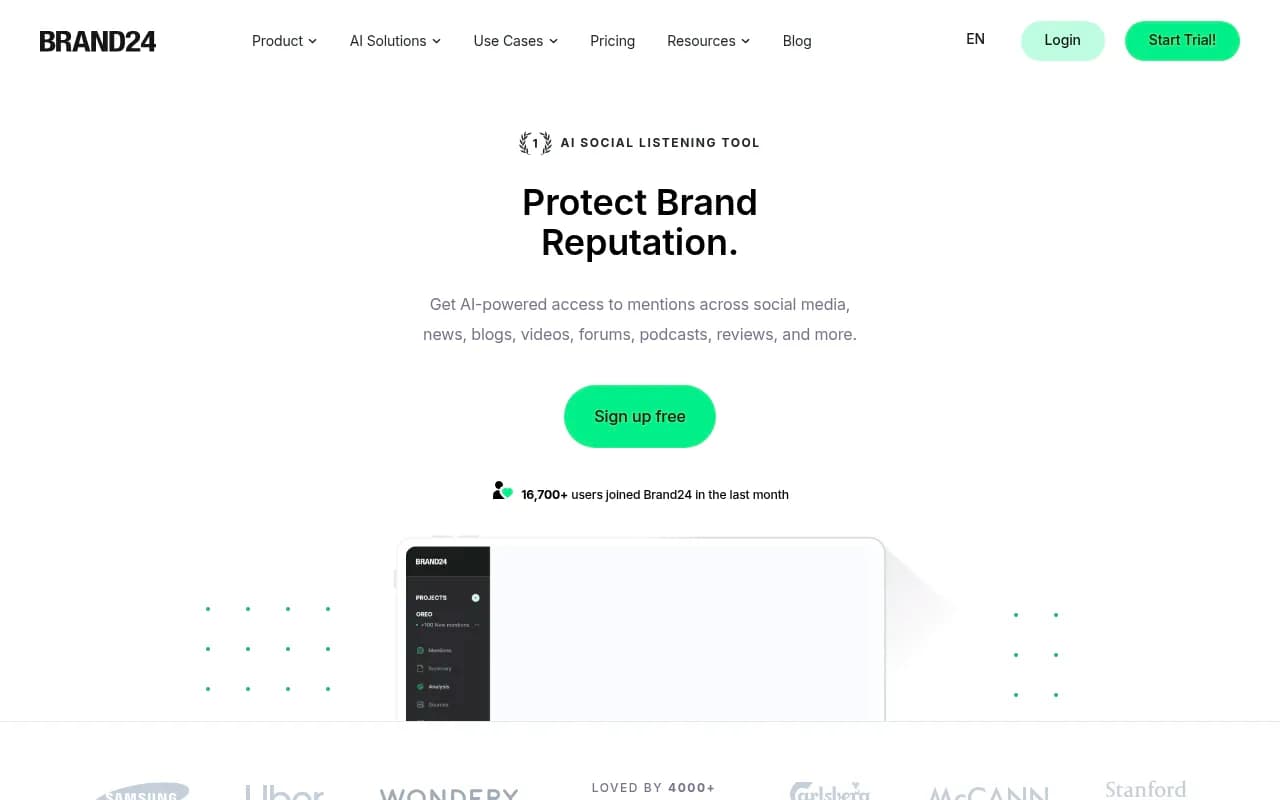
| Brand24 | Social and web mention monitoring with sentiment | Common pick for small teams |
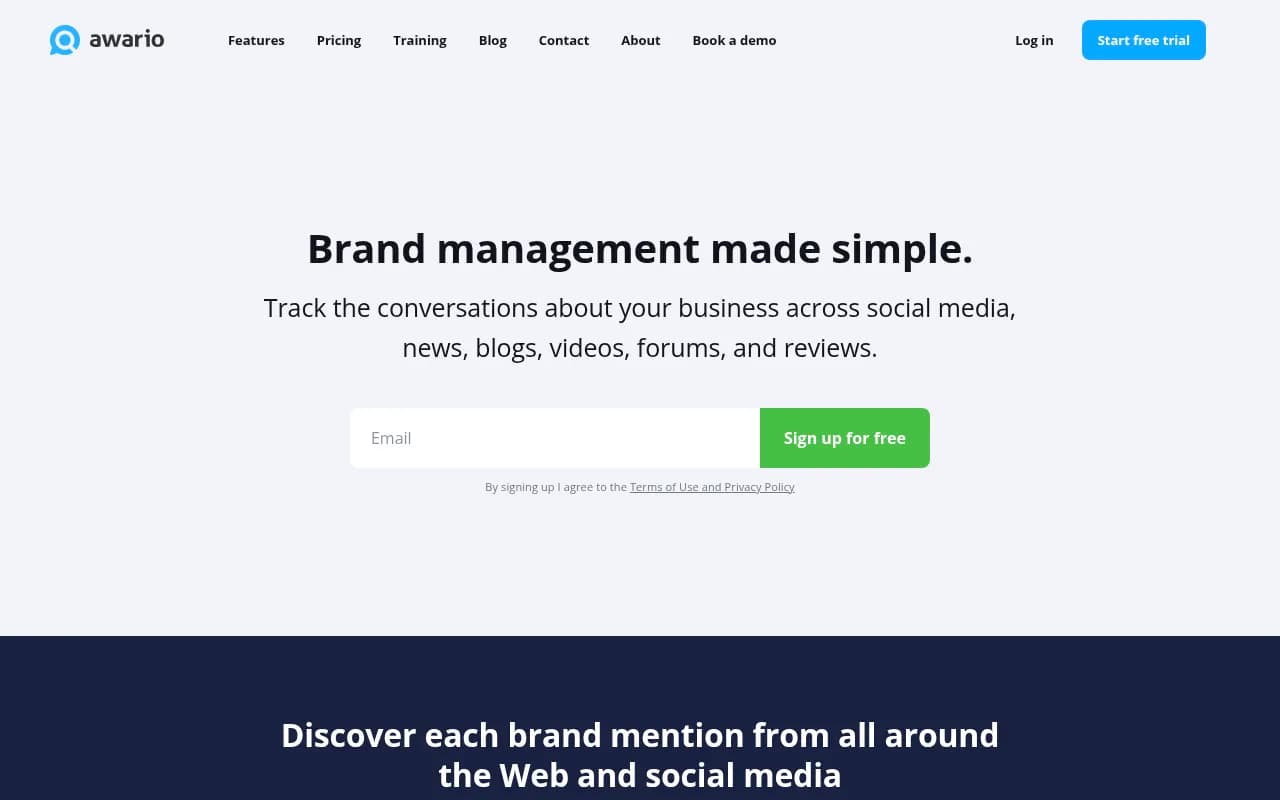
| Awario | Web-wide brand mention tracking | Alerts for new mentions |
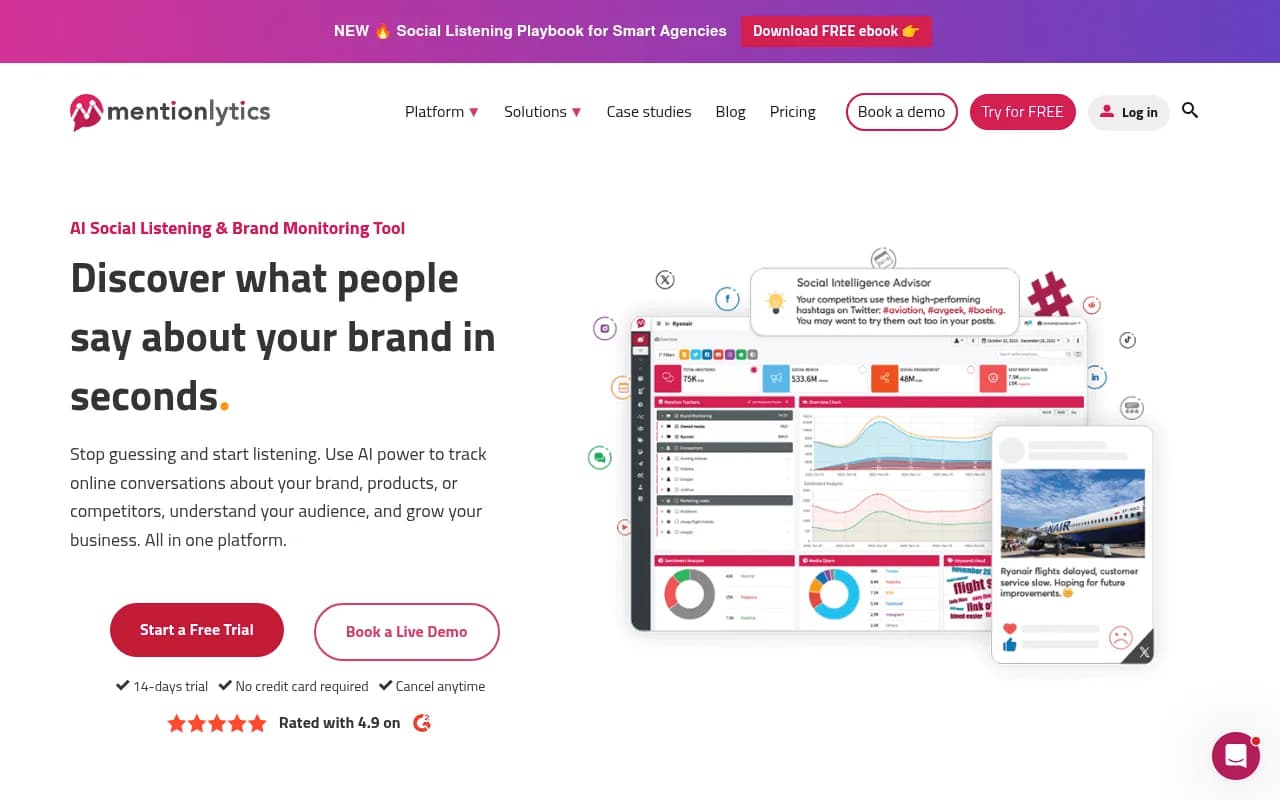
| Mentionlytics | Mention tracking across the web | Similar territory to Awario |
| Trustpilot | Collecting and displaying reviews | Reviews carry weight in AI answers about brands |
| Birdeye | Review and listing monitoring for local businesses | Also positions around AI answers |
| Moz Local | Listings and review management | Useful for local consistency |
I could not verify current pricing for these in my research, so check each vendor directly. Pick one mention monitor and one review source. Doing more than that on a small budget just creates dashboards nobody reads.
If you run a multi-location or local business, Yext and Chatmeter focus on local-level visibility and reputation, though they generally price above a single-location budget.
The hidden costs that blow budgets
Prompt caps are the main one. A plan advertised at $29 is only cheap if 15 prompts covers what you need. Count the questions your customers really ask, multiply by the number of markets or products you care about, and you will usually land well above the entry limit.
The others:
- Per-domain and per-seat pricing, which turns a $99 plan into a $250 plan once a colleague joins
- Extra engines sold as add-ons. Otterly's base plan covers some engines while Claude, AI Mode and Gemini cost extra.
- Per-engine and per-cadence pricing at some vendors, such as Guzu's roughly $79 per engine
- Tracking with no action layer, meaning you pay to learn you are invisible and then pay again, in time or money, to fix it
Also be skeptical of "best for small business" lists, including any that rank the vendor writing them first. Guzu and Leapd both run their own budget tools and rank themselves well. That is not a reason to ignore them, only to double-check the claims.
A cheap workflow that works
Here is what I would do with a $100 per month ceiling.
- Run the manual audit and free report above. Write down your gaps.
- Choose one tracker with a decent prompt count. Start with ChatGPT plus Google AI Overviews, as Guzu suggests, since those are where most buyers look.
- Build 30 to 50 prompts from real customer questions: pricing, comparisons, "best X for Y", and a few that name you.
- Read the results monthly, not daily. Promptwatch's own advice on Copilot applies broadly: judge on monthly trends, because weekly numbers swing.
- Fix the pages AI relies on. Per Promptwatch Data, product pages, landing pages and docs drive most citations, so make them state pricing, features and who the product is for in plain language. Add a short FAQ. Collect reviews on trusted sites.
- Be patient with news-style content. Promptwatch's content half-life report found news pages lose half their citations in about five weeks, while landing pages and docs last for months.
Which one should you pick
- Tightest budget, comfortable with some setup: cloro or Otterly.AI, accepting the prompt limits.
- Want accuracy of AI claims checked: Waikay, or Promptwatch if you also want the fixing workflow nearby.
- Already use Semrush: its toolkit is the low-friction route, watching for seat and prompt add-ons.
- Want one platform to track, find gaps and eventually publish fixes: Promptwatch, starting on Essential and moving up when crawler logs or the Content Agent become worth it.
- Local or multi-location business: pair a tracker with a listings and review tool.
For wider browsing, the GEO software directory at bestgeosoftware.com lists far more options than fit here.
One last honest note. If you would rather hand the whole thing to specialists, agencies like 1001 SEO Media handle GEO and AI search work, and it is the agency behind this site. For most small businesses, though, the manual audit plus one $30 to $100 tool is enough to find out what AI thinks of you. Do that first, then decide whether the problem is big enough to pay for.