
Key takeaways
- No single AI writer wins everywhere. SEO article tools (Surfer, Frase, Writesonic) and marketing copy tools (Jasper, Copy.ai) solve different problems.
- Drafting speed is no longer the differentiator. Fact accuracy, brand voice control, and how well a tool fits your publishing workflow are.
- Promptwatch's data shows product pages, landing pages, and listicles dominate ChatGPT citations, so a tool that only churns out generic blog posts misses most of what gets cited.
- AI-written how-tos and news-style posts decay faster than maintained landing pages and comparisons, so budget for refreshes.
- I did not verify current pricing for most tools below. Check each vendor's pricing page before you buy.
How I picked these 12 tools
I looked for tools that produce publishable written content, not just chat interfaces. Then I sorted them by the job they do best. Quality here means three things: does the draft need heavy rewriting, does the tool keep facts and brand voice under control, and does it connect to how you actually rank or get cited.
A note on honesty. Pricing for AI writers changes constantly, and credit-based plans make comparisons messy. I am not quoting prices I could not confirm. The table below uses pricing models (credits, seats, flat subscription) as a rough guide, and you should confirm numbers on each vendor's site.
What actually gets cited and ranked in 2026
Before choosing a writer, decide what you are writing. Promptwatch Data tracked ChatGPT citations from Sep 28 to Oct 4, 2026. Product pages were the most cited type at 22.4%, landing pages followed at 16.8%, and listicles at 13.6%. How-tos were 8.7% and comparisons 5.9%.
For commercial prompts like "best CRM for small businesses", product pages, landing pages, listicles, and comparisons made up almost 70% of citations. So if your AI writer is only good at 1,500-word informational blog posts, you are covering a minority of what AI engines pull from.
Shelf life matters too. In Promptwatch's content half-life study, pages cited on July 6, 2026 were tracked for 90 days. After 60 days ChatGPT still cited 69% of landing pages and 63% of comparisons. News-style pages lost half their citations within 36 days. The practical takeaway: bulk-generated timely posts are cheap to make and quick to lose. Maintained comparison and landing pages last.
Comparison table
| Tool | Best for | Pricing model | SEO optimization | Brand voice control |
|---|---|---|---|---|
| Jasper | Marketing teams, brand governance | Seat-based plans, 7-day trial | Growing (SEO and AEO module) | Strong |
| Writesonic | Blog automation | Tiered subscription | Built in | Moderate |
| Copy.ai | Short-form copy, workflows | Tiered subscription | Light | Moderate |
| Surfer SEO | Optimizing and drafting for rankings | Tiered subscription | Strong | Moderate |
| Frase | Research-driven briefs and drafts | Tiered subscription | Strong | Moderate |
| ContentShake AI | Semrush users wanting quick articles | Add-on style subscription | Good | Light |
| Koala AI | One-click SEO articles | Credit or tier based | Good | Light |
| NeuronWriter | Budget content optimization | Tiered subscription | Strong | Light |
| Writer | Enterprise governance | Custom enterprise | Light | Very strong |
| Claude | Long-form drafting and editing | Subscription | None native | Via prompting |
| ChatGPT | General drafting and research | Subscription | None native | Via custom instructions |
| Junia AI | Long-form SEO plus auto-publishing | Tiered subscription | Good | Moderate |
The 12 tools
1. Jasper
Jasper is the long-standing name in marketing-focused AI writing, and it has moved well beyond a template library. Its platform now includes Brand IQ for voice and style guidelines, Knowledge for source material, and agents for research and translation. It also markets a GEO and AI optimization module that, per its site, monitors citation rates, finds content gaps, and generates governed content. Plans are listed as Pro and Business with a 7-day free trial; the pricing figures didn't load when I checked, so confirm on the pricing page.
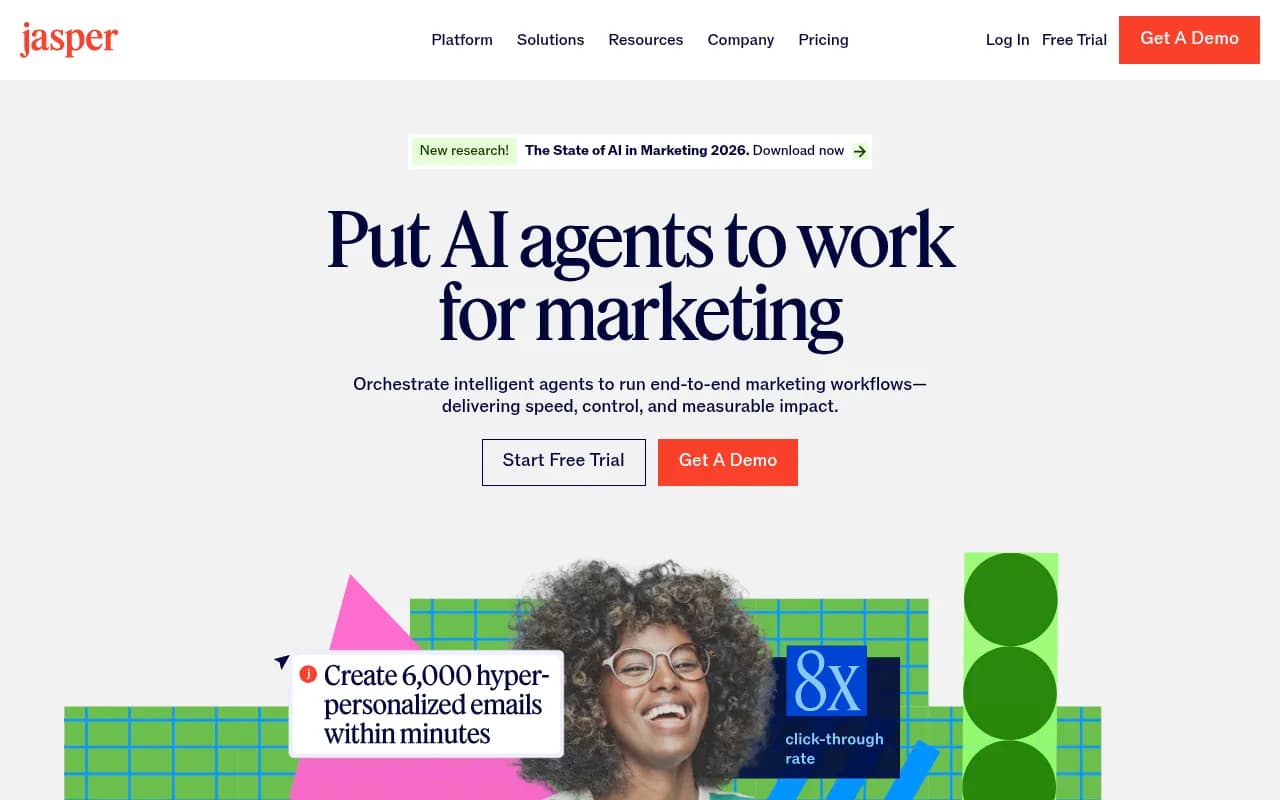
Best for teams that care more about consistent brand output than raw SEO scoring. Weak spot: if all you need is ranking-focused blog posts, you are paying for governance features you may not use.
2. Writesonic
Writesonic leans into automated blog production and content marketing. It is a reasonable pick when you want an end-to-end flow from keyword to draft with SEO guidance included. Quality is good for first drafts and uneven on technical subjects, so plan on a fact-check pass.

3. Copy.ai
Copy.ai is strongest at short-form marketing copy: emails, ad variations, product descriptions, social posts. It is less compelling for long, search-driven articles. If your work is mostly outbound and campaign copy, it is a sensible fit.

4. Surfer SEO
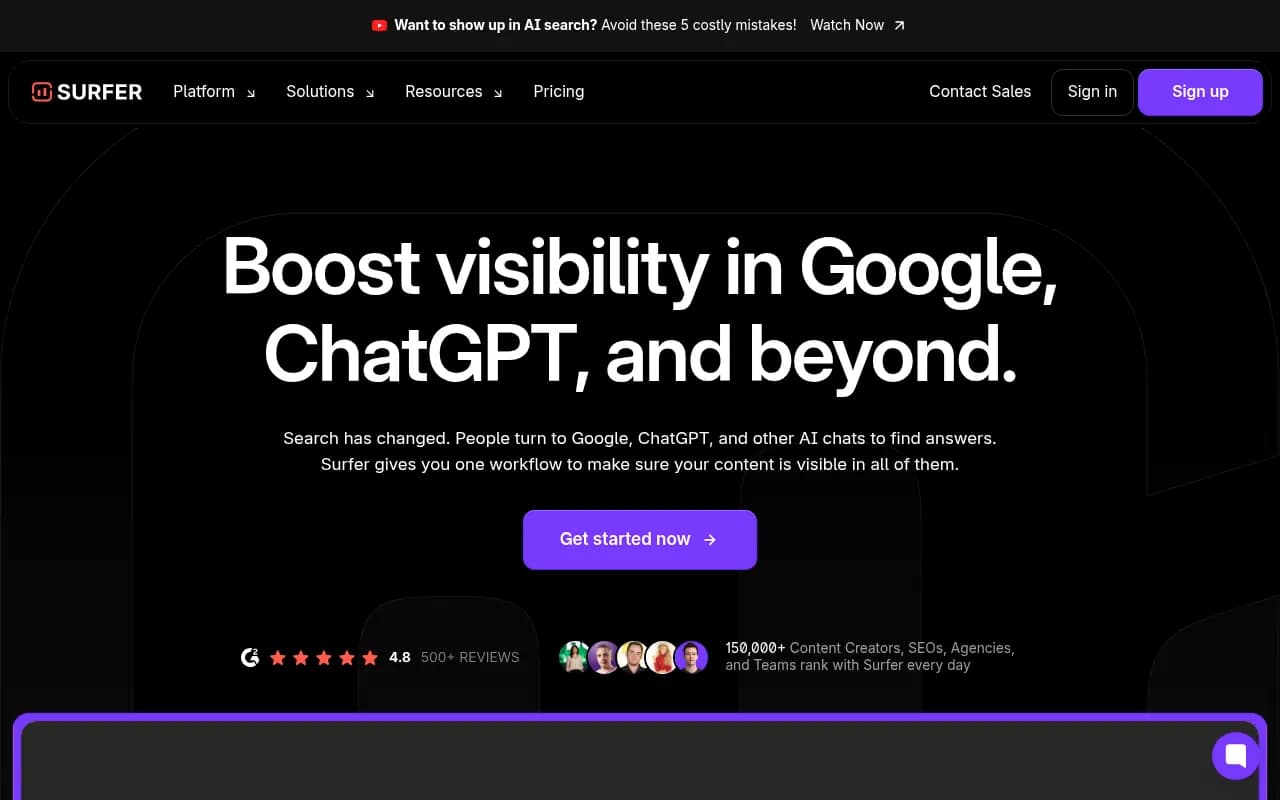
Surfer started as an optimizer and added drafting. Its strength is telling you what a page needs to compete: terms, structure, and length based on what already ranks. I would use it when you already have writers and want a scoring layer, or when you want a draft that is pre-aligned with the SERP.
5. Frase
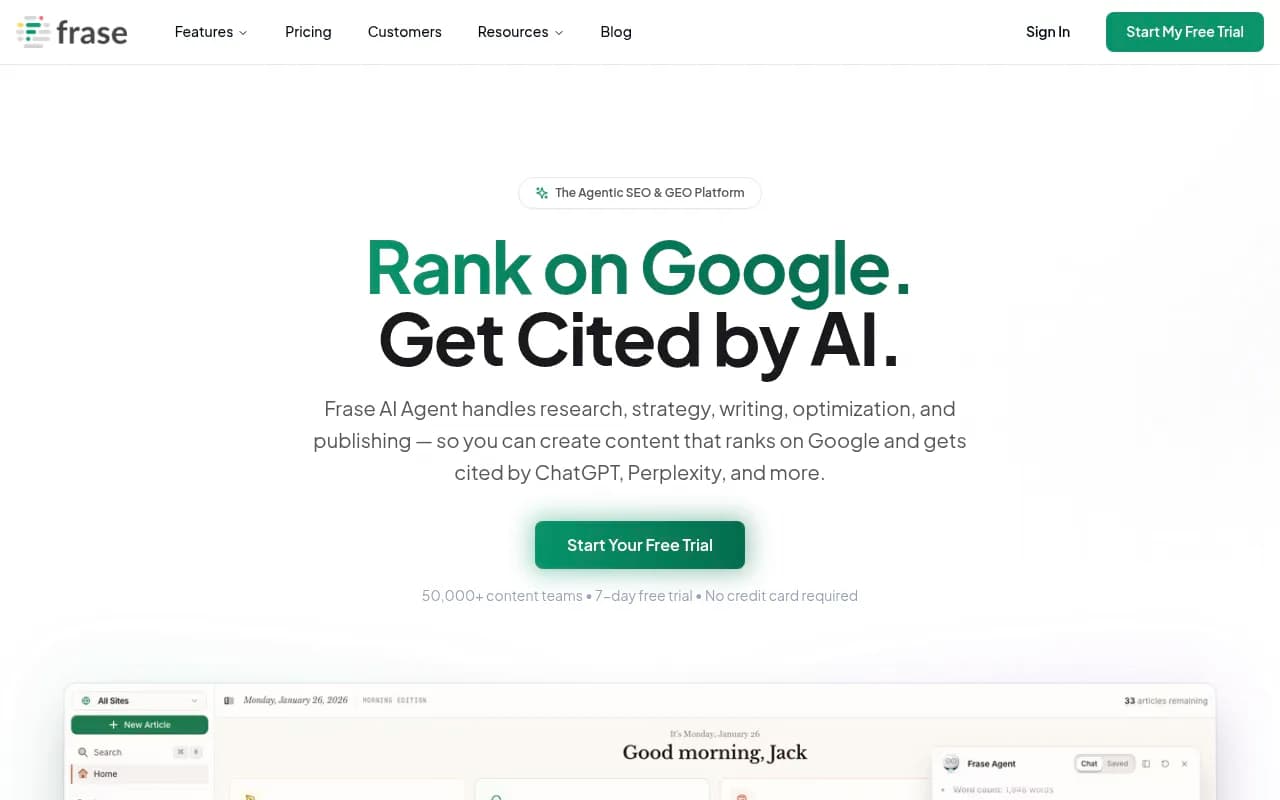
Frase is built around research. It pulls the top results for a query, builds a brief, and drafts from there. For editors who want to understand the competitive shape of a topic before writing, it is one of the more useful workflows.
6. ContentShake AI
ContentShake sits inside the Semrush family and turns keyword ideas into SEO-oriented articles quickly. It is a natural pick if you already live in Semrush and want a low-friction way to draft. Expect to edit for voice.
7. Koala AI
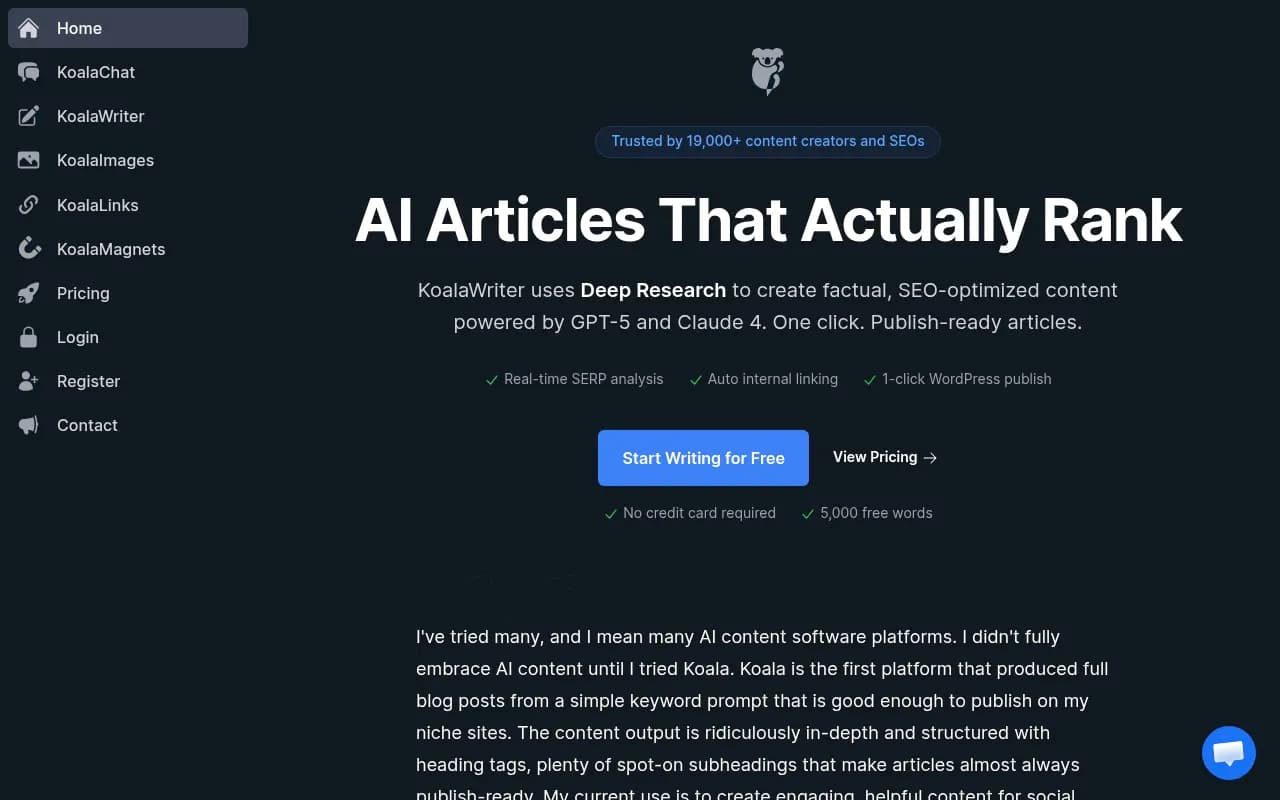
Koala generates publish-ready SEO articles with a focus on speed. It suits affiliate and niche site operators who produce volume. Be careful with volume though: more pages does not mean more citations, as the half-life data above suggests.
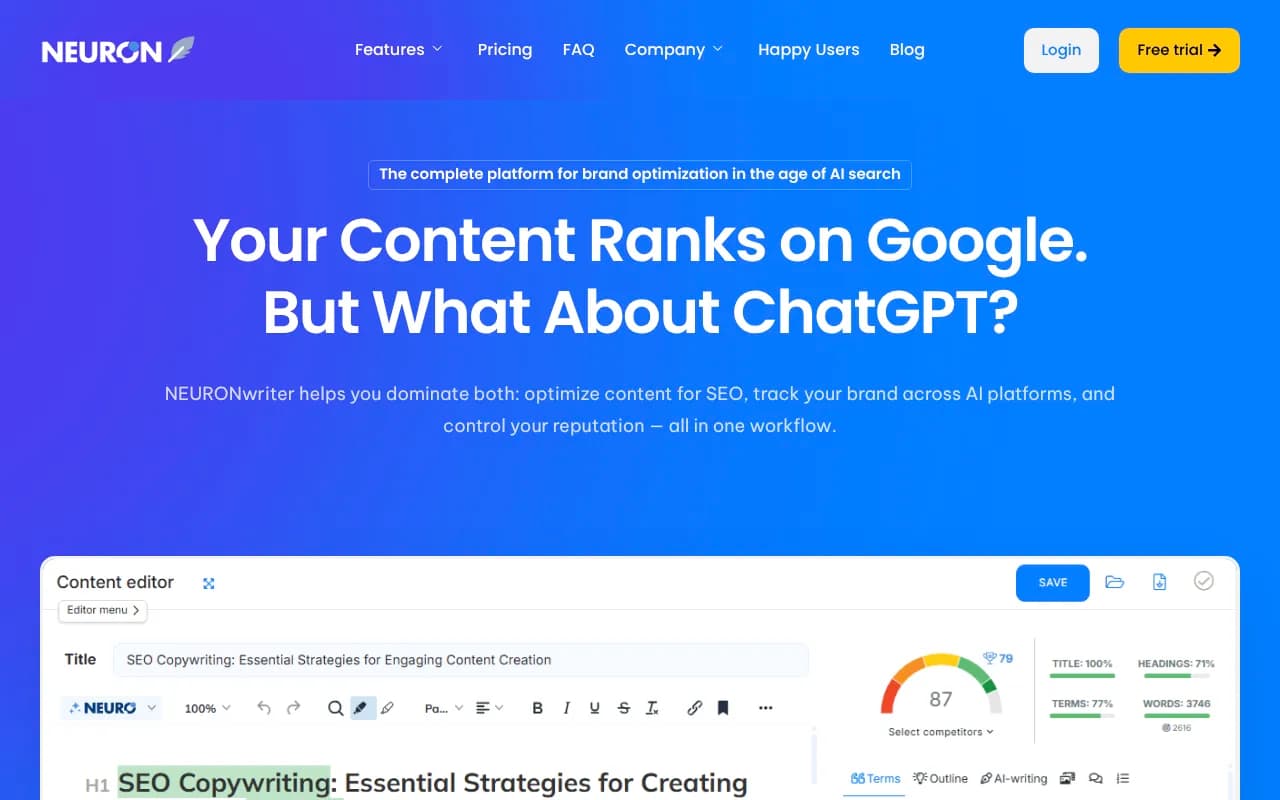
8. NeuronWriter
NeuronWriter gives competitor-based optimization guidance and AI drafting at a lower cost than some bigger names. A good choice for freelancers and small teams who want Surfer-like guidance without the same spend.
9. Writer
Writer is an enterprise platform built around style guides, terminology, and compliance. It is not the tool you pick for SEO scoring. It is what you pick when legal and brand teams need guardrails on every draft.
10. Claude
Claude is one of the better general-purpose models for long-form drafting and editing, and it handles nuance and tone well when you give it a style guide and source material. It has no native SEO tooling, so pair it with a brief from Frase or Surfer.
11. ChatGPT
ChatGPT remains the default drafting and research assistant for many teams. Custom instructions and projects help with consistency. Like Claude, it needs an external SEO layer, and you should verify its factual claims.
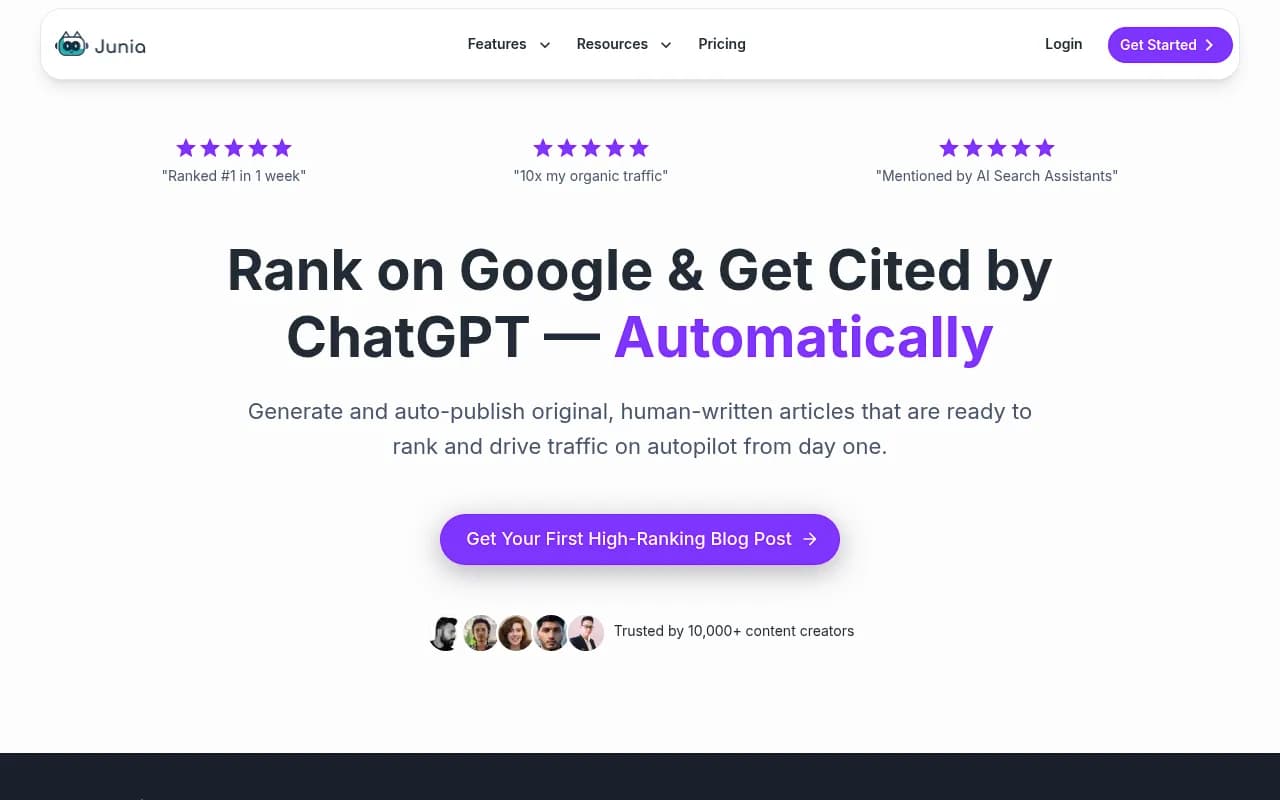
12. Junia AI
Junia targets long-form SEO content with optimization and publishing built in. It is worth a look if you want drafting and CMS delivery in one place without assembling a stack.
How to choose
Match the tool to the content type
- Product, landing, and comparison pages: prioritize accuracy and brand voice. Jasper or Writer, plus a human who owns the facts.
- Informational blog posts: Surfer, Frase, or NeuronWriter for SERP-based structure.
- Short copy at volume: Copy.ai or Jasper.
- Volume SEO sites: Koala or Writesonic, but audit quality hard.
Test with your own topic
Run the same brief through three tools. Score each draft on how many factual errors you find, how much you rewrite, and whether it sounds like you. That beats any feature list, including mine.
Plan for refresh
A draft is the start, not the finish. Keep a refresh schedule for how-tos and anything time-sensitive, and treat comparison and landing pages as living assets.
Writing for AI search, not only Google
A good SEO score does not guarantee AI engines will cite you. You need to know which prompts matter, which of your pages get cited, and where competitors are cited instead. Writers produce text; they do not tell you whether it worked.
Promptwatch covers that other half: it tracks how ChatGPT, Gemini, Perplexity, Google AI Overviews, and others mention and cite your brand, shows content gaps, and its Content Agent can write and publish pages aimed at those gaps. Then crawler logs and page tracking show whether AI bots read the page and cite it. Used alongside a writer from this list, or instead of one if gap-driven articles are your main need, it closes the loop. Pricing starts at $95/mo for Essential, and the Content Agent comes with the Business plan at $579/mo; confirm current plans at promptwatch.com/pricing.

If you want to compare more options in this space, the GEO software directory at bestgeosoftware.com lists visibility and optimization tools.
A practical workflow
- Pick prompts and keywords worth targeting, using real search and AI data.
- Build a brief from the top-ranking and top-cited pages.
- Draft with your chosen writer using a style guide and verified source facts.
- Edit by a human: check every number, name, and claim.
- Publish, then monitor crawls, citations, and traffic.
- Refresh on a schedule. Pages that stop getting cited come back to the top of the queue.
FAQ
Are AI content writers good enough to publish without editing?
Not reliably. They are fast and fluent, but they still invent specifics and flatten voice. Treat output as a strong first draft.
Which tool is best for SEO?
Surfer, Frase, and NeuronWriter are the most SERP-driven. ContentShake is the easiest if you already use Semrush.
Which is best for brand voice?
Writer and Jasper are built around style guidance and governance. General models like Claude and ChatGPT can match voice with good instructions but need more care.
Does AI-written content get cited by AI search?
It can, but what matters is the page type, accuracy, and whether crawlers can read it. Promptwatch's data points to product pages, landing pages, listicles, and comparisons as the most cited formats, so write those with care rather than only publishing generic posts.
How much do these tools cost?
It varies widely and changes often. I could not verify most current prices, so check each vendor's pricing page and watch for credit limits that can make a cheap plan expensive.
Bottom line
Pick by job, not by hype. Jasper or Writer for governed brand content, Surfer or Frase for search-driven articles, Copy.ai for short copy, and Claude or ChatGPT as flexible drafters. Whatever you choose, measure whether the pages get ranked and cited, and refresh the ones that fade.