
Key takeaways
- No AI writer is equally good in every language. Quality drops fastest in lower-resource languages, in idiom-heavy copy, and in regulated or technical topics.
- Treat translation and native creation as two different jobs. Direct translation preserves meaning but often misses local search intent, so keyword research per market comes first.
- General models like ChatGPT and Claude are strong drafting engines for many languages. SEO platforms like Surfer, Frase and NeuronWriter add the briefs and scoring around them.
- Localised product pages, landing pages, FAQs and how-tos are the formats most worth producing in each language, based on what AI assistants cite.
- Always verify language counts and pricing on vendor pages. They change often, and I have not quoted figures I could not confirm.
Why multilingual SEO breaks most AI writing workflows
English is the language these models were mostly trained on, and it shows. Ask a tool for a German article and you often get grammatically correct text that no German marketer would publish: stiff compound nouns, wrong formality level (du versus Sie), and keywords that are literal translations of English terms nobody actually searches.
The second failure is intent. People in Madrid and Mexico City do not search the same way for the same product. A tool that translates your English post produces a page that answers an English question in Spanish words. It may get indexed. It rarely ranks for what the local audience types.
The third is scale. Once a team produces 50 articles in six languages, nobody on staff can read all of it, and mistakes ship quietly.
So the question is not just which tool writes the best Italian. It is which setup lets you catch problems before they go live.
How to evaluate a multilingual AI writer
I would run the same test on every tool you are considering, and I would not skip it because a vendor lists 100+ languages on a pricing page. Language count says almost nothing about quality.
The five-point test
- Native brief test. Give the tool a topic and a local keyword (not a translated one) and see whether the structure fits local SERPs.
- Register test. Ask for the same paragraph in formal and informal tone. Check whether it respects local conventions.
- Terminology test. Feed it your glossary of brand and product terms. Does it keep them consistent across a 1,500-word piece?
- Fact test. Ask for local regulations, prices or units. Models invent local specifics more often than general ones.
- Reviewer test. Hand the output to a native speaker without saying it is AI. Count the edits they make per 500 words.
That last number is your real cost metric. A tool that saves 20 minutes of drafting but costs 25 minutes of editing is not saving anything.
What to check in the tool itself
- Does it do keyword research and SERP analysis in the target country, or only in English?
- Can it store a glossary, brand voice and do-not-translate list per language?
- Does it publish to your CMS with the right language and locale fields?
- Can you export or edit hreflang-related fields, or does that stay manual?
Shortlist: AI writers worth testing
The table below groups tools by what they are best at. I have deliberately not listed language counts or prices, because I could not verify them and they change. Confirm both on each vendor's page before you buy.
| Tool | Type | Strength for multilingual work | Watch out for |
|---|---|---|---|
| ChatGPT | General model | Flexible drafting and rewriting in many languages | No built-in SEO scoring or CMS workflow |
| Claude | General model | Long-form drafts with good tone control | Needs your own briefs and keyword data |
| Writer | Enterprise platform | Glossaries, style rules and governance | Suited to larger teams |
| Jasper | Marketing platform | Brand voice and campaign workflows | Check output in each target language |
| Surfer SEO | SEO optimizer | Brief and scoring layer around any draft | Verify supported markets and languages |
| Frase | SEO research and writing | Fast briefs from live SERPs | Confirm language support for your markets |
| NeuronWriter | SEO optimizer | Per-market SERP-based recommendations | Review depth of non-English NLP terms |
| Writesonic | AI writer | Quick drafts and blog automation | Quality varies by language |
| Junia AI | SEO article writer | End-to-end article generation | Spot-check idiom and tone |
| Hypotenuse AI | Ecommerce content | Product descriptions at volume | Needs terminology control |
General models as the drafting engine
For many teams the best multilingual writer is not an "AI writer" product at all. It is a strong general model plus a good prompt.
ChatGPT handles a wide spread of languages and is easy to steer with a style guide pasted into the prompt.
Claude tends to produce calmer, more natural long-form text, which matters when you are drafting pillar content rather than product blurbs. In my experience, both need explicit instructions about formality and regional variants (Brazilian versus European Portuguese, for example), or they pick one at random.

The trade-off is workflow. You get no keyword scoring, no brief, no publishing. That is where the SEO platforms come in.
SEO platforms that add structure
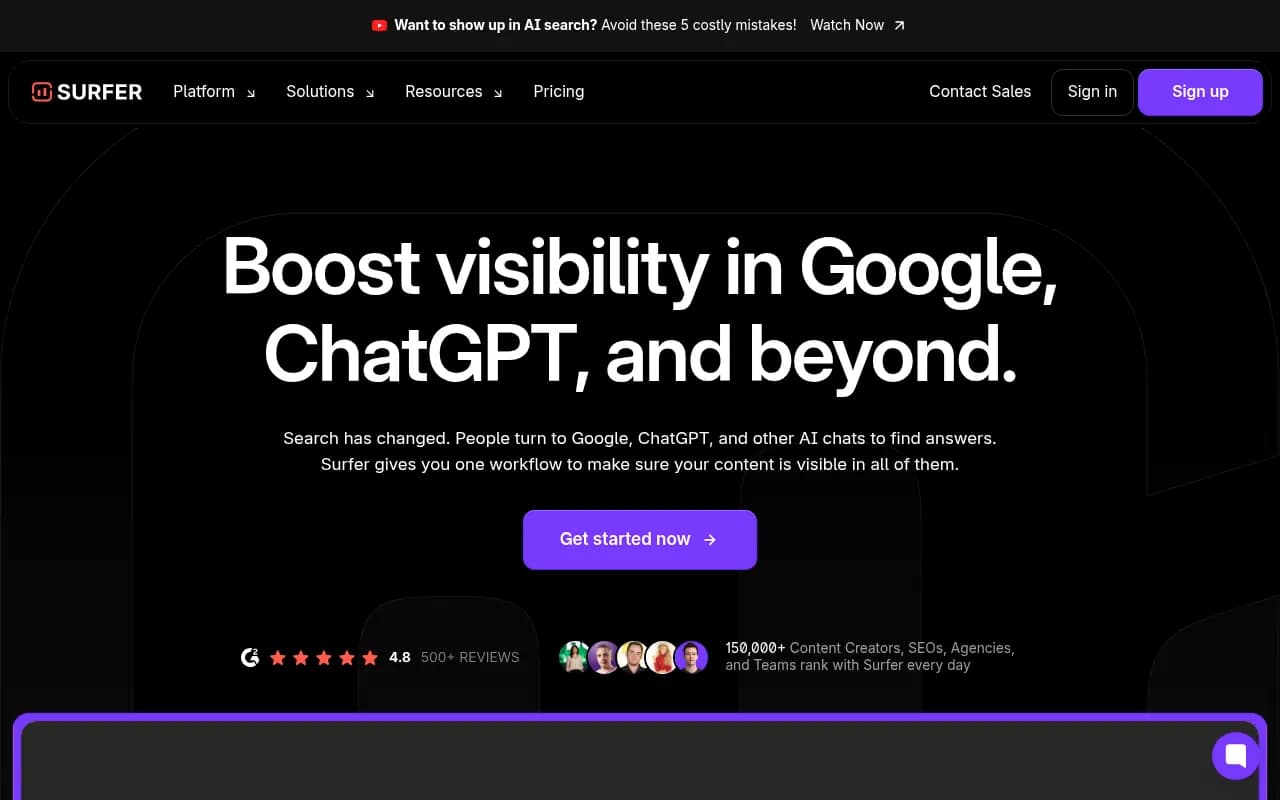
Surfer SEO is the best known content scoring tool, and it is worth checking which countries and languages your plan covers before building a process around it.
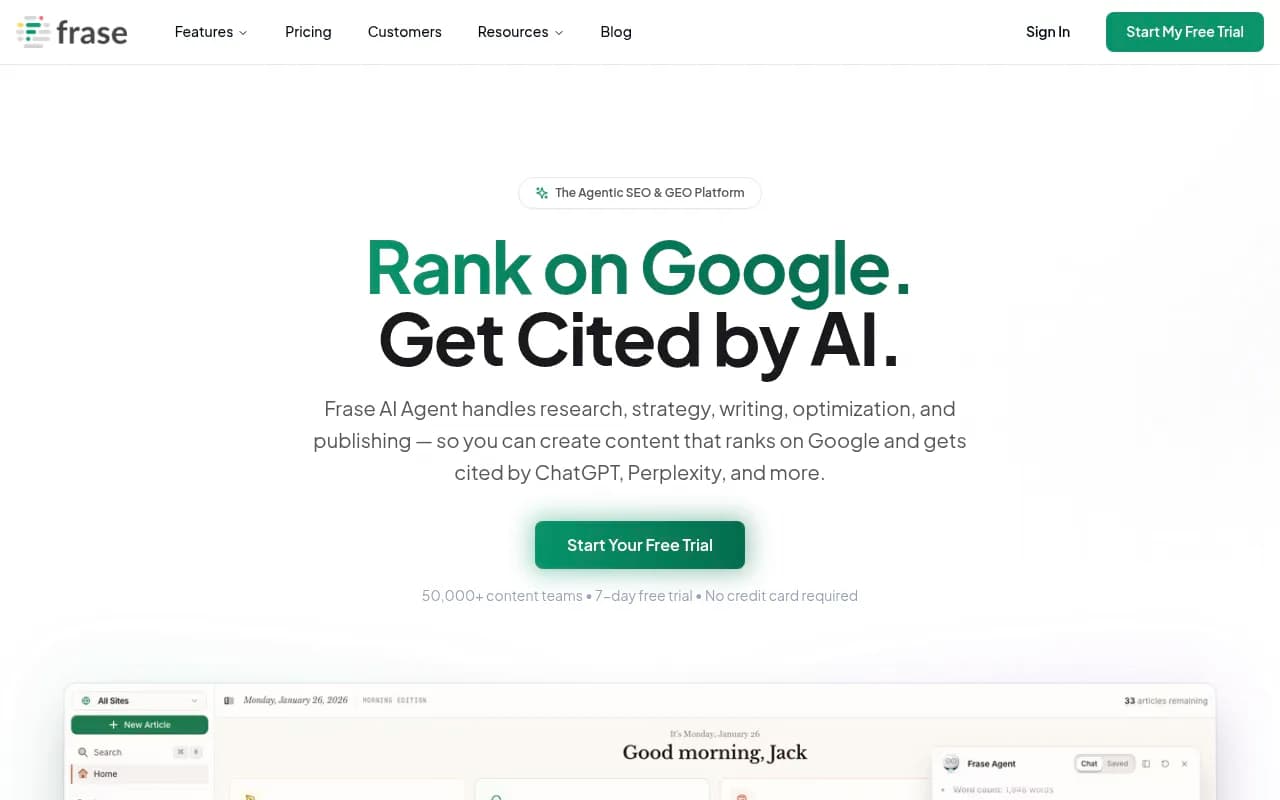
Frase builds briefs from live search results and is a good fit if your editors want research and drafting in one place.
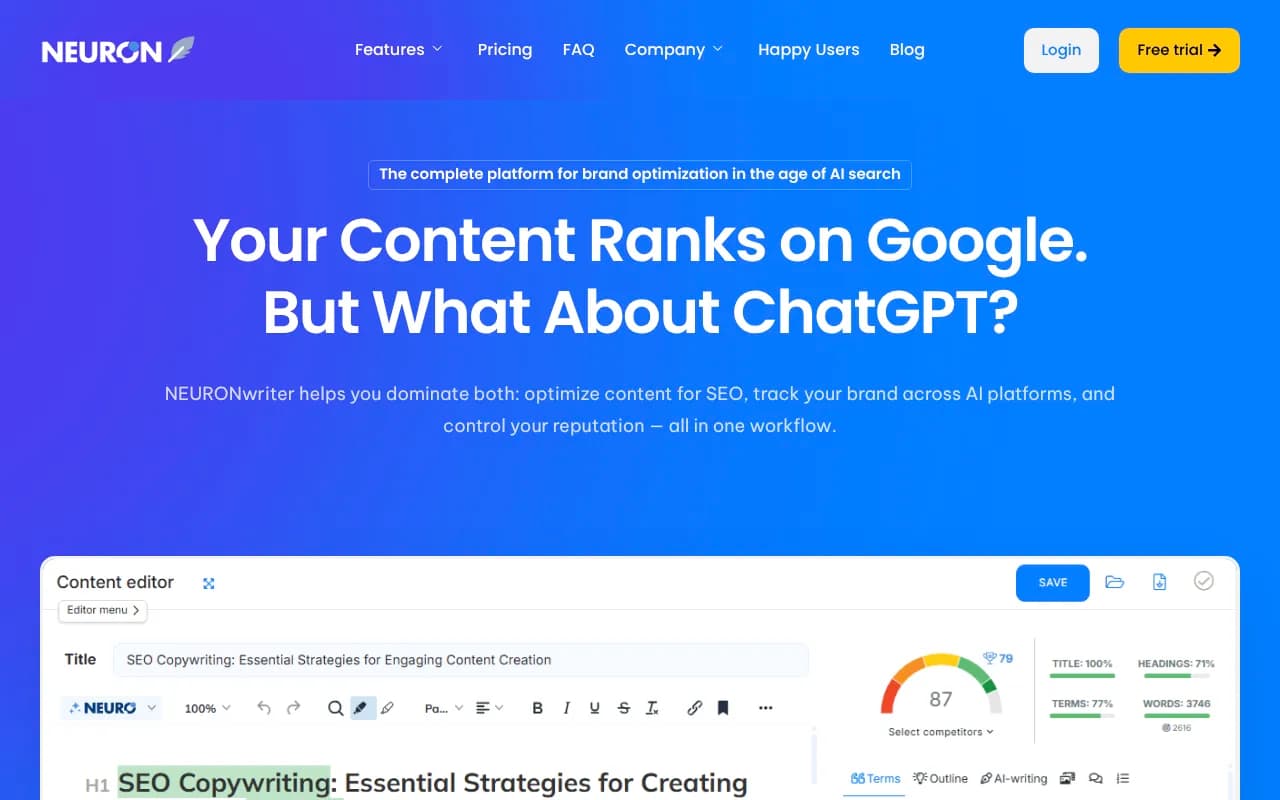
NeuronWriter scores content against SERP-derived term lists and is often shortlisted by teams working across several European markets. Test it with a non-English keyword before committing.
MarketMuse and Clearscope are stronger on content strategy and optimisation than on generation. They are useful for deciding what to write in each market and checking drafts, less so as the writer itself.

Brand-governed enterprise writers
If you run content for a larger company, glossary enforcement and style rules matter more than raw fluency. Writer is built around those controls, and Jasper focuses on brand voice and repeatable pipelines.
These cost more than self-serve tools, so they only pay off when many people are producing content that must stay on-brand across languages.
Volume writers for articles and ecommerce
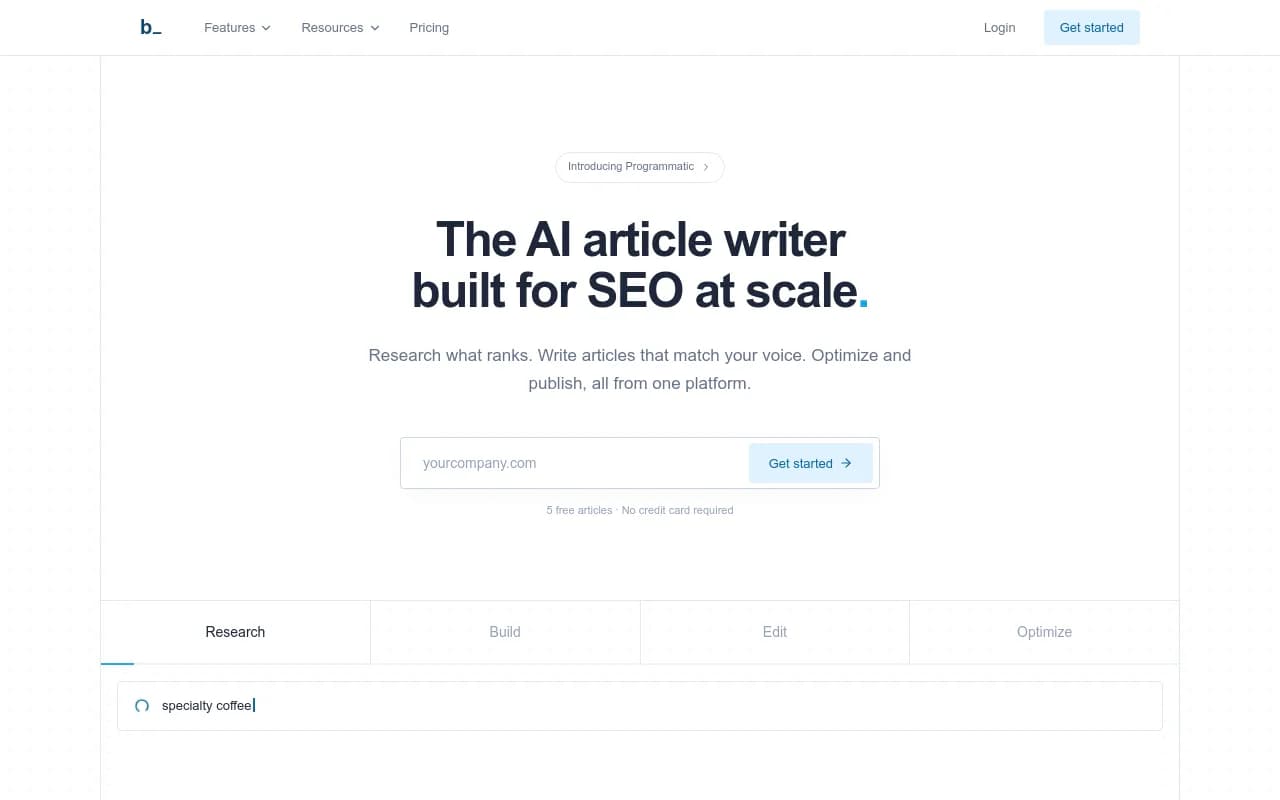
Writesonic, Junia AI and Byword generate full articles quickly. They are tempting for programmatic multilingual rollouts, and that is exactly where I would be most careful. Publishing hundreds of lightly reviewed pages in a language you cannot read is a reputational risk, whatever the tool.

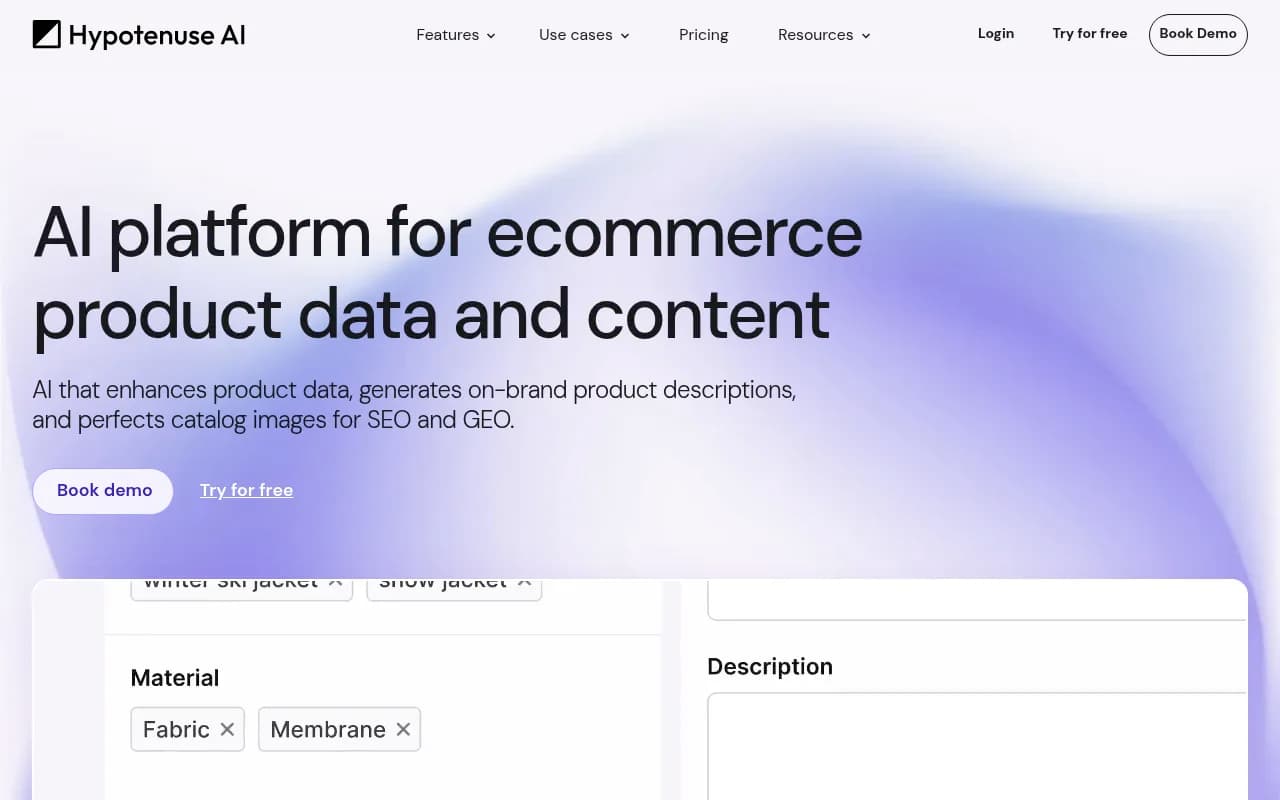
For product catalogues, Hypotenuse AI is built for ecommerce descriptions at scale, and ConvertMate focuses on SEO for online stores.
A workflow that holds up in 2026
Tools matter less than the process around them. This is the sequence I would use for each new language.
1. Research keywords natively
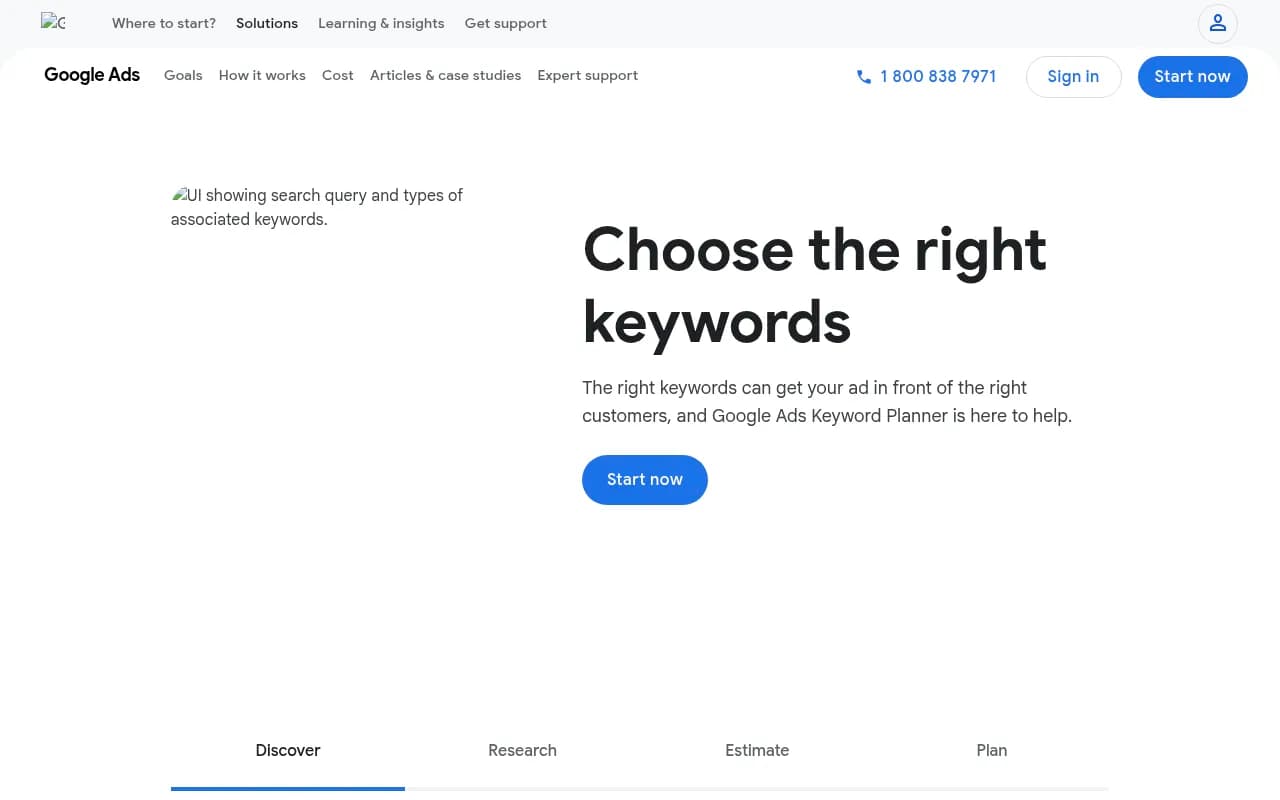
Do not translate your English keyword list. Pull seed terms in the target language and check volumes in that country. Google Keyword Planner is free and supports country and language targeting, and platforms like Semrush and Ahrefs offer regional databases.
Look at the actual SERP for each term. If the top results are comparison pages in German but guides in English, your content type should differ too.
2. Build a glossary and a style sheet
One page per language: preferred terms, banned terms, formality level, regional variant, how to write numbers, dates and currencies. Paste it into every prompt or load it into the tool's brand settings. This single step removes a large share of the edits a native reviewer would otherwise make.
3. Draft, then edit with a native speaker
Use the AI draft as a first pass. A native editor should check idiom, claims and local facts. Budget for this honestly. It is cheaper than an agency writing from scratch, but it is not zero.
4. Handle the technical side
Make sure each language version has its own URL, correct hreflang annotations and a localised title and meta description. I could not verify Google's current wording on AI-generated or translated content for this guide, so read Google Search Central's guidance on multilingual sites and AI content directly before you scale. Crawl your site with a tool like Screaming Frog to catch missing or conflicting hreflang tags.
5. Measure per market
Track rankings and traffic per country in Google Search Console, filtering by country and language. Judge each market on its own numbers, not your English average.
Which content to localise first
If you cannot translate everything, pick formats that earn visibility. Promptwatch Data's report on which content types ChatGPT cites the most (Sep 28 to Oct 4, 2026) found product pages at 22.4% of classified citations and landing pages at 16.8%, followed by listicles at 13.6%, how-to guides at 8.7% and FAQ pages at 3.3%. Product and landing pages together made up about 39%.
That report does not break citations down by language, so I would not read it as a multilingual finding. But it is a sensible prioritisation hint: start with localised product pages, landing pages, FAQs and how-tos in each market before investing in long editorial pieces.
Also consider shelf life. Promptwatch's content half-life data shows news pages losing half their citations in about five weeks, while landing pages and docs keep most of theirs for months. Evergreen pages are the better bet for translation budget.
Checking whether AI search sees your translated pages
Ranking in Google is only half the picture. People increasingly ask ChatGPT, Gemini and Perplexity in their own language, and the answers can differ by country. After you publish, it is worth checking whether your localised pages are cited and what the models say about your brand in each market.
Promptwatch lets you run monitors per country and language, so a French market never mixes with a UK one, and it traces which of your pages get cited and whether AI crawlers can read them. Its AI crawler logs are handy for spotting a localised section that bots never reach.

For a quick first look, the free AI visibility report shows how the major assistants talk about your brand. If you want to compare other options, the directory at bestgeosoftware.com lists GEO tools by category.
Common mistakes
- Publishing machine translations of English posts with no local keyword research.
- Trusting a vendor's language list as proof of quality.
- Mixing regional variants on the same site (Latin American and European Spanish).
- Letting the tool translate brand and product names that should stay in English.
- Skipping native review because the text reads fine to a non-speaker.
- Scaling to a dozen languages before one market shows results.
Recommendations by situation
| Situation | Start with |
|---|---|
| Small team, two or three languages | ChatGPT or Claude plus Surfer SEO or NeuronWriter |
| Agency serving clients in many markets | Frase or Surfer for briefs, general model for drafts, native freelancers for review |
| Enterprise with strict brand rules | Writer or Jasper with glossaries |
| Ecommerce catalogue | Hypotenuse AI or ConvertMate, with spot checks per language |
| Programmatic rollout | Pilot one language first, review a sample, then expand |
Bottom line
The best AI content writer for multilingual SEO is the one that produces the fewest native-speaker edits in your languages, on your topics. Run the five-point test on two or three candidates, pay for the tool that wins, and keep a human editor in every market. Verify language support and pricing on vendor pages, then start with one language and measure it before you expand.
FAQ
Can AI write SEO content in languages other than English?
Yes, and the major general models handle many languages well. Quality is uneven, especially in lower-resource languages and for idiomatic or technical copy, so native review is still needed.
Should I translate or write natively for each market?
Write natively where search intent differs, and translate where it does not, such as documentation or specs. Either way, run keyword research in the target language.
Do I need a different tool per language?
Usually not. One drafting model plus an SEO scoring tool that supports your markets is enough. Test each language separately, because strengths vary.
Will Google penalise AI-written multilingual content?
Check Google Search Central's current guidance directly, since I could not verify its wording for this guide. In practice, thin, unreviewed pages are the risk, whoever or whatever wrote them.
How do I know if AI assistants cite my translated pages?
Track prompts in each country and language with a visibility platform, and check crawler logs to confirm AI bots can reach the localised URLs.