Key takeaways
- Most AI visibility tools are monitoring dashboards only — they show you gaps but don't help you fill them
- A small number of platforms now combine gap analysis, content generation, and publishing in a single workflow
- The best tools connect prompt-level data to content creation, so what you publish is grounded in what AI models actually need
- Platforms like Promptwatch, Writesonic, AirOps, and Search Atlas each take different approaches to this "full loop" problem
- If you're choosing a tool, the key question is: does it help you act on the data, or just look at it?
The problem with most AI visibility tools
Here's a workflow that too many marketing teams are stuck in right now.
Step one: log into your AI visibility platform and see that a competitor is getting cited for "best project management software for remote teams" and you're not. Step two: screenshot it, paste it into Slack, write a Jira ticket, assign it to someone, wait two weeks, and maybe get a brief. Step three: write the article. Step four: publish it. Step five: go back to the visibility platform and check if it worked.
That's five steps across four different tools and at least three people. And the original data — the exact prompt, the competitor's cited URL, the angle AI models seem to prefer — has been diluted by the time anyone actually writes anything.
The platforms covered in this guide are trying to collapse that chain. Some do it better than others. A few are genuinely impressive. A couple are mostly marketing.
What "full loop" actually means
Before getting into specific tools, it's worth being precise about what we mean by a platform that goes "from gap to live article."
A true full-loop platform needs to do at least three things:
- Identify which prompts your competitors are visible for but you aren't — with enough specificity to act on
- Generate content that's grounded in that gap data, not just generic AI writing
- Either publish directly or hand off to a CMS with minimal friction
Most tools handle one of these. Some handle two. Very few handle all three in a way that's actually usable.
There's also a fourth thing that separates the serious platforms from the rest: tracking whether the content you published actually moved the needle. Without that feedback loop, you're optimizing blind.
The platforms worth knowing about
Promptwatch
Promptwatch is the most complete version of this workflow I've seen. The Answer Gap Analysis shows you exactly which prompts competitors are appearing for — not vague topic clusters, but specific questions with prompt volume estimates and difficulty scores. From there, Content Agents generate articles, listicles, and comparisons grounded in that prompt data, with brand guidance, competitor analysis, and real citation data baked in.
What makes this different from a tool that just has an AI writer bolted on: the content is engineered around what AI models are already citing. The platform tracks over 4.5 billion citations across 10 AI engines (ChatGPT, Perplexity, Claude, Gemini, Google AI Overviews, Grok, DeepSeek, Copilot, Meta AI, Mistral), so the gap analysis isn't guesswork — it's based on how these models actually behave in real user interfaces, not just API outputs.
After publishing, page-level tracking shows which pages are being cited, by which models, and how often. The Agent Analytics feature tracks the timeline from publish to crawl to citation, so you can see when GPTBot or ClaudeBot first reads a page and when it starts appearing in responses. That closes the loop in a way most competitors don't even attempt.

Writesonic
Writesonic has been building toward this for a while, and in 2026 it's one of the more capable all-in-one content platforms. You can research, write, optimize, and publish blog posts without leaving the dashboard. It connects to WordPress and other CMS platforms for direct publishing.
The AI writing quality is solid, and the SEO optimization layer (Surfer-style content scoring) helps ensure articles are structured for search. Where it falls short for AI visibility specifically: the gap analysis is more traditional SEO-oriented than AI-search-oriented. It doesn't tell you which prompts ChatGPT or Perplexity are using to surface competitors. So if your goal is specifically to improve AI citation rates rather than Google rankings, Writesonic is a capable writing tool but not a complete GEO solution.
That said, for teams that want to produce a high volume of SEO content with minimal friction, it's genuinely useful.

AirOps
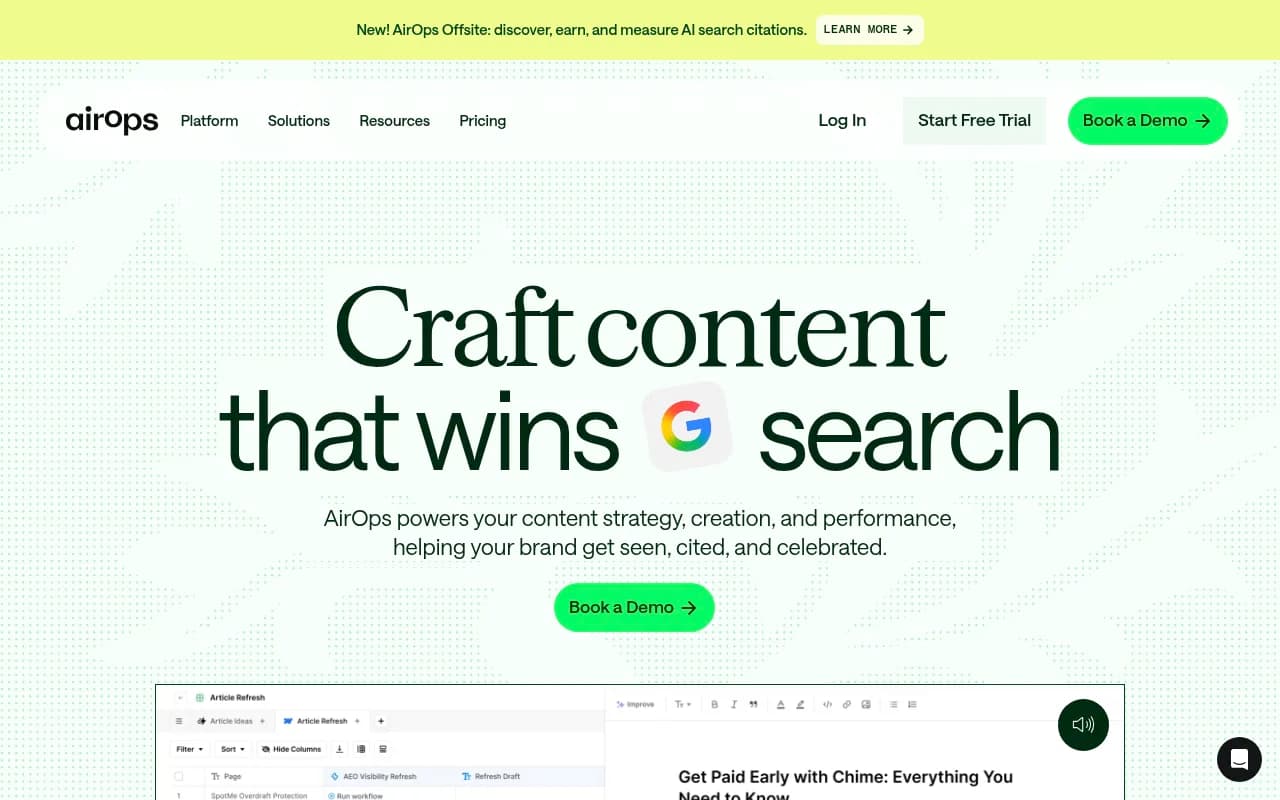
AirOps positions itself as a content engineering platform for AI search visibility. The workflow is more technical than Writesonic — it's built around structured content workflows that pull in real data sources, competitor analysis, and brand guidelines before generating anything.
The platform has a strong focus on the "engineering" side of content: you're not just prompting an AI to write a blog post, you're building repeatable workflows that produce consistent output at scale. For agencies and larger marketing teams, this is appealing. The tradeoff is that it has more setup overhead than a tool like Writesonic.
AirOps doesn't have the same depth of AI-specific citation tracking that Promptwatch does, but it's a serious option for teams that want to systematize content production for AI search.
Search Atlas
Search Atlas is an interesting case. It's an AI-powered SEO automation platform that combines rank tracking, content generation, and publishing in one place. The "OTTO" AI agent can identify optimization opportunities and generate content to address them.
It's more traditional-SEO-oriented than AI-search-oriented, but it's one of the more complete single-dashboard experiences for teams that want to go from audit to published article without switching tools. The publishing integrations are solid.

Outranking
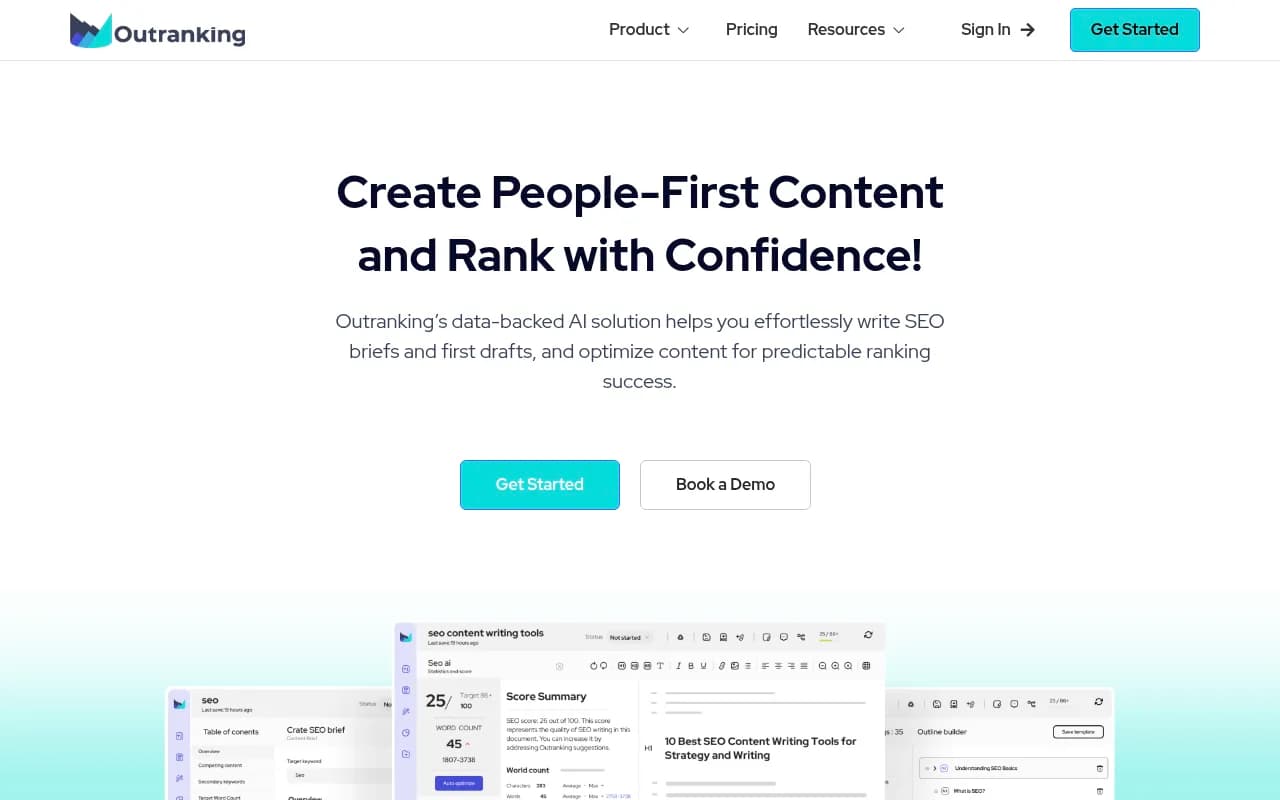
Outranking sits in a similar space to Writesonic but with a stronger emphasis on the research and brief phase. It builds detailed content briefs before generating anything, which tends to produce better output than tools that skip straight to drafting.
Direct CMS publishing is available, and the optimization scoring helps writers understand what's needed to compete for a given topic. Like Writesonic, it's more Google-SEO-oriented than AI-citation-oriented, but it's a capable full-loop tool for traditional search.
Frase
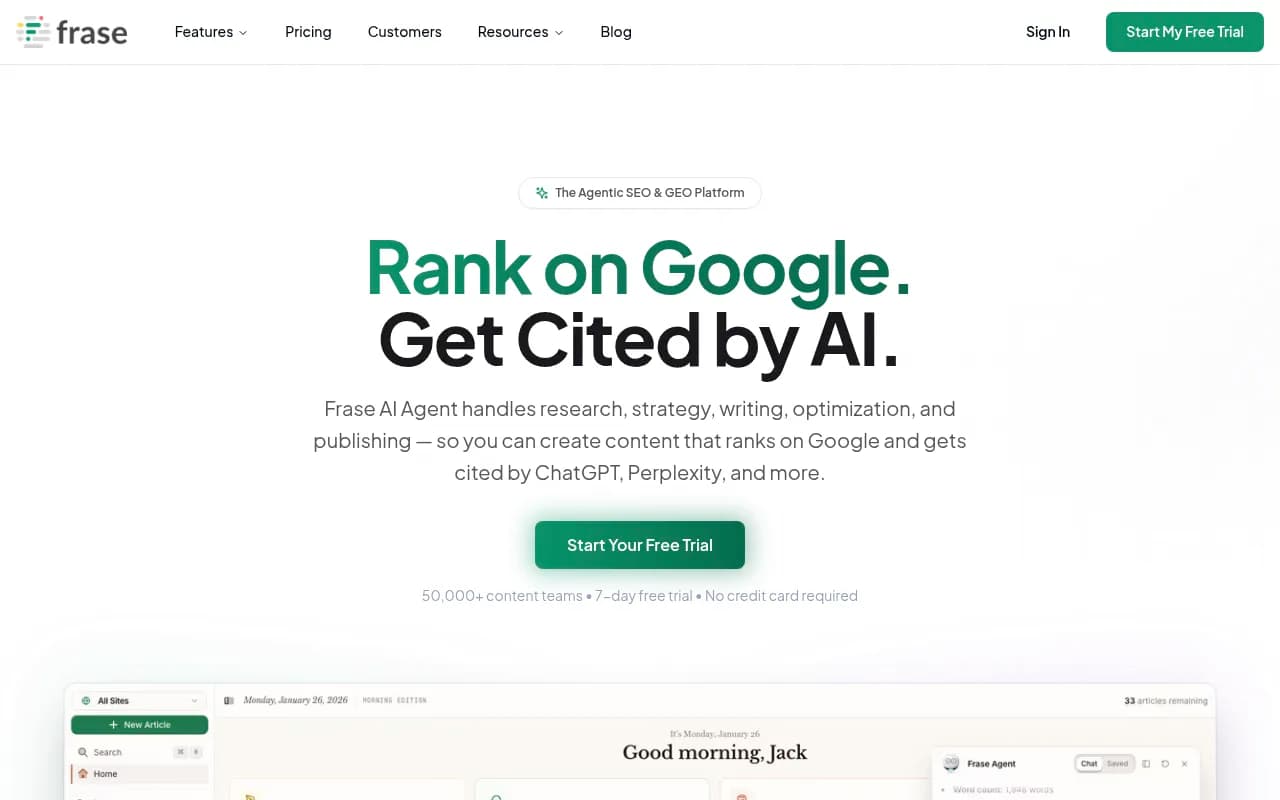
Frase has been around long enough to have earned genuine trust in the SEO content space. The core workflow — research a topic, generate a brief, write the article, optimize against competitors — is well-executed and fast.
What Frase does well: the research phase is genuinely useful. It pulls in real SERP data and structures it into briefs that writers can actually use. The AI writing is competent. Publishing integrations exist.
What it doesn't do: AI-specific gap analysis. Frase is built around Google search, not AI search. If you're trying to appear in ChatGPT responses, Frase won't tell you why you're not there or what to write to fix it.
Jasper
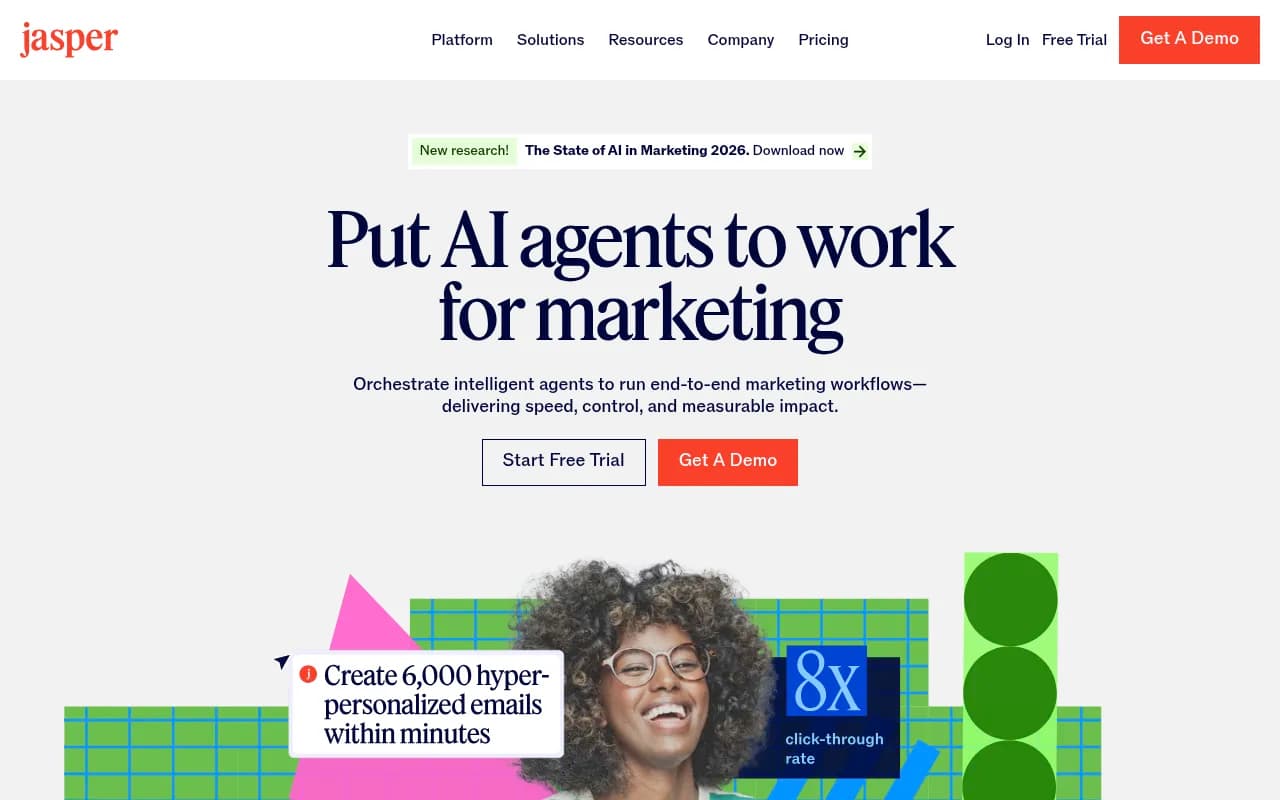
Jasper has evolved from a pure AI writing tool into something closer to a marketing platform with agents and content pipelines. For enterprise teams, the brand voice controls and workflow features are genuinely useful.
The publishing integrations are decent, and the content quality is high. But like most of the writing-first tools, Jasper doesn't have deep AI search visibility data. It can help you produce content at scale, but it won't tell you which prompts to target or whether your content is getting cited by AI models.
Junia AI
Junia AI is worth mentioning because it explicitly targets the "write and publish" workflow for SEO. It generates SEO-optimized articles and can publish directly to WordPress. The interface is clean and the output quality is reasonable.
It's a simpler tool than most others on this list — which is either a feature or a limitation depending on your needs. If you want a lightweight "write and publish" tool without a lot of setup, Junia AI works. If you need AI-specific gap analysis or citation tracking, it's not the right fit.
Comparison: how these platforms stack up
| Platform | AI gap analysis | Content generation | Direct publishing | AI citation tracking | Best for |
|---|---|---|---|---|---|
| Promptwatch | Yes (prompt-level) | Yes (Content Agents) | Via CMS integrations | Yes (page-level + crawler logs) | Full GEO loop: gap to publish to track |
| Writesonic | Limited (SEO-focused) | Yes | Yes (WordPress etc.) | No | High-volume SEO content production |
| AirOps | Partial | Yes (workflow-based) | Yes | No | Agencies building repeatable content systems |
| Search Atlas | SEO-focused | Yes (OTTO agent) | Yes | No | All-in-one SEO automation |
| Outranking | SEO-focused | Yes | Yes | No | Research-first content teams |
| Frase | SEO-focused | Yes | Yes | No | Google SEO content workflows |
| Jasper | No | Yes | Partial | No | Enterprise content at scale |
| Junia AI | No | Yes | Yes (WordPress) | No | Simple write-and-publish workflow |
The gap most tools leave open
Looking at that table, something stands out: content generation and publishing are now table stakes. Most of these tools can write an article and push it to WordPress. That part of the problem is largely solved.
The harder problem — and the one most tools still don't address — is connecting the content you publish to the specific prompts AI models are using, and then tracking whether that content actually gets cited.
This matters more than it might seem. Writing a good article about "best project management software for remote teams" is not the same as writing an article that gets cited by ChatGPT when someone asks that question. The latter requires knowing what ChatGPT is currently citing, why it's citing those sources, and what your content is missing relative to those sources.
That's prompt-level intelligence, not keyword intelligence. And it's the difference between optimizing for Google and optimizing for AI search.
Promptwatch is currently the most complete solution for this because it tracks real AI model behavior (not just API outputs), has prompt volume and difficulty data, and connects content generation directly to that data. The crawler log feature is particularly useful — seeing when GPTBot or PerplexityBot actually crawls a page, and when that crawl converts to a citation, is the kind of feedback loop that makes optimization possible rather than just hopeful.
What to look for when evaluating these tools
A few questions worth asking before committing to any platform:
Where does the gap data come from? Some tools derive "gaps" from keyword data or competitor website analysis. Others track actual AI model responses. The latter is more useful for AI search optimization, but also harder to do well.
Is the content generation grounded in the gap data? A tool that identifies a gap and then hands you off to a generic AI writer hasn't really solved the problem. The best tools use the gap data to shape what the content agent actually writes.
What does "publishing" mean? Direct CMS publishing is convenient but not always necessary. What matters more is whether the handoff is low-friction — does the tool produce something that's ready to publish, or does it produce a draft that needs significant editing before it's usable?
Can you track results? If you can't see whether your published content is getting cited, you're flying blind. Page-level citation tracking and crawler log data are the metrics that actually tell you whether your GEO efforts are working.
Does it track real user-facing behavior? AI models can behave differently in their user interfaces than through their APIs. A platform that only queries APIs may miss what users actually see when they ask questions in ChatGPT or Perplexity.
A note on tools that are monitoring-only
Several well-known AI visibility tools — Otterly.AI, Peec AI, AthenaHQ, and others — are monitoring dashboards. They'll show you where you appear and where you don't. Some have decent gap analysis. But they stop there.
Otterly.AI

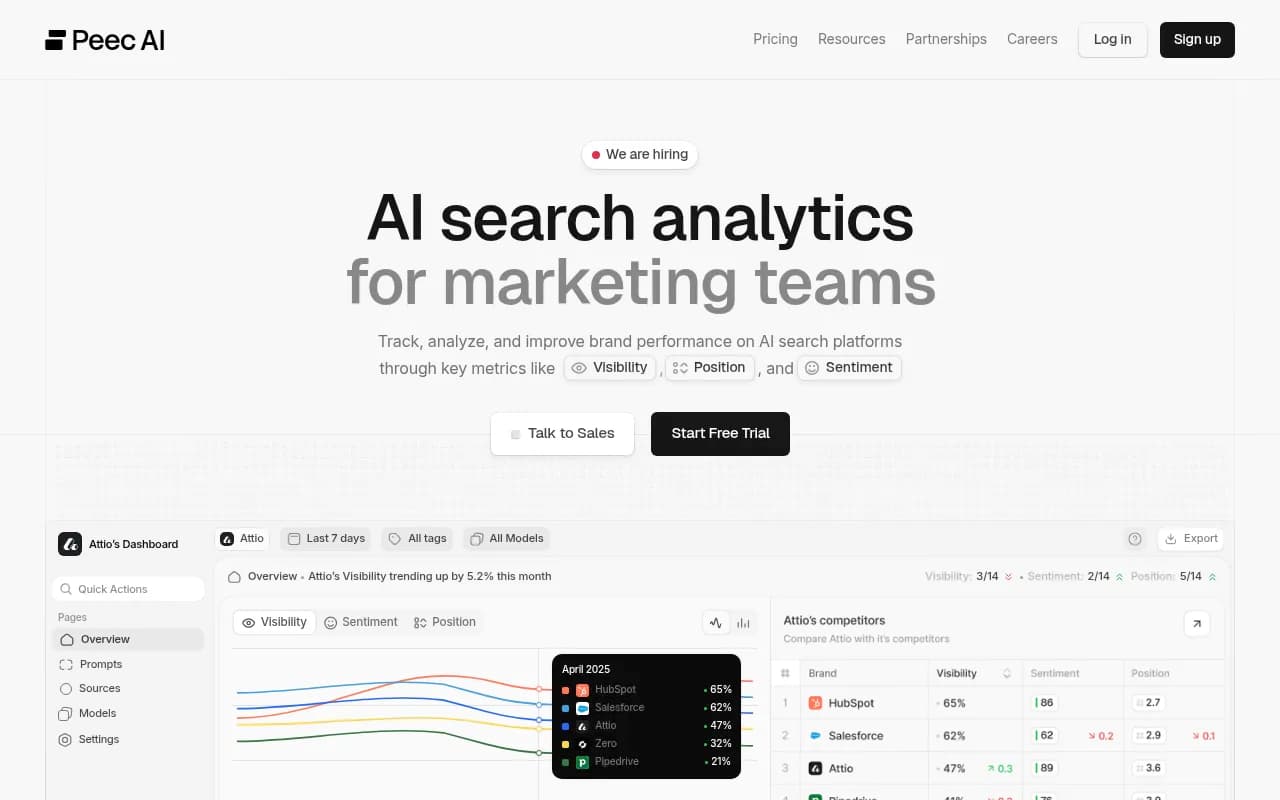

That's not a criticism — monitoring is genuinely valuable, and some teams just need the data and have their own content production process. But if you're evaluating tools specifically for the "gap to live article" workflow, these platforms will require you to bring your own content creation and publishing stack.
The practical recommendation
If your goal is specifically to improve AI search visibility — to appear in ChatGPT, Perplexity, and Google AI Overviews when people ask questions relevant to your business — the platform that most completely addresses the full workflow is Promptwatch. The combination of prompt-level gap analysis, AI-grounded content generation, and citation tracking is genuinely differentiated.
If your goal is more traditional SEO content production at scale, with AI writing and direct publishing, Writesonic and AirOps are both solid choices depending on whether you want simplicity (Writesonic) or workflow control (AirOps).
If you're a smaller team or blogger who just needs a lightweight write-and-publish tool, Junia AI or Frase will get the job done without the overhead of a full GEO platform.
The honest answer is that the "full loop" problem is still being solved. Most platforms are better at one part of the chain than the others. The tools that are investing in connecting gap data to content generation to citation tracking are the ones worth watching — because that's where the real leverage is.