Key takeaways
- Most AI visibility platforms stop at monitoring — showing you where you're invisible but not helping you fix it. For SaaS agency work, that's only half the job.
- Promptwatch is the only platform in this comparison rated as a "Leader" across all categories in a 2026 comparison of 12 GEO platforms, largely because it closes the loop from gap analysis to content creation to traffic attribution.
- Profound is a strong enterprise-tier choice with solid agency features, but it's priced accordingly and lacks some of the content generation and Reddit/YouTube tracking that SaaS agencies increasingly need.
- Search Party is built around custom workflow automation for agencies, but it's thin on prompt intelligence and has no content gap analysis.
- The right choice depends on whether your agency needs a self-serve optimization engine (Promptwatch), an enterprise-grade monitoring suite (Profound), or a custom automation consultancy (Search Party).
If you run a marketing agency that serves SaaS clients, you already know the shift that's happened. Buyers are starting their research in ChatGPT, Perplexity, and Google AI Overviews instead of typing into a search bar. When someone asks "what's the best project management tool for remote teams," the AI gives them a list -- and if your client isn't on it, that's a real pipeline problem.
The category of tools that addresses this is called Generative Engine Optimization (GEO) or AI visibility. In 2026, there are now dozens of platforms claiming to help. But for agencies specifically -- managing multiple SaaS clients, needing white-label reporting, proving ROI to clients who are used to traditional SEO metrics -- the field narrows quickly.
This guide focuses on three platforms that agencies actually talk about: Promptwatch, Profound, and Search Party. Here's how they compare, where each one wins, and which is the right fit for different agency setups.
Why SaaS agencies have specific needs
Before getting into the tools, it's worth being clear about what makes agency use cases different from in-house brand teams.
Agencies managing SaaS clients typically need:
- Multi-client management from a single dashboard (not logging into 12 separate accounts)
- White-label reporting or client-facing views
- Prompt tracking across multiple AI models, not just one or two
- Content gap analysis that shows why a client isn't appearing, not just that they aren't
- Some way to connect AI visibility to actual traffic and pipeline, so you can justify the retainer
- Competitive intelligence across the SaaS landscape (your client's competitors are also your client's competitors in AI search)
SaaS is also a category where AI models are extremely active. Ask ChatGPT about CRM software, email marketing tools, or project management platforms, and you'll get detailed, opinionated answers with specific recommendations. That means the stakes for AI visibility are high -- and the opportunity to displace a competitor in an AI response is real.
The three platforms compared
Promptwatch
Promptwatch is the platform I'd put at the top of this list for most SaaS agencies, and the reason is straightforward: it's the only one of the three that actually helps you do something about the gaps it finds.

The core workflow is what Promptwatch calls the Action Loop. You start with Answer Gap Analysis, which shows you the specific prompts where your client's competitors appear but your client doesn't. You can see the exact content that's missing -- the topics, angles, and questions AI models are trying to answer but can't find on your client's site. Then, the built-in AI writing agent generates content (articles, listicles, comparisons) grounded in real citation data. Promptwatch has processed over 880 million citations, so the content recommendations aren't generic -- they're based on what AI models actually cite. Finally, page-level tracking shows which new pages are getting cited, by which models, and how often. Traffic attribution (via a code snippet, GSC integration, or server log analysis) connects that visibility to actual revenue.
For agencies, a few specific features stand out. The AI Crawler Logs show you in real time which AI crawlers (ChatGPT, Claude, Perplexity, etc.) are visiting your client's site, which pages they're reading, and what errors they're hitting. Most competitors don't have this at all. The Competitor Heatmaps let you compare your client's AI visibility against specific competitors across different LLMs -- useful for client reporting. Reddit and YouTube tracking surfaces discussions that directly influence AI recommendations, which is a channel most platforms ignore entirely.
Pricing starts at $99/month for the Essential plan (1 site, 50 prompts, 5 articles), $249/month for Professional (2 sites, 150 prompts, 15 articles, crawler logs), and $579/month for Business (5 sites, 350 prompts, 30 articles). Agency and enterprise pricing is available on request. There's a free trial.
The honest limitation: prompt caps scale with price, and agencies managing many SaaS clients will likely need the Business tier or a custom agency plan. The content generation is powerful, but it works best when you're feeding it well-defined prompt sets -- which requires some upfront work to set up properly.
Profound
Profound is the other name that comes up consistently in agency conversations, and it deserves a serious look -- particularly for agencies working with larger SaaS brands that have enterprise-level requirements.
Profound

Profound tracks brand presence across 10+ AI platforms and has built out what it calls "Agency mode," which includes brand configurations and pitch environments -- useful for agencies that need to demonstrate AI visibility to prospective clients before they sign. The platform has strong answer engine insights and agent analytics, and it's added prompt volume data and shopping tracking.
Where Profound is genuinely strong: the depth of its monitoring data and the quality of its enterprise integrations. If your client is a mid-market or enterprise SaaS company with a dedicated analytics team, Profound's data exports and reporting capabilities are solid.
Where it falls short for most agencies: Profound is primarily a monitoring platform. It shows you the data, but the path from "here's where you're invisible" to "here's the content that will fix it" is less direct than Promptwatch's. There's no Reddit or YouTube tracking, no ChatGPT Shopping monitoring, and the content generation capabilities are more limited. Pricing is also higher -- Profound is positioned as an enterprise tool, and the cost reflects that.
For a boutique SaaS agency managing 5-10 clients at the growth stage, Profound is probably more tool than you need, and more expensive than you want. For an agency with one or two large enterprise SaaS accounts where the client has their own analytics team and wants raw data, it's a legitimate choice.
Search Party
Search Party takes a different approach entirely. It's less of a self-serve platform and more of an AI automation consultancy -- it engineers custom workflows to eliminate repetitive tasks in your agency's operations.
Search Party
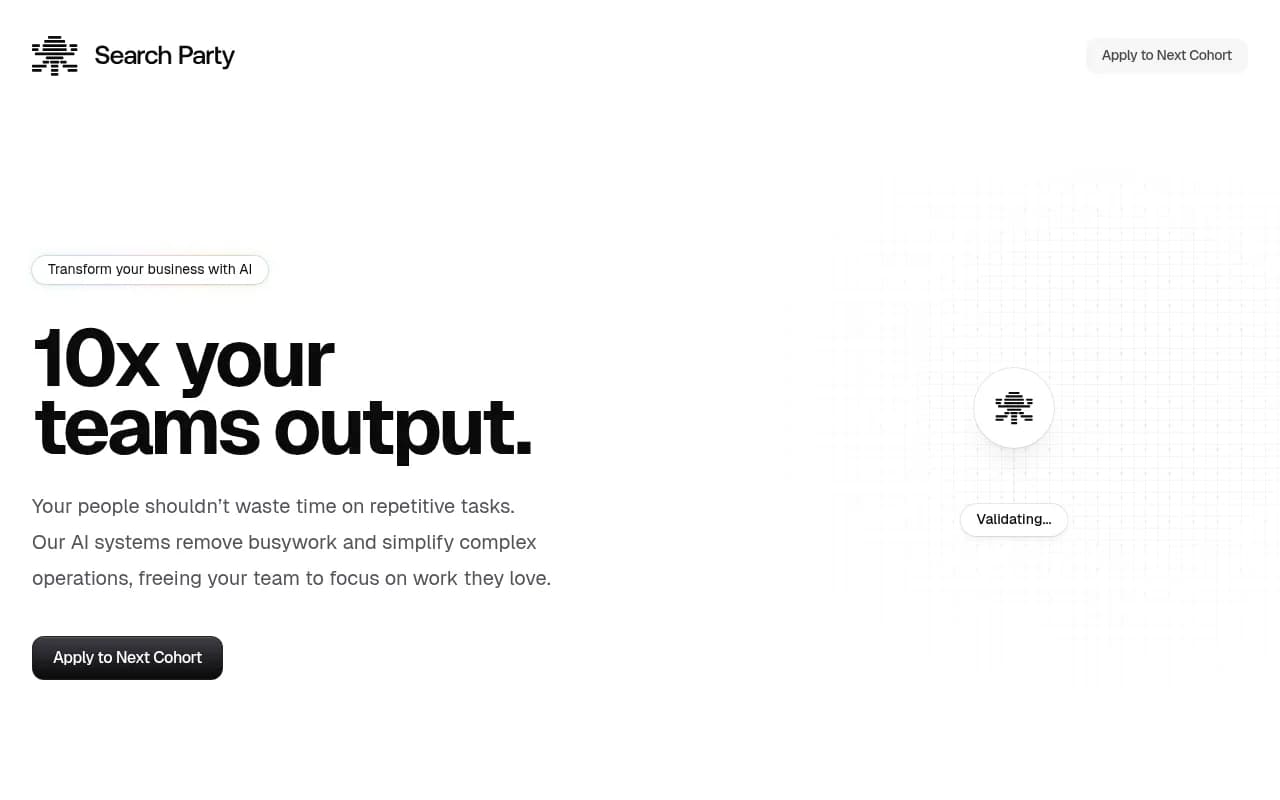
That's genuinely useful for some agencies, but it means Search Party isn't really competing with Promptwatch or Profound on the same terms. There's no prompt intelligence dashboard, no content gap analysis, no citation tracking. What you get is custom-built automation that can be configured for your specific workflow.
For agencies that have already figured out their AI visibility strategy and just need help automating the execution, Search Party can add real value. But for agencies that are still trying to understand where their SaaS clients stand in AI search -- and how to improve it -- Search Party doesn't give you the monitoring or optimization layer you need.
It's also worth noting that Search Party's model means you're more dependent on their team to build and maintain your workflows. That's fine if the relationship works, but it's a different kind of vendor relationship than a self-serve SaaS platform.
Feature comparison
| Feature | Promptwatch | Profound | Search Party |
|---|---|---|---|
| AI model coverage | 10+ (ChatGPT, Claude, Perplexity, Gemini, Grok, DeepSeek, Copilot, Mistral, Meta AI, Google AI Overviews) | 10+ | Not applicable (custom workflows) |
| Answer gap analysis | Yes | Limited | No |
| Built-in content generation | Yes (AI writing agent) | Limited | No |
| AI crawler logs | Yes (Professional+) | No | No |
| Reddit & YouTube tracking | Yes | No | No |
| ChatGPT Shopping tracking | Yes | Yes | No |
| Competitor heatmaps | Yes | Yes | No |
| Prompt volume & difficulty | Yes | Yes | No |
| Traffic attribution | Yes (snippet, GSC, server logs) | Limited | No |
| Multi-client / agency management | Yes (agency plans) | Yes (Agency mode) | Yes (custom) |
| White-label reporting | Agency plans | Yes | Custom |
| Pricing entry point | $99/month | Enterprise pricing | Custom |
| Free trial | Yes | Demo-based | No |
Which platform is right for your agency?
Choose Promptwatch if your agency is actively selling or building out AI visibility services for SaaS clients and you need a platform that does more than monitor. The gap analysis and content generation tools mean you can actually move the needle for clients, not just report on where they stand. The crawler logs and traffic attribution give you the data to prove ROI. Most SaaS agencies in the growth-to-mid-market segment will find this is the right fit.
Choose Profound if you're working with large enterprise SaaS clients who have their own data teams and want deep monitoring data with strong integrations. If the client is running their own content operation and just needs visibility data piped into their existing workflows, Profound's data depth is hard to argue with. Just go in knowing you'll need to build the content optimization layer separately.
Choose Search Party if you've already got an AI visibility strategy and a content process in place, and you're looking for custom automation to scale it. It's not a monitoring or optimization platform -- it's a consultancy that builds workflows. That's a different product for a different problem.
Other tools worth knowing about
If none of the three above are quite right, a few other platforms are worth a look depending on your specific situation.
Otterly.AI is a lightweight monitoring tool that's easy to set up and works well for agencies just starting to offer AI visibility as a service. It won't give you content gap analysis or content generation, but the barrier to entry is low.
Otterly.AI

AthenaHQ is monitoring-focused with a clean interface. Good for agencies that want to track AI mentions without the complexity of a full optimization platform.

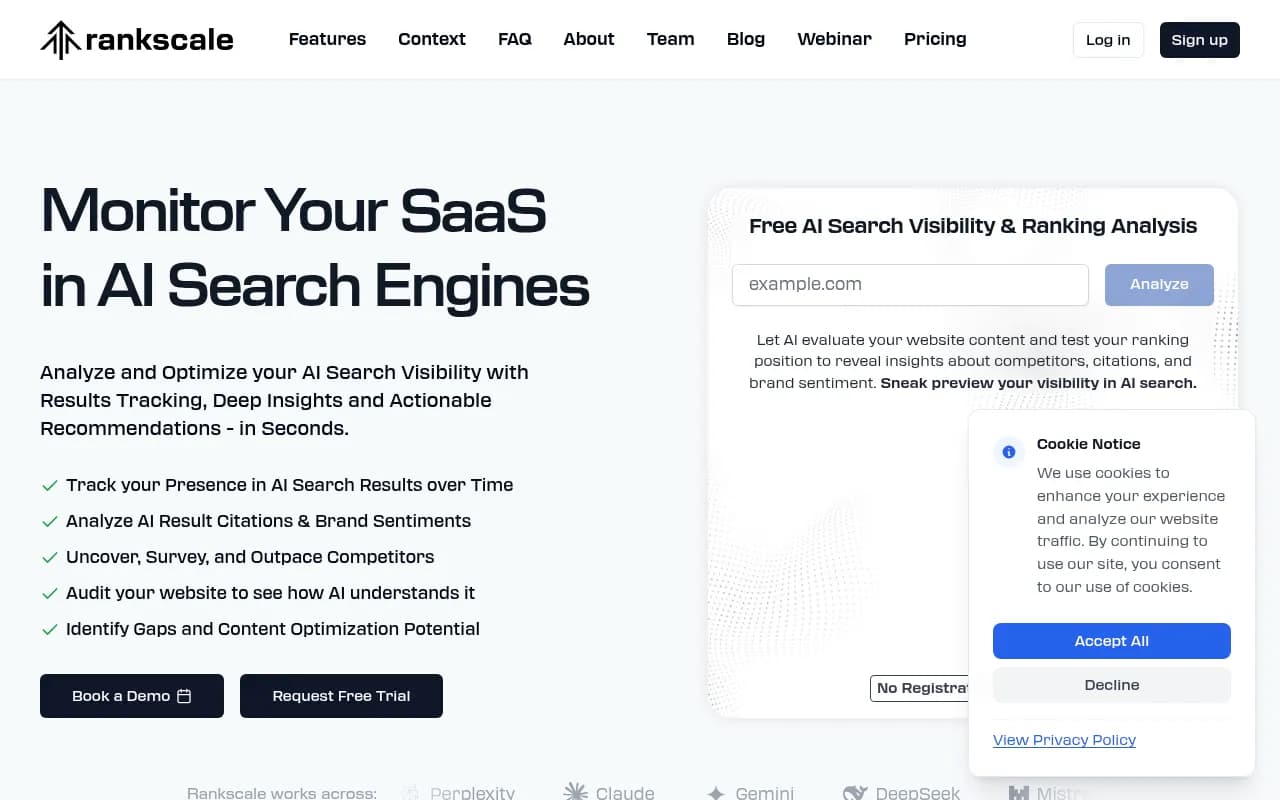
Rankscale is specifically built for agencies and has a clean multi-client dashboard. Worth considering if client management UX is your primary concern.
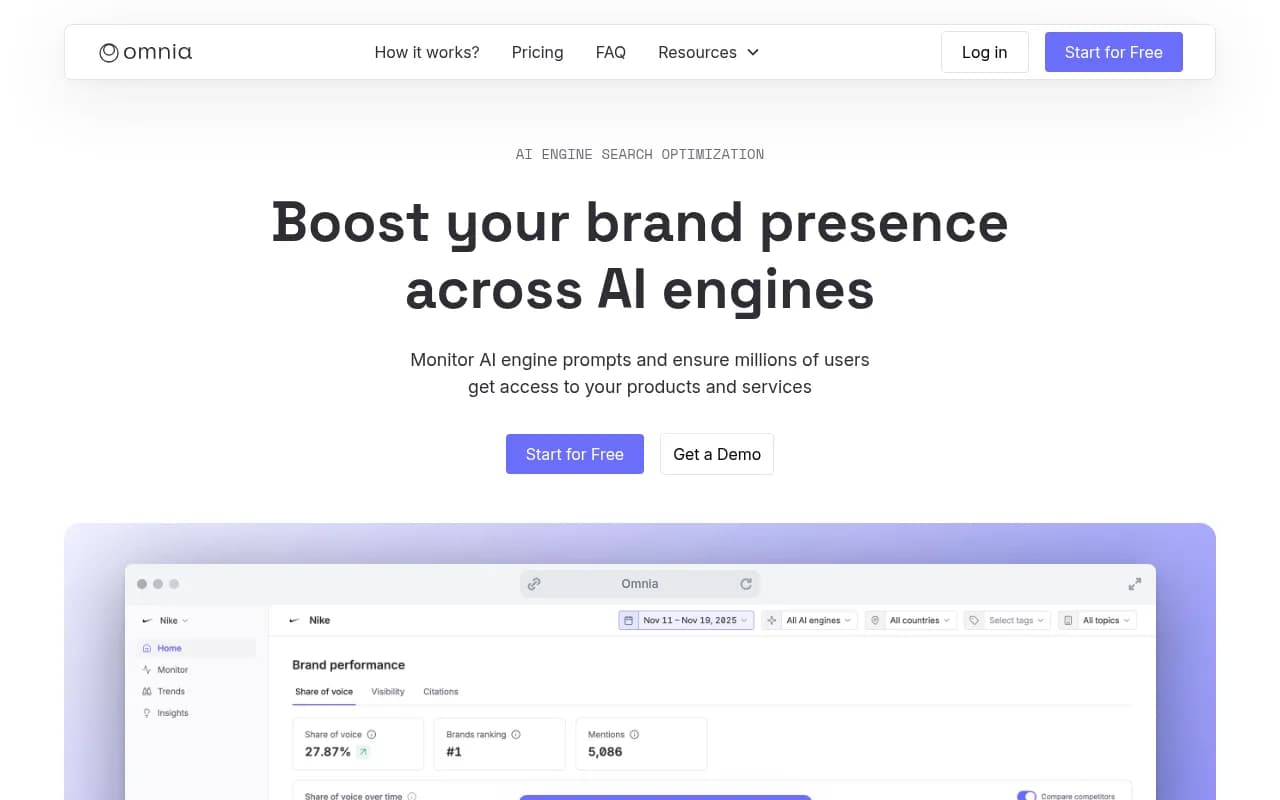
Omnia is a newer entrant that's getting attention for its URL-level citation intelligence and geo-by-country tracking. Worth watching.
What to look for when evaluating any AI visibility platform
A few questions that will save you from buying the wrong tool:
Does it show you what to fix, or just what's broken? Monitoring data is only useful if it leads to action. Ask any vendor to walk you through what happens after you see a gap -- how does the platform help you close it?
How does it handle multi-client management? Some platforms are built for single brands and bolt on agency features as an afterthought. Ask specifically about client switching, permissions, and reporting.
What models does it actually track? "AI search" means different things to different vendors. Make sure the platform covers the models your clients' buyers actually use -- which in 2026 typically means ChatGPT, Perplexity, Google AI Overviews, and Claude at minimum.
Can it connect visibility to traffic and revenue? AI visibility scores are a means to an end. If you can't show a client that their improved AI visibility is driving actual sessions and pipeline, the retainer is hard to justify. Look for traffic attribution features, not just ranking dashboards.
What's the prompt cap, and how does it scale? Most platforms charge based on the number of prompts you track. For a SaaS agency with multiple clients, each needing 50-100 prompts tracked across multiple models, the math adds up fast. Get clarity on this before you commit.
The bottom line
The AI visibility category is moving fast, and the gap between monitoring-only tools and full optimization platforms is widening. For agencies that want to build a real AI search practice -- one that delivers measurable results for SaaS clients -- the platform choice matters more than it did 12 months ago.
Promptwatch is the strongest option for most SaaS agencies right now because it's the only one that takes you from "here's where you're invisible" all the way to "here's the content that will fix it" and "here's the traffic it generated." Profound is a legitimate alternative for enterprise-focused agencies. Search Party is a different product solving a different problem.
Whatever you choose, the agencies that win in AI search over the next 12 months will be the ones that treat it as an optimization discipline -- not just a reporting exercise.