Key takeaways
- Buffer's free plan (3 channels, 10 queued posts each) is the best starting point for most solo creators and small businesses
- Metricool offers the most generous free analytics of any tool on this list — 50 scheduled posts per month with real performance data included
- Later's free plan is strong for Instagram-first workflows but limited elsewhere
- Hootsuite's free tier is essentially gone in 2026; what remains is a trial, not a true free plan
- Most free plans cap you at 1-3 social profiles and remove team collaboration, approval workflows, and bulk scheduling
Free social media scheduling tools are everywhere. The promises are bold: "manage all your accounts in one place," "never miss a post," "save hours every week." Then you sign up, poke around for 20 minutes, and discover the free plan lets you connect exactly two platforms and schedule five posts before a paywall appears.
This guide cuts through that. I've gone through the actual free tiers of the most popular schedulers in 2026 to tell you what you genuinely get, what's missing, and which tool makes sense depending on your situation. No vague "limited features" language — just the real numbers.
Why free plans exist (and what that means for you)
Free tiers are lead generation. Every tool on this list offers a free plan because they want you to hit the ceiling, feel the pain of the limit, and upgrade. That's not cynical — it's just the business model. Knowing that helps you pick the right tool: choose the one whose ceiling is highest for your specific use case, not the one with the most impressive paid features.
For a solo creator posting to Instagram and LinkedIn three times a week, Buffer's free plan might be genuinely all you need. For a small agency managing five client accounts, you'll hit every free tier's wall within a week.
The tools worth knowing about
Buffer
Buffer is consistently the top recommendation for free scheduling in 2026, and for good reason. The free plan gives you:
- 3 social channels
- 10 scheduled posts per channel (queue-based, not monthly)
- Basic analytics (last 30 days)
- 1 user
That "10 posts per channel" structure is queue-based, meaning once a post publishes, a slot opens up. It's not a hard monthly cap. For someone posting daily to three platforms, that's workable.
What you lose: AI assistant features, engagement tools (comments/mentions management), team access, and link-in-bio pages. The interface is clean and genuinely one of the best in the category — even on the free tier.
Metricool
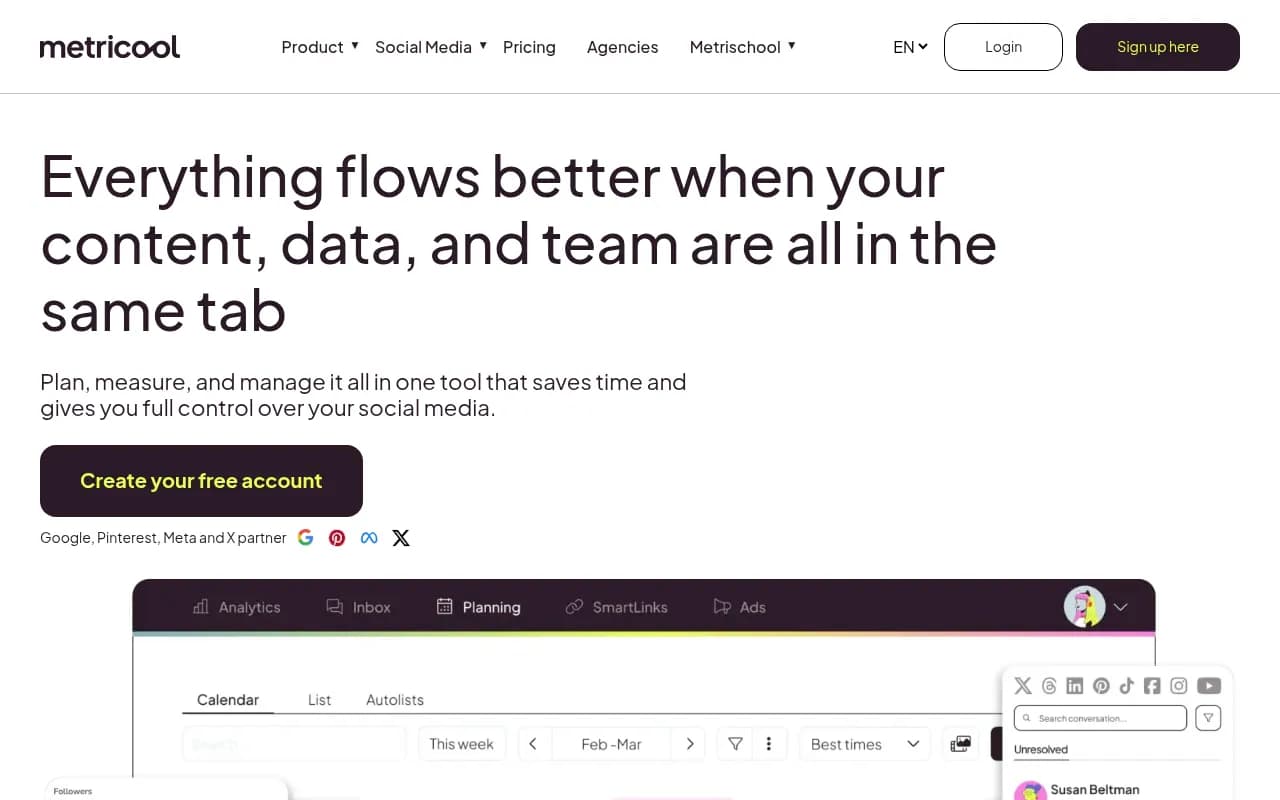
Metricool's free plan is arguably the most generous for analytics. You get:
- 1 brand (which can include multiple connected profiles)
- 50 scheduled posts per month
- Analytics with historical data (up to 3 months)
- Competitor analysis (limited)
- Basic auto-publishing
The analytics piece is what sets Metricool apart at the free tier. Most tools strip out performance data entirely unless you pay. Metricool shows you reach, impressions, engagement rates, and follower growth — all free. If you're trying to understand what's working without spending money, this is your tool.
The downside: 50 posts per month sounds like a lot until you're managing multiple platforms. A brand posting once daily to Instagram, LinkedIn, and X hits that cap in 17 days.
Later
Later built its reputation on visual Instagram scheduling, and that DNA still shows in the free plan:
- 1 social set (Instagram, Facebook, X, Pinterest, LinkedIn, TikTok)
- 30 posts per social profile per month
- Basic analytics
- 1 user
- Link-in-bio page (limited)
The visual calendar is genuinely good. Dragging and dropping posts into a grid view to preview your Instagram feed before publishing is one of those features that sounds gimmicky until you actually use it. For Instagram-heavy workflows, it's legitimately useful.
The catch: Later's free plan has gotten more restrictive over the past two years. Video scheduling, hashtag suggestions, and best-time-to-post recommendations are now paid features. If Instagram is your main channel and you post fewer than 30 times a month, Later works. Otherwise, you'll feel the squeeze.

Hootsuite
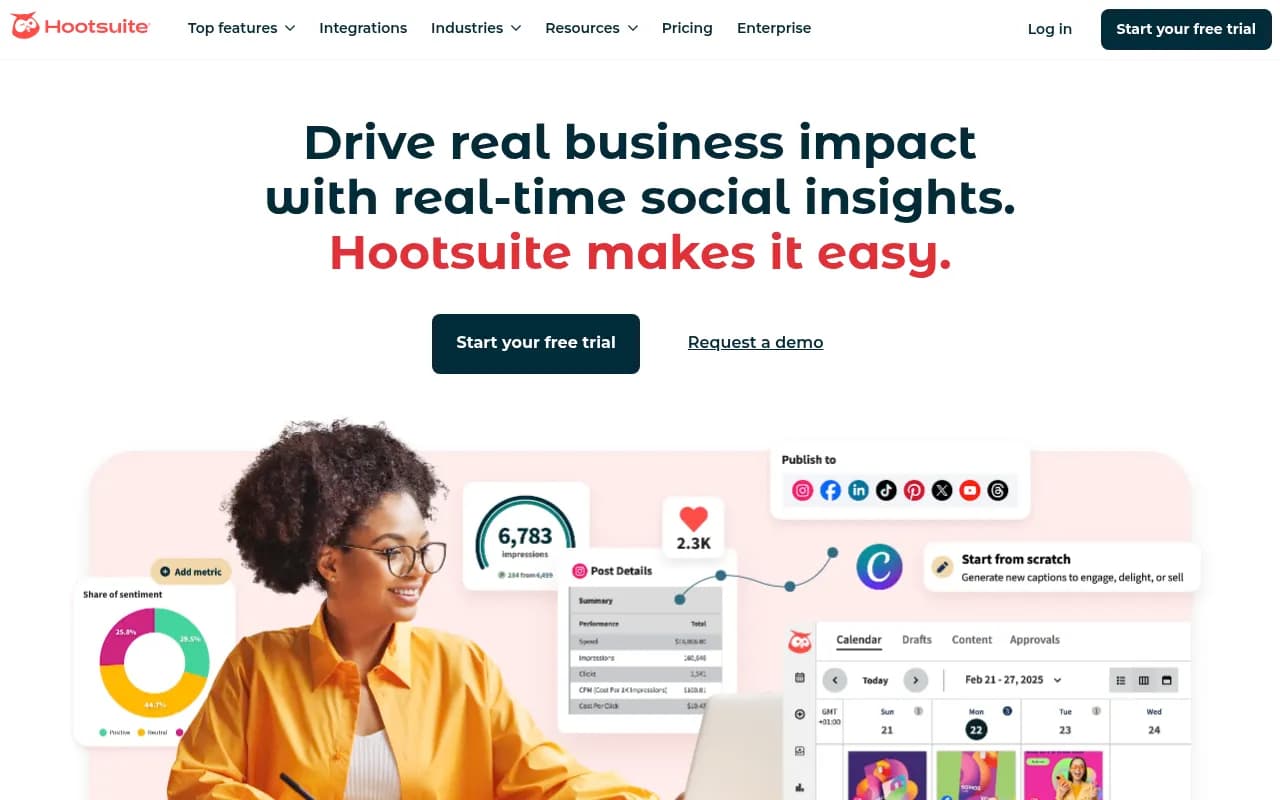
Here's the honest answer about Hootsuite's free plan in 2026: it's effectively dead. Hootsuite eliminated its permanent free tier a couple of years ago. What exists now is a 30-day free trial of the Professional plan, after which you're looking at $99/month.
I'm including Hootsuite because it still appears in "free tools" searches constantly, and people sign up expecting a free tier that no longer exists. Don't plan your workflow around it unless you're budgeting for the paid plan.
Zoho Social
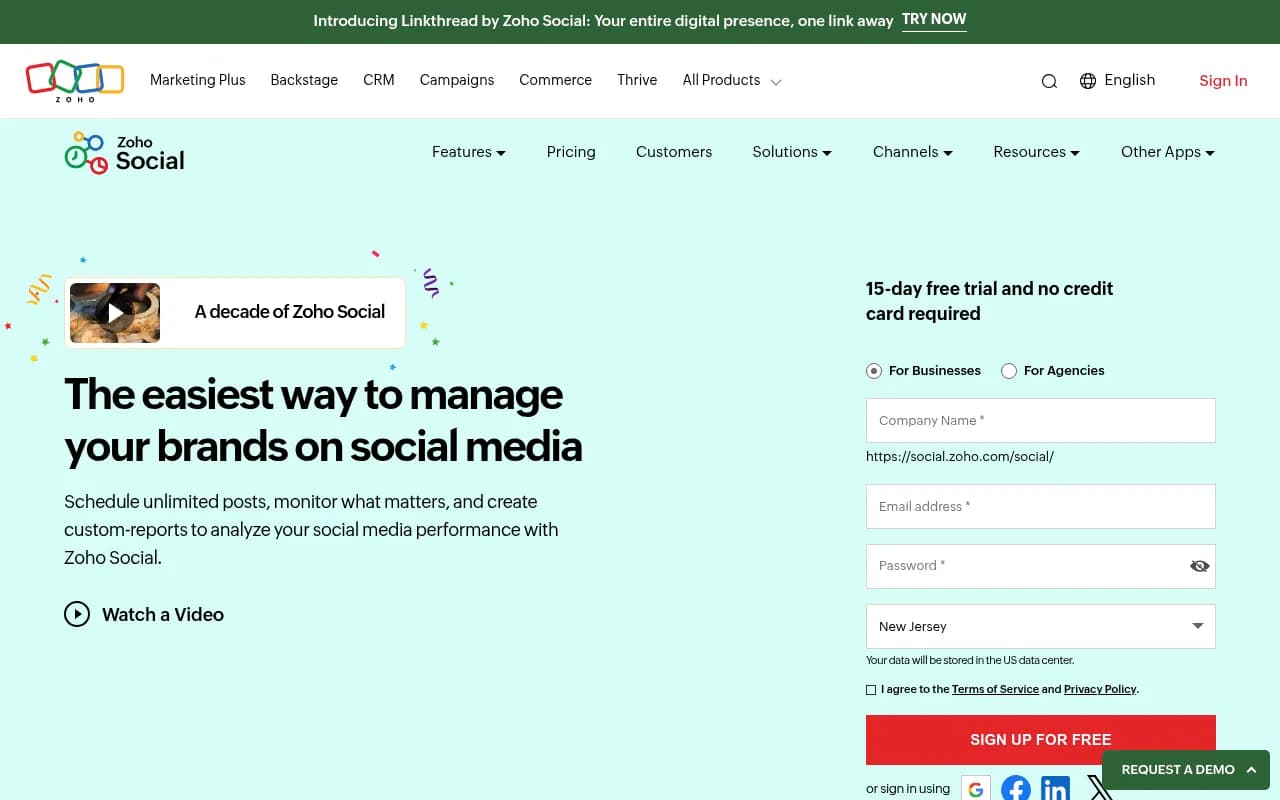
Zoho Social's free plan is surprisingly capable if you're already in the Zoho ecosystem:
- 1 brand
- 1 team member
- Publishing to Facebook, X, Instagram, LinkedIn, and Google Business Profile
- Basic scheduling and publishing
- Limited analytics
The free tier is genuinely free (not a trial), and the interface is more polished than you'd expect at this price point. The main limitation is that it's really designed as an entry point to the broader Zoho suite. If you're not using Zoho CRM or other Zoho products, the integrations that make it powerful aren't relevant to you.
SocialBee
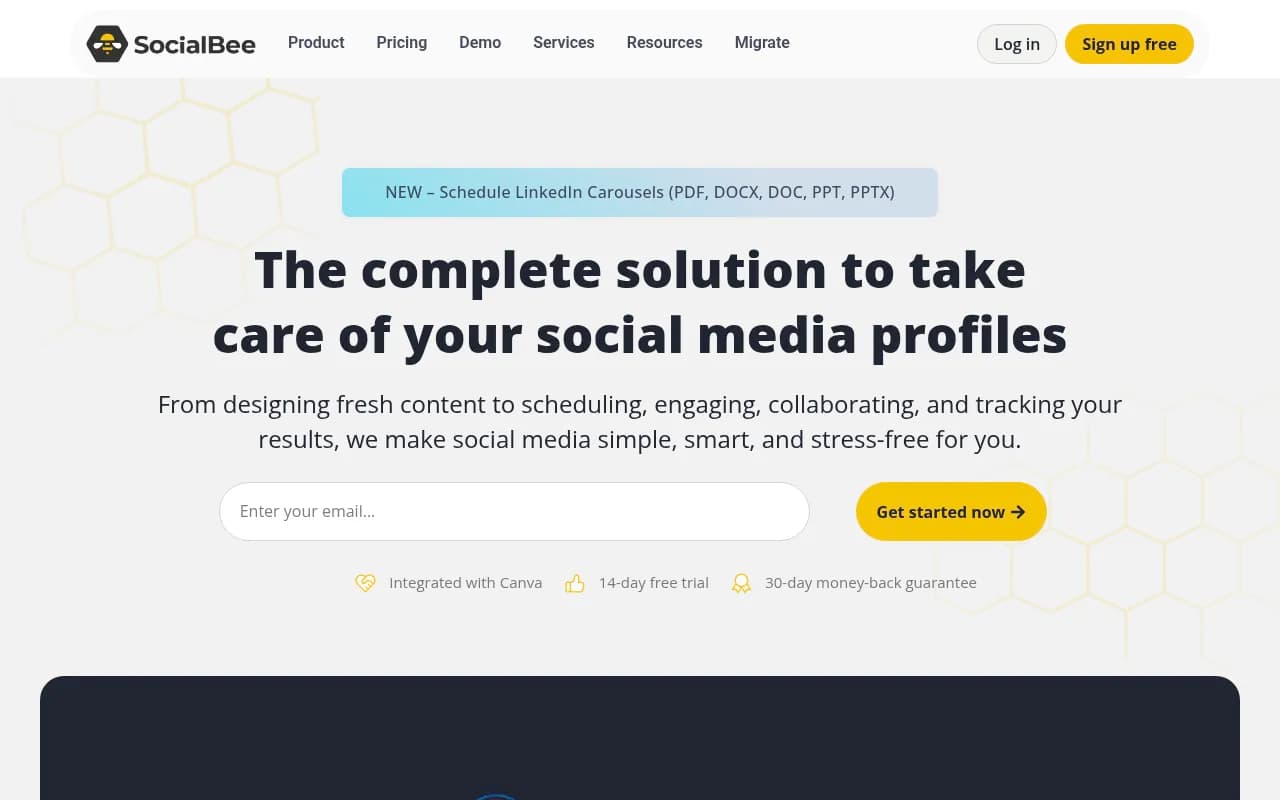
SocialBee doesn't offer a permanent free plan, but its 14-day trial is worth mentioning because the category-based content recycling system is genuinely different from everything else on this list. You organize posts into categories (educational, promotional, curated, etc.) and SocialBee rotates through them automatically.
If you're managing evergreen content that can be reshared, this approach saves significant time. Just go in knowing you'll need to pay after the trial.
FeedHive
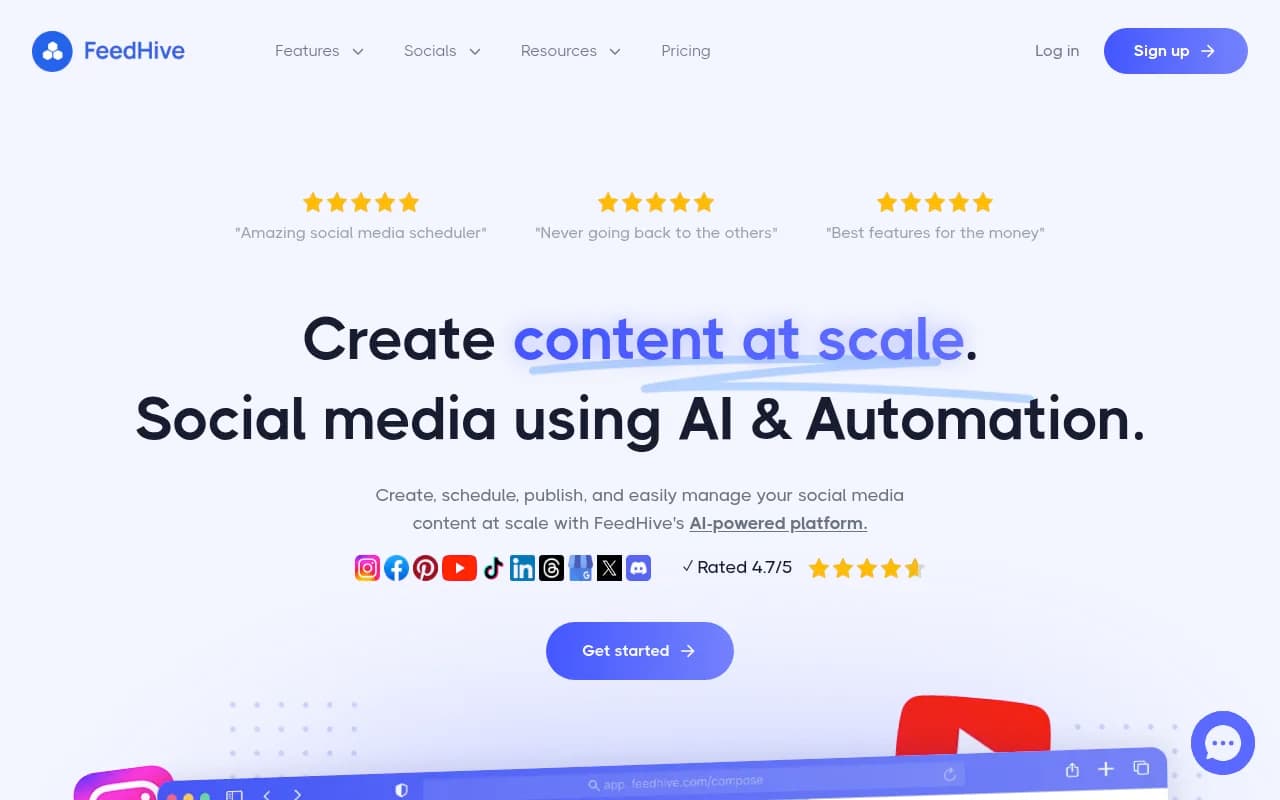
FeedHive has a free plan that includes:
- 4 social profiles
- Unlimited posts (with some scheduling restrictions)
- AI writing assistant (limited uses)
- Basic analytics
The AI features are genuinely useful even at the free tier — FeedHive will suggest post variations, predict engagement, and help you repurpose content. The catch is that the "unlimited posts" claim comes with a footnote: you can only schedule a certain number of posts per day on the free plan.
Publer
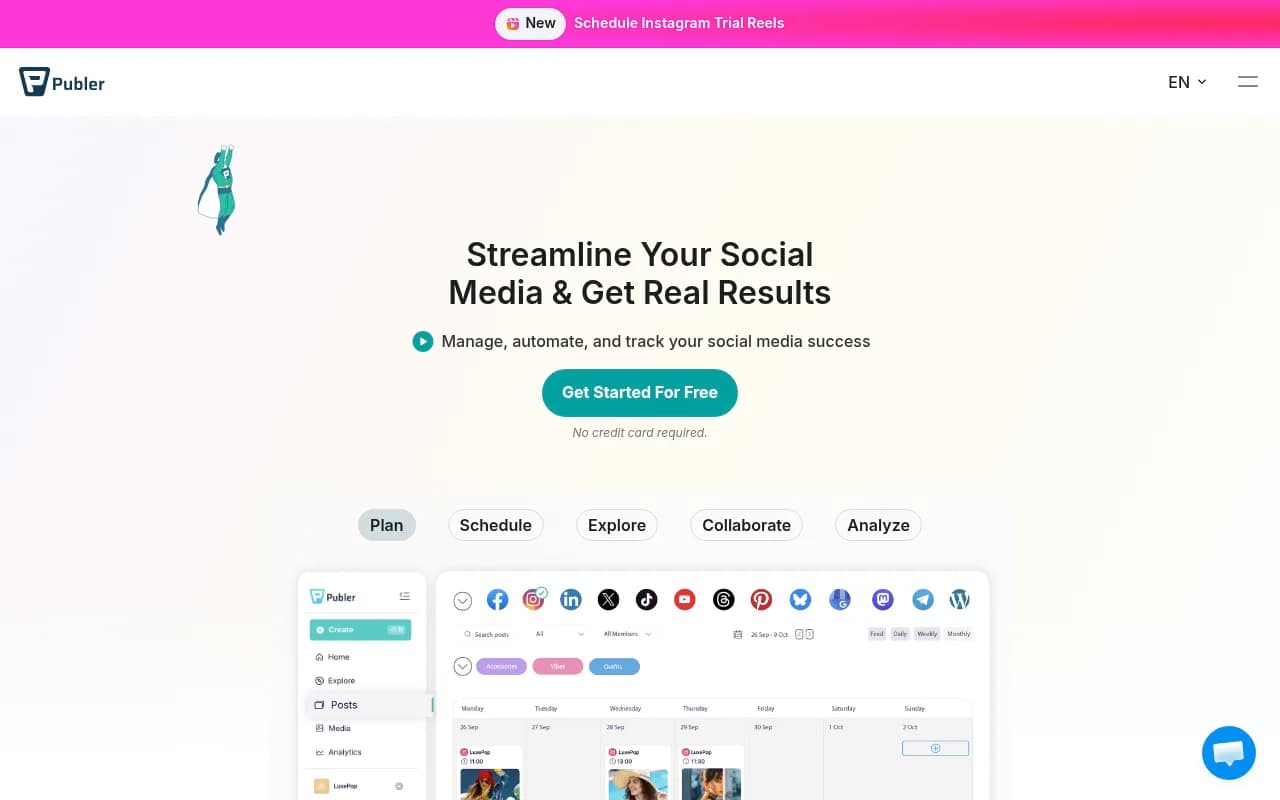
Publer's free plan gives you:
- 3 social accounts
- 10 scheduled posts per account
- Basic analytics
- 1 workspace
Similar structure to Buffer, but with slightly different platform support. Publer handles Google Business Profile scheduling on the free tier, which Buffer doesn't. If you're managing a local business and need to post to GBP regularly, that's a meaningful difference.
Side-by-side comparison
| Tool | Free profiles | Post limit | Analytics | Team members | Truly free? |
|---|---|---|---|---|---|
| Buffer | 3 channels | 10 queued/channel | Basic (30 days) | 1 | Yes |
| Metricool | 1 brand | 50/month | Strong (3 months) | 1 | Yes |
| Later | 1 social set | 30/profile/month | Basic | 1 | Yes |
| Hootsuite | N/A | N/A | N/A | N/A | No (trial only) |
| Zoho Social | 1 brand | Unlimited | Limited | 1 | Yes |
| FeedHive | 4 profiles | Unlimited* | Basic | 1 | Yes |
| Publer | 3 accounts | 10 queued/account | Basic | 1 | Yes |
| SocialBee | N/A | N/A | N/A | N/A | No (trial only) |
*With daily scheduling limits
What every free plan removes
Regardless of which tool you choose, here's what you almost universally lose on a free tier:
Team collaboration. Approval workflows, comment threads on drafts, role-based permissions — these are paid features across the board. If you need a client or manager to approve posts before they go live, you're paying.
Bulk scheduling. Uploading a CSV of 50 posts at once? Paid. Free plans want you to schedule one post at a time.
Inbox management. Monitoring and responding to comments, DMs, and mentions from a unified inbox is a paid feature on every major tool. Free plans are publish-only.
Best time to post. AI-powered send-time optimization is consistently a paid feature. Free plans let you schedule at a specific time you choose.
Competitor analysis. Metricool is the partial exception here, but meaningful competitor benchmarking is a paid feature everywhere.
White-label reporting. Relevant for agencies — PDF reports with your branding are always paid.
Which free plan should you actually use?
The right answer depends on your situation more than any feature comparison can capture.
You're a solo creator posting to 2-3 platforms: Buffer is the cleanest experience and the 10-post queue is enough for most posting cadences. Start here.
You care about understanding your performance data: Metricool's free analytics are genuinely better than what most paid tools offered three years ago. If data matters to you, Metricool.
Instagram is your primary channel: Later's visual grid preview and link-in-bio page make it the best free option for Instagram-first workflows.
You're managing a local business with a Google Business Profile: Publer is the only free tool that includes GBP scheduling.
You're evaluating tools for a team or agency: None of the free plans will work for you long-term. Use the trials from SocialBee or Hootsuite to test the full product, then budget for a paid plan.
The hidden cost of free tools
There's one thing worth saying plainly: free social media scheduling tools save you money but cost you time. The limitations mean more manual work, more tab-switching, and more workarounds. For a solo creator, that tradeoff often makes sense. For a growing team, the productivity loss from working around free-tier restrictions usually costs more than a $20/month plan would.
The tools above are genuinely useful at their free tiers. But be honest with yourself about whether you're staying on a free plan because it meets your needs or because you haven't done the math on what the limitations are actually costing you.
A note on AI features in free plans
In 2026, most scheduling tools have added AI writing assistants, caption generators, and hashtag suggestion tools. Almost all of these are paywalled. FeedHive is the exception — it includes limited AI writing features on the free tier.
If AI-assisted content creation is important to your workflow, you're looking at paid plans. The free tiers are still primarily about scheduling mechanics, not content generation.
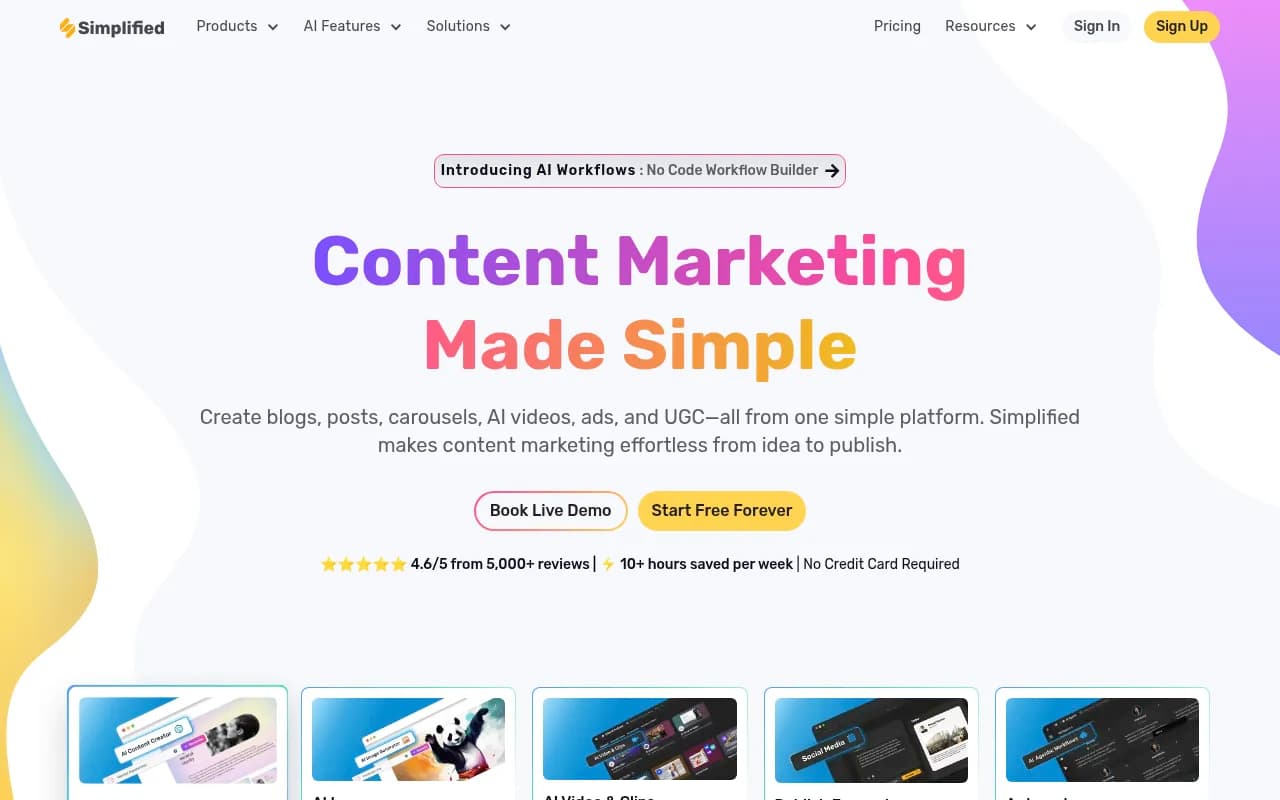
Tools like Simplified sit in an adjacent category — they're AI content creation platforms that also include scheduling, rather than scheduling tools that added AI. Worth knowing about if content creation is your bigger bottleneck.
Bottom line
The best free social media scheduling tool in 2026 is Buffer for most people — clean interface, honest free tier, no tricks. Metricool is the better choice if you want real analytics without paying. Later wins for Instagram-focused workflows.
Just go in knowing what you're getting. Free plans are real, but they're also carefully designed to show you exactly enough to want more.