Key takeaways
- Most GEO platforms are built for enterprise budgets -- but several solid options exist under $100/month for small businesses
- Monitoring your brand in AI search is step one, but the real value comes from tools that help you act on what you find
- The most common mistake small businesses make is paying for a tracker and never knowing what to do with the data
- Free tools like HubSpot's AI Search Grader can give you a baseline, but you'll outgrow them quickly
- For small teams that want monitoring plus content optimization in one place, Promptwatch and Otterly.AI are the two names that come up most often at the affordable end
Why small businesses need to care about GEO right now
Here's what's changed: people used to Google something, scan a list of blue links, and click through to a website. Now they ask ChatGPT, Perplexity, or Google's AI Mode a question and get a direct answer. No clicking required.
That shift matters enormously for small businesses. If ChatGPT recommends three local accountants, three coffee roasters, or three project management tools -- and your brand isn't one of them -- you've lost that customer without ever knowing they existed.
Gartner projected that traditional search volume would drop 25% by 2026 due to AI assistants. Whether that number is exactly right or not, the direction is clear. AI-generated answers are eating into traditional search traffic, and the brands that show up in those answers are the ones that invested early in Generative Engine Optimization (GEO).
The problem for small businesses is that most GEO platforms were built with enterprise clients in mind. Pricing starts at $499/month, onboarding takes weeks, and the dashboards are more suited to a 10-person marketing team than a solo founder or a small agency managing a handful of clients.
This guide focuses on the tools that are actually accessible -- affordable, practical, and useful even if you don't have a dedicated SEO team.
What GEO platforms actually do (and what most get wrong)
Before comparing tools, it helps to understand what you're buying.
A GEO platform does some combination of these things:
- Tracks how often your brand appears in AI-generated responses across engines like ChatGPT, Perplexity, Google AI Overviews, Claude, and Gemini
- Shows you which competitors are getting cited when you're not
- Identifies content gaps -- the questions AI models are answering without referencing your site
- Helps you create or optimize content to earn more citations
- Attributes AI-driven traffic back to actual revenue
The catch is that most tools only do the first two. They show you a visibility score and a list of mentions. That's useful for a weekly report, but it doesn't tell you what to do next. You're left staring at a dashboard wondering why your competitor keeps getting cited for "best CRM for freelancers" and you don't.
The more useful platforms close that loop. They show you the gap, help you understand why it exists, and give you something to do about it.
The best affordable GEO platforms for small businesses in 2026
Otterly.AI -- best for getting started cheaply
Otterly.AI starts at $25/month, which makes it the most accessible paid option in the category. It tracks brand mentions across ChatGPT, Perplexity, and Google AI Overviews, and the setup is genuinely simple -- you're up and running in under 30 minutes.
The honest limitation: Otterly is a monitoring tool. It shows you where you appear and where you don't, but it doesn't tell you why, and it doesn't help you fix it. For a small business that just wants to know "are we showing up in AI search at all?" it's a reasonable starting point.
Otterly.AI

Peec AI -- solid analytics at a fair price
Peec AI sits at around €89/month and has raised $1.9 million in funding, which gives it more runway than some of the bootstrapped alternatives. It tracks visibility across ChatGPT, Perplexity, Google AI Overviews, and a few others, and the analytics are more detailed than Otterly -- you get share-of-voice comparisons, competitor breakdowns, and trend data over time.
Still primarily a monitoring platform, though. The data is good; the "now what?" is still on you.

Promptwatch -- best for small businesses that want to act, not just track
Promptwatch starts at $99/month for the Essential plan (1 site, 50 prompts, 5 articles per month), which puts it within reach for most small businesses. What makes it different from the monitoring-only tools is that it's built around a full optimization loop.
The Answer Gap Analysis shows you exactly which prompts your competitors are visible for that you're not -- with specific content recommendations, not just a list of missing keywords. The built-in AI writing agent then generates articles and content pieces grounded in real citation data from over 880 million citations analyzed. And the page-level tracking shows you which of your pages are actually getting cited by which AI models, so you can see whether the content you published is working.
For a small business owner who doesn't have time to stitch together three separate tools, that end-to-end workflow is genuinely useful. The Professional plan at $249/month adds crawler logs (showing you which AI bots are visiting your site and what they're reading), multi-location tracking, and 15 articles per month.

LLMrefs -- budget-friendly tracking across 9+ engines
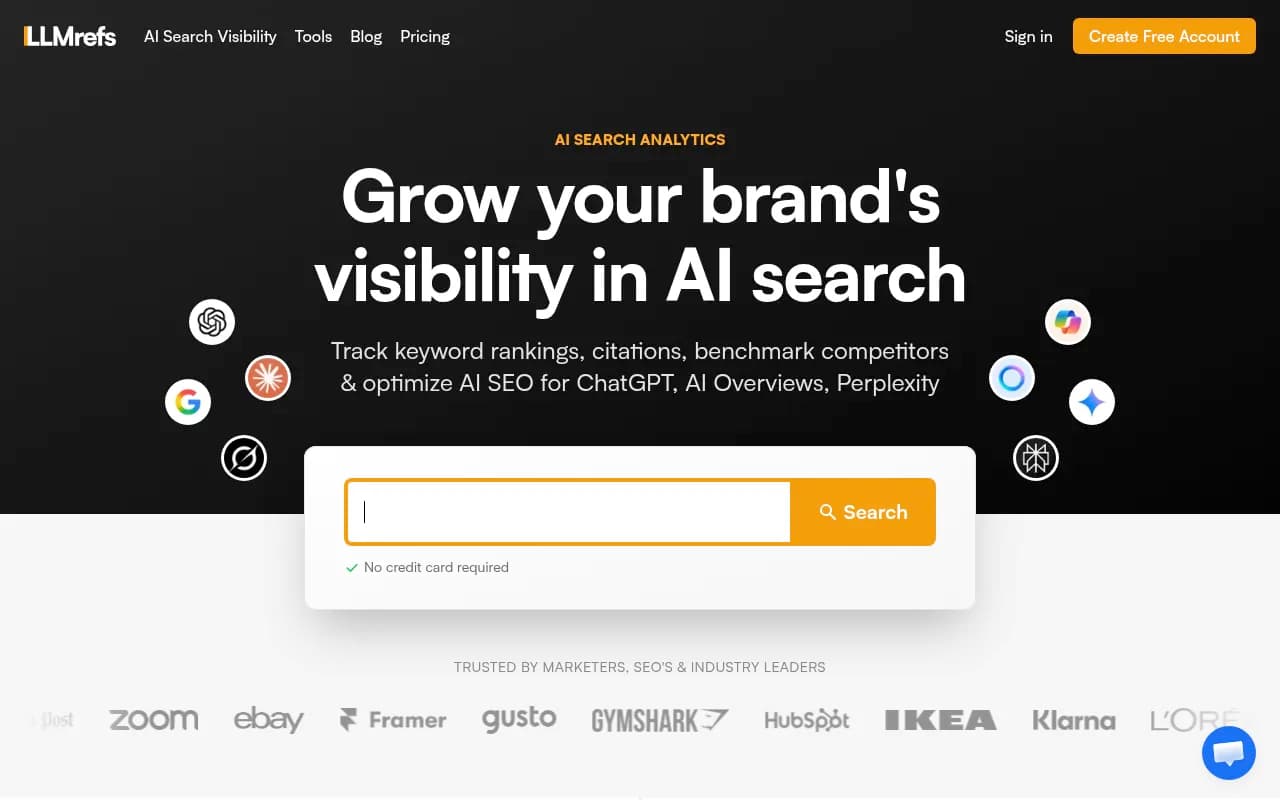
LLMrefs comes in at $79/month and covers an impressive number of AI engines for the price -- ChatGPT, Perplexity, Claude, Gemini, and several others. It's bootstrapped, which means no VC-funded feature bloat, and the interface is clean and straightforward.
Good option if you want broad coverage without paying enterprise prices. Like Peec and Otterly, it's primarily a tracker rather than an optimizer.
LLMrefs
Rankability -- best for agencies managing multiple clients
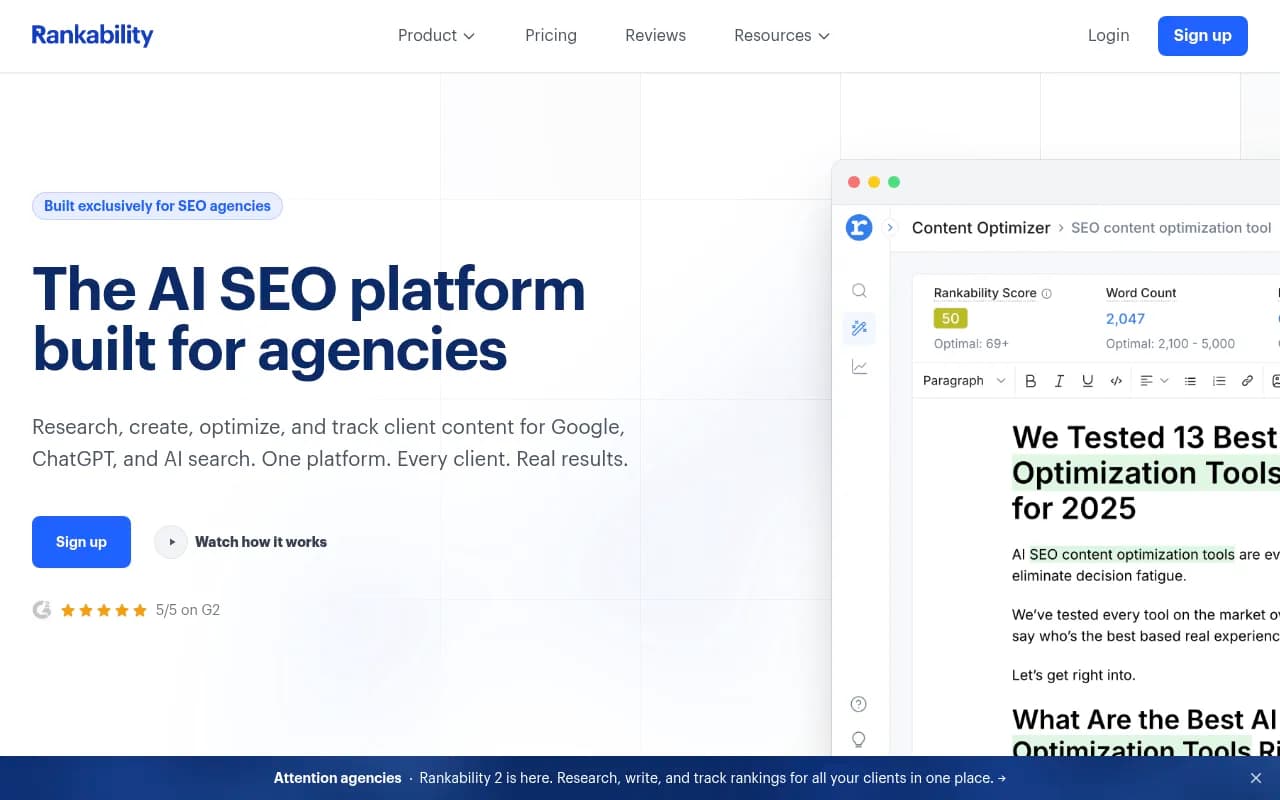
Rankability's Reporter product starts at $149/month and is built with agencies in mind. If you're a small agency managing AI visibility for several clients, the multi-client workflow and reporting features are worth the extra cost compared to single-brand tools.
Geoptie -- affordable all-in-one with content tools
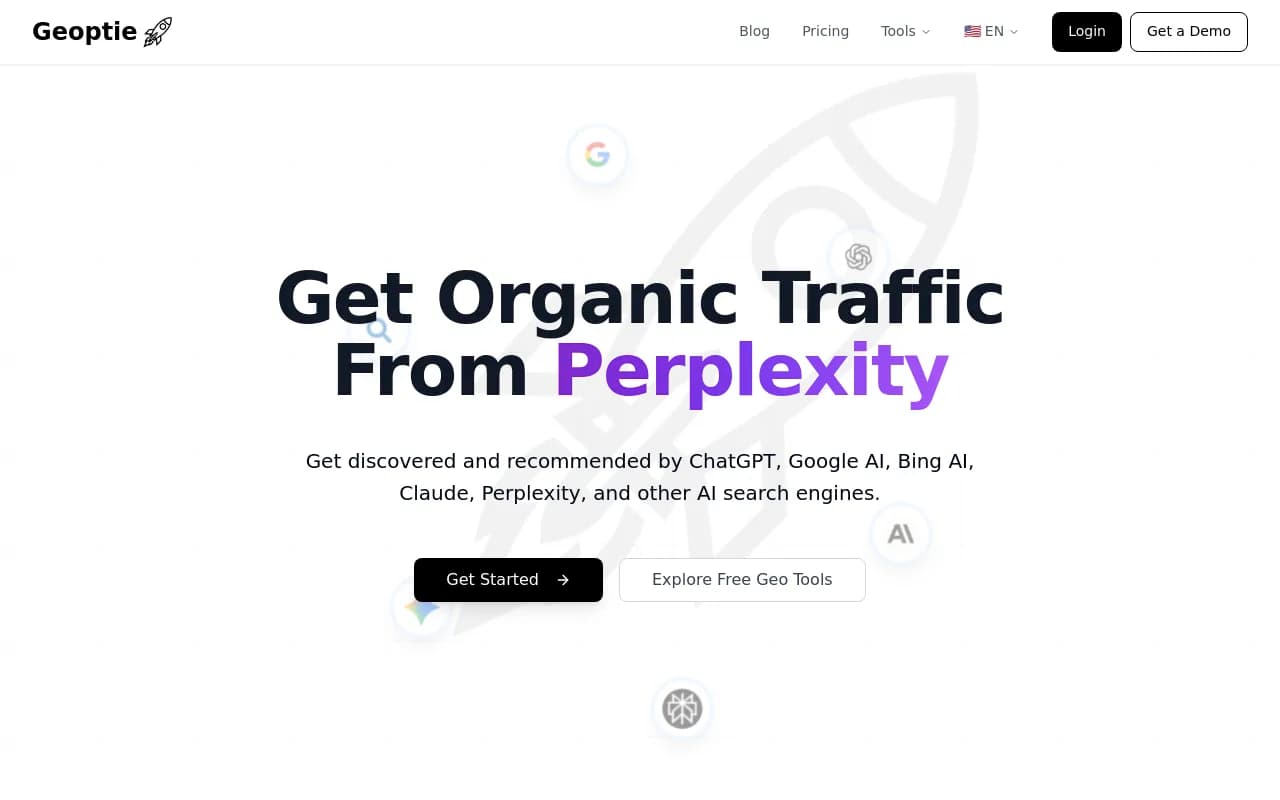
Geoptie starts at $49/month (Starter) and goes up to $199/month (Enterprise). It combines AI visibility tracking with content optimization tools, and the 14-day free trial makes it easy to test before committing. Coverage includes ChatGPT, Claude, Perplexity, Google AI Overviews, and Gemini.
Semrush -- if you're already paying for traditional SEO
If you're already a Semrush subscriber, their AI Toolkit add-on at $99/month is a reasonable way to add AI search monitoring without switching platforms. The integration with existing keyword data and site audits is convenient. The limitation is that Semrush uses fixed prompt sets rather than letting you define your own, which can feel restrictive if your business has specific niche queries you care about.
Comparison: affordable GEO platforms at a glance
| Tool | Starting price | Free trial | AI engines covered | Content optimization | Best for |
|---|---|---|---|---|---|
| Otterly.AI | $25/mo | 14 days | ChatGPT, Perplexity, Google AI | No | Getting started |
| LLMrefs | $79/mo | No | 9+ engines | No | Broad coverage on a budget |
| Peec AI | €89/mo | Yes | ChatGPT, Perplexity, Google AI | No | Analytics-focused teams |
| Promptwatch | $99/mo | Yes | 10 engines | Yes (AI writing agent) | End-to-end optimization |
| Rankability | $149/mo | No | ChatGPT, Perplexity, Claude, Gemini | Limited | Agencies |
| Geoptie | $49/mo | 14 days | ChatGPT, Claude, Perplexity, Google AI, Gemini | Yes | All-in-one on a budget |
| Semrush AI Toolkit | $99/mo (add-on) | No | Multiple | Limited | Existing Semrush users |
Tools to avoid (or at least be realistic about)
A few tools worth mentioning with some caveats:
Profound ($499/month) is a genuinely capable platform, but it's priced for enterprise teams. If you're a small business, you'll be paying for features you won't use.
AthenaHQ is monitoring-focused and doesn't offer content optimization -- similar to Otterly but at a higher price point. Fine for research-grade tracking, less useful if you want to take action.
HubSpot AI Search Grader is free and worth running once to get a baseline score. But it's a one-time assessment, not an ongoing tracker. Use it to understand where you stand, then move to a paid tool.
What to actually look for when choosing a GEO platform
Prompt customization
Can you define your own prompts, or are you stuck with the platform's fixed set? For a small business, the queries that matter to you are often niche. "Best accountant for freelancers in Austin" is very different from "best accountant," and a tool that only tracks generic prompts will miss what actually matters to your customers.
Content gap analysis
Does the tool tell you what content you're missing, or just that you're missing visibility? The difference is enormous. A visibility score tells you there's a problem. A content gap analysis tells you what to write to fix it.
Attribution
Can you connect AI visibility to actual website traffic and revenue? This is where most tools fall short. A few platforms (Promptwatch being one of them) offer traffic attribution through code snippets, Google Search Console integration, or server log analysis. Without this, you're optimizing for a metric that may or may not connect to business outcomes.
Crawler logs
This is an underrated feature. Knowing which AI bots are crawling your site, which pages they're reading, and whether they're encountering errors gives you a technical foundation for GEO that pure monitoring tools can't provide. Most tools at the affordable end don't offer this -- Promptwatch's Professional plan ($249/month) is one of the few that does at a non-enterprise price.
Number of AI engines covered
ChatGPT and Google AI Overviews are the obvious ones, but Perplexity, Claude, Gemini, Grok, and DeepSeek are all growing. A tool that only tracks two or three engines is giving you an incomplete picture.
A practical starting point for small businesses
If you're just getting started and want to spend as little as possible, here's a sensible path:
- Run HubSpot's free AI Search Grader to get a baseline. It takes five minutes and costs nothing.
- Sign up for a free trial of Otterly.AI or Promptwatch to see what ongoing monitoring looks like. Both offer 14-day trials.
- If you find you're barely visible in AI search, prioritize a tool with content optimization -- not just monitoring. Knowing you're invisible is only useful if you can do something about it.
- If you're managing multiple brands or client accounts, look at Rankability or Promptwatch's agency/business tiers.
The industry average for AI search visibility tools is around $337/month according to Rankability's own analysis of the market. You don't need to spend that much to get started, but you do need to be realistic: the $25/month tools will show you data, and the $99-$249/month tools will help you act on it.
For most small businesses, the right answer is somewhere in the middle -- a tool that covers the AI engines your customers actually use, lets you define your own prompts, and gives you at least some guidance on what content to create. That's a more useful investment than a cheap tracker that leaves you with a dashboard full of numbers and no clear next step.
The bottom line
GEO is no longer optional for businesses that rely on search traffic. AI-generated answers are already influencing purchase decisions, and the brands that show up in those answers built that visibility deliberately -- through content that answers real questions, structured data that AI models can parse, and consistent monitoring to know what's working.
The good news for small businesses is that you don't need an enterprise budget to get started. Tools like Otterly.AI, LLMrefs, and Geoptie make basic monitoring accessible. And platforms like Promptwatch bring the full optimization loop -- gap analysis, content generation, traffic attribution -- to a price point that a small marketing team can justify.
The worst thing you can do is nothing. Every month you're not tracking AI visibility is a month your competitors are building an advantage that gets harder to close.