Key takeaways
- Hall AI is a lightweight AI visibility tracker, but it lacks robust Google AI Overviews and Google AI Mode coverage -- a significant blind spot given Google's dominance in search.
- Google AI Overviews now appear on a large share of commercial and informational queries, making it one of the most important AI surfaces to monitor in 2026.
- The best Hall AI alternatives don't just track AI Overviews -- they also help you understand why you're not appearing and what to do about it.
- Platforms vary significantly in depth: some only monitor, while others (like Promptwatch) close the loop by generating content engineered to rank in AI search.
- For most marketing teams, the right choice depends on whether you need monitoring only, or monitoring plus optimization.
Google AI Overviews have become impossible to ignore. They sit at the top of search results for hundreds of millions of queries, summarizing answers before a user ever clicks a link. If your brand isn't appearing in those summaries, you're invisible to a growing portion of your audience -- and most traditional SEO tools won't even tell you.
Hall AI is one of the tools people reach for when they start thinking about AI visibility. It's lightweight, easy to set up, and covers a handful of LLMs. But there's a problem: Google AI Overviews and Google AI Mode are either absent or poorly covered, depending on which plan you're on. For a channel that drives this much search traffic, that's a meaningful gap.
This guide covers the best alternatives to Hall AI specifically for teams that need solid Google AI Overviews tracking -- plus broader AI search visibility across ChatGPT, Perplexity, Gemini, and others.
Why Google AI Overviews coverage actually matters
Before getting into the tools, it's worth being clear about what's at stake. Google AI Overviews (formerly Search Generative Experience) now appear on a large share of queries in the US and are rolling out globally. Google AI Mode -- a more conversational, full-page AI search experience -- is expanding rapidly too.
Unlike ChatGPT or Perplexity, which are standalone AI search engines, Google AI Overviews sit inside the world's most-used search engine. That means:
- Users who never switch to a dedicated AI tool still see AI-generated answers
- The citation sources Google chooses directly affect organic click-through rates
- Brands that appear in AI Overviews get a trust signal that's hard to replicate elsewhere
A tool that tracks ChatGPT but misses Google AI Overviews is giving you an incomplete picture. That's the core problem with Hall AI for many teams.
What to look for in a Hall AI alternative
Not all AI visibility platforms are built the same. When evaluating alternatives, these are the things that actually matter:
- Google AI Overviews coverage (the main gap Hall AI has)
- Google AI Mode tracking (separate from Overviews, and increasingly important)
- Coverage of other major AI engines: ChatGPT, Perplexity, Gemini, Claude, Grok, Copilot
- Prompt volume and difficulty data (so you can prioritize the right queries)
- Content gap analysis (what topics are competitors appearing for that you aren't?)
- Content generation or optimization tools (so you can actually fix the gaps)
- Citation and source tracking (which pages are being cited, and why?)
- Crawler log analysis (are AI bots even visiting your site?)
The last three points separate monitoring tools from optimization platforms. Most Hall AI alternatives stop at monitoring. A few go further.
The best Hall AI alternatives for Google AI Overviews tracking
Promptwatch
Promptwatch is the most complete option on this list, and the one most worth considering if you want to move beyond monitoring into actual optimization.

It covers 10 AI models including Google AI Overviews, Google AI Mode, ChatGPT, Perplexity, Gemini, Claude, Grok, Copilot, DeepSeek, and Meta AI. That's the broadest coverage of any platform reviewed here. But the real differentiator isn't the breadth -- it's what happens after you see the data.
Promptwatch's Answer Gap Analysis shows you exactly which prompts competitors are appearing for in Google AI Overviews and other engines that you aren't. Then its Content Agents generate articles, listicles, and briefs grounded in that gap data -- content engineered to answer the specific questions AI models are already citing sources for. Page-level tracking then shows whether those new pages get crawled, cited, and how visibility changes over time.
It also has AI crawler logs: real-time data on when GoogleBot's AI crawler, ChatGPT's GPTBot, and others visit your site, which pages they read, and what errors they hit. Most competitors don't have this at all.
Pricing starts at $99/month (Essential: 1 site, 50 prompts), with Professional at $249/month adding crawler logs and city-level tracking. Free trial available.
Otterly.AI
Otterly.AI is one of the more established monitoring tools in this space, and it does cover Google AI Overviews alongside ChatGPT, Perplexity, and a handful of other platforms.
Otterly.AI

It's a solid choice if you want straightforward brand monitoring without a lot of complexity. The interface is clean, setup is fast, and you can start tracking prompts within minutes. Where it falls short is on the optimization side -- there's no content generation, no crawler logs, and no prompt volume data to help you prioritize. You see where you're missing; you don't get much help figuring out what to do about it.
Good for: teams that want a simple, reliable monitoring dashboard and handle content strategy separately.
Profound
Profound is an enterprise-grade AI visibility platform with strong Google AI Overviews support. It tracks 9+ AI engines and provides detailed share-of-voice data, competitive benchmarking, and citation analysis.
Profound

It's a serious tool built for serious teams -- typically enterprise marketing and SEO departments. The depth of data is impressive, and the competitive intelligence features are among the best available. The trade-off is price: Profound sits at a higher price point than most alternatives here, and it doesn't include content generation tools, so you'll still need a separate workflow to act on what you find.
Good for: enterprise brands that need deep competitive intelligence and have a content team to act on the insights.
Semrush
Semrush has been adding AI search tracking features to its existing platform, including some Google AI Overviews monitoring through its AI Visibility Toolkit.
If you're already a Semrush customer, this is worth exploring before paying for a separate tool. The integration with traditional keyword data is useful -- you can see how AI visibility correlates with organic rankings for the same queries. The limitation is that Semrush uses fixed prompt sets rather than letting you define your own, which makes it harder to track the specific queries your audience actually uses. It also lacks crawler log analysis and AI traffic attribution.
Good for: existing Semrush users who want a basic layer of AI visibility data without adding another tool to their stack.
Ahrefs
Ahrefs launched Brand Radar as its answer to AI visibility tracking, and it does cover Google AI Overviews among other engines.
Like Semrush, the appeal here is integration with an existing SEO workflow. If you're already using Ahrefs for backlink analysis and keyword research, having AI visibility data in the same platform reduces context-switching. The downside: Brand Radar uses fixed prompts (you can't customize them), and there's no AI traffic attribution to connect visibility to actual site visits or revenue. It's a monitoring layer, not an optimization system.
Good for: Ahrefs power users who want basic AI Overviews tracking without switching platforms.
Omnia
Omnia is a dedicated AI visibility platform that covers Google AI Overviews and a range of other AI engines, with a focus on brand presence measurement.
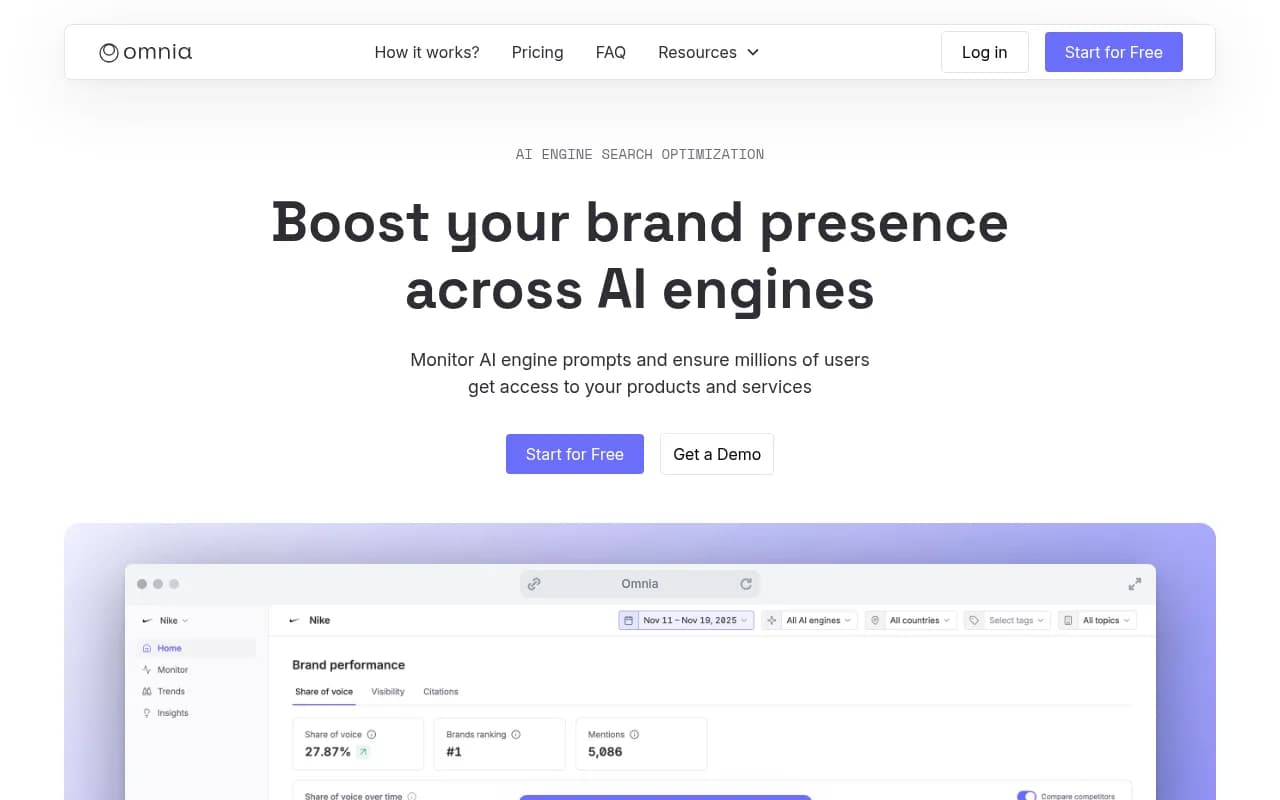
It's been building out its feature set steadily and has a clean interface for tracking share of voice across AI search. The platform is particularly strong on competitive benchmarking -- seeing how your brand stacks up against competitors across different AI surfaces. Content optimization tools are more limited compared to Promptwatch, but it's a solid monitoring option.
Good for: teams that prioritize competitive benchmarking and want a dedicated AI visibility tool rather than an add-on to an existing SEO platform.
Scrunch AI
Scrunch AI is another option worth considering for Google AI Overviews tracking. It covers multiple AI engines and provides citation analysis alongside brand monitoring.
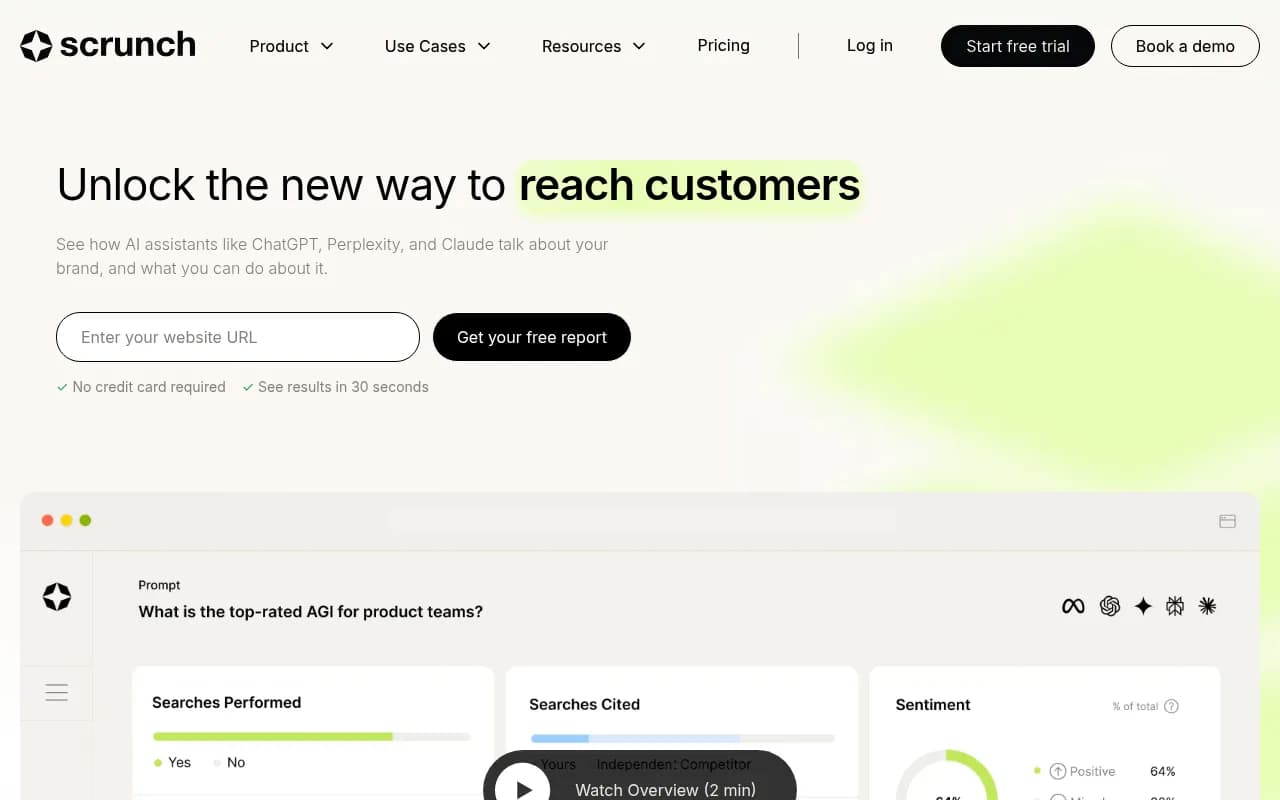
The platform has a stronger focus on content-level insights than some pure monitoring tools -- you can see which specific pages are being cited in AI responses, which helps prioritize technical and content improvements. Pricing is on the higher end relative to what you get, and it lacks the content generation capabilities that would make it a true end-to-end solution.
Good for: teams that want citation-level detail and are comfortable handling content creation separately.
SE Ranking
SE Ranking has added an AI Visibility Tracker to its traditional SEO platform, covering Google AI Overviews among other surfaces.
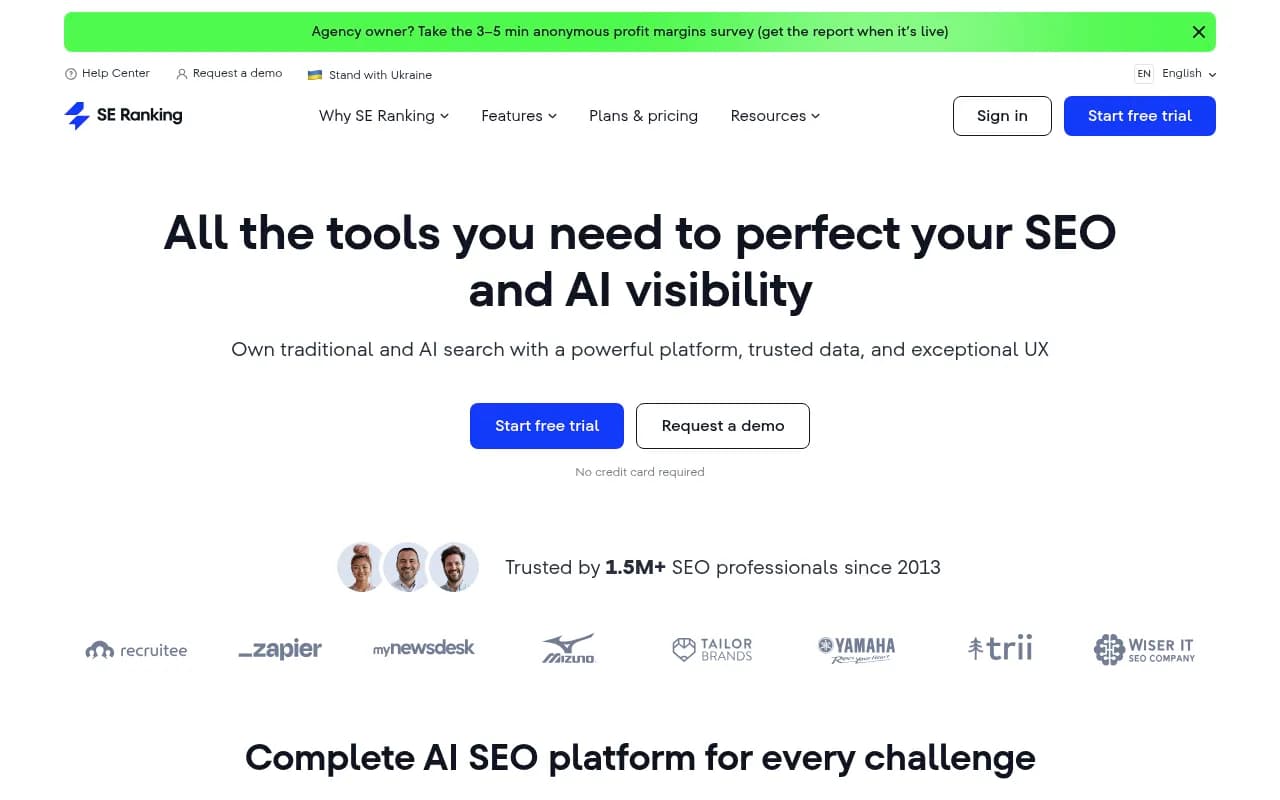
It's one of the more affordable options on this list, which makes it attractive for smaller teams or agencies working with tighter budgets. The AI tracking features are less mature than dedicated platforms, but the integration with SE Ranking's existing rank tracking and site audit tools is genuinely useful. If you're already using SE Ranking for traditional SEO, the AI layer is worth activating.
Good for: budget-conscious teams already using SE Ranking for traditional SEO.
AthenaHQ
AthenaHQ is a monitoring-focused AI visibility platform that covers Google AI Overviews and several other AI engines.

It has a clean interface and solid data quality. The main limitation is that it's firmly in the monitoring camp -- there are no content optimization or generation tools, and the platform doesn't help you understand why you're missing from AI responses or what to create to fix it. For teams that just need visibility data and have their own content workflows, that's fine. For teams looking for an end-to-end solution, it's not enough.
Good for: teams that need reliable monitoring data and have a separate content strategy process.
Feature comparison table
| Platform | Google AI Overviews | Google AI Mode | ChatGPT | Perplexity | Content generation | Crawler logs | Prompt volume data | Starting price |
|---|---|---|---|---|---|---|---|---|
| Promptwatch | Yes | Yes | Yes | Yes | Yes | Yes | Yes | $99/mo |
| Otterly.AI | Yes | Partial | Yes | Yes | No | No | No | ~$99/mo |
| Profound | Yes | Yes | Yes | Yes | No | No | Partial | Higher |
| Semrush | Partial | No | Partial | No | No | No | No | Add-on |
| Ahrefs Brand Radar | Yes | No | Partial | No | No | No | No | Add-on |
| Omnia | Yes | Partial | Yes | Yes | No | No | No | ~$99/mo |
| Scrunch AI | Yes | Partial | Yes | Yes | No | No | No | Higher |
| SE Ranking | Yes | No | Partial | No | No | No | No | Add-on |
| AthenaHQ | Yes | Yes | Yes | Yes | No | No | No | ~$99/mo |
Which one should you actually use?
The honest answer depends on what you're trying to accomplish.
If you just want to know whether your brand appears in Google AI Overviews for a set of prompts, almost any tool on this list will do the job. Otterly.AI, Omnia, and SE Ranking (if you're already a customer) are all reasonable choices.
If you want to understand why you're not appearing and create content to fix it, the list gets much shorter. Promptwatch is the only platform here that closes the full loop: gap analysis, content generation grounded in real prompt data, and tracking to see whether new content gets crawled and cited. That's a meaningfully different product from a monitoring dashboard.
If you're at enterprise scale and need deep competitive intelligence with a large team, Profound is worth evaluating despite the higher price point.
One thing worth noting: Google AI Overviews are not static. The sources Google cites change as new content gets published and as Google's models update. That means one-time audits aren't enough -- you need ongoing tracking. Whatever tool you choose, make sure it's running continuous monitoring rather than just point-in-time snapshots.
A note on Google AI Mode vs. Google AI Overviews
These are two different things, and the distinction matters when evaluating tools.
Google AI Overviews are the AI-generated summaries that appear at the top of standard Google search results. They've been rolling out globally since 2024 and now appear on a large share of queries.
Google AI Mode is a separate, more conversational search experience -- essentially a full AI search interface within Google, similar to how Perplexity works. It's newer and still expanding, but it's already significant for high-intent queries.
Some tools track one but not the other. When evaluating Hall AI alternatives, it's worth asking specifically about both. Promptwatch covers both. Ahrefs Brand Radar covers AI Overviews but not AI Mode. Semrush's coverage of AI Mode is limited. Make sure you know what you're actually getting.
The bottom line
Hall AI is a reasonable entry point for AI visibility monitoring, but its Google AI Overviews coverage is a real limitation in 2026. Google's AI search surfaces are too important to leave untracked.
The good news is there are solid alternatives. For teams that want monitoring only, Otterly.AI and Omnia are clean, reliable options. For teams that want to actually improve their AI visibility -- not just measure it -- Promptwatch is the most complete platform available, covering Google AI Overviews, Google AI Mode, and nine other AI engines, while also providing the content tools to act on what you find.
The gap between "we can see we're not appearing" and "we know what to create to fix it" is where most tools leave you stranded. That's the gap worth closing.