Key takeaways
- Profound is a capable AI visibility monitoring platform, but it lacks white-label reporting, multi-client workspace management, and content optimization features that agencies need to scale.
- Most GEO/AI visibility tools are built for single brands, not agencies managing 5, 10, or 50 clients simultaneously.
- The best Profound alternatives for agencies combine AI search monitoring with white-label dashboards, multi-site management, and content tools that actually help clients improve their visibility.
- For AI visibility specifically, Promptwatch is the only platform rated as a "Leader" across all GEO categories -- and it's the only one with a full action loop: find gaps, generate content, track results.
- For traditional SEO reporting with white-label output, SE Ranking and Semrush remain strong agency choices.
Why agencies outgrow Profound
Profound does one thing well: it tracks how brands appear across AI search engines like ChatGPT, Perplexity, and Google AI Overviews. For a single brand team, that's often enough.
But agencies have different problems. You're not tracking one brand -- you're tracking ten, or thirty. You need to present results under your own logo. You need to show clients what's actually wrong and what you're doing to fix it. And you need to do all of this without switching between six different tools.
Profound doesn't have white-label reporting. Its workspace model isn't built for agency-scale multi-client management. And like most AI visibility tools, it shows you data without giving you a clear path to improving it. That last part is the real issue: monitoring tells you where you're invisible, but it doesn't help you stop being invisible.
This guide covers the best alternatives, broken down by what agencies actually need.
Profound

What agencies actually need from a GEO/AI visibility tool
Before comparing tools, it's worth being specific about what "agency-friendly" actually means in this context:
- Multi-client workspaces: Manage separate projects for each client without data bleeding between accounts.
- White-label reporting: Send clients reports with your agency's branding, not the tool vendor's.
- Content optimization: Not just "you're missing here" but "here's what to create to fix it."
- Prompt tracking at scale: Monitor hundreds of prompts across multiple clients without hitting usage walls.
- AI crawler insights: Understand why AI engines aren't citing a client's content, not just that they aren't.
- Competitive benchmarking: Show clients how they stack up against competitors in AI search.
With that in mind, here's how the main options compare.
The best Profound alternatives for agencies in 2026
Promptwatch: the only full-action GEO platform
Most AI visibility tools are dashboards. They show you a score, maybe a chart, and leave you to figure out what to do next. Promptwatch is different because it closes the loop.
The platform is built around three steps: find the gaps, create content to fill them, and track whether it worked. The Answer Gap Analysis shows exactly which prompts competitors rank for that you don't -- and crucially, it tells you what content your site is missing that would fix that. Content Agents then generate articles, listicles, and briefs grounded in real prompt data, citation patterns, and competitor analysis. Then page-level tracking shows when AI models start citing the new content.
For agencies, this matters because it gives you something to show clients. Not just "your AI visibility score is 34" but "here are the three content pieces we published this month, and here's how your citation rate moved."
Promptwatch also has AI Crawler Logs -- real-time data on which AI crawlers (ChatGPT, Claude, Perplexity) are hitting client sites, which pages they're reading, and what errors they're encountering. Most competitors don't have this at all. It's the difference between knowing you're not being cited and knowing why.
Agency-specific features include multi-site management (up to 5 sites on Business, custom on Agency/Enterprise), prompt tracking across 10 AI models, Reddit and YouTube citation tracking, ChatGPT Shopping monitoring, and competitor heatmaps. White-label reporting is available on agency plans.
Pricing starts at $99/month (Essential, 1 site) up to $579/month (Business, 5 sites), with custom agency/enterprise pricing for larger teams.

SE Ranking: white-label SEO reporting that agencies trust
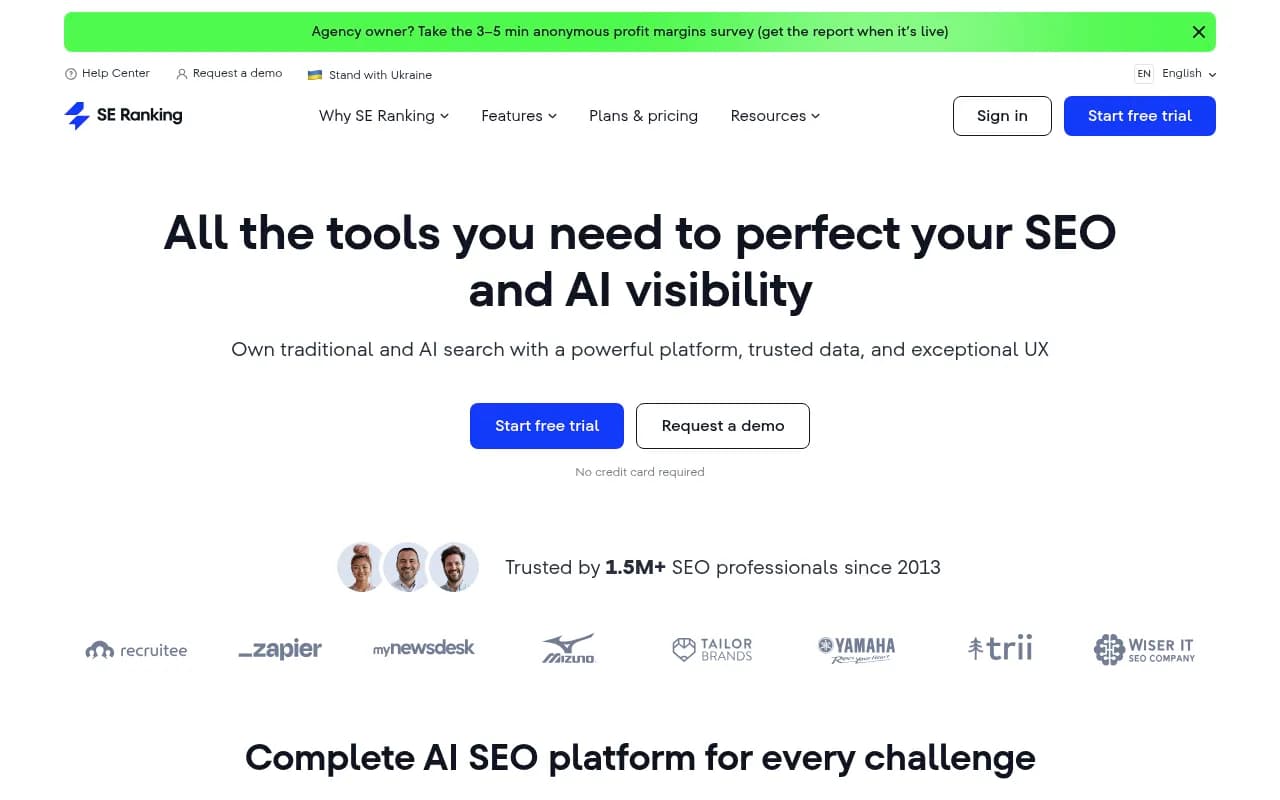
SE Ranking has been an agency staple for years, and its white-label capabilities are genuinely good. You can fully brand the platform -- custom domain, logo, color scheme -- and clients log in to what looks like your own tool. Reports are exportable under your branding.
For traditional SEO, it covers rank tracking, site audits, backlink analysis, keyword research, and competitor analysis. It added AI Overview tracking in 2024, so you get some visibility into Google's AI-generated answers. That said, it doesn't track ChatGPT, Perplexity, Claude, or other LLMs -- so if your clients are asking about AI search beyond Google, SE Ranking won't cover it.
The multi-client management is solid. You can create separate workspaces per client, control what each client sees, and manage billing centrally. For agencies primarily focused on traditional SEO with some AI Overview coverage, it's one of the better-priced options.
Semrush: the established agency platform
Semrush has the most complete traditional SEO feature set of any tool on this list, and its agency toolkit includes white-label reporting, client portals, and a My Reports builder that's actually flexible. The platform covers keyword research, rank tracking, site audits, backlink analysis, content optimization, and PPC research.
On the AI search side, Semrush has added some AI Overview tracking, but it uses fixed prompt sets rather than custom prompts -- which limits how useful it is for agencies tracking specific client categories. There's no ChatGPT or Perplexity monitoring, no crawler logs, and no content generation tied to AI gap analysis.
Where Semrush wins is breadth. If a client needs everything from technical SEO to competitive PPC analysis in one place, Semrush covers it. The agency pricing is on the higher end, but the feature density justifies it for full-service shops.
Rankscale: agency-focused AI visibility tracking
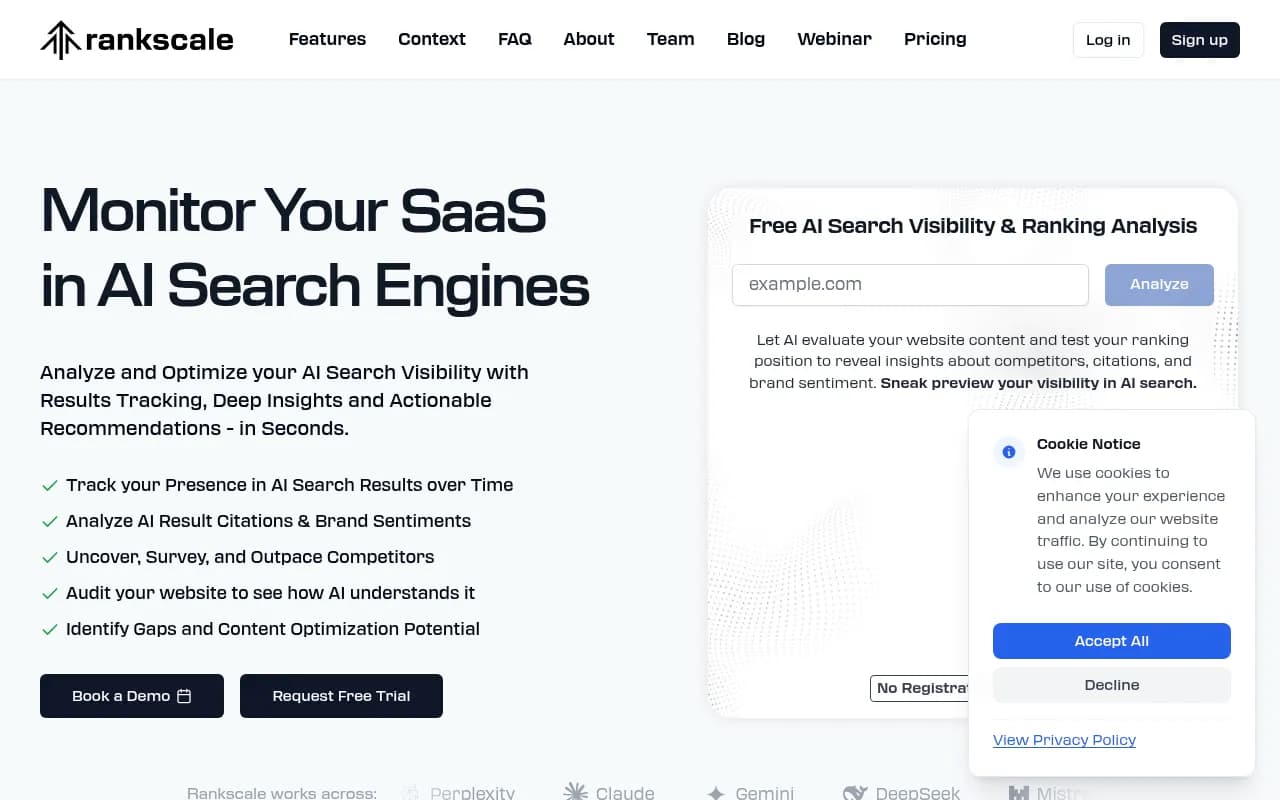
Rankscale is built specifically for agencies managing AI visibility across multiple clients. It has a cleaner multi-client interface than most AI monitoring tools, and it tracks brand mentions across several major LLMs. The reporting is white-label capable, which puts it ahead of Profound for agency use.
It's more of a monitoring tool than an optimization platform -- you'll see where clients are and aren't appearing, but the content optimization side is limited. Think of it as a step up from Profound for agencies that need multi-client management and white-label output, but still need a separate tool for content creation.
Otterly.AI: simple AI monitoring for smaller agencies
Otterly.AI tracks brand mentions across ChatGPT, Perplexity, and Google AI Overviews. It's straightforward to set up and has a clean interface. For agencies with a handful of clients who want basic AI visibility reporting, it works.
The limitations become apparent as you scale. There's no crawler log data, no content generation, no Reddit or YouTube tracking, and the prompt customization is limited. It's monitoring-only, which means you can report on visibility but can't help clients improve it from within the platform.
Otterly.AI

Ahrefs: strong SEO foundation, limited AI search depth
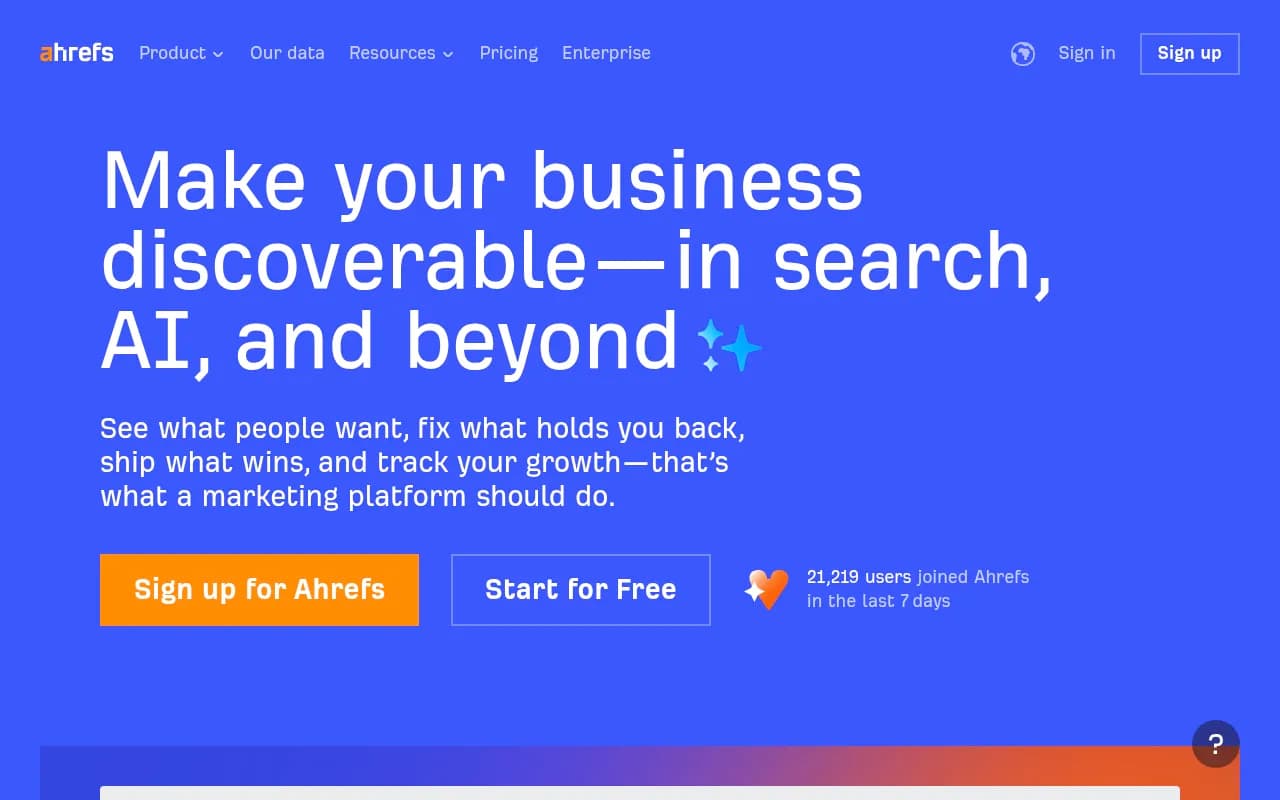
Ahrefs is the other major traditional SEO platform worth mentioning. Its Brand Radar feature tracks some AI search mentions, but it uses fixed prompts and doesn't connect visibility data to traffic attribution. For agencies already deep in the Ahrefs ecosystem, it's a reasonable starting point for AI visibility, but it won't replace a dedicated GEO platform.
Where Ahrefs genuinely excels is backlink analysis and keyword research -- two things that still matter for AI search, since AI models tend to cite authoritative, well-linked content.
GoHighLevel: white-label agency OS (not GEO-focused)
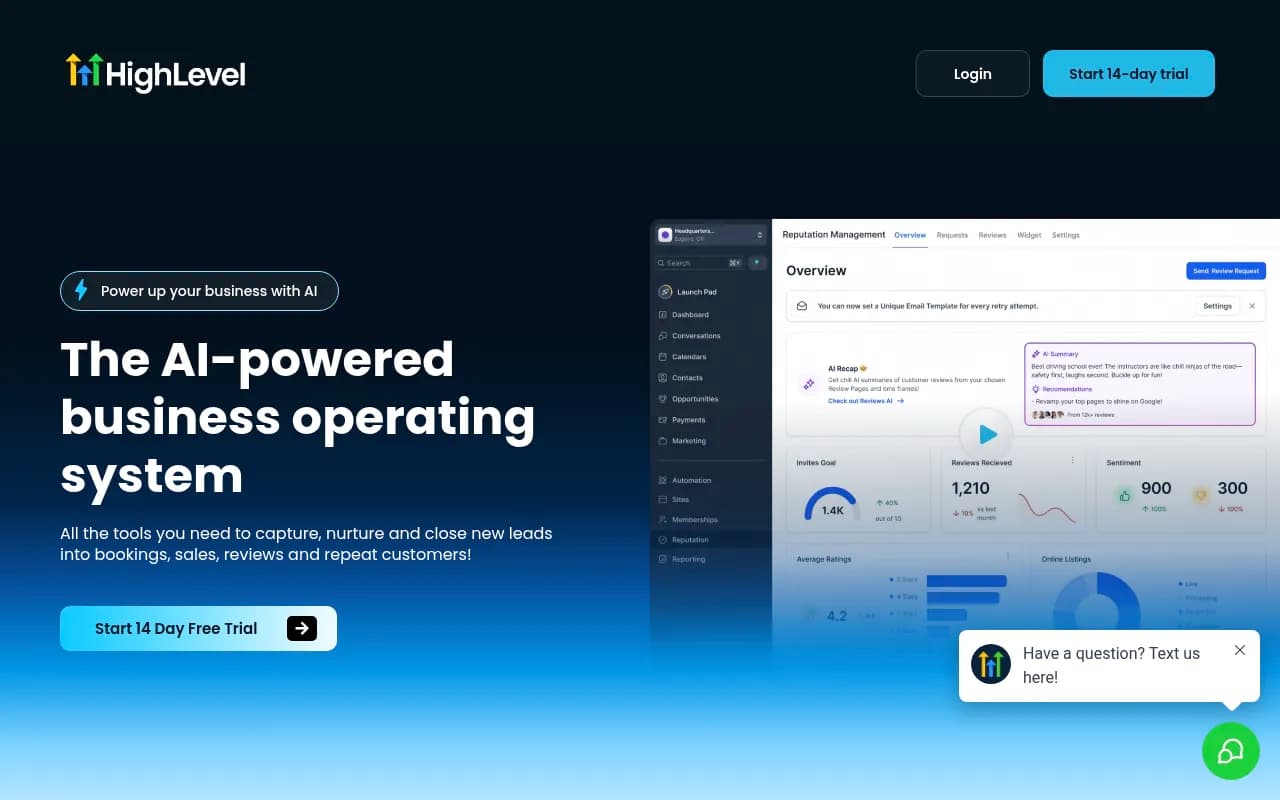
GoHighLevel deserves a mention here because many agencies are already using it as their operational backbone. It's a full white-label platform covering CRM, email/SMS marketing, landing pages, reputation management, and client reporting -- all under your brand.
It doesn't track AI search visibility at all. But if you're an agency looking for a white-label platform to run client operations and you want to layer in a separate AI visibility tool (like Promptwatch), GoHighLevel handles the infrastructure side well.
Vendasta: white-label marketplace for full-service agencies
Vendasta is an agency platform built around a marketplace of resold local marketing tools. It includes a branded CRM, automation, billing, and client portals. Like GoHighLevel, it's more of an agency operating system than a GEO tool -- but it has a broader marketplace of services you can resell under your brand.
If you're a full-service agency that wants to offer AI visibility monitoring as a resold service, Vendasta's marketplace model could work. The native AI search tracking is limited, but you could potentially integrate a dedicated tool.
Feature comparison table
| Tool | AI search monitoring | White-label reporting | Multi-client management | Content optimization | Crawler logs | Pricing (starting) |
|---|---|---|---|---|---|---|
| Profound | Yes (9+ LLMs) | No | Limited | No | No | ~$500/mo |
| Promptwatch | Yes (10 LLMs) | Yes (agency plans) | Yes (up to 5+ sites) | Yes (Content Agents) | Yes | $99/mo |
| SE Ranking | Google AI Overviews only | Yes | Yes | Basic | No | ~$65/mo |
| Semrush | Google AI Overviews only | Yes | Yes | Yes (SEO-focused) | No | ~$140/mo |
| Rankscale | Yes (multiple LLMs) | Yes | Yes | Limited | No | Custom |
| Otterly.AI | Yes (3 platforms) | Limited | Limited | No | No | ~$99/mo |
| Ahrefs | Limited (Brand Radar) | No | Yes | Yes (SEO-focused) | No | ~$129/mo |
| GoHighLevel | No | Yes (full white-label) | Yes | No | No | $97/mo |
| Vendasta | Limited | Yes (full white-label) | Yes | No | No | Custom |
How to choose the right stack for your agency
The honest answer is that most agencies need two layers: an AI visibility and optimization platform, and a reporting/client management layer.
For the AI visibility side, the question is whether you need monitoring only or monitoring plus optimization. If clients are asking "why aren't we showing up in ChatGPT?" and expecting you to fix it, monitoring-only tools leave you stuck. You can show them the problem but not solve it. That's where Promptwatch's content generation and gap analysis become genuinely useful -- you can run the full cycle from audit to published content to improved citations, all within one platform.
For the reporting and client management side, SE Ranking and Semrush both have mature white-label systems that agencies have used for years. If you're already on one of them, the path of least resistance is to add a dedicated AI visibility tool on top rather than switching everything.
A few questions to help narrow it down:
- How many clients are you managing? Under 5, most tools work. Over 10, you need something with proper workspace isolation.
- Are clients asking about AI search specifically, or just "SEO"? If it's the former, a dedicated GEO platform is worth the investment.
- Do you need to show clients what you're doing to improve their visibility, or just report on where they stand? The former requires optimization capabilities, not just monitoring.
- Is white-label reporting a hard requirement? If yes, Profound is off the table immediately.
The agency AI visibility stack that actually works in 2026
Based on what agencies are actually running in 2026, the most common effective stack looks like this:
For AI search visibility and optimization: Promptwatch handles the monitoring, gap analysis, and content generation. Crawler logs tell you why AI engines aren't citing client content. The Content Agents generate the pieces needed to fill gaps. Page-level tracking shows results over time.
For traditional SEO and white-label reporting: SE Ranking or Semrush for rank tracking, site audits, and client-facing reports. Both have mature white-label systems and cover Google AI Overviews.
For client operations: GoHighLevel or Vendasta if you need a full white-label CRM and service delivery layer.
The tools that try to do everything -- full traditional SEO plus full AI visibility plus white-label client management -- don't exist yet in a single platform. The best agencies are running a small, deliberate stack rather than searching for one tool that covers everything.
What's changed in 2026 is that AI search visibility has moved from "nice to have" to a line item clients are actively asking about. Agencies that can show clients their ChatGPT and Perplexity citation rates -- and demonstrate they're improving them -- have a meaningful competitive advantage over those still reporting only on Google rankings.
The tools to do that exist. The question is which combination fits how your agency actually works.