Key takeaways
- AI answers vary by geography. Frost Bank wins Texas, BECU beats Chase, Bank of America and Wells Fargo in Washington, and PNC leads Ohio and Pennsylvania, so a national visibility score hides most of what matters to a regional brand.
- State-level tracking is often gated to higher plans. Country-level geo (like "unlimited countries") is not the same thing, so check the feature page and the plan tier before you buy.
- Prompt math gets ugly fast. 50 states times your prompt list times several engines can blow through a lower-tier prompt cap in one afternoon.
- Vendor comparison pages contradict each other on prices and local features. Treat every number here as something to confirm on the official pricing page.
- For banks and multi-location chains, branch landing pages, product pages and FAQ pages are the likely citation surface, so pair tracking with content that fixes the gaps.
Why state-level tracking matters for banks and regional chains
A national average tells a regional bank almost nothing. The 5W "50-State Banking AI Map" looked at state-level recommendations across five answer engines and found that the three largest banks in America hold the dominant recommendation in only six states between them. Frost Bank, a Texas-only bank, owns Texas. PNC takes Ohio and Pennsylvania. Regions owns Alabama and flips Florida. And BECU, a Seattle credit union, outranks Chase, Bank of America and Wells Fargo in Washington State.
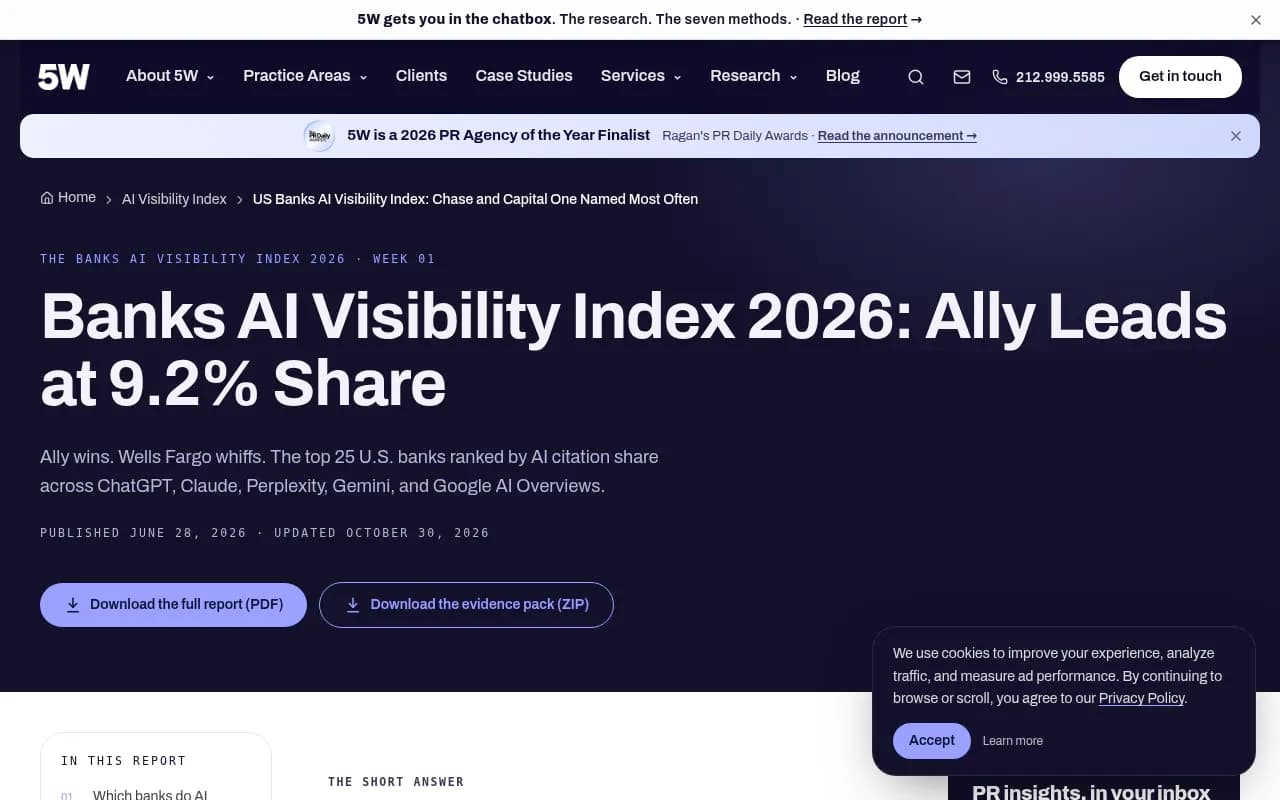
The flip side is less comfortable. The headline from 5W's separate AI Visibility Index says most US regional banks are invisible inside ChatGPT, Claude and Google AI Overviews. So if you run a regional bank or a 200-location chain, you probably have two questions. Where do we show up, and in which states are we losing to a bigger name or a local rival?
Only state-level (and often city-level) tracking answers that. The same goes for chains: "best pharmacy near me" or "best regional grocery in Ohio" returns a different set of brands depending on where the question is asked.
What "state-level tracking" should actually mean
Vendors use the phrase loosely. Before you shortlist anything, pin down which of these you are really getting.
- Country-level only. Peec AI reportedly advertises unlimited countries. That is useful for international brands and useless for a bank that operates in seven states.
- State or city as a separate read. Each location is tracked as its own result, so you can compare Ohio against Pennsylvania instead of blending them.
- Exact-coordinate or location-pinned tracking. The strongest option for branch-level and "near me" questions.
- Prompt text with a place name added. Some tools just append "in Texas" to a prompt. That is a different thing from asking the engine as if the user were in Texas, and the results can differ.
I could not verify how most vendors implement geo-targeting (IP and proxy versus prompt text), so ask that directly in every demo. It changes how much you can trust the numbers.
Comparison table: who offers state or city tracking
The table below mixes vendor claims and third-party comparisons, and those sources disagree in several places. Pricing and feature tiers change often. Verify everything on the official site.
| Tool | Geo granularity | Engines | Reported entry price | Watch out for |
|---|---|---|---|---|
| Promptwatch | Country on every plan; state and city on Business and above; exact-coordinate local targeting on Business, Agency Scale and Enterprise | ChatGPT, Gemini, Perplexity, Claude, Google AI Overviews, AI Mode, Copilot and more | $95/mo (Essential) | State and city tracking starts at Business ($579/mo) |
| SE Visible (SE Ranking) | State or city, per project or per prompt | ChatGPT, Gemini, AI Mode, AI Overviews | Not shown on the page I found; 10-day free trial | Results labelled "down to state level where supported" |
| BrightLocal AI Visibility Tracker | Location-level | Google AI Overviews, AI Mode, ChatGPT | From $31/mo (included in subscriptions) | 20 prompts per location; vendor's own comparison |
| Peec AI | Country-level | Multi-engine | $80/mo or $95/mo depending on source | Not state-level |
| Profound | Sources conflict on location tracking | ChatGPT on the entry plan per one source | Sources conflict ($99/mo vs not public) | Confirm with sales |
| Searchable | Not confirmed in my research | Multi-model | Pro $125/mo, Enterprise $999/mo | Confirm geo features |
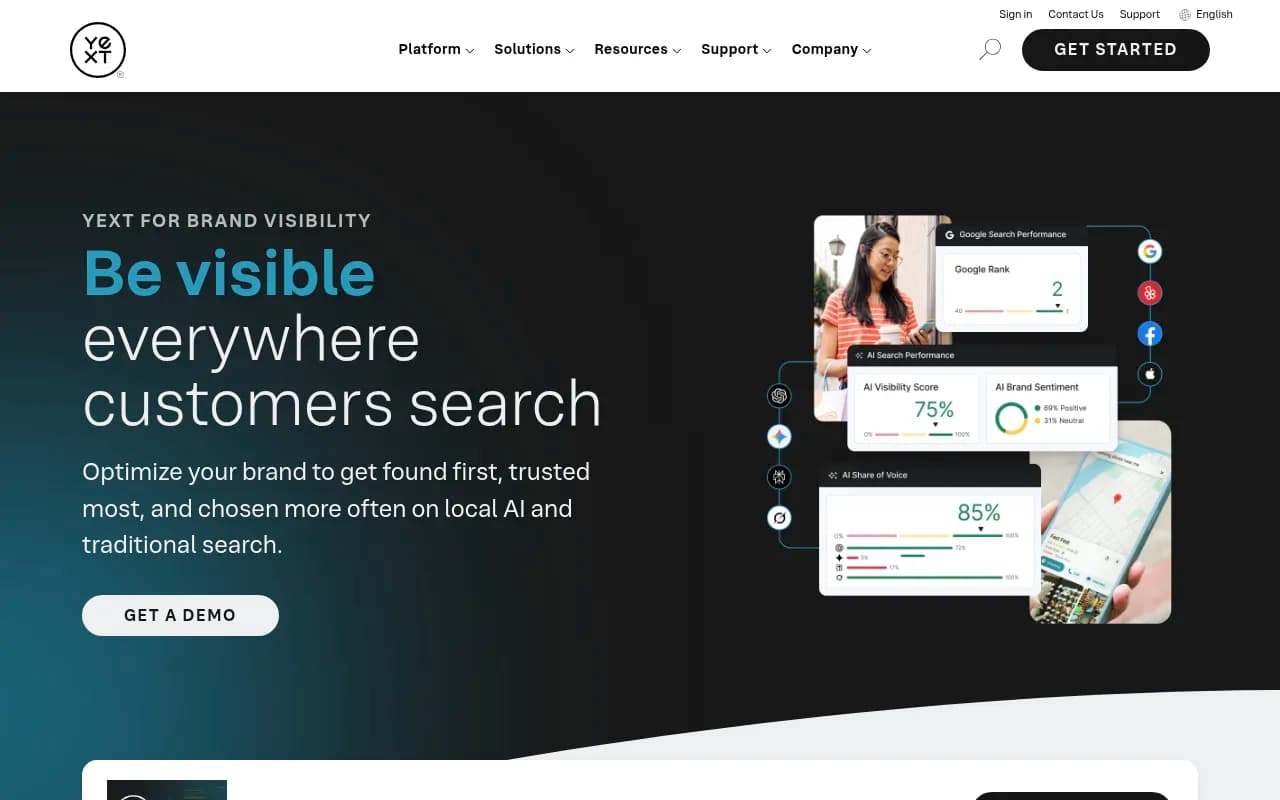
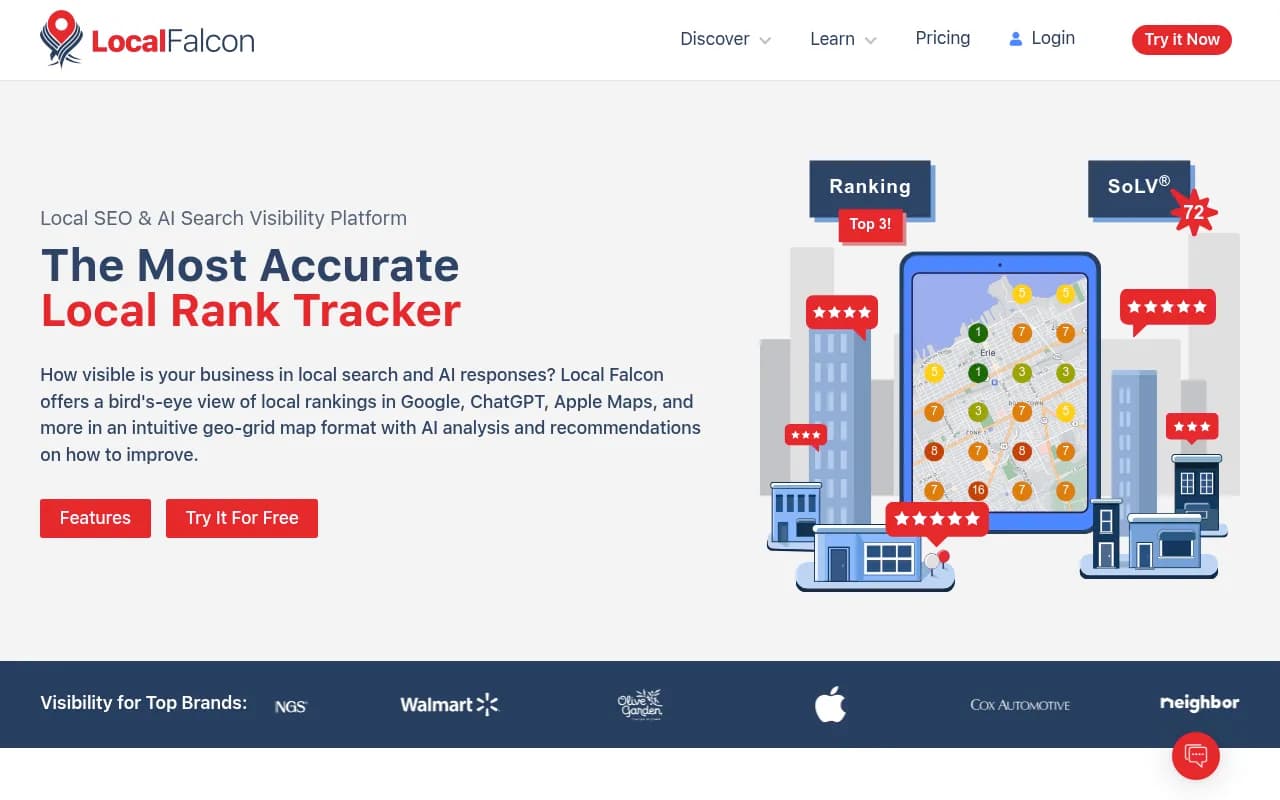
| Yext / Local Falcon | Location-level per BrightLocal's table | Varies | Yext not public; Local Falcon from $24.99/mo | Local-listing and geo-grid tools, not full AI visibility platforms |
Promptwatch
Promptwatch is the option I would put first on a shortlist for a regional bank or multi-state chain, mainly because it covers the whole loop rather than only the reporting. Country tracking is on every plan. State and city tracking is on Business, the agency plans and Enterprise, and local GEO/SEO targeting lets you pin a monitor to exact coordinates (accuracy radius from 20 m to 5 km) so ChatGPT, Google AI Overviews and Google AI Mode answer as if asked from that spot. That is the closest thing to the way a customer in Columbus actually asks.

A few details matter for this use case:
- A monitor's language and location are fixed once created, so markets never mix. You would build one monitor per state or metro.
- It collects from the real interfaces of ChatGPT, AI Overviews, AI Mode, Gemini, Perplexity and Copilot, not just APIs, because user-facing answers and citations can differ from API output.
- Business adds Fact Check, which matters for banks. Brand Narrative pulls out the individual claims AI makes about you (rates, fees, branch access), and Fact Check lets you mark one as inaccurate and find the page it is probably learning it from.
- Business also includes tracking every 12, 6 or 1 hours, the Content Agent and the Action Board. Business is $579/mo with 350 prompts and 42,000 responses, so do the prompt math before assuming it covers 50 states.
- ISO/IEC 27001 certification and GDPR compliance help when security reviews get involved. I found no bank-specific regulatory material (FINRA, UDAAP) in my research, so your compliance team still has to review any AI-generated content.
One caution. Radarkit, a competitor, lists a $95/month starting price and says higher tiers track by country, state and city, but its own table shows "No" in a local-tracking column for Promptwatch. That contradicts its text, so confirm on promptwatch.com/pricing. There is a 7-day free trial on monthly billing, and a free AI visibility report if you just want a first read.
SE Visible (SE Ranking)
SE Visible is the most explicit about state and city tracking in the material I found. Its local page says prompts and mentions can be tracked down to the state or city, with each city getting its own read, and results rolled up by market or franchise group. You can use one geography for a whole project, or point individual prompts at different cities.
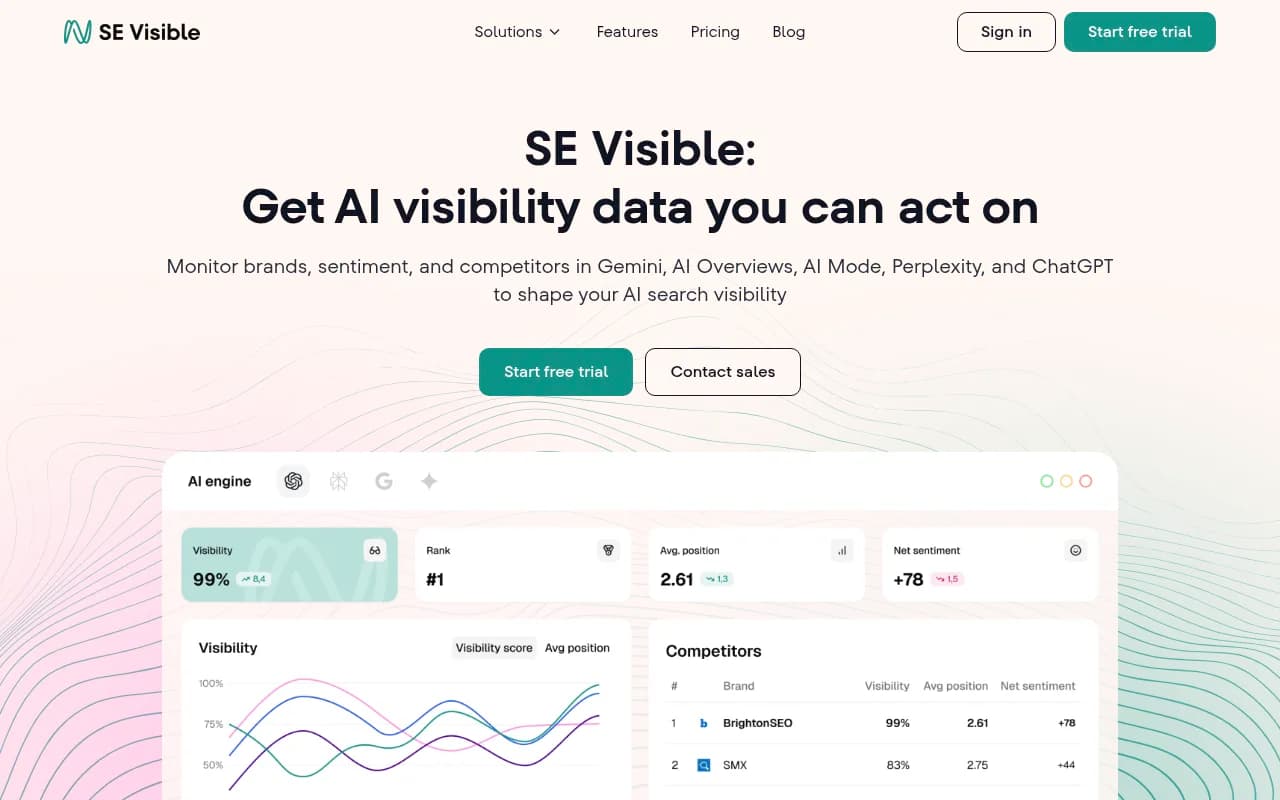
Plans run daily across ChatGPT, Gemini, AI Mode and AI Overviews: 75 prompts across 5 projects, 200 prompts across 10 projects, and 1,000 prompts across 30 projects. Annual billing saves 20% and there is a 10-day free trial. The page excerpt did not show prices. It is a monitoring product, so you will need other tools to fix what it finds. If you already use SE Ranking, the add-on route is convenient.
BrightLocal
BrightLocal is the budget route for location-level tracking. Its AI Visibility Tracker covers up to 20 prompts per location across Google AI Overviews, AI Mode and ChatGPT, is included in all subscriptions, and starts at $31/month. Note that BrightLocal is a vendor and its comparison table marks several rivals "No" for location tracking, which should be read as self-interested.
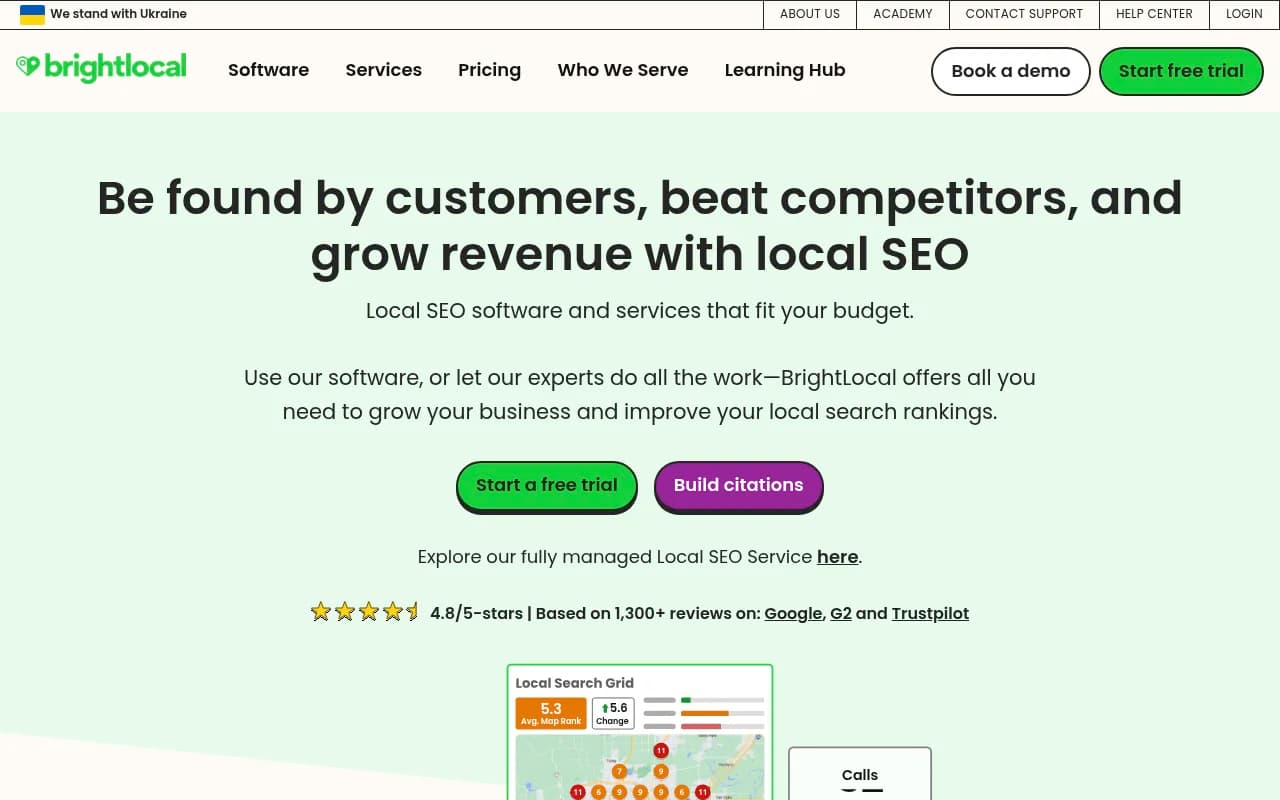
The 20-prompts-per-location cap matters for chains. A 300-branch brand gets a lot of locations but a short prompt list for each. It fits franchise and branch-level questions better than a statewide share-of-voice view.
Peec AI, Profound and Searchable
Peec AI is a clean, affordable tracker, but the geo story I found is country-level. Radarkit lists $80/month and BrightLocal lists from $95/month, so the two sources disagree.

Profound is the enterprise name most banks will hear first. Radarkit says Starter is $99/month with 50 prompts and ChatGPT only. BrightLocal says pricing is not public and that Profound has no location-level tracking. Those cannot both be right, so ask for the current plan in writing.
Profound

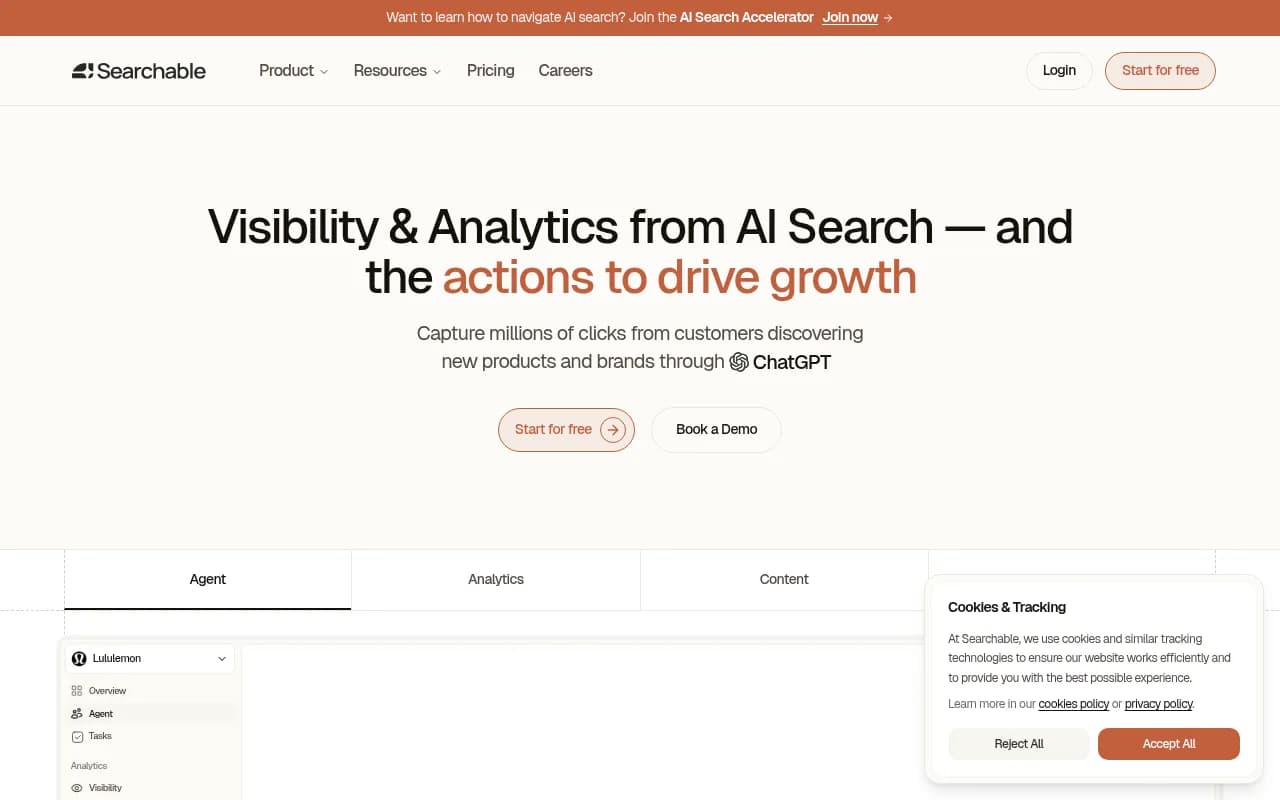
Searchable's Pro plan is reportedly $125/month for 100 prompts per model and up to 9,000 answers per month, with Enterprise at $999/month for 1,250 prompts. I did not confirm its geo granularity.
One more mention: a Reddit r/aeotips list describes an unnamed tool at $29/month for 15 prompts, with local business tracking on all plans and state and city tracking on Enterprise. The snippet does not name it, so I would not build a decision on it.
Local listing and reputation platforms worth pairing
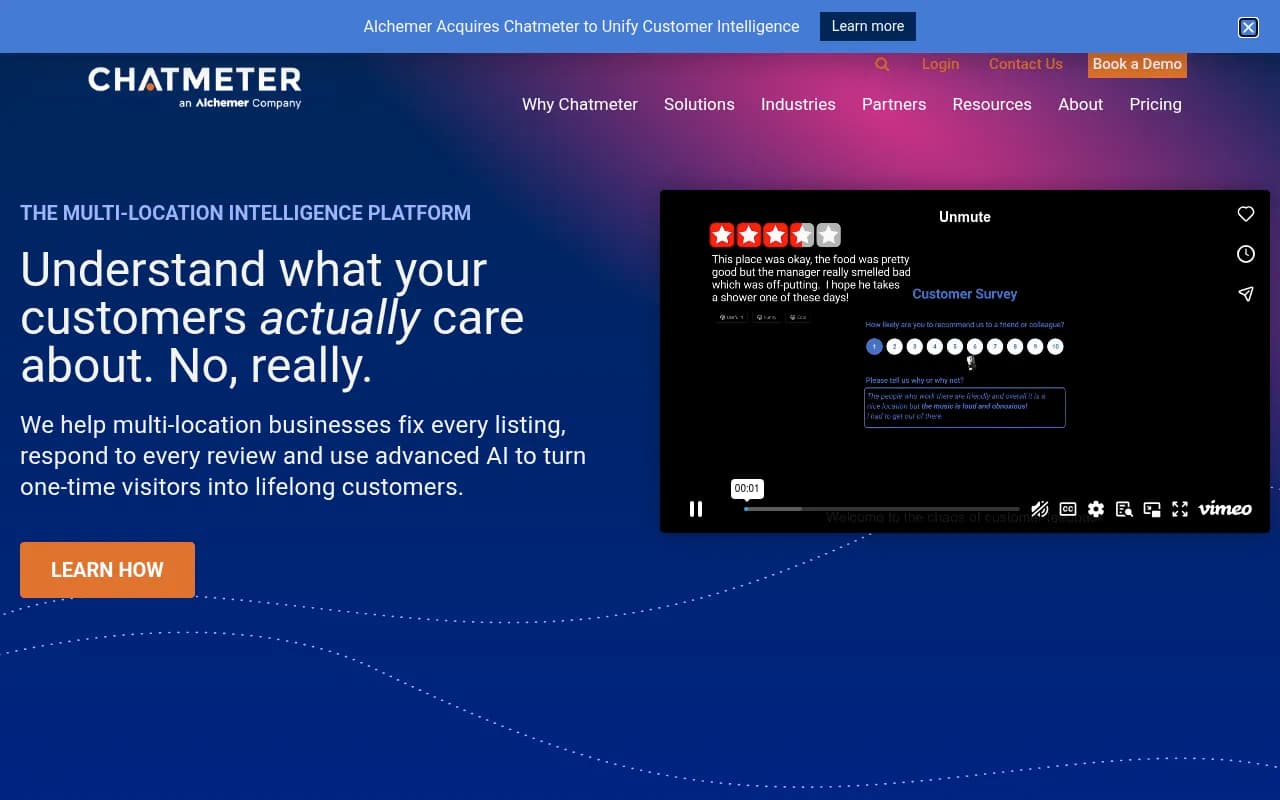
For multi-location brands, a prompt tracker rarely works alone. Listing consistency, reviews and branch data feed what AI engines repeat. If you manage hundreds of branches, look at Yext, Uberall, Chatmeter or SOCi alongside whichever tracker you choose.
For a wider look at the category, the GEO software directory at bestgeosoftware.com lists more options.
Do the prompt math before you pick a plan
This is where regional programs quietly fail. Take a bank in eight states with 25 core prompts ("best checking account in Ohio", "small business loans near me", "best credit union for auto loans"). That is 200 state-prompt combinations before you add engines. Run it across four engines and you are at 800 prompt runs per cycle, every day.
Some ways to keep it manageable:
- Start with the five or six states where you have the most branches or deposits, not all fifty.
- Split prompts into a core set tracked everywhere and a smaller set tracked only where a product is sold.
- Track metro areas for your three or four biggest markets instead of every city.
- Use fast (hourly) tracking only for launches or rate promotions.
- Check response limits too. Promptwatch Business includes 42,000 responses a month, SE Visible tiers cap by prompt count, and BrightLocal caps by location.
Which prompts to track for banks and chains
Promptwatch's content-type data (Sep 28 to Oct 4, 2026) shows product pages make up 22.4% of ChatGPT citations, landing pages 16.8% and listicles 13.6%. For commercial prompts the lean is stronger: product pages 26.0%, landing pages 20.6%. Branded prompts cite product pages at 23.3% and landing pages at 22.8%. For a bank or chain, that points to branch and location landing pages, product pages and FAQs as the main surface AI can cite.
So track a mix:
- Commercial: "best bank for first-time homebuyers in [state]", "best regional credit union near me"
- Branded: "is [your bank] good for small business", "[your bank] vs [national bank]"
- Competitor: "[local rival] vs [your bank]"
- Informational: "how to switch banks without losing direct deposit"
There is a caveat on geo. Promptwatch's query fanout data shows ChatGPT building short keyword-style searches (average length fell from about 117 characters in December to about 53 in April). I did not find data showing whether those queries carry a state or city name, so treat location effects as something to test, not assume.
What to check before you buy
- Confirm state-level support on the plan you will really pay for, not the demo plan.
- Ask how location is simulated: IP or proxy, coordinates, or text appended to the prompt.
- Check whether results can be grouped by market, franchise group or state in dashboards and exports.
- Ask about audit logs, SSO and role-based access if your security team will review it.
- Ask whether the tool also helps fix gaps, through content creation, CMS publishing or crawler logs, or only reports.
- Run a two-week trial on your three hardest states and compare against what you see by hand.
The free trials help here. SE Visible offers 10 days and Promptwatch offers 7 days on monthly billing.
Fixing what you find
Tracking is the easy half. If a regional rival wins your home state, you need pages and citations that change that. This is where monitoring-only tools stall, and where a platform with a content agent, crawler logs and a prioritized action list earns its price. For more on rival tools that only monitor, the AI rank tracking directory at ai-rank-tools.com is a useful second opinion.
If you want help building the program rather than buying software alone, 1001 SEO Media runs GEO and local SEO engagements for brands, using Promptwatch as its AI visibility platform.
Recommendation
If you are a regional bank or a multi-state chain with a budget above a few hundred dollars a month, shortlist Promptwatch (Business tier) and SE Visible, and test both on your hardest states. If you only need cheap, branch-level checks, BrightLocal is the lowest entry cost in my research. If your footprint is a single country, country-level tools like Peec AI work fine, but they will not tell you why Frost beats you in Texas.
Whatever you pick, confirm pricing and geo features on the vendor site. The comparison pages I found disagree with each other too often to trust any one of them.