Key takeaways
- Local map rank tracking (geo-grids) and AI answer tracking are two different jobs. Few tools do both well, so most multi-location brands end up combining two.
- Brand-level AI trackers like Otterly or Peec are cheap, but they mostly can't tell you how location 87 of 200 performs.
- Per-location pricing scales fast. BrightLocal at $31-$49 per location means 200 locations costs thousands a month, which is why enterprise platforms quote custom prices.
- ChatGPT now searches domains directly, so every location page needs to be crawlable and indexed. Promptwatch Data shows this behavior can change overnight.
- Measure across many prompts and locations. A single prompt tells you very little.
Why local AI visibility is its own problem
If you run 40 dental clinics, 300 franchise gyms or 1,200 hearing-aid shops, you don't have one AI visibility problem. You have hundreds of small ones. A customer asking ChatGPT for "best urgent care near me" gets a different answer in Leeds than in Leicester, and your brand-level mention rate averages those two worlds into a number that hides everything useful.
Most AI visibility tools were built for SaaS brands that care about one global answer. They track a prompt set, count mentions, report share of voice. That is fine for a software company. For a multi-location brand it misses the point: the question is which locations show up, which don't, and why.
So the tool category splits into a few groups:
- Geo-grid map trackers that have added AI tracking (Local Falcon, BrightLocal)
- Multi-location platforms that added AI modules (Yext, Birdeye, Uberall)
- Brand-level AI visibility platforms with country, state or city tracking (Promptwatch and a few others)
- Cheap general AI trackers that are fine for a headline number but not for location detail
A caveat on sources: most comparison articles on this topic are written by vendors (Birdeye, Yext, Rank.ai, Speak Local). I've used their pricing and feature claims as snapshots and flagged where they conflict. Check vendor pages before you buy.
What actually changes in ChatGPT for local queries
Before picking a tool, it helps to know what you are measuring. A few findings from Promptwatch Data are directly relevant.
ChatGPT can search your domain directly
On August 8, 2026, ChatGPT Search started using the site: operator at scale. According to Promptwatch's data on ChatGPT site: operator fan-outs, site: queries jumped from 0.37% to 16.8% of fan-out queries overnight, and average fan-outs per response rose from about 1.08 to about 1.83.
For a multi-location brand, the implication is practical. Each location page has to be crawlable and indexed, because ChatGPT can now go look inside your domain for "Denver branch hours". Any keyword-to-prompt mapping you built before that date is stale. This is also the argument for continuous monitoring over one-off audits.
What content types get cited
In Promptwatch's ChatGPT citation share by content type report (Sep 28 to Oct 4, 2026), product pages made up 22.4% of classified citations, landing pages 16.8% and listicles 13.6%. For commercial prompts, product pages hit 26.0% and landing pages 20.6%. For branded prompts, reviews rise to 5.6% and FAQ pages to 4.8%.
Promptwatch did not publish a local-specific breakdown, so this part is my inference: location pages behave like landing pages, and review sites matter most for branded "[brand] near me" style queries. Treat that as a hypothesis to test in your own data.
Why one prompt tells you nothing
Promptwatch Data on unique domains per response found that 47.6% of ChatGPT responses cite 10 or more domains, but only 21.3% of brand-specific prompts do. The most common count for brand-specific prompts is 5 domains. The spread is wide, so you need many prompts per location to see a signal.
The tools, grouped by job
Geo-grid trackers with AI tracking
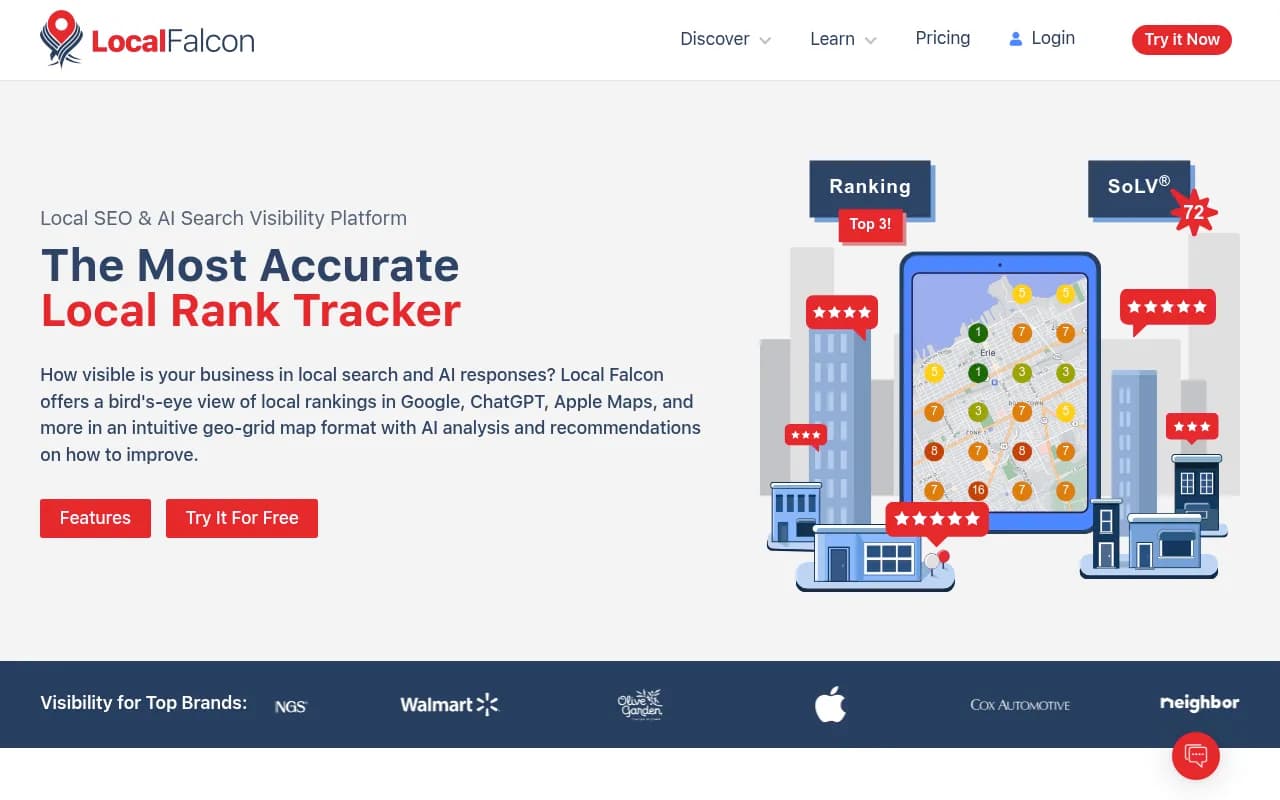
Local Falcon visualizes Google Business Profile rankings across neighborhoods and ZIP codes on a map, and has added AI visibility tracking. Pricing runs from $24.99 to $199.99 a month billed annually, sold in credits, with enterprise up to $4,999 and 100 free credits with no card. Grids go from 3x3 to 21x21 and cover Google Maps and Apple Maps. The number of AI platforms it tracks varies by source (Rank.ai lists 5, Speak Local lists 8), so verify on the vendor site. The common criticism is credit-based pricing, which bites agencies running frequent scans across many locations.
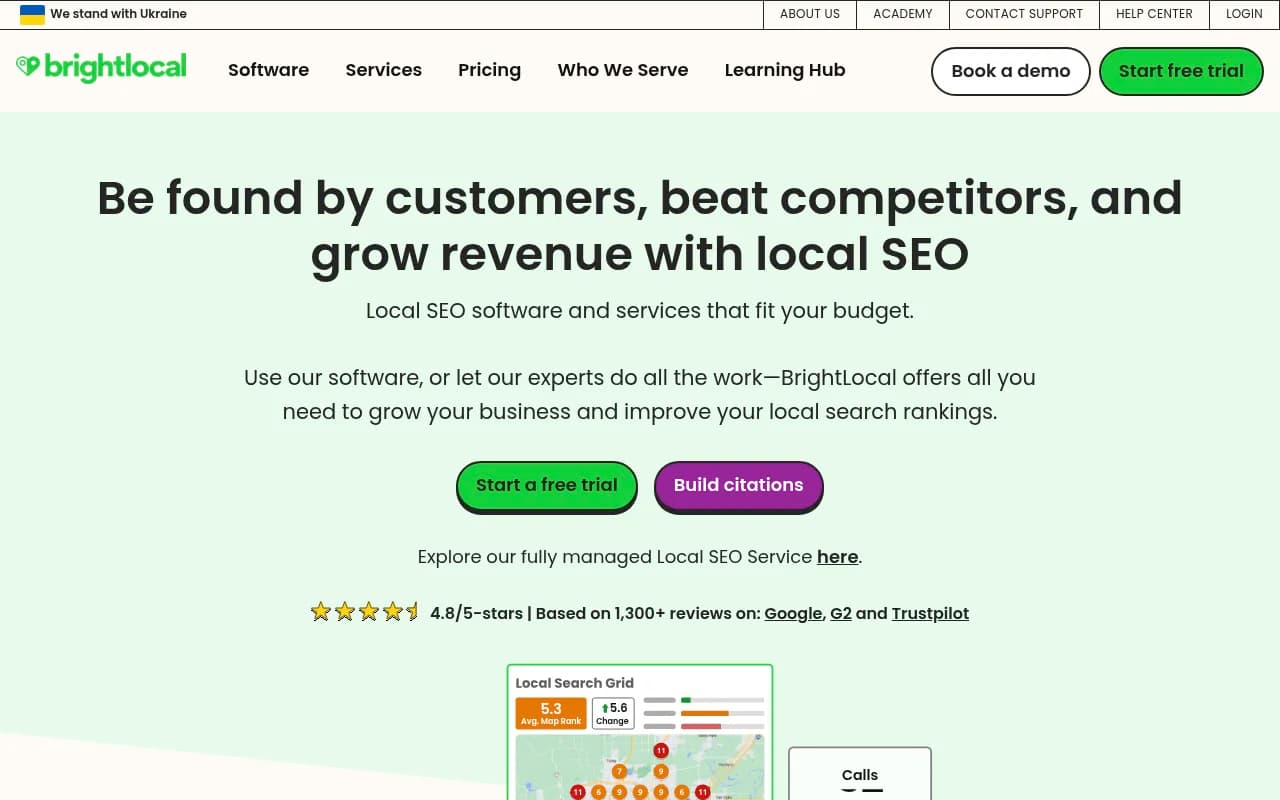
BrightLocal is the familiar name in local SEO. It lists a Local AI Visibility Tracker covering ChatGPT, AI Mode and AI Overviews, plus a local search grid for up to five keywords. Pricing is $31-$49 a month per location billed annually, with a 14-day trial. That per-location model is fine at 10 locations and painful at 300.
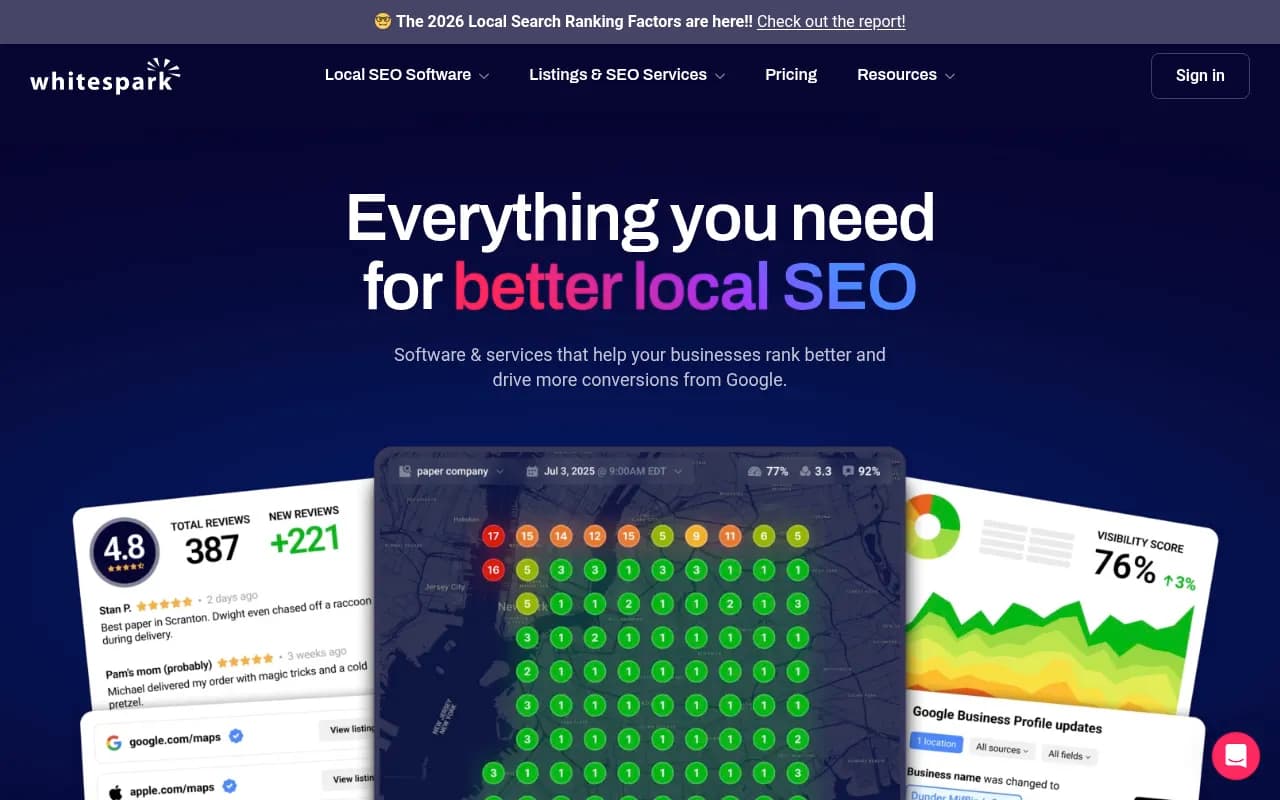
Other grid trackers worth a glance: Local Dominator ($33-$164 a month, AI tracker on every plan), LocalOptics/Local Viking ($39-$200, no AI tracking listed) and Whitespark (grids from $10 a month, no AI tracking). Whitespark is in our catalog.
Multi-location platforms
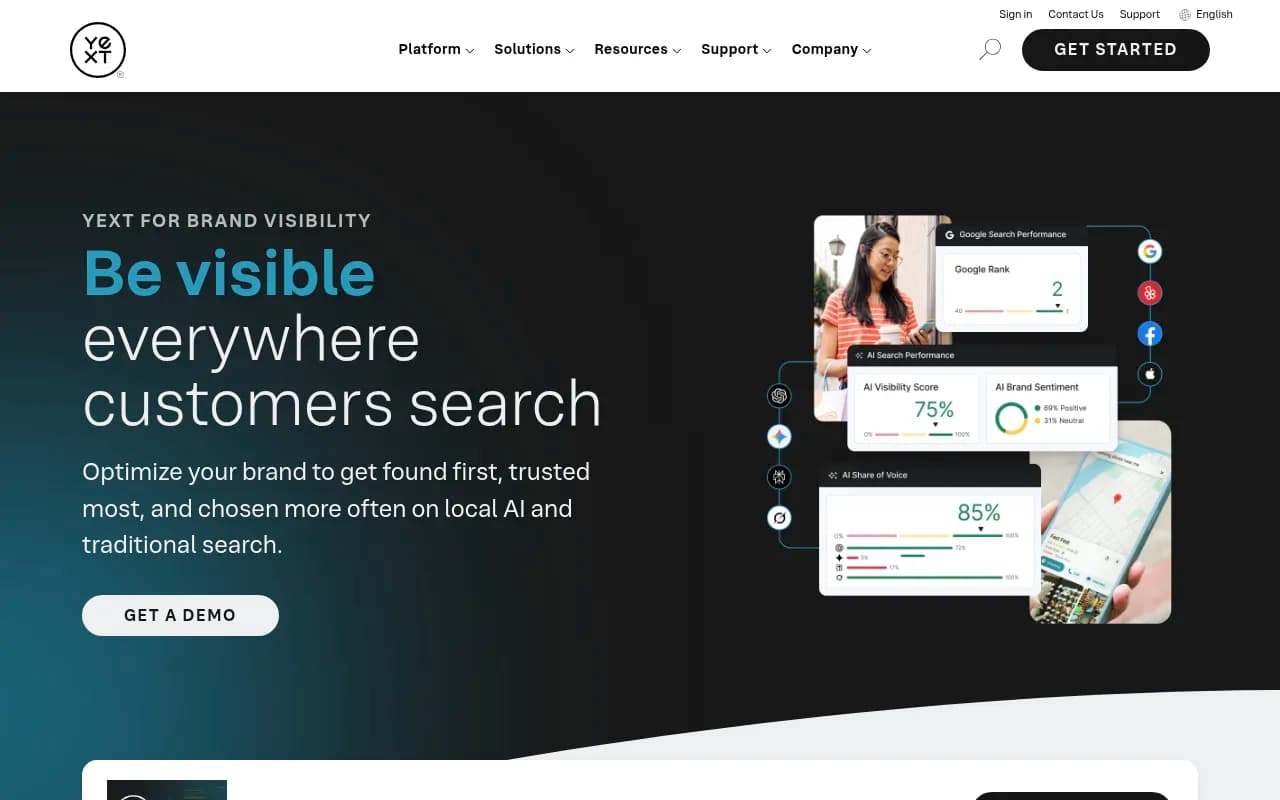
Yext has Scout, which reports brand-level share of voice and location-level win rate against up to 20 nearby named competitors, across 150 metrics and four AI models. It is included in the Yext platform and has no public pricing. Yext cites a case study where Beltone, with 1,200+ locations, reported a 186% increase in AI citations across its clinics. That is a vendor claim, so weigh it accordingly.
Birdeye offers per-location visibility, rankings, sentiment and citations in its Search AI product, with custom pricing based on locations and modules. Birdeye's own comparison says Yext Scout is "primarily brand and category level", which directly contradicts Yext's location-level claim. That is vendor positioning from both sides. Run a pilot on your own locations rather than trusting either.

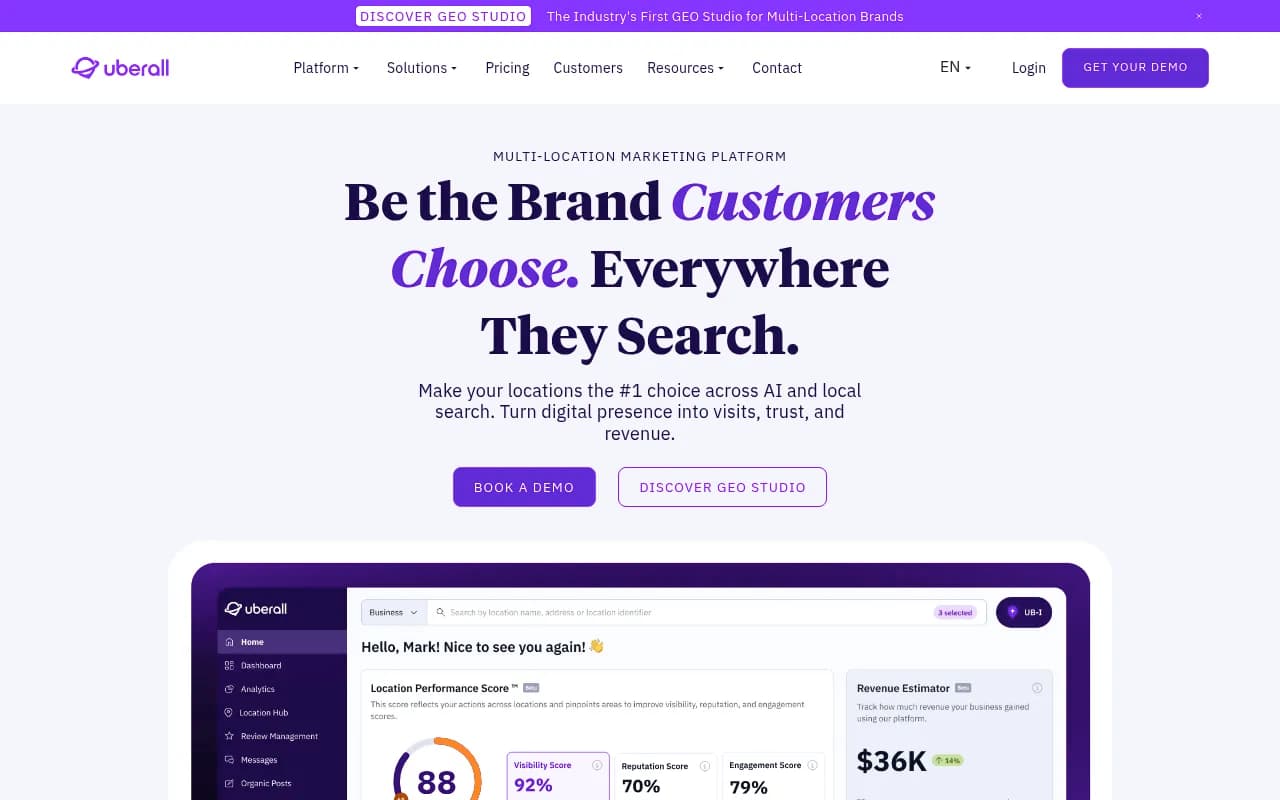
Uberall lists GEO Studio with nine models, share of voice, source breakdown (Reddit, TikTok, YouTube) and hallucination detection, sold as an add-on. That description comes from Yext, a competitor, so verify.
Other multi-location names in the catalog include Chatmeter, SOCi, Rio SEO, Synup, Partoo and Reputation. They overlap heavily with the platforms above on listings and reviews; their AI visibility modules vary, so ask for a demo on your own data.
Brand-level AI visibility with geographic tracking
This is where Promptwatch fits. It monitors the real interfaces of ChatGPT, Google AI Overviews, Google AI Mode, Gemini, Perplexity and Copilot, with country tracking on every paid plan and state/city tracking from the Business plan. That matters for local work, because ChatGPT answers differ by location and API outputs don't reflect what a user in Denver actually sees.
What I find more useful for multi-location brands is the rest of the stack. IP-verified AI crawler logs show whether ChatGPT's bots are actually reading your location pages and hitting errors. Page-level tracking and citation analytics show which location pages get cited. The Content Agent and Action Board help turn gaps into fixes. It is not a geo-grid map tool, and it is not a listings manager, so you would pair it with one.

If you want to compare more options in the category, the GEO software directory at bestgeosoftware.com is a good place to browse.
Budget general AI trackers
OtterlyAI ($29 to $489 a month), Nightwatch (from $32 a month), the Semrush AI toolkit ($99 per domain) and Peec AI are brand-level tools. They are useful for a headline visibility number and trend line, and they are cheap. They are not location-level, so don't expect to see which of your 200 branches is invisible. I did not verify pricing for Peec, Profound, Semrush local features or Birdeye.
Otterly.AI


Comparison table
Prices are snapshots from vendor pages and third-party comparisons. Confirm before buying.
| Tool | Type | AI tracking | Location depth | Pricing snapshot |
|---|---|---|---|---|
| Local Falcon | Geo-grid tracker | Yes (platform count varies by source) | Grid points, 3x3 to 21x21 | $24.99-$199.99/mo annual, credits; enterprise up to $4,999 |
| BrightLocal | Local SEO suite | ChatGPT, AI Mode, AI Overviews | Per location, grid up to 5 keywords | $31-$49/location/mo annual |
| Yext Scout | Multi-location platform | 4 AI models | Location-level win rate vs up to 20 competitors | Not public |
| Birdeye Search AI | Multi-location platform | Yes | Per-location visibility, sentiment, citations | Custom |
| Uberall GEO Studio | Multi-location platform | 9 models | Location add-on | Add-on, custom |
| Promptwatch | AI visibility and GEO platform | Real UIs across major AI engines | Country on all paid plans, state/city from Business | From $95/mo; confirm at promptwatch.com/pricing |
| Otterly / Peec / Nightwatch | Brand-level AI tracker | Yes | Brand-level | From roughly $29-$99/mo |
Which setup fits which brand
5 to 30 locations
A geo-grid tool like Local Falcon or BrightLocal covers your map-pack rankings and gives you some AI tracking. Add a brand-level AI tracker if you want a broader prompt set. Per-location pricing is still reasonable at this size.
30 to 300 locations
This is where per-location pricing hurts. Ask for volume quotes from BrightLocal, and compare against Yext, Birdeye or Uberall, which are built for this scale but quote privately. Pilot on 10 representative locations (urban, suburban, weak, strong) and compare what each tool surfaces.
Agencies
Credit-based pricing (Local Falcon) gets awkward with frequent scans across many clients. Agency plans from Promptwatch (Kick-off at $199/mo, Growth at $399/mo, Scale at $799/mo) include unlimited projects and state/city tracking, and white-label reports. Check the pricing page for the current numbers.
Enterprise and franchise networks
Yext, Birdeye and Uberall bundle listings, reviews and AI tracking, which matters when franchisees control local pages. Pair with a visibility platform that exposes crawler logs if you want to understand why AI does or doesn't read your location pages.
A practical measurement checklist
- Build a prompt set per location type, not per brand. Include "near me", neighborhood, service-plus-city and comparison prompts.
- Track by city or state where the tool allows it. Country-level data hides local differences.
- Measure across at least dozens of prompts per market. One prompt is noise.
- Check that each location page is indexed and crawlable. Since ChatGPT can run site: queries, thin or blocked location pages are a real risk.
- Compare location pages that get cited with those that don't. Look at content type, reviews, schema and page depth.
- Review monthly at minimum. Platform behavior moves overnight, as the August 8 site: change showed.
- Connect to traffic. Mentions are not revenue. Use analytics or a visibility platform with visitor tracking to see if AI referrals convert.
What I'd do
I'd start with a 10-location pilot. Run a geo-grid tool for map-pack performance, a location-aware AI visibility tool for ChatGPT and AI Overviews, and compare. If the multi-location platform you already pay for (Yext, Birdeye) has an AI module, test it against an independent tracker, since each vendor has an incentive to look good in its own reports.
And be skeptical of any single AI visibility score for a 200-location brand. If a tool can't break results out by location, it's telling you the weather for the whole country.
For broader tool research, surferstack.com has reviews and comparisons across the SEO and GEO space.