Key takeaways
- Bluefish AI is built for large enterprises that need diagnostic depth, brand protection, and security compliance -- it's not designed for mid-market teams or agencies on a budget.
- Most GEO platforms, including Bluefish, are primarily monitoring tools. They show you where you're invisible but don't help you fix it.
- Promptwatch is the only platform rated "Leader" across all GEO categories in 2026, largely because it closes the loop: find gaps, generate content, track results.
- Pricing transparency is a real differentiator in this space -- Bluefish doesn't publish pricing, which makes evaluation harder for teams without enterprise procurement budgets.
- If you're comparing platforms seriously, the right question isn't just "who tracks the most AI engines?" -- it's "what happens after I see the data?"
What Bluefish AI actually is
Bluefish AI positions itself as an enterprise GEO platform built around brand protection and diagnostic depth. The pitch is that it doesn't just track whether your brand appears in AI responses -- it analyzes how your brand is described, whether that description is accurate, and which sources are shaping the model's conclusions.
That's a meaningful distinction from basic mention-counting tools. Most early GEO platforms just tell you "you appeared in 40% of responses this week." Bluefish goes deeper: it looks at narrative accuracy, competitive positioning, and source influence. According to LSEO's 2026 evaluation, Bluefish "outperformed competitors in diagnostic depth" in expert testing.
The platform is clearly aimed at large brands -- Fortune 500 companies, regulated industries, organizations where brand narrative drift is a genuine risk. If a major AI model starts describing your pharmaceutical product incorrectly, or positions a competitor as the default recommendation in your category, that's a business problem. Bluefish is built to catch and flag those issues.
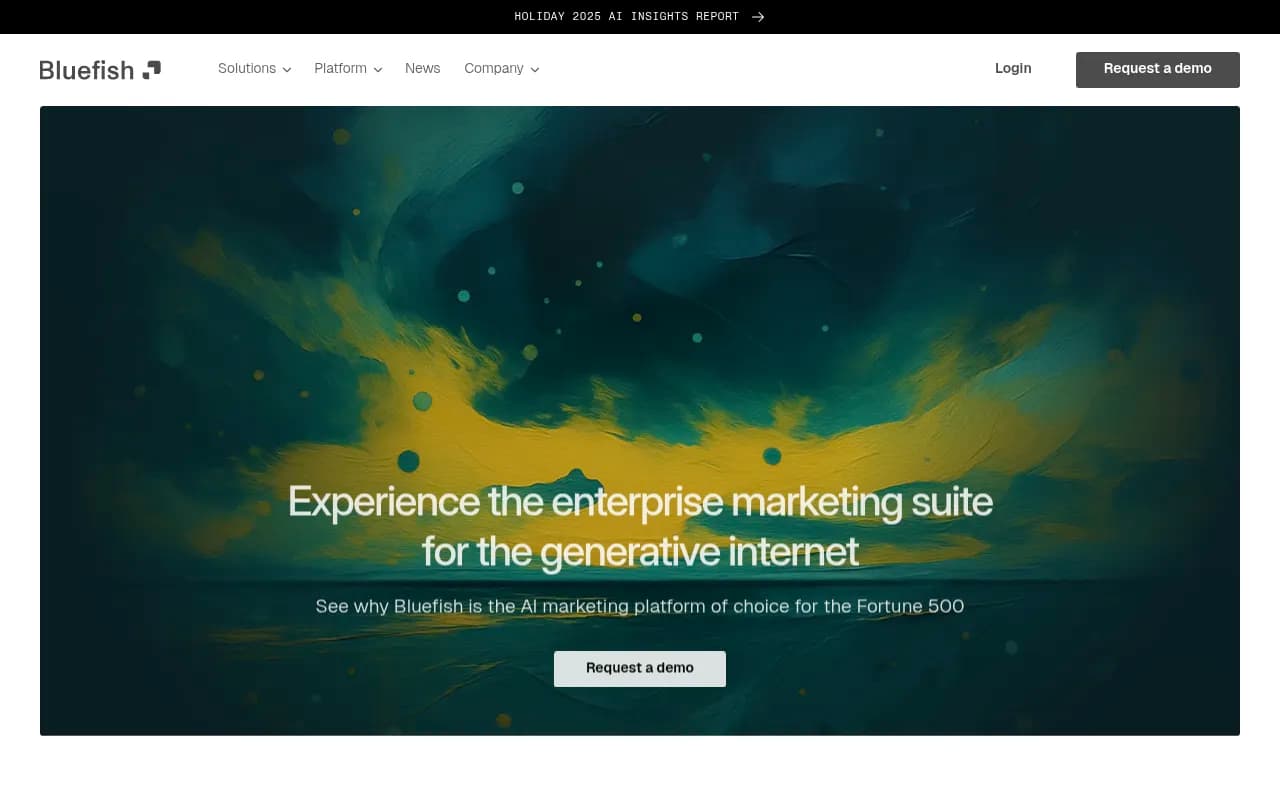
What Bluefish is not built for is teams that want to take action on what they find. The platform's strength is in monitoring and diagnosis. Content optimization, gap analysis, and AI-targeted content generation aren't core features. You get the data; you figure out what to do with it.
The GEO platform landscape in 2026
Before getting into comparisons, it's worth understanding how the category has split. In 2026, there are roughly three types of GEO tools:
Monitoring-only platforms track brand mentions across AI engines and report back. They're useful for awareness but leave you stuck when it comes to improvement. Most tools in this category -- Otterly.AI, Peec AI, Goodie AI, and many others -- fall here.
Diagnostic platforms go deeper than mention counts. They analyze how your brand is described, which sources influence AI responses, and how you compare to competitors. Bluefish AI and AthenaHQ sit in this tier.
Optimization platforms complete the loop. They don't just show you where you're invisible -- they help you fix it. This means content gap analysis, AI-targeted content generation, crawler monitoring, and traffic attribution. Promptwatch is the clearest example of this category.
The distinction matters because monitoring data without a path to action has limited value. Knowing you're invisible in 60% of relevant AI responses is useful. Knowing why, and having tools to change it, is what actually moves the needle.
Bluefish AI vs the top GEO platforms: feature comparison
Here's how Bluefish stacks up against the platforms most commonly evaluated alongside it:
| Feature | Bluefish AI | Promptwatch | Profound | AthenaHQ | Otterly.AI | Peec AI |
|---|---|---|---|---|---|---|
| AI engine coverage | Multiple | 10+ engines | 10+ engines | Multiple | 5+ | 5+ |
| Brand mention tracking | Yes | Yes | Yes | Yes | Yes | Yes |
| Narrative/sentiment analysis | Yes (deep) | Yes | Yes | Yes | Basic | Basic |
| Competitor visibility heatmaps | Yes | Yes | Yes | Limited | No | No |
| Content gap analysis | No | Yes | Limited | No | No | No |
| AI content generation | No | Yes | No | No | No | No |
| AI crawler logs | No | Yes | No | No | No | No |
| Prompt volume/difficulty scoring | No | Yes | No | No | No | No |
| Reddit & YouTube tracking | No | Yes | No | No | No | No |
| ChatGPT Shopping tracking | No | Yes | No | No | No | No |
| Traffic attribution | No | Yes | No | No | No | No |
| Transparent pricing | No | Yes ($99-$579/mo) | No | No | Yes | Yes |
| Best for | Enterprise | All sizes | Enterprise | Mid-market | SMB | SMB |
The pattern is clear: Bluefish is strong on the diagnostic side but doesn't extend into optimization. Promptwatch covers both ends.

Where Bluefish AI genuinely excels
It's worth being specific about what Bluefish does well, because the enterprise use case is real.
Diagnostic depth. Bluefish doesn't just count mentions -- it analyzes the quality and accuracy of how AI models describe your brand. For a large company managing complex messaging across multiple product lines, this level of analysis is genuinely useful. You can catch narrative drift before it becomes a PR problem.
Security and compliance. Bluefish has invested in enterprise security credentials. For regulated industries (finance, healthcare, legal) where data handling requirements are strict, this matters. Not every GEO platform has done this work.
Source influence analysis. Understanding which domains and sources are shaping what AI models say about your category is a meaningful capability. If a competitor's whitepaper is being cited constantly, you know where to focus your content strategy.
Crisis monitoring. If an AI model starts generating inaccurate or damaging content about your brand, Bluefish is designed to catch it quickly. This is a legitimate enterprise risk management use case.
Where Bluefish AI falls short
The gaps are also worth naming directly.
No content optimization loop. Bluefish tells you what's wrong but doesn't help you fix it. There's no content gap analysis, no AI writing tools, no guidance on what to publish to improve your visibility scores. You're expected to take the diagnostic data and figure out the rest yourself.
No crawler monitoring. Knowing which pages AI crawlers are actually visiting -- and which ones they're ignoring or encountering errors on -- is increasingly important for GEO. Bluefish doesn't offer this. Promptwatch's crawler logs show you exactly which pages ChatGPT, Claude, and Perplexity are reading, how often, and what errors they hit.
No traffic attribution. You can't connect your AI visibility data to actual website traffic or revenue. That makes it hard to justify the investment or prove ROI to stakeholders.
Opaque pricing. Bluefish doesn't publish pricing. For teams that need to build a business case or compare options quickly, this is a real friction point. You have to go through a sales process just to understand if the tool is in your budget.
Not built for smaller teams. The platform is designed for enterprise procurement cycles. If you're a marketing team of 5 or an agency managing 10 clients, Bluefish probably isn't the right fit -- and the pricing will likely reflect that.
Promptwatch: the optimization alternative
The core difference between Bluefish and Promptwatch comes down to what happens after you see the data.
Promptwatch is built around a three-step loop: find the gaps, create content that ranks in AI, and track the results. That sounds simple, but most platforms only do the first step.
The Answer Gap Analysis shows you exactly which prompts competitors are visible for but you're not. You see the specific topics and questions AI models want answers to but can't find on your site. Then the built-in AI writing agent generates content grounded in real citation data -- not generic SEO filler, but articles and comparisons engineered to get cited by ChatGPT, Claude, and Perplexity. Then you track whether it worked, down to the page level.
On top of that, Promptwatch offers AI crawler logs (real-time visibility into which pages AI bots are reading), prompt volume and difficulty scoring, Reddit and YouTube tracking, ChatGPT Shopping monitoring, and traffic attribution via GSC integration or server logs.
It covers 10+ AI engines: ChatGPT, Perplexity, Claude, Gemini, Google AI Overviews, Google AI Mode, Meta/Llama, DeepSeek, Grok, Mistral, and Copilot.
Pricing starts at $99/month for the Essential plan (1 site, 50 prompts, 5 articles), $249/month for Professional, and $579/month for Business. There's a free trial.
Profound: the other enterprise option
Profound is the other platform most often compared to Bluefish at the enterprise level. It covers 10+ AI engines with strong analytics, SOC 2 certification, and a focus on visibility tracking across large organizations.
One independent comparison (Nick Lafferty's 2026 analysis) concluded that Profound edges out Bluefish on comprehensive analytics and security certifications. Bluefish counters with deeper narrative analysis and crisis monitoring capabilities.
Neither platform offers content generation or optimization tools -- both are primarily monitoring and analytics platforms. If you're choosing between them, the decision usually comes down to which specific diagnostic capabilities matter most for your organization.
Profound

AthenaHQ: monitoring-focused mid-market option
AthenaHQ sits between the enterprise platforms and the basic monitoring tools. It tracks brand visibility across AI engines and provides some competitive analysis, but like Bluefish, it's primarily a monitoring platform without content optimization capabilities.
It's a reasonable option for mid-market teams that don't need the full enterprise feature set of Bluefish or Profound, but it doesn't solve the "now what?" problem either.

Otterly.AI and Peec AI: lightweight monitoring
For teams that just want basic visibility tracking without enterprise complexity or pricing, Otterly.AI and Peec AI are the most commonly used options. Both track brand mentions across major AI engines and provide simple dashboards.
The trade-off is obvious: you get mention data and not much else. No narrative analysis, no content gap analysis, no crawler logs, no traffic attribution. These tools are fine for getting started with GEO monitoring, but they're not platforms you can grow with.
Otterly.AI


Scrunch AI: influencer signal analysis
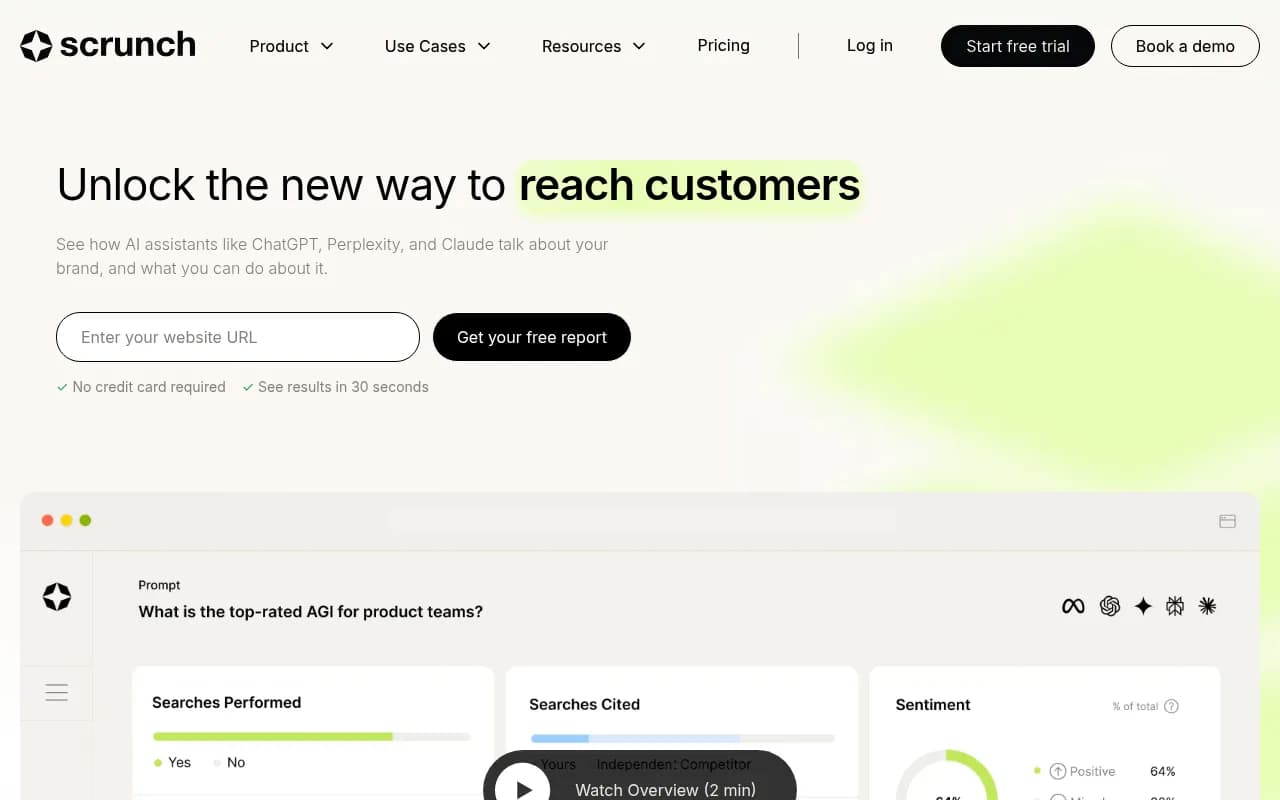
Scrunch takes a different angle -- it focuses on which influencer signals and external content sources are shaping AI responses. If you're trying to understand the broader content ecosystem that influences what AI models say about your category, Scrunch has some useful capabilities.
It's more of a specialist tool than a full GEO platform, and it lacks the monitoring breadth and content optimization features of the leading platforms.
How to choose: a practical framework
The right platform depends on what you actually need to do with the data.
If you're a large enterprise managing brand risk, narrative accuracy, and compliance requirements, Bluefish AI or Profound are worth evaluating. Both offer the diagnostic depth and security credentials that enterprise procurement teams expect.
If you're a marketing or SEO team that wants to actually improve your AI visibility -- not just monitor it -- you need a platform with content gap analysis and optimization tools. Promptwatch is the clearest option here, and it works for teams of all sizes, not just enterprises.
If you're just getting started with GEO and want to understand the basics before committing to a full platform, Otterly.AI or Peec AI give you a low-cost entry point.
If you're an agency managing multiple clients, Promptwatch's agency pricing and multi-site support are worth looking at. Search Party is another agency-oriented option, though it has more limited prompt metrics.
Search Party
The honest summary: Bluefish AI is a well-built diagnostic platform for enterprise brands that take brand protection seriously. But if your goal is to improve where you show up in AI responses -- not just know where you don't -- you need a platform that helps you act on what you find.
Quick reference: which platform for which use case
| Use case | Best option |
|---|---|
| Enterprise brand protection & narrative monitoring | Bluefish AI or Profound |
| Full optimization loop (find gaps, create content, track results) | Promptwatch |
| Mid-market visibility tracking | AthenaHQ or Promptwatch |
| Agency managing multiple clients | Promptwatch |
| Budget-conscious basic monitoring | Otterly.AI or Peec AI |
| Influencer signal analysis | Scrunch AI |
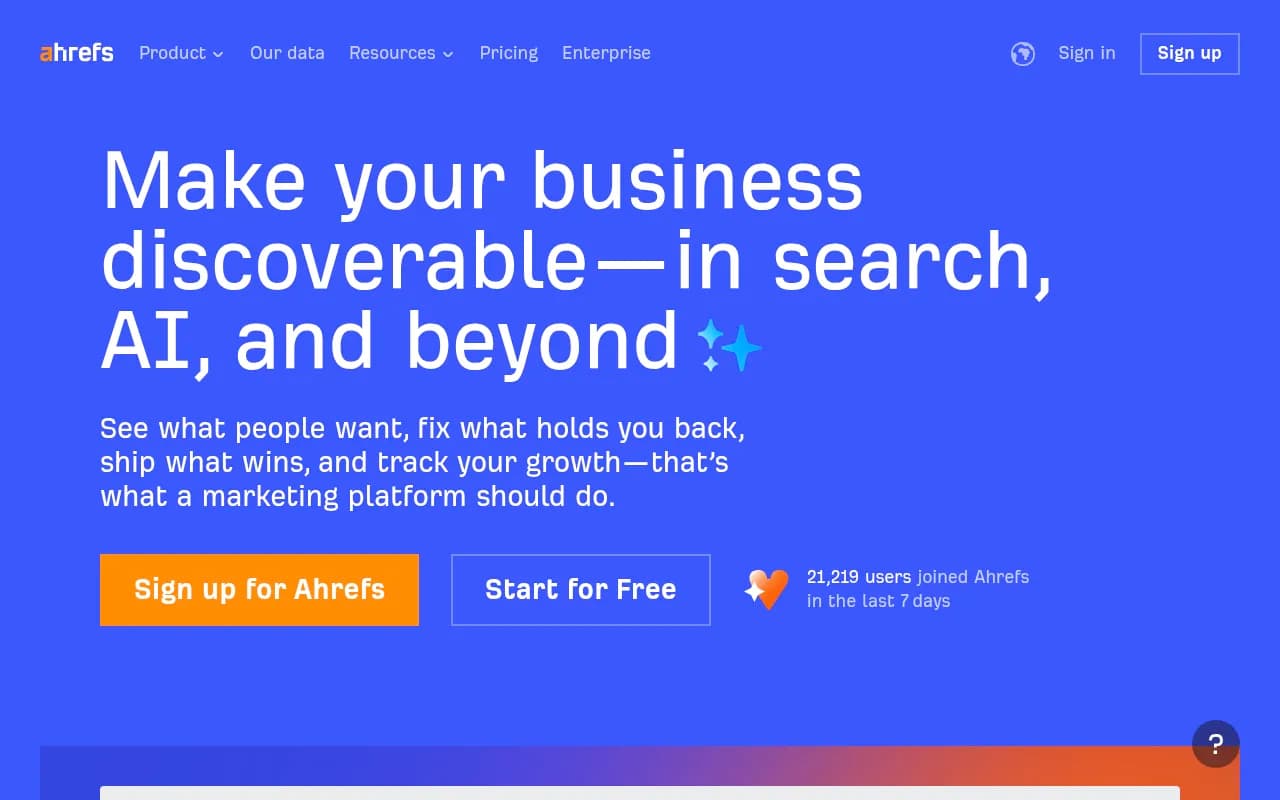
| Traditional SEO + AI visibility combined | Semrush or Ahrefs |
The GEO category is still maturing fast. Platforms that were monitoring-only a year ago are adding optimization features. The gap between "we track your visibility" and "we help you improve it" is closing -- but it hasn't closed yet, and that gap is where the real value difference lies in 2026.