Key takeaways
- Google AI Mode pulls from a different set of signals than traditional search — answer quality, entity clarity, and crawlability all matter more than keyword density.
- Technical fundamentals (clean HTML, fast load times, proper indexing) are table stakes; without them, AI engines simply won't read your content.
- Structured data, E-E-A-T signals, and direct answer formatting are the three biggest levers for getting cited in AI-generated responses.
- Monitoring your AI visibility separately from traditional rankings is now necessary — what ranks in Google Search and what gets cited in AI Mode are increasingly different things.
- Most of these optimizations are one-time fixes that compound over time, making this checklist worth working through systematically.
Google AI Mode is not just AI Overviews with a new coat of paint. It's a fundamentally different search experience — one that synthesizes answers from multiple sources, reasons across documents, and often skips the blue links entirely. If your content isn't built for this, you're invisible to a growing share of search traffic.
This checklist covers 18 concrete things your content needs before it can rank in Google AI Mode. Some are technical. Some are structural. Some are about how you write. All of them matter.
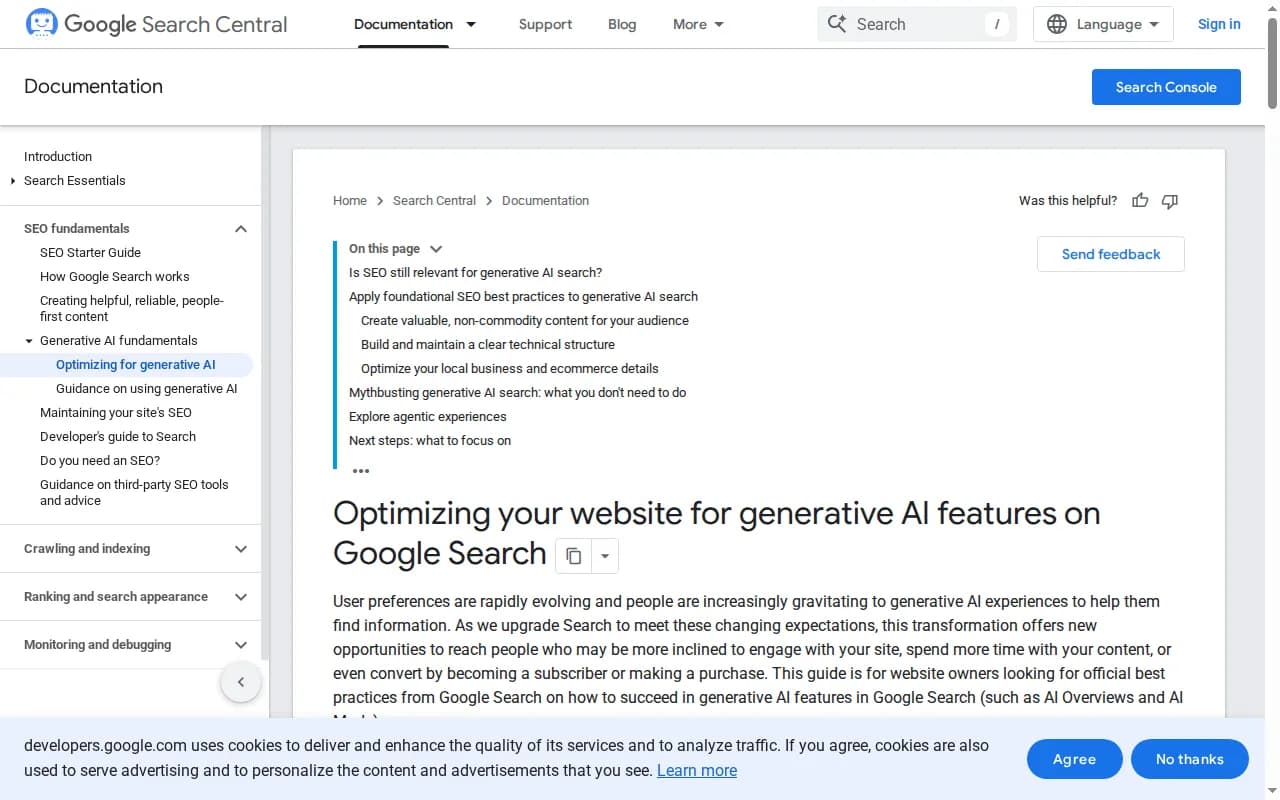
Section 1: Technical foundations
These are the non-negotiables. If AI crawlers can't access and parse your content, nothing else on this list matters.
1. Make sure Googlebot (and AI crawlers) can actually reach your pages
Check your robots.txt file. A surprising number of sites accidentally block crawlers from key sections. Beyond Googlebot, AI engines like Perplexity and ChatGPT send their own crawlers (GPTBot, PerplexityBot, ClaudeBot). If you're blocking them, you're opting out of AI citations.
Run a crawl with a tool like Screaming Frog to identify blocked pages, redirect chains, and orphaned content.
2. Render your content in clean HTML — not just JavaScript
AI crawlers are generally worse at executing JavaScript than Googlebot. If your content only appears after JS runs, there's a real chance AI engines are seeing a blank page. The fix: server-side rendering (SSR) or static generation for content pages. If you're running a JavaScript-heavy site, pre-rendering services can help.
Test this yourself: disable JavaScript in your browser and load your key pages. If the content disappears, you have a rendering problem.
3. Pass Core Web Vitals
Google has been explicit that page experience signals matter for AI Overviews, and the same logic applies to AI Mode. Slow pages get deprioritized. Aim for:
- LCP under 2.5 seconds
- INP under 200ms
- CLS under 0.1
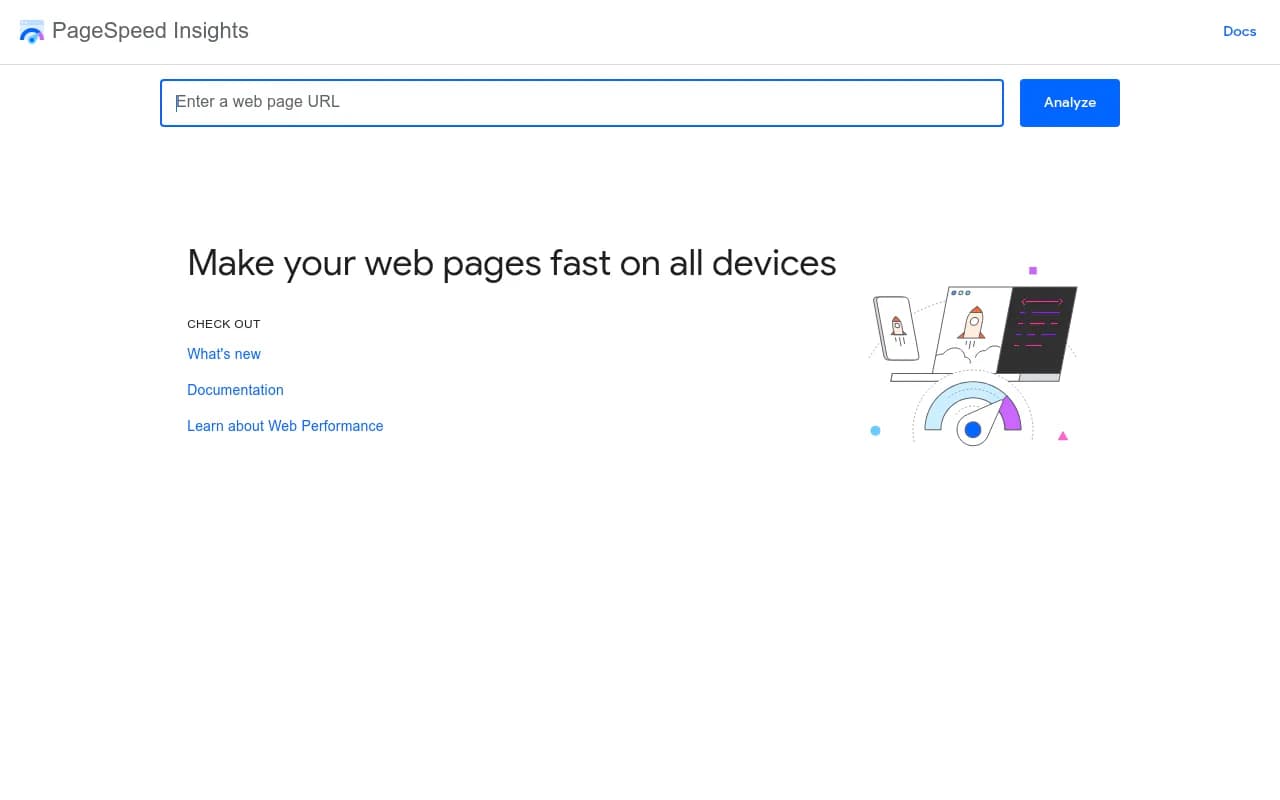
Use Google PageSpeed Insights for a free baseline, and [tool:debugbear] for ongoing monitoring that catches regressions before they hurt your visibility.
4. Fix your internal linking structure
AI engines build a picture of your site's topical authority by following links. If your best content is buried three clicks deep with no internal links pointing to it, AI models may never discover it — or may underweight it when they do. Every important page should be reachable within two clicks from your homepage, and related content should link to each other naturally.
5. Submit and maintain an accurate XML sitemap
This is basic, but worth checking: is your sitemap current? Does it include your most important pages? Is it submitted in Google Search Console? AI Mode still relies on Google's index as its primary source, so anything that helps Googlebot index your content faster helps AI Mode too.
Section 2: Content structure and formatting
AI Mode doesn't just find your content — it reads it, extracts answers from it, and decides whether to cite you. How you structure your content determines whether it's extractable.
6. Write direct answers at the top of every section
Traditional SEO content often buries the answer. You'd write 300 words of context before getting to the point, because longer pages used to rank better. AI Mode works the opposite way. It looks for the clearest, most direct answer to a query and surfaces that.
The fix is simple: lead with the answer, then provide context. If someone asks "What is the best way to structure a blog post for AI search?", your first sentence should answer that directly. The explanation follows.
7. Use question-based headings that match real queries
AI Mode is built around questions. It synthesizes answers to specific queries, not broad topics. Your H2s and H3s should reflect the actual questions people ask, not just keyword-stuffed topic labels.
Instead of "Content Strategy Tips," try "How should I structure content for Google AI Mode?" This isn't just about matching search intent — it's about making your content easy for AI to map to a specific query.
Tools like [tool:alsoasked] and [tool:answerthepublic] are useful for finding the exact question phrasing real users type.
8. Use structured formatting: lists, tables, and numbered steps
AI engines extract information more reliably from structured content. Bullet lists, comparison tables, and numbered steps are easier to parse and cite than dense paragraphs. This doesn't mean every page needs to be a listicle — but wherever you're explaining a process or comparing options, use the appropriate format.
Comparison tables are particularly valuable. They let AI models pull clean, factual comparisons without having to interpret prose.
9. Add FAQ sections to key pages
FAQ sections are one of the most reliable ways to get cited in AI-generated responses. They're pre-formatted as question-answer pairs, which is exactly what AI Mode is looking for. Add a genuine FAQ section (not keyword stuffing disguised as questions) to your most important landing pages and articles.
Mark them up with FAQPage schema so Google can parse them unambiguously.
10. Keep paragraphs short and sentences clear
This sounds like basic writing advice, but it has real implications for AI citability. Long, complex sentences with multiple clauses are harder for AI models to extract clean quotes from. Short paragraphs (3-4 sentences max) with clear subject-verb-object structure get cited more often.
The [tool:hemingway-editor] is a useful gut-check here — aim for Grade 8 readability on most content.
Section 3: Structured data and entity signals
Structured data is how you speak directly to machines. In 2026, that includes AI engines, not just search crawlers.
11. Implement schema markup relevant to your content type
At minimum, every site should have:
Organizationschema on the homepage (with name, URL, logo, social profiles)ArticleorBlogPostingschema on content pagesFAQPageschema on pages with Q&A sectionsProductschema on product pagesLocalBusinessschema for location-based businesses
Google's AI systems use structured data to understand what a page is about, who created it, and whether it's authoritative. Missing schema is a missed opportunity to communicate clearly.
WordLift is worth looking at if you want to go deeper on entity-based structured data and knowledge graph optimization.
12. Build clear entity associations
AI models understand the world through entities — named people, places, organizations, products, and concepts. If your brand, your authors, and your key topics aren't clearly associated with established entities, you're harder for AI to reason about.
Practical steps:
- Create or claim your Google Knowledge Panel
- Ensure your brand name, founders, and products appear consistently across Wikipedia, Wikidata, and major directories
- Use
sameAsproperties in your schema to link your entities to authoritative sources
13. Establish authorship clearly
Google's E-E-A-T framework (Experience, Expertise, Authoritativeness, Trustworthiness) is baked into how AI Mode evaluates sources. Anonymous content is at a disadvantage. Every article should have a named author with a bio that establishes their credentials. Link author profiles to their LinkedIn, published work, or other credibility signals.
This matters more in YMYL (Your Money, Your Life) categories — health, finance, legal — but it's good practice everywhere.
Section 4: Authority and trust signals
AI Mode doesn't just cite any page that answers a question. It cites pages it trusts. These signals influence that trust.
14. Earn citations from authoritative sources
Backlinks still matter, but the signal AI Mode cares about is slightly different: it's whether authoritative sources reference your content, your brand, or your claims. Being cited in industry publications, academic sources, or well-known media outlets tells AI models that your content is worth trusting.
This is where traditional link building and AI optimization overlap. High-quality editorial links from relevant sources are the most durable authority signal you can build.
15. Get mentioned in third-party sources AI models trust
Beyond backlinks, AI models are influenced by what they've seen during training and what they retrieve in real time. If your brand appears in Reddit discussions, YouTube videos, industry roundups, and comparison articles, that offsite presence contributes to how AI models perceive your authority.
This is one reason why PR, community participation, and being included in "best of" lists matters more in the AI search era than it did before. Tools like Promptwatch can show you which external citations and third-party mentions are actually driving AI visibility for your brand.

16. Maintain consistent NAP data (for local businesses)
For businesses with physical locations, Name/Address/Phone consistency across directories is a trust signal that feeds into Google's local knowledge graph — which AI Mode draws from when answering location-based queries. Inconsistent data creates ambiguity that AI models resolve by citing someone else.
Section 5: Content quality and topical depth
17. Cover topics with genuine depth, not surface-level summaries
AI Mode synthesizes answers from multiple sources. If your content says the same thing as ten other pages, there's no particular reason to cite yours. What gets cited is content that adds something: original data, a specific angle, a more complete explanation, or a perspective that other sources don't cover.
This doesn't mean every page needs to be 5,000 words. It means every page needs a reason to exist beyond "we should have content about this topic." Ask yourself: what does this page say that the top three results don't?
Tools like [tool:clearscope] and [tool:surfer-seo] can help you identify topical gaps and ensure your content covers a subject comprehensively.

18. Update content regularly and signal freshness
AI Mode tends to prefer recent information, especially for topics where things change (technology, regulations, market conditions, product comparisons). A page last updated in 2022 is at a disadvantage against one updated in 2026, even if the underlying content is similar.
Add a visible "last updated" date to your articles. More importantly, actually update them — refresh statistics, add new context, remove outdated claims. Google's crawlers notice when pages change, and that freshness signal carries weight.
Tracking your AI Mode visibility
Working through this checklist is only useful if you can measure whether it's working. Traditional rank tracking doesn't capture AI Mode citations — you need tools built specifically for this.
| Tool | What it tracks | Best for |
|---|---|---|
| Promptwatch | AI citations across 10+ models, crawler logs, content gap analysis, traffic attribution | Full-cycle optimization: find gaps, create content, track results |
| Promptwatch (content agents) | Generates AI-optimized content based on real prompt data | Teams that want to act on gaps, not just see them |
| Google Search Console | AI Mode impressions (new 2026 reports), traditional rankings | Baseline monitoring, free |
| Screaming Frog | Technical crawl issues, rendering problems | Technical SEO audits |
| Clearscope / Surfer SEO | Content depth and topical coverage | On-page content optimization |
The May 2026 Google core update introduced new Search Console reports specifically for AI Mode performance, which is a good starting point for free monitoring. But for brands that want to understand why they're being cited (or not), and what content to create to close the gap, a dedicated GEO platform is worth the investment.
A note on prioritization
Not all 18 items on this list are equally urgent. If you're starting from scratch, work in this order:
- Fix technical access issues first (items 1-5). Nothing else matters if AI crawlers can't read your pages.
- Restructure your content for direct answers (items 6-10). This is where most sites have the biggest gap.
- Add structured data (items 11-13). One-time implementation with lasting impact.
- Build authority over time (items 14-16). This is the slow work, but it compounds.
- Invest in content depth and freshness (items 17-18). Ongoing, but increasingly the differentiator.
Google AI Mode is still evolving. The signals that matter today will shift as Google refines how it selects and cites sources. The best hedge against those changes is the same one that's always worked: build content that genuinely helps people, make it technically accessible, and establish real authority in your space. The checklist above is just the systematic version of that.