Key takeaways
- ChatGPT is not inherently location-aware, so you have to test each city with prompts that name the city, the service, and sometimes the neighborhood.
- One prompt tells you almost nothing. Promptwatch Data found that 47.6% of ChatGPT responses cite 10 or more domains (Sep 28 to Oct 4, 2026), so you are always sharing an answer with many other sites.
- Track four things per city: mention rate, position in the answer, how ChatGPT describes you, and which third-party pages get cited instead of yours.
- Start with a manual spreadsheet for two or three cities. Move to a dedicated tracker once you pass about 5 cities or 100 prompts.
- Ads now exist in ChatGPT too, so your tracking should separate organic recommendations from sponsored placements.
Why multi-city tracking is harder than it sounds
A single-location plumber can type five questions into ChatGPT and get a decent feel for where they stand. A company with branches in Phoenix, Tucson, Denver and Boise cannot. Each city has its own competitors, its own directories, its own review sites, and its own quirks in how ChatGPT answers.
The core problem is geography. As Courtyard noted in late 2025, ChatGPT is context-aware but not inherently location-aware. When someone types "I need a plumber," the model does not automatically know they live in your service area. Memory and saved preferences may add that context over time, but you cannot count on it.
So the answer you see from your office is not the answer a homeowner in another city sees. That is why you need a structured process rather than a few ad hoc searches.
What you are actually measuring
Before building anything, decide what counts as a win. "Did ChatGPT mention us?" is the weakest possible question. For home services, I would track these:
- Mention rate: the share of your prompts for a given city where your business is named.
- Position: whether you are the first recommendation, one of five, or buried in a long list.
- Description accuracy: does ChatGPT say you do gas furnace repair, or only installs? Does it put you in the right city?
- Cited sources: which pages ChatGPT used. Often it is Yelp, Angi, a local listicle, or a competitor's service page, not your site.
- Competitor presence: who shows up next to you, city by city.
The unique-domains data matters here. Promptwatch Data's report on unique domains per ChatGPT response found that 66.1% of responses cite at least 8 domains and only 6% cite 3 or fewer. Its practical takeaway is to track your position and how ChatGPT describes you, not just whether you are cited, and to measure across many organic prompts because a single prompt says little.
Step 1: build a prompt set for each city
This is the part most people skip, and it decides whether your data is useful. You want a prompt set that mirrors how a homeowner actually asks, repeated for each city so the results are comparable.
Pick your service categories
List the 4 to 8 services that make you money. For an HVAC company that might be furnace repair, AC installation, emergency heating, duct cleaning, and heat pump replacement.
Use three prompt types
| Prompt type | Example | What it tells you |
|---|---|---|
| Organic discovery | "Best HVAC company for furnace repair in Aurora, CO" | Whether you are recommended cold |
| Brand-specific | "Is Summit Heating in Aurora any good?" | How ChatGPT describes you |
| Competitor comparison | "Summit Heating vs Front Range Air in Aurora" | How you stack up head to head |
Promptwatch Data's numbers show why this split matters. Among responses with at least one citation, 52.5% of organic prompts cite 10 or more domains, while only 21.3% of brand-specific prompts do. Brand prompts are narrower, so do not average them together with organic prompts.
Add neighborhood and suburb variations
Homeowners do not always name the city. They write "near me," a suburb, a ZIP code, or a neighborhood. Include a few of each for every market. Also include problem-led prompts such as "water heater not heating, who should I call in Tacoma" because that is how people ask when they are stressed.
Keep prompts short and keyword-like
Promptwatch's query fanout data shows ChatGPT's own background searches getting shorter, from about 117 characters in December to around 53 in April. My read, and it is an inference rather than something the report states, is that those searches look like "service + city" keyword queries. That is a reason to make your city pages and headings read the same way.
Step 2: run manual checks first
Before paying for anything, spend an afternoon doing it by hand. It teaches you what the answers look like and tells you whether a tool is worth it.
- Open a fresh ChatGPT session, ideally logged out or in a clean browser profile so memory does not skew results.
- Run each prompt in your set for city one.
- Record in a spreadsheet: mentioned yes/no, position, description, cited URLs, competitors named.
- Repeat on three different days. Outcomes shift, and one run can be an outlier.
- Repeat for each city.
A simple way to verify what ChatGPT says about you is to check the cited page against the claim. The ShiftFlow playbook suggests a useful habit: for each claim, ask whether the cited page actually supports the service, the city, and the job type, and mark it Supported, Unclear or Conflicting. If ChatGPT says you serve Aurora but your page never mentions Aurora, that is a content fix, not a tracking problem.
I will be honest: manual tracking breaks down fast. Ten prompts across four cities, run three times, is 120 checks. It is fine for a baseline and miserable as a monthly routine.
Step 3: choose a tracking approach
Once you know what you want to measure, pick the tool that fits your scale. Here is how the main options compare.
| Approach | Best for | Multi-city support | Limits |
|---|---|---|---|
| Manual spreadsheet | 1 to 3 cities | You do the work | Slow, inconsistent, no history |
| Local SEO platforms (BrightLocal, Yext, SOCi) | Listings and local rankings | Strong for locations | Mostly Google-centric, AI tracking varies |
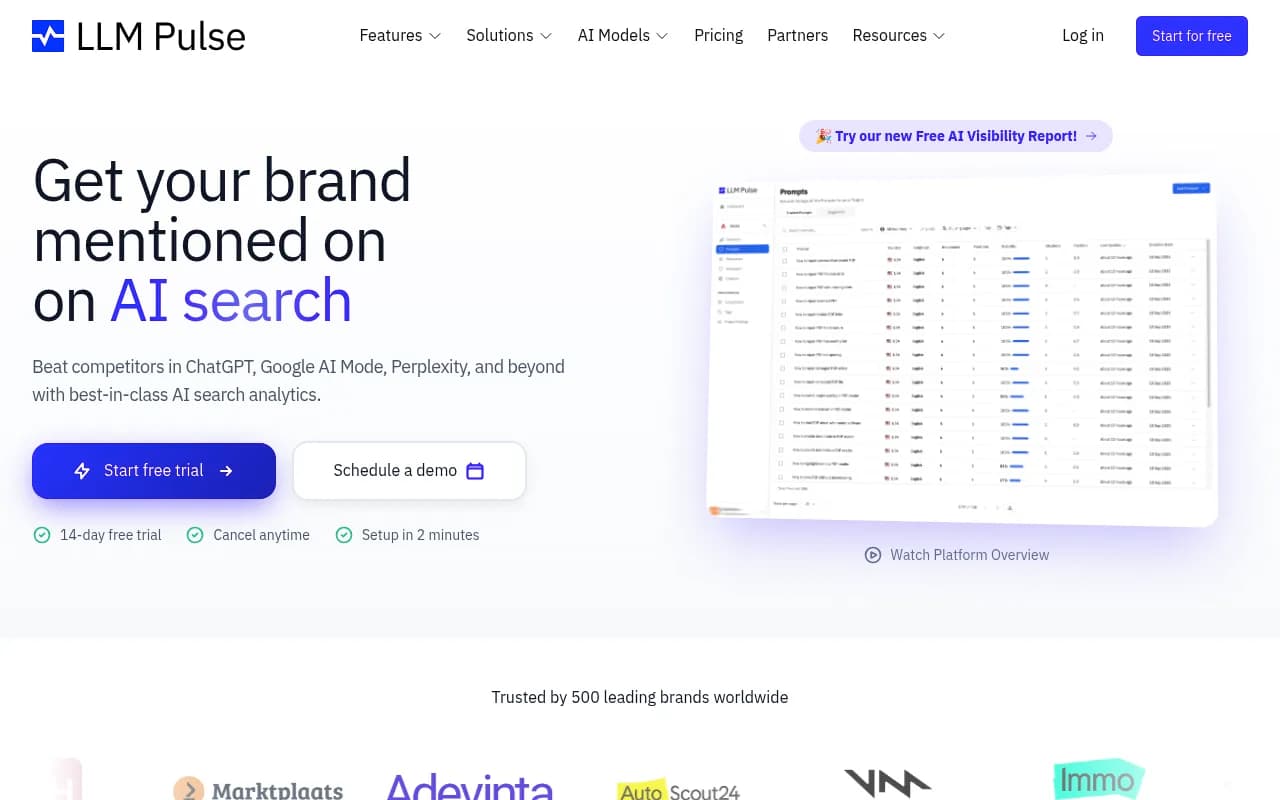
| Prompt trackers (Otterly.AI, Peec AI, LLM Pulse) | Mentions across AI models | Varies, check country and city options | Mostly monitoring, little action |
| Full AI visibility platform (Promptwatch) | Multi-location brands and agencies | Country tracking on all paid plans, state and city tracking from Business | Higher tier needed for city-level tracking |
Prompt-level AI tracking
For multi-city work, you want a tool that lets you set a location per prompt set and stores history. Promptwatch tracks the real ChatGPT interface rather than only API output, supports state and city tracking from its Business plan, and shows citations, competitors and position. It also has an Action Board that turns gaps into a to-do list, which matters because the data alone does not get you more calls. Check promptwatch.com/pricing for current plans.

If you want a lighter, cheaper monitor, several options in our catalog track brand mentions in ChatGPT, such as Otterly.AI and Peec AI. Confirm whether they handle city-level locations before you commit, since that is the feature that matters for you.
Otterly.AI


For broader comparisons, the GEO software directory at bestgeosoftware.com lists more options.
Local SEO platforms still matter
ChatGPT leans on the same business data that feeds the rest of the local web. Consistent listings help, and multi-location platforms make that manageable.
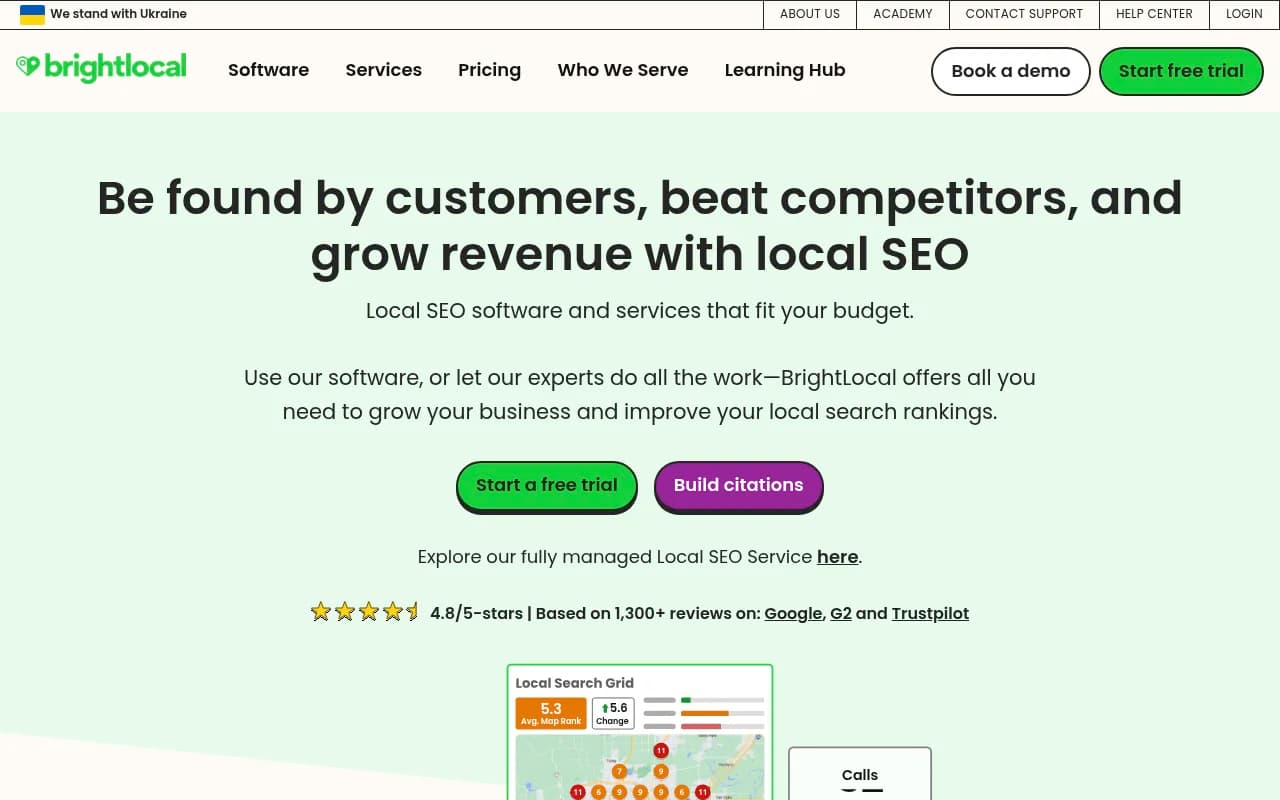
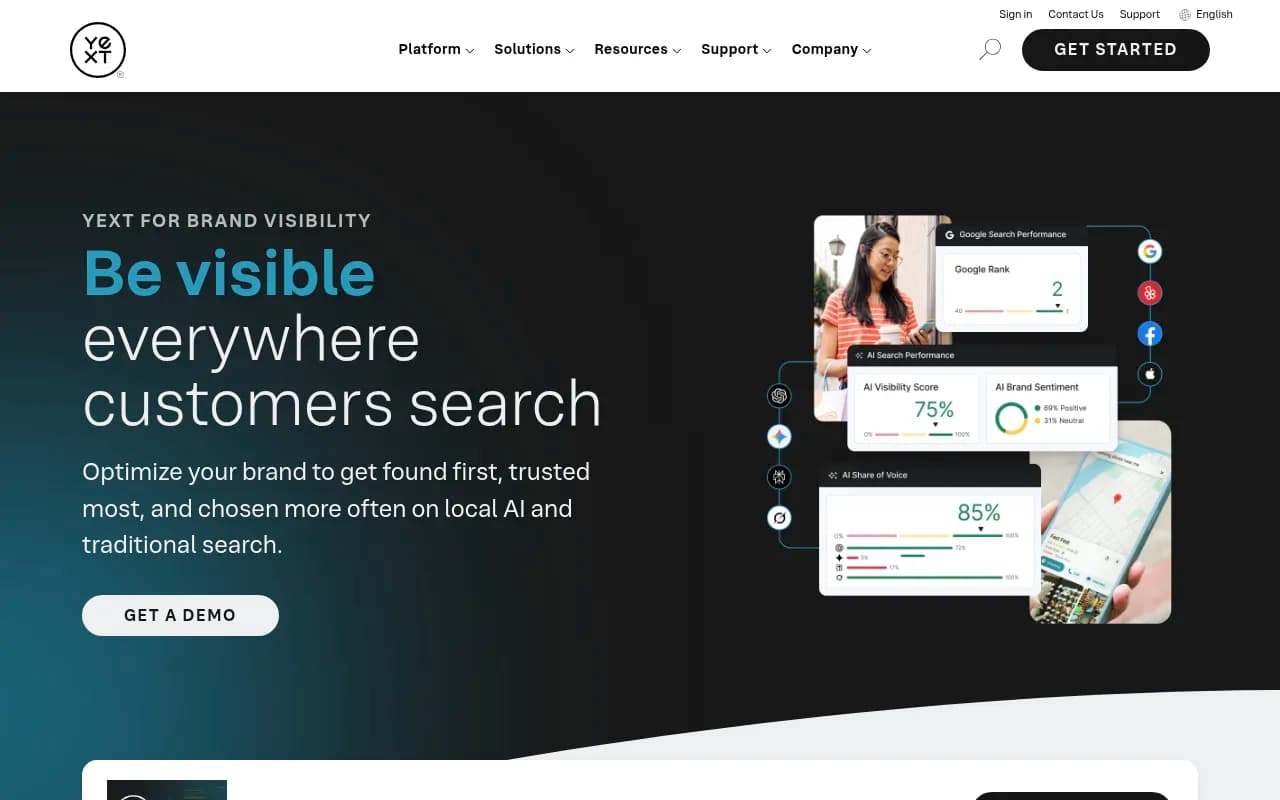
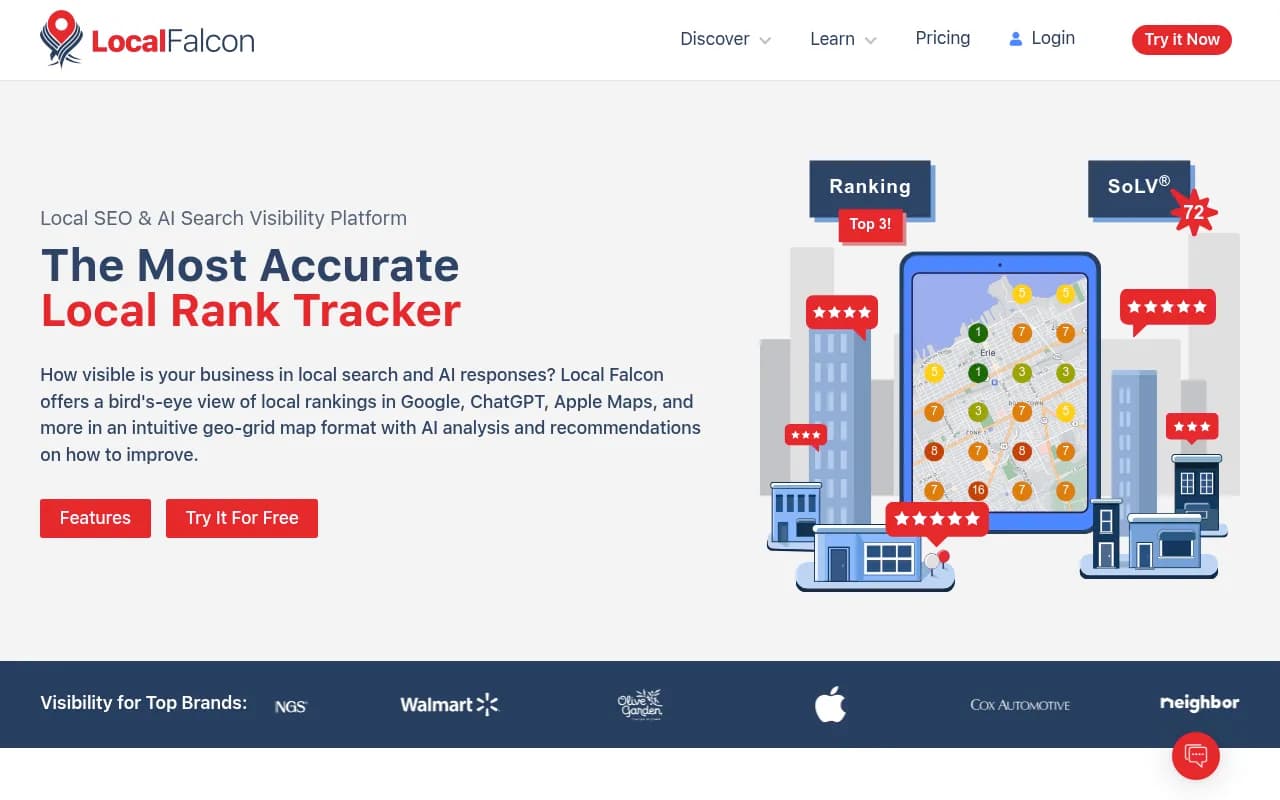
These do not replace AI tracking, but they fix the underlying data that AI answers draw from. Local Falcon is also worth a look for geo-grid rank tracking if you want to compare map rankings to ChatGPT results.
Step 4: read the results by city
Once you have a few weeks of data, compare cities against each other. Patterns are more useful than single numbers.
Common patterns
- Strong in your home city, invisible elsewhere: your newer branches lack city pages, local reviews and listings.
- Mentioned but described wrongly: ChatGPT is pulling from an old directory entry or a thin page. Fix the source.
- Cited but never recommended: your page is being read but a listicle or marketplace is winning the recommendation.
- A competitor dominates one city only: look at which sources they appear in there. Often it is a local "best of" article or a review site you are not on.
There is no Promptwatch report specifically on home services, so I would not assume the pattern. But vertical reports hint at what to expect: in automotive prompts, marketplaces like Autotrader and Cars.com outrank every car brand, and in travel prompts booking and search sites earn more than half of citations. Home services likely behaves similarly, with Angi, Yelp, Thumbtack and local listicles taking a large share. Treat that as a hypothesis and test it with your own data.
Watch for which sources get you in
The Promptwatch report on unique domains notes that third-party listicles, reviews and forums are how brands often get into the answer. For a contractor, that means getting listed and reviewed where ChatGPT looks, not only polishing your own site. One caveat: Promptwatch's Reddit data shows reddit.com's share of ChatGPT citations fell from about 4% to 0.5% on August 14, 2026, so do not build a strategy around Reddit threads for ChatGPT specifically.
Step 5: separate organic results from ads
ChatGPT now shows ads, and your tracking should account for them so you do not mistake a sponsored placement for an organic win.
According to Promptwatch's ChatGPT ads data (May 20 to Aug 17, 2026), ads appeared in an average of 20.1% of ChatGPT responses that ran a web search. The daily rate passed 30% on July 1 and peaked at 43.9%. The last 7 days averaged 32.4%. Its advice is to check ad visibility across several days before drawing conclusions and to track which advertisers and landing pages show up on your prompts.
On the buying side, OpenAI's self-serve Ads Manager entered open beta for U.S. businesses on May 5, 2026, with no minimum spend, per a WebFX piece syndicated by the Tacoma News Tribune. Local services are among the eligible verticals. Targeting is contextual intent matching rather than keyword auctions, and ads appear on Free and Go tiers in the U.S., Canada, Australia and New Zealand, not for Plus, Pro or Business subscribers.
Two practical points for multi-city operators. First, log which competitors are advertising on your city prompts, because that tells you where the competition is spending. Second, OpenAI only gives aggregated performance data, so attribution is on you. A call tracking tool such as WhatConverts can tie leads back to source.
Step 6: fix what you find
Tracking is only useful if it changes what you publish. For home services, the fixes tend to be unglamorous.
- Build one focused page per service per city, rather than one page listing every city. Promptwatch's fanout report recommends focused pages for each sub-question instead of one mega-page.
- Put the service and city first in titles and headings: "Furnace repair in Aurora, CO."
- State exactly what you do and do not do. "Repairs gas furnaces" and "installs gas furnaces" are different claims.
- Name your service area explicitly, including suburbs and ZIP codes you actually cover.
- Clean up listings and reviews in every city so third-party sources say the same thing.
- Check that AI crawlers can reach your site. If your robots rules or firewall block them, nothing else matters.
If you publish at volume across many cities, a content workflow tool can help, but be careful with thin, templated pages. Quality per city page matters more than count.
Step 7: set a reporting rhythm
For a multi-city operator, I would keep it simple:
- Weekly: glance at mention rate and any big drops per city.
- Monthly: review cited sources and competitor movement, then pick 3 to 5 fixes.
- Quarterly: add new cities and services to the prompt set, and retire prompts that no longer matter.
Also tie the numbers to leads. Mentions are interesting, calls are what pay the bills. Look at referral traffic from chatgpt.com in analytics and ask new customers how they found you.
A realistic starter plan
If you manage three to five cities and have never done this, here is where I would start this week:
- Write 12 to 20 prompts per city across the three prompt types.
- Run them manually on three separate days and log the results.
- Note the three most-cited third-party sites in each city.
- Pick one tracking tool and trial it against your spreadsheet to see if the results match.
- Fix the single biggest gap in each city, usually a missing or weak service page.
Agencies handling many clients in this way sometimes bring in outside help for audits and GEO strategy. If you want that, 1001 SEO Media works on AI search visibility alongside traditional SEO.
The main thing is consistency. Same prompts, same cities, same cadence, and you will quickly see which markets ChatGPT trusts you in and which ones it does not know exist.