Summary
- AI search engines like ChatGPT, Perplexity, and Google AI Overviews are changing how customers discover information -- they answer questions conversationally before users ever click a link
- You can reverse-engineer customer intent by analyzing what AI models cite, which prompts drive visibility, and where your competitors appear in AI-generated answers
- Tools like Promptwatch reveal the exact prompts your audience is using, the content gaps AI models can't fill from your site, and which questions competitors are visible for but you're not
- Predictive content strategy means creating articles, guides, and FAQs that answer the questions AI models will surface next -- not just the ones people typed yesterday
- The brands winning in 2026 are those treating AI search data as a forward-looking signal, not a backward-looking report
The shift from reactive search to predictive AI answers
For twenty years, SEO meant reacting to what people already searched for. You'd look at Google Search Console, see which queries drove traffic, and optimize around those keywords. That model assumed people would type a question, scan ten blue links, and click one.
That's not how discovery works anymore.
In 2026, AI assistants answer questions before the user ever sees a search result. ChatGPT, Perplexity, Claude, and Google AI Overviews deliver conversational responses that synthesize multiple sources into a single answer. The user gets what they need without clicking. Your brand either shows up in that answer or it doesn't exist.
This changes the game. Traditional keyword research tells you what people asked yesterday. AI search data tells you what they're about to ask tomorrow -- and which answers AI models are struggling to provide today.
Why AI search data is a predictive signal, not a historical record
When you track how AI models respond to prompts, you're not just monitoring mentions. You're seeing:
- Which questions AI models can't answer well -- gaps where they hedge, cite outdated sources, or admit uncertainty
- Which topics trigger follow-up questions -- one prompt about "best CRM for small teams" fans out into sub-queries about pricing, integrations, and migration
- Which competitors dominate specific question types -- if a rival is cited every time someone asks about "enterprise security," you know where they're winning
- Which content formats AI models prefer -- structured data, comparison tables, and step-by-step guides get cited more than vague blog posts
This is forward-looking intelligence. You're not reacting to last month's traffic. You're identifying the questions your audience will ask next week, next quarter, next year -- and creating content to answer them before your competitors do.
How to extract predictive insights from AI search data
1. Track the prompts your audience is actually using
Most brands guess at what their customers ask AI models. Stop guessing. Use AI visibility platforms to see the exact prompts that trigger responses about your industry, competitors, and product category.
Promptwatch monitors 10 AI models (ChatGPT, Perplexity, Claude, Gemini, Google AI Overviews, and more) and shows you:
- Prompt volumes and difficulty scores for each query
- Query fan-outs that reveal how one question branches into sub-questions
- Which prompts competitors rank for but you don't

This gives you a real-time map of customer intent. You see what people are asking right now, not what they searched for three months ago.
2. Identify content gaps AI models can't fill
AI models are only as good as the content they can cite. When they can't find a good answer, they hedge -- "this depends on your specific needs" or "results may vary." These hedges are opportunities.
Answer Gap Analysis (a core feature in platforms like Promptwatch) shows you:
- Prompts where competitors are cited but you're not
- Topics where AI models struggle to find authoritative sources
- Questions that trigger vague or incomplete answers
These gaps tell you exactly what to write. If AI models can't find a detailed guide on "how to migrate from Salesforce to HubSpot without losing data," and your competitors aren't covering it either, you just found your next high-value article.
3. Analyze citation patterns to understand what AI models trust
Not all content gets cited equally. AI models prefer:
- Structured data and comparison tables -- they parse tables faster than prose
- Step-by-step guides with clear headings -- hierarchical content is easier to extract
- Authoritative sources with recent publish dates -- freshness matters
- Pages with strong backlink profiles -- trust signals carry over from traditional SEO
Look at which pages AI models cite most often in your category. What format are they? How are they structured? What questions do they answer that your content doesn't?
Tools like Ahrefs and Semrush can show you backlink profiles and content performance, but they don't tell you which pages AI models actually cite. For that, you need AI-specific tracking.
4. Monitor how prompts evolve over time
Customer questions don't stay static. A prompt that was popular in January might be irrelevant by June. New product launches, regulatory changes, and industry trends shift what people ask.
Track prompt trends month-over-month:
- Are certain question types growing in volume?
- Are new sub-topics emerging within your category?
- Are competitors gaining visibility for prompts they didn't rank for before?
This trend data lets you predict what customers will ask next. If you see a 40% increase in prompts about "AI compliance" over three months, you know to prioritize compliance content before the demand peaks.
How to turn AI search insights into predictive content
Build a prompt-to-content pipeline
Once you know which prompts are growing and where the gaps are, create content systematically:
- Prioritize high-volume, low-competition prompts -- questions lots of people ask but few brands answer well
- Write for AI citation, not just human readers -- use clear headings, structured data, and comparison tables
- Update existing content to fill gaps -- if you have a guide on "CRM features" but it doesn't cover "CRM migration," add a section
- Publish consistently -- AI models reward sites that update frequently with fresh, relevant content
Platforms like Frase and Clearscope help optimize content for traditional SEO, but they don't show you which prompts AI models are struggling with. For that, you need AI-native tools.

Use AI content generation grounded in citation data
Writing 50 articles manually to fill content gaps isn't realistic. Use AI writing tools that generate content based on real citation data, not generic templates.
Promptwatch's built-in AI writing agent creates articles, listicles, and comparisons grounded in:
- 880M+ citations analyzed across AI models
- Prompt volumes and difficulty scores
- Competitor analysis and persona targeting
This isn't generic SEO filler. It's content engineered to get cited by ChatGPT, Claude, and Perplexity because it's based on what those models already cite.
Other tools like Jasper and Copy.ai can generate content at scale, but they don't optimize specifically for AI search visibility.

Create comparison tables and structured data
AI models love tables. A well-structured comparison table gets cited more often than a 2,000-word prose article covering the same information.
Example:
| Tool | Best for | Free tier | AI features | Citation tracking |
|---|---|---|---|---|
| Promptwatch | End-to-end GEO | Yes (trial) | Content generation, gap analysis | Yes |
| Semrush | Traditional SEO + basic AI tracking | Limited | Basic monitoring | Limited |
| Ahrefs | Backlink analysis + AI brand radar | No | Brand mentions only | No |
Tables make information scannable for humans and parseable for AI. Use them liberally.
Optimize for query fan-outs
One prompt rarely exists in isolation. A user asking "best project management software" will follow up with:
- "best project management software for remote teams"
- "Asana vs Monday.com"
- "project management software pricing comparison"
Create content clusters that answer the root question and all its branches. This increases your chances of being cited across multiple related prompts.
Measuring success: from visibility to revenue
Tracking AI visibility is step one. Connecting it to actual business outcomes is step two.
Track visibility scores by AI model
Most AI visibility platforms show you a single score or a list of mentions. That's not enough. You need to know:
- Which AI models cite you most often (ChatGPT, Perplexity, Claude, etc.)
- How your visibility changes over time
- Which specific pages are being cited
- Which prompts drive the most citations
Promptwatch provides page-level tracking and model-specific visibility scores. You see exactly which pages are working and which need optimization.
Connect AI visibility to traffic and revenue
Visibility without traffic is vanity. Use:
- Code snippet tracking -- embed a tracking pixel to see which visitors came from AI-generated answers
- Google Search Console integration -- correlate AI visibility with organic traffic trends
- Server log analysis -- monitor AI crawler activity (ChatGPT, Claude, Perplexity bots) to see which pages they're reading
This closes the loop: you see which prompts drive visibility, which pages get cited, and which citations turn into actual visitors and conversions.
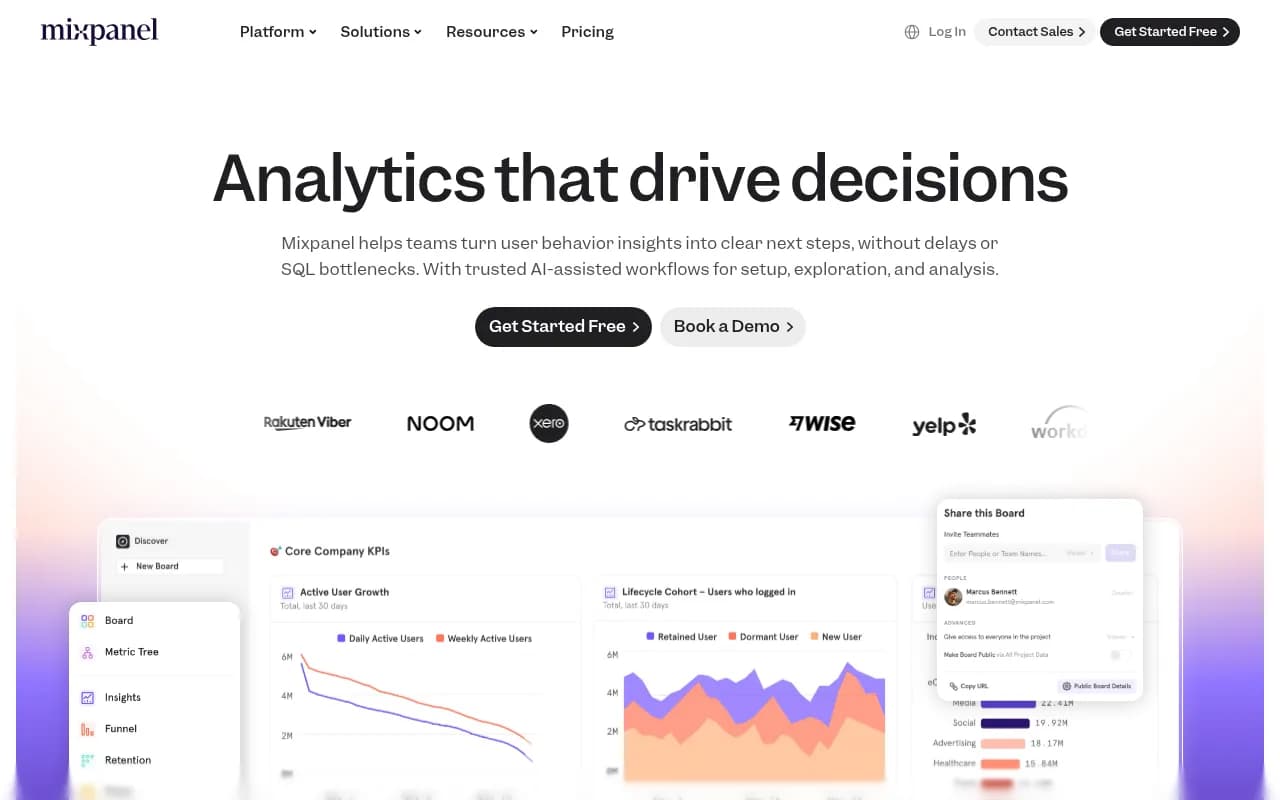
Tools like Google Analytics and Mixpanel can track user behavior, but they don't attribute traffic to specific AI models. For that, you need AI-native attribution.
Common mistakes brands make with AI search data
Treating AI search like traditional SEO
AI search isn't just "SEO with a new interface." The ranking factors are different:
- Freshness matters more -- AI models prefer recently updated content
- Structured data is critical -- tables, lists, and clear headings get cited more
- Authority signals shift -- backlinks still matter, but so do Reddit mentions, YouTube videos, and forum discussions
Optimizing for AI search requires a different playbook.
Ignoring AI crawler logs
Most brands have no idea how often AI crawlers visit their site, which pages they read, or what errors they encounter. This is like running a restaurant with no idea how many customers walked in today.
AI crawler logs show you:
- Which pages ChatGPT, Claude, and Perplexity are reading
- How often they return
- Which pages they can't access (404s, blocked by robots.txt, JavaScript rendering issues)
If AI crawlers can't read your content, you won't get cited. Period.
Promptwatch includes real-time AI crawler logs. Most competitors (like Otterly.AI and Peec AI) don't offer this at all.
Otterly.AI


Focusing only on brand mentions
Tracking when AI models mention your brand is useful, but it's not the full picture. You also need to know:
- Which competitors are mentioned instead of you
- Which prompts you're invisible for
- Which content gaps are costing you visibility
Brand mention tracking is reactive. Content gap analysis is predictive.
Not updating content fast enough
AI models reward sites that update frequently. A static website with content from 2023 will lose visibility to competitors publishing fresh guides every week.
Set up a content refresh schedule:
- Update high-traffic pages quarterly
- Add new sections to existing guides when gaps emerge
- Publish new content weekly to signal freshness
This isn't busywork. It's a competitive advantage.
Tools for AI search prediction and optimization
Here's a comparison of platforms that help you track, analyze, and act on AI search data:
| Platform | Monitoring | Content gap analysis | AI content generation | Crawler logs | Pricing |
|---|---|---|---|---|---|
| Promptwatch | 10 AI models | Yes | Yes | Yes | From $99/mo |
| Semrush | Basic (fixed prompts) | No | Limited | No | From $139/mo |
| Ahrefs Brand Radar | Basic (fixed prompts) | No | No | No | Add-on to existing plan |
| Otterly.AI | 3 AI models | No | No | No | From $99/mo |
| Peec AI | 3 AI models | No | No | No | From $79/mo |
Promptwatch is the only platform rated as a "Leader" across all categories in 2026 GEO platform comparisons. The difference: most competitors are monitoring-only dashboards. Promptwatch shows you what's missing, then helps you fix it with content gap analysis, AI writing agents, and crawler logs.
Other tools worth considering:
- Rankshift -- tracks brand visibility across ChatGPT and Perplexity
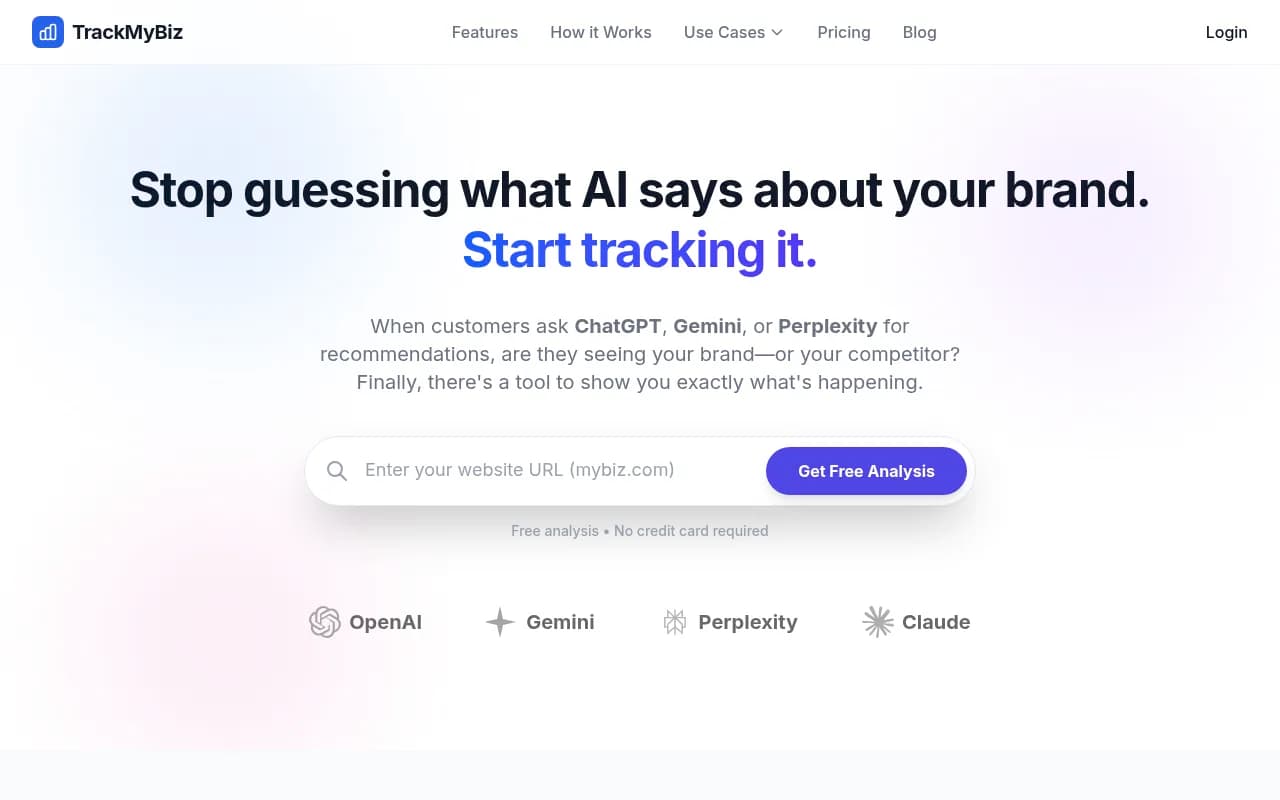
- TrackMyBusiness -- monitors what AI models say about your brand
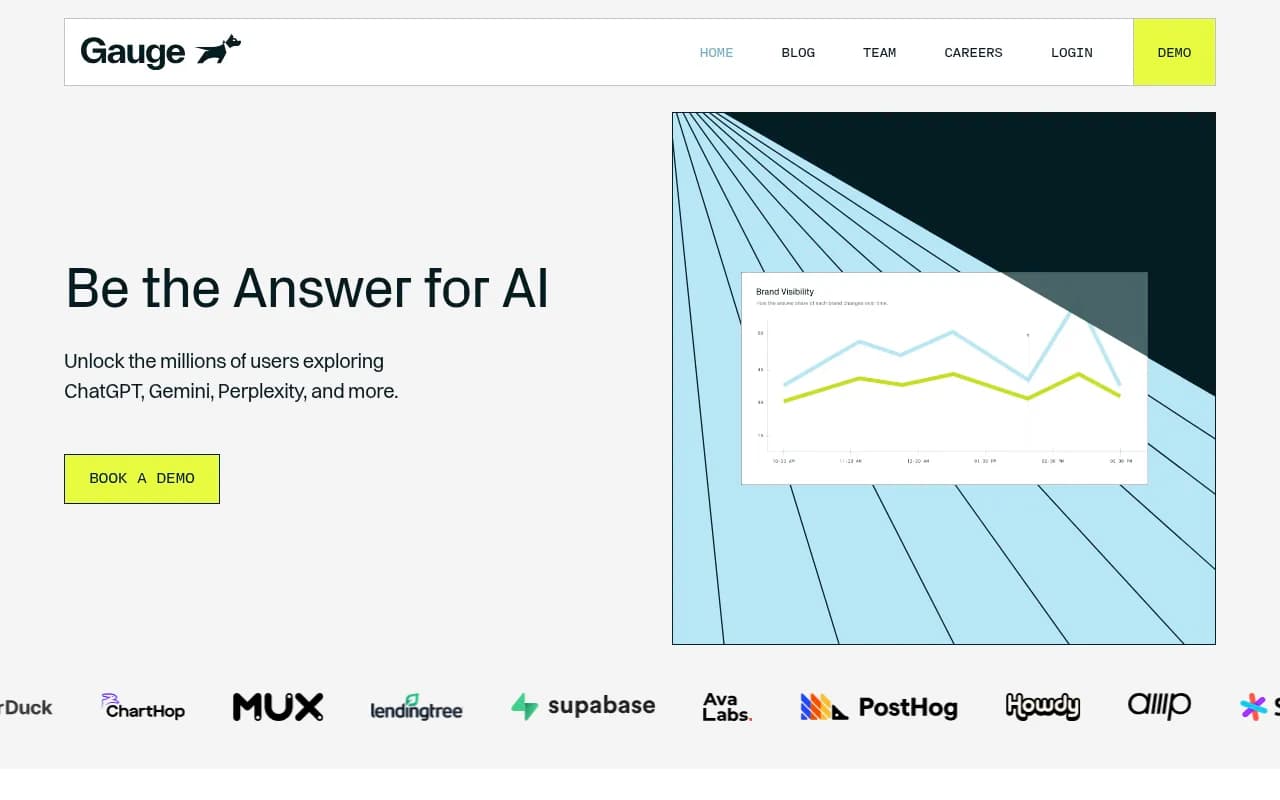
- Gauge -- tracks brand mentions across AI engines

But if you want to go beyond monitoring and actually optimize your content for AI search, you need a platform that closes the action loop.
The future of predictive AI search strategy
AI search is still early. Most brands are just waking up to the fact that their customers are asking ChatGPT and Perplexity instead of Google. The ones who move now -- who treat AI search data as a predictive signal, not a vanity metric -- will dominate their categories.
Here's what's coming:
- AI agents that book meetings and make purchases -- visibility won't just drive traffic, it will drive transactions
- Multi-modal search -- AI models will cite images, videos, and audio, not just text
- Real-time personalization -- AI models will tailor answers based on user context, making generic content obsolete
The brands that win will be those who:
- Track AI search data systematically
- Identify content gaps before competitors do
- Create content engineered for AI citation
- Update frequently to signal freshness
- Close the loop from visibility to revenue
This isn't SEO 2.0. It's a fundamentally different way of thinking about discovery, intent, and content strategy. The question isn't whether AI search will replace traditional search. It's whether your brand will be visible when it does.
Start tracking your AI visibility today. Find the gaps. Fill them before your competitors do. That's how you predict customer questions before they ask them.