Summary
- AI models prioritize original research and first-party data over recycled content -- credibility is the new ranking factor
- Data-driven articles need verified, complete datasets to avoid AI hallucinations and bias in citations
- Structuring content with clear methodology, transparent sources, and actionable insights increases AI trust signals
- Tools like Promptwatch help track which content AI models cite and identify gaps in your coverage
- The shift from volume to value means one well-researched article outperforms ten generic posts

AI systems don't just summarize content anymore. They decide which sources deserve to be trusted, cited, and recommended. In 2026, the difference between being referenced by ChatGPT or buried in irrelevance comes down to one thing: credibility.
Most organizations still measure success by how much they publish. The AI-driven search environment measures something else entirely -- whether your content introduces new information or just repeats what's already out there. Original research, verified data, and transparent methodology are the signals AI models use to separate signal from noise.
This guide walks through how to build data-driven articles that AI models can't ignore. Not by gaming algorithms, but by producing the kind of content AI systems are designed to trust.
Why AI models ignore most content (and what they're looking for instead)
AI-driven search prioritizes credibility over content volume. When ChatGPT, Perplexity, or Claude generate an answer, they're not just pulling from the highest-ranking pages. They're evaluating which sources reflect real decision-making, introduce new information, and come from traceable, credible origins.
Content built on information that can be found elsewhere is easy for AI to summarize -- and easy to replace. Content grounded in original research and industry-leading perspectives is not.
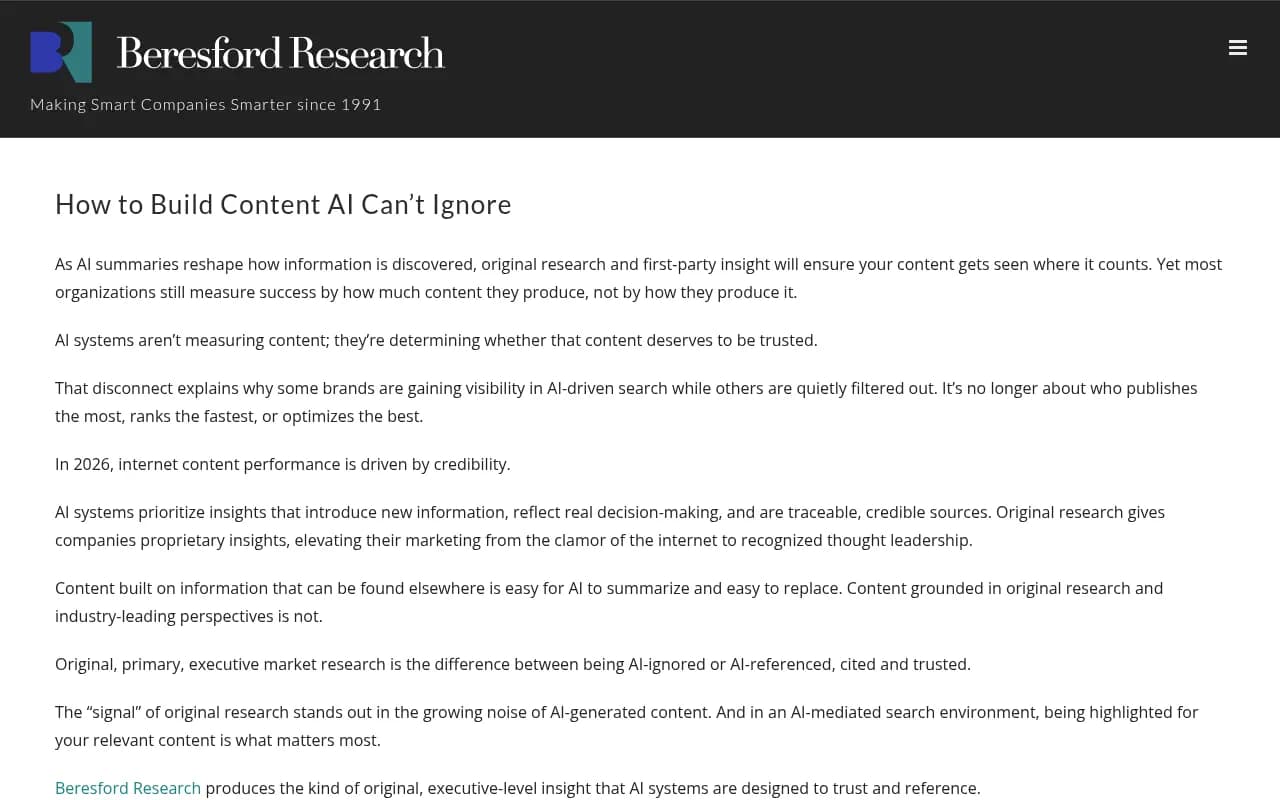
The shift is structural. AI systems aren't measuring how well you optimize for keywords. They're determining whether your content deserves to be trusted. That's why some brands are gaining visibility in AI-driven search while others are quietly filtered out.
Original, primary, executive market research is the difference between being AI-ignored or AI-referenced. The "signal" of original research stands out in the growing noise of AI-generated content. And in an AI-mediated search environment, being highlighted for your relevant content is what matters most.
The data quality problem: why AI hallucinations start with bad inputs
AI hallucinations -- when models invent facts, distort attributes, or draw faulty conclusions -- don't happen because the technology is flawed. They happen because the data fed into the system is incomplete, fragmented, or poorly governed.
Many marketers have watched AI campaigns generate audience segments that veer into guesswork. The AI itself isn't broken. It's working with shoddy data that forces it to fill in the blanks with assumptions. These "hallucinations" may seem harmless at first, but they quickly lead to wasted budgets and alienated prospects who receive irrelevant messages.
The key to preventing these AI missteps is high-quality data that is constantly verified, ethically sourced, and free of guesswork. When you have a steady flow of accurate records, your AI models don't have to fill in the blanks with assumptions.
This applies directly to content creation. If your article cites a survey with a vague sample size, no methodology, or unverified claims, AI models will deprioritize it. If your data comes from a single source with no corroboration, AI systems flag it as unreliable. If your research methodology is opaque, AI engines skip your content entirely.
Verified, complete data is essential to prevent AI hallucinations, bias, and mis-targeted personalization. Without it, your content becomes part of the noise AI models are designed to filter out.
How to structure data-driven content that AI models trust
AI models evaluate content based on structure, transparency, and verifiability. Here's how to build articles that meet those criteria.
Lead with the methodology
AI systems prioritize content that explains how data was collected. Don't bury your methodology in an appendix or footnote. Lead with it.
- State your sample size upfront
- Explain how participants were selected
- Clarify the time period of data collection
- Disclose any limitations or biases in the dataset
Transparency signals credibility. AI models are more likely to cite research that shows its work.
Use comparison tables to make data scannable
AI models parse structured data more effectively than dense paragraphs. Comparison tables make your findings scannable and increase the likelihood of citation.
Example:
| Metric | 2025 | 2026 | Change |
|---|---|---|---|
| AI adoption rate | 78% | 89% | +11% |
| Productivity gains | 26-55% | 35-60% | +9-5% |
| Private AI investment | $130B | $180B | +38% |
Tables like this give AI models clear, structured data to reference. They're also one of the most valuable parts of a guide for human readers.
Cite specific sources, not vague attributions
AI models deprioritize content with vague attributions like "Experts argue" or "Industry reports suggest." Name the specific source or drop the claim.
Instead of: "Studies show that AI adoption is increasing."
Write: "Mordor Intelligence's 2025 market analysis shows the AI writing assistant software market stands at $1.77 billion and is projected to reach $4.88 billion by 2030, reflecting a compound annual growth rate of 22.49%."
Specific citations with verifiable sources increase AI trust signals. Vague claims decrease them.
Include original data visualizations
AI models can't parse images for data (yet), but they recognize when content includes original visualizations. Screenshots of dashboards, research reports, or data interfaces signal that your content is grounded in primary research.
Only embed screenshots from authoritative sources -- official documentation pages, data dashboards, research reports, configuration interfaces, educational guides. Skip generic SaaS landing pages, marketing homepages, or random blog posts. Those add no real value.
Structure content with clear headings and logical flow
AI models parse content hierarchically. Use proper heading structure (##, ###) to organize your article into clear sections. Each section should answer a specific question or address a specific point.
Avoid forcing ideas into groups of three or using formulaic structures like "challenges and future." Let the data dictate the structure.
The research process: how to gather data AI models will cite
Original research is the foundation of data-driven content. Here's how to conduct research that AI models recognize as credible.
Conduct primary research through surveys and interviews
Primary research -- data you collect directly from sources -- is the gold standard for AI citations. Surveys, interviews, and experiments introduce new information that AI models can't find elsewhere.
When designing surveys:
- Use a statistically significant sample size (minimum 100 respondents for most topics)
- Ask specific, unbiased questions
- Avoid leading language that skews results
- Include demographic breakdowns to add depth
When conducting interviews:
- Target senior decision-makers or subject matter experts
- Record and transcribe interviews for accuracy
- Use direct quotes to add authenticity
- Verify claims with additional sources
Primary research takes time, but it's the most effective way to build content AI models can't ignore.
Aggregate and analyze existing datasets
If primary research isn't feasible, aggregate and analyze existing datasets. Pull data from multiple sources, identify patterns, and present new insights.
For example:
- Combine data from Google Trends, industry reports, and public surveys to identify emerging trends
- Analyze competitor data to reveal market gaps
- Cross-reference datasets to validate findings
The key is to introduce a new perspective or synthesis. Don't just restate what's already been published. Add analysis that reveals something new.
Use real-time data to stay relevant
AI models prioritize recent, up-to-date information. Real-time data ensures your content stays relevant and compliant.
Tools like Promptwatch help track which content AI models cite and identify gaps in your coverage. By monitoring AI search visibility in real time, you can see which topics are underserved and where your content is missing.
Verify data with multiple sources
Single-source data is weak. AI models prioritize content that corroborates findings with multiple sources.
Before publishing:
- Cross-check data with at least two independent sources
- Verify claims with official documentation or research reports
- Flag any discrepancies or conflicting data
Verification takes extra time, but it's the difference between being cited and being ignored.
How to optimize content for AI search visibility
Once you've built a data-driven article, optimization ensures AI models can find, parse, and cite it.
Use structured data markup
Structured data (schema markup) helps AI models understand the content and context of your article. Use schema types like:
- Article schema for blog posts and guides
- Dataset schema for research and data visualizations
- FAQ schema for question-and-answer sections
Structured data doesn't guarantee citations, but it increases the likelihood that AI models will parse your content correctly.
Optimize for prompt-based queries
AI search operates on prompts, not keywords. Optimize your content for the questions people actually ask.
Instead of targeting "AI content writing," optimize for prompts like:
- "How do I write content that AI models will cite?"
- "What makes AI models trust a data source?"
- "How do I prevent AI hallucinations in my content?"
Tools like Promptwatch provide prompt intelligence -- volume estimates, difficulty scores, and query fan-outs that show how one prompt branches into sub-queries. This helps you prioritize high-value, winnable prompts instead of guessing.
Track AI citations and adjust strategy
AI visibility isn't static. Track which content AI models cite, how often, and in what context.
Platforms like Promptwatch show exactly which pages are being cited, by which models, and for which prompts. This feedback loop helps you refine your content strategy based on real AI behavior, not assumptions.
Fix technical issues that block AI crawlers
AI models rely on crawlers (like GPTBot, ClaudeBot, and PerplexityBot) to discover and index content. Technical issues can block these crawlers entirely.
Common issues:
- Robots.txt blocking AI crawlers
- JavaScript-heavy sites that don't render for bots
- Slow page load times that cause crawlers to time out
- Broken links or 404 errors
Tools like Promptwatch provide real-time logs of AI crawlers hitting your website -- which pages they read, errors they encounter, how often they return. This helps you identify and fix indexing issues before they impact visibility.
Tools for building and tracking data-driven content
The right tools make the difference between guessing and knowing what works.
AI visibility tracking
Promptwatch is the market-leading Generative Engine Optimization (GEO) and AI Visibility platform. It tracks brand mentions across ChatGPT, Perplexity, Claude, Gemini, and other AI models. More importantly, it helps you take action -- showing content gaps, generating AI-optimized articles, and tracking results.
Other options:
- Rankshift tracks brand visibility across ChatGPT, Perplexity, and AI search
- Ahrefs offers AI search tracking alongside traditional SEO tools
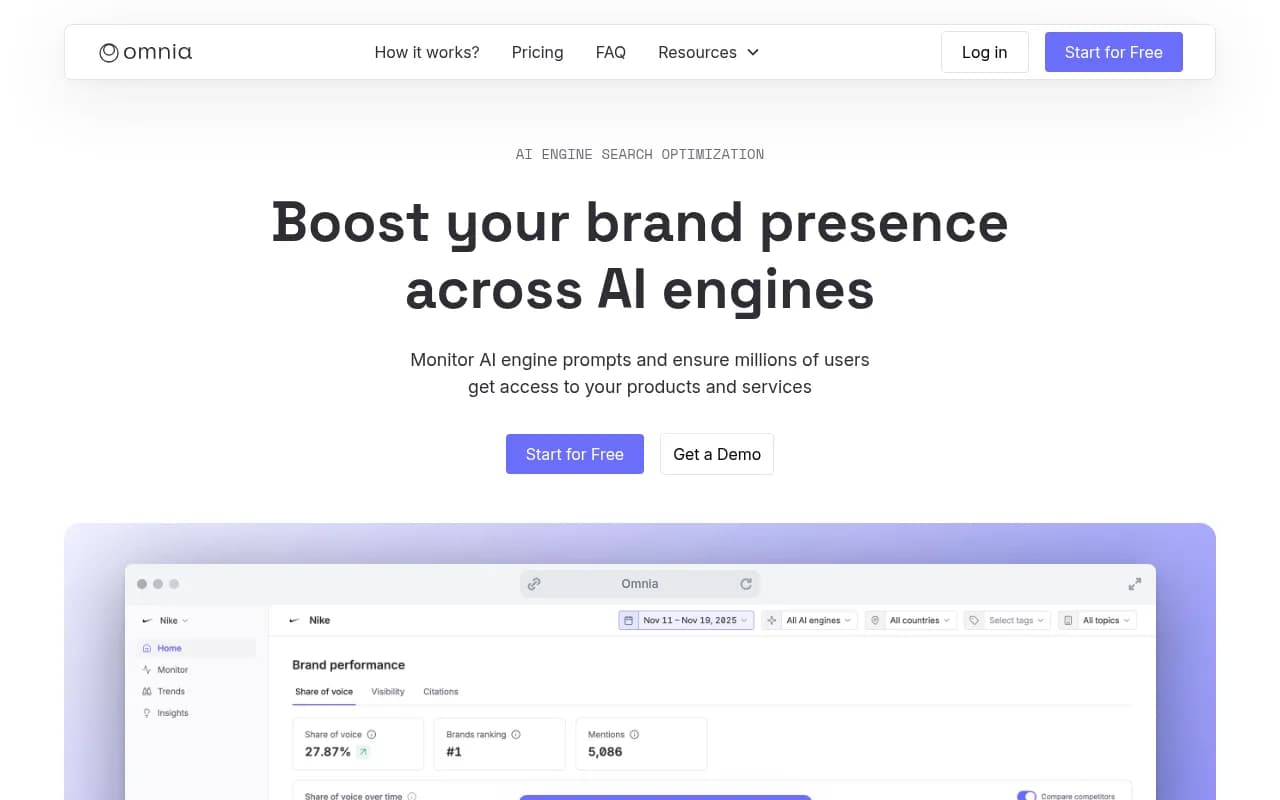
- Omnia measures brand presence in AI-generated answers


Content research and optimization
- Frase provides AI-powered SEO content research and writing
- MarketMuse offers AI content intelligence and strategy
- Clearscope optimizes content for SEO teams



Data analysis and visualization
- Google Analytics tracks web traffic and user behavior
- Tableau provides business intelligence and data visualization
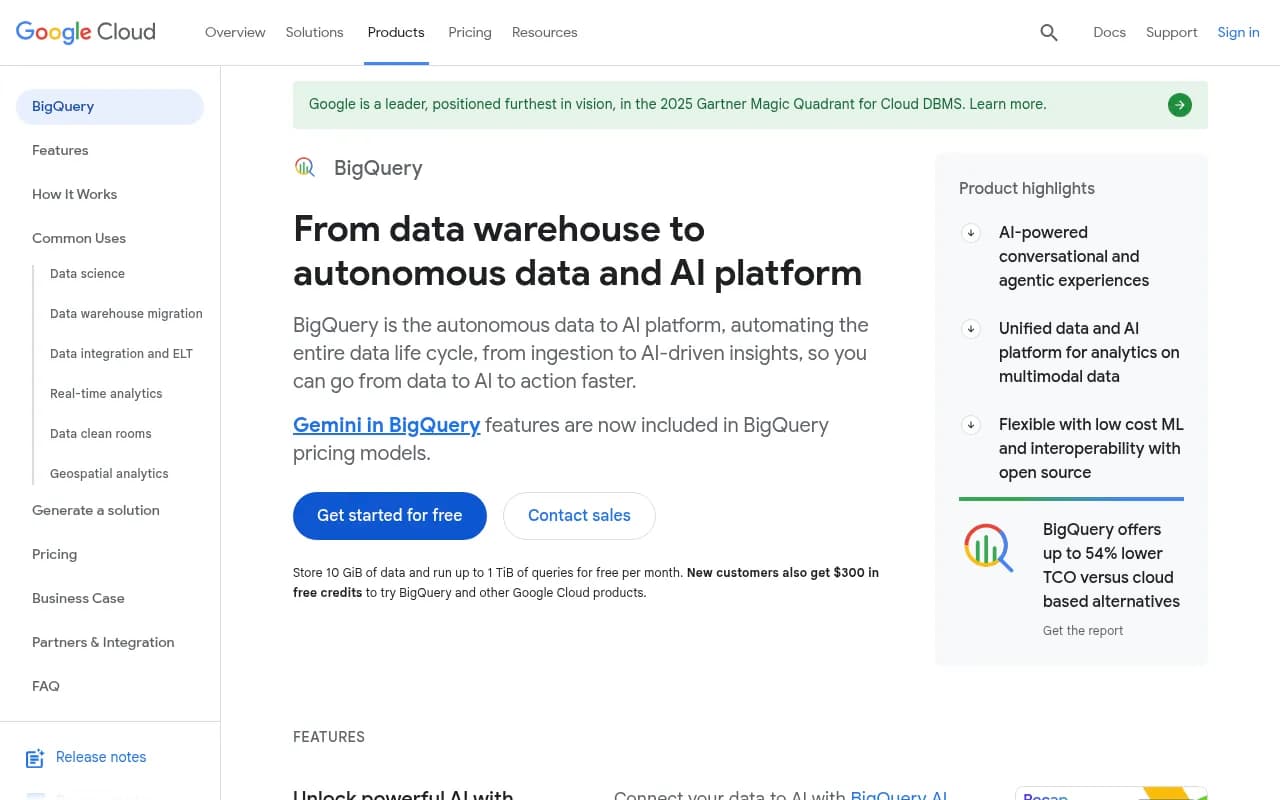
- Google Cloud BigQuery handles large-scale data analysis

Survey and research tools
- SurveyMonkey offers online survey tools for market research
- Wynter provides B2B buyer insights from your exact ICP in under 48 hours
- Attest delivers real-time consumer research at enterprise scale



Common mistakes that kill AI visibility
Even well-researched content can fail if it falls into these traps.
Recycling existing content without adding new insights
AI models prioritize content that introduces new information. If your article just restates what's already been published, AI systems will skip it.
Always ask: "What new information does this article introduce?" If the answer is "none," rework the content.
Using vague or unverified data sources
Vague attributions like "Studies show" or "Experts believe" signal low credibility. AI models deprioritize content that can't back up its claims.
Always cite specific sources with verifiable data.
Ignoring technical SEO and crawler access
AI models can't cite content they can't access. If your site blocks AI crawlers, uses excessive JavaScript, or has slow load times, AI models will skip it entirely.
Regularly audit your site for technical issues that block AI crawlers.
Overloading content with promotional language
AI models deprioritize content that reads like a sales pitch. Avoid promotional language like "groundbreaking," "revolutionary," or "game-changing."
Focus on facts, data, and actionable insights. Let the research speak for itself.
Failing to track and iterate
AI visibility isn't a one-time effort. Track which content AI models cite, identify gaps, and adjust your strategy accordingly.
Tools like Promptwatch provide the feedback loop you need to refine your approach based on real AI behavior.
The future of data-driven content in AI search
AI search is evolving fast. The models that dominate 2026 -- ChatGPT, Perplexity, Claude, Gemini -- will continue to prioritize credibility over volume. But the bar for credibility is rising.
Future trends to watch:
- Real-time data verification: AI models will increasingly cross-check claims in real time, deprioritizing content that can't be verified instantly
- Multi-source corroboration: Single-source data will become less valuable as AI models prioritize findings that are corroborated by multiple independent sources
- Transparent AI models: As AI systems become more explainable, they'll surface the reasoning behind citations -- making it easier to understand what works and what doesn't
- Agentic AI workflows: AI agents will automate parts of the research process, but human oversight will remain critical for ensuring data quality and credibility
The organizations that win in this environment are the ones that treat content as a credibility signal, not a volume game. One well-researched, data-driven article outperforms ten generic posts. The shift from volume to value is already underway.
AI models can't ignore content that introduces new information, reflects real decision-making, and comes from traceable, credible sources. Build that content, and AI search will find you.