Key takeaways
- Published per-location pricing (Yext's $199-$999/year, Moz Local's $16-$33/month) is a poor guide for anyone buying at scale. Vendr-reported enterprise deals put real Yext pricing at $500-$3,000+ per location per year depending on volume and bundle.
- Two pricing architectures dominate: tiered per-location SaaS (BrightLocal, Moz Local, Semrush Local, Yext) that gets cheaper per location as you add sites, and fully custom quote-gated enterprise pricing (SOCi, Chatmeter, Rio SEO) with no public rate card at all.
- Reputation-management-heavy platforms don't follow the volume-discount pattern. Reputation.com runs $80-$150 per location per month more or less regardless of scale, while BrightLocal's base tiers can drop to $4-$10 per location per month once you cross 90-100 sites.
- AI-visibility add-ons are now a separate line item. Uberall's GEO Studio starts at $109/month self-serve and scales to $449/month before enterprise pricing kicks in, and it's layered on top of the core listings product, not bundled into it.
- Multi-location brands should budget local SEO/reputation spend separately from AI-search visibility spend. Tools built for citations and listings (Yext, Uberall, BrightLocal) aren't built to track how your locations show up in ChatGPT or AI Overviews, which is a different job entirely.
Why local GEO pricing is so hard to pin down
Ask ten vendors what it costs to manage SEO and reputation across 50 locations and you'll get ten different answers, and most of them will be wrong by the time you actually sign a contract. I spent time digging through list pricing pages, Vendr's buyer-reported data, and practitioner threads, and the gap between what's published and what brands actually pay is bigger than almost any other SaaS category I've looked at.
Part of the problem is structural. Local SEO and local marketing platforms serve businesses with wildly different needs at 5 locations versus 500, so most vendors either publish a thin top-of-funnel rate card (Yext, Moz Local) and negotiate everything else behind closed doors, or skip the rate card entirely and make you request a quote (SOCi, Chatmeter, Rio SEO). Either way, the number on the pricing page is a starting point for a conversation, not a number you can budget against.
There's also a newer wrinkle: generative engine optimization (GEO) for local brands is starting to show up as its own line item rather than a feature bolted onto listings management. Uberall split its AI-visibility tracking into a standalone product, GEO Studio, with its own self-serve pricing tiers. That's worth watching because it signals where the category is heading, even though most local SEO tools still haven't caught up.
What multi-location brands actually pay, by platform
| Platform | List/published pricing | Real-world per-location cost | Structure |
|---|---|---|---|
| Yext | $199-$999/year per location (list) | $500-$3,000+/location/year, negotiated via Vendr data | Tiered, volume-discounted bundles |
| BrightLocal | $31-$65/month at 1 location | $4-$10/location/month at 91-100 locations | Tiered (Track/Manage/Grow), steep volume discount |
| Moz Local | $16-$33/month per location | Enterprise custom quote at 50+ locations | Tiered per-location |
| Semrush Local | $30-$60/month per location | Same as list (less negotiable) | Flat per-location |
| Birdeye | Gated by location band (1-3 up to 1000+) | $159-$399/location/month reported | Custom bands, quote only |
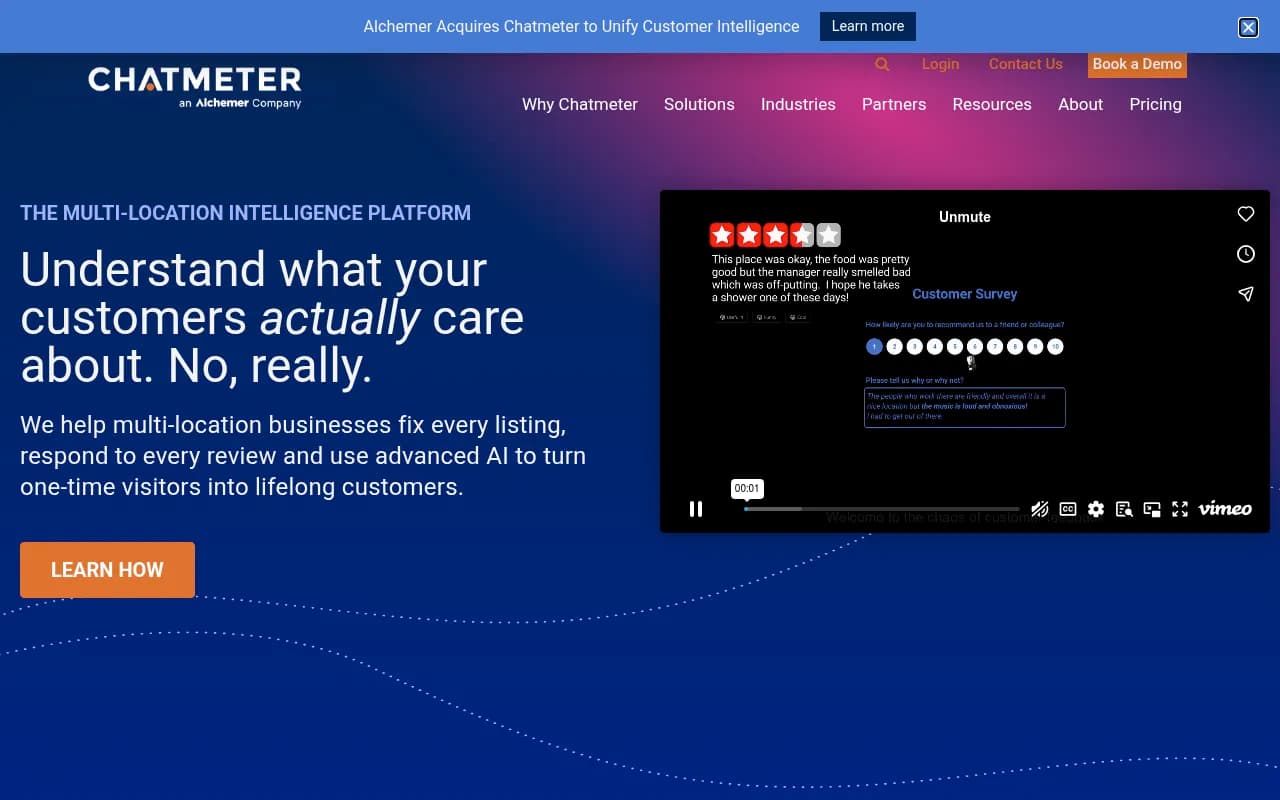
| Chatmeter | Quote-based by band (1-4 up to 500+) | $199-$399/location/month reported | Fully custom |
| SOCi | Quote-based, no per-listing fee | ~$30,000 reference contract value | Custom by location count + modules |
| Reputation.com | $80/location/month starting | $80-$150/location/month, scale-resistant | Flat per-location, limited discount |
| Uberall (core) | Custom quote | Comparable to $34/mo-per-location tools at scale | Custom, module-based |
| Uberall GEO Studio | $109-$449/month self-serve, custom above | N/A (early-stage product) | Credit and prompt-based tiers |
A few things jump out. First, the volume discount you get depends entirely on which platform you pick, not just how many locations you have. BrightLocal rewards scale aggressively; Reputation.com barely rewards it at all. If reputation management across 100+ locations is your main use case, that $80-150/month per location floor adds up fast, roughly $96,000-$180,000 a year before you've touched listings or AI visibility.
Second, the custom-quote vendors (SOCi, Chatmeter, Rio SEO) aren't necessarily more expensive, they're just opaque. SOCi's own Forrester-commissioned study found a composite 1,000-location enterprise brand hit 192% ROI over three years with under six months of payback, which suggests the pricing, whatever it ends up being, is designed around enterprise contract sizes rather than a per-site rate card you could reverse-engineer from a website.
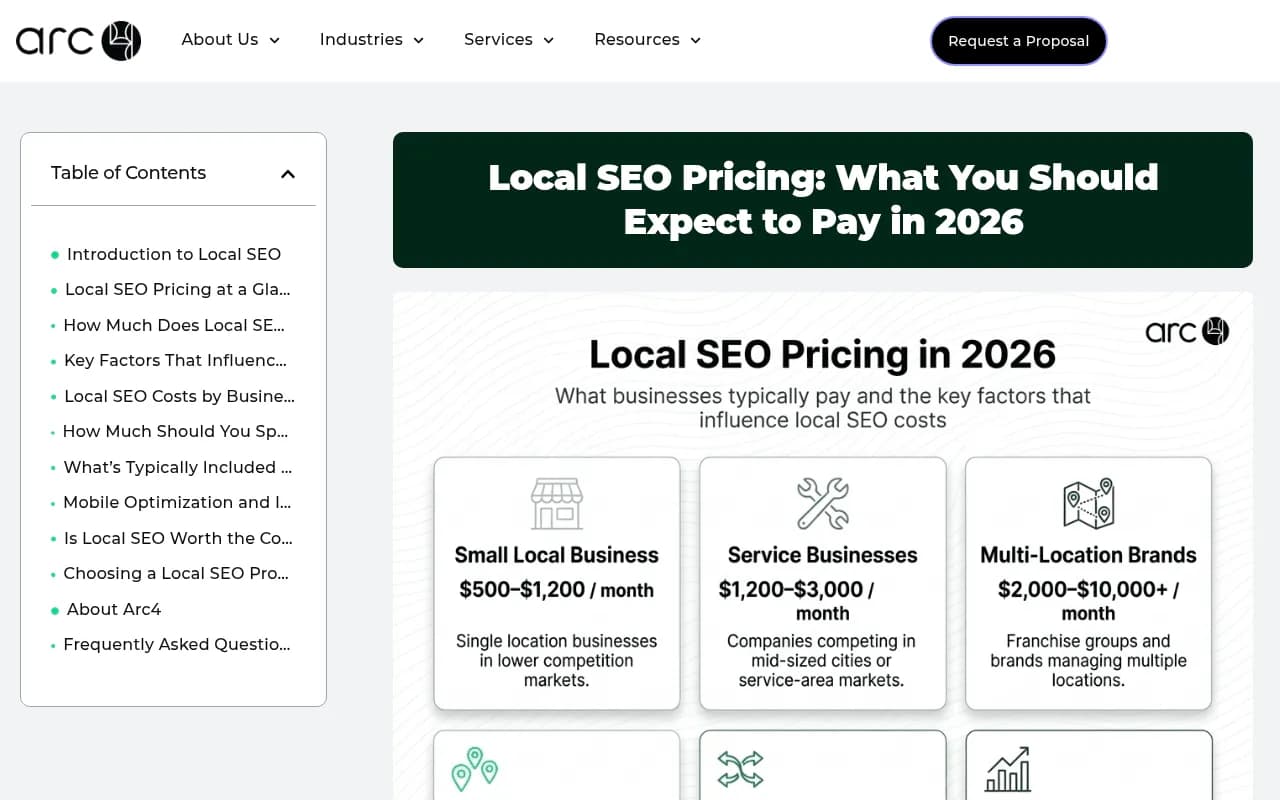
Monthly local SEO/GEO spend by brand size
Aggregate agency and platform data for 2026 puts total monthly spend (not per-location, total) roughly as follows:
- 3-5 locations: $1,800-$4,000/month total, covering multiple Google Business Profiles, location pages, and coordinated strategy
- 5-10 locations: $3,000-$7,000/month
- 10-50+ locations: custom retainers from $7,000-$20,000+/month, often built around centralized content and shared assets
Those numbers blend agency labor with software spend, so they'll run higher than the pure-platform costs in the table above. If you're doing the work in-house with a stack of tools, you can often land meaningfully below those agency benchmarks, but you're trading dollars for internal hours.
Tools worth knowing about
Yext
Yext is still the name most people reach for when they think "multi-location listings and visibility," and the gap between its list price and negotiated price is the single clearest example of why you shouldn't trust a pricing page in this category. BrightLocal explicitly markets a "Yext Replacement Service" at roughly half the price of a comparable Yext package, which tells you something about where the market thinks Yext's real pricing sits.
BrightLocal
BrightLocal is the platform that actually rewards scale. Its Track, Manage, and Grow tiers drop from $31-65/month at a single location down to the equivalent of $4-10/location/month once you're managing 91-100 sites. It's also added a Local AI Visibility Tracker to its Track tier and AI Insights to Manage, so it's at least starting to bridge local SEO and AI search visibility rather than leaving that gap entirely to separate tools.
Moz Local
Simple, published, per-location pricing at $16-33/month depending on tier, which makes it one of the easier platforms to budget against without a sales call, at least until you hit 50+ locations and get routed to a custom enterprise quote.
Semrush Local
Semrush Local's Base and Pro tiers at $30 and $60 per location per month are about as close to "what you see is what you pay" as this category gets. No steep volume curve, but also no surprise negotiation later.
Uberall
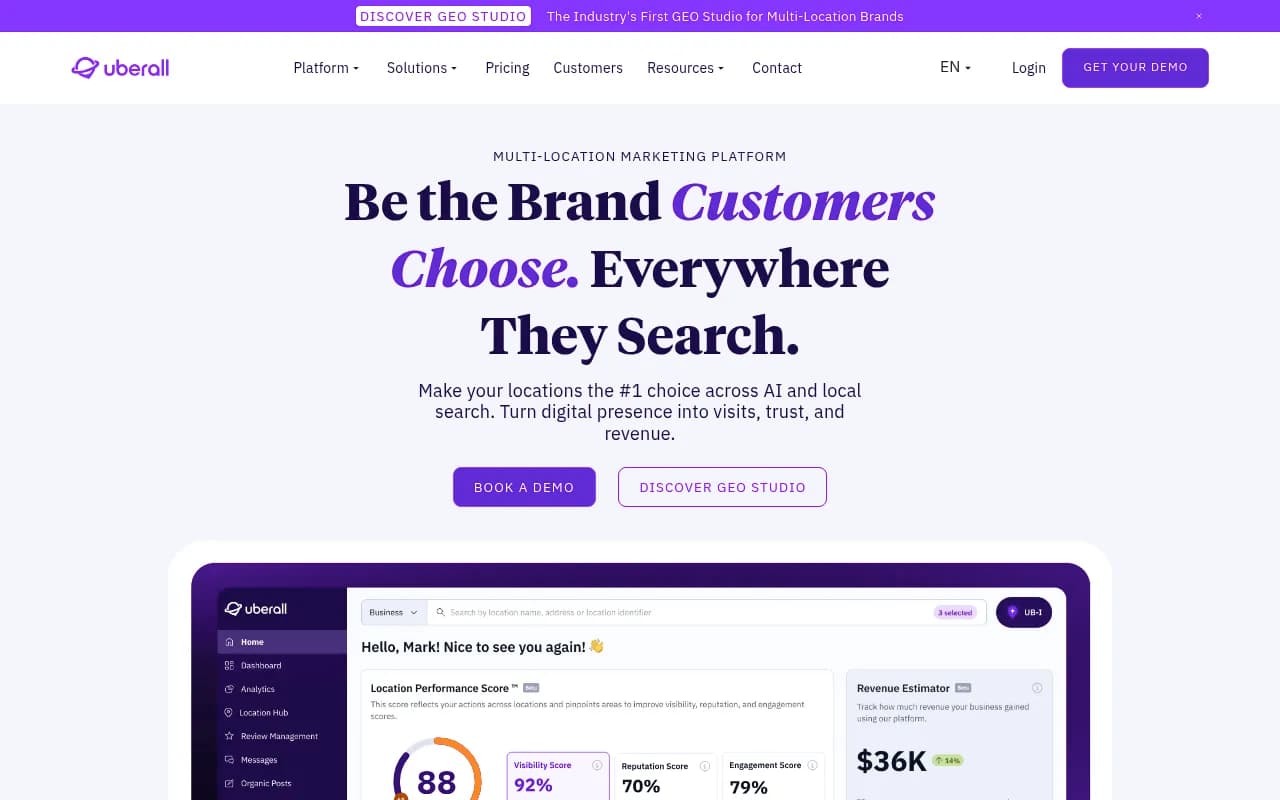
Uberall's core listings and reviews product is custom-quoted, but its GEO Studio add-on is genuinely self-serve: $109/month for 1,000 credits and 50 prompts tracked across 3 answer engines, scaling to $449/month for location-level AI-visibility tracking across 5 engines. It's one of the only local-marketing platforms treating GEO as its own product tier rather than a vague feature bullet.
SOCi, Chatmeter, and Rio SEO
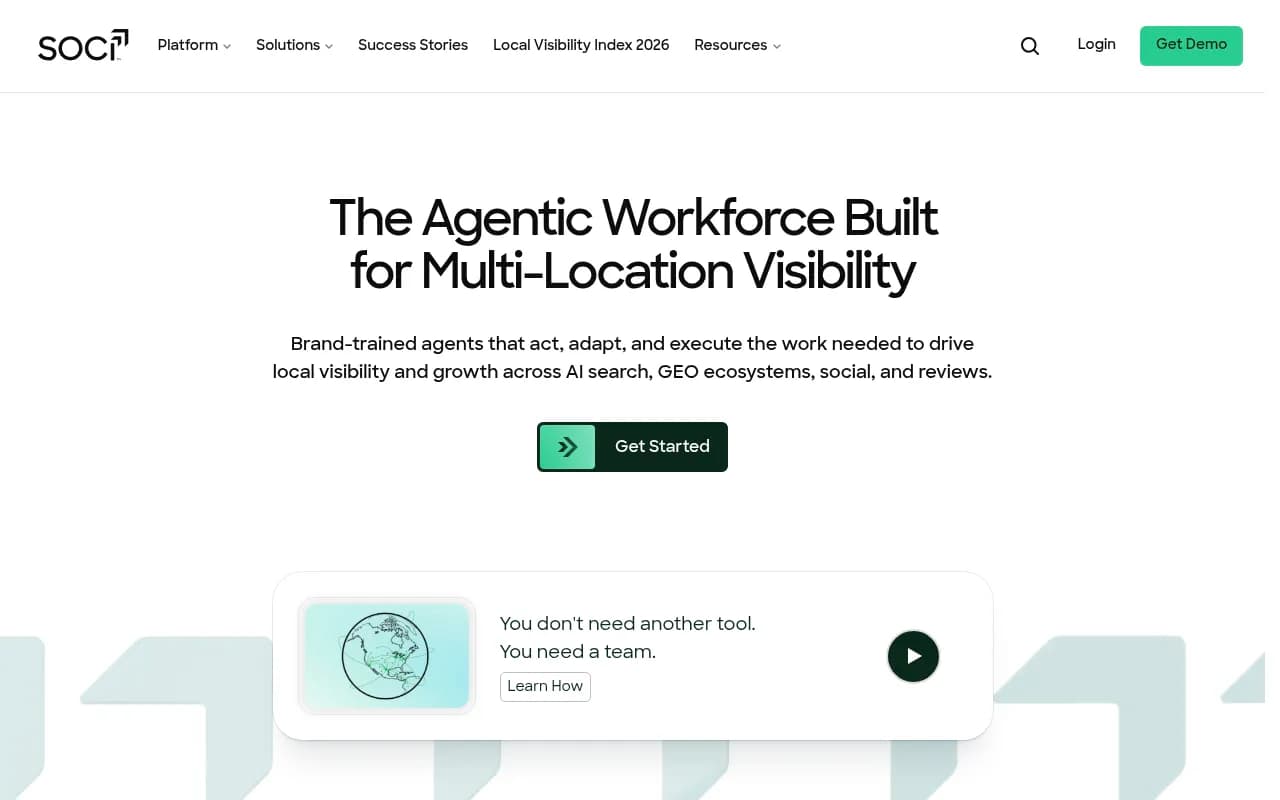
All three skip public pricing entirely and quote by location band and feature set. SOCi's model is worth noting because it explicitly charges zero per-listing or per-user fees, pricing purely on location count and which "Genius Agent" modules (local search, social, reputation) you deploy. That's a cleaner model conceptually, but it also means you can't sanity-check a quote against a published number before you're already in a sales conversation.

Birdeye and Reputation.com
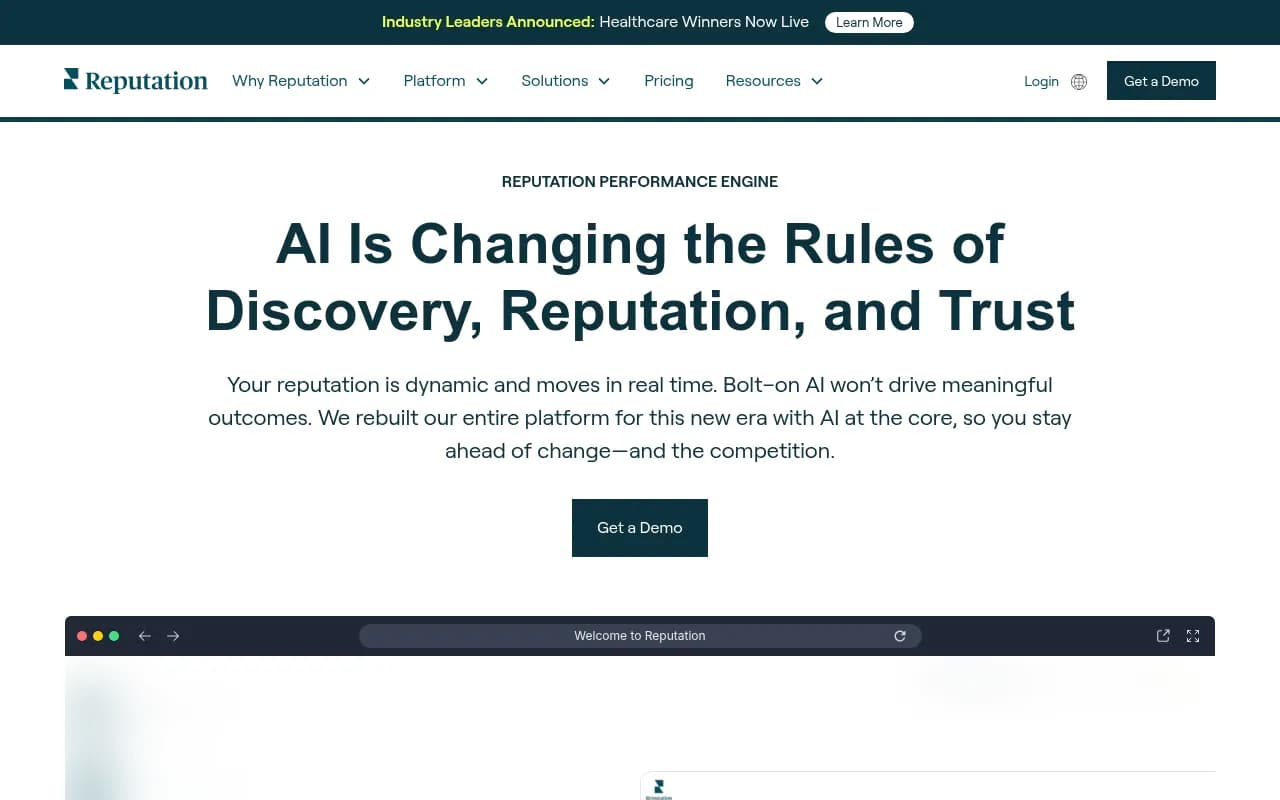
Birdeye and Reputation.com both lean reputation-first, and both show the same pattern: pricing is gated behind a quote form, and third-party reports suggest real per-location costs land anywhere from $80 to nearly $400/month depending on plan and negotiation. If reputation management is your core need rather than listings or AI visibility, budget on the higher end of that range and push for volume pricing explicitly, because it isn't automatic the way it is with BrightLocal.

Where AI search visibility fits into the budget
Here's the part most local SEO pricing guides miss entirely: none of the platforms above are built to answer "how does each of my 50 locations show up when someone asks ChatGPT or Google AI Mode about us." That's a different data problem. Local listings platforms track NAP consistency, citations, and review volume. AI visibility platforms track which of your pages get cited in generative answers and why.
This matters more than it might seem, because Promptwatch's own data shows product and landing pages together make up about 39% of all ChatGPT citations, and for comparison-style prompts that climbs to roughly 47% combined. Location pages and GBP-linked content are exactly the kind of landing-page assets multi-location brands produce at scale, which means they're already competing for AI citation slots whether anyone's tracking it or not (https://promptwatch.com/data/chatgpt-citation-share-by-content-type).
The branded-query data is even more relevant for franchise and multi-location brands specifically. When someone asks "is [Brand] good" by name, reviews earn 5.6% of citations, more than three times their overall share, and FAQ content earns 4.8%. If your locations are generating reviews but nobody's tracking whether AI models are actually citing them, that's a visibility gap none of the platforms in the table above will ever surface (https://promptwatch.com/data/chatgpt-citation-share-by-content-type).
There's a silver lining in the domain-authority data too. ChatGPT's citations skew toward mid-authority sites, DR 46-75 domains captured almost half of all citations in August 2026, while DR 91-100 sites fell to just 3-4% by month's end. A regional multi-location brand doesn't need Fortune-500-level domain authority to earn AI citations, which is a more encouraging setup for local and regional players than it might first appear (https://promptwatch.com/data/chatgpt-citation-share-by-domain-rank-august-2026).
This is where Promptwatch fits as a complement, not a replacement, to the listings/reputation stack above. It tracks how your brand and locations show up across ChatGPT, Gemini, Perplexity, Google AI Overviews and AI Mode, and the rest of the major engines, with crawler logs that show exactly when AI bots visit your location pages and whether they hit errors. Pricing starts at $95/month for the Essential plan (50 prompts, one site) and runs to $579/month for Business (5 sites, 350 prompts), which is a genuinely different cost structure than per-location listings pricing, because you're not paying per physical location, you're paying per tracked prompt and response volume.

For a brand running 20-30 locations, that usually means one AI-visibility subscription covering the whole brand, layered on top of a per-location listings/reputation tool rather than replacing it. Budget for both, because they're solving different problems and neither one substitutes for the other.
How to budget without getting surprised
A few practical rules based on everything above:
- Treat every published per-location rate as a floor, not a ceiling, for anything beyond Moz Local and Semrush Local's genuinely flat tiers. Ask explicitly what the rate looks like at your projected 12-month location count, not your current one.
- If reputation management is the priority, model Reputation.com or Birdeye at the higher end of their reported ranges ($150-400/location/month) rather than the lowest published figure. The volume discount you're hoping for often doesn't materialize the way it does with BrightLocal.
- Separate your local listings/reputation budget from your AI-search-visibility budget. They're different line items with different pricing logic, and conflating them is how brands end up under-tracking AI visibility entirely.
- For anything quote-gated (SOCi, Chatmeter, Rio SEO), get at least two competing quotes before signing. The lack of a public rate card means there's more room for a vendor to price based on what you say you're willing to pay rather than what the platform actually costs to run.
If you want to compare more options in the GEO and AI-visibility space specifically, the directory at bestgeosoftware.com tracks a wider set of platforms beyond the local-marketing-first tools covered here.