Key takeaways
- Nightwatch, Gauge, Orchly, and Promptwatch all track brand visibility in AI search engines, but they differ significantly in what they do after showing you the data
- Orchly combines AI visibility with SEO in one platform and includes an Action Center for execution, starting at $49/month
- Gauge focuses on brand mention tracking across AI engines with clean reporting, suited for teams that want simple monitoring
- Nightwatch is primarily a traditional rank tracker that has added AI search monitoring, making it a hybrid tool rather than a dedicated GEO platform
- Promptwatch is the only platform in this comparison that closes the full loop: find visibility gaps, generate content to fill them, track the results, and attribute traffic back to revenue
If you're running marketing for a brand that's starting to take AI search seriously, you've probably noticed that the tool landscape is a mess. There are dozens of platforms claiming to "track your AI visibility" -- and most of them do roughly the same thing: run your prompts through ChatGPT and Perplexity, show you whether your brand appears, and call it a day.
That's fine as a starting point. But for a growing marketing team, data without action is just overhead. You need to know what to do with the information.
This guide compares four platforms that come up regularly for mid-market teams: Nightwatch, Gauge, Orchly, and Promptwatch. They're not all the same category of tool, which is actually the most important thing to understand before you pick one.
What "AI visibility" actually means in 2026
Before getting into the tools, it's worth being precise about what we're measuring. When someone asks ChatGPT "what's the best project management tool for remote teams?" -- your brand either appears in that answer or it doesn't. AI visibility is the aggregate of how often and how prominently you appear across those kinds of queries.
Unlike traditional SEO rankings (position 1, 2, 3...), AI search responses are more fluid. The same prompt can return different answers depending on the model, the user's location, the time of day, and how the question is phrased. That makes tracking harder, and it makes acting on the data harder still.
The platforms in this comparison all try to solve the tracking problem. Where they diverge is on the action side.
The four platforms at a glance
| Platform | Primary focus | Content generation | Crawler logs | Pricing starts at | Best for |
|---|---|---|---|---|---|
| Nightwatch | Traditional SEO + AI monitoring hybrid | No | No | ~$39/mo | Teams already using Nightwatch for SEO |
| Gauge | AI brand mention tracking | No | No | Not publicly listed | Simple monitoring with clean UX |
| Orchly | SEO + AI visibility + Action Center | Partial (AI Agents) | No | $49/mo | Teams wanting SEO and AI in one place |
| Promptwatch | End-to-end AI visibility + optimization | Yes (built-in AI writer) | Yes | $99/mo | Teams that want to track and improve |
Nightwatch
Nightwatch started as a rank tracker. A solid one, actually -- it's been around long enough to have a real user base and a reputation for accurate SERP data. The AI search monitoring features came later, added as the category grew.
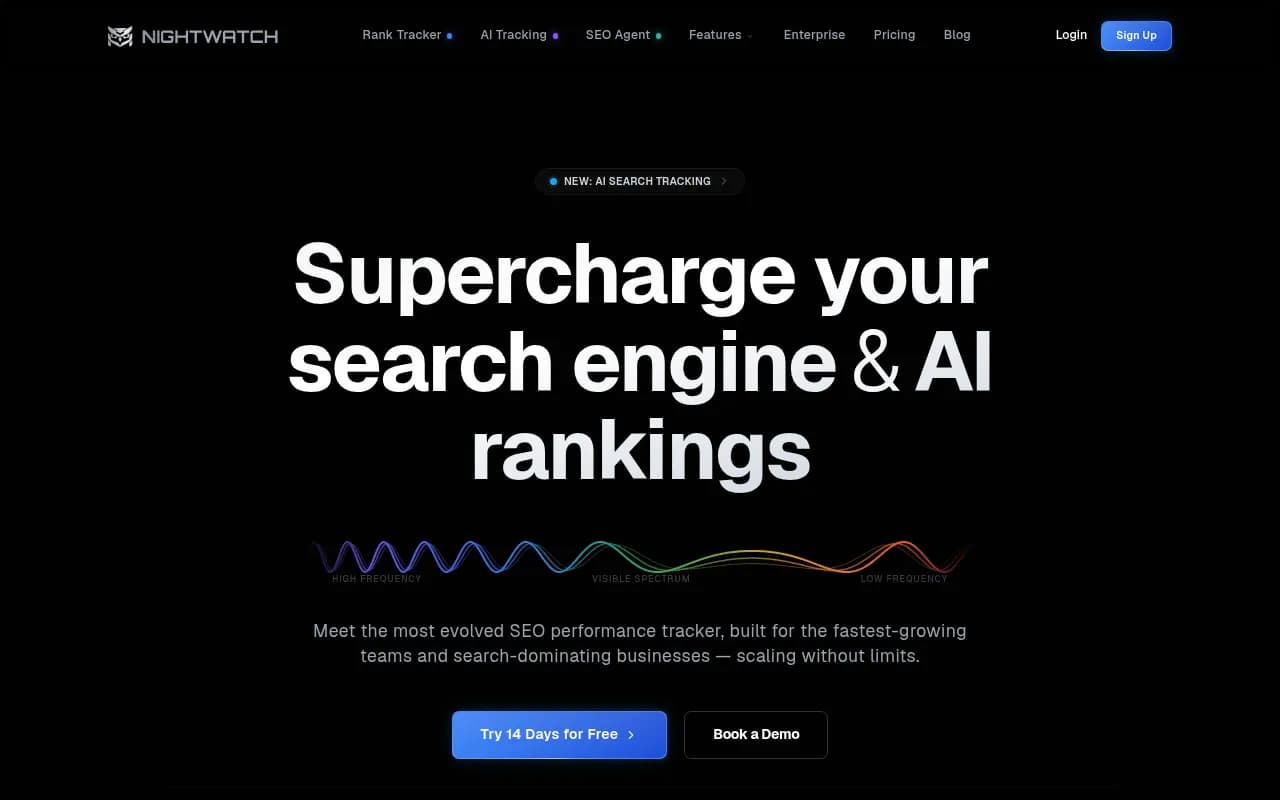
That origin story matters. Nightwatch's AI visibility features feel like an extension of a traditional SEO tool rather than something built from the ground up for generative search. You can track brand mentions across AI engines, but the depth of analysis -- prompt volumes, competitor heatmaps, citation sources -- isn't really there.
For a team that's already paying for Nightwatch and wants a basic read on AI visibility without adding another subscription, it makes sense as a stopgap. But if AI search is becoming a real priority, you'll quickly hit the ceiling.
What Nightwatch does well: rank tracking for traditional search, clean UI, solid historical data. What it doesn't do: help you understand why you're not appearing in AI responses, or what content to create to change that.
Gauge
Gauge is a more focused product. It's built specifically for AI search monitoring -- tracking brand mentions across ChatGPT, Perplexity, Claude, Gemini, and similar engines. The interface is clean, the setup is straightforward, and it gives you a clear picture of where your brand shows up and where it doesn't.
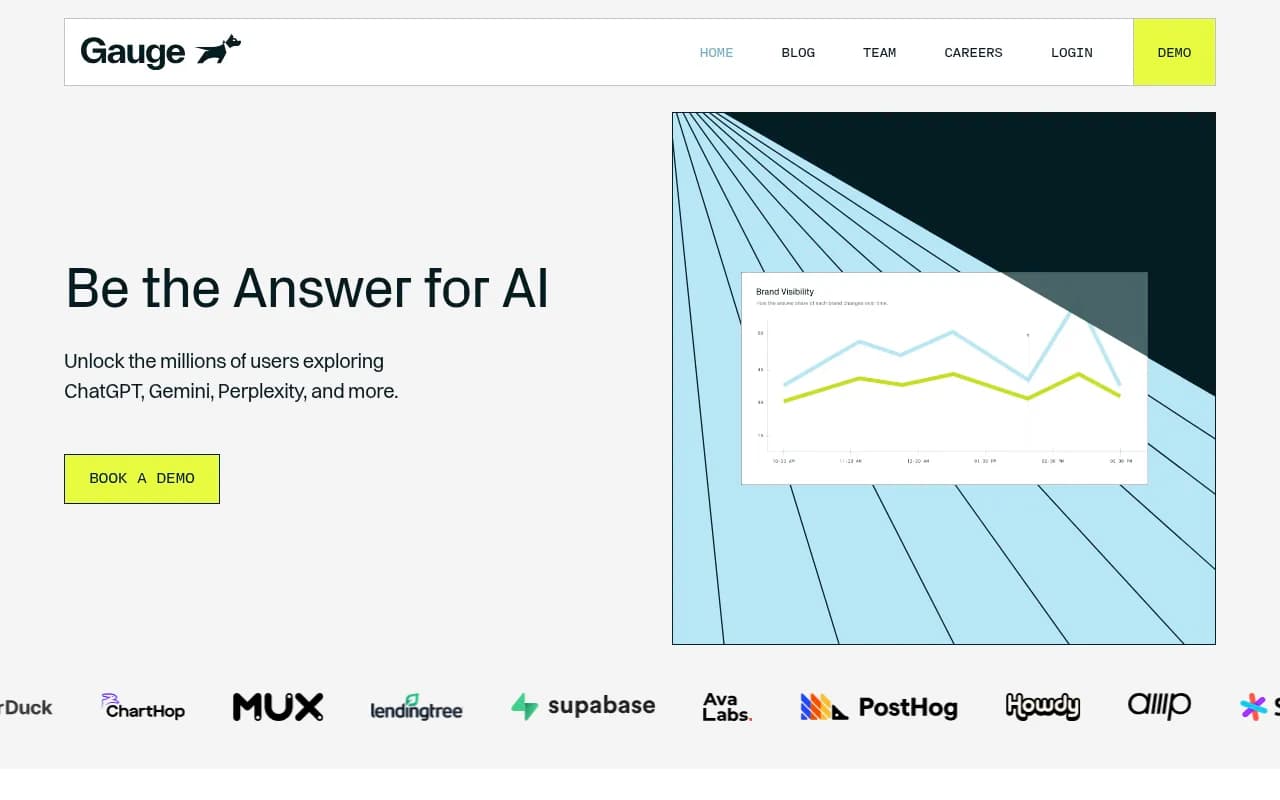
The honest limitation with Gauge is the same one that affects most monitoring-only tools: it shows you the problem but doesn't help you solve it. You can see that a competitor is getting cited more often than you for a given category of prompts. You can see which prompts you're missing. But the next step -- figuring out what content to create, writing it, publishing it, and tracking whether it worked -- is entirely on you.
For smaller teams or brands that just want a visibility dashboard to report on, Gauge is a reasonable choice. The pricing isn't publicly listed, which is a minor frustration when you're trying to compare options quickly.
Orchly
Orchly is interesting because it's trying to solve a real problem: the fragmentation between traditional SEO and AI search monitoring. Most teams are running separate tools for each, which creates reporting headaches and makes it hard to see the full picture.
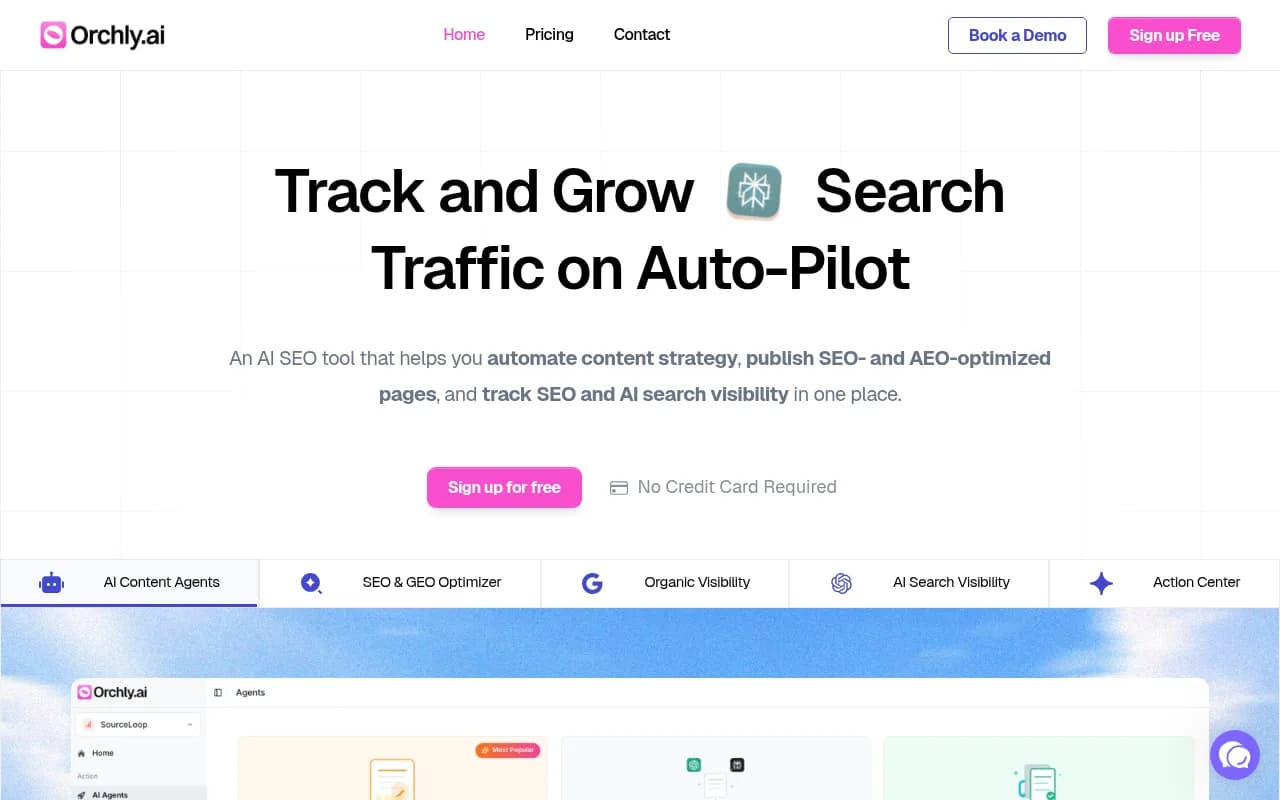
The platform combines standard SEO tracking with AI visibility monitoring, and it includes what they call an "Action Center" with AI agents to help teams act on what they find. According to their own comparison of 15 AI search monitoring tools (published March 2026), Orchly positions itself as the option for "teams that want visibility + execution" at $49/month.
That's a compelling pitch, and the price point is genuinely accessible for mid-market teams. The SEO integration is a real differentiator -- if you're trying to manage both traditional and AI search from one place, Orchly is worth a look.
Where it falls short compared to more specialized platforms: the AI content generation is limited, there are no crawler logs to see how AI bots are actually interacting with your site, and the citation analysis doesn't go as deep. It's a good all-rounder, but "all-rounder" means trade-offs.
Promptwatch
Promptwatch is the platform in this comparison that's built around a different premise: monitoring is only useful if it leads to action.

The core workflow is a loop. First, Answer Gap Analysis shows you exactly which prompts your competitors are appearing for that you're not -- not just "you're missing some prompts" but the specific topics, questions, and angles that AI models want to answer but can't find on your site. Second, a built-in AI writing agent generates content grounded in real citation data (880M+ citations analyzed) to fill those gaps. Third, page-level tracking shows whether your new content is actually getting cited, by which models, and how often. And fourth, traffic attribution connects that visibility back to actual revenue through a code snippet, GSC integration, or server log analysis.
That loop is what separates Promptwatch from the other three platforms in this comparison. Nightwatch, Gauge, and Orchly all stop somewhere in the middle. Promptwatch closes it.
A few other things worth mentioning: Promptwatch tracks AI crawler activity in real time -- you can see when GPTBot, ClaudeBot, or PerplexityBot hits your site, which pages they read, and any errors they encounter. That's a capability most competitors lack entirely. It also tracks Reddit and YouTube discussions that influence AI recommendations, which is a channel that gets ignored by almost every other platform.
Pricing starts at $99/month for the Essential plan (1 site, 50 prompts, 5 articles), with Professional at $249/month and Business at $579/month. There's a free trial available.
The trade-off is complexity. Promptwatch has more features than Gauge or Nightwatch, and getting full value from it requires some investment in setup and strategy. For a team that's serious about AI search, that's a worthwhile trade. For a team that just wants a quick visibility snapshot, it might be more than they need right now.
How to choose
The right tool depends on where your team is in the AI search journey.
If you're just starting out and want a simple read on AI visibility, Gauge or Nightwatch (if you're already a customer) will give you a baseline without a big commitment. Don't expect them to tell you what to do with the data.
If you want to consolidate SEO and AI monitoring into one platform, Orchly is worth evaluating. The $49/month price point is accessible, and the Action Center adds some execution capability that pure monitoring tools lack.
If AI search is a real growth channel for your business and you need to actually improve your visibility -- not just track it -- Promptwatch is the most complete option in this comparison. The content generation, crawler logs, citation analysis, and traffic attribution are capabilities that the other three platforms don't match.
One honest note: if your team doesn't have the bandwidth to act on gap analysis and create new content, even the best optimization platform won't move the needle. The tool is only as useful as the process around it.
Feature comparison in depth
| Feature | Nightwatch | Gauge | Orchly | Promptwatch |
|---|---|---|---|---|
| AI brand mention tracking | Yes | Yes | Yes | Yes |
| Traditional SEO rank tracking | Yes | No | Yes | No |
| Answer gap analysis | No | No | Limited | Yes |
| Built-in content generation | No | No | Partial | Yes |
| AI crawler logs | No | No | No | Yes |
| Reddit/YouTube tracking | No | No | No | Yes |
| ChatGPT Shopping tracking | No | No | No | Yes |
| Traffic attribution | No | No | No | Yes |
| Prompt volume/difficulty scores | No | No | No | Yes |
| Multi-model coverage | Limited | Yes | Yes | 10+ models |
| Pricing transparency | Yes | No | Yes | Yes |
The monitoring-only problem
It's worth being direct about something: most AI visibility tools in 2026 are monitoring dashboards. They show you data. They don't help you change it.
That's not a knock on monitoring -- you need to know where you stand before you can improve. But for a marketing team with real targets, a dashboard that shows you're losing to competitors in AI search is only useful if it also tells you what to do about it.
The platforms that are starting to close this gap -- Orchly with its Action Center, Promptwatch with its full optimization loop -- are the ones worth watching. The pure monitoring tools will need to evolve or get squeezed out as teams realize that visibility scores alone don't move revenue.
Bottom line
For mid-market marketing teams in 2026, the choice comes down to what you actually need to accomplish.
Nightwatch is a solid traditional SEO tool with AI monitoring bolted on. Gauge is clean and focused but stops at the dashboard. Orchly is a genuine attempt at combining SEO and AI visibility with some execution capability at an accessible price. Promptwatch is the most complete platform if your goal is to actually improve your AI search visibility, not just measure it.
None of these tools do the work for you. But some of them give you a much clearer path to doing it.