Key takeaways
- Profound is the most enterprise-complete platform with SOC 2 Type II, HIPAA compliance, and built-in content workflows, but starts at $499/month and scales steeply from there.
- Peec AI is the most accessible option with unlimited team seats and countries on every plan, making it the strongest mid-market choice.
- Evertune targets Fortune 500 brands with panel-based AI usage data and source influence analysis -- capabilities no other platform here matches.
- Bluefish and Relixir are newer entrants with narrower feature sets; useful for specific use cases but not yet full-stack GEO platforms.
- If you want a platform that goes beyond monitoring to actually fix your AI visibility gaps -- with content generation, crawler logs, and traffic attribution -- Promptwatch is worth a serious look.
The GEO platform market in 2026 is genuinely confusing. Five platforms, all claiming to be the enterprise standard, all with different definitions of what "enterprise" even means. Profound raised $96M at a $1B valuation. Evertune has The Trade Desk's backing. Bluefish publishes comparison posts declaring itself the winner. Relixir is positioning as an "end-to-end GEO engine." And Peec AI keeps undercutting everyone on price while adding features fast.
So which one is actually worth the premium price tag? That depends entirely on what problem you're trying to solve. Let me break down what each platform actually does well, where each falls short, and who should pick what.
What we're comparing
Before getting into the platforms, it's worth being clear about what "enterprise GEO" means in practice. At minimum, a platform in this category should:
- Track brand visibility across multiple AI models (ChatGPT, Perplexity, Gemini, Claude, etc.)
- Support custom prompt sets that reflect how your customers actually search
- Provide competitor benchmarking
- Offer some path from "here's your visibility score" to "here's how to improve it"
The five platforms here all meet the first two criteria. Where they diverge sharply is on the last one -- the gap between monitoring and optimization.
Peec AI

Peec AI has carved out a clear position: serious GEO capabilities without the enterprise price wall. Every plan includes unlimited team seats, unlimited countries, and data export. That's not a small thing -- most competitors gate multi-user access or international monitoring behind higher tiers.
The platform covers the major AI models (ChatGPT, Google AI Overviews, Gemini, Perplexity, Claude) and includes an "Actions" module that surfaces optimization opportunities even on basic plans. They've also added MCP access, which lets you query your AI visibility data using natural language and connect it to existing workflows -- a genuinely useful feature for teams that want to integrate GEO data into broader reporting.
Where Peec AI is thinner: it's primarily a monitoring and analytics platform. The content generation capabilities are more limited compared to Profound, and there's no equivalent to Evertune's panel-based audience data or Profound's AI crawler analytics. If you're a mid-market brand that needs solid visibility tracking and competitive benchmarking without paying enterprise prices, Peec AI is hard to beat. If you need deep content workflows or compliance certifications, you'll hit its ceiling.
Pricing starts significantly lower than Profound -- exact figures vary by plan, but the gap is substantial.
Profound
Profound

Profound is the most fully-featured platform in this comparison, and the pricing reflects it. Starting at $499/month, it's built for organizations where GEO is a serious budget line item.
The compliance story is real: SOC 2 Type II certification, HIPAA compliance for healthcare brands, and GCP/WordPress integrations that enterprise IT teams actually care about. Profound tracks 10+ AI engines with real-time monitoring and recently added GPT-5.2 tracking. The G2 Winter 2026 AEO Leader recognition isn't just marketing -- it reflects genuine depth in the platform.
The content generation capability is where Profound separates itself from pure monitoring tools. Profound Workflows (currently in public beta) automates content operations, connecting visibility gaps to content production. This is the right direction -- most GEO platforms show you where you're invisible and then leave you to figure out what to do about it.
The honest limitation: Profound's content generation is still maturing. The Workflows beta is promising but not yet the seamless end-to-end loop that the price point implies. And at $499/month as an entry point, smaller teams will find it hard to justify before they've proven GEO ROI internally.
Evertune
Evertune is doing something genuinely different from the other platforms here. Most GEO tools measure whether your brand appears in AI responses. Evertune goes a layer deeper with its EverPanel -- a panel of 25 million real internet users -- to show you the actual scale of AI's influence on your audience. That's not just "did ChatGPT mention you" but "how many people in your category are using AI to make decisions, and what are they finding?"
The AI Brand Index scores unaided brand visibility on a 0-100 scale, weighting both frequency and position. The Consumer Preferences module tests brands against buyer preference topics to identify content gaps. Word Association analysis shows which terms AI models connect to your brand, with sentiment scoring. These are research-grade capabilities that go well beyond standard rank tracking.
The Trade Desk connection matters here. Evertune was built by people who understand media measurement at scale, and it shows in the methodology. Statistical significance through prompting at scale, curated prompts based on market research -- this is a more rigorous approach than most competitors.
The trade-off: Evertune is expensive and positioned squarely at Fortune 500 brands. It's not a self-serve tool you spin up in an afternoon. If you're a mid-market brand, the panel data and brand research capabilities may be more than you need.
Bluefish AI
Bluefish positions itself as the enterprise standard and publishes comparison content declaring itself the winner across every assessment. Take that with appropriate skepticism -- every platform in this space publishes similar content.
What Bluefish does well: citation alerts for brand misrepresentation and integrations with PR tools like Cision. If your primary GEO concern is brand safety -- catching cases where AI models are saying inaccurate things about your brand and getting that in front of your PR team quickly -- Bluefish has a genuine edge here.
Where Bluefish is weaker: comprehensive AI model coverage and the depth of analytics that Evertune or Profound offer. The platform covers fewer models and the optimization capabilities are more limited. It's a reasonable choice for brands where the PR use case dominates, but it's not a full-stack GEO platform.
Relixir
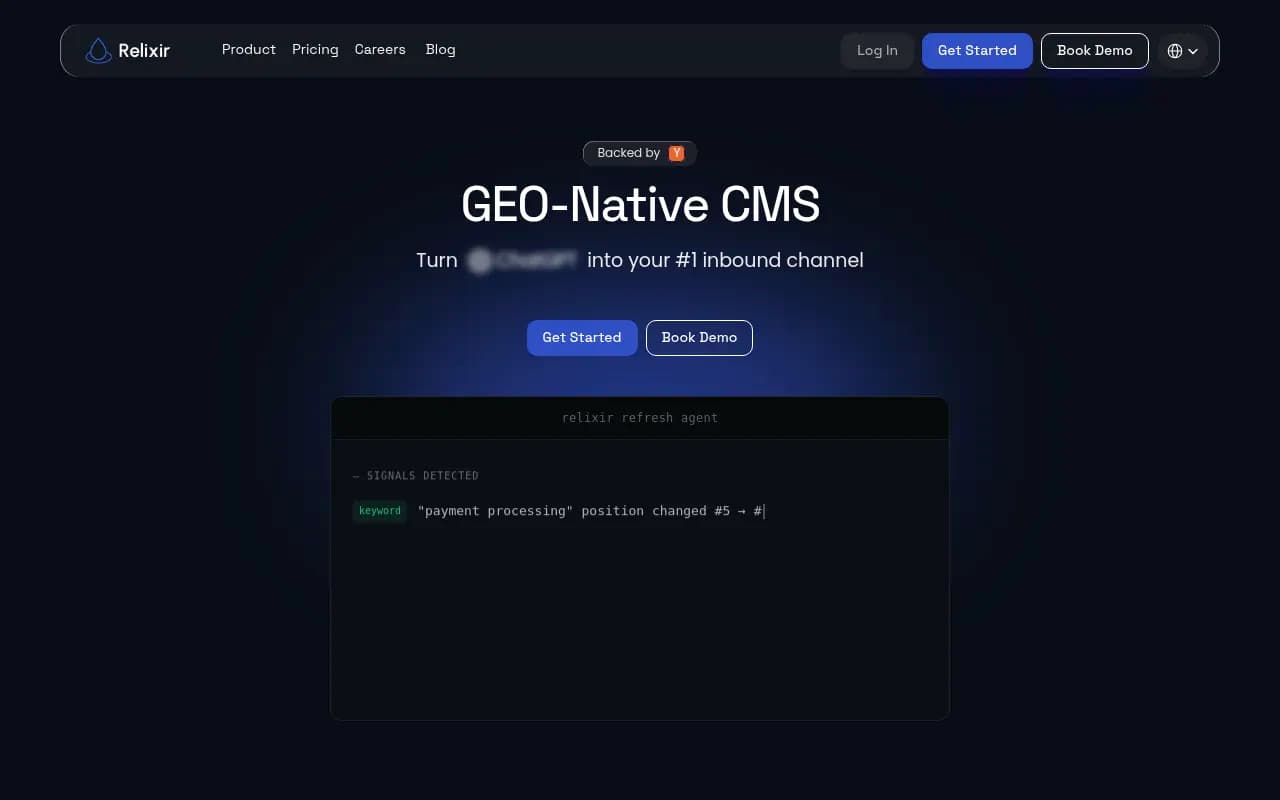
Relixir describes itself as an "end-to-end GEO engine built for enterprise brands." It's the newest entrant in this comparison and still building out its feature set. The positioning is ambitious -- end-to-end implies both monitoring and optimization -- but the platform is earlier in its development than Profound or Evertune.
What's interesting about Relixir is the explicit focus on closing the loop between visibility data and content action. That's the right problem to solve. Whether the execution is there yet depends on your specific needs -- it's worth evaluating if you're building a GEO program from scratch and want a platform that's designed around the full workflow rather than retrofitting optimization onto a monitoring tool.
Head-to-head comparison
| Platform | Starting price | AI models tracked | Content generation | Compliance | Best for |
|---|---|---|---|---|---|
| Peec AI | Low (mid-market pricing) | Major models (ChatGPT, Gemini, Perplexity, Claude) | Limited | Standard | Mid-market teams needing solid monitoring + unlimited seats |
| Profound | ~$499/month | 10+ including GPT-5.2 | Yes (Workflows beta) | SOC 2 Type II, HIPAA | Enterprise brands needing compliance + content workflows |
| Evertune | Enterprise pricing | 11 platforms | Content Studio | Enterprise-grade | Fortune 500 brands needing panel-based audience research |
| Bluefish AI | Enterprise pricing | Fewer models | Limited | Enterprise | Brands prioritizing PR/brand safety + Cision integration |
| Relixir | Custom | Growing | Yes (end-to-end focus) | TBD | Teams building GEO programs from scratch |
The monitoring vs. optimization gap
Here's the thing that gets lost in most platform comparisons: knowing you're invisible in AI search is not the same as becoming visible. Most platforms in this space -- including some in this comparison -- are fundamentally monitoring dashboards. They show you data. They score your visibility. They compare you to competitors. And then they stop.
The platforms that are actually moving the needle for brands are the ones that close the loop: find the gaps, generate content that addresses those gaps, and track whether that content gets cited. Profound is trying to do this with Workflows. Relixir is trying to do this by design. Evertune's Content Studio points in this direction.
If the optimization loop matters to you -- and it should, because visibility data without action is just expensive reporting -- it's worth looking beyond this list at platforms built specifically around that workflow.
Promptwatch is one worth evaluating here. It's built around exactly this cycle: Answer Gap Analysis to find which prompts competitors rank for but you don't, an AI writing agent that generates content grounded in real citation data, and page-level tracking to close the loop with traffic attribution. It's not in the same "Fortune 500 brand research" tier as Evertune, but for marketing teams that need to actually move their AI visibility scores, it's a more actionable platform than most.

Who should pick what
The right choice depends less on which platform has the most features and more on what stage you're at and what problem you're solving.
If you're a mid-market brand or agency that needs solid AI visibility monitoring without enterprise pricing, Peec AI is the most sensible starting point. Unlimited seats, unlimited countries, and an Actions module that at least points toward optimization -- all at a price point that doesn't require a board approval.
If you're a Fortune 500 brand with compliance requirements, a dedicated GEO team, and budget to match, Profound is the most complete platform. The SOC 2 and HIPAA certifications matter for regulated industries, and the depth of analytics justifies the price for teams that will actually use them.
If you're a large brand where understanding AI's influence on your audience -- not just your AI search rankings -- is the core question, Evertune's panel methodology is genuinely differentiated. No other platform here gives you that kind of audience-level data.
If brand safety and PR integration are your primary concerns, Bluefish's Cision integration and citation alert system make it a reasonable choice for that specific use case.
If you're building a GEO program from scratch and want a platform designed around the full optimization workflow rather than pure monitoring, Relixir is worth evaluating -- with the caveat that it's earlier in its development.
And if you want a platform that doesn't just show you the problem but actively helps you fix it -- with content gap analysis, AI-generated articles grounded in citation data, crawler logs, and traffic attribution -- Promptwatch sits in a different category from most of these tools and is worth a serious look alongside whichever enterprise platform you're evaluating.
The bottom line
The "premium price" question in the title is really asking: what are you paying for? If you're paying for compliance certifications and enterprise support, Profound earns its price. If you're paying for audience research methodology, Evertune earns its price. If you're paying for a monitoring dashboard with a high price tag, you're probably overpaying.
The GEO platforms worth the money in 2026 are the ones that help you do something with the data -- not just collect it.