Key takeaways
- All four platforms (Profound, Evertune, Bluefish AI, Relixir) offer AI visibility monitoring, but their depth, focus, and action capabilities differ significantly.
- Evertune is strongest for brand measurement and consumer preference analysis, particularly for Fortune 500 brands that need statistical rigor across 11 AI models.
- Bluefish AI leans into brand safety and reputation monitoring, with PR integrations that make it useful for comms teams.
- Profound is a well-rounded enterprise AEO platform with solid reporting, agent analytics, and a growing content creation layer.
- Relixir positions itself as an end-to-end GEO engine, combining tracking with content automation in a single workflow.
- If you want a platform that closes the full loop from gap analysis to content creation to citation tracking, Promptwatch is worth serious consideration alongside these four.
The enterprise GEO market has gotten crowded fast. Two years ago, most brands were still debating whether AI search was real. Now they're debating which six-figure platform to buy to manage it. That's a meaningful shift -- and it's created a category full of vendors making similar promises with very different underlying capabilities.
This guide focuses on four platforms that regularly come up in enterprise buying conversations: Profound, Evertune, Bluefish AI, and Relixir. They're not the only options, but they represent distinct approaches to the same problem. Understanding what separates them is more useful than reading any vendor's own comparison page.
What "enterprise GEO" actually means in 2026
Before comparing platforms, it's worth being precise about what enterprise buyers actually need. The GEO category has a monitoring problem: most platforms are excellent at showing you data and genuinely bad at helping you do anything with it.
Enterprise teams need three things:
- Accurate, consistent measurement across multiple AI models (not just ChatGPT)
- Enough context to understand why visibility is high or low -- which sources, which topics, which competitors
- Tools to actually change the outcome, not just observe it
The platforms below vary significantly on that third point. Some are primarily dashboards. Others are trying to be full optimization engines. That distinction matters more than feature checklists.
Profound
Profound has built one of the more complete enterprise AEO stacks in the market. It covers 10+ AI engines, offers agent analytics (which shows how AI crawlers interact with your site), and has a growing content creation layer through its Agents feature.
Profound

What Profound does well is enterprise reporting. The platform is SOC 2 certified, which matters for regulated industries and large procurement processes. Its "Aim" feature is designed to help teams operationalize their GEO strategy -- tracking which prompts to prioritize, which pages are performing, and where gaps exist.
The content creation side is newer. Profound's Agents can generate content briefs and articles, but the feature set is still maturing compared to platforms that have built content generation as a core capability from the start.
Where Profound sometimes falls short: the platform is better at telling you what's happening than helping you fix it at speed. Teams that need to produce a lot of AI-optimized content quickly may find the workflow slower than purpose-built content tools.
Best fit: Enterprise marketing and SEO teams that need a solid system of record, strong compliance credentials, and are willing to build their optimization workflow around the platform's structure.
Evertune
Evertune takes a different angle. Where most GEO platforms focus on citation tracking and content gaps, Evertune is built around brand measurement -- specifically, how AI models perceive and recommend your brand relative to competitors.
Its AI Brand Index scores brands on a 0-100 scale, weighting both mention frequency and position in AI responses. The Consumer Preferences module is genuinely useful: it tests your brand against dozens of buyer preference topics to identify where competitors are winning the narrative and where you have an opening.
The Word Association feature -- which shows what terms AI models associate with your brand, including sentiment -- is the kind of thing brand and PR teams actually want. It's not just "are we mentioned" but "how are we described."
Evertune also covers 11 AI platforms, which is broader than most competitors. And its EverPanel (a panel of 25 million real internet users) gives it a way to connect AI visibility to actual audience behavior -- a data layer most platforms don't have.
The gap in Evertune's offering is on the content side. The Content Studio can generate blog copy, but the platform's core strength is measurement, not optimization workflow. If you need to produce and track content at scale, you'll likely need to pair Evertune with other tools.
Best fit: Large brands and agencies where the primary question is "how does AI perceive us and our competitors" rather than "how do we rank for specific prompts." Particularly strong for brand and comms teams.
Bluefish AI
Bluefish AI markets itself as an enterprise GEO powerhouse, and it has genuine strengths -- particularly around brand safety and reputation monitoring. Its citation alert system, which flags brand misrepresentation in AI responses, is one of the more practically useful features for PR and legal teams.
The platform integrates with PR tools like Cision, which means it fits naturally into existing comms workflows. For organizations where the primary concern is "what are AI models saying about us and is it accurate," Bluefish AI has a clear use case.
Where Bluefish AI is weaker: prompt intelligence, content optimization, and the kind of granular tracking (page-level citations, crawler logs, traffic attribution) that SEO and growth teams need. The platform is built for brand monitoring, and that focus shows in what it doesn't do.
Bluefish also publishes its own "top 10 GEO platforms" ranking that puts itself at number one -- which is worth noting when evaluating any claims they make about the competitive landscape.
Best fit: Enterprise comms and PR teams that need brand safety monitoring and AI reputation management, especially organizations already using PR tech stacks.
Relixir
Relixir positions itself as an end-to-end GEO engine. The pitch is that it combines tracking with content automation in a single workflow -- find the gap, generate the content, track the improvement.
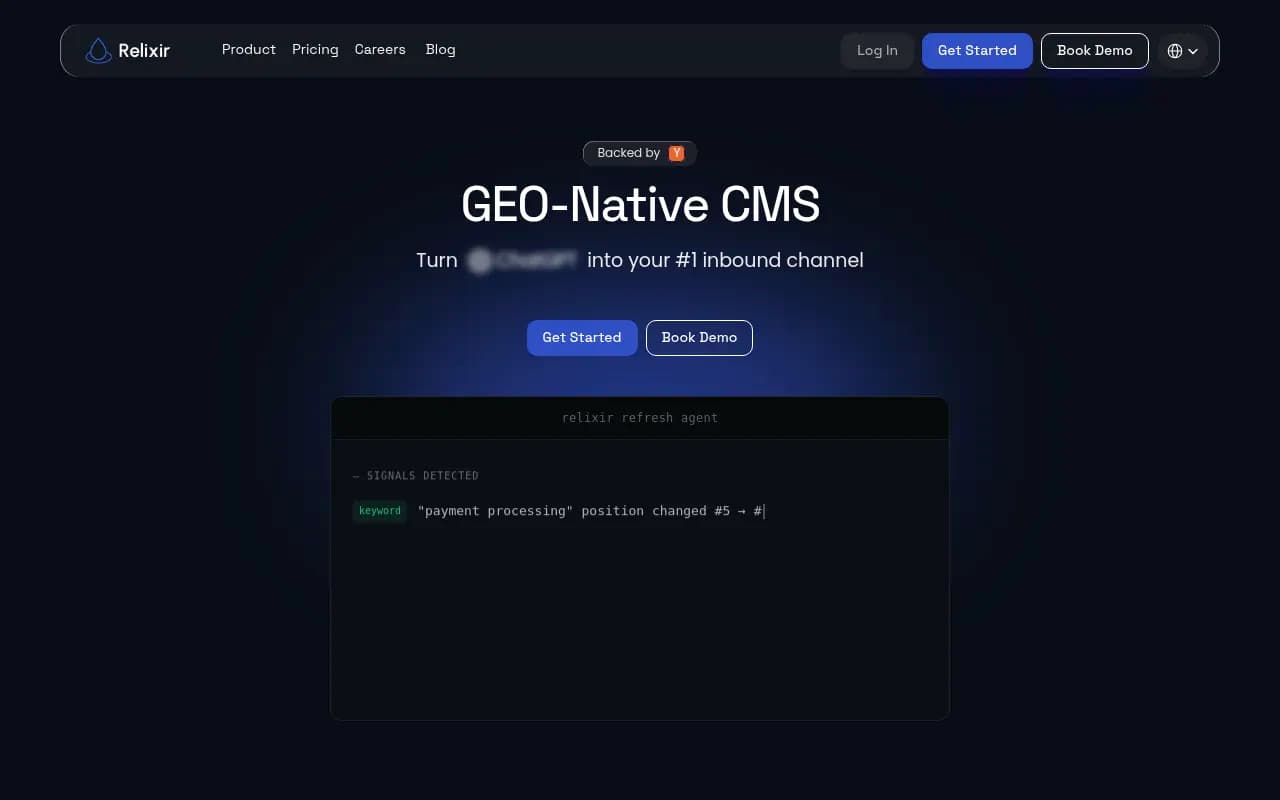
That's the right idea. The question is execution. Relixir is a newer entrant compared to Profound and Evertune, and its enterprise credentials (client roster, compliance certifications, integrations) are less established. The platform is worth evaluating for teams that want a tighter tracking-to-content loop, but larger organizations with complex procurement requirements may find it less ready than the more established players.
Best fit: Mid-market brands and growth teams that want an integrated GEO workflow without the overhead of enterprise-tier platforms.
Head-to-head comparison
| Profound | Evertune | Bluefish AI | Relixir | |
|---|---|---|---|---|
| AI models covered | 10+ | 11 | Multiple | Multiple |
| Brand measurement | Good | Excellent | Good | Moderate |
| Prompt/citation tracking | Strong | Moderate | Moderate | Strong |
| Content generation | Growing | Basic | Limited | Yes |
| Crawler/agent analytics | Yes | No | No | Limited |
| PR/comms integrations | Limited | Limited | Yes (Cision) | No |
| SOC 2 / compliance | Yes | Unknown | Unknown | Unknown |
| Best for | Enterprise SEO/AEO teams | Brand/comms teams | PR-focused orgs | Mid-market growth teams |
| Pricing tier | Enterprise | Enterprise | Enterprise | Mid-market |
The gap all four platforms share
Here's the honest assessment: all four platforms are primarily monitoring tools with varying degrees of optimization capability bolted on. Profound and Relixir are further along the optimization path than Evertune and Bluefish AI, but none of them have fully closed the loop between "here's where you're invisible" and "here's the content that will fix it, here's the traffic it drove."
That gap is real, and it's where the category is heading. The platforms that win the next two years won't just be better dashboards -- they'll be the ones that make it fast and easy to act on what the data shows.
Promptwatch is one platform that's built around this action loop from the ground up: Answer Gap Analysis identifies exactly which prompts competitors rank for but you don't, Content Agents generate articles grounded in real prompt data and citation analysis, and page-level tracking connects published content to actual citation improvements. It's worth looking at alongside these four, particularly if your team needs to move fast.

How to choose
The right platform depends less on feature lists and more on what your team actually does with the data.
If your primary stakeholder is a brand or PR team worried about AI reputation, Bluefish AI or Evertune make sense. Bluefish AI has the PR integrations; Evertune has the deeper brand measurement.
If you're running an enterprise SEO or AEO program and need a proper system of record with compliance credentials, Profound is the most mature option.
If you want an integrated tracking-to-content workflow and don't need enterprise-tier compliance overhead, Relixir is worth a look -- as is Promptwatch, which has more established enterprise credentials and a more complete optimization loop.
One practical suggestion: before committing to any platform, ask each vendor to show you a specific example of a brand that improved AI visibility using their platform, with before/after citation data. The ones that can answer that question clearly are the ones actually delivering results. The ones that pivot to feature demos probably aren't.
The GEO category is moving fast enough that the platform you buy today should be able to show you a roadmap for where it's going, not just what it does now. That's the conversation worth having.