Key takeaways
- Profound and Promptwatch are purpose-built for AI visibility; seoClarity and Botify are enterprise SEO platforms that have added AI tracking as a layer on top of their existing products.
- Promptwatch is the only platform in this comparison that closes the full loop: find gaps, generate content, track results -- all in one place.
- Botify is the strongest choice if your primary problem is technical crawlability at scale (millions of pages, JavaScript rendering, log file analysis).
- seoClarity suits large enterprise SEO teams that want a single platform for traditional rank tracking, content optimization, and basic AI visibility in one contract.
- If AI search is your primary channel -- or you expect it to be -- Profound and Promptwatch are the more serious options, with Promptwatch pulling ahead on content generation and actionability.
The question used to be simple: which SEO platform should we use? Now it's messier. You need to track how you appear in ChatGPT, Perplexity, Google AI Overviews, and a dozen other AI engines -- while still keeping your traditional SEO house in order. And ideally, you want one platform that does both without forcing you to stitch together five different tools.
Four platforms come up repeatedly in this conversation: Profound, Promptwatch, seoClarity, and Botify. They're all credible. They're also solving quite different problems, and the overlap between them is smaller than their marketing suggests. This guide breaks down what each one actually does well, where they fall short, and which combination (or single platform) makes sense for your situation.
What "combining technical SEO with AI visibility" actually means
Before comparing tools, it's worth being precise about what we're comparing. "Technical SEO" and "AI visibility" are both broad terms.
Technical SEO, in the traditional sense, means crawlability, indexation, site architecture, Core Web Vitals, log file analysis, JavaScript rendering, and structured data. It's the plumbing that lets search engines find and understand your content.
AI visibility means something different: whether AI search engines (ChatGPT, Perplexity, Claude, Gemini, Google AI Mode) mention your brand, cite your pages, and recommend your products when users ask relevant questions. The signals that drive AI visibility aren't identical to traditional ranking signals -- citation patterns, entity recognition, content comprehensiveness, and prompt-level relevance all play a role.
A platform that truly combines both would need to: audit your site's technical health, track how AI models respond to relevant prompts, identify content gaps, help you create content that gets cited, and connect all of this to actual traffic and revenue. That's a tall order. None of the four platforms here does all of it equally well.
Profound
Profound is one of the more mature dedicated AI visibility platforms. It tracks brand mentions and citations across ChatGPT, Perplexity, Gemini, and several other AI engines, and it's built specifically for enterprise teams that want to understand their AI search presence.
Profound

Profound's strengths are in prompt monitoring and sentiment analysis. You can track how AI models respond to specific prompts, see whether your brand is mentioned positively or negatively, and get demand estimation data that helps prioritize which prompts are worth targeting. It also has dedicated AI shopping insights, which matters if you're in e-commerce and want to know when your products appear in AI-generated recommendations.
The platform recently shipped autonomous Agents and MCP (Model Context Protocol) support, which lets it connect to other tools and workflows. That's a meaningful step toward being more than a monitoring dashboard.
Where Profound falls short: it's primarily a monitoring and analysis tool. It shows you where you're visible and where you're not, but it doesn't generate content to fill those gaps. If you want to act on the data -- create articles, briefs, or pages designed to get cited -- you'll need to take that work elsewhere. It also has no meaningful technical SEO layer. There's no site crawler, no log file analysis, no Core Web Vitals tracking. For teams that need both, Profound is half the picture.
Pricing sits at the higher end of the dedicated AI visibility market, which makes it harder to justify for smaller teams or agencies managing multiple clients.
Promptwatch
Promptwatch is built around a different philosophy. Where most AI visibility tools stop at monitoring, Promptwatch is designed to close the full loop: identify gaps, generate content, and track results.

The platform tracks 10 AI models (ChatGPT, Perplexity, Google AI Overviews, Google AI Mode, Claude, Gemini, Meta/Llama, DeepSeek, Grok, Mistral, Copilot) and has processed more than 4.5 billion citations, clicks, and prompts. That data depth matters -- it means the prompt volume estimates and difficulty scores are based on real usage patterns, not API samples.
What sets Promptwatch apart in this comparison is the action loop:
The Answer Gap Analysis shows you exactly which prompts competitors are visible for that you're not -- not as a vague "you're missing coverage here" signal, but as specific prompts with volume data and competitor citations. Then Content Agents generate articles, listicles, comparisons, and briefs grounded in that prompt data, citation patterns, and brand guidance. After publishing, page-level tracking shows which pages AI models are citing, how often, and by which model. Agent Analytics shows the timeline from publish to crawl to citation.
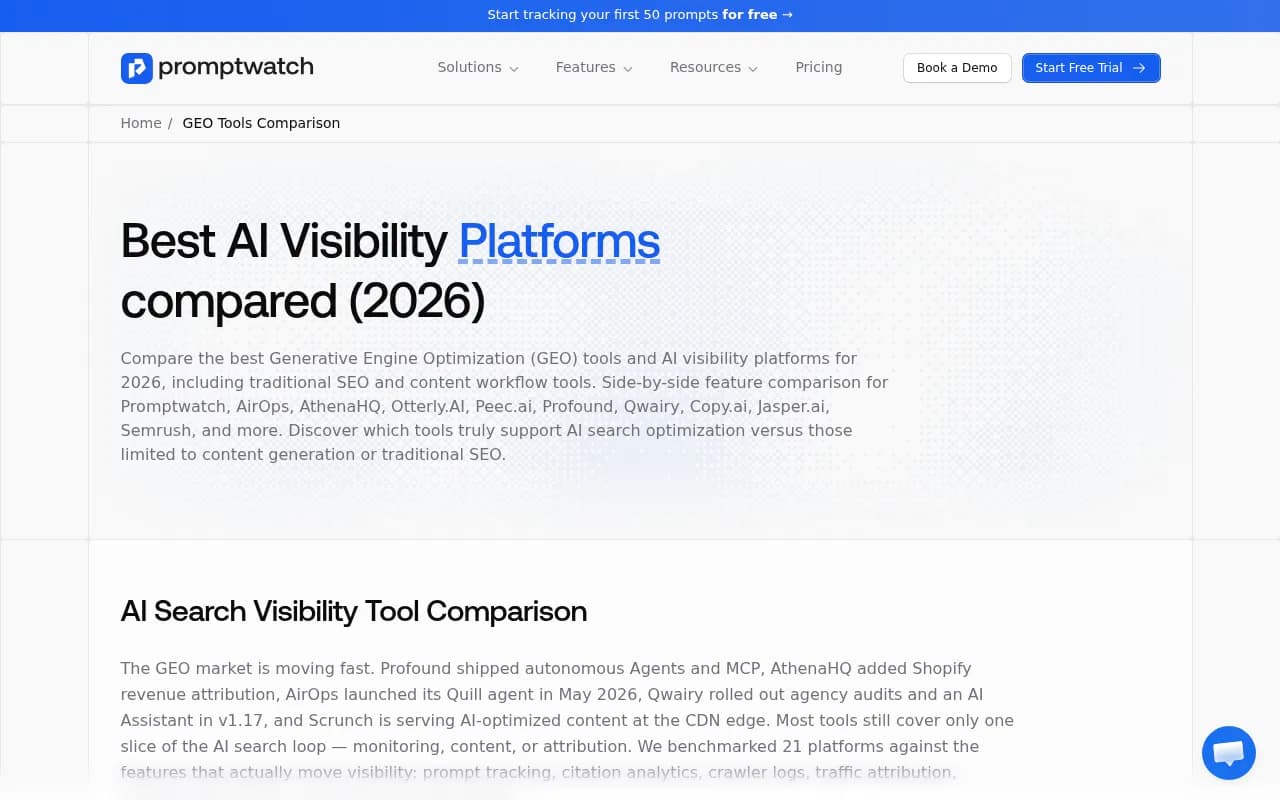
Promptwatch also has AI Crawler Logs -- real-time logs of AI crawlers hitting your site, which pages they read, errors they encounter, and how often they return. This is the closest thing in this comparison to a technical SEO feature for AI search: understanding how AI engines discover and index your content. Most competitors lack this entirely.
Other capabilities worth noting: Reddit and YouTube insights (discussions that influence AI recommendations), ChatGPT Shopping tracking, offsite citation analysis, multi-language and multi-region monitoring, and traffic attribution that connects AI visibility to actual revenue.
On technical SEO in the traditional sense -- crawl audits, Core Web Vitals, log file analysis for Googlebot -- Promptwatch doesn't go there. It's focused on AI search. But for teams whose primary concern is AI visibility, it's the most complete platform in this comparison.
Pricing: Essential at $99/month (1 site, 50 prompts, 5 articles), Professional at $249/month (2 sites, 150 prompts, 15 articles, crawler logs), Business at $579/month (5 sites, 350 prompts, 30 articles). Free trial available.
seoClarity
seoClarity is an enterprise SEO platform that has been around for over a decade. It covers traditional rank tracking, site auditing, content optimization, and competitive analysis -- and in 2025-2026, it added AI search visibility tracking to that stack.
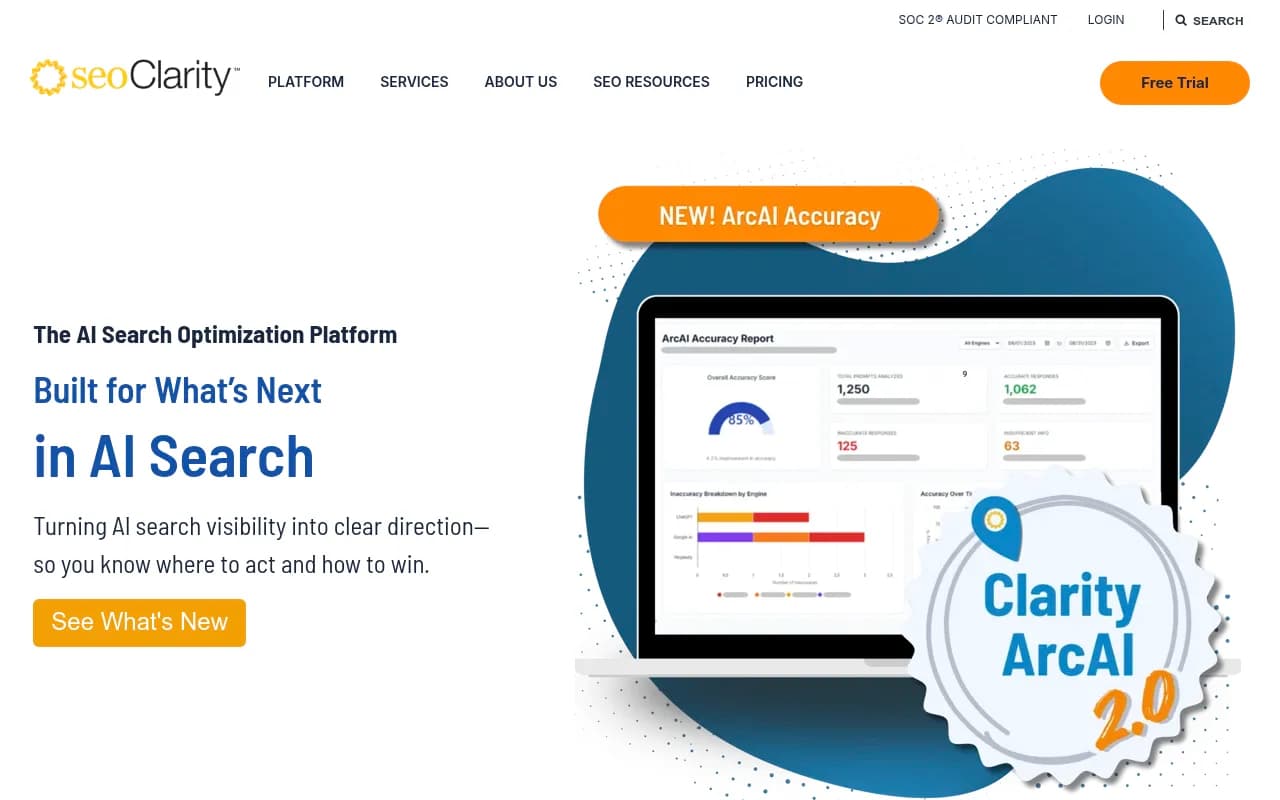
The appeal of seoClarity for large enterprise teams is consolidation. If you're managing a major brand's SEO program and you want one platform that handles keyword tracking, technical audits, content briefs, and now AI visibility monitoring, seoClarity can cover most of that. The platform integrates with Google Search Console and has robust reporting capabilities that enterprise stakeholders expect.
The AI visibility layer in seoClarity tracks how brands appear in AI-generated answers, but it's not as deep as Profound or Promptwatch. The prompt database is smaller, the AI model coverage is narrower, and there's no content generation capability specifically designed for AI search. It's more of an "AI visibility added to SEO" approach than a purpose-built GEO platform.
Where seoClarity genuinely excels is in traditional technical SEO. Site auditing, crawl analysis, log file integration, and structured data recommendations are mature features. For teams that are primarily SEO-focused and want to add some AI visibility monitoring without switching platforms, that's a reasonable value proposition.
The downside is cost and complexity. seoClarity is priced for enterprise budgets, and the platform has a learning curve. Teams that primarily need AI visibility will likely find they're paying for a lot of traditional SEO features they don't need.
Botify
Botify is the most technically focused platform in this comparison. It's built for large-scale websites -- think e-commerce sites with millions of pages, media companies with complex content architectures, or enterprise brands where crawl budget and JavaScript rendering are real problems.
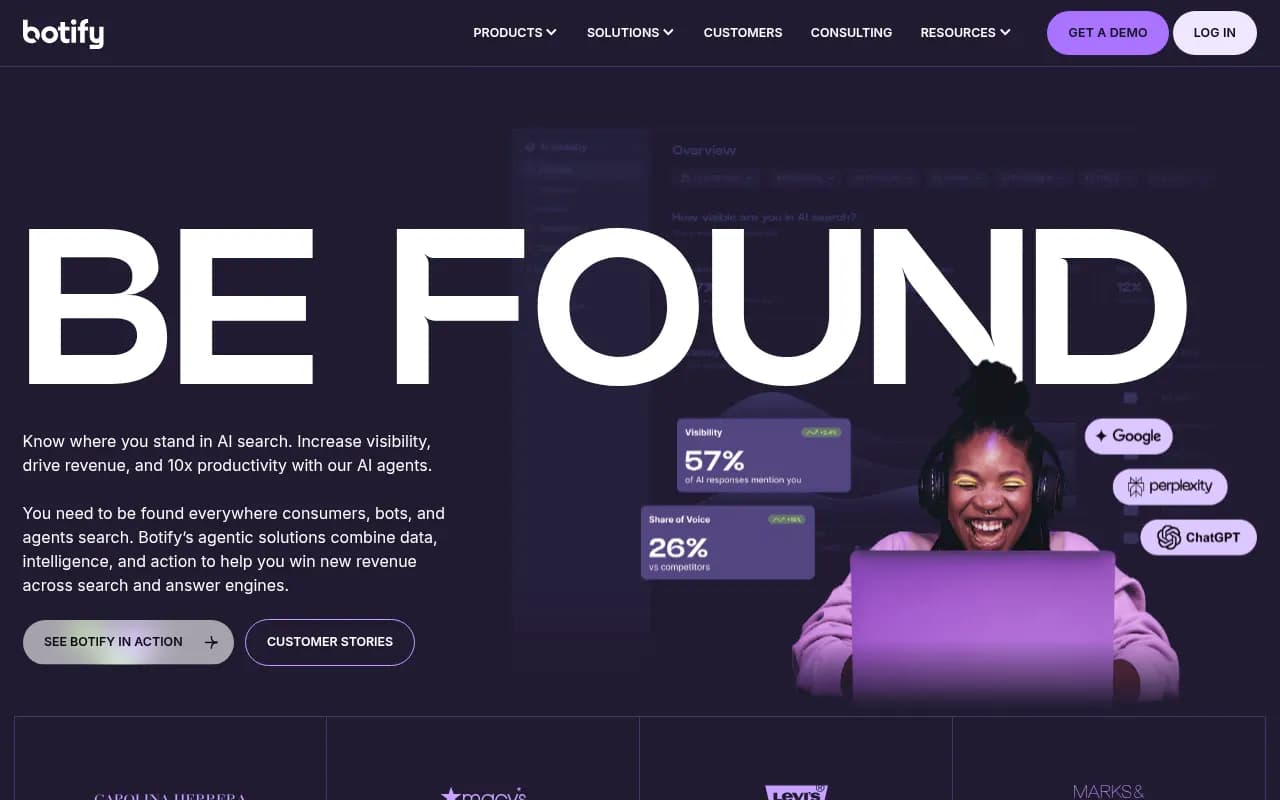
Botify's core product is a technical SEO platform: it crawls your site, analyzes log files, identifies crawl budget waste, flags JavaScript rendering issues, and gives you a detailed picture of how search engines actually experience your site. For teams dealing with indexation problems at scale, it's genuinely powerful.
In 2025-2026, Botify added AI search optimization features, positioning itself as a platform that bridges traditional technical SEO with AI search visibility. The GEO layer includes some prompt tracking and citation monitoring, but it's less mature than what Profound or Promptwatch offer. Botify's strength is still in the technical foundation -- making sure your content is actually crawlable and indexable by both traditional and AI search engines.
The honest assessment: if you're choosing Botify, you're choosing it for technical SEO at scale. The AI visibility features are a bonus, not the reason to buy. For teams whose primary challenge is getting millions of pages properly crawled and indexed, Botify is hard to beat. For teams whose primary challenge is AI visibility and content strategy, it's not the right fit.
Botify is also priced at the high end of the enterprise market, with custom pricing that typically requires a significant annual commitment.
Head-to-head comparison
| Feature | Profound | Promptwatch | seoClarity | Botify |
|---|---|---|---|---|
| AI model coverage | 9+ models | 10 models | Limited | Limited |
| Prompt tracking | Yes | Yes | Basic | Basic |
| Citation analysis | Yes | Yes | Basic | No |
| Content generation for AI | No | Yes (Content Agents) | No | No |
| Answer gap analysis | Partial | Yes | No | No |
| AI crawler logs | No | Yes | No | Partial (log files) |
| Traffic attribution | No | Yes | Partial | No |
| Reddit/YouTube insights | No | Yes | No | No |
| ChatGPT Shopping tracking | Yes | Yes | No | No |
| Traditional site crawler | No | No | Yes | Yes (enterprise-grade) |
| Core Web Vitals tracking | No | No | Yes | Yes |
| Log file analysis | No | No | Partial | Yes |
| Structured data tools | No | No | Yes | Yes |
| Multi-language/region | Yes | Yes | Yes | Yes |
| Pricing (entry) | Custom | $99/mo | Custom | Custom |
| Free trial | Yes | Yes | No | No |
| Best for | Enterprise AI monitoring | AI visibility + content action | Enterprise SEO + basic AI | Technical SEO at scale |
Which platform should you choose?
The right answer depends on what problem you're actually trying to solve.
If AI search is your primary focus and you want to do something about it -- not just watch your visibility scores -- Promptwatch is the strongest choice in this comparison. The content generation layer, answer gap analysis, and AI crawler logs give you a complete workflow from discovery to execution. It's also the most accessible price point, with a free trial that lets you evaluate it before committing.
If you're an enterprise brand with a large SEO team that needs AI visibility monitoring alongside traditional rank tracking and content optimization, seoClarity is worth evaluating. You'll get a consolidated platform, though the AI visibility features are less mature than dedicated tools.
If your website has serious technical SEO challenges -- millions of pages, JavaScript rendering issues, crawl budget problems -- Botify is the specialist tool. Add a dedicated AI visibility platform alongside it if AI search is also a priority.
If you're specifically focused on enterprise AI monitoring with strong sentiment analysis and AI shopping insights, and you have the budget for it, Profound is a credible option. Just know you'll need separate tools for content creation and technical SEO.
For most marketing teams and agencies in 2026, the combination that makes the most sense is a dedicated AI visibility platform with content capabilities (Promptwatch) plus whatever technical SEO tool you already use for traditional search. Trying to find one platform that does everything equally well usually means settling for a platform that does nothing particularly well.
A note on the broader market
The AI visibility platform space has exploded in the past 18 months. There are now dozens of tools claiming to track your brand across ChatGPT and Perplexity. Most of them are monitoring dashboards -- they show you data, then leave you to figure out what to do with it.
The platforms that will matter in 2026 and beyond are the ones that help you act on the data, not just observe it. That's the real differentiator to look for when evaluating any tool in this space -- not the number of AI models it tracks, but what it helps you do once you know where you're invisible.
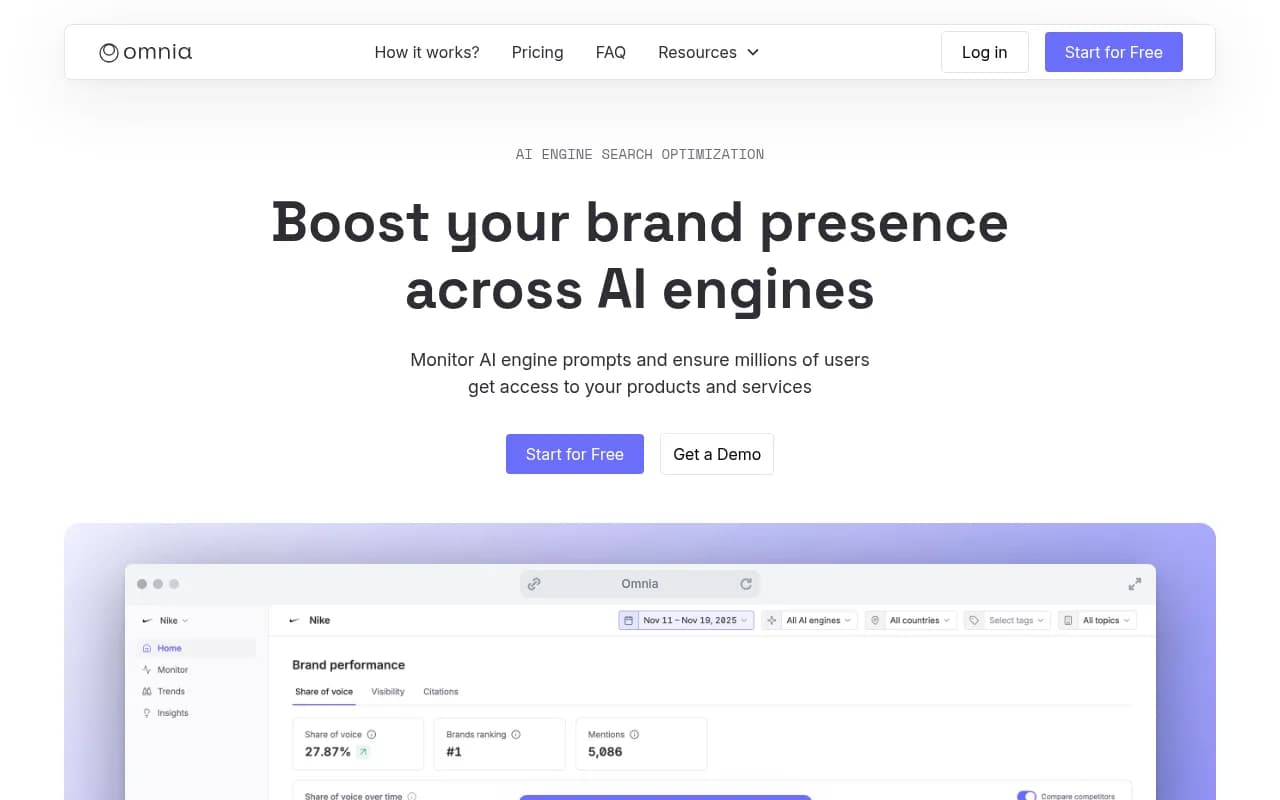
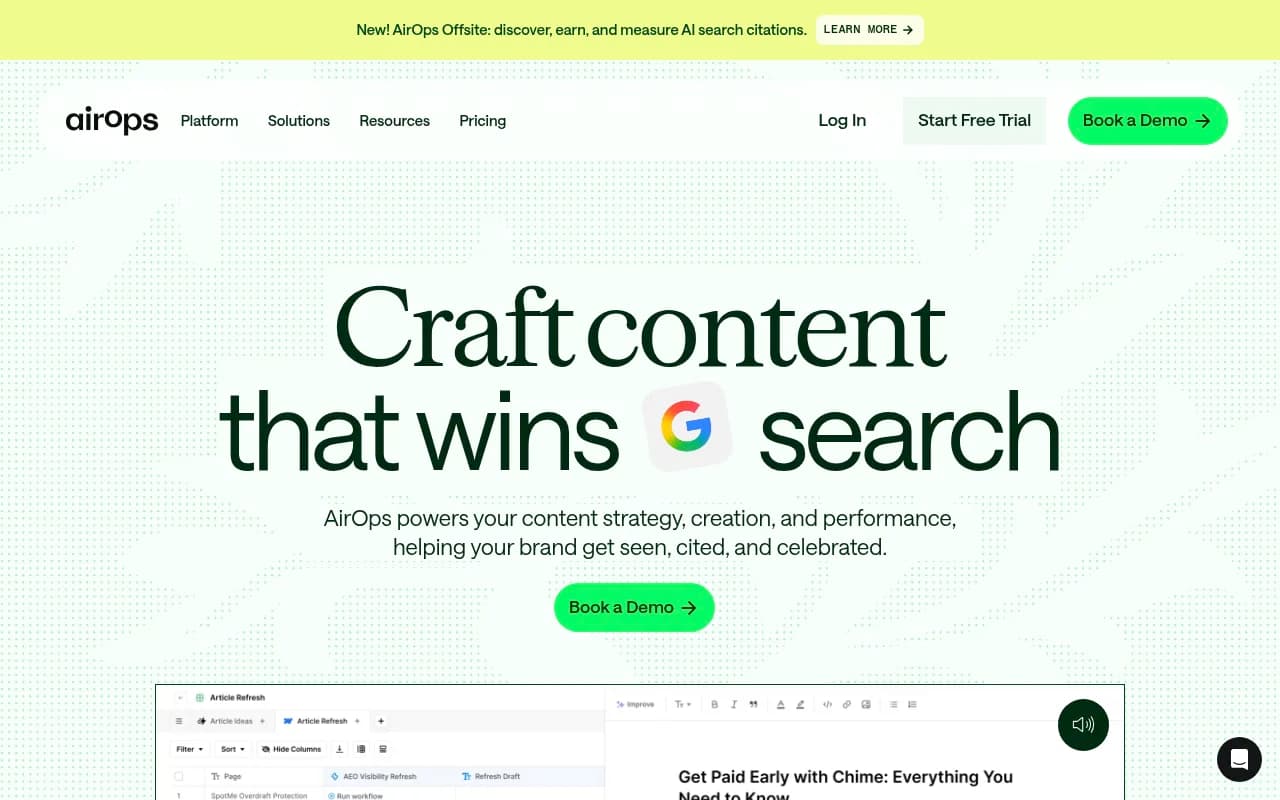
For teams evaluating other options in the space, tools like Omnia, AthenaHQ, and Peec AI are worth a look for monitoring-focused use cases. For content-focused workflows, AirOps has built interesting capabilities. But for the combination of tracking, content generation, and actionable optimization in a single platform, the comparison above covers the most complete options available right now.