Key takeaways
- All four platforms (Relixir, Promptwatch, Evertune, Bluefish AI) target enterprise brands, but they differ significantly in whether they just monitor AI visibility or actually help you improve it.
- Promptwatch is the only platform in this comparison rated as a "Leader" across all GEO categories in a 2026 evaluation of 12 platforms -- its core advantage is a full action loop: find gaps, generate content, track results.
- Evertune and Bluefish AI are strong on analytics depth and enterprise security (Bluefish has SOC 2 certification), but both lean heavily toward monitoring rather than optimization.
- Relixir positions itself as an end-to-end GEO engine, though its market presence and data scale are smaller than Promptwatch's 1.1 billion citations processed.
- For Fortune 500 brands that need to move from visibility data to actual content that gets cited by ChatGPT and Perplexity, Promptwatch's built-in AI writing agent and Answer Gap Analysis are the most direct path.
The GEO platform market has consolidated fast. Two years ago, most brands were still asking whether AI search mattered. Now the question is which platform to buy -- and for enterprise teams, the stakes are high enough that the wrong choice costs months of lost visibility while competitors get cited in ChatGPT and Perplexity instead of you.
This comparison focuses on four platforms that explicitly target enterprise and Fortune 500 use cases: Relixir, Promptwatch, Evertune, and Bluefish AI. They're not the same. Some are primarily monitoring dashboards. Some have genuine optimization capabilities. One has a dataset that dwarfs the others. Here's how they actually compare.
What "enterprise GEO" actually requires
Before getting into the platforms, it's worth being specific about what Fortune 500 teams actually need from a GEO platform -- because the requirements are different from what a 10-person SaaS startup needs.
Enterprise teams typically need: coverage across all major AI engines (not just ChatGPT), multi-brand and multi-region monitoring, security certifications (SOC 2 at minimum), integration with existing data infrastructure (Looker Studio, APIs), and -- critically -- the ability to act on data, not just read it. A dashboard that shows you're invisible in Gemini is useless if it doesn't tell you what to do about it.
They also need traffic attribution. Knowing your brand appears in AI responses is interesting. Knowing that AI-referred traffic converted at a higher rate than organic traffic and tying that back to specific pages -- that's what justifies budget.
With that frame in mind, here's how the four platforms stack up.
Platform overviews
Relixir
Relixir markets itself as an end-to-end GEO engine built specifically for enterprise brands. The pitch is that it handles the full cycle from monitoring to content creation to tracking, similar in concept to what Promptwatch does. It covers major AI engines and includes content optimization features.
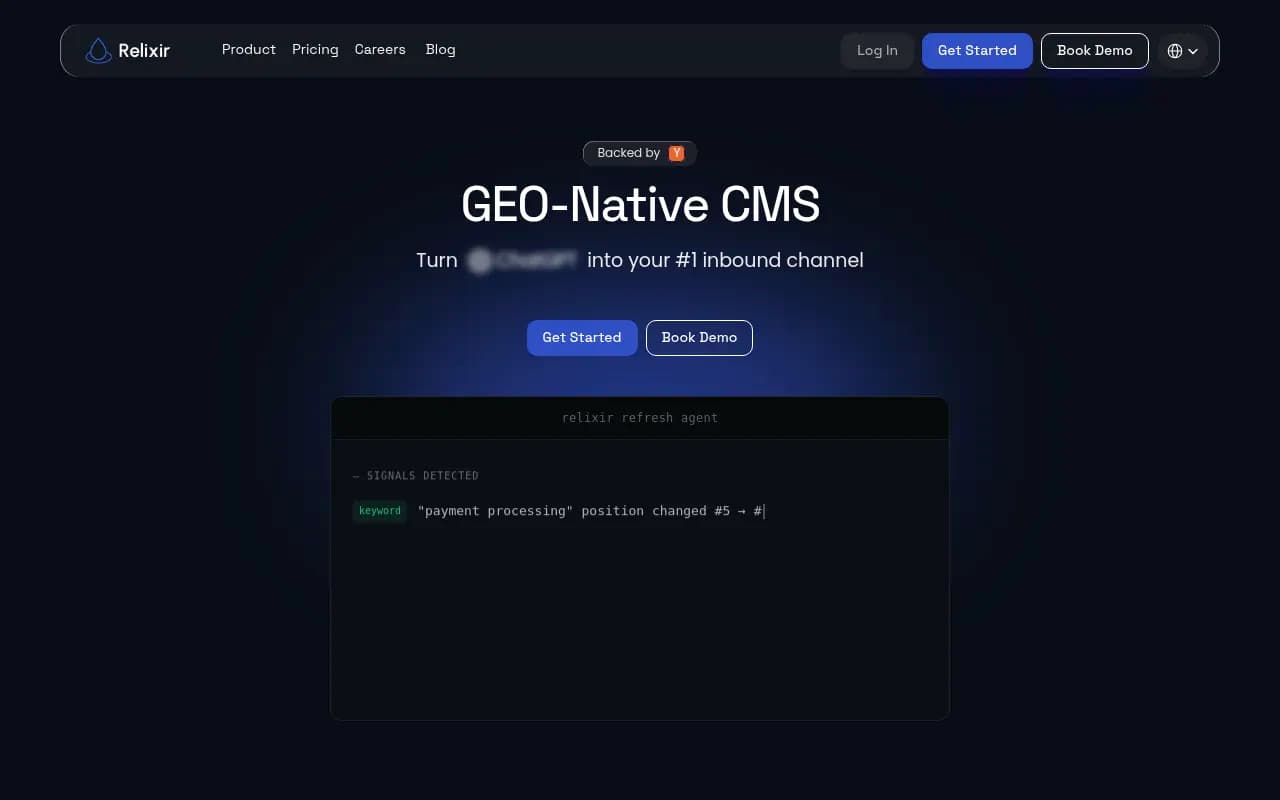
The honest limitation: Relixir is a newer entrant with a smaller data footprint. When you're making decisions about which prompts to target and what content to create, the quality of the underlying citation data matters enormously. Relixir hasn't published the kind of scale metrics (citations processed, prompts analyzed) that would let you independently verify the depth of its intelligence.
Promptwatch
Promptwatch monitors 10 AI models -- ChatGPT, Perplexity, Google AI Overviews, Google AI Mode, Claude, Gemini, Meta/Llama, DeepSeek, Grok, Mistral, and Copilot -- and has processed over 1.1 billion citations, clicks, and prompts. That dataset is the foundation for everything else it does.

What separates Promptwatch from most competitors is that it doesn't stop at monitoring. The Answer Gap Analysis shows you exactly which prompts competitors rank for that you don't -- not as a vague suggestion, but as specific content gaps with prompt volume estimates and difficulty scores. The built-in AI writing agent then generates articles, listicles, and comparisons grounded in that citation data. You can see which pages AI models are actually citing, fix crawling issues through real-time AI crawler logs, and connect visibility changes to actual revenue through GSC integration or server log analysis.
In a 2026 comparison of 12 GEO platforms, Promptwatch was the only one rated as a "Leader" across all categories. It's used by 6,700+ brands including Booking.com and Center Parcs, and its data has been cited in the Wall Street Journal and Axios.
Pricing runs from $99/month (Essential: 1 site, 50 prompts, 5 articles) to $579/month (Business: 5 sites, 350 prompts, 30 articles), with agency and enterprise custom pricing available.
Evertune
Evertune is explicitly positioned for enterprise organizations and has built a reputation for analytics depth. Its own resources describe it as best for "enterprise organizations," and it publishes comparison content against competitors like Bluefish AI.
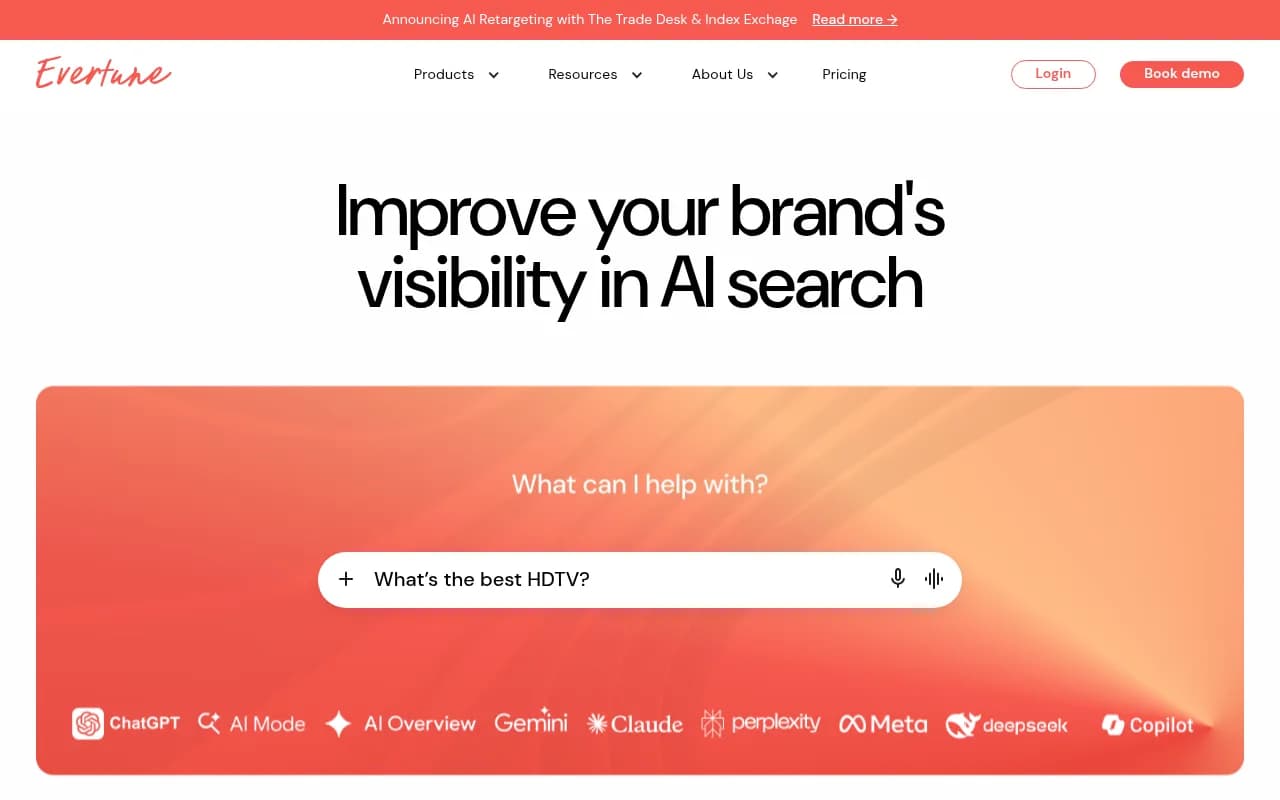
Evertune's strength is in the monitoring and analytics layer -- understanding how your brand is perceived across AI engines, tracking sentiment, and measuring share of voice. Where it's weaker is in the optimization side. Like several enterprise-focused platforms, it tends to show you the data and leave the "what to do about it" question largely unanswered. For Fortune 500 brands with large in-house content teams, that might be fine. For teams that need the platform to help generate the content that will actually improve their visibility, it's a gap.
Bluefish AI
Bluefish AI is the most security-focused platform in this comparison. It's SOC 2 certified, which matters for Fortune 500 procurement teams that have strict vendor security requirements. According to LSEO's 2026 evaluation, Bluefish "outperformed" competitors in diagnostic depth in expert evaluations.
The diagnostic depth is real -- Bluefish gives you granular data on how AI engines perceive your brand, what's influencing those perceptions, and where the gaps are. The limitation is similar to Evertune's: it's primarily a diagnostic and monitoring tool. The platform tells you what's wrong more than it helps you fix it. For enterprises that have the internal resources to act on detailed diagnostics, that's workable. For teams that need a platform to do more of the heavy lifting, it falls short.
Head-to-head feature comparison
| Feature | Relixir | Promptwatch | Evertune | Bluefish AI |
|---|---|---|---|---|
| AI engines monitored | 5+ | 10 | 6+ | 6+ |
| Answer gap analysis | Yes | Yes (with prompt volumes) | Limited | Limited |
| Built-in content generation | Yes | Yes (AI writing agent) | No | No |
| AI crawler logs | Unknown | Yes | No | No |
| Citation data scale | Not published | 1.1B+ citations | Not published | Not published |
| Reddit/YouTube tracking | Unknown | Yes | No | No |
| ChatGPT Shopping tracking | No | Yes | No | No |
| Traffic attribution | Limited | Yes (GSC, server logs, snippet) | Limited | No |
| SOC 2 certification | Unknown | Not specified | Unknown | Yes |
| Prompt volume/difficulty scoring | Unknown | Yes | No | No |
| Multi-region/multi-language | Unknown | Yes | Yes | Yes |
| Looker Studio / API | Unknown | Yes | Limited | Limited |
| Pricing (starting) | Custom | $99/month | Custom | Custom |
| Free trial | Unknown | Yes | Unknown | Unknown |
| Best for | Enterprise brands wanting end-to-end GEO | Brands needing monitoring + content optimization | Enterprise analytics depth | Enterprise diagnostics + security |
Where each platform wins
Relixir wins when...
You want an end-to-end GEO platform that's newer to the market and potentially more flexible on enterprise customization. If you're evaluating multiple vendors and want to include a challenger option alongside more established platforms, Relixir is worth a demo. The caveat is that you'll want to push hard on data provenance -- ask specifically how many citations they've analyzed and how prompt volume estimates are calculated.
Promptwatch wins when...
You need the full loop: find gaps, create content, track results. The combination of Answer Gap Analysis, AI writing agent, and traffic attribution is genuinely rare -- most platforms do one or two of these things, not all three. If your team's bottleneck is knowing what content to create and then actually creating it, Promptwatch is the most direct solution. The $99/month entry point also makes it accessible for teams that want to test before committing to enterprise pricing.
Evertune wins when...
Your primary need is deep analytics and share-of-voice measurement across AI engines, and you have a content team that can act on the data independently. Evertune's enterprise positioning and analytics depth make it a reasonable choice for large organizations where the marketing analytics team and the content team are separate functions.
Bluefish AI wins when...
Security and compliance are non-negotiable. SOC 2 certification is a hard requirement for many Fortune 500 procurement processes, and Bluefish's diagnostic depth is genuinely strong. If you need to pass a vendor security review and you have internal resources to act on detailed diagnostics, Bluefish is the most defensible choice from a compliance standpoint.
The monitoring-only trap
One pattern worth naming explicitly: several platforms in the GEO space -- including Evertune and Bluefish AI -- are primarily monitoring tools. They show you data. They tell you where you're invisible. They produce reports.
What they don't do is help you fix the problem.
This matters more than it sounds. According to Nobori.ai's AI Search Visibility Statistics 2025 report, B2B companies tracking AI search visibility jumped from 8% to 47% in a single year. The brands that are winning aren't just tracking -- they're creating content that gets cited. A monitoring dashboard that shows you're losing to a competitor in Perplexity is only useful if it tells you what content to create and helps you create it.
Promptwatch's Answer Gap Analysis is the most direct implementation of this I've seen: it shows you the specific prompts your competitors appear for that you don't, with volume and difficulty data, and then the AI writing agent generates content targeting those exact gaps. That's a closed loop. Most competitors leave a significant gap between "here's the data" and "here's what you should do."
Pricing reality for Fortune 500 teams
Evertune and Bluefish AI both use custom enterprise pricing, which typically means you're looking at five-figure annual contracts before you've seen the product work. That's a significant commitment for a category that's still maturing.
Promptwatch's transparent pricing ($99 to $579/month, with agency and enterprise tiers available) is unusual for a platform with this feature depth. It means you can actually start with a real budget, prove value, and scale -- rather than committing to a large contract based on a demo.
Relixir also uses custom pricing for enterprise, which is standard for the category but worth factoring into your evaluation timeline.
For Fortune 500 teams that need to justify budget internally, Promptwatch's combination of transparent pricing and traffic attribution (connecting AI visibility to actual revenue) makes the ROI case significantly easier to make.
What the broader market looks like
These four platforms don't exist in isolation. The GEO platform market now includes 150+ tools, ranging from basic monitoring dashboards to full optimization platforms. A few others worth knowing about in the enterprise context:
Profound

Profound is frequently cited alongside these platforms for enterprise use. It has strong analytics and SOC 2 certification, covers 10+ AI engines, and is generally considered one of the more complete monitoring platforms. Like Bluefish, it's primarily diagnostic rather than generative.

AthenaHQ focuses on revenue attribution -- connecting AI visibility to pipeline and revenue. It's monitoring-focused but with a stronger commercial lens than most. The limitation is that it lacks content generation capabilities.
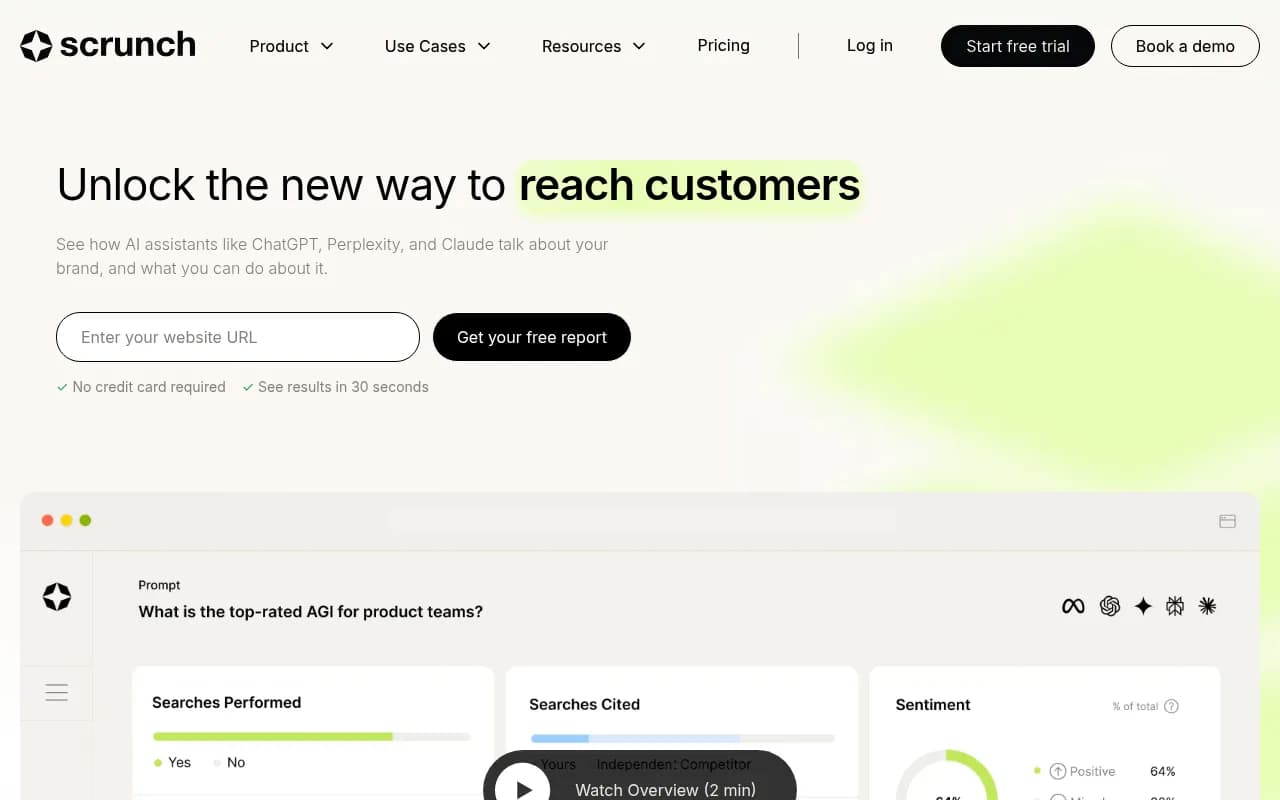
Scrunch AI covers major AI engines and has enterprise features, but Google AI Mode is enterprise-only and it lacks some of the optimization capabilities that Promptwatch offers.
How to choose
The decision framework is simpler than the feature lists suggest. Ask yourself one question: does your team have the capacity to act on monitoring data independently, or do you need the platform to help you act?
If you have a large content team that can take a gap analysis and produce content without platform assistance, Evertune or Bluefish AI might be sufficient -- especially if security compliance is a hard requirement (Bluefish) or analytics depth is the priority (Evertune).
If you need the platform to close the loop -- identify gaps, generate content, track whether it worked -- Promptwatch is the most complete option in this comparison. Relixir is worth evaluating as a challenger, but push on data scale and ask for specific case studies before committing.
For most Fortune 500 marketing teams, the honest answer is that monitoring data without optimization capability is a dead end. You'll spend months looking at dashboards showing you're invisible in AI search, and nothing will change. The platforms that help you create content that actually gets cited are the ones worth paying for.
Bottom line
The GEO platform category is real, the stakes are real, and the differences between these four platforms are significant enough to matter. Relixir and Promptwatch both attempt the full optimization loop. Evertune and Bluefish AI are stronger on analytics and diagnostics but weaker on helping you act.
For Fortune 500 brands that want to move fast and can't afford to spend six months looking at data before creating content, Promptwatch's combination of citation scale (1.1B+ processed), Answer Gap Analysis, AI writing agent, and traffic attribution is the most complete package. For brands where SOC 2 compliance is the first filter, Bluefish AI passes that bar and has strong diagnostic depth. For brands that want deep analytics without needing the platform to generate content, Evertune is worth a serious look.
None of these platforms are cheap, and none of them are magic. But the brands that will win in AI search over the next 18 months are the ones that start creating the right content now -- not the ones with the prettiest dashboards.